Game development in Unity and Unreal Engine places a unique set of demands on a processor. Unlike gaming, where single-core clock speed dominates, dev workloads split their time between high-core-count tasks, such as shader compilation, Lightmass baking and asset importing, and fast single-threaded iteration when you are scripting, tweaking Blueprint logic or running play-in-editor sessions. Since last year, AMD's Zen 5 architecture has arrived on AM5 with the Ryzen 5 9600X and Ryzen 7 9700X, offering improved IPC and better power efficiency than Zen 4. The Ryzen 7 9800X3D has also landed, bringing AMD's 3D V-Cache technology to the newest platform, making it a compelling all-rounder for developers who also want to test their games at high frame rates. Whether you are a solo indie developer on a tight budget, a mid-career developer building a studio rig, or a technical artist who spends hours waiting on shader compiles, there is a processor here to match your workflow and your wallet.
Quick Verdict
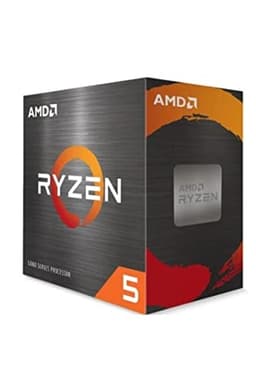
Best Overall: AMD Ryzen 7 9800X3D, which combines Zen 5 IPC, a massive L3 cache that accelerates iteration loops, and strong multi-threaded compile performance in a single package. Best Value: AMD Ryzen 5 9600X, which brings Zen 5 efficiency and solid compile speeds to the AM5 platform at a price that leaves budget for RAM and an SSD.
The Ryzen 7 9800X3D is the processor that most game developers will want to own in 2025, provided their budget stretches to it. It combines AMD's latest Zen 5 CPU cores with the second generation of 3D V-Cache technology, stacking an enormous 96 MB of additional L3 cache on top of the standard 8 MB die to reach a total of 104 MB. That cache matters enormously in game development workloads. When Unreal Engine's shader compiler is churning through thousands of permutations, or when Unity's Burst compiler is optimising job graphs, having a deep cache pool reduces memory latency and keeps the cores fed with data. The result is noticeably faster iteration cycles compared with non-3D-cache processors at similar clock speeds.
The 9800X3D boosts to 5.7 GHz on its fastest core, which is the highest boost frequency AMD has achieved on a 3D V-Cache part to date. This matters for Blueprint execution in Unreal and for C# scripting in Unity, both of which are largely single-threaded at runtime. The processor sits on the AM5 platform, which supports DDR5 memory and PCIe 5.0, giving you a forward-looking upgrade path. TDP is rated at 120W under full load, which is higher than the standard 9700X but still manageable with a decent 240mm AIO or a high-end air cooler such as the Noctua NH-D15.
For developers who also want to test their games at the highest possible frame rates, the 9800X3D is exceptional. Its cache advantage translates directly into lower frame times in CPU-bound scenarios, so you can accurately assess whether your optimisation work is having the intended effect. The eight cores and sixteen threads are enough to handle parallel asset imports and background Lightmass bakes without completely stalling the editor. This is the chip to buy if you are building a single machine that must serve as both your development workstation and your primary test platform.
Verdict: The best all-round CPU for game developers in 2025, combining Zen 5 IPC, record-breaking cache depth and strong gaming performance in one package.
Pros
- 104 MB 3D V-Cache dramatically reduces shader compile latency in Unreal and Unity
- 5.7 GHz boost clock is the fastest AMD has achieved on a V-Cache part, aiding single-threaded editor responsiveness
- Doubles as an outstanding gaming CPU for accurate frame-rate testing of your own projects
Cons
- Premium price puts it out of reach for developers on tight budgets
- 120W TDP requires a quality cooler, adding to overall system cost
The Ryzen 7 9700X is the sensible step down from the 9800X3D for developers who prioritise compile throughput and editor responsiveness but cannot justify the premium for 3D V-Cache. Built on Zen 5 with TSMC's 4nm process node, it delivers a meaningful IPC uplift over Zen 4, which translates to faster C# compilation in Unity and quicker Blueprint graph evaluation in Unreal. The eight cores and sixteen threads provide enough parallelism for multi-project builds, background asset processing and running a local version control server simultaneously without the editor becoming sluggish.
One of the most attractive aspects of the 9700X is its 65W TDP. AMD has managed to achieve this low power figure while maintaining a 5.5 GHz boost clock, which is only 200 MHz behind the 9800X3D. In practice, this means the 9700X runs cooler and quieter than its V-Cache sibling, making it a better choice for developers who work in shared spaces or who prefer a silent workstation. A mid-range air cooler such as the be quiet! Dark Rock 4 is more than sufficient to keep it within thermal limits even during sustained Lightmass bakes.
The AM5 platform brings DDR5 support, and the 9700X benefits noticeably from fast DDR5-6000 memory in bandwidth-sensitive tasks such as texture streaming and large scene loading. If you are coming from an AM4 system, the platform migration is a cost to factor in, but the 9700X's longevity on AM5 makes it a worthwhile investment. Developers working primarily in Unreal Engine 5, where Lumen and Nanite place heavy demands on both CPU and memory bandwidth, will appreciate the combination of strong IPC and the DDR5 memory controller.
For studios or freelancers who run multiple virtual machines, compile servers or Docker containers alongside their main editor instance, the 9700X's eight cores handle context switching more gracefully than any six-core option. It is the most balanced chip in this roundup for pure development work.
Verdict: The most balanced development CPU for 2025, offering Zen 5 IPC, eight efficient cores and a 65W TDP that keeps noise and heat manageable throughout long work sessions.
Pros
- 65W TDP with a 5.5 GHz boost clock keeps the system quiet without sacrificing single-threaded performance
- Eight Zen 5 cores handle parallel compile tasks and background processes without editor stutter
- AM5 platform with DDR5 support provides a long upgrade path
Cons
- No 3D V-Cache means shader compile latency is noticeably higher than the 9800X3D in sustained workloads
- AM5 platform migration cost adds to overall outlay for developers upgrading from AM4
The Ryzen 5 9600X is the best value entry point into the Zen 5 architecture for game developers, and it earns its place as the Best Value pick in this roundup. Six cores and twelve threads is genuinely sufficient for most solo developers and small team members who are not simultaneously running compile servers or multiple editor instances. The 5.4 GHz boost clock is only 100 MHz behind the 9700X, meaning that single-threaded tasks such as scripting, Blueprint editing and play-in-editor sessions feel almost identical between the two chips in day-to-day use.
Where the 9600X falls behind the 9700X is in sustained multi-threaded workloads. A full project rebuild in Unreal Engine, which involves compiling thousands of shaders in parallel, will take noticeably longer on six cores than on eight. Similarly, importing a large batch of FBX assets or running a Lightmass bake with high quality settings will max out all six cores and leave no headroom for other tasks. Developers who frequently trigger these long background operations may find themselves waiting more than they would like. That said, for the majority of a typical development session, the 9600X feels snappy and responsive.
The 65W TDP is identical to the 9700X, and the 9600X runs even cooler in practice because it has fewer cores to power. A modest air cooler is all that is needed. The integrated Radeon graphics are a useful fallback if your discrete GPU fails or if you are building a temporary workstation while waiting for a graphics card, though they are not suitable for running Unreal Engine 5's Lumen or Nanite features at any meaningful resolution.
For developers building their first dedicated workstation on a budget, or for those who are upgrading from a very old system and want to land on AM5 without spending heavily, the 9600X is the right choice. Pair it with 32 GB of DDR5-6000 and a fast NVMe SSD and you have a genuinely capable game development machine.
Verdict: The best value Zen 5 CPU for game developers, delivering near-9700X single-threaded performance at a significantly lower price, with only multi-threaded compile times as the trade-off.
Pros
- 5.4 GHz boost clock delivers near-9700X responsiveness in single-threaded editor and scripting tasks
- 65W TDP and excellent efficiency make it easy to cool quietly with a budget air cooler
- Integrated Radeon graphics provide a useful fallback display output
Cons
- Six cores show their limits during full project shader compiles and large asset import batches
- AM5 platform costs more to build around than AM4 alternatives at a similar CPU price point
Buying Guide
Single-threaded performance vs multi-threaded throughput
Game development is not a purely multi-threaded workload. When you are writing C# in Unity or editing Blueprint graphs in Unreal, the engine is largely running on a single thread, and clock speed combined with IPC determines how quickly the editor responds to your input. Conversely, when you trigger a full project rebuild, compile shaders or bake lighting, the engine will use every available thread. The ideal game development CPU therefore needs both strong single-core performance and a reasonable core count. Six cores is the practical minimum for a smooth development experience in 2025; eight cores provides a more comfortable margin for background tasks.
Cache size and compile latency
L3 cache is more important for game development than for most consumer workloads. Shader compilers and code build systems repeatedly access the same data structures during compilation, and a larger cache keeps that data close to the cores rather than forcing expensive trips to system RAM. This is why the Ryzen 7 9800X3D's 104 MB of L3 cache translates into a tangible reduction in compile times rather than just a gaming benchmark advantage. If you are choosing between two processors at a similar price, favour the one with more L3 cache.
Platform choice: AM4 vs AM5
AM4 is a mature, affordable platform with a huge range of compatible motherboards and cheap DDR4 memory. If you already own an AM4 board, upgrading the CPU is the most cost-effective path. If you are building from scratch, AM5 is the better long-term investment: it supports DDR5 memory, PCIe 5.0 and will receive AMD's next-generation processors. The performance gap between DDR4 and DDR5 in game development workloads is real but not dramatic, so the platform decision should be driven primarily by budget and upgrade intentions.
RAM and storage matter as much as the CPU
A fast CPU paired with insufficient RAM will bottleneck your development workflow. Unity and Unreal Engine both benefit enormously from 32 GB of RAM as a minimum, with 64 GB recommended for large projects with many open assets. Similarly, a fast NVMe SSD dramatically reduces project load times, asset import times and the time spent waiting for the editor to open a large scene. Do not sacrifice RAM or storage budget to buy a faster CPU than you need.
Cooling and noise
Game development involves long periods of sustained CPU load during compile and bake operations. A cooler that is adequate for gaming may not be sufficient for a two-hour Lightmass bake. Check that your chosen cooler is rated for the CPU's full TDP under sustained load, not just peak gaming scenarios. For a quiet workstation, a large air cooler or a 240mm AIO will keep temperatures and noise levels acceptable even during the most demanding compile sessions.
Budget allocation recommendation
As a rough guide, aim to spend no more than 30 to 35 percent of your total workstation budget on the CPU. The remaining budget should cover a capable GPU for real-time rendering previews, at least 32 GB of RAM, a fast NVMe SSD of 1 TB or larger, and a reliable motherboard. A well-balanced system will serve your development workflow better than a top-tier CPU paired with inadequate memory or slow storage.
The AMD Ryzen 7 9800X3D is the overall winner for game developers in 2025. Its combination of Zen 5 IPC, a 5.7 GHz boost clock and 104 MB of 3D V-Cache creates a processor that excels at every part of the game development workflow: fast editor responsiveness during scripting and Blueprint editing, reduced shader compile latency during full project rebuilds, and outstanding performance when testing your game at high frame rates. No other processor in this roundup matches its breadth of capability for the specific demands of Unity and Unreal Engine development. For developers who cannot stretch to the 9800X3D, the Ryzen 5 9600X is the Best Value pick, bringing Zen 5 efficiency and strong single-threaded performance to AM5 at a price that leaves meaningful budget for the rest of the system.