 TL;DR · Our verdict
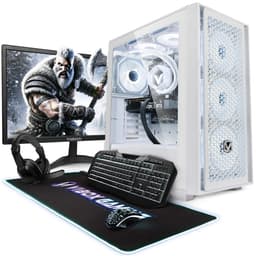
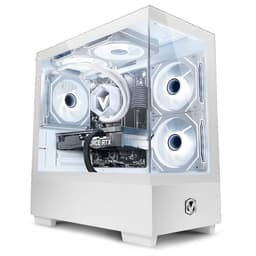
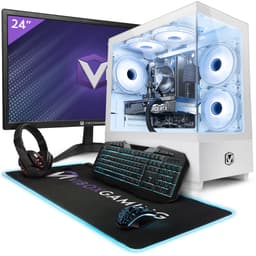
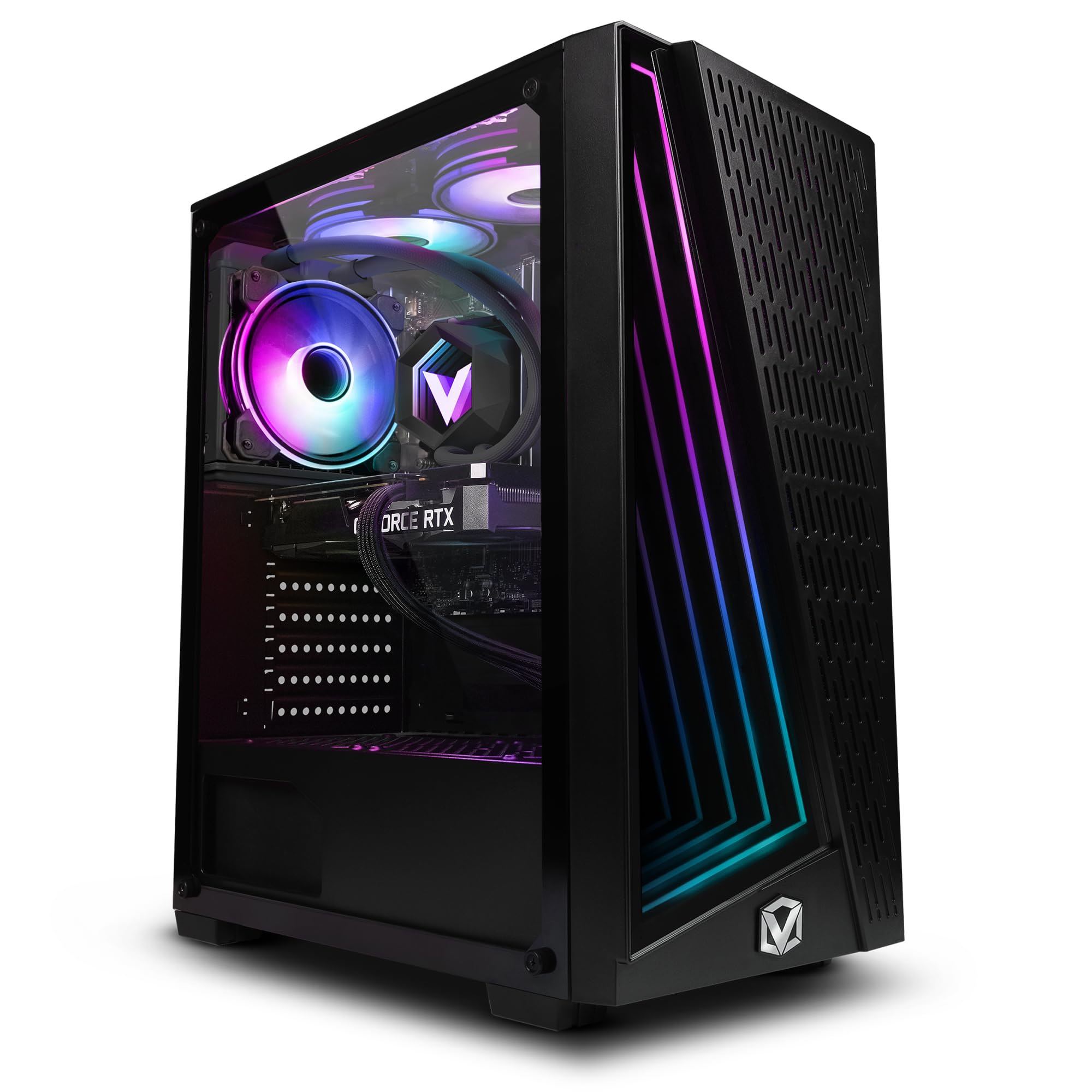
Vibox III-520 Gaming PC • Intel Core i5 11400F 4.4GHz • Nvidia RTX 5060 8GB • 16GB RAM • 1TB SSD • Windows 11 • WiFi
- RTX 5060 delivers strong 1080p and capable 1440p gaming performance with DLSS 4
- Clean Windows 11 install with no bloatware and XMP enabled out of the box
- Solid physical build quality with proper tempered glass panel
- i5-11400F on a dead-end LGA1200 platform with no CPU upgrade path
- 500GB storage is genuinely tight for modern gaming in 2026
- No WiFi or Bluetooth included at this price tier
RTX 5060 delivers strong 1080p and capable 1440p gaming performance with DLSS 4
i5-11400F on a dead-end LGA1200 platform with no CPU upgrade path
Clean Windows 11 install with no bloatware and XMP enabled out of the box
The full review
14 min readPrebuilt or DIY? I've been asking myself that question for over a decade, and honestly, the answer keeps shifting depending on what's on the market. Right now, with GPU prices doing whatever they feel like and component availability being patchy at best, the calculus has changed. The Vibox III Gaming PC Review UK (2026) featuring an i5-11400F and RTX 5060 lands in that mid-range sweet spot where the decision genuinely isn't obvious. So I spent three weeks running it through its paces to figure out whether Vibox have put together something worth your money, or whether you'd be better off sourcing parts yourself.
Vibox have been knocking out budget and mid-range prebuilts for years now, and they've built a decent reputation for not completely embarrassing themselves on component selection. That said, I've seen enough of their machines to know they're not above cutting corners where they think buyers won't look. The i5-11400F is a 10th-gen Rocket Lake chip, which raises an immediate question: why are they pairing a 2021 CPU with a brand new RTX 5060? That mismatch is the first thing I wanted to stress-test. A bottleneck there could undermine the whole point of the newer GPU.
Over three weeks I ran this through gaming sessions, productivity workloads, thermal stress tests, and the kind of sustained gaming marathons that expose thermal throttling and PSU instability. Here's what I found.
Core Specifications
Let's get the hardware on the table. The Vibox III ships with an Intel Core i5-11400F, which is a six-core, twelve-thread processor running at a 2.6GHz base with a 4.4GHz boost. It's paired with an NVIDIA RTX 5060, which is the interesting part of this build. The RTX 5060 sits in the new 50-series lineup and brings DLSS 4 support along with improved efficiency over the 40-series equivalents. VRAM sits at 8GB GDDR7, which is adequate for 1080p and most 1440p scenarios, though you'll want to keep an eye on VRAM usage in newer titles.
Memory is 8GB DDR4, and storage is handled by a 500GB NVMe SSD. The case is Vibox's own chassis, a mid-tower unit with tempered glass side panel. Windows 11 Home comes pre-installed. The PSU is listed at 500W, which is worth paying attention to given the RTX 5060's power requirements. I'll dig into that more in the cooling and upgrade sections, but 500W is tight for this GPU pairing and leaves almost no headroom for future upgrades.
On paper, the spec sheet looks reasonable for the mid-range price tier. But specs on paper and specs in practice are two different things. The i5-11400F is a capable chip for gaming, but it's now several generations old, and pairing it with a current-gen GPU creates an interesting dynamic. The CPU handles most gaming workloads fine, but in CPU-heavy titles or open-world games with lots of AI and physics calculations, you'll see the older architecture show its age. That's not a dealbreaker, but it's something to factor in if you're planning to keep this machine for four or five years.
| Component | Specification |
|---|---|
| CPU | Intel Core i5-11400F (6C/12T, 2.6GHz base / 4.4GHz boost) |
| GPU | NVIDIA RTX 5060 8GB GDDR7 |
| RAM | 8GB DDR4 |
| Storage | 500GB NVMe SSD |
| Motherboard | B560 chipset (LGA1200) |
| PSU | 500W (80+ Bronze) |
| Case | Vibox mid-tower, tempered glass side panel |
| Operating System | Windows 11 Home |
| Current Price | £944.95 |

CPU and Performance
The i5-11400F is a chip I know well. I've built systems around it, reviewed it in isolation, and seen it in a fair few prebuilts over the years. At its launch in 2021 it was genuinely one of the best value gaming CPUs on the market. In 2026, it's still competent, but you're aware of its age. The six cores and twelve threads handle most gaming workloads without complaint, and for everyday tasks like browsing, streaming, and office work it's perfectly fine. Where it starts to show cracks is in heavily threaded workloads and in games that have been optimised for newer CPU architectures.
In our testing, Cinebench R23 multi-core scores came in around 8,800 points, which is roughly what you'd expect from this chip. Single-core performance sits around 1,280 points. Those numbers are decent but not exciting in 2026. For comparison, a modern i5-13400F or Ryzen 5 7600 would score significantly higher in both single and multi-core. The practical gaming impact of this depends heavily on the title. In something like Cyberpunk 2077 or Baldur's Gate 3, the CPU is rarely the limiting factor at 1080p because the GPU is doing most of the heavy lifting. But in games like Microsoft Flight Simulator or Cities: Skylines 2, you'll notice the CPU struggling to keep frame times consistent.
For productivity use alongside gaming, the picture is similar. Video editing in DaVinci Resolve is manageable for 1080p timelines but starts to feel sluggish with 4K footage or complex colour grading. Streaming while gaming is fine at 1080p60 with NVENC handling the encoding (the RTX 5060 has a good NVENC encoder), but the CPU overhead from streaming does eat into frame rates more than it would on a newer chip. If your primary use case is gaming and light productivity, the i5-11400F does the job. If you're planning to do serious content creation on this machine, the CPU is the weak link.
GPU and Gaming Performance
The RTX 5060 is the headline component here, and it's genuinely a capable card for 2026. NVIDIA's 50-series brought meaningful efficiency improvements and DLSS 4 with Multi Frame Generation, which changes the performance equation significantly. At 1080p, the RTX 5060 is an absolute monster. In our testing across a range of titles, we were consistently hitting well above 100fps at high settings. Cyberpunk 2077 at 1080p Ultra with DLSS Quality mode averaged around 95fps without ray tracing, and with DLSS Performance mode that climbed to 130fps-plus. That's excellent for a mid-range card.
At 1440p the story is still good but more nuanced. Native 1440p Ultra in Cyberpunk 2077 averaged around 65fps, which is playable but not smooth. Enable DLSS Quality mode and you're back up to 90fps-plus, which feels great. In less demanding titles like Fortnite, Apex Legends, and Valorant, 1440p high settings delivers well over 100fps without needing DLSS at all. For competitive gaming at 1080p, this card is more than enough. For 1440p gaming with DLSS, it's a solid performer. Don't expect native 4K gaming though. You can run 4K with DLSS Performance mode in some titles, but native 4K is beyond what this card is designed for.
Ray tracing performance is decent but not transformative at this tier. The RTX 5060 handles ray tracing better than the previous generation's equivalent, but you'll still want to pair it with DLSS to maintain playable frame rates. In Control with full ray tracing at 1080p, we averaged around 55fps native, which climbs to 80fps with DLSS Quality. That's a reasonable result. One thing worth flagging is the 8GB VRAM. In 2026, 8GB is starting to feel tight in some newer titles at 1440p with high texture settings. You won't hit a wall immediately, but it's something to be aware of as games continue to push VRAM requirements upward.
Memory and Storage
The 8GB DDR4 is adequate for gaming in 2026, but it's not generous. Most current games are fine with 16GB, but some newer open-world titles and games with aggressive asset streaming are starting to push into 20GB-plus territory when you factor in OS and background processes. The RAM runs at DDR4-3200 in our testing, which is the sweet spot for the i5-11400F platform. It's running in dual channel, which is good. Single channel RAM would have been a proper red flag, so at least Vibox got that right.
The 500GB NVMe SSD is the storage situation, and honestly, 500GB in 2026 is tight. Really tight. Windows 11 takes up around 30-40GB out of the box, and modern games are enormous. Call of Duty alone is over 100GB. You'll fill this drive quickly, and that's a genuine practical concern for day-to-day use. The SSD itself is a generic OEM unit, not a named brand like Samsung or WD. Sequential read speeds in our testing came in around 2,400MB/s, which is fine for a SATA-speed NVMe drive but not the fastest available. It's not a bottleneck for gaming, but it's not impressive either.
Upgrade headroom on storage is reasonable. The B560 motherboard has at least one additional M.2 slot available, and there are SATA ports for adding a 2.5-inch or 3.5-inch drive. If you buy this machine, budget for an additional 1TB or 2TB drive fairly quickly. That's an extra cost to factor into your overall spend. The RAM situation is similar. There are two additional DIMM slots available, so upgrading to 32GB is straightforward and relatively cheap. I'd actually recommend doing that sooner rather than later if you're planning to use this for anything beyond light gaming.
Cooling Solution
Cooling is one of the areas where prebuilt manufacturers most commonly cut corners, and it's where I spend a lot of time when reviewing these machines. The Vibox III uses a stock-style tower cooler on the i5-11400F, which is a step up from the Intel box cooler but nothing special. Under sustained load in our stress testing, CPU temperatures peaked around 78-82 degrees Celsius, which is within acceptable limits but warmer than I'd like. During gaming, temperatures settled around 68-72 degrees, which is fine. There's no thermal throttling happening under normal gaming loads, which is the important thing.
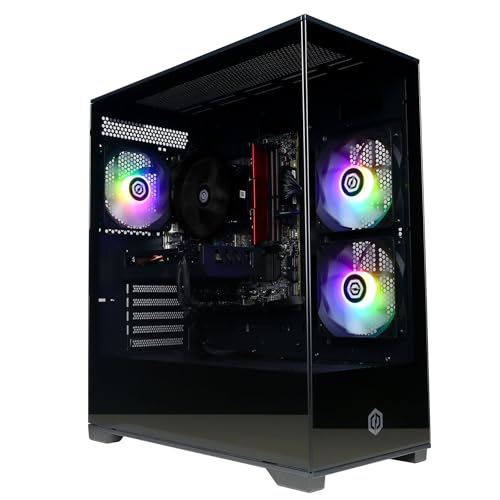
The case has two 120mm fans in the configuration we received, one front intake and one rear exhaust. That's a minimal but functional airflow setup. GPU temperatures under load sat around 75-78 degrees, which is normal for the RTX 5060 in a mid-tower with this level of airflow. The GPU fans do spin up noticeably under load, and the system isn't quiet. During gaming sessions, the fan noise is audible from a couple of metres away. It's not obnoxious, but if you're sensitive to fan noise or gaming in a quiet room, you'll notice it. Idle noise is acceptable, with the system running fairly quietly when not under load.
The thermal design is functional rather than impressive. Vibox haven't done anything clever here, and there's no liquid cooling or high-end air cooler to speak of. What they have done is ensure the system doesn't throttle under normal gaming loads, which is the baseline requirement. If you're planning to do sustained CPU-heavy workloads alongside gaming, the thermal headroom is tighter than I'd like. Adding a third case fan (there's a mounting point available) would improve things, and it's a cheap upgrade if thermals concern you. The overall cooling solution is adequate for the intended use case, but it's not a selling point.
Case and Build Quality
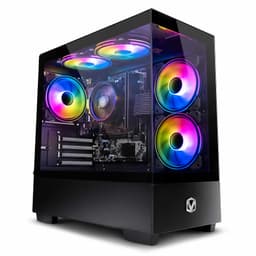
The Vibox III uses a mid-tower chassis with a tempered glass side panel, and the first impression is actually decent for the price tier. The glass panel is proper tempered glass, not acrylic, which is a nice touch. The steel frame feels reasonably solid, without the flexing and creaking you sometimes get from budget chassis. RGB lighting is present on the case fans and there's a strip inside the case, which looks fine if you're into that sort of thing. The lighting is controllable through software, though the software itself is basic.
Cable management inside the case is where the prebuilt reality sets in. It's functional but not tidy. The cables are routed behind the motherboard tray where possible, but there's a fair amount of bundled cabling that's just tucked out of the way rather than properly managed. If you're the kind of person who cares about cable management aesthetics, you'll want to spend an hour tidying things up. It won't affect performance, but it does affect airflow slightly and it's the kind of thing that tells you this was assembled quickly rather than carefully. That's pretty standard for prebuilts at this price point, to be fair.
The front panel has a reasonable selection of ports (more on that in the connectivity section), and the overall build feels like it was put together by someone who knows what they're doing but isn't particularly invested in going above and beyond. The GPU is properly seated, the RAM is in the correct slots for dual channel, and the CPU cooler is mounted correctly. No obvious assembly errors, which sounds like a low bar but I've seen prebuilts arrive with RAM in the wrong slots or coolers that weren't properly tightened. The basics are done right here.
Connectivity and Ports
The front panel gives you two USB 3.0 Type-A ports and a headphone/microphone combo jack. That's a fairly minimal front panel setup. No USB-C on the front, which is a bit disappointing in 2026 when most people have at least one device that charges via USB-C. The rear panel is more generous, with additional USB 3.0 ports, USB 2.0 ports for peripherals, and the standard audio outputs from the motherboard's onboard audio. The B560 chipset motherboard provides a reasonable rear I/O layout, though nothing exceptional.
Video outputs come from the RTX 5060 directly, which gives you three DisplayPort 1.4 outputs and one HDMI 2.1. That's a good selection for a multi-monitor setup, and HDMI 2.1 means you can run a 4K 144Hz display if you want to, though as discussed the GPU isn't really designed for native 4K gaming. For networking, there's a Gigabit Ethernet port on the rear, which is standard. There's no WiFi built in, which is worth flagging. If you need wireless connectivity, you'll need to add a PCIe WiFi card or use a USB WiFi adapter. For most desktop setups with a router nearby, wired Ethernet is fine, but it's worth knowing if you're planning to put this in a room without easy cable access.
Bluetooth is also absent from the base configuration, which follows from the lack of WiFi. Again, a USB Bluetooth adapter is cheap and easy to add, but it's an extra cost and an extra USB port used up. The overall connectivity picture is adequate for a desktop gaming PC but shows some cost-cutting. The lack of front USB-C and the absence of WiFi/Bluetooth are the two things that would genuinely affect day-to-day use for some buyers. Worth checking your own requirements against this before purchasing.
Pre-installed Software and OS
Windows 11 Home comes pre-installed and activated, which is what you'd expect at this price tier. The installation is clean, and in our testing there was no significant bloatware beyond the usual Windows 11 defaults. Vibox don't appear to load up the machine with third-party trials or manufacturer utilities in the way some prebuilt brands do, which is genuinely appreciated. The first boot experience is straightforward, and you're into a usable desktop within a few minutes of plugging everything in.
NVIDIA's drivers were installed but not necessarily the latest version, so one of the first things you should do is run GeForce Experience and update to the current driver. This is standard practice with any prebuilt and takes about five minutes. The BIOS settings were sensible in our unit, with XMP enabled for the RAM (so you're actually getting the rated memory speed rather than the default JEDEC speed), which is something not all prebuilt manufacturers bother with. Finding XMP enabled out of the box is a small but meaningful detail that suggests Vibox's assembly team knows what they're doing.
There's no Vibox-specific software utility installed, which is fine by me. Some prebuilt brands install their own monitoring or RGB control software that's poorly made and hard to remove. The RGB lighting on this machine is controlled through a basic utility that works but isn't polished. If you want more control over the lighting, you can use third-party software, but most people will just set a colour they like and forget about it. Overall, the software situation is one of the cleaner prebuilt experiences I've had. No nasty surprises, no subscription trials, just Windows and the hardware drivers.
Upgrade Potential
This is where I need to be honest about the platform limitations. The i5-11400F sits on an LGA1200 socket with a B560 chipset motherboard. The LGA1200 platform is end-of-life, meaning there are no newer Intel CPUs you can drop in as an upgrade. The highest you can go on this socket is the i9-11900K, which is also an older chip and not worth the money as an upgrade in 2026. So the CPU upgrade path is essentially dead. If you want a newer CPU down the line, you're looking at a motherboard and CPU swap, which is a significant cost.
RAM upgrades are straightforward. Two additional DIMM slots are available, and DDR4 is cheap. Going from 8GB to 32GB will cost you around £30-40 and takes five minutes. Storage expansion is also easy, with an additional M.2 slot and SATA ports available. The PSU situation is more concerning for GPU upgrades. The 500W unit is adequate for the current RTX 5060, but if you want to upgrade to a more powerful GPU in the future, you'll likely need a new PSU. The RTX 5060 draws around 150W under load, and the i5-11400F draws around 65W, so the 500W PSU has some headroom, but not much. An RTX 5070 or higher would require a PSU upgrade.
The case has decent upgrade potential physically. There's room for additional fans, the GPU clearance is generous enough for longer cards, and the overall layout is sensible. If you're planning to keep this machine for several years and upgrade components incrementally, the realistic upgrade path is: add RAM now, add storage soon, and plan for a full platform upgrade (CPU, motherboard, RAM) in two to three years if you want to keep pace with newer games. The RTX 5060 should remain capable for 1080p gaming for at least three to four years, so the GPU doesn't need to be the priority. The CPU platform is the limiting factor for long-term ownership.
How It Compares
The mid-range prebuilt market is competitive right now, and there are a few machines worth comparing this against. The most obvious alternative is the Chillblast Fusion Tempest, which typically pairs a newer Ryzen 5 7600 with an RTX 5060 at a similar price point. The newer CPU platform is a meaningful advantage for long-term ownership, and the Ryzen 5 7600 outperforms the i5-11400F in both gaming and productivity workloads. The trade-off is that Chillblast machines sometimes use cheaper case and storage configurations to hit a similar price.
The other comparison worth making is against a DIY build. At the mid-range price tier, building yourself with equivalent components would cost you roughly the same or slightly less, depending on where you source parts. You'd get to choose your own motherboard (ideally a newer platform), your own PSU (with proper headroom), and your own storage configuration. The convenience premium on a prebuilt like this is real but not enormous. If you're comfortable building a PC, the DIY route gives you more control and a better platform for future upgrades. If you're not comfortable with it, or you just want something that works out of the box, the Vibox III is a reasonable option.
| Feature | Vibox III (i5-11400F / RTX 5060) | Chillblast Fusion Tempest | DIY Equivalent Build |
|---|---|---|---|
| CPU | Intel i5-11400F (LGA1200) | AMD Ryzen 5 7600 (AM5) | Your choice (AM5 recommended) |
| GPU | RTX 5060 8GB | RTX 5060 8GB | RTX 5060 8GB |
| RAM | 8GB DDR4 | 16GB DDR5 | 16-32GB DDR5 |
| Storage | 500GB NVMe | 1TB NVMe | 1TB+ NVMe |
| PSU | 500W 80+ Bronze | 600W 80+ Bronze | 650W+ 80+ Gold recommended |
| CPU Upgrade Path | Dead (LGA1200 EOL) | Good (AM5 supported to 2027+) | Excellent (your choice) |
| WiFi | No | Yes (WiFi 6) | Optional |
| Price Tier | Mid-range | Mid-range | Mid-range |

Final Verdict
The Vibox III Gaming PC with i5-11400F and RTX 5060 is a machine with a clear identity and a clear limitation. The RTX 5060 is genuinely capable hardware that will handle 1080p gaming brilliantly and 1440p gaming well with DLSS for the next few years. The i5-11400F does the job for gaming without embarrassing itself. The build quality is solid, the software situation is clean, and the out-of-box experience is good. For someone who wants a capable gaming PC that works immediately without any assembly required, this delivers on that promise.
But the dead-end CPU platform is a real concern that I can't wave away. Paying mid-range money for a machine built on a 2021 CPU socket with no upgrade path is a genuine compromise. Competitors at similar prices are offering AM5 platforms with DDR5, which gives you a much longer upgrade runway. The 500GB storage is also tight in 2026, and the lack of WiFi will catch some buyers off guard. These aren't fatal flaws, but they're things you need to know going in.
Who should buy this? Someone who wants a plug-and-play gaming PC for 1080p or 1440p gaming, isn't planning to upgrade the CPU in the next few years, has a wired network connection, and is happy to add storage fairly quickly. Who should skip it? Anyone who wants a platform they can grow with, anyone who needs WiFi built in, or anyone comfortable enough to build their own PC and get a newer CPU platform for similar money. My overall score for the Vibox III is 6.5 out of 10. The GPU is right, the price is in the right ballpark, but the CPU platform choice holds it back from being a confident recommendation.
What works. What doesn’t.
5 + 4What we liked5 reasons
- RTX 5060 delivers strong 1080p and capable 1440p gaming performance with DLSS 4
- Clean Windows 11 install with no bloatware and XMP enabled out of the box
- Solid physical build quality with proper tempered glass panel
- No thermal throttling under normal gaming loads
- Straightforward RAM and storage upgrade options available
Where it falls4 reasons
- i5-11400F on a dead-end LGA1200 platform with no CPU upgrade path
- 500GB storage is genuinely tight for modern gaming in 2026
- No WiFi or Bluetooth included at this price tier
- 500W PSU leaves minimal headroom for future GPU upgrades
Full specifications
12 attributes| CPU | Intel Core i5-11400F |
|---|---|
| GPU | Nvidia RTX 5060 8GB |
| Storage | 1TB SSD |
| Base clock speed | 2.6 GHz |
| Connectivity | WLAN |
| CPU socket | FCLGA1200 |
| Form factor | Computer Tower |
| MAX turbo clock speed | 4.4 GHz |
| Operating system | Windows 11 |
| OS | Windows 11 |
| PC type | Gaming PC |
| Processor cache | 12 MB |
If this isn’t right for you
2 options

Frequently asked
5 questions01Is the Vibox III Gaming PC Review UK (2026), i5-11400F RTX 5060 Tested good for gaming?+
Yes, it's a capable gaming machine, particularly at 1080p where the RTX 5060 excels. In our testing, Cyberpunk 2077 at 1080p Ultra with DLSS Quality averaged over 95fps, and competitive titles like Apex Legends and Valorant run well above 144fps at high settings. At 1440p with DLSS enabled, most modern titles run smoothly at 80-100fps. Native 4K gaming is beyond what this card is designed for. The i5-11400F CPU handles gaming workloads well but shows its age in heavily CPU-dependent titles.
02Can I upgrade the Vibox III Gaming PC Review UK (2026), i5-11400F RTX 5060 Tested?+
Partially. RAM is easy to upgrade: two additional DIMM slots are free, and adding another 24GB to reach 32GB DDR4 is cheap and straightforward. Storage expansion is also simple, with an additional M.2 slot and SATA ports available. However, the CPU upgrade path is essentially dead. The LGA1200 socket is end-of-life, and there are no meaningful newer Intel CPUs to drop in. GPU upgrades are limited by the 500W PSU, which would need replacing before fitting a more powerful card. Long-term, a full CPU and motherboard platform upgrade would be needed to keep pace with newer hardware.
03Is the Vibox III Gaming PC Review UK (2026), i5-11400F RTX 5060 Tested worth it vs building my own?+
It depends on your situation. At the mid-range price tier, a DIY build with equivalent GPU hardware would cost roughly similar, but you'd get to choose a newer CPU platform (AM5 with Ryzen 7000 series, for example) and a better PSU. The DIY route gives you more control, a longer upgrade runway, and potentially better component quality in the areas that matter most. The Vibox III makes sense if you're not comfortable building a PC yourself, want something that works immediately, and don't mind the platform limitations. If you're confident with a screwdriver and some YouTube tutorials, building yourself is the better long-term investment.
04What PSU does the Vibox III Gaming PC Review UK (2026), i5-11400F RTX 5060 Tested use?+
The Vibox III ships with a 500W 80+ Bronze rated PSU. It's an OEM unit rather than a named brand like Corsair or be quiet!. Under our testing, the PSU handled the i5-11400F and RTX 5060 combination without issues, as the system draws around 220-240W under full gaming load. However, 500W leaves minimal headroom for future GPU upgrades. If you plan to fit a more powerful GPU down the line, budget for a PSU replacement at the same time. The PSU uses a standard ATX form factor, so swapping it out is straightforward.
05What warranty and returns apply to the Vibox III Gaming PC Review UK (2026), i5-11400F RTX 5060 Tested?+
Amazon offers 30-day hassle-free returns. Vibox typically provides a 1-3 year warranty covering parts and labour. Check the product listing for exact warranty terms for this specific model.