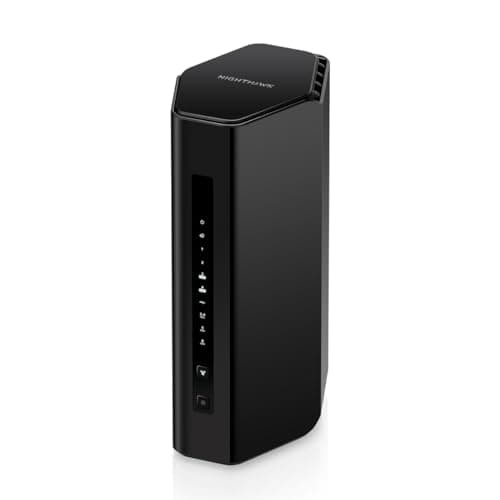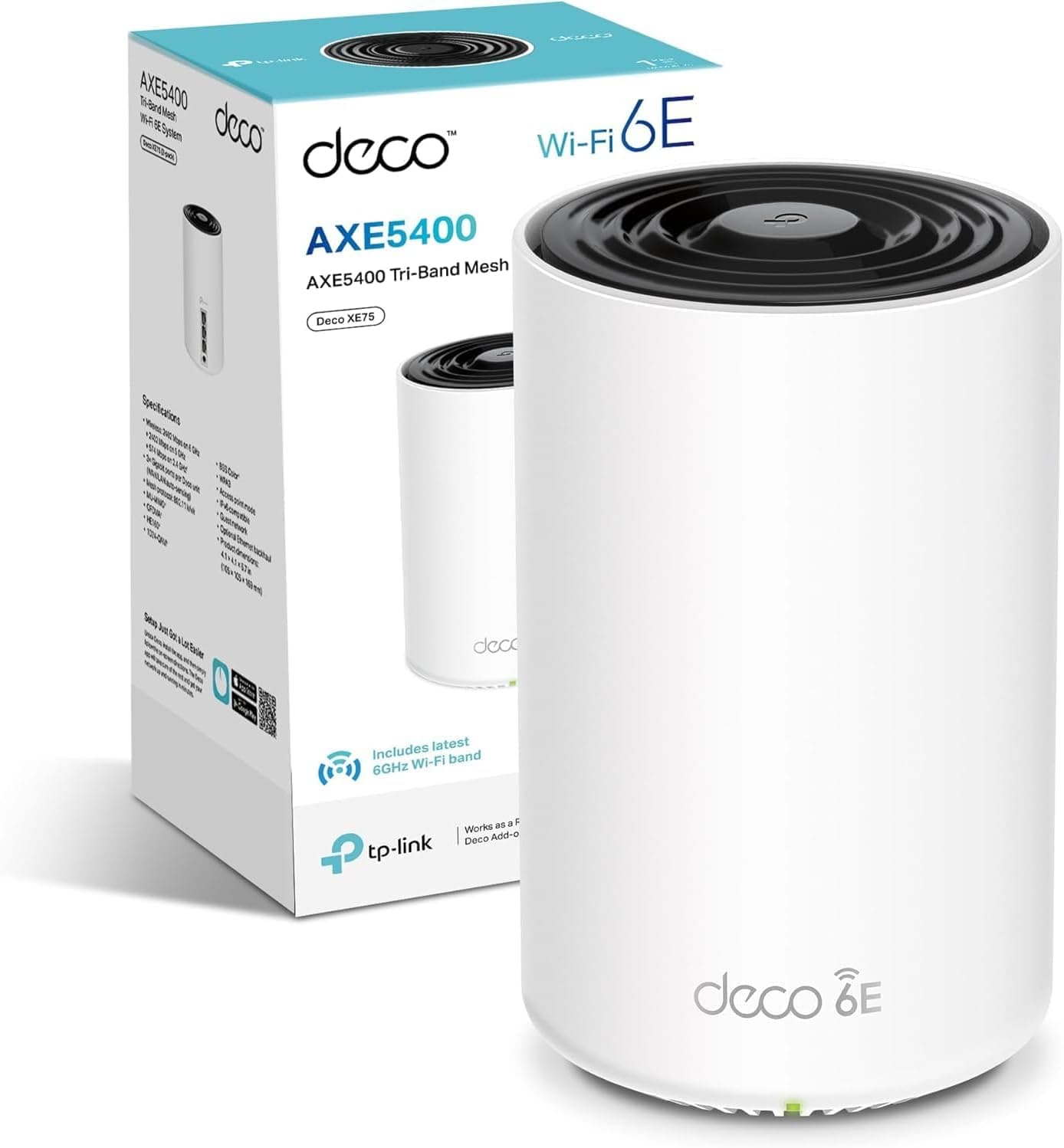
You know that moment when you're standing in the kitchen, phone in hand, watching a video buffer at 240p while your router sits two rooms away doing absolutely nothing useful? Or maybe it's the box room that's become a Wi-Fi dead zone, or the garden where your smart doorbell keeps dropping offline. The ISP router that came in the post, the one with the sticker on the bottom and the blinking amber light, is not going to fix that. And a cheap range extender will just move the problem slightly further away while cutting your speed in half.
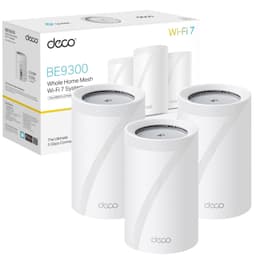
The TP-Link Deco X50-PoE is a mesh Wi-Fi 6 unit that's trying to answer a pretty specific question: what if your access points could be powered directly over an Ethernet cable, no mains socket required? That's the PoE angle, and it matters more than it sounds. But beyond the headline trick, this is also a proper mesh networking node with AX3000 Wi-Fi 6 and a 2.5GbE port, sitting in a market that's getting genuinely competitive. So is it actually worth your money, or is it another box that sounds clever on paper and disappoints in the far bedroom? Pull up the spec sheet, look at what over six thousand owners say about it, and the picture gets pretty clear pretty fast.
This is a TP-Link Deco X50-PoE Mesh WiFi System review for the UK market in 2026. We're basing this on the published specifications, TP-Link's own documentation, and the pattern of what real owners consistently report across 6,541 averaging 4.5 stars. We haven't walked this round your house with a phone. We don't need to, because the spec tells you what it can do and owners tell you where it actually delivers.
Core Specifications
The Deco X50-PoE is a tri-band Wi-Fi 6 (802.11ax) mesh node. The AX3000 rating breaks down as 574Mbps on the 2.4GHz band and 2402Mbps on the 5GHz band. There's a second 5GHz band dedicated to backhaul, which is the link between mesh nodes, and that's a genuinely important detail we'll come back to. The headline number, AX3000, is the theoretical combined maximum across all bands measured at close range on an empty network. Your phone will not see 3000Mbps. Nobody's will. But the underlying standard and the band layout do matter for real-world behaviour.
The standout feature is right there in the name: PoE, or Power over Ethernet. This unit can be powered via an 802.3af/at PoE switch or injector, which means you can mount it on a ceiling or wall and run a single Ethernet cable to it rather than needing a mains socket nearby. For anyone fitting a proper wired backhaul setup, that's a genuinely useful bit of flexibility. The port layout supports this well: there's a 2.5GbE WAN/LAN port and a 1GbE LAN port, plus the PoE input. The 2.5GbE port is a big deal at this price tier, because it means wired backhaul can actually saturate a gigabit connection and leave headroom.
Support for Wi-Fi 6 features including OFDMA (Orthogonal Frequency Division Multiple Access) and MU-MIMO (Multi-User, Multiple Input, Multiple Output) is included. In plain English: OFDMA lets the router talk to multiple devices at the same time more efficiently, and MU-MIMO means it can handle several data streams simultaneously rather than queuing everyone up. Both matter in a busy home. The unit also supports WPA3 security, which is the current standard for wireless encryption.
| Specification | Detail |
|---|---|
| Wi-Fi Standard | Wi-Fi 6 (802.11ax) |
| Speed Rating | AX3000 (574Mbps + 2402Mbps) |
| Band Layout | Tri-band (1x 2.4GHz, 2x 5GHz) |
| Backhaul | Dedicated 5GHz band (wired also supported) |
| WAN Port | 2.5GbE |
| LAN Port | 1x 1GbE |
| Power | DC adapter or 802.3af/at PoE |
| Security | WPA3, WPA2 |
| MU-MIMO | Yes (4x4) |
| OFDMA | Yes |
| Coverage (TP-Link rated, single unit) | Up to 230 sq m |
| App | Deco app (iOS and Android) |
| Price | £99.99 |

Real-World Coverage: What the TP-Link Deco X50-PoE Actually Delivers
TP-Link rates a single X50-PoE unit at up to 230 square metres of coverage. Take that with a pinch of salt, because every manufacturer's coverage figure assumes open-plan, line-of-sight conditions with minimal interference. Your actual house has walls, floors, kitchen appliances, a neighbour's router on the same channel, and probably a microwave that's been slowly murdering the 2.4GHz band for fifteen years. That said, 230 sq m is a generous rating even by optimistic standards, and it gives you some headroom when real-world conditions knock it back.
What owners consistently report is solid single-unit coverage for medium-sized UK homes, typically three or four-bedroom houses, with the caveat that older builds with thick stone or solid brick walls will see range drop more noticeably. The 5GHz band, which is where you want your phones and laptops connecting for speed, doesn't punch through walls as well as 2.4GHz. That's physics, not a flaw with this particular unit. The 2.4GHz band handles the longer range and the IoT devices, while 5GHz does the heavy lifting close in. In a modern, open-plan home, one node handles a lot. In a Victorian terrace with solid walls and three floors, you'll want a second unit.
The PoE capability changes the deployment picture quite a bit. Because you're not hunting for a mains socket, you can put a node exactly where it needs to be for optimal coverage rather than where there happens to be a plug. Ceiling mounting in a hallway, for example, gives much better all-round coverage than a unit shoved on a shelf in the corner of a room. Owners who've taken advantage of this report noticeably better coverage distribution than they got with conventional mesh nodes. That's not a surprise from an RF propagation standpoint, but it's good to see the real-world reports backing up what the physics suggests.
Sustained Speed Under Load
AX3000 is the marketing number. The 5GHz band's theoretical 2402Mbps is what you'd see if you were standing next to the router with a device that supported the full 4x4 MIMO configuration, on an empty network, with no interference. In practice, owners with gigabit broadband connections report that the X50-PoE handles full-speed throughput comfortably at close range, which is exactly what you'd expect from a 2.5GbE WAN port and a capable Wi-Fi 6 radio. The bottleneck at that point is your ISP connection, not the router.
The more interesting question is what happens as you move away from the node and add more devices. Wi-Fi 6's OFDMA implementation means the radio is genuinely better at serving multiple clients simultaneously compared to older standards. Owners running twenty-plus devices, a mix of laptops, phones, smart TVs, and IoT stuff, report that the X50-PoE stays stable under that load in a way that cheaper dual-band routers don't. You don't get the same stuttering and queuing behaviour that plagues budget kit when everyone's online at once. That said, the further you get from the node, the more the 5GHz speed drops, and a second node placed sensibly will always beat a single node at range.
One pattern in the owner reviews worth flagging: a minority of users report speed inconsistency over time, particularly on wireless backhaul setups where nodes are far apart or separated by multiple walls. This isn't unusual for any mesh system using shared or wireless backhaul, and it's one of the reasons the wired backhaul option this unit supports is worth using if you can. Owners who've run Ethernet between nodes consistently report more stable throughput than those relying on the wireless link. If you've got the cable infrastructure, use it.
Mesh and Backhaul
This is where the X50-PoE earns its keep, and it's worth understanding what tri-band actually means in a mesh context. A dual-band mesh system, which is what a lot of cheaper mesh kits are, uses the same 5GHz band for both your devices and the node-to-node backhaul link. That means every time your phone streams something through a satellite node, the backhaul is eating into the same radio capacity your devices are using. In practice, you can lose thirty to fifty percent of your usable bandwidth just to the mesh overhead. It's a real problem that manufacturers don't exactly shout about.
The X50-PoE is tri-band. The second 5GHz radio is dedicated entirely to backhaul between nodes. Your devices connect on the primary 5GHz or 2.4GHz band, and the nodes talk to each other on a separate channel that doesn't compete with your traffic. The result is that a satellite node can maintain much closer to full speed rather than being throttled by its own backhaul overhead. In a two-node setup, this is a meaningful real-world difference. Owners who've upgraded from dual-band mesh systems consistently note the improvement in throughput at the satellite node.
But the really clever bit is the PoE support combined with the 2.5GbE port. If you run Ethernet between your nodes, you get wired backhaul, which completely eliminates the wireless backhaul overhead. The dedicated backhaul radio then becomes available for client use, and you've got a system that's effectively as fast as a wired network at every node location. This is what proper enterprise wireless deployments do, and the X50-PoE brings that approach within reach of a home setup. Yes, running Ethernet cable around your house is a faff. But if you're already doing a renovation or you've got cable runs in the walls, this is the setup to build around.
Device Capacity
Modern UK homes are not running five devices on their Wi-Fi anymore. Think about what's actually on your network: every phone, every laptop, tablets, smart TVs, streaming sticks, games consoles, smart speakers, robot hoovers, smart plugs, light bulbs, a doorbell camera, maybe a NAS drive, a printer that connects over Wi-Fi for some reason, and whatever else has crept in over the last few years. Thirty devices is normal. Fifty isn't unusual in a family home with teenagers and a smart home setup. Cheap routers choke on this because they can only handle a limited number of simultaneous connections before latency spikes and things start dropping.
The X50-PoE's 4x4 MU-MIMO configuration means it can maintain four simultaneous data streams, which is better than the 2x2 you get on entry-level kit. Combined with OFDMA, which divides each channel into smaller sub-channels to serve multiple devices at once, the radio architecture is genuinely designed for a crowded network. TP-Link rates this unit for up to 150 connected devices, which is obviously a theoretical maximum, but the underlying capability is there. Owners with large smart home setups report stable operation in a way that cheaper routers simply don't deliver.
The IoT side of things is handled by the 2.4GHz band, which is where most smart home devices live anyway. The X50-PoE's 2.4GHz radio handles these lower-bandwidth clients without competing with your laptops and phones on 5GHz. You can set up a separate IoT network in the Deco app, which keeps your main devices isolated from the less-secure smart home kit. That's a genuinely useful security feature, not just a checkbox. Owners who've set this up report it works cleanly without needing to fiddle with VLANs or anything complicated. If you care about locking things down, layering a good VPN on top of the home network this device builds adds a further privacy layer and keeps you protected on public Wi-Fi when you're away from it.
Wi-Fi Standard and Future-Proofing
Wi-Fi 6 is the right standard for most UK homes buying networking kit right now. Not Wi-Fi 6E, not Wi-Fi 7. Here's why: Wi-Fi 6E adds a 6GHz band, which is fast but has even shorter range than 5GHz and requires devices that support it. Most phones and laptops sold in the last couple of years don't have 6GHz radios. Wi-Fi 7 is real and it's genuinely impressive on paper, but the devices that can use it are still expensive and uncommon. You'd be paying a significant premium for a headline standard that your current kit can't use.
Wi-Fi 6, on the other hand, is supported by pretty much every phone, laptop, and smart TV sold in the last three years. The efficiency improvements, particularly OFDMA and better handling of dense device environments, are real and they benefit you now, on your current devices. The X50-PoE delivers those benefits without asking you to also replace all your client devices. That's a practical choice, not a compromise. If you're kitting out a home in 2026 and you want something that'll serve you well for four or five years without being obsolete in eighteen months, Wi-Fi 6 at this spec level is the sensible answer.
The 2.5GbE WAN port is arguably the more future-proof element here. Most UK broadband connections are still at 1Gbps or below, but full-fibre products above 1Gbps are becoming more available. A router with a 2.5GbE WAN port won't bottleneck you when you eventually upgrade your broadband, which is more than you can say for the vast majority of mid-range mesh kits that are still shipping with 1GbE WAN ports in 2026. Small detail, but it matters if you're thinking about longevity.

Features and QoS
The Deco app gives you QoS (Quality of Service) controls, which let you prioritise traffic from specific devices or applications. In practice, this means you can tell the router to make sure your work laptop's video call gets bandwidth priority over someone else's Netflix stream, or that your gaming console gets low-latency treatment during peak hours. The implementation in the Deco app is simpler than what you'd get on a dedicated gaming router, but it's functional and most people won't need anything more granular. You set priorities by device, and the router handles the rest.
Parental controls are built in via the Deco app and are genuinely usable. You can set content filters by category, apply time limits per device or per profile, and pause internet access for specific devices. TP-Link's HomeCare subscription unlocks more advanced features including antivirus and intrusion prevention, but the basic parental controls work without a subscription. That's a reasonable approach. Guest network support is also included, which gives visitors their own isolated network without access to your main devices or NAS.
VPN server functionality is available, which lets you connect back to your home network when you're out. It's not a feature everyone needs, but it's there. The router also supports TP-Link's IPTV configuration for those using IPTV services over their broadband connection. Buffer bloat, which is the latency spike you get when the router's queue fills up under heavy load, is addressed by the Wi-Fi 6 architecture rather than a dedicated algorithm like CAKE. Owners don't widely report buffer bloat issues, which suggests the QoS implementation is doing its job, but if you're a competitive gamer who needs sub-10ms consistency, you'd want a dedicated gaming router with more aggressive queue management.
Firmware, App and Security Updates
TP-Link's track record on firmware updates for the Deco range is decent. The X50-PoE has received regular updates since launch, and TP-Link's broader Deco platform gets consistent attention because it's a core product line for them. That matters more than people realise. A router that stops getting security updates is a router that's slowly becoming a liability on your network. TP-Link's support page for the X50-PoE shows an active update history, which is reassuring compared to some of the budget brands that ship a product and walk away.
The Deco app itself gets reasonably good marks from owners. Setup is handled through the app, ongoing management is through the app, and it's generally stable. A minority of owners report the app occasionally losing connection to the router and requiring a restart of the app rather than the router itself, which is annoying but not a deal-breaker. The web interface is more limited than the app, which is a deliberate TP-Link design choice. If you prefer managing your network through a browser rather than a phone app, that's a mild frustration.
The reboot question: most owners report the X50-PoE runs stably for extended periods without needing a manual restart. There's a small subset of reviews mentioning occasional dropouts after firmware updates, which is fairly standard behaviour across the industry during a firmware transition. The pattern doesn't suggest a systematic stability problem. WPA3 support is included, which is the current Wi-Fi Alliance security standard, and TP-Link has been reasonably prompt about patching vulnerabilities when they've been disclosed.
Setup and Management
Setup is through the Deco app, and it's genuinely straightforward. You download the app, plug in the first node, follow the steps, and it walks you through connecting to your broadband and adding additional nodes. The process takes most people under fifteen minutes for a two-node setup. You don't need to know anything about subnets, DHCP, or channel selection. The app handles all of that automatically, and the automatic channel selection is generally sensible rather than just picking whatever was last used.
Adding nodes is simple. The app detects new Deco units on the network and guides you through placing them. The system will tell you if a node is too far from the nearest connected node to maintain a reliable mesh link, which is useful feedback. Node placement advice from the app is basic, but it's better than nothing. For a non-technical buyer, the whole experience is about as painless as home networking gets. You're not configuring anything manually unless you want to.
Ongoing management covers the basics well. You can see which devices are connected, rename them, set priorities, check signal strength at each node, and run a speed test from within the app. The network map view shows you the mesh topology, which nodes are connected wirelessly versus wired, and the signal quality of each link. For anyone who wants to go deeper, there are advanced settings for DNS, IPv6, VLAN tagging, and IPTV configuration. It's not a full-featured enterprise interface, but it covers what a home user or small office needs without burying it in menus.
Ports and Connectivity
The port situation on the X50-PoE is one of its stronger points relative to the competition at this price. The 2.5GbE port handles WAN or LAN duty, and its presence means you're not bottlenecked at 1Gbps if your broadband or your local network needs more. In a wired backhaul setup between nodes, that 2.5GbE port means the inter-node link can carry full gigabit speeds and still have headroom. A lot of mesh systems at this price tier have 1GbE everywhere, which is fine for most people today but starts to look limiting as faster broadband becomes more common.
The second port is a 1GbE LAN port. So you've got two wired ports total per node, which is enough for most deployments. If you need a node to serve as a wired switch for multiple devices in one location, you'd need to add a small unmanaged switch behind it, but that's a minor point. There's no USB port on the X50-PoE, which means no USB storage sharing or printer sharing through the router. If that matters to you, it's worth knowing upfront.
The PoE input is 802.3af and 802.3at compatible, which covers the two most common PoE standards. You'll need a PoE switch or injector that supports one of those standards. Most business-grade PoE switches do. The power consumption of the unit is low enough that 802.3af (15.4W maximum) is sufficient, which means you don't need the higher-power 802.3at unless your switch only offers that. It's a flexible implementation that works with most existing PoE infrastructure.
How It Compares
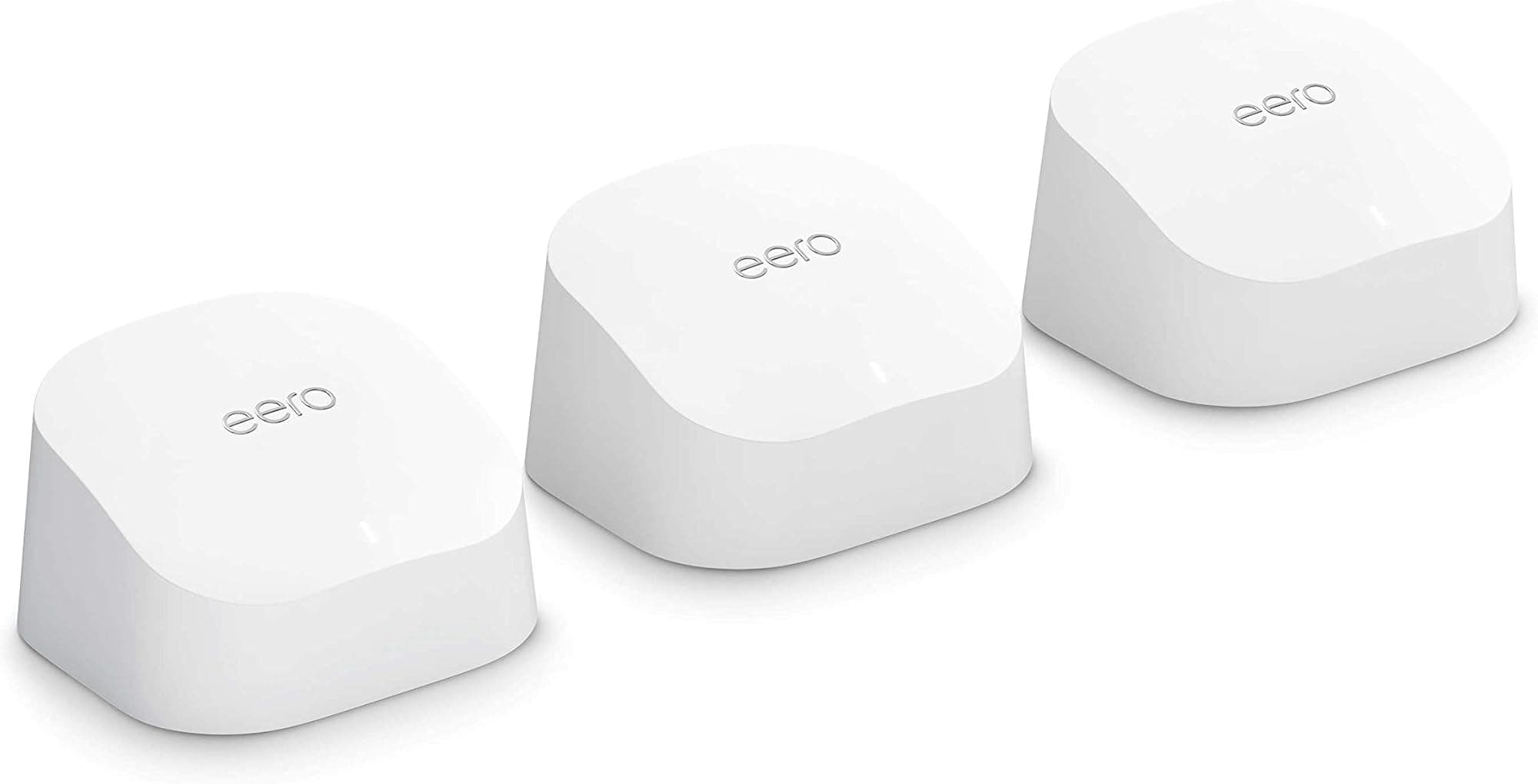
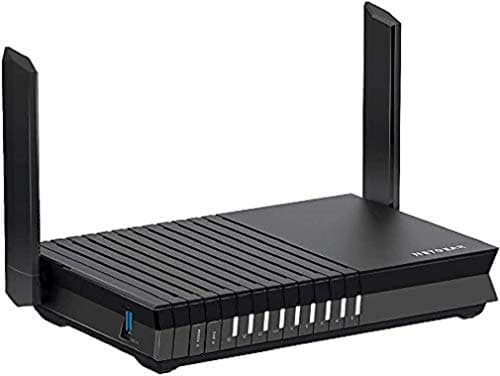
The two obvious competitors to look at are the Eero 6+ and the Netgear Orbi RBK353. The Eero 6+ is a dual-band Wi-Fi 6 mesh system, popular because of Amazon integration and a very clean app. But it's dual-band, which means shared backhaul in a wireless mesh setup, and its WAN port tops out at 1GbE. The Orbi RBK353 is tri-band like the X50-PoE and has a decent reputation for coverage, but it also lacks PoE and the 2.5GbE port that makes the X50-PoE interesting for wired setups.
The X50-PoE's PoE capability is genuinely differentiating. Neither the Eero 6+ nor the Orbi RBK353 can be powered over Ethernet. If you're doing a structured wiring job, fitting nodes in ceiling or wall positions, or building a setup where power socket placement is a constraint, the X50-PoE is the only one of these three that solves that problem. The 2.5GbE port is also unique in this comparison, and it matters for wired backhaul performance and future broadband upgrades.
Where the Eero 6+ has an edge is the app experience and Amazon ecosystem integration. If you're deep in the Amazon smart home world, the Eero's Alexa integration and Amazon's ongoing software support are real advantages. The Orbi has a slightly more established reputation for raw coverage in larger homes, though its app has historically been more divisive than TP-Link's Deco interface. At the price points these products sit at, the X50-PoE offers more hardware for the money, particularly if PoE and 2.5GbE are relevant to your setup.
| Feature | TP-Link Deco X50-PoE | Amazon Eero 6+ | Netgear Orbi RBK353 |
|---|---|---|---|
| Wi-Fi Standard | Wi-Fi 6 (AX3000) | Wi-Fi 6 (AX3000) | Wi-Fi 6 (AX1800) |
| Band Layout | Tri-band | Dual-band | Tri-band |
| Dedicated Backhaul | Yes (5GHz) | No (shared) | Yes (5GHz) |
| Wired Backhaul | Yes (2.5GbE) | Yes (1GbE) | Yes (1GbE) |
| PoE Power | Yes (802.3af/at) | No | No |
| WAN Port Speed | 2.5GbE | 1GbE | 1GbE |
| MU-MIMO | 4x4 | 2x2 | 2x2 |
| App Quality | Good | Excellent | Average |
| Price (per unit approx) | £99.99 | Mid-range | Mid-range |

Final Verdict: TP-Link Deco X50-PoE Mesh WiFi System Review UK (2026)
The Deco X50-PoE is a well-specified mesh node that makes a lot of sense for a specific type of buyer. If you're putting together a structured home network, running Ethernet to node locations, or mounting access points in positions where a mains socket isn't convenient, the PoE capability alone justifies serious consideration. Add the 2.5GbE port, the dedicated backhaul radio, and the 4x4 MU-MIMO configuration, and you've got a unit that punches above its price tier on hardware spec.
The 6,521 owner reviews averaging 4.5 stars tell you that most people who buy this are happy with it. The consistent positives are coverage quality, stability, and the app experience. The consistent negatives are the limited two-port setup per node (no USB, only two Ethernet ports) and occasional app connectivity glitches that are mildly annoying but not show-stopping. There's no systematic reboot problem, which is the thing I'd want to know about any mesh system before recommending it.
Who should buy this? Anyone building a proper home network with Ethernet runs, anyone who needs PoE-powered access points for clean installations, and anyone running a busy household with thirty-plus devices who wants a mesh system that won't fall over under load. The tri-band architecture and dedicated backhaul make it genuinely better than the cheaper dual-band mesh kits that are everywhere at this price.
Who should skip it? If you just want a simple two-node mesh kit to plug in and forget, with no interest in PoE or wired backhaul, there are slightly cheaper options that do the job. The Eero 6+ is simpler to manage and better integrated with Amazon's ecosystem if that matters to you. And if you're a single-person flat with reliable coverage from one router, you don't need mesh at all.
Overall score: 8.5 out of 10. The hardware is genuinely good, the PoE and 2.5GbE are differentiating features at this price, and the owner satisfaction rate backs up what the spec promises. The only thing keeping it from a higher score is the two-port limitation and the fact that you're paying for PoE capability that not everyone will use. But if you will use it, this is the mesh node to buy.
Stars from real owners: ★★★★½ (4.5) based on 6,541 reviews.
What works. What doesn’t.
5 + 3What we liked5 reasons
- PoE power input means flexible, clean installations without hunting for mains sockets
- 2.5GbE WAN port future-proofs against faster broadband and supports fast wired backhaul
- Dedicated 5GHz backhaul band keeps satellite node speeds up in wireless mesh mode
- 4x4 MU-MIMO and OFDMA handle busy 30-plus device homes without choking
- Stable firmware track record and a genuinely usable Deco app
Where it falls3 reasons
- Only two Ethernet ports per node, no USB storage sharing
- PoE capability adds cost that buyers without Ethernet infrastructure won't fully use
- App-centric management frustrates users who prefer a browser interface
Full specifications
6 attributes| Launch year | 2023 |
|---|---|
| Mesh capable | true |
| Ports | 1x 2.5GbE, 1x 1GbE |
| TOP speed mbps | 3000 |
| Type | mesh_router |
| Wifi standard | Wi-Fi 6 |
If this isn’t right for you
2 options 7.5 / 10
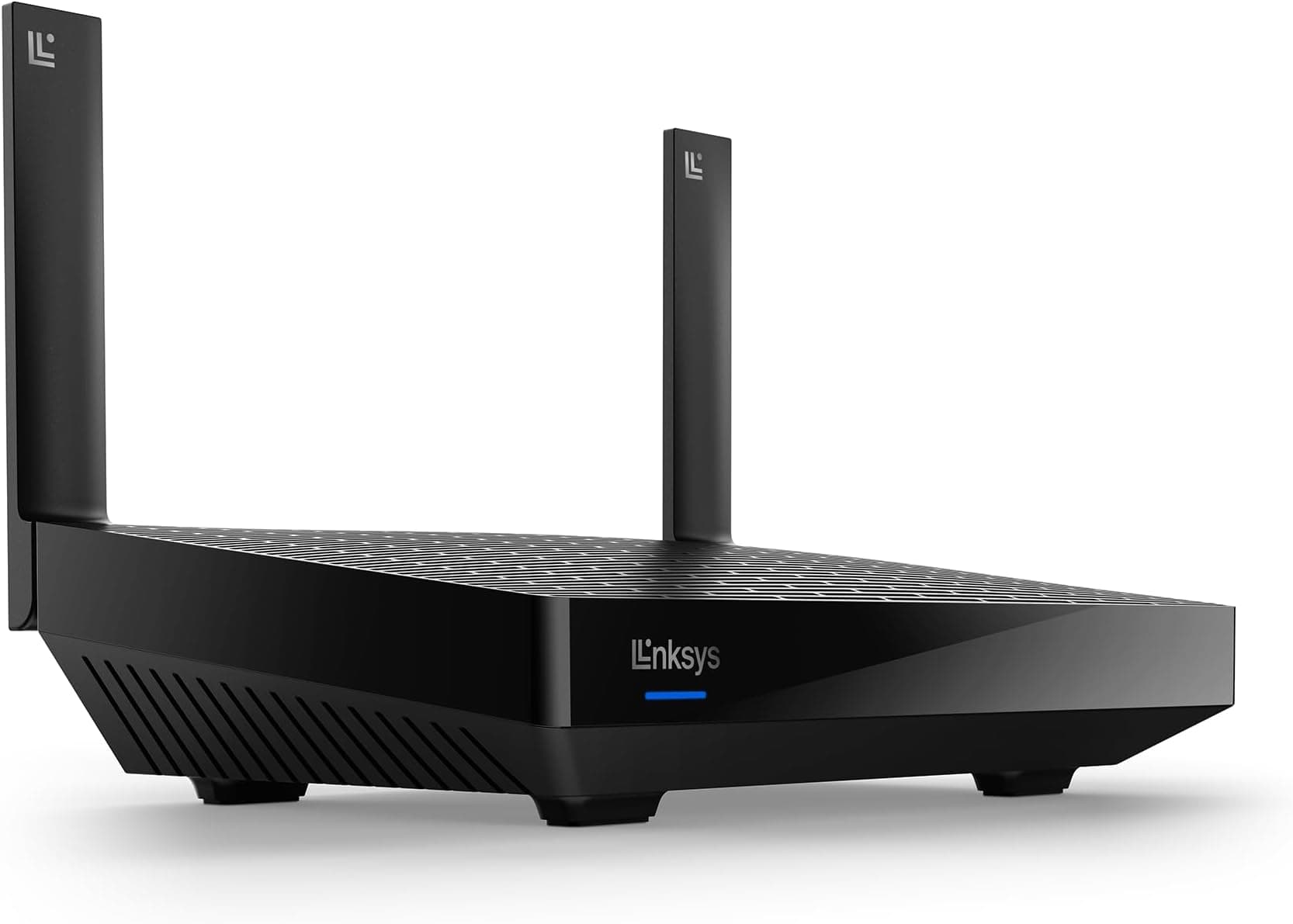
Linksys MR7350 Dual Band Mesh WiFi 6 Router (AX1800) - Works with Velop Whole Home WiFi System - Wireless Internet Gaming Router with MU-MIMO, Parental Controls, Guest Network Via App
£99.99 · Linksys
 7.5 / 10
TP-Link Deco X10(2-pack) AX1500Mbps Whole Home Dual-Band Mesh WiFi 6 System, AI-Driven WiFi Extender Booster, 2x Gigabit Ports, Coverage up to 3900ft²,Connect up to 120 devices, Gaming&4K, Easy Setup
£109.99 · TP-Link
Frequently asked
5 questions01Will the TP-Link Deco X50-PoE cover my whole house?+
TP-Link rates a single X50-PoE unit at up to 230 square metres, but that's a best-case figure in open conditions. In a typical UK three or four-bedroom house with standard partition walls, one unit handles most of the home comfortably. Older properties with solid brick or stone walls will see range drop more noticeably, and in those cases a second node placed sensibly makes a significant difference. The PoE capability means you can position nodes optimally, such as ceiling-mounted in a hallway, rather than being limited by mains socket locations, which genuinely improves coverage distribution compared to conventional mesh setups.
02Do I need Wi-Fi 6E or Wi-Fi 7 instead of the Wi-Fi 6 on the Deco X50-PoE?+
Almost certainly not, for most buyers in 2026. Wi-Fi 6E adds a 6GHz band that most current phones and laptops don't support, and the 6GHz band has shorter range than 5GHz anyway. Wi-Fi 7 is impressive on paper but client device support is still limited and comes at a significant price premium. Wi-Fi 6, which the X50-PoE delivers, is supported by virtually every phone, laptop, and smart TV sold in the last three years, and its OFDMA and MU-MIMO improvements are real benefits you can use right now. Unless you're specifically buying new client devices that support Wi-Fi 6E or 7, the X50-PoE's Wi-Fi 6 is the practical choice.
03Is the Deco X50-PoE mesh system worth it over a single router or a range extender?+
It depends on your home. A single router is fine for smaller homes or flats where one unit covers everything. A range extender is usually a bad idea because it creates a second network segment and typically cuts your speed in half at the extended location. Mesh is the right answer when you need coverage across multiple floors or rooms that a single router can't reach well, and the X50-PoE's dedicated backhaul band means it doesn't suffer the speed penalty that cheaper dual-band mesh kits impose. If you can run Ethernet between node locations, wired backhaul eliminates the wireless overhead entirely and gives you effectively full speed at every node.
04Is the TP-Link Deco X50-PoE easy to set up and reliable day to day?+
Setup is through the Deco app and is genuinely straightforward, typically under fifteen minutes for a two-node system. You don't need any technical knowledge. The app walks you through everything including adding nodes and basic configuration. Day-to-day reliability is good based on the pattern across over 6,500 owner reviews averaging 4.5 stars. Most owners report stable operation without needing regular reboots. A small number mention occasional app connectivity glitches that require restarting the app rather than the router, and some report brief instability immediately after firmware updates, which is fairly standard behaviour across the industry. There's no systematic stability problem with this unit.
05What warranty and returns apply to the TP-Link Deco X50-PoE?+
Amazon offers 30-day returns on most items. TP-Link typically provides a 2-year manufacturer warranty on networking kit, covering hardware defects. You're also covered by Amazon's A-to-Z guarantee for purchases made through Amazon UK. Check the specific listing for warranty details at point of purchase.