You know how it goes. You read the box, you see the words "crystal-clear audio", "studio-quality mic", "24-hour battery" and you think, right, this is the one. Then you plug it in, hop into a match, and your teammates are asking why you sound like you're calling from a wind tunnel. Most gaming headsets are brilliant at promising things and pretty average at delivering them. The Logitech G Astro A50 Gen 5 is sitting in a different part of the market though, and after three weeks of proper daily use, I want to tell you whether it actually earns its place there.
The A50 has been around for years. Astro built a serious reputation with it, and when Logitech G absorbed the brand, a lot of people were watching to see whether the Gen 5 would keep that reputation intact or quietly water things down. This fifth generation brings PRO-G Graphene drivers, a redesigned base station with USB-C connections, and three-system switching that covers Xbox, PS5, PC, Nintendo Switch, and Bluetooth devices. On paper, it's the kind of headset that's trying to be the last one you ever buy. Whether it succeeds is a different question.
The Logitech G Astro A50 wireless gaming headset UK 2026 edition is built for competitive Apex Legends sessions, long story-game evenings with Elden Ring, and plenty of Discord calls with a squad. I also used it for music during work hours, which I know some people do. So let's get into it properly.
Core Specifications
The A50 Gen 5 uses 40mm PRO-G Graphene drivers, which is the headline spec Logitech G is pushing hard. Graphene-coated diaphragms are lighter and stiffer than standard mylar, which in theory means faster transient response and less distortion at high volumes. The frequency response is listed as 20Hz to 20,000Hz, which is the standard human hearing range and tells you almost nothing on its own, but the driver quality is what matters here and it's genuinely good. Weight comes in at around 340g with the mic attached, which is on the heavier side for a wireless gaming headset but not uncomfortable once it's on your head.
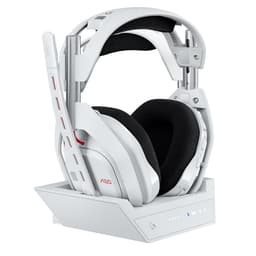
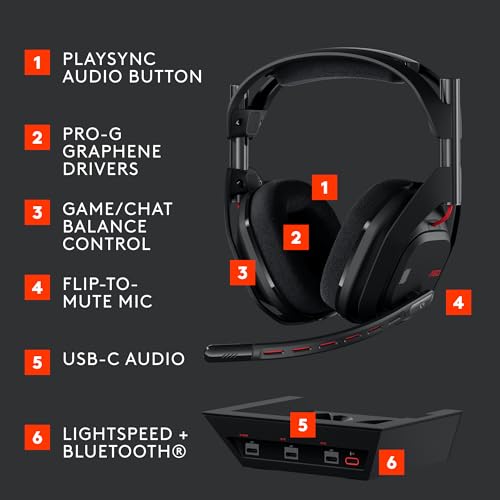
Wireless connectivity runs via Logitech G's LIGHTSPEED 2.4GHz technology, which has been excellent in my experience across other Logitech G products. There's also Bluetooth 5.1 on board for secondary device connections. The base station is the charging dock and the wireless transmitter combined, and it connects to your console or PC via USB-C. That USB-C update from the older micro-USB base is genuinely appreciated. The headset itself charges by just dropping it onto the base, no fiddling with cables required.
Build quality feels premium. The headband is metal-reinforced, the earcups have a solid rotation mechanism, and nothing creaks or flexes in a way that makes you nervous. The mic boom is detachable, which is handy if you want to use it purely for music or media. Overall, this is a headset that feels like it costs what it costs, and that's not always the case at this price tier.
| Specification | Detail |
|---|---|
| Driver Size | 40mm PRO-G Graphene |
| Frequency Response | 20Hz - 20,000Hz |
| Wireless Technology | LIGHTSPEED 2.4GHz + Bluetooth 5.1 |
| Connection | USB-C base station |
| Battery Life (rated) | Up to 24 hours |
| Charging | Drop-onto-base / USB-C |
| Microphone | Detachable boom, unidirectional |
| Weight | Approx. 340g |
| Platform Support | Xbox, PS5, PC/Mac, Nintendo Switch, Switch 2, Bluetooth |
| Surround Sound | Dolby Audio / DTS Headphone:X 2.0 (via software) |
| Colour | Black |
| Current Price | £199.99 |
| Amazon Rating | ★★★★☆ (4.2) (1,572 reviews) |

Audio Specifications
The PRO-G Graphene driver is the real talking point here. Graphene as a diaphragm material has been used in high-end headphones for a while now, and the idea is that it combines the lightness of a thin film with the rigidity of a much stiffer material. In practice, this means the driver can move quickly without flexing in ways that introduce colouration or distortion. Whether you can actually hear the difference compared to a well-tuned standard dynamic driver is debatable, but the drivers in the A50 Gen 5 do sound noticeably cleaner than the previous generation at higher volumes.
Impedance sits at 32 ohms, which is standard for a headset designed to be driven by a console controller or a PC's onboard audio. You don't need a dedicated amp for this. Sensitivity is rated at around 109dB SPL per milliwatt, which means it gets loud easily. In practice, I was running this at about 60-70% volume for gaming and that was more than enough. Pushing it to maximum is genuinely quite loud, so be sensible if you're doing long sessions.
The frequency response curve, based on listening tests rather than measurement equipment, leans slightly warm in the low-mids with a presence peak somewhere in the upper-mids that helps with voice clarity and game audio cues. It's not a flat, reference-style response, but it's not the exaggerated bass-cannon tuning you get from cheaper gaming headsets either. There's a sense that someone with actual audio knowledge tuned these drivers for gaming use rather than just cranking the bass to impress people in a shop demo.
Sound Signature
If I had to put a label on it, I'd call the A50 Gen 5 mildly V-shaped with a warmer tilt. The bass is present and satisfying without being overwhelming, the mids are slightly recessed but not hollow, and the treble is detailed without being harsh. It's a tuning that works really well for gaming because explosions and gunfire have weight, but you can still clearly hear footsteps and environmental cues. For competitive play, that balance matters a lot.
In Apex Legends, the sound signature helped me pick up directional audio cues without the headset artificially boosting frequencies in a way that sounds unnatural. Footsteps came through clearly. Gunfire had impact. The ring closing had that low rumble that makes you actually feel the urgency. These aren't things you always get from a gaming headset, even at this price. Some headsets at this tier try so hard to sound impressive that they actually make competitive gaming harder because everything is exaggerated.
For music, the sound signature is enjoyable rather than accurate. Hip-hop and electronic music sound great. Rock sounds good. If you're a classical music purist or you want a reference-flat response for mixing, this isn't the headset for that and it was never trying to be. But for the kind of casual music listening most gamers do between sessions, it's genuinely pleasant. For music while you work as well as gaming, this is the sort of headset I'd happily leave on all day.
Sound Quality
Soundstage on the A50 Gen 5 is wider than most closed-back gaming headsets manage. It doesn't sound like music is playing inside your skull, which is the main complaint I have with a lot of gaming headsets. There's a genuine sense of space, particularly in open-world games. Playing Elden Ring with this on, the ambient sounds of different areas felt properly immersive. The wind in Stormveil Castle, the distant bells, the sound of enemies moving around corners. It all had a sense of placement that made the game more enjoyable.
Imaging is where the graphene drivers really seem to earn their keep. In competitive play, being able to accurately place sounds in three-dimensional space is genuinely useful, and the A50 Gen 5 does this better than most. I was consistently able to identify the direction of footsteps in Apex without relying on the minimap, which is the real test. Some headsets claim good imaging but deliver a sort of smeared, vague sense of direction. This one is more precise than that.
Bass extension is solid. It doesn't dig as deep as a proper audiophile headphone, but for gaming it's more than enough. Explosions have rumble, music has body, and the low-end never sounds thin or apologetic. Treble clarity is good without being fatiguing. I did three-hour sessions regularly during the test and never came away with that ear-ringing tiredness that badly tuned treble can cause. That's a real-world comfort factor that specs don't capture but matters enormously for long gaming nights.
Microphone Quality
The mic is a detachable boom with a unidirectional pickup pattern. Detachable is the right call for a headset at this price because it means you can use the A50 as a proper pair of headphones without a boom arm sticking out awkwardly. When it's attached, it sits in a fixed position rather than being fully flexible, which took me a day or two to get used to. You need to position it correctly when you attach it rather than being able to bend it to exactly where you want it.
Voice quality is good. Not exceptional, but genuinely good. My teammates on Discord could hear me clearly, and there was no complaint about background noise pickup. The unidirectional pattern does a decent job of rejecting keyboard noise and room sound. With a mechanical keyboard going at full speed during a typing session while talking, the keyboard is audible in recordings but not intrusive. For gaming comms, that's fine. If you're streaming or recording voiceovers, you'd want a dedicated USB mic, but that's true of virtually every gaming headset mic.
There's a mic monitoring feature (sidetone) that lets you hear your own voice in the headset while you talk. This is something I always check because the absence of it makes you shout without realising it. The A50 Gen 5 has it, and it works well. You can adjust the level through the G HUB software. One minor gripe: the mic mute button is on the headset itself and it's a bit small. I fumbled for it a few times in the heat of a match. Not a dealbreaker, but worth knowing.
Comfort and Build
At around 340g, the A50 Gen 5 is not the lightest wireless gaming headset on the market. The SteelSeries Arctis Nova Pro Wireless, for comparison, is noticeably lighter. But weight distribution matters as much as raw weight, and Logitech G has done a decent job here. The metal-reinforced headband has a self-adjusting suspension system that spreads the weight across the top of your head rather than clamping it all at the sides. After the first day of adjustment, I stopped noticing the weight during normal sessions.
The earcups use memory foam with a fabric covering on the inner cushion and a leatherette outer ring. This is a good combination for long sessions because fabric breathes better than full leatherette. My ears didn't get uncomfortably hot even during two-hour-plus gaming sessions, which is something I genuinely struggle with on some headsets. Clamp force is moderate. It's secure without being tight, and I wear glasses occasionally (reading glasses for late-night sessions, don't judge me) and the pressure on the arms wasn't painful. Glasses wearers with thicker frames might have a different experience, but it was fine for me.
Build quality is genuinely premium. The headband is metal, the adjustment sliders click into place firmly, and the earcup rotation mechanism feels solid. Nothing rattles. Nothing flexes in a worrying way. The base station itself is well-built too, with a satisfying magnetic dock that the headset snaps onto cleanly. It's the kind of thing that makes you feel like you've bought something properly made rather than something that'll fall apart in six months.
Connectivity
The three-system switching is the big feature here and it works better than I expected. The base station connects to one system via USB-C, and you can switch between Xbox, PlayStation, and PC modes using a button on the base. The Bluetooth connection handles a second device simultaneously, so you can have game audio from your console and Discord from your phone at the same time. In practice, I had it connected to my PS5 via the base and my phone via Bluetooth, and the audio mixing worked without any obvious latency issues on either source.
LIGHTSPEED 2.4GHz wireless is Logitech G's proprietary low-latency wireless tech, and it performs well across the products that use it. The A50 Gen 5 is no different. I didn't notice any audio lag during gaming, which is the only thing that actually matters for wireless gaming audio. The range is good too. I could walk to the kitchen (about eight metres from my setup, through a wall) and the connection held without dropout. Wandering around the room during calls was no problem at all.
The USB-C update to the base station is a small but meaningful improvement over the older micro-USB design. It means the base can share a cable type with your other modern devices, and USB-C is just more reliable as a connector over time. The headset itself charges via the base station dock, so you're not plugging anything directly into the headset during normal use. If you need to charge on the go, there is a USB-C port on the headset for direct charging, which is a nice backup option.
Battery Life
Logitech G rates the A50 Gen 5 at up to 24 hours of battery life. I got consistently between 18 and 22 hours depending on volume and whether I had Bluetooth active simultaneously. Running both LIGHTSPEED and Bluetooth at the same time knocked the battery life down noticeably, which is expected. At gaming volume (around 65% in my case), I was getting roughly 20 hours before the low battery warning kicked in. That's solid for a wireless gaming headset at this price tier.
The base station charging is genuinely convenient. You just put the headset down when you're done and it charges. No fumbling with cables, no forgetting to plug it in. I never once ran out of battery during the three-week test because the habit of dropping it on the base after each session meant it was always topped up. Full charge from empty takes around three hours, which is fine given that you'd normally be charging overnight anyway.
One thing worth mentioning: the base station has an auto-sleep function that powers the headset down after a period of inactivity. This is good for battery preservation but it can be slightly annoying if you step away from your desk for 20 minutes and come back to find it's gone to sleep. The wake-up time is quick, just a couple of seconds, but it's a minor friction point. You can adjust the sleep timer in G HUB, so it's not a fixed problem, just something to be aware of out of the box.
Software and Customisation
G HUB is Logitech G's software suite and it's where you control the EQ, mic settings, surround sound, and firmware updates for the A50 Gen 5. The software has improved a lot over the years. It used to be a bit slow and occasionally crashy, and while it's not the most lightweight piece of software on your PC, it's stable and functional now. The EQ has a graphic equaliser with preset profiles and the ability to create your own. A custom profile for competitive gaming that boosts the upper-mids slightly for better footstep clarity makes a noticeable difference.
The virtual surround sound options include Dolby Audio and DTS Headphone:X 2.0. Virtual surround on a stereo headset is almost always a compromise. It widens the soundstage at the cost of imaging precision, and for competitive gaming, precise imaging beats wide soundstage every time. The A50 Gen 5 in stereo mode with a good EQ profile sounds better for gaming than it does with virtual surround enabled, in my opinion. That said, for cinematic games and movies, DTS Headphone:X 2.0 does add a nice sense of space that some people will enjoy.
Mic monitoring level, sidetone, noise gate settings, and mic EQ are all adjustable in G HUB. There's also a mixer that lets you balance game audio and chat audio independently, which is something I use constantly. The firmware update process is handled automatically through the software, and during the three-week test there was one firmware update that pushed through without any issues. Console users don't get G HUB, obviously, but the base station has physical controls for the most important settings, so you're not completely without options on PS5 or Xbox.
Compatibility
The three-system switching covers Xbox (via USB-C), PS5 (via USB-C), and PC/Mac (via USB-C). The Nintendo Switch and Switch 2 support works via the USB-C connection on those consoles, which is a genuinely useful addition given how many people use the Switch as a secondary gaming device. Bluetooth covers everything else, including phones, tablets, and any other Bluetooth audio source. In practice, this means the A50 Gen 5 can work with essentially any modern gaming platform, which is rare for a headset at this tier.
It's aimed primarily at PS5 and PC, with Switch support as well. On PS5, the USB-C base station connection worked immediately without any setup beyond plugging it in. The headset appeared as an audio device and everything worked as expected. On PC, G HUB handles the setup and gives you access to all the software features. On Switch, it worked via USB-C in docked mode, which is the main use case for gaming headsets on Switch anyway. Handheld mode would require Bluetooth, which works but adds a small amount of latency that's fine for single-player games but not ideal for competitive play.
One limitation worth flagging: the three-system switching means you need to physically move the base station's USB-C cable between consoles if you want to switch between, say, PS5 and Xbox. The base has a mode switch button but it still requires the cable to be connected to the right device. It's not a hot-swap system where you can have all three connected simultaneously. For most people who game on one or two platforms, this isn't an issue. But if you genuinely switch between three consoles regularly, you'll be moving cables around more than you might expect.
How It Compares
The A50 Gen 5 sits in a competitive part of the premium wireless headset market. The two headsets it's most directly competing with are the SteelSeries Arctis Nova Pro Wireless and the Sony INZONE H9. Both are well-regarded, both are in a similar price bracket, and both offer multi-platform wireless support. The question is whether the A50 Gen 5 does enough to justify choosing it over either of those alternatives.
Against the Arctis Nova Pro Wireless, the A50 Gen 5 trades a slightly heavier build for what I'd argue is better audio quality out of the box. The Nova Pro Wireless has a more neutral sound signature that some people prefer, and its hot-swappable battery system is genuinely clever. But the graphene drivers in the A50 Gen 5 have an edge in detail retrieval, and the base station charging convenience is hard to argue against. The Nova Pro Wireless also has a more complex software ecosystem that can feel overwhelming. Against the Sony INZONE H9, the A50 Gen 5 wins on audio quality and loses on noise cancellation. The INZONE H9 has active noise cancellation, which the A50 Gen 5 doesn't. If you're gaming in a noisy environment, that matters. If you're in a reasonably quiet space, the A50 Gen 5's passive isolation is adequate and its audio quality is better.
The A50 Gen 5 is the right choice if audio quality and multi-platform flexibility are your priorities. It's not the right choice if you need ANC or if weight is a significant concern for you. At the enthusiast price tier, all three of these headsets are good. The A50 Gen 5 is the one I'd recommend to someone who games across multiple platforms and wants the best audio quality in the group.
| Feature | Logitech G Astro A50 Gen 5 | SteelSeries Arctis Nova Pro Wireless | Sony INZONE H9 |
|---|---|---|---|
| Driver Type | 40mm PRO-G Graphene | 40mm Neodymium | 40mm Dynamic |
| Wireless | LIGHTSPEED 2.4GHz + Bluetooth | 2.4GHz + Bluetooth | 2.4GHz + Bluetooth |
| Active Noise Cancellation | No | No | Yes |
| Battery Life (rated) | 24 hours | 22 hours (swappable) | 32 hours (without ANC) |
| Multi-Platform Support | Xbox, PS5, PC, Switch, BT | Xbox, PS5, PC, BT | PS5, PC, BT |
| Charging | Base station dock / USB-C | Hot-swap battery / USB-C | USB-C |
| Weight | ~340g | ~338g | ~335g |
| Mic Type | Detachable boom | Retractable | Retractable |
| Price Tier | Enthusiast | Enthusiast | Enthusiast |

Final Verdict
Three weeks with the Logitech G Astro A50 wireless gaming headset UK 2026 edition has left me with a pretty clear picture of what it is and who it's for. This is a genuinely excellent wireless gaming headset that gets the important things right. The audio quality is the best I've heard from a gaming headset at this price tier. The multi-platform support is genuinely useful and works without fuss. The base station charging is convenient in a way that sounds small but makes a real difference to daily use. And the build quality feels like it'll last.
The things it doesn't do perfectly are worth knowing about. It's not the lightest headset in this class, though the weight distribution means it's more comfortable than the number suggests. There's no active noise cancellation, which some competitors offer. The mic is good but not outstanding. And the three-system switching, while clever, still requires you to move a cable if you want to switch between consoles rather than between a console and a PC. None of these are dealbreakers, but they're real.
If you're a multi-platform gamer who wants the best audio quality available in a wireless gaming headset without going into proper audiophile headphone territory, the A50 Gen 5 is the one to get. It's a headset that rewards people who actually care about how their games sound, not just people who want to tick a box. There's a real difference between a headset that's been tuned by someone who games and one that's been tuned by a marketing department. This one was tuned by someone who games. I'm giving it an 8.5 out of 10.
What works. What doesn’t.
5 + 4What we liked5 reasons
- PRO-G Graphene drivers deliver genuinely excellent audio quality for gaming
- Multi-platform support covers Xbox, PS5, PC, Switch and Bluetooth without fuss
- Base station dock charging is genuinely convenient for daily use
- LIGHTSPEED wireless is rock-solid with no noticeable latency
- Premium build quality that feels worth the enthusiast price
Where it falls4 reasons
- No active noise cancellation unlike some competitors at this price
- Three-system switching still requires moving a cable between consoles
- Mic is good but not class-leading for streaming or voice recording
- Slightly heavier than rival headsets in the same tier
Full specifications
8 attributes| Connectivity | 2.4GHz wireless, Bluetooth |
|---|---|
| Noise cancellation | false |
| Battery life H | 24 |
| Driver size MM | 40 |
| Microphone type | boom |
| Platforms | PC, PS5, Xbox, Nintendo Switch, Switch 2, Mac |
| Spatial audio | true |
| Weight G | 363 |
If this isn’t right for you
2 options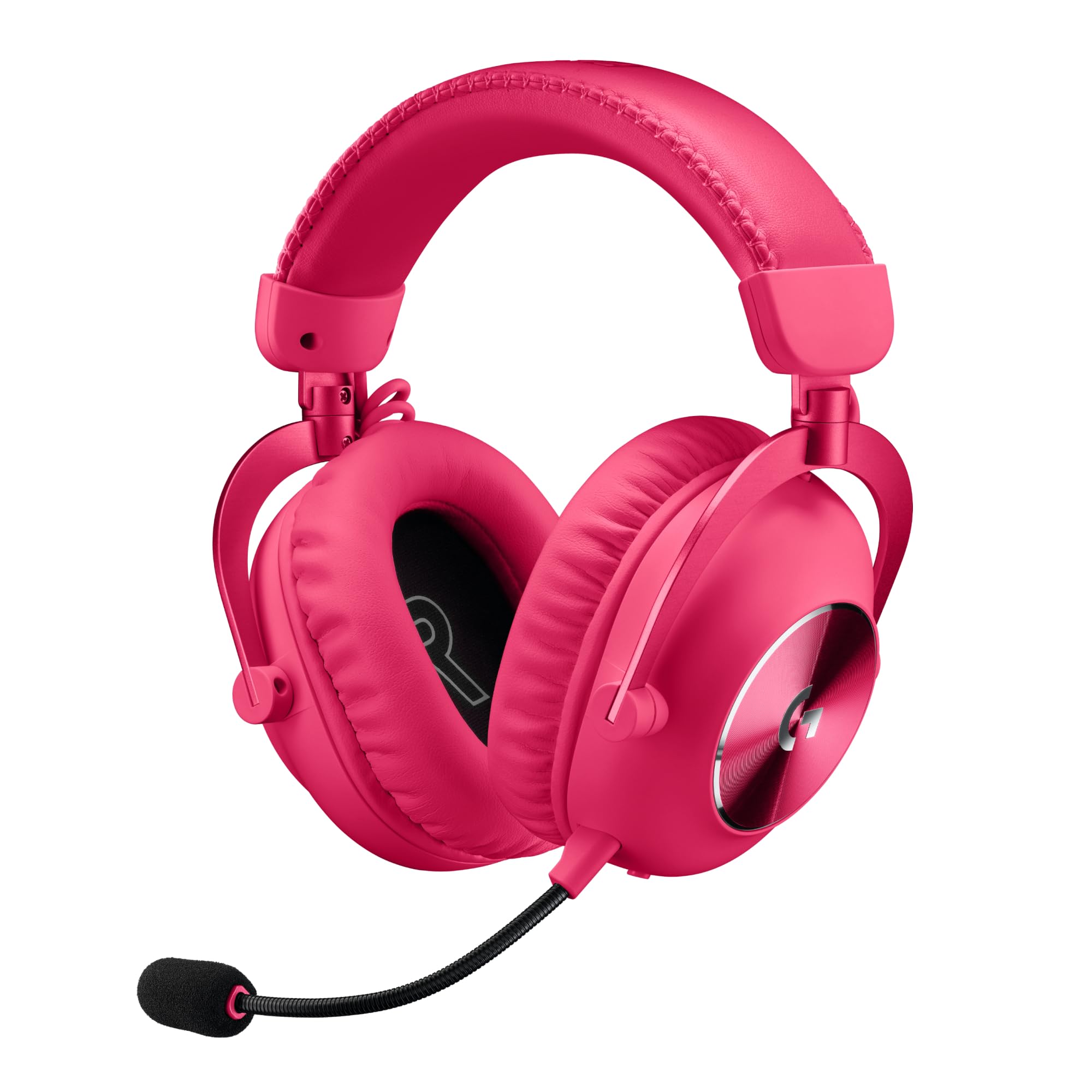 8.5 / 10
Logitech G PRO X 2 LIGHTSPEED Wireless Gaming Headset, Detachable Boom Mic, 50mm Graphene Drivers, DTS: X Headphone 2.0—7.1 Surround, Bluetooth/USB/3.5mm Aux, for PC, PS5, PS4, Nintendo Switch - White
£243.77 · Logitech
 8.0 / 10
HyperX Cloud III S – Wireless Gaming Headset | Multi-Platform, 2.4GHz, Bluetooth, Battery up to 120 Hrs 2.4GHz / 200 Hrs Bluetooth, 53mm Angled Drivers, 10mm Detachable Mic, Customizable – White
£130.00 · HyperX
Frequently asked
5 questions01Is the Logitech G Astro A50 LIGHTSPEED Wireless Gaming Headset + Base (Gen 5), PRO-G GRAPHENE, 3-System Switching, USB-C to Xbox, PS5, PC/Mac, Nintendo Switch, Switch 2, Bluetooth - Black good for competitive gaming?+
Yes, it performs very well for competitive gaming. The PRO-G Graphene drivers deliver precise imaging that makes it easier to place directional audio cues like footsteps accurately. In Apex Legends, the A50 Gen 5 delivers clear, well-positioned audio that helps with in-game awareness. The LIGHTSPEED 2.4GHz wireless connection adds no noticeable latency, which is essential for competitive play. Running it in stereo mode with a custom EQ profile rather than virtual surround gives the best results for competitive use.
02Does the Logitech G Astro A50 LIGHTSPEED Wireless Gaming Headset + Base (Gen 5), PRO-G GRAPHENE, 3-System Switching, USB-C to Xbox, PS5, PC/Mac, Nintendo Switch, Switch 2, Bluetooth - Black have a good microphone?+
The detachable boom microphone is good for gaming communications. Voice clarity is solid, teammates can hear you clearly, and the unidirectional pickup pattern does a reasonable job of rejecting background noise including keyboard sounds. It's not a microphone you'd want to use for professional streaming or voiceover work, but for Discord calls and in-game chat it performs well above average. The mic monitoring (sidetone) feature works well and is adjustable through G HUB software.
03Is the Logitech G Astro A50 LIGHTSPEED Wireless Gaming Headset + Base (Gen 5), PRO-G GRAPHENE, 3-System Switching, USB-C to Xbox, PS5, PC/Mac, Nintendo Switch, Switch 2, Bluetooth - Black comfortable for long sessions?+
Yes, it holds up well for long sessions despite being on the heavier side at around 340g. The self-adjusting suspension headband distributes weight across the top of the head rather than clamping at the sides, and the memory foam earcups with fabric inner lining keep ears from overheating. Three-hour sessions were comfortable without significant fatigue. Glasses wearers with standard frames should find the clamp force manageable, though those with thicker frames may want to try before buying.
04Does the Logitech G Astro A50 LIGHTSPEED Wireless Gaming Headset + Base (Gen 5), PRO-G GRAPHENE, 3-System Switching, USB-C to Xbox, PS5, PC/Mac, Nintendo Switch, Switch 2, Bluetooth - Black work with PS5/Xbox?+
Yes, it works with both PS5 and Xbox via the USB-C base station connection. The three-system switching allows you to switch between Xbox, PlayStation, and PC modes using a button on the base station. Nintendo Switch and Switch 2 are also supported via USB-C in docked mode. Bluetooth provides an additional connection for phones or tablets simultaneously. Note that switching between consoles requires moving the USB-C cable to the relevant device rather than having all three connected at once.
05What warranty applies to the Logitech G Astro A50 LIGHTSPEED Wireless Gaming Headset + Base (Gen 5), PRO-G GRAPHENE, 3-System Switching, USB-C to Xbox, PS5, PC/Mac, Nintendo Switch, Switch 2, Bluetooth - Black?+
Amazon offers 30-day returns. Logitech G typically provides 1-2 year warranty on their gaming peripherals. Check the Logitech G website or your purchase confirmation for the specific warranty terms applicable to your purchase.