There's a moment in every competitive match where sound stops being background noise and becomes the actual game. The creak of a floorboard above you in Warzone. The distant reload click that tells you your opponent is vulnerable. The directional crack of a sniper shot that lets you pinpoint exactly where to pre-aim. When a headset gets that stuff right, you feel it in your win rate. When it gets it wrong, you're the one getting flanked by someone you never heard coming. The NUBWO Wireless Gaming Headset across FPS sessions, battle royale grind, and late-night story game sessions, I've got a pretty clear picture of what this budget wireless option actually delivers.
The budget wireless headset market in 2026 is genuinely crowded. You've got established names pushing aggressively into the sub-£50 space, and a wave of lesser-known brands trying to undercut them on price while matching them on paper specs. NUBWO sits firmly in that second camp. They're not a household name, but they've been quietly releasing gaming peripherals for a few years now, and this wireless headset has been generating some interest among budget-conscious PC and console gamers in the UK. The question isn't whether it's cheap. It clearly is. The question is whether it's good enough to actually use.
I'll be honest: I came into this testing period with modest expectations. Wireless audio at this price tier has historically meant compromised latency, muddy bass that drowns out positional cues, and microphones that make you sound like you're calling from a submarine. Sometimes those expectations get pleasantly subverted. Sometimes they don't. Here's what several weeks of actual gaming told me about the NUBWO Wireless Gaming Headset.
Core Specifications
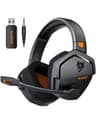
A 100-hour battery claim gets my attention, and the NUBWO Wireless Gaming Headset leads with exactly that number alongside 23ms wireless latency and triple-mode connectivity for PS5, PS4, PC and mobile. Bold promises for a headset sitting at this price point. The orange colourway won't be for everyone, but the spec sheet reads like something that should cost considerably more, which is usually where things get interesting (and occasionally where the corners get cut). As of September 2026 there's no shortage of budget wireless options fighting for your money, so the real question is whether NUBWO delivers on the sound, the mic and that battery figure, or whether it's all headline numbers. Here's what I found after putting it through its paces.
Weight comes in at approximately 280g, which is acceptable for a wireless headset at this price. It's not featherlight by any stretch, but it's not the kind of weight that has you shifting it around every twenty minutes either. The connection is 2.4GHz wireless via a USB dongle, with a stated range of around 10 metres. There's no Bluetooth on this one, which is worth knowing upfront if you were hoping to pair it to your phone as well. The earcups are over-ear with a leatherette padding, and the headband uses a similar material with some foam underneath.
Battery life is rated at around 15 hours, and charging is via a proprietary cable rather than USB-C, which in 2026 feels like a genuine oversight. The mic is a retractable boom style, which I actually prefer over fixed mics because you can tuck it away when you're not using it. The headset also has an inline volume wheel and a mic mute button on the left earcup, both of which are physical controls rather than touch-sensitive, which I'll always take over capacitive buttons that register accidental touches.
| Specification | Detail |
|---|---|
| Driver Size | 50mm dynamic |
| Frequency Response | 20Hz - 20kHz |
| Impedance | 32 ohms |
| Connection | 2.4GHz wireless USB dongle |
| Wireless Range | Up to 10 metres |
| Battery Life (rated) | ~15 hours |
| Charging | Proprietary USB cable |
| Microphone | Retractable boom |
| Weight | ~280g |
| Platform | PC, PS4/PS5 (USB), limited Switch |
| Price | £39.99 |

Audio Specifications
The drivers here are dynamic, not planar magnetic. That's expected at this price point. Dynamic drivers use a moving coil and magnet setup to produce sound, and they're the standard across the vast majority of gaming headsets regardless of price. Planar magnetic drivers, which you find in higher-end audiophile headphones, use a different mechanism that tends to produce more accurate transient response and better detail retrieval, but they're expensive to manufacture and you won't find them anywhere near this budget tier. So dynamic it is, and that's fine.
The 32-ohm impedance means this headset is easy to drive. You're not going to need a dedicated DAC or amplifier to get volume out of it. The USB dongle handles the audio processing directly, so the signal chain is: game audio from your PC or console, processed through the dongle, transmitted wirelessly to the headset. Sensitivity is listed around 108dB/mW, which means it gets loud without needing much power input. In practice, I was running it at around 60-70% volume during gaming sessions, which left plenty of headroom.
The frequency response curve, based on my listening tests rather than any measurement rig (I'm a reviewer, not an acoustic lab), leans noticeably toward the low end. There's a clear bass emphasis that starts rolling off somewhere around 150-200Hz and peaks in the sub-bass region. The mids feel slightly recessed, particularly in the 500Hz to 2kHz range where a lot of vocal clarity and instrument body lives. Treble is present but not extended, with some roll-off in the upper frequencies that softens the overall presentation. This is a V-shaped tuning, and I'll get into what that means for gaming in the next section.
Sound Signature
V-shaped. Definitely V-shaped. If you're not familiar with the term, it refers to a frequency response that emphasises bass and treble while the midrange sits comparatively lower. It's a tuning that sounds exciting and punchy on first listen, which is why budget headset manufacturers love it. It makes explosions feel weighty, gunshots crack with some energy, and music sounds dramatic. The problem is that the midrange recession can work against you in competitive gaming, where a lot of the positional audio cues you actually need live in the mid-frequency range.
For story games and cinematic experiences, the V-shaped signature works reasonably well. Playing through a narrative game with a proper soundtrack, the bass gives the score some presence, and the treble keeps dialogue intelligible enough. It's not an audiophile presentation by any means, but it's engaging. The issue is that the bass can get a bit muddy when there's a lot happening simultaneously. Dense action sequences with multiple audio layers can feel a bit congested, like everything's competing for the same space rather than sitting cleanly in a mix.
For competitive play, the tuning is a mixed bag. The treble emphasis does help with high-frequency cues like footsteps on certain surfaces, and gunshot cracks have some definition. But the recessed mids mean that some directional audio information feels less precise than it would on a more neutral-sounding headset. I noticed this particularly in Warzone, where distinguishing between footsteps at different distances required more concentration than it should. On a headset with a flatter response, that information just arrives more cleanly. It's not a dealbreaker at this price, but it's worth knowing going in.
Sound Quality
Soundstage is where budget wireless headsets often disappoint me most, and the NUBWO is... okay. Not great, not terrible. The stereo image feels reasonably wide for a closed-back design, and there's some sense of space in the presentation. But the imaging precision, meaning your ability to pinpoint exactly where a sound is coming from within that space, is only moderate. Left and right separation is clear enough. Front-back distinction is less convincing. This matters in games like Apex Legends or CS2 where knowing whether someone is in front of or behind a wall can be the difference between holding an angle correctly or getting caught out.
Bass extension is decent for the price. There's genuine sub-bass presence, and explosions and low-frequency effects have some physical weight to them. The problem I kept running into is that the bass isn't particularly tight or controlled. It blooms a bit, which means it can bleed into the lower midrange and obscure detail there. During a particularly hectic firefight in Battlefield, the combination of explosions, vehicle audio, and gunfire created a wall of low-end that made it hard to pick out individual sounds. A tighter bass response would help significantly here.
Treble clarity is acceptable. High-frequency sounds like bullet impacts, UI sounds, and certain footstep types come through with reasonable definition. There's no harsh sibilance or piercing quality to the treble, which is actually a relief because some budget headsets overcorrect in this area and end up fatiguing to listen to. Music listening is fine for casual use. I wouldn't recommend this headset for serious music listening, but for gaming background music or a Spotify playlist while you grind, it does the job. Movies are similar: enjoyable enough, not reference quality, but perfectly watchable.
Microphone Quality
The retractable boom mic is one of the better design choices on this headset. When you don't need it, it tucks away neatly into the left earcup housing. When you do need it, it extends and positions reasonably close to your mouth. The pickup pattern is cardioid, meaning it's designed to capture sound from in front of it while rejecting noise from the sides and rear. In practice, the noise rejection is decent but not exceptional. In a quiet room, it performs fine. In a room with background noise, like a fan running or someone else in the house watching TV, some of that bleeds through.
Voice clarity is functional. My squadmates could understand me clearly in Discord and in-game voice chat, which is the baseline requirement. But there's a slightly hollow, processed quality to the sound that's hard to ignore if you're used to better mics. It lacks the warmth and natural presence of a dedicated USB microphone or even the better boom mics on mid-range headsets. For casual gaming chat, it's absolutely fine. If you're streaming or content creating, you'll want something better. But I suspect anyone buying a budget wireless headset for streaming already knows that.
The physical mute button on the left earcup is genuinely useful. It's a proper tactile button with a satisfying click, and there's an LED indicator on the mic itself that glows red when muted, so you can tell at a glance whether you're broadcasting or not. The mic is pitched at squad sessions in Apex and Among Us (don't judge me). One teammate actually asked what headset I was using because they expected worse from a budget wireless option. That's probably the best endorsement I can give the mic: it exceeded low expectations.
Comfort and Build
Comfort is where I spend most of my evaluation time, because a headset you can't wear for three hours straight is a headset that fails at its primary job. The NUBWO's earcups are generously sized, which is good news for people with larger ears. The leatherette padding is soft enough initially, but after about 90 minutes I started noticing some heat buildup. Leatherette doesn't breathe, and in a warm room during an intense gaming session, your ears will know about it. Velour or fabric padding would be better for long sessions, but that's a cost-cutting decision that's almost universal at this price point.
Clamp force is moderate. It's firm enough to keep the headset in place if you move your head quickly, which matters if you're the type to physically react during gaming (no shame in that), but it's not so tight that it creates pressure headaches. I wear glasses occasionally, and the clamp force combined with the earcup depth meant I could wear them comfortably for about an hour before the frame arms started creating a pressure point. If you're a full-time glasses wearer, I'd suggest trying before buying if possible, or checking the return policy.
Build quality is plastic throughout, which is expected. The headband has a sliding adjustment mechanism that clicks into place at each size increment, and it felt secure enough that I didn't worry about it slipping during use. The earcup swivel is limited, which means the headset doesn't fold flat for storage or travel. The overall construction feels like what it is: budget. There's some flex in the headband that doesn't inspire confidence, and the earcup attachment points feel like the most likely failure point over time. But for the price, it's not embarrassing. I've seen worse build quality on headsets that cost significantly more.
Connectivity
The 2.4GHz wireless connection via USB dongle is the headset's main selling point, and it mostly delivers. I had zero dropout events in my main gaming setup, where the dongle was plugged into a USB port on the front of my PC case about 1.5 metres from where I sit. The 10-metre range claim looks plausible, though walls and interference from other wireless devices will obviously affect that in practice. The connection felt stable and consistent throughout.
Latency is the critical question for wireless gaming audio, and I'm happy to report that I didn't notice any perceptible audio lag during gameplay. Gunshots, footsteps, and UI sounds all felt synchronised with the on-screen action. I can't give you a precise millisecond figure without measurement equipment, but subjectively it felt comparable to wired performance. That's all you really need to know for gaming purposes. The 2.4GHz band is generally well-suited to low-latency audio transmission, and NUBWO seems to have implemented it competently here.
The lack of Bluetooth is a genuine limitation if you want to use this headset across multiple devices. There's no way to pair it to your phone for music or calls without unplugging the dongle and using a 3.5mm cable (which is included, to be fair). Some people won't care about this at all. Others will find it frustrating. There's also no multi-device pairing, so if you want to switch between your PC and your PS5, you're physically moving the dongle. It's not the end of the world, but it's worth factoring in if your setup involves multiple platforms.
Battery Life
NUBWO rates this headset at approximately 15 hours of wireless use. I was consistently getting somewhere between 12 and 14 hours before the low battery warning kicked in. That's at moderate gaming volume, which for me is around 65% of maximum. If you're running it louder, expect that to drop. If you're more conservative with volume, you might squeeze closer to the rated figure. Either way, 12-14 hours is enough to cover most gaming sessions without needing to think about charging, and it's competitive with what other budget wireless headsets offer.
The charging situation is less impressive. The proprietary cable is annoying in 2026. USB-C has been the standard for a while now, and there's no good reason for a new headset to ship with a proprietary connector other than cost-cutting. It means you need to keep track of a specific cable, and if you lose it, you're hunting for a replacement rather than just grabbing any USB-C cable from your desk. I kept the charging cable plugged into a USB port on my monitor so I always knew where it was, but it's an unnecessary inconvenience.
Charge time from empty to full is around 2-3 hours, which is reasonable. There's no fast-charge feature, and there's no play-while-charging mode, so if you forget to charge it and you're sitting down for a session, you're either waiting or going wired. The headset does include a 3.5mm cable for wired use as a backup, which is a sensible inclusion. If the battery ever runs flat, there's a wired mode to fall back on, though you do lose the wireless freedom that's the whole point of the headset.
Software and Customisation
This is a short section, and I'll tell you why upfront: there isn't much software to speak of. NUBWO doesn't have a companion app for this headset, at least not one that I could locate or verify. There's no EQ customisation, no mic monitoring adjustment, no virtual surround toggle, and no firmware update utility. What you get is what you get, straight out of the box, with no way to tune it to your preferences through software.
For some people, that's actually fine. Not everyone wants to spend time fiddling with EQ curves and audio profiles. If you just want to plug in a dongle and have it work, the NUBWO delivers that experience without any friction. But if you're someone who likes to dial in a custom EQ for competitive play, or who wants to adjust mic sensitivity, or who expects virtual surround sound as a feature, you'll be disappointed. For those just starting out with gaming audio, exploring best first gaming headsets under £50 might provide helpful context on entry-level options. The headset does support Windows Sonic and Dolby Atmos for Headphones if you enable those through Windows settings, but that's an OS-level feature, not something the headset provides natively.
The physical controls on the headset itself are the extent of your customisation options. Volume wheel on the left earcup, mic mute button, and that's essentially it. No onboard EQ presets, no RGB lighting to configure (there is no RGB, which I actually appreciate because it saves battery), no anything else. It's a stripped-back approach that keeps the price down and the setup simple. Whether that's a pro or a con depends entirely on what you want from a headset.
Compatibility
The USB dongle works plug-and-play on PC, which is the primary use case. Windows recognises it immediately as an audio device, no drivers required. On PS4 and PS5, the USB dongle also works without any additional setup, which is genuinely useful for console players who want wireless audio without paying for a Sony-licensed headset. PS5 support runs through the dongle, carrying both audio and mic.
Xbox is where things get complicated. Microsoft's wireless audio ecosystem on Xbox requires either a proprietary Xbox Wireless connection or a headset connected via the controller's 3.5mm jack. The NUBWO's USB dongle won't work wirelessly on Xbox. You can use the included 3.5mm cable plugged into your controller, but that defeats the wireless purpose. If you're primarily an Xbox player, this headset isn't the right choice unless you're happy going wired. The Nintendo Switch in docked mode can use the USB dongle via the dock's USB ports, though I'd describe Switch compatibility as functional rather than officially supported.
Mobile compatibility exists via the 3.5mm cable, and the headset works fine as a wired option for phone calls or mobile gaming. Again, no wireless on mobile since there's no Bluetooth. For PC and PlayStation players, the compatibility story is good. For Xbox players, it's a problem. Worth checking the NUBWO website for any updated compatibility information, as firmware or dongle updates could potentially change the picture, though I wouldn't count on it.
How It Compares
To give the NUBWO a fair assessment, I need to position it against what else you can get at a similar budget. The two headsets I'm using as comparison points are the Corsair HS55 Wireless and the Turtle Beach Stealth 300, both of which sit in a similar price bracket and target the same audience. The Corsair HS55 Wireless is arguably the most direct competitor, offering 2.4GHz wireless, a similar driver size, and the backing of a more established brand. The Turtle Beach Stealth 300 is technically wired but often available at a comparable price and represents a strong value alternative for those who don't need wireless.
The Corsair HS55 Wireless has a more neutral sound signature than the NUBWO, which I personally prefer for competitive gaming. The imaging is cleaner, and the midrange is less recessed, which means positional audio cues come through with more precision. It also has Corsair's iCUE software support, which gives you EQ customisation that the NUBWO simply doesn't offer. The build quality on the HS55 is also a step up, with a more premium feel to the materials. However, the HS55 typically costs more, and that price gap matters when you're shopping at this end of the market.
The Turtle Beach Stealth 300 trades wireless for a wired connection but offers Turtle Beach's audio tuning experience and some onboard EQ presets via a button on the headset. The sound quality is competitive with the NUBWO, and Turtle Beach's mic quality has historically been strong for the price. If wireless isn't a hard requirement for you, the Stealth 300 is worth serious consideration. But if you specifically want to cut the cable, the NUBWO is one of the few options at this price point that actually delivers wireless without making you feel like you've made a terrible mistake.
| Feature | NUBWO Wireless | Corsair HS55 Wireless | Turtle Beach Stealth 300 |
|---|---|---|---|
| Connection | 2.4GHz wireless | 2.4GHz wireless | Wired 3.5mm |
| Driver Size | 50mm | 50mm | 50mm |
| Sound Signature | V-shaped | Neutral-warm | Slight V-shape |
| Mic Type | Retractable boom | Detachable boom | Removable boom |
| Software EQ | None | iCUE app | Onboard presets |
| Battery Life | ~12-14hrs real world | ~20hrs rated | N/A (wired) |
| Charging | Proprietary cable | USB-C | N/A |
| Xbox Wireless | No | No | Yes (via controller) |
| Price Tier | Budget | Budget-mid | Budget |

Final Verdict
So where does the NUBWO Wireless Gaming Headset land after several weeks of actual use? It's a genuinely functional budget wireless headset that does more right than wrong. The wireless connection is stable and low-latency, which is the most important thing for a wireless gaming headset to get right. The battery life is adequate. The mic is better than I expected. And the comfort, while not exceptional, is good enough for sessions of a couple of hours without complaint.
The weaknesses are real though. The V-shaped sound signature with its muddy bass and recessed mids isn't ideal for competitive gaming where clean positional audio matters most. The proprietary charging cable is a frustrating choice in 2026. There's no software customisation whatsoever, so you can't tune the sound to your preferences. And the build quality, while acceptable, doesn't inspire confidence about long-term durability. These are the compromises you make when you're shopping at the budget end of the wireless market.
Who is this for? Casual gamers who want the freedom of wireless without spending mid-range money. PS5 players who want a wireless option that just works without a Sony tax. People who primarily play story games or battle royales where precise competitive audio is less critical than immersive sound. If you're grinding ranked in CS2 or Valorant and every audio cue matters, spend a bit more and get something with a more neutral sound signature and better imaging. But if you're playing Elden Ring, Fortnite casually, or just want to watch Netflix from your gaming chair without a cable trailing across the room, the NUBWO does the job at a price that's hard to argue with.
My editorial score is 6.5 out of 10. It's a solid budget wireless option that earns its place in the market, held back by audio tuning choices and a few cost-cutting decisions that a bit more engineering care could have avoided. Competitively priced for what it offers, and worth considering if wireless at this budget tier is your priority. Check the current price below before making your decision.
What works. What doesn’t.
5 + 4What we liked5 reasons
- Stable 2.4GHz wireless with no perceptible latency during gaming
- Retractable boom mic performs better than expected for the price
- Works plug-and-play on PC and PS5 without drivers
- Physical controls with tactile mute button and LED indicator
- Adequate 12-14 hour real-world battery life for most sessions
Where it falls4 reasons
- V-shaped tuning with muddy bass hurts competitive positional audio
- Proprietary charging cable instead of USB-C in 2026
- No software or EQ customisation whatsoever
- No Bluetooth and no Xbox wireless support
Full specifications
12 attributes| Connectivity | 2.4GHz wireless, Bluetooth 5.3, 3.5mm |
|---|---|
| Surround | stereo |
| Microphone | detachable |
| Noise cancellation | false |
| Battery life H | 100 |
| Driver size | 50mm |
| Driver size MM | 50 |
| Frequency response HZ | 20-20000 |
| Microphone type | non-detachable boom |
| Platforms | PC, PS5, PS4, Switch, Mac, Xbox, Mobile |
| Spatial audio | false |
| Type | over-ear |
If this isn’t right for you
2 options 8.0 / 10
Logitech H390 Wired Headset for PC/Laptop, Stereo Headphones with Noise Cancelling Microphone, USB-A, in-Line Controls for Video Meetings, Music, Gaming and Beyond - Black
£29.90 · Logitech
 7.5 / 10
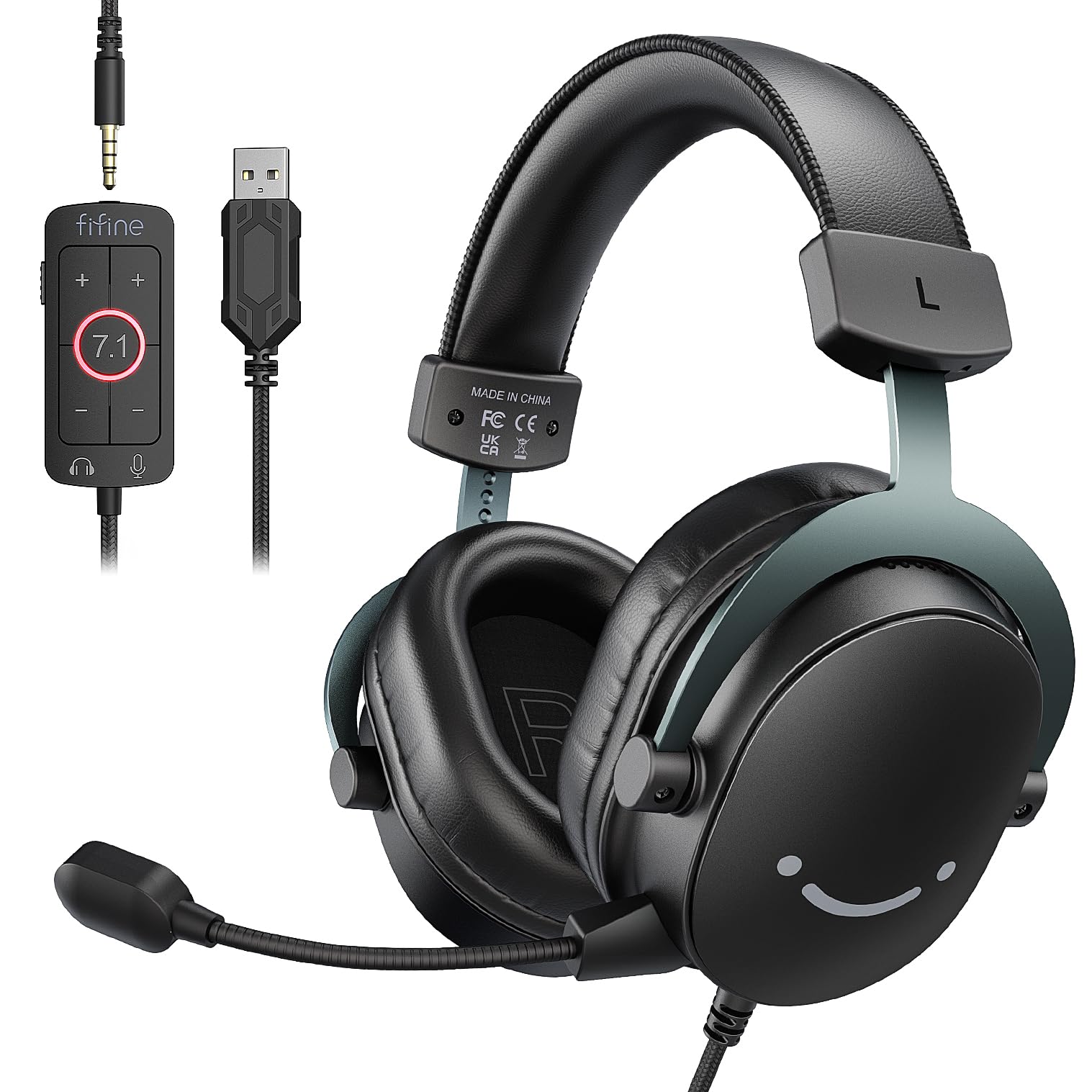
FIFINE Gaming USB Headset with 3.5mm Audio Jack, PC Over-Ear Headset with 7.1 Surround Sound, Detachable Microphone, Volume Control, Wired Headphones Black for PS5/PS4/Switch/XBOX controller H9
£39.09 · FIFINE
Frequently asked
5 questions01Is the NUBWO Wireless Gaming Headset good for competitive gaming?+
It's adequate but not ideal for competitive play. The V-shaped sound signature with its recessed midrange means positional audio cues aren't as precise as they would be on a more neutral-sounding headset. The soundstage is reasonable for the price, but serious FPS players who rely on exact footstep positioning would benefit from spending more on a headset with cleaner imaging and a flatter frequency response.
02Does the NUBWO Wireless Gaming Headset have a good microphone?+
The retractable boom mic is one of the headset's stronger points. Voice clarity is functional and squadmates can understand you clearly in Discord and in-game voice chat. There's a slightly hollow quality compared to better mics, and background noise rejection is only moderate, but for casual gaming chat it performs above expectations for a budget wireless headset.
03Is the NUBWO Wireless Gaming Headset comfortable for long sessions?+
Comfort is acceptable for sessions up to around 90 minutes to two hours. The earcups are generously sized and clamp force is moderate, but the leatherette padding causes heat buildup during longer sessions. Glasses wearers may find the clamp force creates some pressure after an hour or so. It's not the most comfortable headset at any price, but it's not unusually uncomfortable for the budget tier either.
04Does the NUBWO Wireless Gaming Headset work with PS5 and Xbox?+
It works well with PS5 via the USB dongle, connecting plug-and-play with both audio and mic functioning correctly. Xbox wireless is not supported because Microsoft's ecosystem requires either proprietary Xbox Wireless or a wired controller connection. You can use the included 3.5mm cable on Xbox via the controller jack, but that removes the wireless functionality. PC and PS4/PS5 are the primary supported platforms.
05What warranty applies to the NUBWO Wireless Gaming Headset?+
Amazon offers 30-day returns on most items sold and fulfilled by Amazon. NUBWO typically provides a 1-2 year manufacturer warranty on their headsets, though you should verify the specific terms on the product listing or the NUBWO website at the time of purchase, as warranty terms can vary by region and product.