Specs sheets don't tell you whether a headset is actually usable. You can have 53mm drivers, angled acoustics, and a frequency response that looks great on paper, but if the thing is digging into your skull after two hours of Warzone, none of that matters. The real test is whether you can keep it on long enough to get any benefit from those specs. That's the lens I've been using the HyperX Cloud III in pink.
The Cloud III isn't a new product line. HyperX has been iterating on the Cloud formula for years, and at this point it's one of the more trusted names in the mid-range wired headset space. This pink colourway is the same hardware underneath, just dressed differently. It connects via USB-C, USB-A, or 3.5mm, works across PC, PS5, Xbox Series X|S, and mobile, and sits firmly in mid-range territory. The question isn't whether it looks good. The question is whether it performs well enough to justify the spend over cheaper alternatives or whether you should save up for something better.
This review covers competitive FPS use in Apex Legends and Valorant, longer story game sessions in Elden Ring, and general desktop use including video calls. I also used it with a PS5 via USB-C and on PC via USB-A. Here's what I found.
Core Specifications
The Cloud III runs 53mm angled dynamic drivers, which is a step up from the 40mm units you'll find in cheaper headsets. The angling is meant to position the drivers more naturally relative to your ear canal, which HyperX claims improves soundstage and imaging. Whether that's marketing or genuine engineering is something I'll get into in the sound sections, but the hardware foundation is at least credible. Impedance sits at 32 ohms, which means it'll drive fine from a phone or console controller without needing an external amp.
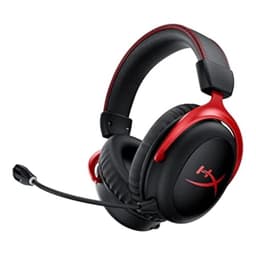
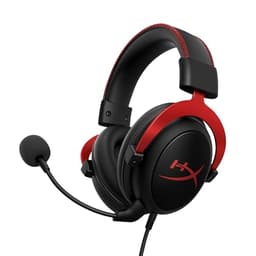
Weight comes in at around 309g, which is on the lighter side for a wired headset with a full aluminium frame. The headband is aluminium with leatherette padding, and the earcups use memory foam covered in leatherette. The mic is a detachable 10mm boom mic, which is a sensible choice over built-in retractable designs. You can pull it off when you don't need it, and replacement is straightforward if it gets damaged. The cable situation is flexible: you get a USB-C cable, a USB-A cable, and a 3.5mm cable in the box, which covers pretty much every scenario.
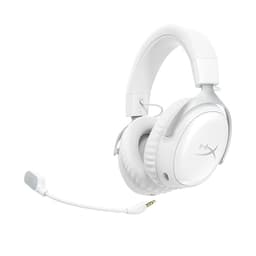
Build quality feels solid. The aluminium frame doesn't flex or creak, and the adjustment sliders have a satisfying click to them. The pink colourway is a muted rose rather than a garish bubblegum shade, which is worth knowing if you were expecting something more subtle. It's a proper colour, not a token gesture. Below is the full spec breakdown.
| Specification | Detail |
|---|---|
| Driver Size | 53mm angled dynamic |
| Frequency Response | 10Hz - 21kHz |
| Impedance | 32 ohms |
| Sensitivity | 98 dBSPL/mW at 1kHz |
| Microphone | 10mm electret condenser, detachable boom |
| Mic Frequency Response | 100Hz - 16kHz |
| Mic Sensitivity | -38dBV/Pa at 1kHz |
| Connection | USB-C, USB-A, 3.5mm |
| Cable Length | 1.2m (USB-C), 1.8m (USB-A), 1.3m (3.5mm) |
| Weight | 309g |
| Platform Compatibility | PC, PS5, Xbox Series X|S, mobile |
| Virtual Surround | DTS Headphone:X (USB mode) |
| Price | Check price |

Audio Specifications: HyperX Cloud III Gaming Headset Review 2026
The 53mm angled dynamic drivers are the headline spec here, and they're worth unpacking. Dynamic drivers work by moving a diaphragm via electromagnetic induction, which is the same basic tech in most headphones. The angling is the more interesting part. By tilting the driver relative to the ear, HyperX is trying to replicate the way sound reaches your ear naturally, from a slightly forward angle rather than directly side-on. In practice, this can improve perceived soundstage width and front-back imaging, though the effect varies depending on your ear shape.
The 32 ohm impedance is low enough that you won't need anything special to drive this. It gets to comfortable listening volumes from a PS5 controller, a phone, or a laptop headphone jack without any issues. Sensitivity is rated at 98 dBSPL/mW, which is adequate. You're not going to be running this at maximum volume and damaging your hearing, but you'll have plenty of headroom at normal gaming levels. The frequency response of 10Hz to 21kHz is a wide claim, and like most manufacturer specs, the extremes should be taken with a pinch of salt. What matters more is how the midrange and upper bass behave, which I'll cover in the sound quality section.
The mic specs are worth a look too. A 10mm electret condenser with a 100Hz to 16kHz response is decent for a gaming headset. The cardioid pickup pattern (unidirectional) means it's designed to reject sound from behind and to the sides, which helps with background noise rejection. The -38dBV/Pa sensitivity is on the lower side, meaning it won't pick up every tiny sound in the room, but it also means you need to speak at a normal volume rather than whispering. In practice, that's fine for gaming comms.
Sound Signature
The Cloud III has a mild V-shape to its sound signature. Bass and treble are pushed forward relative to the midrange, which is a common tuning choice for gaming headsets because it makes explosions feel impactful and high-frequency sounds like footsteps feel crisp. It's not an extreme V-shape though. The mids aren't recessed to the point where voices sound thin or distant. It's more of a gentle curve than a dramatic scoop.
For competitive gaming, this tuning works reasonably well. The elevated treble helps with directional audio cues. Footsteps in Apex Legends were easy to pick out, and the crack of gunfire had enough bite to feel immediate. The bass boost adds weight to explosions and environmental sounds without becoming muddy or masking other frequencies. In Valorant, where audio clarity is arguably more important than raw impact, the Cloud III held up fine. I wasn't missing callouts or struggling to place enemy positions.
For music and movies, the V-shape is a bit more of a compromise. Vocals sit slightly behind the mix, which isn't ideal for acoustic music or dialogue-heavy films. If you're primarily a gamer who occasionally watches YouTube or Netflix through the same headset, it's fine. If you're a music listener first and a gamer second, the tuning might frustrate you. The Cloud III is clearly optimised for gaming, and it doesn't pretend otherwise.
Sound Quality
Soundstage is where the angled drivers are supposed to earn their keep, and honestly, they do make a difference. The Cloud III has a wider perceived soundstage than most headsets at this price point. It doesn't sound like the audio is coming from directly inside your skull, which is the problem with a lot of cheaper gaming headsets. There's genuine left-right separation, and front-back positioning is better than average for a closed-back wired design. In Apex Legends, I could reliably tell whether footsteps were in front of or behind me, which isn't always the case with headsets in this range.
Bass extension is good without being excessive. The low end has weight and presence, particularly in games with heavy environmental audio like Elden Ring. The rumble of distant explosions and the thud of boss attacks felt satisfying without bleeding into the mids. Treble clarity is solid too. High-frequency sounds are crisp and detailed, though there's a slight sharpness in the upper treble that can become fatiguing over very long sessions. I noticed this most during extended music listening rather than gaming, where the dynamic range of the content is more varied.
For movies, the Cloud III performs well above its price bracket. Dialogue is clear enough, action sequences have genuine impact, and the soundstage makes cinematic audio feel more expansive than you'd expect from a closed-back headset. I watched a couple of films through this on PC via USB-A with DTS Headphone:X enabled, and the spatial processing added some useful depth to the surround mix. It's not magic, and it won't replace a proper surround setup, but it's one of the better implementations of virtual surround I've heard at this price. The key is that it doesn't muddy the imaging the way some virtual surround modes do.
Microphone Quality
The 10mm detachable boom mic is one of the better gaming headset mics in this price range. Voice clarity is good. My squadmates in Apex didn't ask me to repeat myself, which is a low bar but one that plenty of gaming headset mics fail. More specifically, the mic captures voice with enough presence that it doesn't sound like you're calling from a tin can. There's a bit of proximity effect when you get close to the capsule, which adds warmth to the voice, but it's not excessive.
Background noise rejection is decent. The cardioid pattern does its job. Alongside a mechanical keyboard and occasional traffic noise from outside, the mic picks up your voice clearly without the background becoming distracting on the receiving end. It's not a broadcast-quality noise gate, and if you're in a genuinely noisy environment, your teammates will hear some of it. But for normal home gaming setups, it's sorted. The mic also has a mute function via a button on the inline control unit, which is quick to find by feel during a match.
One thing worth mentioning: the mic doesn't have any onboard monitoring (sidetone) when used via 3.5mm. You can get sidetone through the HyperX NGENUITY software on PC when using USB, but if you're on console via 3.5mm, you won't hear your own voice in the headset. Some people don't care about this at all, others find it disorienting. Worth knowing before you buy. The mic arm itself is flexible and holds its position well. It doesn't droop during sessions, which is a small but genuinely useful thing.
Comfort and Build
This is where the Cloud III genuinely earns its reputation. At 309g, it's light enough that you stop noticing it's there after about 20 minutes. The memory foam earcups conform to the shape of your head and create a decent passive seal without clamping hard. Clamp force is on the lighter side of medium, which means it won't give you a headache during a four-hour session, but it also means it might shift slightly if you move your head quickly. For desk gaming, that's a non-issue. For anything more active, it's worth being aware of.
The leatherette earcup material is comfortable initially but does get warm over long sessions. After about two hours, I noticed some heat building up around my ears, particularly in a warmer room. It's not unbearable, but if you run hot or game in a warm environment, this will be a factor. The headband padding is generous and the aluminium frame distributes weight well across the top of the head. I wore this for a five-hour Elden Ring session without any significant discomfort, which is a decent real-world test.
Glasses wearers should be fine with this. The earcup depth is generous enough that the frames of most glasses sit inside the cup rather than pressing against the driver housing. It sits comfortably with a pair of standard rectangular frames, with no pressure points. The build quality overall is genuinely good for the price. The aluminium frame feels like it'll survive being knocked off a desk, the adjustment sliders are smooth and firm, and the detachable mic and cables mean the most failure-prone parts are replaceable. Nothing about this feels like it's going to fall apart in six months.

Connectivity
Three connection options in the box is a genuine advantage. The USB-C cable is the primary connection for PC and PS5, enabling DTS Headphone:X virtual surround and full software integration. The USB-A cable covers older PCs and the Xbox Series X|S (which doesn't have USB-C audio support in the same way). The 3.5mm cable covers everything else: Nintendo Switch, mobile, older consoles, and any device with a headphone jack. Having all three cables included rather than sold separately is the right call.
Cable length is sensible across all three options. The USB-A cable at 1.8m is the longest, which is useful for desktop setups where the PC tower is on the floor. The USB-C at 1.2m is fine for laptop use or a PS5 on a desk. The 3.5mm at 1.3m is adequate for most scenarios. None of the cables are braided, which is a minor complaint. They're standard rubber-coated cables that will tangle if you're not careful. Not a dealbreaker, but worth noting.
The inline control unit on the USB-A cable includes a volume wheel and a mic mute button. It's a simple unit but it works. The volume wheel has a smooth action and the mute button has a tactile click. On the USB-C cable, controls are more limited, and on 3.5mm you're relying on whatever volume control your source device has. This is all standard for wired headsets, but it's worth knowing that the full control experience is tied to the USB-A connection specifically. There's no wireless option here, which is a deliberate choice at this price point. No latency concerns, no battery to manage, no dongle to lose.
Battery Life
The Cloud III is a wired headset. There is no battery. This is actually one of its practical advantages over wireless alternatives in the same price range. You plug it in and it works. No charging routine, no mid-session power death, no checking the battery indicator before a long gaming session. For competitive players who want zero variables in their setup, this is a feature rather than a limitation.
The trade-off is obvious: you're tethered to your source device. For desktop PC gaming, this is rarely a problem. The cables are long enough to give you freedom of movement at a desk, and most people aren't moving around while gaming on PC. For console gaming from a sofa, the cable length might be a constraint depending on your setup. The USB-C cable at 1.2m is the shortest of the three, and if your PS5 is more than a metre from your sitting position, you'll need an extension or to use the 3.5mm cable into the controller instead.
If you're coming from a wireless headset and considering switching to the Cloud III, the wired nature is the biggest adjustment. But if you've never been wireless or you've had bad experiences with wireless latency or battery management, the Cloud III's always-on reliability is a genuine selling point. No firmware updates that brick the connection. No interference from other 2.4GHz devices. It just works, every time.
Software and Customisation
HyperX NGENUITY is the companion software for PC, and it's one of the less annoying gaming peripheral apps I've used. It's not bloated, it doesn't run a dozen background processes, and it loads quickly. Through NGENUITY, you get access to a basic EQ with preset profiles (gaming, music, movie, and a custom option), mic monitoring (sidetone), and DTS Headphone:X virtual surround toggle. The EQ presets are actually useful rather than just being marketing labels. The gaming preset boosts the upper mids and treble slightly, which helps with positional audio. The music preset flattens the response a bit, which is more accurate for listening.
The custom EQ gives you a five-band parametric-style interface, which is enough to make meaningful adjustments without being overwhelming. If you want to tame the upper treble sharpness I mentioned earlier, a small cut around 8-10kHz does the job. The mic monitoring feature is useful for people who find it disorienting to not hear their own voice. You can set the sidetone level independently of the main volume, which is a nice touch. Some headsets tie these together and it becomes a mess.
DTS Headphone:X is available in USB mode and it's better than most virtual surround implementations. The key is that it doesn't collapse the stereo image the way some virtual surround modes do. It adds some depth and height cues without making everything sound like it's in a reverb chamber. I'd recommend trying it in gaming scenarios and leaving it off for music. For competitive play, whether it helps or hurts depends on the game. In Apex, I found it useful. In Valorant, I preferred stereo because the DTS processing added a very slight smearing to precise directional cues. Your mileage will vary. The software lets you toggle it quickly, so experimenting is easy.
Compatibility
The Cloud III covers a lot of ground. On PC, USB-A gives you the full software experience with DTS and NGENUITY integration. USB-C works on PC too but the software experience is the same. On PS5, USB-C is the cleanest connection, and the headset is recognised immediately without any setup. On Xbox Series X|S, USB-A is the way to go since Xbox doesn't support USB audio in the same way via USB-C. The 3.5mm connection works on both Xbox and PlayStation controllers, as well as Nintendo Switch in handheld mode and any mobile device with a headphone jack.
One thing to be aware of: DTS Headphone:X is only available in USB mode on PC. On console, you're getting stereo audio regardless of which connection you use. The PS5 has its own Tempest 3D audio processing that works independently of the headset, and the Cloud III is compatible with that. Xbox has its own spatial audio options too. So you're not completely without spatial processing on console, but it's the platform's processing rather than DTS doing the work.
Mobile compatibility via 3.5mm is straightforward. The headset works fine with phones that have a headphone jack. For phones without one, you'd need a USB-C to 3.5mm adapter, which isn't included. The mic also works via 3.5mm on mobile, though call quality will depend on your phone's mic input processing. On an Android device, voice calls come through clearly. It's not a headset I'd primarily recommend for mobile use, but it's functional if you need it.
How It Compares
The Cloud III's main competition at this price point comes from the SteelSeries Arctis Nova 1 and the Corsair HS65 Stereo. Both are wired headsets in the same mid-range bracket, and both have their own strengths. The Arctis Nova 1 has a flatter, more neutral sound signature that some competitive players prefer because it doesn't colour the audio as much. The HS65 has a slightly warmer tuning and is often praised for comfort, though its build quality isn't quite at the Cloud III's level.
Where the Cloud III wins is the combination of build quality, driver size, and connection flexibility. The aluminium frame is more durable than the plastic construction of the Arctis Nova 1. The three-cable setup (USB-C, USB-A, 3.5mm all included) beats both competitors for out-of-the-box versatility. The mic on the Cloud III is also a step above the Arctis Nova 1's, which is decent but not quite as clear. The HS65 has a comparable mic but lacks the USB-C option.
Where the Cloud III loses ground is the sound signature. If you want a more neutral, accurate sound for competitive play, the Arctis Nova 1's flatter tuning might suit you better. The Cloud III's V-shape is enjoyable and works well for gaming, but it's a tuning choice rather than a universal truth. The HS65 also has slightly better passive isolation, which matters if you're gaming in a noisy environment. Overall though, the Cloud III is the strongest all-rounder of the three.
| Feature | HyperX Cloud III | SteelSeries Arctis Nova 1 | Corsair HS65 Stereo |
|---|---|---|---|
| Driver Size | 53mm angled | 40mm | 50mm |
| Sound Signature | Mild V-shape | Neutral/flat | Warm V-shape |
| Mic Type | 10mm detachable boom | Retractable | Detachable boom |
| Connection Options | USB-C, USB-A, 3.5mm | USB-A, 3.5mm | USB-A, 3.5mm |
| Virtual Surround | DTS Headphone:X | None | Dolby Audio 7.1 |
| Frame Material | Aluminium | Plastic/steel | Plastic |
| Weight | 309g | 186g | 270g |
| Price Tier | Mid-range | Mid-range | Mid-range |

Final Verdict: HyperX Cloud III Gaming Headset Review 2026
After several weeks of daily use across competitive FPS, story games, and general desktop work, the Cloud III has earned its place as one of the better mid-range wired headsets you can buy right now. It's not perfect. The leatherette earcups get warm on long sessions, the upper treble can be slightly sharp at higher volumes, and the lack of wireless is a genuine limitation for some setups. But the things it does well, it does properly well.
The build quality is the standout. An aluminium frame at this price point is unusual, and it makes the Cloud III feel like it'll last. The sound quality is genuinely competitive for the price bracket, with a soundstage that punches above its weight and imaging that's useful in actual matches rather than just test tracks. The mic is one of the better gaming headset mics under £80. And the three-cable setup means you can use it across every platform you own without buying anything extra.
Who should buy this? If you're a PC or console gamer who wants a reliable, well-built wired headset with good audio performance and a decent mic, and you don't want to spend premium money, the Cloud III is a strong choice. The pink colourway specifically is worth considering if you want something that looks a bit different from the standard black or white options, and the hardware underneath is identical to the other colourways. At its current mid-range price, it represents good value for what you're getting.
Who should skip it? If you need wireless, look elsewhere. If you want a completely neutral sound signature for the most accurate competitive audio, the Arctis Nova 1 might suit you better. And if you run very hot and know that leatherette earcups are a problem for you, the warmth buildup over long sessions will be a real issue. But for most people in the market for a mid-range wired gaming headset, this is a solid, practical choice that won't let you down.
Our rating: 8 out of 10. The Cloud III does the fundamentals right, builds them into a durable package, and prices it sensibly. That's all most people need.
What works. What doesn’t.
5 + 4What we liked5 reasons
- Aluminium frame feels genuinely durable for the price
- Wider soundstage than most mid-range wired headsets
- Three cables included (USB-C, USB-A, 3.5mm) covers every platform
- Detachable boom mic with clear voice reproduction
- Comfortable enough for five-plus hour sessions
Where it falls4 reasons
- Leatherette earcups get warm after two hours
- Upper treble can be slightly sharp at higher volumes
- No wireless option
- Sidetone only available via USB on PC, not on console
Full specifications
12 attributes| Connectivity | 3.5mm, USB |
|---|---|
| Surround | 7.1 |
| Microphone | detachable |
| Noise cancellation | false |
| Driver size | 53mm |
| Driver size MM | 53 |
| Frequency response HZ | 15-25000 |
| Microphone type | detachable boom |
| Platforms | PC, PS4, PS5, Xbox, Switch, Mobile |
| Spatial audio | true |
| Type | over-ear |
| Weight G | 320 |
If this isn’t right for you
2 options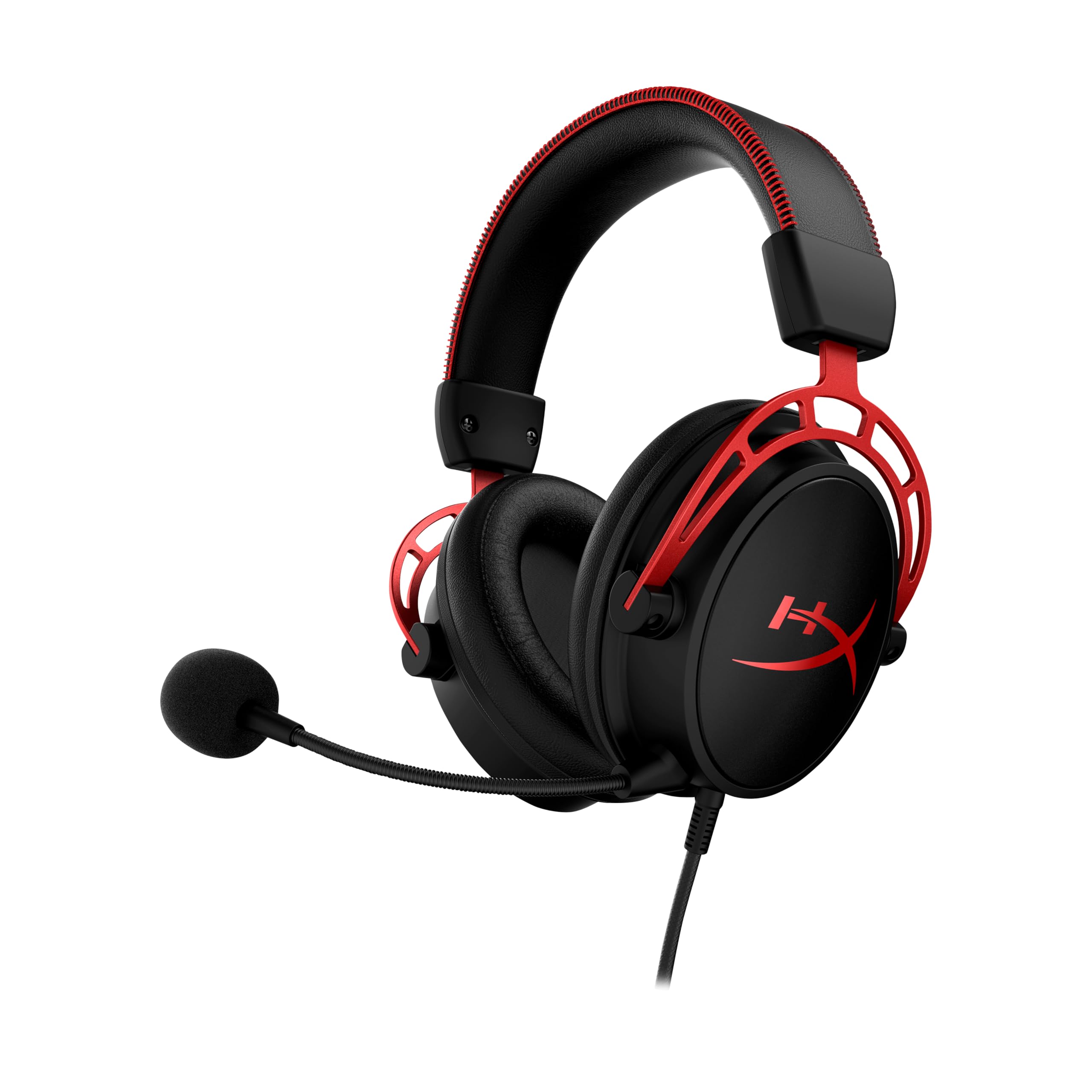

Frequently asked
5 questions01Is the HyperX Cloud III, Wired Gaming Headset, PC, PS5, Xbox Series X|S, Angled 53mm Drivers, DTS, Memory Foam, Durable Frame, Ultra-Clear 10mm Mic, USB-C, USB-A, 3.5mm, Pink good for competitive gaming?+
Yes, it performs well in competitive scenarios. The angled 53mm drivers produce a wider soundstage than most headsets at this price, and positional audio in FPS games like Apex Legends and Valorant is clear and reliable. The mild V-shaped tuning keeps treble crisp for footstep detection without muddying the mids. DTS Headphone:X virtual surround is available in USB mode on PC and adds useful depth, though some players may prefer stereo for the most precise directional cues.
02Does the HyperX Cloud III, Wired Gaming Headset, PC, PS5, Xbox Series X|S, Angled 53mm Drivers, DTS, Memory Foam, Durable Frame, Ultra-Clear 10mm Mic, USB-C, USB-A, 3.5mm, Pink have a good microphone?+
The 10mm detachable boom mic is one of the better gaming headset mics in this price range. Voice clarity is good, background noise rejection is decent for normal home environments, and the cardioid pickup pattern keeps keyboard and ambient noise from dominating the signal. The mic arm holds its position well and doesn't droop during sessions. Sidetone (hearing your own voice) is available via HyperX NGENUITY software on PC in USB mode, but not on console.
03Is the HyperX Cloud III, Wired Gaming Headset, PC, PS5, Xbox Series X|S, Angled 53mm Drivers, DTS, Memory Foam, Durable Frame, Ultra-Clear 10mm Mic, USB-C, USB-A, 3.5mm, Pink comfortable for long sessions?+
Generally yes. At 309g it's light for a headset with an aluminium frame, the memory foam earcups conform well to the head, and clamp force is on the lighter side so it won't cause headaches. The main comfort limitation is heat buildup in the leatherette earcups after around two hours, particularly in warmer rooms. Glasses wearers should be fine as the earcup depth is generous enough to accommodate most frames without pressure points.
04Does the HyperX Cloud III, Wired Gaming Headset, PC, PS5, Xbox Series X|S, Angled 53mm Drivers, DTS, Memory Foam, Durable Frame, Ultra-Clear 10mm Mic, USB-C, USB-A, 3.5mm, Pink work with PS5/Xbox?+
Yes, it works with both. On PS5, USB-C is the recommended connection and the headset is recognised immediately. On Xbox Series X|S, use the USB-A cable as Xbox doesn't support USB audio via USB-C in the same way. Both consoles also support 3.5mm connection via the controller. Note that DTS Headphone:X virtual surround is only available in USB mode on PC; on console you'll use the platform's own spatial audio processing (Tempest 3D on PS5, Windows Sonic or Dolby Atmos on Xbox).
05What warranty applies to the HyperX Cloud III, Wired Gaming Headset, PC, PS5, Xbox Series X|S, Angled 53mm Drivers, DTS, Memory Foam, Durable Frame, Ultra-Clear 10mm Mic, USB-C, USB-A, 3.5mm, Pink?+
Amazon offers 30-day returns. HyperX typically provides 1-2 year warranty on their headsets, but check the current terms on the HyperX website or your purchase confirmation for the exact coverage applicable to your region and purchase date.