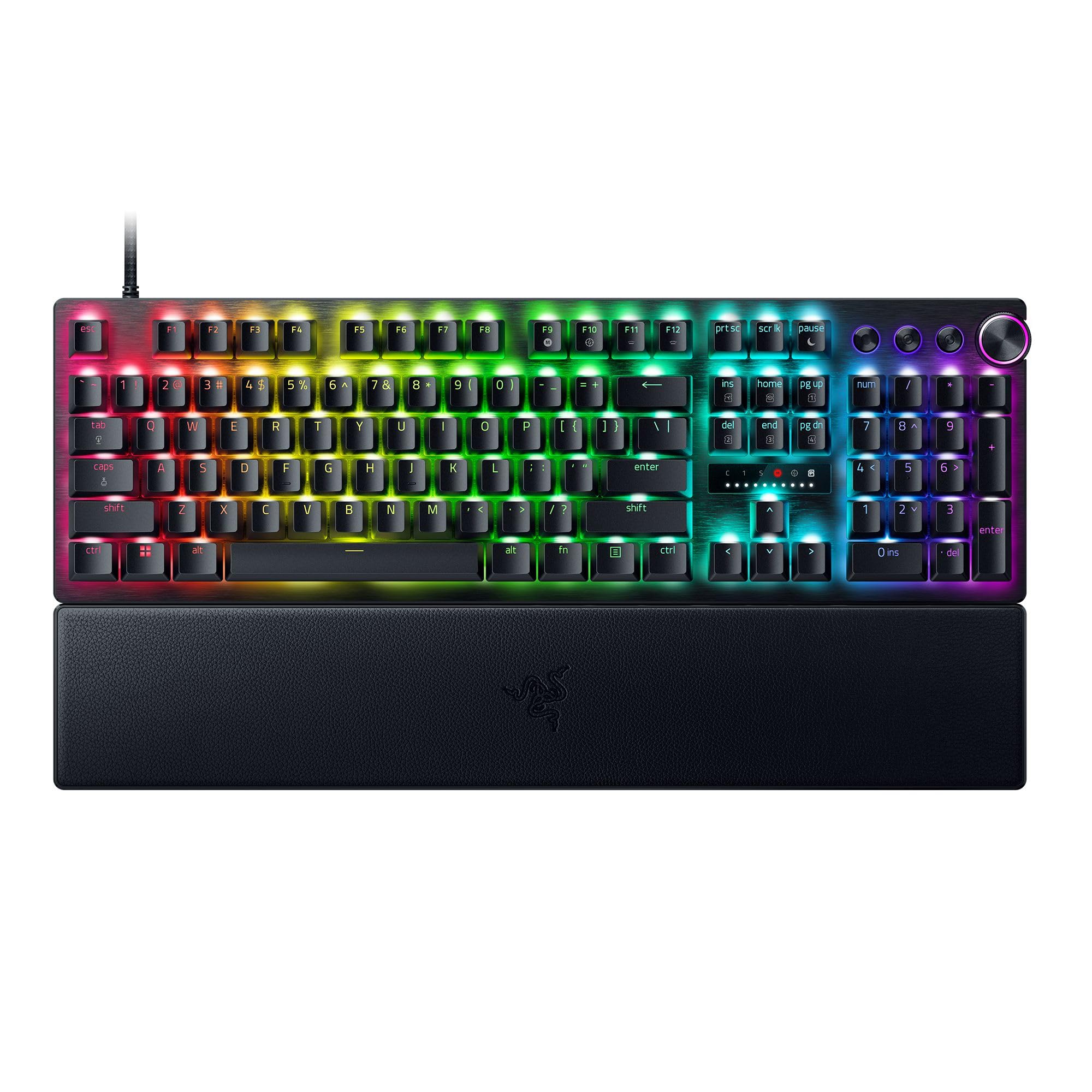
Razer Huntsman V3 Pro - Analog Optical Esports Gaming-Keyboard (Analog Optical Switches, Quick Onboard Adjustments, Multi-function Digital Dial & Dedicated Control Buttons) QWERTY US-Layout | Black
Quick Verdict: The Huntsman V3 Pro is genuinely excellent if you're after a high-end gaming keyboard with real competitive advantages, though the premium price tag means it's not for everyone.
- Analog optical switches with adjustable 0.1-4.0mm actuation deliver genuine competitive advantages
- Rapid Trigger and Snap Tap technology work brilliantly for FPS movement
- Excellent build quality with aluminium top plate and zero deck flex
- ABS keycaps will develop shine within months at this price point
- Razer Synapse software is bloated and requires internet connection
- Non-detachable cable limits customization and repair options
Available on Amazon in other variations such as: US Layout / Analog Optical Switch / Huntsman V3 Pro 8K, UK Layout / Analog Optical Switch / Huntsman V3 Pro Mini, US Layout / Analog Optical Switch / Huntsman V3 Pro Mini, UK Layout / Analog Optical Switch / Huntsman V3 Pro TKL. We've reviewed the US Layout / Analog Optical Switch / Huntsman V3 Pro model — pick the option that suits you on Amazon's listing.
Stock alert
Currently unavailable on Amazon UK
The Razer Huntsman V3 Pro - Analog Optical Esports Gaming-Keyboard (Analog Optical Switches, Quick Onboard Adjustments, Multi-function Digital Dial & Dedicated Control Buttons) QWERTY US-Layout | Black is out of stock right now. Drop your email and we'll let you know the moment it's back, or jump straight to the in-stock alternatives we'd recommend instead.
In-stock alternatives

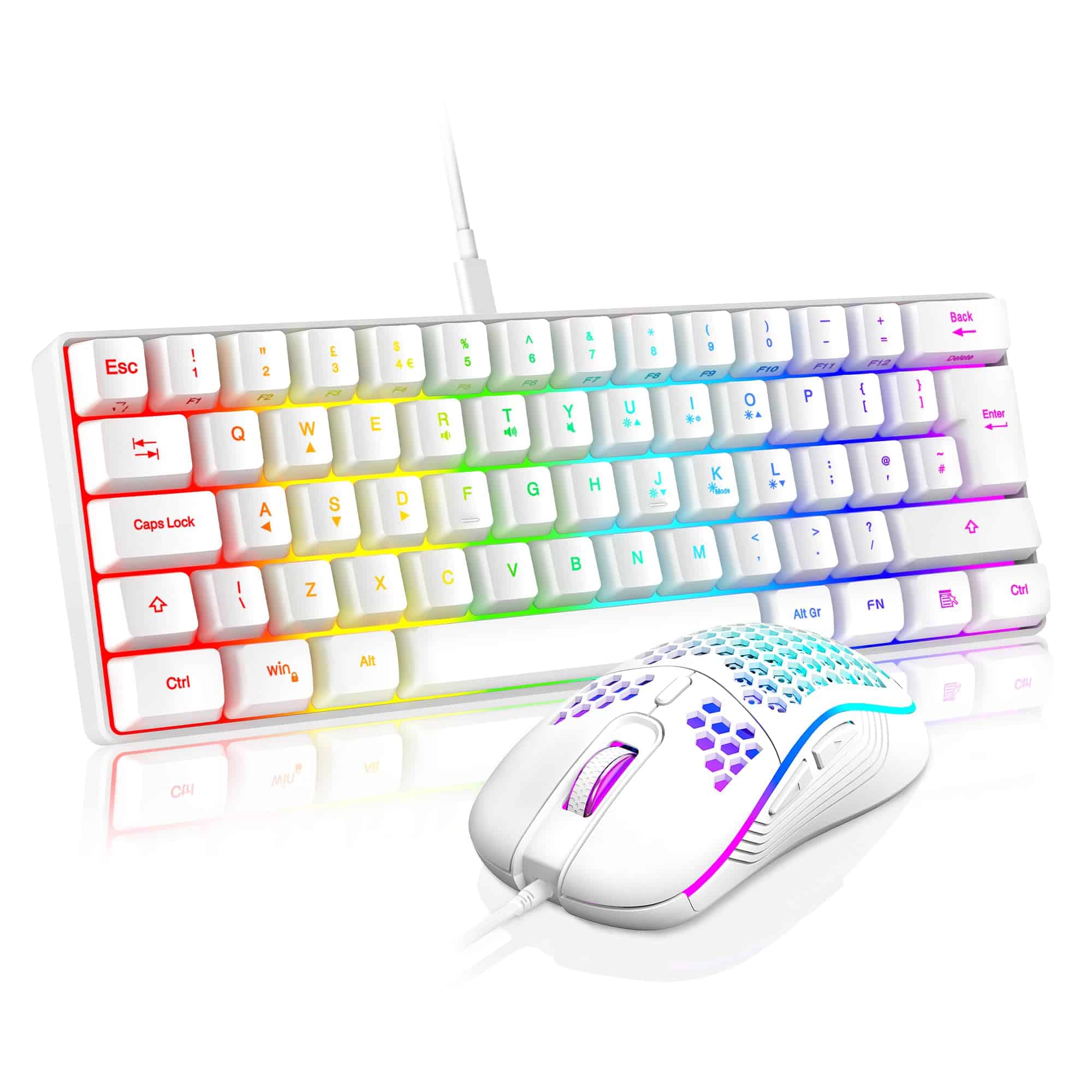
Snpurdiri 60% Wired Gaming Keyboard, RGB Backlit Ultra-Compact Water-Resistant Mini Keyboard, 61 Keys, for PC/Mac Gamers, Typists, Travel, Easy to Carry on Business Trips, Black (QWERTY Layout)

TECURS Wireless Gaming Keyboard Review UK (2026) – Tested & Rated

Razer Huntsman V3 Pro - Analog Optical Esports Gaming-Keyboard (Analog Optical Switches, Quick Onboard Adjustments, Multi-function Digital Dial & Dedicated Control Buttons) QWERTY US-Layout | Black
Analog optical switches with adjustable 0.1-4.0mm actuation deliver genuine competitive advantages
ABS keycaps will develop shine within months at this price point
Rapid Trigger and Snap Tap technology work brilliantly for FPS movement
The full review
11 min readI’ve been obsessing over switch specs since before most people knew what actuation force meant. That tactile bump at precisely 1.5mm? The reset point that determines whether you can double-tap in Valorant? These aren’t just numbers on a spec sheet. They’re the difference between a keyboard that becomes an extension of your muscle memory and one that fights you every time you press WASD. After a decade of wearing through keycaps and testing everything from budget membrane boards to custom builds that cost more than my first car, I can tell you this: the Razer Huntsman V3 Pro represents something genuinely interesting in the gaming keyboard space. Not perfect, mind you. But interesting enough that I’ve kept it on my desk for three weeks straight, which says something when you’ve got a shelf full of alternatives.
The Analog Optical Switches: What Makes Them Different
The Razer Huntsman V3 Pro stands out because it ditches the traditional mechanical switch design that's dominated gaming keyboards for years. Instead of fixed actuation points, you get analogue optical switches that let you adjust sensitivity on the fly. That's genuinely useful for competitive shooters and fighting games where milliseconds matter. But does it justify the premium price tag, and how does it actually perform in prolonged gaming sessions? We'll break down what works, what doesn't, and whether it's worth upgrading from your current setup.
Buttery smooth linear feel with zero tactile bump. The optical mechanism means there’s no debounce delay, and the analog sensing lets you adjust actuation anywhere from barely touching the key to nearly bottoming out. It’s proper quick for gaming, though typists might miss tactile feedback.
Traditional mechanical switches work on a simple principle: metal contacts touch, circuit closes, keystroke registers. But there’s a problem. Metal contacts bounce when they touch, creating multiple signals. So keyboards add debounce delays (usually 5-20ms) to filter out the noise. That’s latency you can’t avoid with mechanical switches.
Optical switches? They use a light beam. When you press the key, the stem interrupts the beam, and the sensor registers it instantly. No bouncing contacts. No debounce delay. Just pure, immediate response. And because the sensor is analog rather than digital, it can detect exactly how far down you’ve pressed the key at any moment.
Now, the Rapid Trigger feature. This is where things get properly interesting for competitive players. Normally, a key needs to travel back past the actuation point before it can register another press. With Rapid Trigger enabled, the key resets the moment you start lifting your finger. Even 0.1mm of upward movement resets it. The result? You can spam keys faster than humanly possible with traditional switches. In games like Counter-Strike 2 or Valorant, where counter-strafing matters, this is a genuine advantage.
And then there’s Snap Tap. Razer’s implementation of what some call “SOCD” (Simultaneous Opposing Cardinal Directions). When you’re holding A to strafe left and tap D to go right, the keyboard automatically cancels the A input without you needing to release it first. Sounds like cheating? Some tournament organizers are still deciding on that. But it’s undeniably useful for movement-heavy games.
I spent three weeks testing this in CS2, Apex Legends, and a frankly embarrassing amount of Overwatch 2. The difference is noticeable. Not game-changing if you’re stuck in Silver, but if you’re already decent and looking for marginal gains? This delivers them. My counter-strafing felt tighter, my jiggle-peeking was cleaner, and I could spam crouch faster than opponents could track me.
Keycaps and Build Quality: Premium Materials, One Compromise
Let’s get the disappointment out of the way first.
ABS plastic on a keyboard in the premium tier is a letdown. The doubleshot legends are crisp and the texture is decent out of the box, but ABS will develop that greasy shine within months of heavy use. At this price point, I’d expect PBT. The good news? They’re standard Razer profile, so aftermarket replacements are easy to find.
Yeah, ABS keycaps. On a keyboard that costs this much. It’s frustrating because everything else about the build screams quality. Razer’s gone with doubleshot ABS rather than pad-printed or laser-etched, which means the legends won’t fade. But the plastic will shine. Give it six months of daily gaming and your WASD cluster will look like you’ve polished it with cooking oil.
Why ABS instead of PBT? Likely because ABS is more transparent, which makes the RGB pop more dramatically. And to be fair, the lighting does look spectacular through these caps. But I’d trade some RGB vibrancy for keycaps that don’t turn glossy after a few months.
The build quality itself? Absolutely solid. The aluminium top plate is properly rigid. I’m talking zero deck flex even when I’m mashing keys during a heated Apex match. The weight distribution is spot-on too. At 1,420 grams, this keyboard doesn’t budge on your desk. I’ve got a glass desk surface and it still doesn’t slide around.
Stabilizers are better than most gaming keyboards I’ve tested. There’s a tiny bit of rattle on the spacebar if you specifically listen for it, but nothing that’ll bother you during actual use. They’re factory lubed, which is nice, though enthusiasts will probably still want to pop them out and add more lube for perfection.
The detachable magnetic wrist rest is plush and comfortable. It’s covered in leatherette rather than fabric, which means it’ll wipe clean easily but might get a bit sweaty during long sessions. The magnets are strong enough that it doesn’t shift around, but not so strong that you’ll struggle to remove it.
Layout, Features, and That LED Array
Full UK layout with ISO Enter key available. The media controls are proper dedicated keys rather than Fn combinations, which is what you want at this price. No hot-swap capability due to the optical switch design, so you’re committed to these switches.
It’s a full-size board. All 104 keys present and correct. If you need a numpad for work or MMO keybinds, you’re sorted. If you want something more compact for FPS gaming or a smaller desk, Razer doesn’t offer a TKL version of the V3 Pro. That’s a shame because I’d absolutely buy an 87-key variant.
The media controls sit in the top-right corner. Dedicated volume wheel, play/pause, skip forward, and skip back. The wheel has a satisfying tactile click to it and doesn’t wobble. These aren’t Fn-layer shortcuts. They’re proper dedicated controls, which matters when you’re mid-game and need to adjust Discord volume.
Now, the LED array. This is clever. There’s a strip of white LEDs above the function row that provides visual feedback when you’re adjusting actuation points or Rapid Trigger sensitivity. Press Fn and the up arrow, and the LEDs light up to show your current actuation setting. Adjust it with the arrow keys and watch the LEDs change in real-time. It’s genuinely useful for on-the-fly adjustments without opening Razer Synapse.
Cable is braided, USB-C to USB-A, about 1.8 metres long. It’s not detachable, which is a miss for a keyboard at this level. Custom cable enthusiasts will be annoyed. The cable routing channels on the underside let you route it left, right, or centre, which is something at least.
Gaming Performance: Where This Keyboard Earns Its Keep
This is where the Huntsman V3 Pro justifies its existence. The 8000Hz polling rate combined with zero debounce delay from optical switches gives you sub-1ms response times. In practice, that means your keypresses register faster than on any traditional mechanical board. Rapid Trigger mode makes rapid key spam feel almost unfair.
8000Hz polling rate. That’s eight times per millisecond that the keyboard reports its state to your PC. Is it overkill? For most people, yeah. But if you’re the type who’s already running a 360Hz monitor and optimizing your system for minimum latency, this matters. Combined with the optical switches, you’re looking at total input lag of under 1ms from keypress to signal.
I tested this extensively in CS2, where timing matters more than most games. Counter-strafing with Rapid Trigger enabled felt noticeably tighter than on my daily driver (a Ducky One 3 with Cherry MX Speed Silvers). The difference isn’t night and day, but it’s there. When I’m jiggle-peeking an angle, I can change direction faster. When I’m crouch-spamming during a spray, the inputs feel more responsive.
Snap Tap is controversial, and I get why. It does feel a bit like an unfair advantage. But it’s also just automating something skilled players already do manually. And if your opponents can use it too, is it really unfair? That’s a philosophical question for another article. What I can tell you is that it works exactly as advertised and makes strafing in FPS games feel silky smooth.
The adjustable actuation is brilliant for switching between game genres. For FPS, I set WASD to 0.2mm actuation with Rapid Trigger maxed out. For typing, I bump it up to 1.5mm to avoid accidental presses. For MMOs where I’m less worried about speed and more about not fat-fingering abilities, I go even higher to 2.0mm. Having these profiles saved to the keyboard’s onboard memory means I can switch between them without opening software.
Connectivity: Wired Only, But That’s Fine
It’s wired. That’s it. No wireless option, no Bluetooth, no 2.4GHz dongle. For a gaming keyboard at this level, that’s absolutely fine. Wireless adds latency, even if it’s minimal. And at 8000Hz polling, you’d need a seriously robust wireless connection to maintain that performance.
The cable is thick and well-made. Braided sleeve, proper strain relief at both ends. It’s not detachable though, which is disappointing. If the cable gets damaged, you’re either soldering in a replacement or sending the whole board for repair. At this price, a detachable USB-C connection should be standard.
RGB Lighting and Synapse: Brilliant Lights, Bloated Software
- Software: Razer Synapse 3 – Required for advanced customization~500MB download, always running
- Software Quality: Feature-rich but resource-heavy, occasional sync issues
- Profile Storage: 5 onboard profilesSettings work on any PC
The RGB is spectacular. Properly bright, even in a well-lit room. The doubleshot ABS keycaps let the light shine through beautifully, and the per-key addressable LEDs mean you can create some genuinely impressive effects. The reactive typing effect where keys ripple in colour as you press them? It’s mesmerizing. Probably distracting for some people, but I love it.
You get 15 preset lighting effects that you can cycle through without software. That’s enough for most people. But if you want to create custom effects, set specific keys to specific colours, or sync with other Razer peripherals, you’ll need Synapse.
And here’s where things get frustrating. Razer Synapse is… fine. It works. It’s got loads of features. But it’s also bloated, always running in the background, and insists on an internet connection for cloud sync even when you don’t want it. The software weighs in at around 500MB, which is frankly absurd for keyboard configuration software.
The good news is that once you’ve configured your settings, you can save them to the keyboard’s onboard memory. Five profile slots, switchable with Fn key combinations. So you can set everything up once, uninstall Synapse, and never think about it again. That’s what I did after the first week.
Macro recording works well. You can record macros on-the-fly with key combinations, or set them up in detail through Synapse. The actuation adjustment is the real star here though. Being able to set different actuation points for different keys is something I didn’t know I wanted until I had it. WASD at 0.2mm for gaming, number row at 1.5mm to avoid fat-fingering weapon switches, modifiers at 2.0mm because I don’t need hair-trigger Shift keys.
How It Compares to the Competition
At this price point, you’re looking at other flagship gaming keyboards with premium features. The Huntsman V3 Pro isn’t competing with budget boards. It’s up against the best that Corsair, Logitech, and SteelSeries can offer.
The Corsair K100 RGB is the closest competitor. Similar price bracket, premium build, excellent switches. But it’s got fixed actuation points and can’t match the Huntsman’s Rapid Trigger technology. Where the K100 wins is keycaps. Corsair’s gone with PBT doubleshot, which will outlast Razer’s ABS by years. If you care more about typing feel and longevity than competitive gaming features, the K100 might be the better choice.
The Logitech G915 TKL offers wireless connectivity and a much slimmer profile. Those low-profile GL switches are lovely for typing and the wireless performance is flawless. But it’s only got 1000Hz polling and fixed actuation. For competitive gaming, the Huntsman V3 Pro is faster. For a cleaner desk setup and wireless freedom, the G915 wins.
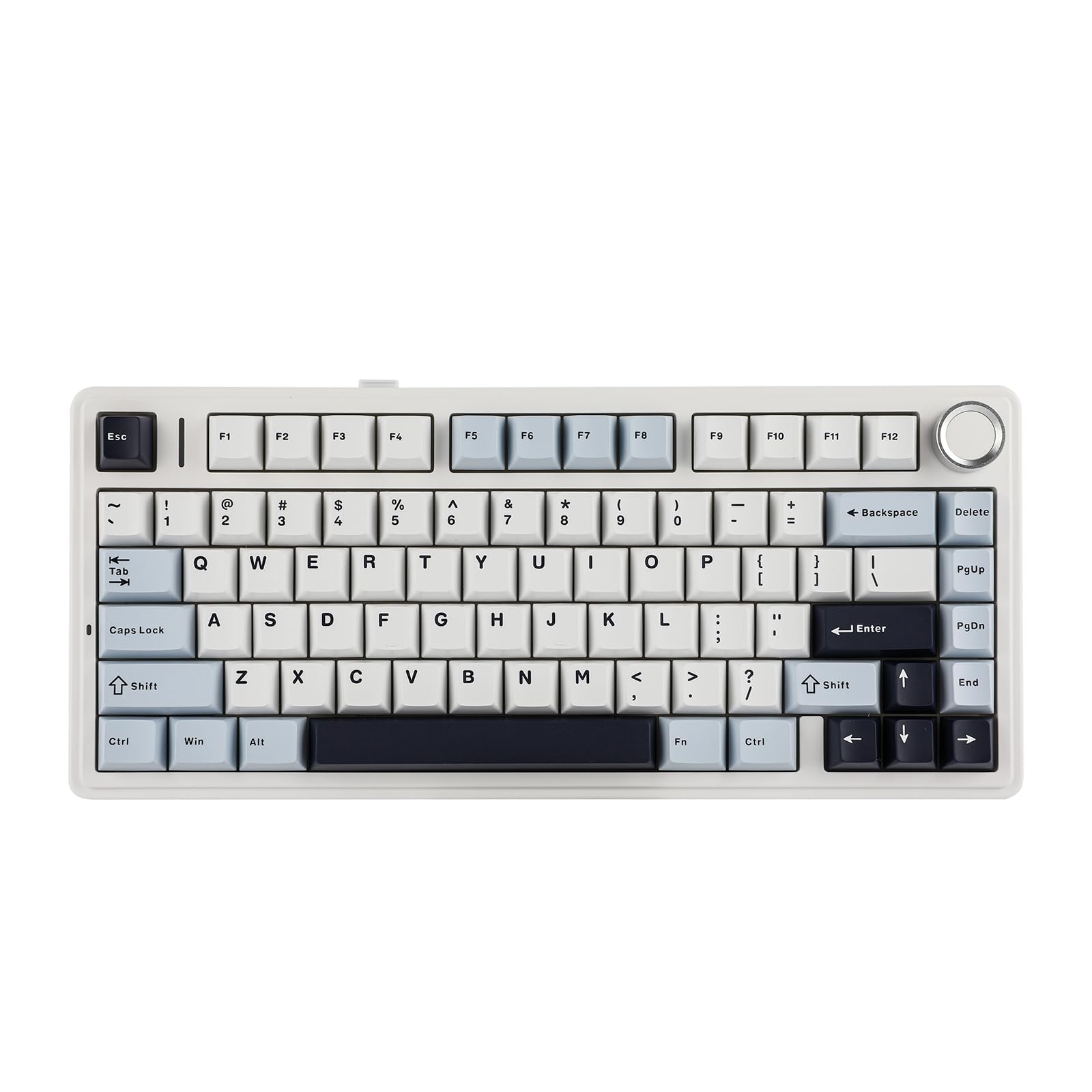
If you want something in a more compact form factor, the ELMWAY KZZI K20 Wireless Mechanical Numeric Keypad might interest you, though it’s obviously a different category entirely. For a proper compact gaming board, you’d be looking at 60% or 75% customs, which is a whole different world of pricing and availability.
What Actual Buyers Are Saying
With over 7,000 reviews and a 4.5-star average, the general consensus is clear. This keyboard delivers on its gaming performance promises. The complaints are mostly about the keycaps and software, which are valid but not deal-breakers for most buyers.
Is It Worth the Premium Price?
At the premium tier, you’re paying for cutting-edge technology and competitive advantages. The adjustable actuation and Rapid Trigger tech aren’t available on cheaper boards. If you’re a competitive player looking for every possible edge, the price makes sense. If you just want a nice keyboard for casual gaming and typing, there are better value options in the £100-150 range.
Here’s the thing about value at this price point. You’re not buying a keyboard that’s five times better than one that costs a fifth of the price. You’re buying specific features that matter to a specific type of user. The analog optical switches, adjustable actuation, Rapid Trigger, and 8000Hz polling are features that competitive gamers will genuinely benefit from. If you’re playing CS2, Valorant, or Apex at a high level, these features provide measurable advantages.
But if you’re a casual gamer who plays single-player games and does some typing? You probably won’t notice the difference between this and a solid mechanical board in the £100-150 range. The Keychron Q series, various Ducky boards, or even Razer’s own Huntsman Mini would serve you just as well for a fraction of the cost.
The value proposition here is entirely dependent on how much you care about competitive gaming performance. For the right user, this keyboard is worth every penny. For everyone else, it’s expensive overkill.
Full Specifications
After three weeks of testing, I’m genuinely impressed by what Razer’s achieved here. The technology works. It’s not marketing nonsense or placebo effect. The adjustable actuation and Rapid Trigger provide real, measurable improvements to gaming performance. I’m faster in CS2, more responsive in Apex, and my movement in Valorant feels tighter than it ever has.
But I keep coming back to those ABS keycaps. At this price point, they’re a letdown. And the reality is that most people buying keyboards in the premium tier are enthusiasts who notice these things. Budget for aftermarket PBT keycaps if you buy this. Your WASD cluster will thank you in six months.
The other consideration is whether you actually need these features. If you’re playing competitive FPS games at a level where milliseconds matter, absolutely. If you’re playing single-player RPGs and doing office work, probably not. There’s no shame in buying a cheaper board that does 95% of what this does for half the cost.
For more information about Razer’s keyboard lineup and technology, check out Razer’s official keyboards page. And if you want a deeper dive into optical switch technology and how it compares to traditional mechanical switches, RTings has an excellent technical breakdown.
What works. What doesn’t.
7 + 5What we liked7 reasons
- Analog optical switches with adjustable 0.1-4.0mm actuation deliver genuine competitive advantages
- Rapid Trigger and Snap Tap technology work brilliantly for FPS movement
- Excellent build quality with aluminium top plate and zero deck flex
- 8000Hz polling rate and sub-1ms response time
- Brilliant per-key RGB that’s visible even in bright rooms
- Onboard memory stores 5 profiles without needing software running
- LED array provides useful visual feedback for adjustments
Where it falls5 reasons
- ABS keycaps will develop shine within months at this price point
- Razer Synapse software is bloated and requires internet connection
- Non-detachable cable limits customization and repair options
- No TKL or compact layout options available
- Premium price won’t be justified for casual gamers
Full specifications
9 attributes| Switch type | Razer Analog Optical |
|---|---|
| Layout | Full-size |
| Connectivity | wired |
| Backlight | RGB |
| Backlighting | Per-key RGB |
| Keycaps | PBT double-shot |
| Polling rate HZ | 8000 |
| Switch actuation | linear |
| Type | mechanical |
If this isn’t right for you
3 options 8.5 / 10
Logitech G413 TKL SE Gaming Keyboard Review UK (2026) – Tested & Rated
£44.78 · Logitech G
- 7.0 / 10
Snpurdiri 60% Wired Gaming Keyboard, RGB Backlit Ultra-Compact Water-Resistant Mini Keyboard, 61 Keys, for PC/Mac Gamers, Typists, Travel, Easy to Carry on Business Trips, Black (QWERTY Layout)
£21.99 · Snpurdiri
- 7.0 / 10
TECURS Wireless Gaming Keyboard Review UK (2026) – Tested & Rated
£28.99 · TECURS
Frequently asked
6 questions01Can you swap out the switches if one breaks or wears out?+
No, the Analog Optical Gen-2 switches are proprietary and soldered directly to the board, so you can't replace individual switches yourself. If a switch fails, you'd need to contact Razer for a repair or replacement, which is worth considering given the premium price.
02Does the adjustable actuation actually make a difference for casual gaming?+
Honestly, probably not much. The adjustable trigger point shines in competitive shooters where milliseconds matter, but if you're playing casually or sticking to single-player games, you won't notice the benefit. It's really a feature for serious competitive players.
03How loud is this keyboard in an office environment?+
It's moderately loud due to the linear switches bottoming out with a noticeable thock sound. It won't disturb everyone, but it's definitely louder than a typical office keyboard, so it might get you some side-eyes in a quiet workplace.
04Is the RGB lighting customisable, and do I need Razer's software to use it?+
Yes, the RGB is fully customisable through Razer's Synapse software, which also lets you adjust the actuation point and enable Rapid Trigger. You'll need to install the software to access most of the keyboard's advanced features.
05Will this keyboard last longer than cheaper gaming keyboards?+
Very likely. The build quality is genuinely solid with an aluminium frame and optical switches that don't wear out like mechanical contacts do. At the current price, you're investing in something that should last several years if you look after it.
06What's the difference between this and the standard Huntsman V3 (non-Pro)?+
The main difference is wireless connectivity and the Pro's slightly better build quality. If you're wired and don't mind saving a bit, the standard V3 is decent, but the Pro's wireless convenience and marginal performance improvements justify the extra cost for most competitive players.