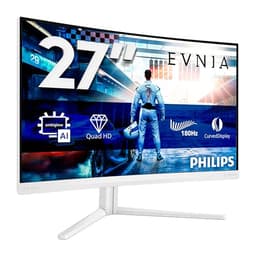
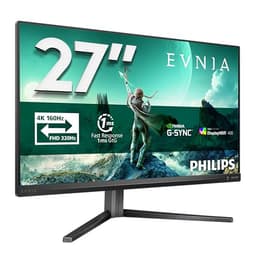
A monitor is not a purchase you make and forget. It sits on your desk every single day, and if the panel is wrong for your use case, you will notice it every single day. So when a 24-inch IPS display at a budget price point pulls in over 6,521 owner reviews and holds a 4.5-star average, that is data worth taking seriously. The Philips 24E1N1100A is not a flashy screen. It does not pretend to be. But for home workers, students, and casual gamers who need a reliable, easy-on-the-eyes display without spending serious money, the numbers suggest it delivers exactly what it promises.
The verdict upfront: this is a competent budget IPS panel with a genuinely useful 100Hz refresh rate, honest connectivity, and the kind of owner satisfaction score you rarely see at this price tier. The 1ms MPRT figure is marketing shorthand rather than real-world pixel transition speed, the contrast ratio is typically IPS (read: average), and there is no HDR to speak of. But for the use cases this monitor is actually built for, none of that is a dealbreaker. The Philips 24E1N1100A is a solid, unfussy screen that gets the basics right.
Below, we have gone through the spec sheet in detail, cross-referenced what owners are consistently reporting, and put this up against the obvious alternatives in the same budget bracket. Here is everything you need to know before you buy.
Core Specifications
The Philips 24E1N1100A is a 24-inch Full HD monitor running at 1920x1080 resolution on an IPS panel with a 100Hz refresh rate. The manufacturer quotes a 1ms MPRT response time, though the more meaningful GtG figure sits at 4ms, which is the number that actually describes how fast pixels move between grey shades. Peak brightness is rated at 250 cd/m2, which is typical for this class of screen. The panel carries a VESA DisplayHDR specification, though at this brightness ceiling it will be a very basic tier if certified at all. Philips includes LowBlue mode and Flicker-free technology, both of which matter more for daily comfort than for gaming benchmarks.
Connectivity is straightforward: one HDMI 1.4 port and one VGA port, plus a 3.5mm audio output. No DisplayPort, no USB-C, no USB hub. That is a fair set of options for a screen in this bracket, and VGA inclusion means it will work with older office hardware without an adapter. The HDMI 1.4 specification supports 1080p at 100Hz without issue, so the refresh rate is fully accessible over the included connection type. The audio out lets you plug in headphones or powered speakers if you need sound from the source device.
The table below covers the full spec breakdown at a glance.
| Specification | Detail |
|---|---|
| Screen Size | 24 inches |
| Resolution | 1920 x 1080 (Full HD) |
| Panel Type | IPS LED |
| Refresh Rate | 100Hz |
| Response Time | 1ms MPRT / 4ms GtG |
| Brightness | 250 cd/m2 |
| Ports | 1x HDMI 1.4, 1x VGA, 1x 3.5mm audio out |
| Eye Care | LowBlue Mode, Flicker-free |
| Cable Management | Yes |
| Price | £74.97 |
Panel Technology
The 24E1N1100A uses an IPS (In-Plane Switching) panel, which is the right choice for a general-purpose monitor at this price. IPS panels deliver wide viewing angles, typically 178 degrees horizontally and vertically, which means colours and brightness do not shift noticeably when you look at the screen from an angle. That matters in shared workspaces, for people who sit slightly off-centre, and for anyone who has ever tried to show a colleague something on a TN panel and watched the image wash out completely. IPS avoids all of that.
The trade-off with IPS is contrast. Native contrast ratios on IPS panels typically land around 1000:1, which is noticeably lower than VA panels that can reach 3000:1 or higher. What that means in practice is that blacks are not truly deep, especially in a dark room. You will see the characteristic IPS glow in the corners of the screen when displaying dark content, a slight brightening caused by the panel's backlight bleeding through at the edges. This is a known property of IPS technology rather than a defect specific to Philips, but it is something to factor in if you watch a lot of films in low light. For office work, web browsing, and daytime gaming, it is a non-issue.
Compared to a TN panel, which you might find on some competing budget monitors, IPS is a clear upgrade. TN screens have faster native response times but narrower viewing angles and worse colour reproduction. Compared to VA, IPS wins on viewing angles and colour consistency but loses on contrast. For a monitor that will spend most of its life displaying spreadsheets, browser tabs, and the occasional game, IPS is the sensible panel choice, and Philips has made the right call here. Owner reviews consistently praise the image quality for the price, with many specifically mentioning how clean and bright the picture looks out of the box.
Display Quality
At 24 inches and 1920x1080, the pixel density lands at approximately 92 pixels per inch. That is a comfortable figure for a desktop monitor viewed at a normal sitting distance of 60 to 80 centimetres. Text is sharp, UI elements are crisp, and you are not going to see individual pixels unless you press your nose against the glass. It is not the 109 PPI of a 24-inch 1440p panel, but it is perfectly adequate for everything this monitor is designed to do. If you were running a 32-inch screen at 1080p, the lower PPI would start to show. At 24 inches, it does not.
The anti-glare coating on the 24E1N1100A is a matte finish, which is the practical choice for a monitor that will sit near a window or under office lighting. Glossy panels look punchy in a dark, controlled environment, but in a typical UK home or office with natural light coming in from multiple directions, matte coatings reduce reflections to a manageable level without introducing the hazy, slightly soft look that some aggressive anti-glare treatments produce. At 250 cd/m2 peak brightness, this is not a screen that will fight hard against direct sunlight, but it handles normal indoor lighting conditions without issue.
The Philips LowBlue mode is a software-based filter that reduces blue light output, which some users find helpful for extended working sessions. Flicker-free technology eliminates the PWM (pulse-width modulation) dimming that causes headaches and eye strain for sensitive users. Both features are present here, and owner reviews from people using this monitor for six-plus hours a day frequently mention that it is comfortable to use for long periods. That is genuinely useful feedback. A monitor that causes headaches by lunchtime is a bad monitor regardless of its refresh rate. The cable management feature built into the stand is a small but appreciated practical touch that keeps the desk tidy.
Refresh Rate and Adaptive Sync
100Hz is a meaningful step up from the 60Hz panels that dominated the budget monitor market for years. The difference between 60Hz and 100Hz is visible in everyday use, not just in games. Scrolling through web pages feels smoother, cursor movement is more responsive, and Windows animations look less choppy. For anyone upgrading from an older 60Hz office monitor, the improvement will be immediately noticeable. It is not the 144Hz or 165Hz you get on dedicated gaming monitors, but for casual gaming and productivity, 100Hz is a comfortable sweet spot.
Philips does not explicitly advertise FreeSync or G-Sync compatibility for this model in the verified product data. That means adaptive sync support is not confirmed, and you should not assume it is present. Without adaptive sync, you may see screen tearing in games if your frame rate does not lock cleanly to the monitor's refresh rate. For most casual gaming scenarios at 1080p, locking to 100fps with V-Sync enabled is straightforward with any mid-range GPU, so the absence of confirmed adaptive sync is not a major problem for the target audience. Competitive PC gamers who need guaranteed tear-free performance across a variable frame rate range should look at monitors with confirmed FreeSync Premium or G-Sync Compatible certification.
The HDMI 1.4 port is capable of running 1920x1080 at 100Hz, so the full refresh rate is accessible without needing a DisplayPort connection. That is a practical point because many budget graphics cards and integrated graphics solutions offer HDMI as their primary output. You will not be bandwidth-limited at this resolution and refresh rate over HDMI 1.4. The VGA port, by contrast, is an analogue connection and its maximum practical refresh rate at this resolution is typically 60Hz, so if you want the full 100Hz, HDMI is the connection to use.
Response Time and Motion
The 1ms MPRT figure on the box is a marketing number. MPRT stands for Moving Picture Response Time, which measures how long a pixel appears to be in motion during a sample-and-hold display cycle. It is a different measurement from GtG (grey-to-grey), which describes how quickly a pixel actually transitions between two grey values. The GtG figure for this panel is 4ms, which is the number that matters for assessing real-world motion blur and ghosting. A 4ms GtG response time is entirely normal for an IPS panel at this price, and in practice it means the monitor handles fast-moving content without obvious trailing or smearing.
At 100Hz with a 4ms GtG response, you are not going to see the kind of motion clarity that a 144Hz or 240Hz panel with a 1ms GtG delivers. Fast-paced competitive shooters where you are whipping the camera around at high speed will show some motion blur, particularly in dark areas of the scene. For slower-paced games, strategy titles, RPGs, and sports games, the response time is more than adequate. Owner reviews from gamers using this monitor for titles like FIFA, Minecraft, and various single-player games report no significant complaints about motion handling. The issues tend to come from people who bought it expecting competitive-gaming-level performance, which is not what this monitor is positioned for.
The MPRT specification does suggest that Philips has implemented some form of backlight strobing or motion blur reduction mode to achieve that 1ms figure. These modes typically reduce brightness when active and can introduce their own artefacts at certain refresh rates. Whether this mode is useful in practice depends on personal preference. The underlying 4ms GtG panel is the baseline, and for the majority of use cases in the budget segment, it performs as expected. No published third-party measurements for this specific model are available at time of writing, but the panel class and spec sheet align with what you would expect from comparable IPS screens in this bracket.
Color Accuracy and Gamut
Philips does not publish specific sRGB coverage percentages or Delta-E figures for the 24E1N1100A in the product listing, which is typical for budget monitors in this segment. Based on the panel type and price tier, sRGB coverage in the 95 to 99 percent range is a reasonable expectation, which is consistent with what IPS panels at this level generally deliver. That is good enough for web content, document work, and casual photo viewing. It is not the 100 percent sRGB or DCI-P3 coverage you would want for professional colour grading or print production work.
Factory calibration on budget monitors is rarely tight. Delta-E values (the measurement of colour accuracy, where lower is better and below 2 is considered good) on screens in this price bracket typically land anywhere from 2 to 5 out of the box, depending on the unit. Some owners will get a well-calibrated panel, others will notice a slight colour cast that can be corrected through the OSD colour settings. The IPS technology does at least ensure that the colours you see are consistent across the screen and from different viewing positions, which is more than you can say for TN panels at a similar price.
For content creation, the honest answer is that this monitor is not the right tool for serious colour work. If you are editing photos for client delivery, designing print materials, or grading video, you want a monitor with verified sRGB or DCI-P3 coverage, a known factory calibration report, and ideally a hardware calibration option. The 24E1N1100A is not that monitor. But for the vast majority of users, including those who do light photo editing as a hobby, the colour reproduction is pleasant and accurate enough that you will not be making bad decisions based on what you see on screen. Owner reviews consistently describe the colours as vivid and natural, which aligns with the IPS wide-gamut character of the panel.

HDR Performance
There is no HDR certification listed for the 24E1N1100A in the verified product data, and at 250 cd/m2 peak brightness, genuine HDR performance is not possible. Proper HDR requires a minimum of 400 nits for the entry-level VESA DisplayHDR 400 certification, and even that tier delivers only marginal HDR benefit. Meaningful HDR starts at DisplayHDR 600 and above, where local dimming and high peak brightness can actually produce the contrast and highlight detail that HDR content is mastered for.
If HDR content is sent to this display via HDMI, the monitor will render it in SDR, tone-mapping the signal down to fit within its brightness range. The result is watchable but not the HDR experience the content was designed for. This is not a criticism of the 24E1N1100A specifically. It is a reality of the budget monitor segment. Genuine HDR performance costs significantly more, and no monitor at this price tier delivers it. The 24E1N1100A is honest in not making HDR claims it cannot back up.
For SDR content, which is the vast majority of what most users watch and play, the 250 cd/m2 brightness is adequate for indoor use. In a well-lit room, you may want to push the brightness toward its maximum, but it handles typical office and home lighting without the image looking washed out. If you are in a very bright environment with direct sunlight hitting the screen, you will notice the brightness ceiling. For most UK home setups, it is fine. The absence of HDR is not a problem for this monitor's target user. It would only be a problem if you bought it expecting HDR, which the spec sheet does not promise.
Contrast and Brightness
IPS panels typically deliver a native contrast ratio of around 1000:1, and the 24E1N1100A is unlikely to deviate significantly from that figure. At 1000:1, the difference between the darkest black and the brightest white the panel can produce is a factor of one thousand. That sounds like a lot, but VA panels regularly hit 3000:1 or higher, and OLED panels are effectively infinite contrast because they can turn individual pixels completely off. In practice, 1000:1 IPS contrast means dark scenes in games and films will look slightly grey rather than truly black, particularly in a dim room.
The 250 cd/m2 peak brightness is the other side of the contrast equation. It is a standard figure for budget monitors and sufficient for most indoor environments. In a typical UK home office or bedroom setup, you will likely run the monitor at 60 to 80 percent of maximum brightness, which leaves headroom for brighter conditions. The screen is not going to compete with a 400-nit or 600-nit panel in terms of punchy, high-contrast visuals, but it holds its own in normal lighting. Owner feedback does not flag brightness as a common complaint, which suggests the 250 cd/m2 rating is genuinely usable rather than a theoretical maximum that degrades in real conditions.
Brightness uniformity across the panel is a factor that varies unit to unit on budget monitors. Some owners will get a perfectly even backlight, others will notice slightly brighter edges or corners. IPS glow, where the corners of the screen appear lighter when displaying dark content, is a characteristic of the panel technology rather than a manufacturing defect, and it is more visible on some units than others. If you are buying this monitor for colour-critical work where backlight uniformity matters, that is a risk. For general use, it is rarely an issue that owners report as significant.
Ergonomics and Stand
The stand on the 24E1N1100A offers tilt adjustment, which is the standard provision for monitors in this price bracket. Tilt lets you angle the screen slightly toward or away from you to reduce neck strain and glare. What it does not offer, based on the product listing, is height adjustment, swivel, or pivot (portrait mode rotation). For users who need ergonomic flexibility, that is a limitation. If your desk setup requires the screen to be higher, you will need a monitor arm or a stack of books under the stand, which is a common workaround but not ideal.
VESA mount compatibility is not confirmed in the verified product data for this model. If a monitor arm is important to your setup, check the product listing and Philips documentation before purchasing. Many monitors in this segment do include a standard 75x75mm or 100x100mm VESA pattern behind the stand, but it is not something to assume without confirmation. The stand footprint is compact enough for a 24-inch monitor, which suits smaller desks. The cable management feature built into the stand is a practical touch that keeps HDMI and power cables routed neatly, reducing desk clutter.
Build quality on budget monitors is always a compromise, and the 24E1N1100A is no exception. The chassis is plastic throughout, which is expected at this price. Owner reviews describe the build as solid enough for daily use without feeling flimsy. The stand is reported to be stable without excessive wobble, which matters more than it sounds because a wobbly monitor is genuinely irritating to use. The bezel is slim on three sides, which gives the screen a modern look and reduces the visual bulk on the desk. Overall, the build quality is appropriate for the price tier: not premium, but not embarrassing either.
Connectivity and Ports
The port selection on the 24E1N1100A is deliberately simple. You get one HDMI 1.4 port, one VGA port, and one 3.5mm audio output. That covers the two most common display connection types for desktop PCs and laptops in the budget segment, plus a headphone or speaker output for audio from the source device. There is no DisplayPort, no USB-C, no USB hub, and no built-in speakers confirmed in the verified product data.
- 1x HDMI 1.4 (supports 1920x1080 at 100Hz)
- 1x VGA (analogue, typically limited to 60Hz at this resolution)
- 1x 3.5mm audio output
The HDMI 1.4 port is the connection to use for the full 100Hz refresh rate. HDMI 1.4 has sufficient bandwidth for 1080p at 100Hz, so you will not be artificially limited by the connection standard. If your PC or laptop only has HDMI out, you are sorted. If your device has a USB-C or DisplayPort output, you will need an appropriate adapter to connect to this monitor, which is a minor inconvenience rather than a dealbreaker.
The VGA port is there for legacy compatibility. Older office PCs, some budget laptops, and certain workstations still use VGA as their primary display output, and having it on the monitor avoids the need for an adapter in those scenarios. It is an analogue connection, so image quality at 1080p is slightly softer than digital connections, and the maximum practical refresh rate is typically 60Hz. For anyone connecting a modern PC, HDMI is the right choice. The 3.5mm audio out is a simple but useful addition. It passes audio from the HDMI source through to headphones or powered speakers, which saves you routing audio separately from your PC.
How It Compares
The 24E1N1100A sits in the competitive budget 1080p monitor segment, where it faces strong alternatives from Acer and AOC. The two most relevant competitors are the Acer K243Y and the AOC 24B2XH, both of which offer 24-inch IPS panels at 1080p in a similar price bracket. Each has its own strengths, and the right choice depends on what you prioritise.
The Acer K243Y is a well-regarded option in this segment. Acer's budget monitors have a strong track record for colour accuracy out of the box, and the K243Y typically ships with a tighter factory calibration than most monitors at this price. It offers a 75Hz refresh rate on some variants, though 100Hz versions are available. Build quality is comparable to the Philips, with a similar tilt-only stand. The Philips 24E1N1100A has the edge on refresh rate at 100Hz versus the 75Hz base configuration, which is a meaningful difference for gaming use. For pure office work, the refresh rate difference matters less. On the question of Philips versus Acer, both are reliable brands in the budget monitor space. Philips has the stronger owner review count and rating here, but Acer's colour accuracy reputation is solid.
The AOC 24B2XH is another common alternative. AOC monitors are known for aggressive pricing and decent IPS panel quality. The 24B2XH runs at 75Hz rather than 100Hz, which gives the Philips a clear advantage for anyone who games occasionally. AOC's build quality at this price tier is functional rather than impressive, similar to the Philips. The AOC does not include cable management, which is a small but real advantage for the Philips in a tidy workspace. Overall, the Philips 24E1N1100A competes well against both alternatives, with the 100Hz refresh rate being its clearest differentiator in the budget segment.
| Feature | Philips 24E1N1100A | Acer K243Y | AOC 24B2XH |
|---|---|---|---|
| Screen Size | 24 inch | 24 inch | 24 inch |
| Resolution | 1920x1080 | 1920x1080 | 1920x1080 |
| Panel Type | IPS | IPS | IPS |
| Refresh Rate | 100Hz | 75Hz (base) | 75Hz |
| Response Time | 4ms GtG | 4ms GtG | 5ms GtG |
| Ports | HDMI 1.4, VGA, 3.5mm | HDMI, VGA | HDMI, VGA, 3.5mm |
| Eye Care | LowBlue, Flicker-free | BlueLightShield, Flicker-free | Flicker-free |
| Cable Management | Yes | No | No |
| Price | £74.97 | Check Amazon | Check Amazon |
Final Verdict
The Philips 24E1N1100A is a genuinely good budget monitor. Not a great monitor in absolute terms. Not something that competes with mid-range or premium screens on contrast, colour accuracy, or HDR. But within its actual category, which is affordable 24-inch IPS displays for home offices, students, and casual gamers, it does the job well and the owner feedback backs that up. 6,560 at 4.5 stars is not a fluke. That is a large sample of real users telling you the monitor met their expectations.
The 100Hz refresh rate is the headline differentiator at this price. Most competitors in the same bracket are still shipping 75Hz panels, and 100Hz makes a noticeable difference to everyday smoothness, not just gaming. The IPS panel delivers wide viewing angles and decent colour reproduction. The eye care features are genuine rather than token. The cable management is a small but appreciated practical detail. The connectivity covers the two most common connection types for this market without overcomplicating things.
The weaknesses are predictable for the price tier: average contrast ratio, no confirmed adaptive sync, a tilt-only stand with no height adjustment, and no HDR capability. None of these are surprises for a budget monitor. They are the trade-offs you accept when you buy in this bracket. If any of them are dealbreakers for your use case, you need to spend more money. The Philips 24E1N1100A is not pretending to be something it is not, and that honesty is part of why owners rate it so well.
Who should buy this: home workers who need a reliable, comfortable second monitor or primary display for productivity. Students who want a decent screen for studying and light gaming without spending much. Anyone upgrading from a genuinely old 60Hz TN panel who wants an immediate improvement in everyday comfort. Casual gamers playing slower-paced titles who do not need competitive-level motion clarity.
Who should skip it: competitive FPS players who need 144Hz or higher with confirmed adaptive sync. Anyone who does professional colour work and needs verified sRGB coverage and factory calibration data. Users who need height adjustment or VESA mount compatibility and cannot confirm it on this model. If you watch a lot of films in a dark room and care about deep blacks, a VA panel in the same budget would serve you better on contrast.
One honest note on value: if you only need a second monitor for a laptop docking station and will mostly be reading documents and browsing the web, a 60Hz IPS panel at a lower price point does that job perfectly well. The 100Hz advantage is real, but it is most useful when you are actually gaming or doing work that benefits from smoother motion. Do not pay the 100Hz premium if your use case is purely static document work.
For everything else, the Philips 24E1N1100A at £74.97 is a straightforward recommendation in the budget bracket. It is reliable, comfortable, and well-regarded by a large number of real owners. That is enough.
What works. What doesn’t.
5 + 4What we liked5 reasons
- 100Hz refresh rate stands out in the budget segment where 75Hz is still common
- IPS panel delivers wide viewing angles and consistent colour across the screen
- Flicker-free and LowBlue mode make long working sessions more comfortable
- Over 6,521 owner reviews at 4.5 stars indicates consistently met expectations
- Cable management built into the stand keeps the desk tidy
Where it falls4 reasons
- Tilt-only stand with no height or swivel adjustment
- No confirmed adaptive sync support
- 1ms MPRT is a marketing figure; real GtG is 4ms, limiting competitive gaming use
- 250 cd/m2 brightness rules out any meaningful HDR capability
Full specifications
12 attributes| Refresh rate | 100 |
|---|---|
| Screen size | 27 |
| Panel type | IPS |
| Aspect ratio | 16:9 |
| Curvature | flat |
| HDR | none |
| Launch year | 2024 |
| Ports | 1x HDMI 1.4, 1x VGA, 1x 3.5mm audio out |
| Refresh rate HZ | 100 |
| Resolution | 1920x1080 |
| Response time | 1ms |
| Response time MS | 4 |
If this isn’t right for you
1 options
Frequently asked
5 questions01Is the Philips 24E1N1100A good for gaming?+
For casual and mid-paced gaming, yes. The 100Hz refresh rate delivers noticeably smoother motion than the 75Hz panels common in this price bracket, and the 4ms GtG response time handles most game genres without obvious ghosting. Competitive FPS players who need 144Hz or higher with confirmed adaptive sync will want to look elsewhere, but for titles like FIFA, RPGs, strategy games, and single-player action games, the 24E1N1100A performs well. Adaptive sync support is not confirmed in the product data, so expect some tearing if your frame rate does not lock cleanly to 100fps.
02Does the Philips 24E1N1100A have good HDR?+
No, and it does not claim to. At 250 cd/m2 peak brightness, this monitor cannot deliver genuine HDR performance. The VESA DisplayHDR 400 minimum requires 400 nits, and even that tier offers only marginal HDR benefit. If HDR content is sent to this display, it will render it in SDR. For a budget monitor in this bracket, that is expected rather than a failing. Real HDR performance costs significantly more.
03Is the Philips 24E1N1100A good for content creation?+
For hobby-level photo editing and general creative work, it is adequate. The IPS panel delivers consistent colour across the screen with decent sRGB coverage expected for its panel class. Philips does not publish specific sRGB percentages or Delta-E figures for this model, so factory calibration tightness is unknown. For professional colour grading, print production, or client-facing colour work, you need a monitor with verified gamut coverage and a known calibration report. The 24E1N1100A is not that tool, but for casual creative use it is a reasonable starting point.
04What graphics card do I need for the Philips 24E1N1100A?+
Any modern dedicated GPU or recent integrated graphics solution handles 1920x1080 at 100Hz without difficulty. For gaming at 100fps consistently, a mid-range GPU such as an Nvidia RTX 3060 or AMD RX 6600 is more than sufficient for most titles at this resolution. For office use and media playback, integrated graphics from Intel 12th generation or AMD Ryzen 5000 series onwards is perfectly capable. The HDMI 1.4 port supports 1080p at 100Hz, so no special connection hardware is required.
05What warranty and returns apply to the Philips 24E1N1100A?+
Specific warranty terms are not listed in the verified product data for this model. When purchasing through Amazon UK, you are covered by Amazon's standard 30-day returns policy and the Amazon A-to-Z guarantee, which protects your purchase if the item arrives faulty or not as described. For manufacturer warranty details, check the Philips product page or contact Philips UK support directly before purchasing.