Best Overall Value
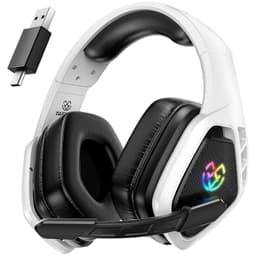
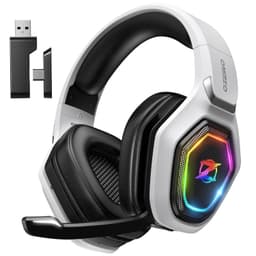
Look, if you want the short answer to which of the Best Wireless Gaming Headsets Under £75 to buy, it's this one. The Picun G2 does the thing budget headsets almost never manage: it covers all the bases without one obvious weak spot. Triple connectivity means you get 2.4GHz for gaming, Bluetooth 5.4 for your phone, and a wired option as backup. That's rare at this money.
The headline spec is that 100-hour battery. Even if the real figure lands nearer 70 to 80 hours with the RGB running, you're charging this thing once a fortnight, not every other night. The claimed 5ms latency on the 2.4GHz dongle is the number that matters for gaming, and owners back it up: audio stays locked to the action in shooters, no perceptible drift. The 7.1 virtual surround is the usual software trick rather than true positional magic, but it does widen the soundstage a touch for footsteps.
The ENC noise-cancelling mic is genuinely useful if you game in a noisy room. It's not streaming-grade, but teammates hear you clearly and background hum gets trimmed. Comfort is fine for long sessions, though the plastic frame won't fool anyone into thinking it's premium. For the price, that's a fair trade. See our full Picun G2 review for the deeper dive.
Pros
- Triple connectivity (2.4GHz, Bluetooth 5.4, wired)
- Huge 100H claimed battery
- Low 5ms latency for gaming
- Usable ENC noise-cancelling mic
Cons
- Plastic build feels its price
- 7.1 surround is virtual, not true positional
Buy on Amazon£66.49Read full review
Best Build Quality
HyperX has spent years building headsets that just feel right, and the Cloud Stinger 2 Wireless carries that reputation into the budget wireless bracket. Among the Best Wireless Gaming Headsets Under £75, this is the one you'd trust to survive being chucked in a bag and yanked off your head mid-rage. The frame flexes without creaking and the memory foam earcups are the comfiest here, full stop.
The swivel-to-mute mic is a lovely touch. Flip it up and you're muted, flip it down and you're live, with a satisfying tactile stop. Owners consistently praise the mic clarity too, which sits a notch above most rivals at this price. Sound signature is warm with punchy bass that suits action games, though audiophiles chasing flat accuracy should look elsewhere.
Two honest caveats. First, it's officially PC-focused via the 2.4GHz dongle, so console support isn't its headline feature the way it is on the Picun G2. Second, the 20-hour battery is short next to the marathon numbers elsewhere in this list. For a lot of players that's a night or two of gaming per charge, which is fine, but it's worth knowing. If build and comfort top your list, this is the pick. You can read more from HyperX's official site.
Pros
- Best build and comfort in the group
- Excellent swivel-to-mute mic
- Warm, punchy sound for games
Cons
- Only 20-hour battery
- PC-focused, weaker console story
Buy on Amazon
Best for Beginners
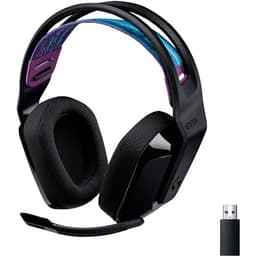
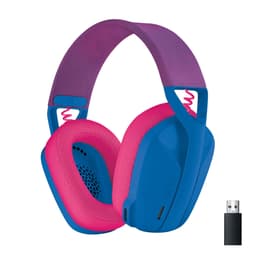
The G535 is the G435's slightly more serious sibling. It swaps the built-in mics for a proper flip-to-mute boom, which immediately makes it a better shout for anyone who does regular team chat. Flip it up, you're muted. Simple and reliable. That alone lifts it above the G435 for competitive players.
It's still light and easy to live with, and the LIGHTSPEED 2.4GHz connection keeps latency low for gaming across PC, PS4 and PS5. USB rechargeable, decent battery, and the Logitech ecosystem all count in its favour. Sound is clean stereo rather than any fancy surround processing, which some players actually prefer for honest positional audio.
The main thing to weigh up is the on-ear design. On-ear cups press on the ear rather than surrounding it, and that suits some people fine while others find it fatiguing over long sessions. If you know you prefer over-ear, the Picun G2 or HyperX are safer. But if on-ear works for you, this is a tidy, well-supported option among the Best Wireless Gaming Headsets Under £75.
Pros
- Proper flip-to-mute boom mic
- Low-latency LIGHTSPEED wireless
- Broad PC and PlayStation support
- Lightweight and Logitech-backed
Cons
- On-ear fit won't suit everyone
- Stereo only, no surround
Buy on Amazon£68.99
Mic Quality
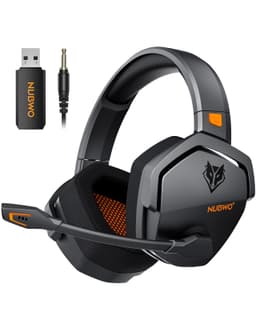
If your worst nightmare is a dead headset mid-raid, the NUBWO is built for you. That 100-hour battery claim means you can go weeks between charges, and even the real-world figure comfortably outlasts most gaming weeks. For under £40, that's serious endurance.
It runs triple mode across all your devices and posts a 23ms sync figure. That's a touch higher than the Picun G2's 5ms, and keen FPS players might just about notice, but for Fortnite, Call of Duty and general play it's plenty quick enough. The marketing leans hard on shooter credentials and the bass-forward tuning does emphasise explosions and gunfire.
The trade-off is the usual budget story: build materials feel plasticky, the RGB is more novelty than necessity, and the mic is fine rather than great. In the orange colourway it's certainly not subtle either. But as a no-drama, all-day-battery pick among the Best Wireless Gaming Headsets Under £75, the value is hard to argue with.
Pros
- Enormous 100-hour battery
- Triple-mode compatibility
- Strong value under £40
Cons
- 23ms latency higher than best rivals
- Plasticky build and loud styling
Buy on Amazon
Best Under £50
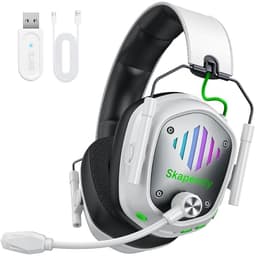
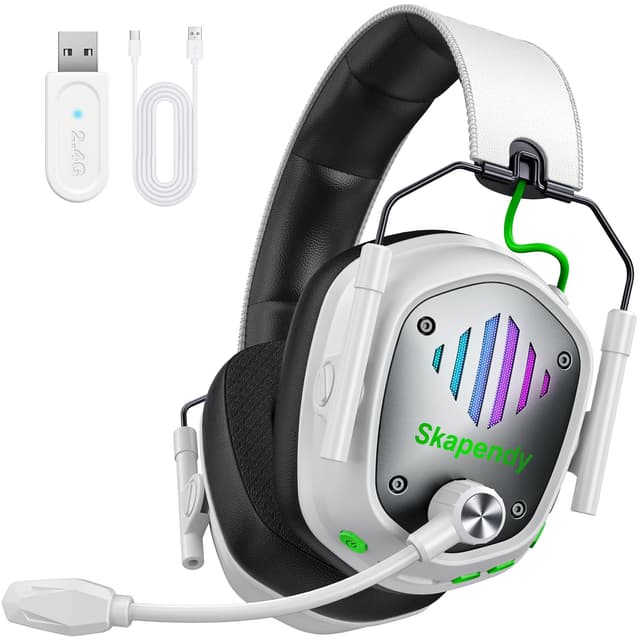
The Skapendy is the bargain that surprised us most. At its price it has no business offering 50mm drivers, dual 2.4GHz and Bluetooth 5.4, an ENC mic and a 50-hour battery. On paper it reads like a headset costing twice as much, and that's exactly why it lands the Best Under £50 badge.
The larger 50mm drivers give it a fuller, punchier sound than most cheap rivals, and the foldable design makes it easy to stow. ENC on the mic helps in busy rooms, and console support spans PS5, PS4, Switch and Mac. Owner feedback is largely positive for the money, with people genuinely shocked at what they got.
Manage expectations though. The plastics are budget, the software is basic to non-existent, and quality control can be a lottery at this price, so it's worth checking yours works properly on arrival. It won't match Logitech or HyperX on refinement. But as a spec-per-pound champion among the Best Wireless Gaming Headsets Under £75, it's outstanding.
Pros
- 50mm drivers for fuller sound
- Dual wireless plus ENC mic
- 50-hour battery, foldable
- Incredible spec for the price
Cons
- Budget plastics
- Quality control can vary
Buy on Amazon£23.99
Stable Connection
This unbranded set earns its place through sheer connection flexibility. You get 2.4GHz over both standard USB and USB-C, plus Bluetooth, which covers just about every device in the house. Console, laptop, Mac, phone, it'll talk to all of them, and that versatility is genuinely handy if you game across platforms.
The 40-hour battery is respectable and the padding is comfortable enough for evening sessions. Sound and mic are middle-of-the-road, doing the job without standing out. For a player who values plugging into anything more than premium audio, that's a reasonable trade.
The catch is that generic listings like this often see variable quality and thin support if something goes wrong. There's no brand ecosystem or software to speak of. It's a capable jack-of-all-trades among the Best Wireless Gaming Headsets Under £75, just not a master of any one thing.
Pros
- USB, USB-C and Bluetooth
- Works across nearly every device
- Comfortable, 40-hour battery
Cons
- Generic brand, limited support
- Average sound and mic
Buy on Amazon
Budget Starter
The Buwnia is a solid first wireless headset for someone on a tight budget. Under £30 gets you 2.4GHz lossless audio, Bluetooth 5.3, a noise-cancelling mic, RGB lighting and a 40-hour battery. That's a full feature sheet for pocket-money money, and it explains why it's a popular starter pick.
In use, the 2.4GHz link is stable for PC, PS5, PS4 and Switch, and the noise-cancelling mic does a decent job of keeping teammates from hearing your fan or keyboard. RGB adds a bit of colour for the desk-setup crowd. For casual gaming, it genuinely does the job.
Temper expectations on refinement. The sound is fine rather than rich, the plastics are light, and it won't hold up to the polish of the Logitech or HyperX options. But as an affordable entry point into the Best Wireless Gaming Headsets Under £75, it's a sensible buy. More detail sits in our Buwnia review.
Pros
- Full feature set under £30
- 2.4GHz plus Bluetooth 5.3
- Noise-cancelling mic and RGB
- 40-hour battery
Cons
- Basic sound quality
- Lightweight, budget build
Buy on Amazon£19.99Read full review
Rock-Bottom Price
This is the cheapest way onto the list, and it makes no apologies for that. You get 2.4GHz wireless, a claimed 40-hours-plus battery, 7.1 virtual surround and a noise-cancelling mic, all for the sort of money that barely buys a wired headset elsewhere. As a stopgap or a first headset for a younger gamer, it works.
The 7.1 surround is a software layer rather than anything special, but it does broaden the sound a little. Connection is fine for casual play across PS5, PS4, PC and Switch, and the mic is serviceable for party chat.
You are buying at the very bottom of the market though, and it shows. Materials feel cheap, comfort is average, and long-term reliability is the usual question mark with ultra-budget gear. If your budget genuinely can't stretch further, it does a job, but almost everything above it is worth saving a little more for.
Pros
- Cheapest option here
- 2.4GHz plus Bluetooth
- 40H+ battery and 7.1 surround
Cons
- Cheap materials and average comfort
- Reliability question marks
Buy on Amazon
Travel Crossover
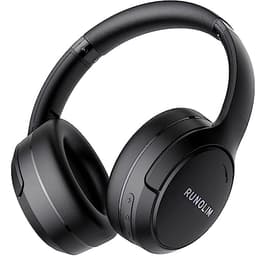
The RUNOLIM is the odd one out, and I've placed it last on purpose because it's really a lifestyle headphone that moonlights as a gaming set. It's Bluetooth only, so there's no low-latency 2.4GHz dongle, which means noticeable lag in fast games. For competitive play, that rules it out.
But hear me out on why it's still here. It packs hybrid active noise cancelling, a 70-hour battery, HiFi tuning with deep bass and a foldable travel design. If you want one set of headphones for commuting, office calls and the occasional relaxed game of something turn-based, this is a genuinely versatile buy for the money.
Just go in clear-eyed. As a dedicated gaming headset it's the weakest here because of the Bluetooth latency and the lack of a proper boom mic. As a do-everything budget headphone that can dabble in gaming, it's decent. Right tool, right job.
Pros
- Active noise cancelling
- Huge 70-hour battery
- Foldable, great for travel
Cons
- Bluetooth only, laggy for gaming
- No proper boom mic
Buy on Amazon£18.96