Every headset manufacturer is shouting about spatial audio right now. But there's a straightforward question that actually matters: does it help you hear where someone is, or does it just make things sound different? The Logitech G G435 Wireless Gaming Headset across competitive matches, late-night story sessions, and everything in between, I've got a proper answer to that question. And it's more nuanced than the marketing would have you believe.
The G435 sits in an interesting spot. It's a lightweight, wireless headset aimed squarely at players who are fed up with cables snagging mid-match and don't want to spend premium money to get rid of them. Logitech has stripped things back considerably here compared to their higher-end G Pro line. No boom mic, no RGB, no software-dependent EQ profiles that require a dongle the size of a USB stick. What you get instead is a headset that promises simplicity, comfort, and Bluetooth plus LIGHTSPEED wireless in one package.
It's aimed primarily at PC play across Valorant, Warzone and Elden Ring, and it also works with Switch and PS5. My usual testing approach: I don't just sit in a quiet room listening to test tones. I play actual matches, I take calls, I wear the thing for four-hour stretches and see what breaks down. Here's what I found with the Logitech G G435 Wireless Gaming Headset in 2026.
Core Specifications
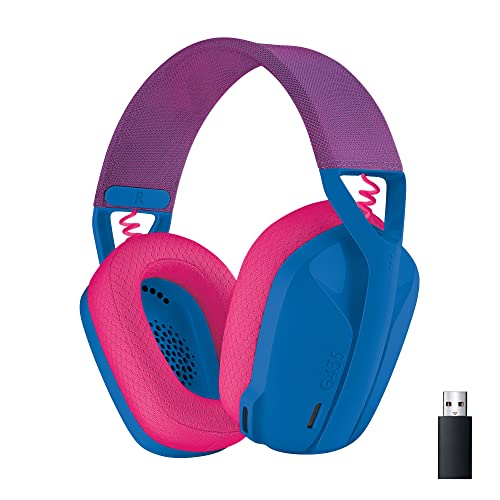
The G435 is built around 40mm drivers, which is fairly standard for this price tier. What's less standard is the weight: this headset comes in at just 165 grams, which makes it one of the lightest wireless gaming headsets you'll find at a mid-range price point. Logitech has achieved that partly by ditching a detachable boom mic in favour of dual built-in beamforming microphones, and partly by keeping the build materials relatively simple. There's no metal headband reinforcement here, just a flexible plastic construction that feels light but does raise some durability questions over the long term.
Connectivity is dual-mode: you get Logitech's LIGHTSPEED 2.4GHz wireless via a USB-A dongle, and Bluetooth 5.0 for connecting to phones, tablets, or consoles that don't support the dongle. The frequency response is rated at 20Hz to 20,000Hz, which is the standard human hearing range claim you'll see on most headsets. Battery life is rated at 18 hours. There's a USB-C charging port, which is genuinely appreciated and something Logitech deserves credit for including at this price. No proprietary charging cables to lose.
One thing worth flagging before we get into the specs table: the G435 does not have a 3.5mm jack. That's a deliberate design choice to keep weight down, but it does mean you're entirely dependent on wireless connectivity. If the battery dies mid-session, you're done. There's no fallback wired option. For most people that won't be a problem, but if you regularly use headsets across devices that don't support Bluetooth or USB dongles, that's a genuine limitation to factor in.
| Specification | Detail |
|---|---|
| Driver Size | 40mm |
| Frequency Response | 20Hz - 20,000Hz |
| Wireless | LIGHTSPEED 2.4GHz + Bluetooth 5.0 |
| Weight | 165g |
| Battery Life (rated) | 18 hours |
| Charging | USB-C |
| Microphone | Dual built-in beamforming mics |
| 3.5mm Jack | None |
| Compatibility | PC, PS4/PS5, Nintendo Switch, Mobile (Bluetooth) |
| Colours Available | White/Lilac, Black/Blue, Black/Cyan |
| Current Price | £62.99 · Details |
Audio Specifications
The G435 uses dynamic drivers, which is the standard choice at this price point. Dynamic drivers work by moving a diaphragm via an electromagnetic coil, and they're generally good at producing bass impact and a wide frequency range without costing a fortune to manufacture. Planar magnetic drivers, which you'd find in higher-end audiophile headphones, aren't something you'll encounter at mid-range gaming headset prices, and honestly they're not necessary for gaming use cases anyway. The 40mm driver size is solid for the price tier.
Logitech hasn't published detailed impedance or sensitivity figures for the G435 in the same way some manufacturers do, which is a bit frustrating if you're trying to do a proper technical comparison. What I can tell you from testing is that the headset gets loud enough at moderate wireless volume levels, and it doesn't require any amplification. The drivers are clearly tuned for consumer gaming use rather than flat reference monitoring, which means there's some deliberate colouration in the sound signature. More on that in the next section.
The frequency response claim of 20Hz to 20,000Hz is standard marketing language that tells you very little about how a headset actually sounds. Almost every headset claims this range. What matters is how flat or coloured the response is across that range, and where the peaks and dips sit. Based on two weeks of listening, the G435 has a noticeable low-mid emphasis and a slightly rolled-off top end. It's not a neutral headset. That's fine for gaming and casual listening, but it does affect how you perceive positional audio cues, particularly high-frequency sounds like footsteps on certain surfaces. The frequency response curve matters more for competitive play than most manufacturers admit.
Sound Signature
The G435 has a mild V-shaped sound signature, though it's not as aggressively boosted as some gaming headsets. The bass is present and punchy without completely overwhelming the mids, and the treble has some sparkle without becoming fatiguing over long sessions. It's a consumer-friendly tuning that makes games feel exciting and music sound full. But it's not a neutral signature, and that has real implications for competitive play.
In Valorant specifically, I found footstep audio to be reasonably clear but not as precise as I'd get from a more neutral headset. The low-mid emphasis adds a bit of warmth to footsteps that can make it slightly harder to judge exact distance. In Warzone, the bass boost actually works in your favour for vehicle audio and explosions, giving you a sense of impact that feels satisfying. For story games like Elden Ring, the signature is genuinely enjoyable. Boss fight audio is dramatic, ambient sounds have weight, and the overall experience is engaging rather than clinical.
If you're a serious competitive player who relies on precise audio positioning to get kills, the G435's tuning isn't ideal. You'd want something flatter. But for the majority of players who play a mix of game types and want a headset that sounds good across all of them, the V-shaped signature is a reasonable compromise. It's not trying to be a reference monitor. It's trying to make gaming fun, and on that front it largely succeeds. The Logitech G G435 Wireless Gaming Headset sits comfortably in the category of headsets that prioritise enjoyable listening over clinical accuracy.
Sound Quality
Soundstage is where the G435 gets interesting. For a closed-back headset at this price, the soundstage is wider than I expected. It doesn't sound like you're listening through a cardboard tube, which is a genuine problem with some budget closed-backs. There's a reasonable sense of space, particularly in open environments in games. Imaging is decent but not exceptional. Positional cues from the left, right or behind come through reliably in most situations, but pinpointing exact angles is less reliable than with some of the better headsets out there.
Bass extension is good for the price. The 40mm drivers produce a satisfying low end that doesn't get muddy at higher volumes. Explosions have impact, music has warmth, and the bass doesn't bleed into the mids in a way that obscures dialogue or voice chat. Treble clarity is adequate. High-frequency sounds are present and distinguishable, but there's a slight softness to the top end that means very high-frequency detail isn't as crisp as you'd get from a more analytically tuned headset. Cymbals in music sound slightly rounded rather than sharp.
For movies and story content, the G435 performs well above what you'd expect from a mid-range wireless headset. Dialogue is clear, action sequences have punch, and the overall presentation is enjoyable for extended viewing. I watched a couple of films through this and had no complaints. For music, it depends on your taste. If you like a warm, full sound with good bass presence, you'll enjoy it. If you prefer a more accurate, flat presentation, you'll find it a bit coloured. For gaming, which is the primary use case, it does the job well enough that most players will be happy. The Logitech G G435 Wireless Gaming Headset isn't going to replace a dedicated audiophile headphone, but it was never trying to.
Microphone Quality
This is probably the most divisive aspect of the G435. Logitech has gone with dual built-in beamforming microphones rather than a traditional boom mic. The idea is that beamforming technology focuses on the sound directly in front of the microphone capsules (i.e., your mouth) and rejects sound from other directions. In theory, this should give you decent voice clarity without needing a boom arm sticking out in front of your face. In practice, the results are mixed.
Voice clarity is acceptable for casual gaming chat. Logitech skips the mic arm entirely here, using built-in dual beamforming microphones that are designed to cut background noise and keep your voice clear in Discord or in-game chat. But compared to a proper boom mic, even a basic one, the built-in mics do pick up more room noise than I'd like. In a quiet room, they're fine. In a room with a fan running, or with any background noise at all, the beamforming doesn't fully reject it. I also noticed that if you tilt your head significantly, the mic pickup changes noticeably, which makes sense given the fixed mic position but is slightly annoying in practice.
For content creators or anyone who streams, this microphone isn't going to cut it. You'll want a dedicated microphone or a headset with a proper boom. For regular gaming chat, it's serviceable. The beamforming microphone approach is a reasonable engineering compromise given the weight target Logitech was clearly aiming for, but it does mean the G435 trails behind headsets with boom mics when it comes to voice quality. If mic quality is a priority for you, factor that in. It's not rubbish, but it's not great either.
Comfort and Build
Right, so this is where the G435 genuinely shines. At 165 grams, it's light enough that you genuinely forget you're wearing it after about 20 minutes. I wore this for a four-hour Elden Ring session on a Saturday afternoon and had zero discomfort by the end. The headband uses a flexible plastic construction with a fabric-covered cushion that distributes pressure well across the top of your head. It's not the most luxurious padding I've ever felt, but it's effective.
The earcups use a fabric covering rather than leatherette or memory foam. This is a deliberate choice that helps with breathability during long sessions. Leatherette earcups can get sweaty and uncomfortable after an hour or two, particularly in warmer weather. The fabric on the G435 stays cooler and more comfortable over time. The trade-off is that fabric doesn't provide quite as much passive noise isolation as leatherette, so you'll hear more of your environment. For most home gaming setups that's fine, but if you're in a noisy environment it's worth knowing.
Clamp force is on the lighter side, which contributes to the comfort but does mean the headset can shift around a bit if you move your head quickly. I didn't have it fall off during gaming, but it's not the most secure fit I've experienced. For glasses wearers, the lighter clamp force is actually a bonus since it doesn't press frames into your head painfully. Build quality overall is decent for the price but clearly plastic-heavy. The headset flexes more than I'd like when you apply lateral pressure, and I'd be cautious about dropping it. It doesn't feel fragile exactly, but it doesn't feel tank-like either. The Logitech G G435 Wireless Gaming Headset prioritises wearability over durability, and that's a valid choice for the target audience.

Connectivity
Dual wireless connectivity is genuinely useful, and Logitech has implemented it well here. The LIGHTSPEED 2.4GHz connection via the included USB-A dongle is the primary gaming connection, and it's reliable. I had zero dropouts during gaming sessions, and the latency is low enough that I never noticed any audio lag. Logitech's LIGHTSPEED technology has a strong track record for low-latency wireless, and the G435 benefits from that. The dongle is small and unobtrusive, though it does occupy a USB-A port, which is increasingly precious on modern laptops.
Bluetooth 5.0 is the secondary connection, and it works as you'd expect. Pairing with my phone took about ten seconds, and the connection was stable. You can have both connections active simultaneously, which means you can be in a game via LIGHTSPEED and take a phone call via Bluetooth without unplugging anything. That's a genuinely practical feature that I used several times. The audio switches automatically when a call comes in, which is handy. The Bluetooth 5.0 standard provides good range and stability for casual use.
The lack of a 3.5mm jack is the connectivity limitation I keep coming back to. It's a conscious design decision, and I understand the reasoning (weight, simplicity), but it does mean the G435 is entirely dependent on wireless. If you're somewhere without a USB port for the dongle and Bluetooth isn't supported by your device, you're stuck. For PC and PlayStation users this is unlikely to be an issue. For Xbox users, it's more of a problem since the LIGHTSPEED dongle doesn't work with Xbox, and Bluetooth audio on Xbox has its own latency quirks. More on that in the compatibility section.
Battery Life
Logitech rates the G435 at 18 hours of battery life that figure held up reasonably well. Battery life will depend on volume and whether you're on LIGHTSPEED or Bluetooth, so treat Logitech's quoted figure as a best case. LIGHTSPEED seems to drain the battery slightly faster than Bluetooth, which is consistent with what I've seen on other dual-mode headsets. At typical gaming volume levels (around 60-70% on my PC), I was getting close to the rated figure.
Charging via USB-C is quick and convenient. From completely flat, the G435 charges to full in roughly two and a half hours, which is acceptable. There's no fast-charge feature that gives you a few hours of use from a short charge, which some competing headsets offer. If you forget to charge it before a long session, you're waiting the full charge time. That said, 18 hours is enough that if you charge it overnight every couple of days, you'll never run into problems during normal use.
The headset does have a low battery indicator, which flashes the LED on the earcup when you're running low. It's not the most sophisticated battery management system, but it works. There's no companion app battery percentage readout unless you're using G HUB software on PC, which I'll cover in the software section. One minor gripe: the headset doesn't have a standby mode that kicks in quickly when you take it off. It just keeps running until you manually turn it off with the power button. Not a dealbreaker, but it means you need to remember to switch it off when you're done, or you'll find it dead when you come back to it the next day.
Software and Customisation
The G435 is compatible with Logitech G HUB, the company's gaming software suite. Through G HUB you can access EQ presets, adjust the mic settings, and enable Logitech's spatial audio processing. The EQ options are limited compared to some competitors. You get a handful of presets (FPS, music, movie) rather than a fully parametric EQ, which means you can't fine-tune specific frequencies. For most users that's fine, but if you like dialling in your own sound signature, it's a limitation.
The spatial audio feature in G HUB is worth discussing honestly. Logitech offers their own virtual surround processing, and it does create a wider, more enveloping soundstage than the stereo default. Whether it actually helps you locate enemies more accurately is debatable. I found the spatial processing made the soundstage feel bigger but also added a slight artificial quality to the audio that I found distracting after a while. I ended up turning it off for competitive play and leaving it on for story games where the immersive effect was more valuable than precise positioning. Your mileage may vary.
Firmware updates are handled through G HUB, and Logitech has a decent track record of supporting their headsets with updates over time. Mic monitoring (hearing your own voice through the headset) is available through the software but not hardware-adjustable on the headset itself, which is a minor inconvenience. The software is functional but not particularly exciting. It does what it needs to do without being bloated, which is more than can be said for some gaming peripheral software suites I've dealt with. If you don't want to install G HUB, the headset works fine out of the box with default settings, which is the right approach for a headset at this price point.
Compatibility
The G435 works well with PC and PlayStation ★★★★☆ (4.2). On PC, the LIGHTSPEED dongle connects via USB-A and is recognised immediately without any driver installation. On PS4 and PS5, the same dongle works in the USB ports on the console, giving you low-latency wireless audio. It works on PS5 without any fuss. The Bluetooth connection works with Nintendo Switch (in handheld mode), Android phones, and iOS devices. That's a solid range of compatibility for a mid-range headset.
Xbox is where things get complicated. The LIGHTSPEED dongle is not compatible with Xbox consoles, and while Bluetooth audio is technically supported on Xbox Series X/S, Microsoft's implementation of Bluetooth audio on Xbox has historically had latency issues that make it unsuitable for gaming. So effectively, the G435 is not a great choice for Xbox as your primary gaming platform. If you're a PC and PlayStation household, you're sorted. If Xbox is your main platform, look elsewhere.
Mobile compatibility via Bluetooth is good. I used the G435 for calls and music on my phone and it worked well. The Bluetooth connection is stable at typical indoor ranges, and the built-in mics work for phone calls in quiet environments. Switch compatibility in docked mode requires the USB dongle in the Switch dock, which works but means you need to move the dongle between devices if you switch between PC and Switch regularly. A minor inconvenience rather than a dealbreaker. Overall, the Logitech G G435 Wireless Gaming Headset covers most platforms that matter for the majority of UK gamers.
How It Compares
At mid-range pricing, the G435 faces competition from two headsets that come up repeatedly in this category: the SteelSeries Arctis 1 Wireless and the HyperX Cloud II Wireless. Both are strong alternatives worth considering, and being honest about how the G435 stacks up against them is more useful than just praising it in isolation.
The SteelSeries Arctis 1 Wireless is a direct competitor in terms of price and feature set. It has a retractable boom mic (a genuine advantage over the G435's built-in mics), similar wireless performance, and a comparable sound signature. The Arctis 1 Wireless is slightly heavier but the boom mic quality is noticeably better for voice chat, and if you want longer battery life there's the newer SteelSeries Arctis Nova 5 to consider too. The G435 wins on Bluetooth dual-connectivity and USB-C charging. The HyperX Cloud II Wireless is slightly more expensive but offers better sound quality overall, a proper boom mic, and a more premium build. If budget allows, the Cloud II Wireless is the better headset. But the G435's weight advantage and dual wireless are genuine differentiators.
The comparison table below gives you a quick overview of how these three headsets line up on the specs that actually matter for day-to-day use. The G435 holds its own on connectivity and comfort, but trails on microphone quality. That's the honest picture.
| Feature | Logitech G G435 | SteelSeries Arctis 1 Wireless | HyperX Cloud II Wireless |
|---|---|---|---|
| Weight | 165g | 181g | 294g |
| Wireless Type | LIGHTSPEED + Bluetooth 5.0 | 2.4GHz USB-C dongle | 2.4GHz USB-A dongle |
| Microphone | Built-in beamforming | Retractable boom | Detachable boom |
| Battery Life | 18 hours | 20 hours | 30 hours |
| Charging | USB-C | USB-C | USB-C |
| 3.5mm Jack | No | Yes | No |
| Xbox Compatible | Bluetooth only (limited) | Yes (USB-C dongle) | No |
| Price Tier | Mid-range | Mid-range | Upper mid-range |
Final Verdict
So where do I land on the Logitech G G435 Wireless Gaming Headset? This is a genuinely good headset for a specific type of player, and a less good choice for others. The weight is the standout feature. At 165 grams, it's lighter than almost anything else in the mid-range wireless category, and that translates to real comfort during long sessions. If you've been suffering through heavy headsets that leave your head aching after a few hours, the G435 solves that problem properly.
The dual wireless connectivity (LIGHTSPEED and Bluetooth simultaneously) is a practical feature that I found myself actually using, not just appreciating on paper. The USB-C charging is the right choice. The sound quality is enjoyable for gaming and casual listening, even if it's not analytically precise. And the battery life is solid enough for normal use patterns. These are real, tangible advantages that make the G435 a sensible buy for the right person.
But the built-in microphone is a genuine compromise. If you're in a team that relies on clear voice comms, or if you stream, the lack of a boom mic will frustrate you. The no-3.5mm-jack decision limits flexibility. And Xbox users are essentially left out. The V-shaped sound signature, while enjoyable, isn't ideal for serious competitive play where precise audio positioning matters. The Logitech G G435 Wireless Gaming Headset isn't trying to be the best headset at any one thing. It's trying to be a comfortable, convenient, multi-platform wireless headset at a mid-range price, and it largely succeeds at that. I'd give it a 7 out of 10. Good value for the right buyer, but know what you're trading away before you commit.
Current pricing: £62.99 · Details
What works. What doesn’t.
5 + 4What we liked5 reasons
- Exceptionally light at 165g - genuine comfort advantage over long sessions
- Dual wireless (LIGHTSPEED + Bluetooth 5.0) works simultaneously and reliably
- USB-C charging is the right call at this price
- Fabric earcups stay cool and comfortable during extended play
- Solid battery life that matches rated figures in real-world use
Where it falls4 reasons
- Built-in beamforming mics are noticeably worse than a boom mic for voice chat
- No 3.5mm jack removes wired fallback option entirely
- Not practically compatible with Xbox consoles
- V-shaped tuning limits precision for serious competitive audio
Full specifications
12 attributes| Connectivity | 2.4GHz LIGHTSPEED wireless, Bluetooth |
|---|---|
| Surround | spatial |
| Microphone | built-in-dual-beamforming |
| Noise cancellation | false |
| Battery life H | 18 |
| Driver size | 40mm |
| Driver size MM | 40 |
| Frequency response HZ | 20-20000 |
| Microphone type | built-in dual beamforming |
| Platforms | PC, PS4, PS5, Nintendo Switch, Mobile |
| Spatial audio | true |
| Type | over-ear |
If this isn’t right for you
2 options

Frequently asked
5 questions01Is the Logitech G G435 Wireless Gaming Headset good for competitive gaming?+
It's decent but not ideal for serious competitive play. The V-shaped sound signature adds warmth to audio that can slightly obscure precise footstep positioning. The LIGHTSPEED wireless connection has low enough latency for competitive use, and the soundstage is wider than expected for a closed-back at this price. But players who rely heavily on precise audio cues for ranked play would be better served by a flatter-sounding headset.
02Does the Logitech G G435 Wireless Gaming Headset have a good microphone?+
The built-in dual beamforming microphones are acceptable for casual gaming chat in quiet environments, but they're noticeably inferior to a proper boom mic. Background noise rejection is limited, and the fixed mic position means audio quality changes if you tilt your head significantly. For streaming or professional voice comms, you'll want a headset with a boom mic or a separate microphone.
03Is the Logitech G G435 Wireless Gaming Headset comfortable for long sessions?+
Yes, this is one of its strongest points. At just 165 grams it's among the lightest wireless gaming headsets in the mid-range category, and the fabric earcups stay cooler than leatherette alternatives during extended play. The lighter clamp force also helps glasses wearers. Four-hour sessions are genuinely comfortable, which is more than can be said for many heavier headsets.
04Does the Logitech G G435 Wireless Gaming Headset work with PS5 and Xbox?+
It works well with PS4 and PS5 via the LIGHTSPEED USB dongle plugged into the console's USB port. Xbox compatibility is limited: the LIGHTSPEED dongle does not work with Xbox consoles, and while Bluetooth audio is technically supported on Xbox Series X/S, it has latency issues that make it unsuitable for gaming. The G435 is not recommended as a primary Xbox headset.
05What warranty applies to the Logitech G G435 Wireless Gaming Headset?+
Amazon offers 30-day returns on most purchases. Logitech typically provides a 2-year limited hardware warranty on their G-series gaming peripherals, covering manufacturing defects. Check Logitech's official support pages for full warranty terms applicable to your region.