Professional monitor buyers in 2025 face a wider choice than ever, with QD-OLED panels finally hitting more accessible price points, ultrawide formats becoming mainstream for productivity, and 4K IPS displays offering colour accuracy that once required specialist hardware. Whether you are a graphic designer who needs precise Delta-E colour reproduction, a video editor who demands wide colour gamut coverage, a software developer who wants maximum screen real estate, or a financial analyst running multiple spreadsheets side by side, the right monitor can meaningfully improve your daily output. Since last year, the most notable shifts have been the arrival of QD-OLED at sub-£400 price points, Samsung's expansion of its Smart Monitor range with built-in apps and speakers, and ultrawide VA panels pushing refresh rates to 180 Hz while keeping prices competitive. This article covers seven carefully selected monitors suited to professional use cases, from budget-conscious office workers to colour-critical creative professionals.
Quick Verdict
Best Overall: LG UltraWide Monitor 34BA75QE. For professionals who need genuine productivity gains from extra horizontal space, accurate IPS colour, USB-C connectivity with RJ45, and built-in speakers, this 34-inch ultrawide delivers the most complete package for desk-based work.
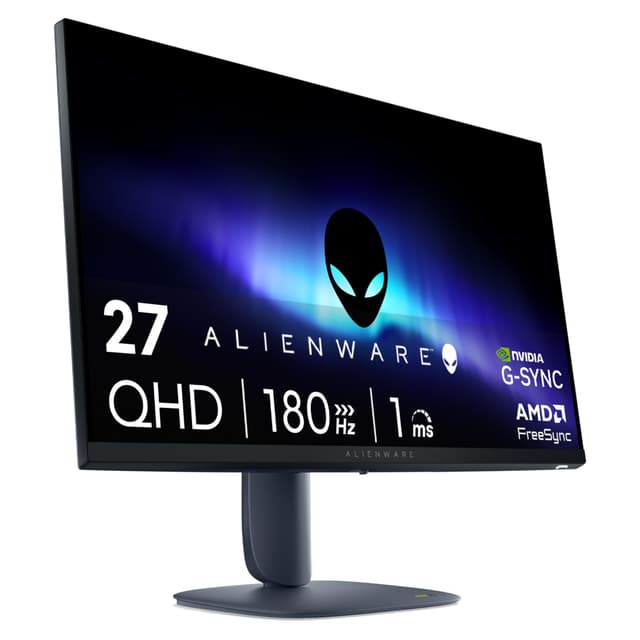
Best Value: Alienware AW2725DM. At its price point, the QHD Fast IPS panel with 180 Hz refresh, excellent colour coverage, and a premium build quality makes it the strongest value proposition for professionals who also game or need sharp, responsive visuals without spending on a flagship display.
Best 4K Pick: Philips Evnia 27M2N3800A. A 27-inch 4K IPS panel at 160 Hz with Dual-Mode switching makes this the standout choice for designers and photographers who need pixel-dense, colour-accurate output.
Comparison Table
| Monitor | Price | Resolution | Panel Type | Refresh Rate | Screen Size | Key Ports |
|---|---|---|---|---|---|---|
| LG UltraWide 34BA75QE | £413.39 | 3440x1440 (UWQHD) | IPS | 60 Hz | 34 inch | USB-C, RJ45, HDMI, DP 1.4, USB hub, Speakers |
| Philips Evnia 27M2N3800A | 4K UHD | IPS | 160 Hz (4K) / 320 Hz (FHD) | 27 inch | Multiple (IPS panel) | |
| MSI MAG 272QPW QD-OLED | £448.99 | 2560x1440 (QHD) | QD-OLED | 280 Hz | 27 inch | 2x HDMI 2.1, DP 1.4a, USB-C (15W PD) |
| AOC CU34G2XPD | £277.00 | 3440x1440 (UWQHD) | VA | 180 Hz | 34 inch | 2x HDMI 2.0, 2x DP 1.4, 4x USB-A, 3.5mm |
| Alienware AW2725DM | 2560x1440 (QHD) | Fast IPS | 180 Hz | 27 inch | 2x HDMI, 1x DP, 3x USB | |
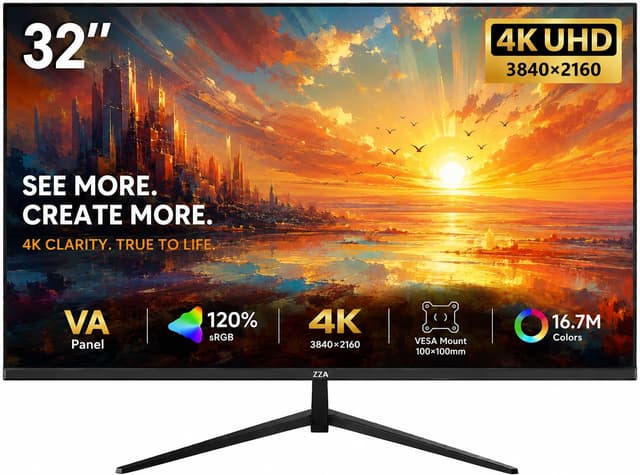
| Samsung 32" 4K Smart Monitor with Speakers (B0FJ2R6MTY) | £1,199.00 | 4K UHD | VA | Not specified | 32 inch | Smart Monitor, Built-in Speakers |
1. LG UltraWide Monitor 34BA75QE
The LG UltraWide 34BA75QE is aimed squarely at professionals who spend the majority of their working day at a desk and need a monitor that handles productivity tasks, video calls, document editing, and light creative work without compromise. The 34-inch IPS panel at 3440x1440 UWQHD resolution gives you a canvas that is noticeably wider than a standard 27-inch QHD display, allowing two full A4-width documents to sit side by side, a code editor and browser to coexist comfortably, or a video timeline and preview window to share the screen without either feeling cramped.
The IPS panel technology is a meaningful advantage for professional use. IPS panels deliver wide viewing angles and more accurate, consistent colour reproduction compared to VA alternatives, which matters if you are reviewing photography, working with brand colour palettes, or simply want a display that looks equally good from slightly off-axis, as happens naturally when you shift in your chair during a long working session. The 5ms response time and 60 Hz refresh rate are entirely adequate for professional applications, though this monitor is not designed for competitive gaming.
Where the 34BA75QE genuinely distinguishes itself from rivals is its connectivity suite. The inclusion of USB-C means you can connect a modern laptop with a single cable and charge it simultaneously, reducing desk clutter. The RJ45 Ethernet port is a particularly thoughtful addition for professionals working in environments where Wi-Fi reliability matters, such as video editors uploading large files or remote workers on video calls who cannot afford dropped connections. The built-in USB hub, HDMI, and DisplayPort 1.4 round out a connectivity package that rivals monitors costing considerably more. Built-in speakers mean you do not need a separate audio solution for calls or casual media consumption, though dedicated speakers will naturally sound better for critical listening.
HDR10 support adds some dynamic range capability, though as with most monitors at this price point, the HDR implementation is functional rather than transformative. The 1440p vertical resolution keeps text sharp and images detailed without demanding the GPU horsepower that 4K requires, making this a sensible choice if your workstation is not a high-end desktop. The curved or flat form factor suits most desk setups, and LG's ergonomic stand options typically allow height, tilt, and swivel adjustments.
For the professional who wants a single-monitor setup that genuinely replaces a dual-monitor arrangement, the 34BA75QE is hard to beat at its price point. The combination of IPS accuracy, ultrawide real estate, USB-C with power delivery, RJ45, and built-in speakers makes it the most complete professional package in this selection.
Pros
- USB-C with power delivery and RJ45 Ethernet reduce cable clutter for laptop users
- IPS panel delivers accurate, wide-angle colour reproduction suited to creative and office work
- 34-inch UWQHD real estate replaces a dual-monitor setup for most productivity tasks
Cons
- 60 Hz refresh rate rules it out for professionals who also game or need fluid motion
- HDR10 implementation is entry-level and will not satisfy colour-critical HDR workflows
2. Philips Evnia 27M2N3800A
The Philips Evnia 27M2N3800A is a 27-inch 4K IPS monitor with a headline specification that sets it apart from almost every other display in this price bracket: a Dual-Mode panel capable of running at 4K resolution and 160 Hz, or switching to Full HD at 320 Hz. For professional users, the 4K 160 Hz mode is the relevant configuration, delivering a pixel-dense 163 PPI that makes text, fine detail in photographs, and intricate vector artwork look genuinely sharp and crisp.
The IPS panel technology ensures that colour accuracy and viewing angles are appropriate for creative professionals. Graphic designers, photographers, and video editors who need to trust what they see on screen will appreciate the wide colour gamut coverage and consistent tone reproduction that IPS delivers. At 4K resolution on a 27-inch screen, individual pixels are essentially imperceptible at normal viewing distances, which means UI elements, typography, and fine image detail are rendered with a clarity that 1440p and 1080p panels simply cannot match.
The 160 Hz refresh rate at 4K is a genuine differentiator. Most 4K professional monitors top out at 60 Hz, which can feel sluggish when scrolling through long documents, navigating complex software interfaces, or moving windows around a busy desktop. The higher refresh rate makes the entire desktop experience feel more fluid and responsive, which is a subtle but real quality-of-life improvement during long working sessions. For professionals who also use their monitor for gaming, the 160 Hz capability means this display performs admirably in both contexts.
The 320 Hz FHD mode is primarily a gaming feature, but it does demonstrate the underlying panel quality and the engineering investment Philips has made in this display. The Evnia branding positions this within Philips' gaming-oriented sub-brand, but the specifications translate directly to professional advantages: fast, accurate, high-resolution output with IPS colour fidelity.
At its price point, the Philips Evnia 27M2N3800A represents exceptional value for professionals who prioritise pixel density and colour accuracy. It is the pick for designers, photographers, and anyone whose work demands that 4K sharpness without the premium pricing of dedicated professional displays from brands like Eizo or NEC.
Pros
- 4K IPS panel at 27 inches delivers 163 PPI sharpness ideal for design, photography, and fine text
- 160 Hz at 4K makes the desktop experience noticeably more fluid than standard 60 Hz 4K monitors
- Competitive pricing for a 4K IPS display with high refresh rate capability
Cons
- 27 inches at 4K requires UI scaling on Windows, which can occasionally cause compatibility issues with older software
- Evnia gaming branding may not appeal to professionals seeking a more understated aesthetic
3. MSI MAG 272QPW QD-OLED X28
The MSI MAG 272QPW QD-OLED X28 brings Quantum Dot OLED technology to a 27-inch QHD panel at a price point that was unthinkable for OLED just two years ago. For professionals, QD-OLED offers a combination of capabilities that no IPS or VA panel can match: true per-pixel illumination delivering perfect blacks, near-infinite contrast ratio, and extremely wide colour gamut coverage that typically exceeds 99% DCI-P3, the colour space used in professional video production and increasingly in high-end photography workflows.
The 2560x1440 resolution at 27 inches gives a pixel density of approximately 109 PPI, which is sharp and comfortable for extended working sessions without requiring aggressive UI scaling. The 280 Hz refresh rate is the headline gaming specification, but for professionals it means an exceptionally fluid desktop experience, smooth scrolling through long documents, and responsive cursor tracking that reduces fatigue during intensive editing sessions.
The connectivity suite is well considered for professional use. Two HDMI 2.1 ports allow connection of multiple high-bandwidth sources, the DisplayPort 1.4a handles PC connections at full resolution and refresh rate, and the USB-C port with 15W power delivery provides a convenient connection point for laptops or mobile devices, though the 15W charging output is modest compared to the 65-90W found on some rivals. Professionals connecting a power-hungry laptop will still need a separate charger.
The primary consideration for professionals evaluating QD-OLED is burn-in risk. Static elements such as taskbars, application toolbars, and persistent UI elements can cause differential ageing of OLED pixels over time. MSI includes pixel refresh and screen-saver features to mitigate this, and modern QD-OLED panels are considerably more resistant to burn-in than early OLED displays, but it remains a consideration for professionals who run the same interface layout for eight or more hours daily over several years.
For colour-critical professionals who need the widest possible gamut, the deepest blacks for HDR content review, and a display that doubles as a high-performance gaming monitor, the MSI MAG 272QPW QD-OLED is a compelling choice at its price point. Video editors working with HDR masters will particularly appreciate the genuine HDR capability that only OLED technology can deliver.
Pros
- QD-OLED panel delivers perfect blacks and wide DCI-P3 colour gamut for HDR video and colour-critical work
- 280 Hz refresh rate and per-pixel contrast make this the most visually impressive display in the selection
- HDMI 2.1 ports future-proof connectivity for high-bandwidth sources
Cons
- Burn-in risk from static UI elements is a genuine long-term concern for professional desktop use
- USB-C power delivery limited to 15W, insufficient to charge most professional laptops
4. AOC CU34G2XPD
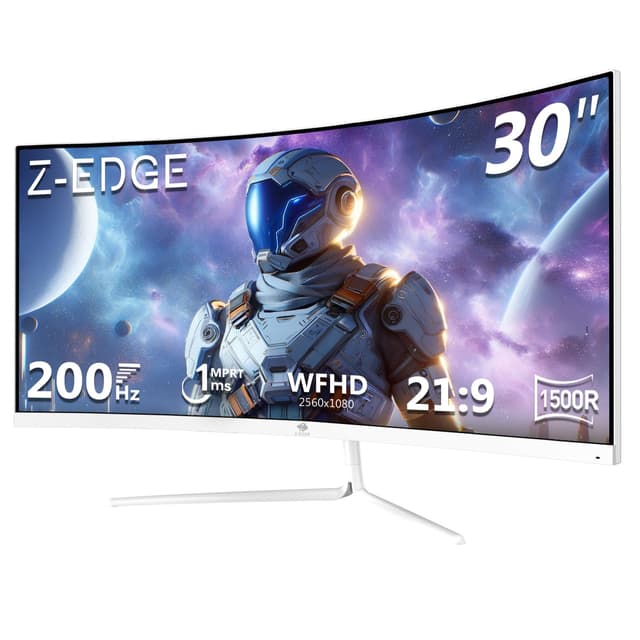
The AOC CU34G2XPD is a 34-inch curved ultrawide VA monitor running at 3440x1440 resolution with a 180 Hz refresh rate, and it arrives at a price point that makes it one of the most affordable routes to the ultrawide format. For professionals who want the productivity benefits of an ultrawide display, specifically the ability to place two full-width application windows side by side without either feeling cramped, the AOC CU34G2XPD delivers the essential experience at a fraction of the cost of premium ultrawide alternatives.
The 1800R curvature is relatively gentle and suits most desk setups, pulling the edges of the screen slightly towards the viewer to reduce the sensation that the corners are further away than the centre. For professionals working with wide spreadsheets, long code files, or video timelines, the curved ultrawide format is genuinely ergonomic, reducing the need to turn your head to read content at the edges of the screen.
The VA panel delivers the deep blacks and high contrast ratio that VA technology is known for, which benefits professionals working with dark-themed development environments, reviewing photography, or working in dimly lit offices where high contrast helps reduce eye strain. The 180 Hz refresh rate is primarily a gaming specification, but it also makes the desktop experience noticeably fluid compared to 60 Hz monitors, which is a genuine quality-of-life benefit during intensive working sessions.
The connectivity suite is generous for this price point. Two HDMI 2.0 ports and two DisplayPort 1.4 inputs allow connection of multiple sources, the four USB-A ports provide a convenient hub for peripherals, and the 3.5mm audio output handles headphone or speaker connections. The USB-B upstream port enables the USB hub functionality when connected to a PC. This level of connectivity rivals monitors costing significantly more and makes the AOC CU34G2XPD a practical choice for professionals who need to connect multiple devices.
The 1ms response time specification ensures that fast-moving content, whether gaming or video playback, remains sharp and free of motion blur. For professionals who also game, the combination of FreeSync Premium support and 180 Hz refresh rate makes this a capable dual-purpose display. The AOC CU34G2XPD is the pick for budget-conscious professionals who want ultrawide real estate without spending on a premium IPS alternative.
Pros
- 34-inch UWQHD ultrawide format at a highly competitive price point for professional productivity
- Four USB-A ports and dual DisplayPort 1.4 inputs provide generous connectivity for a monitor at this price
- 180 Hz refresh rate delivers fluid desktop and gaming performance
Cons
- VA panel has narrower viewing angles than IPS, which can affect colour consistency for colour-critical creative work
- HDMI 2.0 rather than 2.1 limits bandwidth for high-refresh-rate connections from newer consoles and some laptops
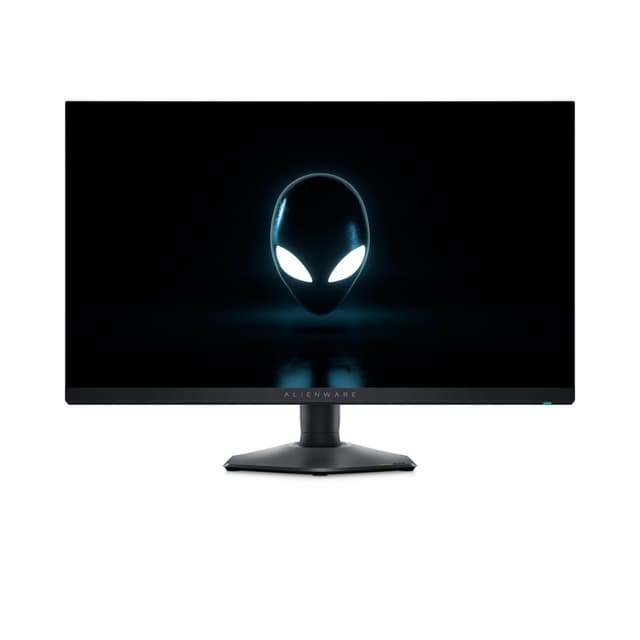
5. Alienware AW2725DM
The Alienware AW2725DM is a 27-inch QHD Fast IPS monitor with a 180 Hz refresh rate, and it occupies a sweet spot in the professional monitor market where performance, colour accuracy, and price intersect particularly well. Alienware's gaming heritage might suggest this is purely a gaming display, but the Fast IPS panel technology, QHD resolution, and strong build quality make it a genuinely capable professional monitor for designers, developers, and content creators who want a display that performs equally well during working hours and leisure time.
The 2560x1440 QHD resolution at 27 inches gives approximately 109 PPI, a pixel density that keeps text sharp and images detailed while remaining comfortable to use without aggressive UI scaling on Windows. For professionals who spend long hours reading text, reviewing design assets, or writing code, this balance of resolution and physical size is well judged. The Fast IPS panel delivers the wide viewing angles and colour accuracy that IPS technology is known for, with the faster pixel response times that distinguish Fast IPS from standard IPS.
The 180 Hz refresh rate is the headline gaming specification, but for professional use it means a desktop experience that feels noticeably more responsive than 60 Hz or even 144 Hz alternatives. Scrolling through long documents, moving windows, and navigating complex software interfaces all feel more fluid at 180 Hz, and this is a genuine productivity benefit rather than a purely gaming-oriented feature. The 1ms response time ensures that fast-moving content remains sharp.
Alienware's build quality is a genuine differentiator at this price point. The stand is solid and well-engineered, offering height, tilt, and pivot adjustments that allow the monitor to be positioned precisely for ergonomic comfort. The connectivity suite includes two HDMI ports, one DisplayPort, and three USB ports, covering the essential connections for a professional desk setup. The Alienware aesthetic is distinctive, with the characteristic lighting elements, though these can be disabled for a more understated appearance in professional environments.
At its price point, the Alienware AW2725DM is the strongest value proposition for professionals who want a high-quality Fast IPS panel with QHD resolution, a premium stand, and the flexibility to use the monitor for gaming without compromise. It is the Best Value pick in this selection.
Pros
- Fast IPS panel delivers accurate, wide-angle colour reproduction at 180 Hz for both professional and gaming use
- Premium Alienware stand with full ergonomic adjustments including height, tilt, and pivot
- QHD resolution at 27 inches is the optimal balance of sharpness and Windows UI scaling comfort
Cons
- Alienware gaming aesthetic with lighting elements may not suit conservative professional environments
- No USB-C port limits single-cable connectivity for modern laptop users
6. Samsung LS32FM703UUXXU 32" 4K Smart Monitor with Speakers
The Samsung LS32FM703UUXXU is the premium tier of Samsung's Smart Monitor range, adding built-in speakers and a white finish to the 32-inch 4K VA panel platform. At, this is the most expensive monitor in this selection, and it targets professionals who want a large, sharp display with integrated audio and smart functionality, particularly those working in home offices where a clean, minimal desk setup is a priority.
The 32-inch 4K VA panel delivers a large, sharp canvas that suits professionals working with data-heavy applications, multi-window layouts, or large design files. The VA panel's high contrast ratio is beneficial for professionals who work with dark-themed interfaces or review content that benefits from deep blacks. At 32 inches, 4K resolution means that text and fine detail are rendered sharply without requiring the aggressive scaling that smaller 4K panels sometimes necessitate.
The built-in speakers are a meaningful addition for professionals who use their monitor as the audio output for video calls, presentations, and media consumption. While built-in monitor speakers rarely match dedicated desktop speakers for music listening, Samsung's Smart Monitor speakers are generally of a higher quality than the minimal speakers found in most monitors, making them practical for professional communication tasks. The white finish is a distinctive aesthetic choice that suits certain office and studio environments where the typical black monitor aesthetic feels too heavy.
The Smart Monitor platform provides access to Samsung's Tizen ecosystem, including streaming services, Microsoft 365 via web, and wireless connectivity from Samsung mobile devices. For professionals in hybrid working environments who want a display that functions independently of a PC for certain tasks, this is a genuine convenience. The premium pricing reflects the combination of large screen size, 4K resolution, smart functionality, built-in speakers, and Samsung's brand positioning.
This monitor is best suited to professionals for whom the smart features, integrated audio, and large 4K canvas justify the premium price. Those who prioritise pure display performance for colour-critical work, or who need IPS colour accuracy, will find better value elsewhere in this selection.
Pros
- 32-inch 4K panel with built-in speakers reduces the need for separate audio hardware in a home office
- Smart Monitor platform enables standalone use for video calls, streaming, and web-based productivity apps
- White finish offers a distinctive aesthetic for studio and home office environments
Cons
- Premium pricing is significantly higher than comparable 32-inch 4K monitors without smart features
- VA panel colour accuracy and viewing angles are inferior to IPS for colour-critical professional creative work
How We Picked
Selecting monitors for professional use requires a different set of priorities to gaming-focused reviews. We evaluated each display against five core criteria. First, panel technology: IPS and QD-OLED panels were weighted more heavily for colour accuracy and viewing angle consistency, which matter in creative and collaborative professional environments. Second, resolution and pixel density: higher PPI scores were favoured for text clarity and fine detail reproduction. Third, connectivity: USB-C with power delivery, RJ45, and USB hub functionality were treated as meaningful professional features rather than optional extras. Fourth, refresh rate and desktop fluidity: while 60 Hz is adequate for professional work, higher refresh rates genuinely improve the desktop experience during long sessions. Fifth, value: we considered whether the price premium of each monitor was justified by its professional-use capabilities rather than gaming-specific features. All verified specifications were sourced directly from manufacturer data.
Buying Guide
Panel Technology
The panel type is the single most important specification for professional monitor buyers. IPS (In-Plane Switching) panels offer wide viewing angles of approximately 178 degrees horizontally and vertically, and consistent colour reproduction across the panel. This matters when you are working with brand colours, reviewing photography, or simply sharing your screen with a colleague who is sitting at a slight angle. VA (Vertical Alignment) panels offer higher contrast ratios, typically 3000:1 compared to 1000:1 for IPS, and deeper blacks, but narrower viewing angles and potential for colour shift when viewed off-axis. QD-OLED combines Quantum Dot colour enhancement with per-pixel OLED illumination, delivering the widest colour gamut, perfect blacks, and the highest contrast of any technology, but with a burn-in risk for static professional interfaces.
Resolution and Screen Size
For professional use, resolution should be matched to screen size to achieve an appropriate pixel density. At 27 inches, QHD (2560x1440) delivers approximately 109 PPI, which is comfortable and sharp. At 27 inches, 4K delivers approximately 163 PPI, which is very sharp but requires UI scaling on Windows. At 32 inches, 4K delivers approximately 138 PPI, a comfortable balance of sharpness and readability without heavy scaling. Ultrawide formats at 3440x1440 on 34 inches deliver approximately 110 PPI, matching the sharpness of 27-inch QHD while providing significantly more horizontal workspace.
Connectivity
Professional monitors should be evaluated on their connectivity as carefully as their display specifications. USB-C with power delivery is essential for professionals using modern laptops, allowing a single cable to carry video, data, and charging simultaneously. RJ45 Ethernet is valuable for professionals who need reliable wired network connections. USB hub functionality reduces desk clutter by allowing peripherals to connect through the monitor rather than directly to the PC. DisplayPort 1.4 supports higher bandwidth than HDMI 2.0, enabling 4K at high refresh rates or ultrawide resolutions without compression.
Colour Accuracy and Gamut
Professionals working with colour-critical content should look for monitors specifying sRGB coverage of 99% or higher, and DCI-P3 coverage of 90% or higher for video production work. Factory calibration, or the availability of calibration profiles, is valuable for design and photography workflows. Delta-E values below 2 are generally considered imperceptible to the human eye and indicate a well-calibrated panel.
Ergonomics
A monitor used for eight or more hours daily must be adjustable. Look for stands offering height adjustment of at least 100mm, tilt adjustment, and ideally swivel and pivot (portrait rotation) capabilities. VESA mount compatibility allows the monitor to be used with third-party arms for more flexible positioning. Eye care features including flicker-free backlights and low blue light modes reduce fatigue during extended working sessions.
Final Verdict
The LG UltraWide Monitor 34BA75QE is the overall winner for professional use. It combines the productivity advantages of the 34-inch UWQHD ultrawide format with IPS colour accuracy, USB-C connectivity with power delivery, RJ45 Ethernet, a built-in USB hub, and integrated speakers. This is the monitor that most closely matches the real-world needs of professionals working in hybrid environments, handling documents, video calls, creative tasks, and data analysis from a single display. The Philips Evnia 27M2N3800A is the strongest choice for colour-critical creative professionals who need 4K pixel density and IPS accuracy, while the Alienware AW2725DM remains the best value pick for those who want Fast IPS quality at QHD resolution with the flexibility to game without compromise.
Frequently Asked Questions
For most professional applications, QHD (2560x1440) at 27 inches or 4K at 27-32 inches offers the best balance of sharpness and usability. QHD at 27 inches gives approximately 109 PPI, which is comfortable for long working sessions without requiring UI scaling. 4K at 27-32 inches delivers higher pixel density for design and photography work, but requires Windows UI scaling, which can occasionally cause compatibility issues with older software.
IPS panels are generally preferred for professional creative work because they offer wider viewing angles and more consistent colour reproduction across the panel. VA panels have higher contrast ratios and deeper blacks, which suits professionals working with dark-themed interfaces or in dimly lit environments. For colour-critical work such as graphic design, photography, or video editing, IPS or QD-OLED is the more reliable choice.
A high refresh rate is not essential for professional work, but it does improve the desktop experience. Monitors running at 144 Hz or above feel noticeably more fluid when scrolling documents, moving windows, and navigating complex software interfaces compared to 60 Hz displays. If your budget allows, a 144 Hz or higher monitor will improve daily comfort during long working sessions, even if you never use it for gaming.
USB-C with power delivery is increasingly important for professionals using modern laptops. A monitor with USB-C allows you to connect your laptop with a single cable that carries video, data, and charging simultaneously, reducing desk clutter and simplifying your setup. Look for monitors offering at least 60W of USB-C power delivery to charge most professional laptops adequately, though some monitors offer only 15W, which is insufficient for charging larger laptops.
Ultrawide monitors at 3440x1440 resolution on 34-inch panels offer a genuine productivity advantage for professionals who regularly work with multiple applications simultaneously. The extra horizontal space allows two full-width application windows to coexist without either feeling cramped, which suits developers, financial analysts, video editors, and anyone working with wide spreadsheets or data tables. The main trade-off is that ultrawide content is not universally supported, and some applications do not scale well to the wider aspect ratio.