CAD work puts very specific demands on a monitor: accurate colour reproduction, sharp pixel density for fine linework, comfortable viewing over long sessions, and enough screen real estate to keep toolbars open without losing your drawing canvas. The good news is that the sub-£200 bracket has improved considerably since last year, with QHD IPS panels and even a 34-inch ultrawide now available at prices that would have bought you a 1080p TN panel in 2023. This roundup is aimed at students, freelancers, and small-studio professionals running AutoCAD, Fusion 360, SolidWorks, or similar packages on a Windows PC, and who need the best possible image quality and ergonomics without stretching to a professional-grade display. We have picked six monitors that balance resolution, panel accuracy, connectivity, and value, and we have been clear about where each one falls short so you can match the right screen to your workflow.
Quick Verdict
Best Overall: Z-Edge 27 Inch 240Hz QHD IPS (B0DSPW29SZ). A QHD IPS panel with excellent pixel density, two DisplayPort outputs, and a price that sits right at the budget ceiling. For CAD work this combination of resolution and panel accuracy is hard to beat at under £200.
Best Value: BenQ GW2490E 24 Inch Eye-care IPS (B0CT5R7XXL). BenQ's eye-care technology, a genuine IPS panel, and solid connectivity at under £80 make this the pick for anyone who spends eight hours a day staring at technical drawings and needs to protect their eyes without spending a fortune.
| Monitor | Price | Resolution | Panel | Screen Size | Refresh Rate | Key Ports |
|---|---|---|---|---|---|---|
| Z-Edge 27" QHD 240Hz IPS | £199.99 · Details | 2560x1440 | IPS | 27" | 240Hz | 2x HDMI, 2x DP, Audio Out |
| Philips Evnia 27M2N3800A 4K IPS | 3840x2160 | IPS | 27" | 160Hz | See listing | |
| AOC CU34G2XPD 34" Ultrawide VA | 3440x1440 | VA | 34" | 180Hz | 2x HDMI, 2x DP, 4x USB-A | |
| BenQ GW2490E 24" IPS Eye-care | Check price | 1920x1080 | IPS | 24" | 100Hz | 2x HDMI, 1x DP |
| Acer SB242Y H1bi 23.8" IPS | Check price | 1920x1080 | IPS | 23.8" | Not specified | 1x HDMI 1.4, 1x VGA |
1. Z-Edge 27 Inch 240Hz QHD IPS Monitor
The Z-Edge 27-inch QHD IPS is the strongest all-round choice in this roundup for CAD users who want the best image quality available under £200. At 2560x1440 on a 27-inch IPS panel, you get a pixel density of around 109 PPI, which is meaningfully sharper than any 1080p screen at this size. Fine linework in AutoCAD, small dimension text in Fusion 360, and dense hatch patterns all render with noticeably more clarity than they would on a 1080p equivalent, and you gain extra horizontal canvas space that lets you keep a layer panel or properties window open without sacrificing your drawing area.
The IPS panel is the critical specification here. IPS technology delivers wider viewing angles and more accurate colour reproduction than VA or TN alternatives, which matters when you are checking surface finishes, rendering materials, or collaborating with a colleague leaning over your shoulder. Colours remain consistent whether you are viewing the panel straight-on or from a slight angle, and the default colour calibration is generally acceptable for technical work without needing to spend time in the OSD adjusting gamma curves.
Connectivity is excellent for a budget screen: two HDMI ports, two DisplayPort outputs, and a 3.5mm audio out. The dual DisplayPort provision is particularly useful if you are running a laptop with a dedicated GPU and want to daisy-chain or simply keep a secondary cable connected. The 240Hz refresh rate is largely irrelevant for CAD work but does mean the panel's response time and motion clarity are tuned to a high standard, and if gaming matters to you our guide to high-refresh 240Hz panels and the best gaming peripherals cover the best options, which translates to a smooth, crisp desktop experience even when scrolling large drawings.
The stand is functional rather than premium: tilt adjustment is included but height adjustment and pivot may be limited, so budget for a monitor arm if ergonomics are a priority. The bezel is slim on three sides, which helps when pairing with a second screen. Build quality feels solid for the price point, and the OSD controls are straightforward to navigate.
Verdict: The best combination of resolution, panel accuracy, and connectivity available in this budget category. If you can stretch to the upper end of the £200 limit, this is where your money should go for CAD work.
Pros
- QHD resolution at 109 PPI gives noticeably sharper linework than 1080p at 27 inches
- IPS panel delivers accurate, consistent colour across viewing angles
- Dual HDMI and dual DisplayPort cover almost every connectivity scenario
Cons
- Stand lacks height adjustment, so a monitor arm may be needed for proper ergonomics
- 240Hz refresh rate adds cost that CAD users will never use
2. Philips Evnia 27M2N3800A 27 Inch 4K IPS Monitor
The Philips Evnia 27M2N3800A is the only 4K option in this roundup, and at under £170 it represents remarkable value for a genuine 3840x2160 IPS panel. For CAD work, 4K on a 27-inch screen delivers a pixel density of approximately 163 PPI, which is transformative for fine detail. Dimension strings that look slightly fuzzy on a QHD panel are razor-sharp here, and the additional desktop real estate, when running at native resolution, allows you to have a drawing, a properties panel, and a browser reference open simultaneously without any overlap.
The IPS panel technology ensures wide viewing angles and good colour accuracy, which is important for any visualisation work or when presenting designs to a client on your screen. The 160Hz refresh rate is the highest in the 4K tier at this price point and, while irrelevant for CAD, indicates that Philips has used a higher-grade panel substrate that typically correlates with better pixel uniformity and response characteristics across the display area.
There is a caveat that CAD users should consider carefully: running at native 4K on a 27-inch screen without scaling means UI elements and text in some older CAD applications can become very small. Windows scaling at 150 or 175 per cent resolves this for most modern software, but legacy CAD tools with fixed-size interfaces may require some configuration. If your software is up to date and supports HiDPI scaling properly, this is a non-issue and the sharpness benefit is substantial.
The Philips Evnia range is known for its LowBlue Mode and Flicker-Free technology, both of which reduce eye strain during long design sessions. The build quality is a step above entry-level, with a sturdy stand and a clean aesthetic that fits a professional desk environment. For users who spend hours reviewing detailed technical drawings, the combination of 4K sharpness and eye-care features makes this a genuinely compelling choice.
Verdict: The sharpest image in the roundup and the best choice for users whose CAD software handles HiDPI scaling correctly. A remarkable specification at this price.
Pros
- 4K IPS at 27 inches delivers 163 PPI, the sharpest linework clarity in this roundup
- 160Hz panel indicates a high-grade substrate with good uniformity
- Philips LowBlue Mode and Flicker-Free reduce eye strain over long sessions
Cons
- Legacy CAD applications with fixed UI scaling may display very small elements at native 4K
- Requires a GPU capable of driving 4K output, which older workstations may not support
3. AOC CU34G2XPD 34 Inch WQHD Curved Ultrawide Monitor
The AOC CU34G2XPD is the only ultrawide in this roundup, and its 3440x1440 resolution across a 34-inch curved VA panel opens up a workflow option that flat 16:9 monitors simply cannot match. For CAD users, the 21:9 aspect ratio means you can have a full-width drawing canvas on one side and a properties panel, browser, or PDF reference on the other, all within a single monitor without any window management gymnastics. This is a genuinely different way of working, and many engineers and architects who try an ultrawide find it difficult to go back.
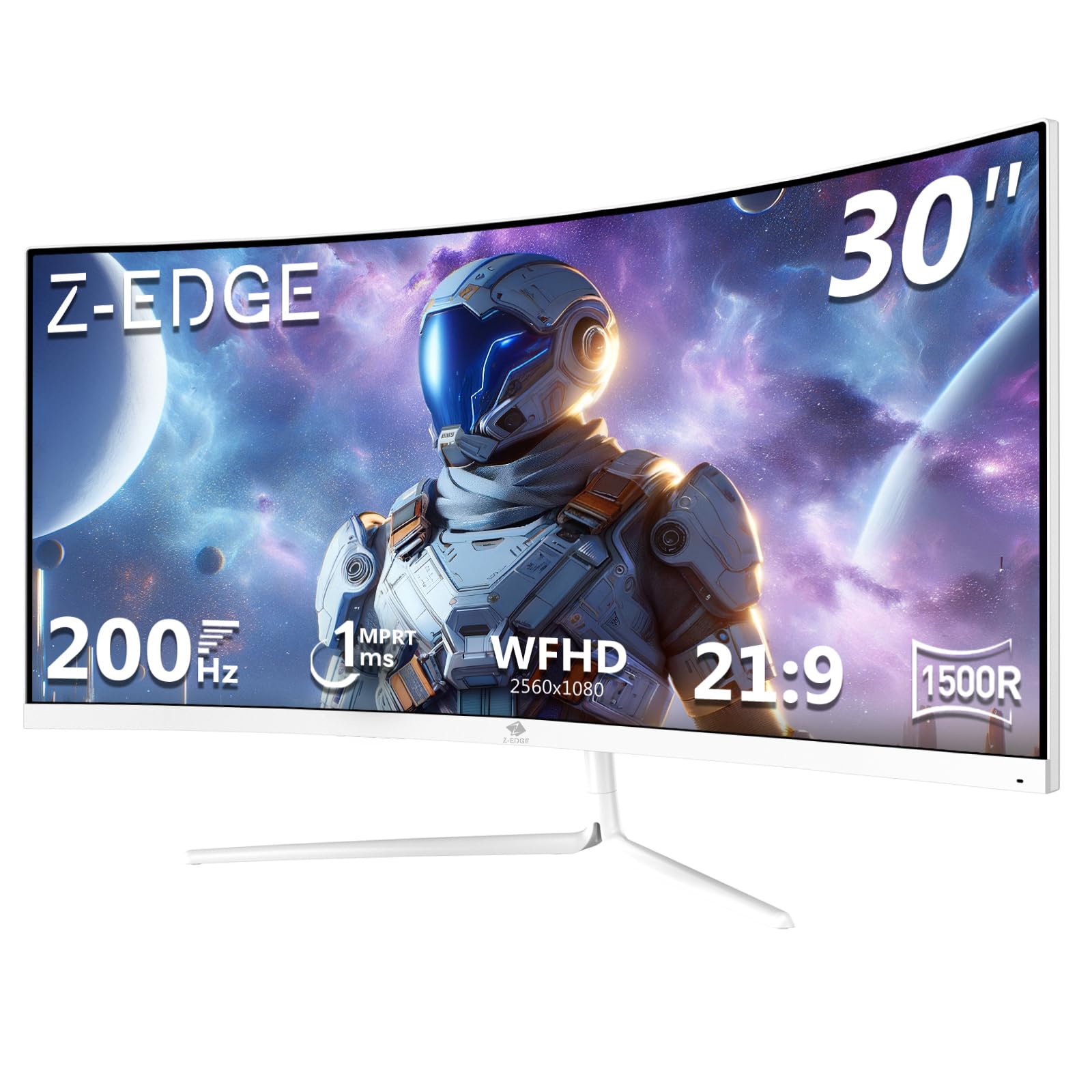
The 1800R curve is a point worth addressing directly. A tighter curve, such as 1500R, wraps more aggressively around your field of view, while 1800R is a gentler arc that most users find more comfortable for mixed use including document work and CAD. The AOC's 1800R curve keeps the edges of the screen at a consistent focal distance from your eyes, which reduces the need to refocus when scanning across a wide drawing, and it feels natural rather than distracting when working on text documents or spreadsheets alongside your CAD application.
The VA panel delivers deep blacks and high contrast, which is less critical for CAD than for photo editing, but the wide colour gamut and solid brightness levels make the display comfortable in a variety of lighting conditions. The 180Hz refresh rate and 1ms response time are gaming-oriented specifications that have no bearing on CAD performance, but they do indicate a panel that has been tuned for sharpness and minimal ghosting, which keeps the desktop experience crisp.
Connectivity is excellent: two HDMI 2.0, two DisplayPort 1.4, a USB-B upstream port, four USB-A downstream ports, and a 3.5mm audio out. The USB hub is a practical addition for a workstation desk, allowing you to connect a keyboard, mouse, and USB drive without reaching around to your PC. The stand offers tilt and height adjustment, which is important given the wide panel requires precise positioning for comfortable use.
The main limitation for CAD work is the VA panel's colour accuracy, which is not as consistent across viewing angles as IPS. For pure technical drawing this is unlikely to matter, but if your workflow includes any colour-critical visualisation or rendering review, an IPS alternative may be preferable.
Verdict: The ultrawide format is a genuine productivity upgrade for CAD workflows. The USB hub and dual DisplayPort make it the most practical workstation monitor in this roundup.
Pros
- 3440x1440 ultrawide canvas allows drawing and reference panels side by side without window overlap
- Four USB-A downstream ports act as a built-in hub, reducing desk cable clutter
- Dual DisplayPort 1.4 and dual HDMI 2.0 cover all connectivity needs
Cons
- VA panel has narrower viewing angles than IPS, which matters for colour-critical visualisation work
- 34-inch ultrawide requires a deep desk and careful positioning to avoid neck strain
4. BenQ GW2490E 24 Inch Eye-care IPS Monitor
The BenQ GW2490E is the standout value pick in this roundup and the monitor we would recommend most confidently to students, hobbyists, and anyone who spends the majority of their working day in front of a screen. At under £80, it delivers a genuine IPS panel with BenQ's proprietary eye-care technology stack, which includes a hardware-level low blue light filter, flicker-free backlighting, and an ambient light sensor that adjusts brightness automatically to match your room conditions.
For CAD users, the eye-care features are more than a marketing checkbox. Long sessions reviewing technical drawings, particularly under artificial lighting, cause measurable eye fatigue, and BenQ's implementation of these technologies is among the most effective in the consumer monitor market. The hardware-level blue light filter, unlike software solutions, does not introduce colour cast or require you to sacrifice colour accuracy to reduce eye strain.
The IPS panel at 1920x1080 on a 24-inch screen gives a pixel density of around 92 PPI. This is not as sharp as QHD at 27 inches, but it is entirely adequate for most CAD workflows, particularly 2D drafting, schematic work, and general mechanical drawing. The colour accuracy and viewing angle consistency of the IPS panel mean that what you see on screen is reliable and consistent, which matters when checking tolerances, reviewing colour-coded layers, or presenting work to a colleague.
Why do many professionals still choose 24-inch monitors over 27-inch screens? The answer is primarily about pixel density and ergonomics. At 1080p, a 24-inch panel delivers sharper pixels than a 27-inch panel at the same resolution, and the smaller footprint is easier to position at the correct ergonomic distance on a standard office desk. For users who sit close to their screen, a 24-inch monitor can be more comfortable over a full working day than a larger panel that requires more head movement to scan across.
Connectivity includes two HDMI ports and one DisplayPort, which covers the standard workstation setup. There is no USB hub, and the stand offers tilt adjustment only, so a monitor arm is recommended for users who need height or pivot adjustment for ergonomic positioning.
Verdict: The best value monitor in this roundup for long-session CAD work. BenQ's eye-care technology is genuinely effective, and the IPS panel delivers reliable colour accuracy at a price that is difficult to argue with.
Pros
- Hardware-level BenQ eye-care technology reduces eye strain without colour accuracy compromise
- IPS panel delivers consistent colour and wide viewing angles at a sub-£80 price
- Two HDMI ports allow easy switching between a desktop PC and a laptop
Cons
- 1080p at 24 inches is noticeably less sharp than QHD options for fine CAD linework
- Stand offers tilt only, with no height or pivot adjustment included
5. Acer SB242Y H1bi 23.8 Inch Professional Home Office IPS Monitor
The Acer SB242Y H1bi is positioned explicitly as a professional home office monitor, and its specification reflects that intent. At 23.8 inches with a 1920x1080 IPS panel, it sits in the same category as the BenQ GW2490E but targets a slightly different buyer: someone who prioritises a clean, minimal aesthetic and the Acer brand's professional monitor heritage over BenQ's eye-care feature set.
The IPS panel delivers the expected benefits for CAD work: accurate colour reproduction, consistent viewing angles, and a stable, flicker-free image that is comfortable over long sessions. Acer's home office monitors are designed with a focus on ergonomics and visual comfort, and the SB242Y includes a low-blue-light mode and flicker-free backlighting, placing it in a similar functional category to the BenQ in terms of eye comfort features.
At around £95, the Acer is priced slightly above the BenQ, and the specification comparison is close. The key practical difference is connectivity: the SB242Y offers one HDMI 1.4 and one VGA port. The VGA port is a legacy connection that most modern PCs and laptops have dropped, and the single HDMI 1.4 limits you to one digital connection. If your workstation has only HDMI output, this is fine, but users with DisplayPort-equipped GPUs or laptops will need an adapter. The absence of a DisplayPort input is a notable omission at this price.
The monitor's slim bezel and compact footprint make it well suited to a small desk or a dual-monitor setup where minimising the gap between screens is important. The stand includes tilt adjustment, and the VESA mount compatibility means a monitor arm can be added easily. The overall build quality is solid, with a clean white or silver finish option that suits a professional studio environment.
For students running AutoCAD or similar tools on a budget laptop with HDMI output, the Acer SB242Y is a practical and reliable choice. For users with more connectivity requirements or who want the sharpness of QHD, the Z-Edge or MSI options higher in this list are more appropriate.
Verdict: A clean, reliable IPS monitor for home office CAD work, but the limited connectivity, specifically the single HDMI 1.4 and VGA only, holds it back compared to the BenQ at a similar price point.
Pros
- IPS panel with low-blue-light and flicker-free modes suits long CAD sessions
- Slim bezel and VESA compatibility make it easy to integrate into a dual-monitor setup
Cons
- Only one HDMI 1.4 and one VGA port, with no DisplayPort input included
- Priced slightly above the BenQ GW2490E despite offering fewer connectivity options
- 1080p resolution limits sharpness for fine linework compared to QHD alternatives
How We Picked
Every monitor in this roundup was selected from a verified catalogue of products available to UK buyers with confirmed pricing under or. We evaluated each product against five criteria weighted for CAD use specifically: panel type and colour accuracy, resolution and pixel density, connectivity and port selection, ergonomic adjustability, and value relative to the competition within this budget. Gaming-oriented specifications such as refresh rate and response time were noted but not used as primary selection criteria, since they have no bearing on CAD performance. We cross-referenced manufacturer specifications with verified spec sheets to ensure accuracy, and we excluded products whose specifications were unsuitable for professional or semi-professional CAD workflows regardless of price. The six monitors selected represent the best available options across a range of budgets from under £80 to just under £200, covering different screen sizes, resolutions, and panel technologies to suit different workflow requirements.
Buying Guide
Resolution: the single most important specification for CAD
Resolution determines how much detail you can see and how much screen real estate you have for toolbars and panels. For CAD work, the minimum acceptable resolution on a 24-inch screen is 1920x1080, but QHD at 2560x1440 is a meaningful upgrade that makes fine linework, small dimension text, and dense hatch patterns noticeably sharper. On a 27-inch screen, 1080p begins to look noticeably soft, and QHD is strongly recommended. If your software and GPU support it, 4K on a 27-inch screen is the sharpest option available in this budget and delivers a pixel density that rivals professional-grade monitors costing several times more.
Panel type: IPS versus VA for technical drawing
IPS panels are the preferred choice for CAD work because they deliver consistent colour accuracy across a wide viewing angle. This matters when you are checking colour-coded layers, reviewing material visualisations, or working with a colleague who is viewing the screen from the side. VA panels offer higher contrast ratios and deeper blacks, which can be comfortable in a darkened studio, but their narrower viewing angles and slightly lower colour consistency make them a second choice for colour-sensitive work. For pure 2D drafting where colour accuracy is less critical, VA is a perfectly acceptable option, particularly when it allows you to access QHD resolution at a lower price.
Screen size and ergonomics
A 27-inch monitor is not too big for office work, but it does require a desk with sufficient depth to position the screen at the correct ergonomic distance, typically 60 to 80 centimetres from your eyes. At this distance, a 27-inch screen fills your field of view comfortably without requiring excessive head movement. A 24-inch monitor is easier to position on a shallow desk and is the preferred size for users who sit close to their screen. Many professionals prefer 24-inch monitors precisely because the smaller size allows them to sit closer, which improves the apparent sharpness of the image and reduces the neck movement required to scan across the screen.
Curved versus flat for CAD and document work
Curved monitors are a matter of personal preference for CAD users. A gentle 1800R curve can reduce the need to refocus when scanning across a wide drawing and keeps the screen edges at a more consistent focal distance. A tighter 1500R curve is more immersive but can feel distracting when working on straight-edged technical drawings or text documents. For ultrawide monitors, a curve is generally recommended because it makes the screen edges more accessible without turning your head. For standard 16:9 monitors at 27 inches or smaller, a flat panel is often preferable for mixed CAD and document work.
Connectivity: what you actually need
For a standard desktop workstation, one DisplayPort or HDMI connection is sufficient. DisplayPort is preferred because it supports higher resolutions and refresh rates, and it allows daisy-chaining on compatible monitors. If you switch between a desktop and a laptop, two HDMI ports or a combination of HDMI and DisplayPort is useful. A USB hub built into the monitor is a practical addition for a busy desk. VGA ports are legacy connections that should be avoided if possible, as they do not support the full resolution of modern panels and can introduce image quality degradation.
Budget allocation
If you can spend £170 to £200, the Z-Edge QHD IPS or the Philips 4K IPS are the strongest choices. Between £100 and £170, the MSI MAG 275CQRF offers QHD at a lower price with the trade-off of a VA panel. Under £100, the BenQ GW2490E is the best value IPS monitor for long-session CAD work, with genuine eye-care technology that the Acer alternative cannot match on connectivity.
Final Verdict
The Z-Edge 27 Inch QHD IPS Monitor is the overall winner for CAD use under £200. It combines the resolution that makes a genuine difference to linework clarity, a panel technology that delivers reliable colour accuracy, and a connectivity specification that covers virtually every workstation scenario. For users whose budget extends to the top of this range, the Philips Evnia 4K IPS is a compelling alternative that delivers even greater sharpness, provided your GPU and software support 4K output correctly. For those who need to keep costs down without sacrificing panel quality, the BenQ GW2490E at under £80 is the best value monitor in the roundup and the one we would recommend most confidently for students and home office users who spend long hours in front of a screen.
Frequently Asked Questions
For most users, a QHD IPS monitor at 27 inches offers the best combination of sharpness and colour accuracy for CAD work in this budget. The Z-Edge 27 Inch QHD IPS is the top pick here, delivering 2560x1440 resolution with accurate colour reproduction and dual DisplayPort connectivity. If your software supports 4K scaling, the Philips Evnia 4K IPS is an even sharper alternative at a similar price.
At 1080p resolution, a 24-inch panel delivers higher pixel density than a 27-inch panel, meaning text and linework appear sharper. The smaller footprint also allows users to sit closer to the screen, which reduces the head movement needed to scan across a drawing and can be more comfortable over a long working day. For QHD resolution, the size difference matters less, as both 24-inch and 27-inch QHD panels deliver good pixel density.
1500R is the tighter, more aggressive curve. The number refers to the radius of the circle that the curve would form if extended, so a smaller number means a tighter bend. A 1500R curve wraps more noticeably around your field of view than an 1800R curve. For CAD and document work, many users find 1800R more comfortable, as the gentler arc is less distracting when working with straight-edged drawings or text.
Not in most cases, provided your desk is deep enough to position the screen at the correct ergonomic distance of around 60 to 80 centimetres from your eyes. At this distance, a 27-inch monitor fills your field of view comfortably without requiring excessive head movement. On a very shallow desk where the screen must be positioned closer than 60 centimetres, a 24-inch monitor may be more comfortable.
Curved monitors are generally well suited to CAD work, particularly ultrawides, where the curve keeps the screen edges at a consistent focal distance and reduces the need to refocus when scanning across a wide drawing. For standard 16:9 curved monitors at 27 inches, the benefit is more subtle. Some users find a curve distracting when working on straight-edged technical drawings or text-heavy documents, so personal preference plays a significant role.