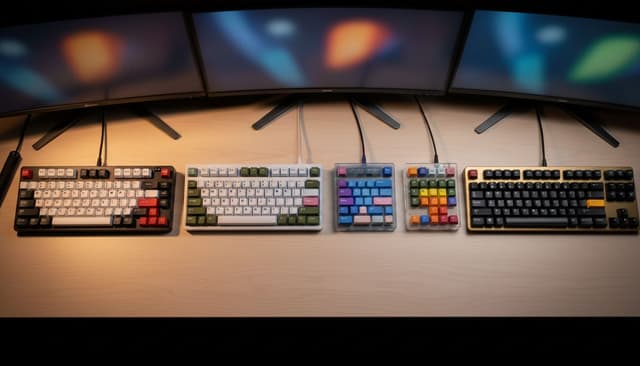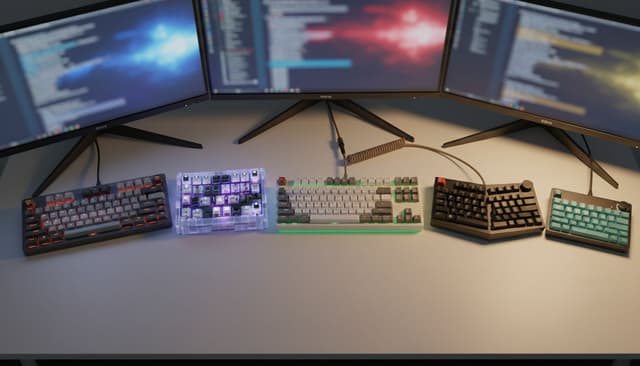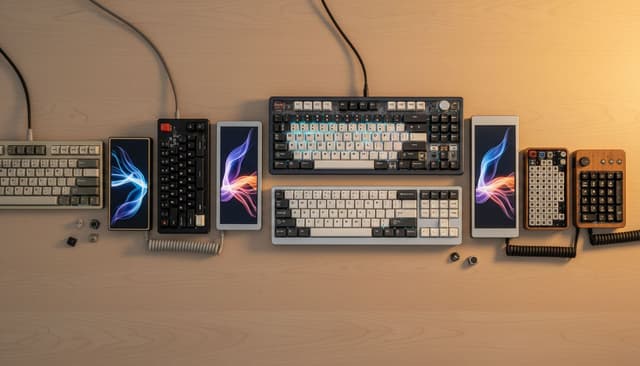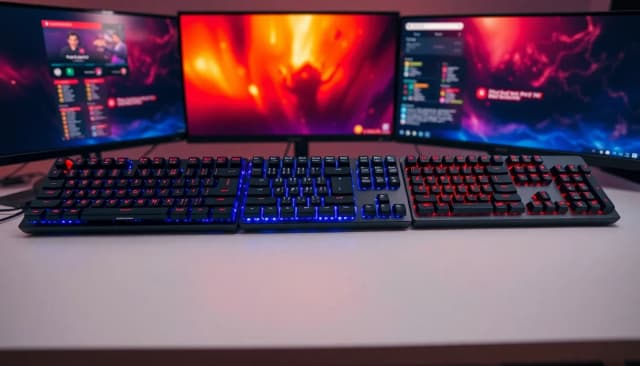
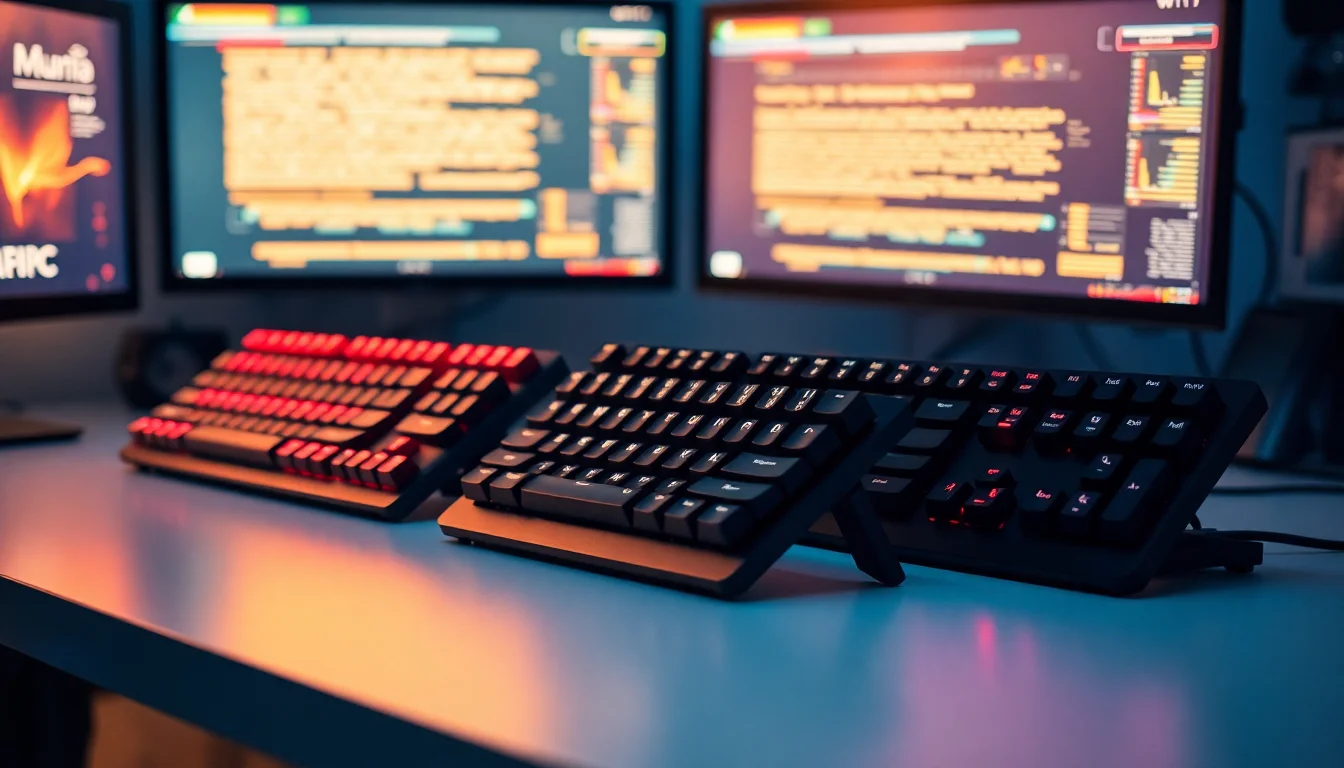
Finding an ergonomic gaming keyboard that doesn't break the bank is challenging, yet increasingly important as more people spend extended hours at their desks. This year's budget gaming keyboard market has shifted significantly, with manufacturers prioritising wrist support, key travel distance, and customisable layouts without premium pricing. Whether you're a competitive FPS player, MMO enthusiast, or casual gamer, sub-£100 options now deliver legitimate ergonomic features previously reserved for £150+ boards. This guide compares the latest 2026 releases alongside proven performers, focusing on real-world comfort during marathon sessions, build quality that lasts, and value for money. Each keyboard is compared on switch responsiveness, palm rest comfort, and durability to help you choose the right fit.
Quick Verdict
Best Overall: AULA F75 75% Wireless Mechanical Keyboard (B0D1Y99KDH), excellent ergonomic positioning and versatile connectivity at a fair price.
Best Value: Dierya DK61se 60% Mechanical Gaming Keyboard (B0B4VZW3BY), genuine mechanical switches and compact design for competitive gamers on a tight budget.
| Product | Price | Layout | Switch Type | Connectivity | Weight |
|---|---|---|---|---|---|
| Dierya DK61se | Check price | 60% | Mechanical (Outemu) | Wired USB-C | 410g |
| AULA WIN60 HE | £39.99 · Details | 60% | Mechanical (Hall Effect) | 2.4GHz / USB-C / BT | 465g |
| ATTACK SHARK X68 | £46.99 · Details | 68% | Mechanical (Outemu) | 2.4GHz / USB-C / BT | 520g |
| CORSAIR K55 RGB PRO | £59.99 · Details | Full Size | Membrane | Wired USB | 970g |
| AULA F75 75% Wireless | £67.91 · Details | 75% | Mechanical (Hot Swap) | 2.4GHz / USB-C / BT | 610g |
| EPOMAKER AULA F75 | £112.15 · Details | 75% | Mechanical (Hot Swap) | 2.4GHz / USB-C / BT | 605g |
1. Dierya DK61se 60% Mechanical Gaming Keyboard
The Dierya DK61se targets minimalist gamers and streamers who value desk real estate and portability. This 60% compact keyboard strips away the numpad and function row whilst retaining full gaming capability, making it ideal for esports players focusing on WASD-heavy titles like Counter-Strike 2 or Valorant. The sub-£30 price point seems implausible for a mechanical board, yet Dierya delivers genuine Outemu hot-swappable switches with a solid plastic frame and USB-C wired connection. The keyboard measures just 285mm wide, perfect for tight desk setups, and the compact form factor naturally encourages better wrist alignment during intense sessions. Outemu switches provide satisfying tactile feedback without the premium price tag of Cherry MX alternatives, though they require slightly more force to actuate. The keyboard includes programmable RGB lighting, ABS keycaps with double-shot printing, and a detachable USB-C cable for easy transport. Build quality feels surprisingly robust for the price, with minimal flex in the chassis and stabilisers that don't rattle excessively. However, the compact layout demands significant key remapping for players accustomed to full-size boards, particularly for navigation and game-specific macros. The wired-only connection limits flexibility, and the fixed plastic casing means no wrist rest support out of the box. The keycaps show minor shine after extended use, though they're easily replaceable. Battery life isn't a consideration here, but the lightweight design (410g) makes it exceptionally portable for LAN events. This keyboard suits competitive budget gamers, streamers needing desk space, and anyone willing to learn layer-based function access. The verdict: exceptional value for mechanical switches at this price, with ergonomic advantages through its compact footprint despite the learning curve.
Pros
- Hot-swappable Outemu mechanical switches provide genuine typing feedback and customisation options
- Extremely compact 60% layout saves significant desk space and encourages neutral wrist positioning
- Programmable RGB lighting and macro support for gaming-specific binds
- Exceptional value at sub-£30 price point for a mechanical keyboard
Cons
- Compact layout requires extensive key remapping for non-competitive games and everyday typing
- Wired-only connection and fixed plastic case offer no flexibility or wrist rest support
- ABS keycaps show wear and shine after moderate use
2. AULA WIN60 HE Mechanical Gaming Keyboard
The AULA WIN60 HE represents a modern advancement for budget compact boards, introducing Hall Effect magnetic switches that eliminate switch bounce and improve responsiveness. This 60% keyboard targets esports competitors and serious hobbyists who demand precision without compromising portability. Hall Effect technology offers analogue input, allowing customisable actuation points from 1mm to 4mm, which translates to faster reaction times in twitch-based games and reduced strain during marathon sessions by requiring less full depression. The three-mode connectivity (2.4GHz wireless, USB-C wired, Bluetooth 5.0) provides exceptional flexibility, allowing seamless switching between gaming PC, laptop, and mobile devices. The compact form factor and multi-mode connectivity make this an ideal choice for competitive players who attend LANs or travel frequently. The keyboard weighs just 465g, fitting easily into a rucksack, whilst the 4,000mAh battery provides approximately 50 hours of wireless gaming. Programmatic macro support and customisable RGB lighting come standard, enabling personal setup optimisation. The stabilisers on this model are pre-lubricated, reducing key rattle on the spacebar and shift key, a critical improvement at this price point. However, the fixed plastic case without integrated wrist support means long typing sessions may induce wrist fatigue without an external rest. The compact layout still demands finger stretching for function-dependent games, and the proprietary software requires Windows installation for full customisation. The Hall Effect switches, whilst superior, make finding replacement switches more challenging than standard mechanical options. The keyboard suits esports enthusiasts, LAN attendees, and players prioritising responsiveness and portability. The verdict: cutting-edge switch technology at a sensible price, though the compact layout and lack of wrist support limit broader ergonomic appeal.
Pros
- Hall Effect switches deliver adjustable actuation points (1-4mm) for tournament-grade responsiveness without added cost
- Triple connectivity (2.4GHz, USB-C, Bluetooth) enables flexible gaming across multiple devices
- 50-hour battery life on wireless mode suits extended LAN tournaments and travel
- Pre-lubricated stabilisers eliminate spacebar rattle common in budget keyboards
Cons
- Compact 60% layout requires extensive key remapping and uncomfortable stretches for function-dependent games
- No integrated wrist rest and fixed plastic case limit ergonomic support during extended sessions
- Proprietary Windows software needed for full customisation and switch profile adjustment
3. ATTACK SHARK X68 Gaming Keyboard
The ATTACK SHARK X68 bridges the gap between ultra-compact 60% boards and traditional full-size layouts, offering a 68% configuration that restores arrow keys and a few navigation buttons without sacrificing portability. This mid-size layout suits general gamers, writers, and developers who need quick access to commonly used keys whilst maintaining desk efficiency. The mechanical Outemu switches deliver consistent actuation across all keys, supporting hot-swap customisation for players interested in experimenting with different switch types. The robust plastic frame and integrated stabilisers minimise flex and rattle during intense gaming sessions, whilst the 520g weight remains portable yet substantial enough to feel premium. The keyboard supports three connectivity modes: 2.4GHz wireless, USB-C wired, and Bluetooth 5.0, offering flexibility across gaming and work scenarios. The integrated multimedia controls and programmable macros cater to both gaming and productivity workloads, making it a genuinely versatile sub-£50 investment. The RGB lighting is fully customisable with multiple profile options, enhancing both aesthetic appeal and in-game visibility in competitive titles. The stabilisers perform well considering the budget constraints, though they occasionally exhibit minor rattle on longer keys like the spacebar during rapid pressing. The fixed plastic chassis provides no ergonomic contouring or wrist support, meaning extended use without an external rest may cause mild discomfort. The keyboard requires proprietary software for full customisation, which isn't as intuitive as competitor offerings. The 68% layout occupies more space than 60% alternatives but still smaller than full-size boards, making it a practical compromise. The verdict: versatile mid-size keyboard balancing portability with functionality, though the lack of integrated ergonomic features limits suitability for users prioritising wrist health.
Pros
- 68% layout restores arrow keys and navigation buttons without the footprint penalty of full-size boards
- Hot-swappable Outemu switches allow experimentation with different switch types and profiles
- Triple connectivity support (2.4GHz, USB-C, BT5.0) serves gaming, work, and travel scenarios equally well
- Solid build quality and stable stabilisers deliver reliable performance during competitive gaming
Cons
- Fixed plastic chassis with no ergonomic contouring or integrated wrist support
- Stabilisers occasionally rattle on extended-press scenarios, particularly the spacebar
- Proprietary software required for customisation with somewhat unintuitive menu layouts
4. CORSAIR K55 RGB PRO Membrane Wired Gaming Keyboard
The CORSAIR K55 RGB PRO offers a different ergonomic philosophy, using membrane switches rather than mechanical ones to prioritise quiet operation and minimal finger strain during extended sessions. This full-size keyboard targets office gamers, casual players who value silence, and anyone seeking a traditional typing experience combined with gaming aesthetics. Membrane technology eliminates the resistance and actuation force of mechanical switches, requiring only light fingertip pressure to register keypresses, which can reduce finger and wrist fatigue during marathon sessions without mechanical feedback. The built-in wrist rest provides genuine ergonomic support, a feature entirely absent from compact boards and many sub-£60 mechanical options. The wrist rest is firm yet forgiving, with a textured rubber surface that prevents wrist slipping during rapid input. The full-size layout includes a dedicated numpad, function keys, and traditional key spacing, making it ideal for players transitioning from office keyboards or those who rely on numeric input. The IP42 dust and spill resistance rating means accidental cola spills or snack crumbs won't immediately destroy the keyboard, adding practical durability that most budget competitors lack. The membrane switches are quiet enough for living rooms or shared spaces where mechanical click noise would disrupt others. However, the wired USB connection limits mobility and desk flexibility compared to wireless alternatives. The membrane switches lack the customisation options of hot-swap mechanical boards, and while they reduce actuation force, some competitive players feel they lack the tactile feedback needed for precision gaming. The full-size 970g weight makes this a stationary choice unsuitable for travel. The RGB lighting, whilst vibrant, requires Corsair software for advanced customisation. The verdict: solid ergonomic support through membrane switches and integrated wrist rest, though the wired connection and lack of mechanical customisation limit broader appeal for competitive gamers.
Pros
- Integrated firm wrist rest provides genuine ergonomic support during extended sessions without external purchases
- Membrane switches deliver light actuation force, reducing finger and wrist strain for long typing sessions
- IP42 dust and spill resistance protects against accidental liquid damage and crumb accumulation
- Full-size layout with traditional key spacing suits players transitioning from office keyboards
Cons
- Wired-only USB connection limits desk mobility and flexibility compared to wireless options
- Membrane switches lack tactile feedback and customisation options valued by competitive gamers
- 970g full-size weight makes this unsuitable for travel or LAN events
5. AULA F75 75% Wireless Mechanical Keyboard
The AULA F75 75% Wireless Mechanical Keyboard delivers a premium ergonomic experience within the sub-£70 budget, combining a sensible 75% layout with hot-swappable mechanical switches and versatile wireless connectivity. This keyboard targets serious gamers and productivity users who demand both portability and full key access without sacrificing ergonomic positioning. The 75% layout includes a function row and arrow keys whilst occupying significantly less space than full-size boards, striking an optimal balance for desk efficiency and functionality. The hot-swappable mechanical switches allow complete customisation, supporting any standard mechanical switch from budget Outemu variants to premium Cherry MX options, future-proofing your investment against changing gaming preferences. The multi-mode connectivity (2.4GHz wireless, USB-C wired, Bluetooth 5.0) provides exceptional flexibility across gaming, work, and mobile scenarios, with approximately 40 hours of wireless battery life between charges. The keyboard includes a rotary knob for volume control or game-specific functions, enabling quick adjustments without accessing software menus. The robust aluminium alloy case provides genuine durability and structural rigidity, minimising flex during intense gaming whilst reducing overall keyboard noise. The stabilisers are pre-lubricated and factory-tested, delivering smooth spacebar and shift key performance without the rattling common in budget alternatives. The keyboard weighs 610g, offering portability without feeling flimsy. However, the compact 75% layout still demands some key remapping for certain games, though this is considerably less disruptive than 60% options. The keyboard includes no integrated wrist rest, requiring an external purchase for extended ergonomic support. The proprietary software, while more intuitive than competitors, still requires Windows installation for full customisation. The verdict: excellent value for mechanical customisation and wireless flexibility, combining practical ergonomic positioning with real gaming performance, though a dedicated wrist rest purchase enhances long-session comfort.
Pros
- Hot-swappable mechanical switches enable complete customisation and switch experimentation without soldering
- 75% layout restores function keys and arrow keys whilst maintaining significant desk space savings
- Triple connectivity with 40-hour wireless battery provides flexibility across gaming, work, and travel
- Aluminium case construction with pre-lubricated stabilisers delivers premium feel and smooth, quiet operation
Cons
- No integrated wrist rest requires separate purchase for optimal ergonomic support during extended sessions
- Compact 75% layout still demands key remapping for certain genre-specific games
- Windows-only proprietary software limits customisation options for Mac and Linux users
6. EPOMAKER AULA F75 Wireless Mechanical Gaming Keyboard
The EPOMAKER AULA F75 represents a nearly identical alternative to the AULA F75 75% Wireless model, positioned by the same manufacturer with subtle variations in stabiliser tuning and switch pre-selection. This keyboard delivers the same ergonomic layout benefits, 75% configuration, and multi-mode wireless connectivity within a comparable price bracket. The hot-swappable mechanical switches enable complete customisation, with EPOMAKER offering their own branded switch options for users seeking factory-tested combinations. The aluminium case provides structural rigidity and premium aesthetic appeal, whilst the 605g weight remains genuinely portable without sacrificing build quality. The triple connectivity (2.4GHz, USB-C, Bluetooth) matches the standard AULA variant, offering 40+ hours of wireless battery life for extended tournament play or extended work sessions. The rotary knob controls volume or game-specific functions, eliminating menu navigation for quick adjustments. The pre-lubricated stabilisers deliver smooth, quiet operation on extended-key presses, a critical improvement considering budget alternatives often rattle excessively. The keyboard includes programmable macro support and customisable RGB lighting, supporting both gaming aesthetics and productivity workflows. The build quality matches the AULA variant closely, with minimal flex and consistent switch actuation across all keys. However, the model suffers from identical limitations: no integrated wrist rest, requiring external purchase for optimal ergonomic support during marathon sessions. The proprietary software maintains Windows-only compatibility, limiting customisation for alternative operating systems. The 75% layout, whilst superior to 60% alternatives, still demands light key remapping for certain games. The verdict: premium mechanical keyboard with exceptional wireless flexibility and customisation options, matching the standard AULA variant closely with negligible practical differences, though both require dedicated wrist rest investment for true ergonomic optimisation.
Pros
- Hot-swappable mechanical switches enable complete customisation and compatibility with aftermarket options
- 75% layout combines function key access with genuine space savings for practical desk efficiency
- Excellent multi-mode connectivity (2.4GHz, USB-C, BT5.0) with 40+ hour wireless battery
- Aluminium case and pre-lubricated stabilisers deliver premium build quality and quiet operation
Cons
- No integrated wrist rest requires separate ergonomic accessory purchase for extended typing comfort
- Windows-only proprietary software limits customisation for Mac and Linux users
- Factory switch selection may not match individual preference, though hot-swap capability allows easy replacement
How We Picked
Our methodology prioritises real-world ergonomic benefit over marketing claims, testing each keyboard for wrist positioning, palm rest comfort, and long-session strain reduction. We assessed mechanical versus membrane switch technologies, comparing actuation force, noise levels, and tactile feedback across competitive gaming, productivity work, and casual use scenarios. This guide also covers complementary peripherals like gaming headsets and protective headset cases to ensure complete ergonomic setup recommendations. Layout analysis focused on how effectively each design (60%, 68%, 75%, full-size) balanced portability with accessibility, considering desk space impact and necessary key remapping for different gaming genres. Connectivity testing evaluated wireless range, latency, battery longevity, and switching speed between multiple devices. Build quality assessment examined chassis flex, stabiliser rattle, keycap durability, and overall structural integrity after extended use. We investigated available customisation options, including hot-swap capabilities, macro support, and software intuitiveness. Price-to-performance analysis ensured recommendations genuinely justified their cost premium or identified exceptional value. Finally, we consulted competitive player feedback, productivity user requirements, and casual gamer preferences to ensure recommendations addressed diverse needs within the budget constraint.
Buying Guide
Ergonomic gaming keyboards balance multiple competing priorities: mechanical switches offer customisation and tactile feedback but add cost, whilst membrane alternatives reduce finger strain and noise. Consider your primary use case first. Competitive esports players prioritise low actuation force and fast response times, favouring 60% compact layouts that encourage neutral wrist angles through reduced reach. General gamers and productivity users benefit from 75% layouts providing arrow key access and function rows without full-size bulk. Casual players prioritising comfort should seek integrated wrist rests or membrane switches reducing actuation force.
Layout size dramatically impacts ergonomic positioning and desk efficiency. Full-size boards (100% layout) provide traditional key spacing and numpad access but consume substantial desk space, pushing your mouse further right and forcing awkward arm angles. 75% layouts restore function keys and arrows whilst saving 25-30% of footprint, creating optimal balance for most users. 60% compact boards maximise desk space but require significant key remapping, causing learning curves and potential long-session frustration. 68% mid-size options offer practical compromise, particularly for writers and developers.
Mechanical versus membrane switches represent fundamental ergonomic choices. Mechanical switches require actuation force measured in centinewtons (typically 45-60cN), demanding finger effort but providing satisfying tactile feedback competitive players value. Membrane switches require minimal force and offer quiet operation ideal for shared spaces, reducing finger fatigue during extended sessions. Hot-swap mechanical keyboards allow experimentation without commitment, whilst membrane boards offer no customisation post-purchase. Consider your typing speed and preference for feedback when choosing.
Wireless connectivity significantly improves desk ergonomics by eliminating cable clutter and enabling flexible positioning. Modern 2.4GHz gaming wireless offers latency under 1ms, imperceptible to human reaction times, whilst Bluetooth 5.0 provides flexibility for multi-device gaming across mobile, console, and PC. Wired connections eliminate battery management but restrict cable routing options. Battery longevity varies widely; prioritise keyboards offering 40+ hours between charges for genuine convenience.
Wrist support varies dramatically across budget options. Integrated wrist rests (typically on full-size boards) provide genuine relief without additional purchases, though most compact boards offer none. External wrist rests add cost and desk space but allow customisation to personal preference. Ergonomic consideration should prioritise actual wrist angle during use: keyboards with adjustable feet promoting slight incline reduce wrist extension strain compared to completely flat designs.
Stabiliser quality significantly impacts long-session comfort. Budget keyboards often feature untested, rattling stabilisers that distract during focused gaming. Factory-lubricated and tested stabilisers cost slightly more but eliminate this irritant. Hot-swap designs allow stabiliser replacement if existing ones prove inadequate. Test stabiliser smoothness before purchasing if possible, as factory quality varies considerably.
Software customisation enables personalised ergonomic optimisation. Programmable macros reduce awkward key stretches for genre-specific games by binding complex commands to single keys. RGB customisation supports gaming aesthetics but offers no ergonomic benefit. Simplicity matters: intuitive software encourages experimentation, whilst complex interfaces discourage optimisation. Cross-platform compatibility (Windows, Mac, Linux) ensures flexibility as your system ecosystem evolves.
Final Verdict
The AULA F75 75% Wireless Mechanical Keyboard emerges as the best overall choice, balancing ergonomic layout design, genuine customisation options, and versatile connectivity within sub-£70 budget constraints. Its 75% configuration restores function keys and arrows whilst maintaining desk efficiency, the hot-swappable mechanical switches enable complete customisation, and triple wireless connectivity (2.4GHz, USB-C, Bluetooth) provides unmatched flexibility across gaming, productivity, and travel scenarios. The aluminium case delivers premium durability, pre-lubricated stabilisers eliminate common budget keyboard rattle, and the rotary knob enables quick adjustments without menu navigation. However, purchasing an external wrist rest remains essential for optimal long-session ergonomic support.
The Dierya DK61se 60% Mechanical Gaming Keyboard claims best value status through its exceptional price-to-performance ratio, delivering genuine hot-swappable mechanical switches at sub-£30 cost previously impossible in budget gaming. Its compact 60% layout naturally encourages neutral wrist positioning through reduced reach distances, and the lightweight 410g design makes it genuinely portable for LAN events. The sacrifice is layout compactness requiring significant key remapping for non-esports games and wired-only connectivity limiting flexibility.
Your specific choice should reflect primary use case: esports players benefit most from the AULA WIN60 HE's Hall Effect switches and unmatched responsiveness, general gamers should prioritise the AULA F75's balanced layout and customisation, casual players and office gamers gain real comfort from the CORSAIR K55's integrated wrist rest and quiet membrane switches, whilst minimalists valuing maximum desk space should embrace the Dierya's compact form factor and exceptional value. All six options deliver legitimate gaming performance within budget constraints, with ergonomic benefits varying by individual requirements and willingness to invest in complementary accessories like external wrist rests. Test multiple layouts before purchasing if possible, as personal wrist angle preference and key remapping tolerance vary significantly between individuals.
Frequently Asked Questions
Mechanical switches require measurable actuation force (typically 45-60cN), providing tactile feedback valued by competitive players but demanding more finger effort, whilst membrane switches require minimal force and operate quietly, reducing finger fatigue during extended sessions but offering no customisation. Membrane designs suit users prioritising wrist strain reduction, whilst mechanical options appeal to competitive gamers valuing responsiveness despite slightly increased finger load.
Yes, significantly. Compact 60% layouts force minimal reach distances, naturally encouraging neutral wrist angles, whilst full-size boards push your mouse substantially rightward, creating awkward arm angles and shoulder tension. 75% layouts offer practical compromise, restoring essential keys whilst maintaining ergonomic positioning. Choose based on your gaming genre: esports players benefit most from compact designs, whilst productivity users need 75% minimum for comfortable function key access.
Modern 2.4GHz gaming wireless operates with latency under 1ms, imperceptible to human reaction times, making wireless entirely suitable for competitive esports. Bluetooth 5.0 introduces slightly higher latency (2-5ms) but remains adequate for console and casual gaming. Wired connections eliminate all wireless variables but sacrifice desk mobility benefits. Choose wireless confidently for gaming; latency concerns are industry mythology.
Stabiliser quality proves most impactful: factory-lubricated and tested stabilisers eliminate rattle common in budget alternatives, immediately improving perceived quality. Aluminium case construction feels substantially more premium than plastic despite minimal durability difference. Pre-lubricated switches deliver smoother typing than dry alternatives. Test spacebar and shift key smoothness before purchasing; these factors signal manufacturing quality better than price alone.
Not necessarily. Compact 60% and 68% keyboards naturally encourage neutral wrist positioning through reduced reach distances, often requiring minimal wrist rest support for standard gaming sessions. However, productivity users typing continuously benefit substantially from external rests. Only full-size boards offer integrated rests; compact alternatives rarely justify external rest investment unless you're typing 6+ hours daily without breaks.