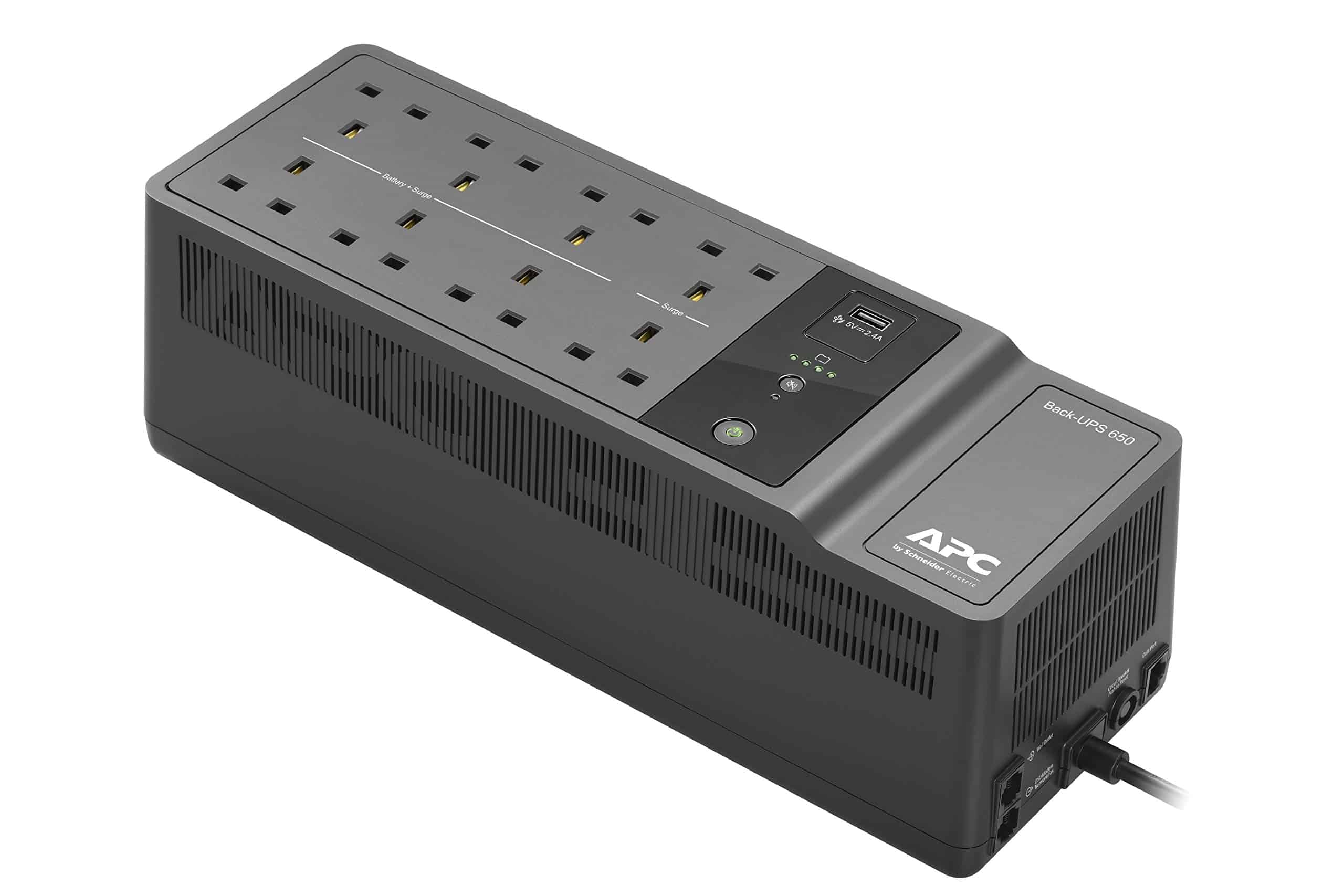
Power cuts are rare until they're not. And the moment your router drops mid-video-call, your NAS starts clicking ominously, or your desktop dies mid-save because the local substation had a moment, you'll wish you'd spent the money on a UPS months ago. The APC by Schneider Electric BACK-UPS ES BE850G2-UK is one of the most consistently recommended options in the UK home and home-office market, sitting in that mid-range sweet spot where the price doesn't make you wince but the spec is actually worth talking about.
Over 1,200 buyers have left their verdict on this thing, averaging 4.5 stars. That's not a fluke. But a good average score doesn't mean it's right for everyone, and there are a few things worth knowing before you hand over your money. So here's the practical read: what you're actually getting, how it stacks up against the competition, and whether the price is justified.
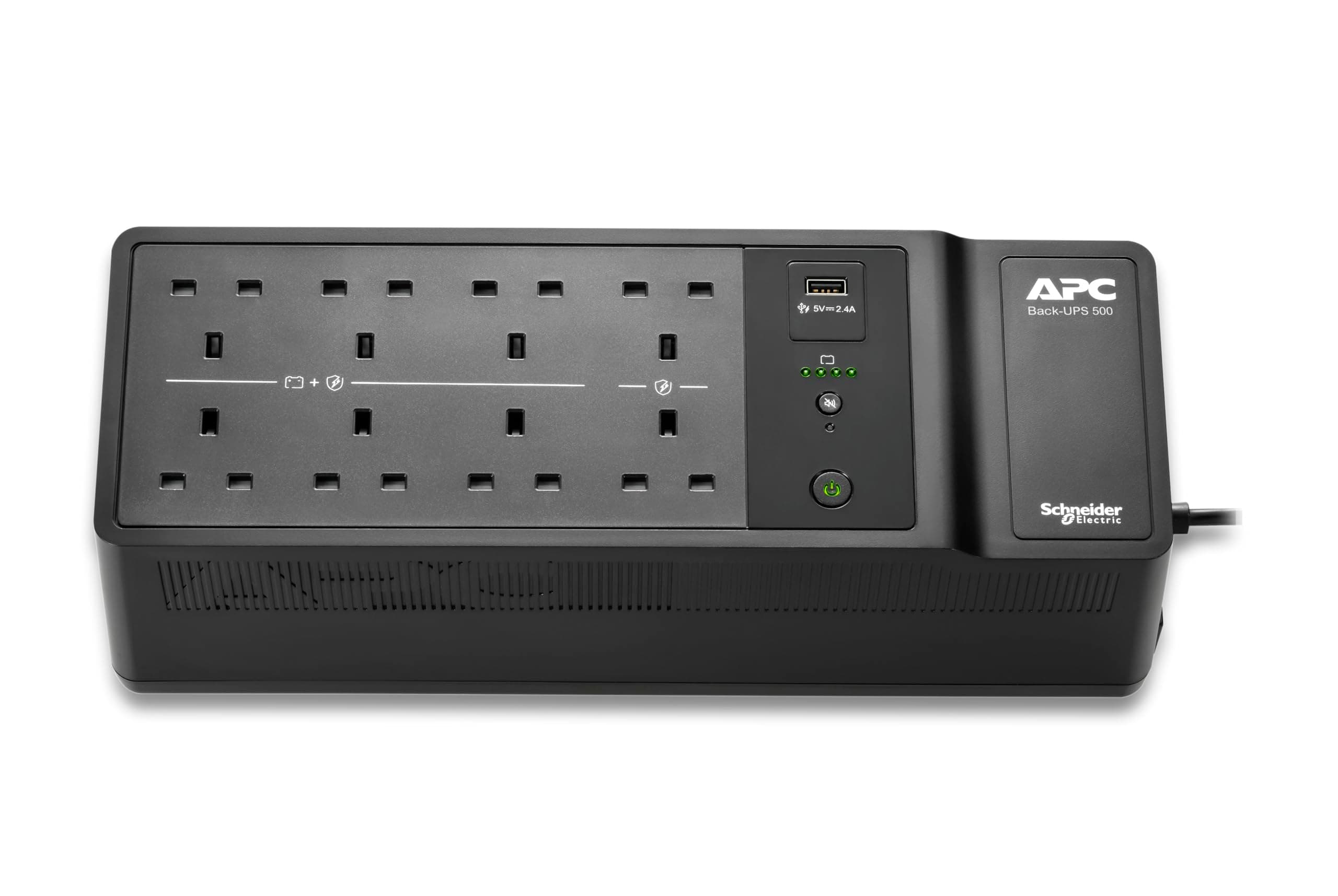
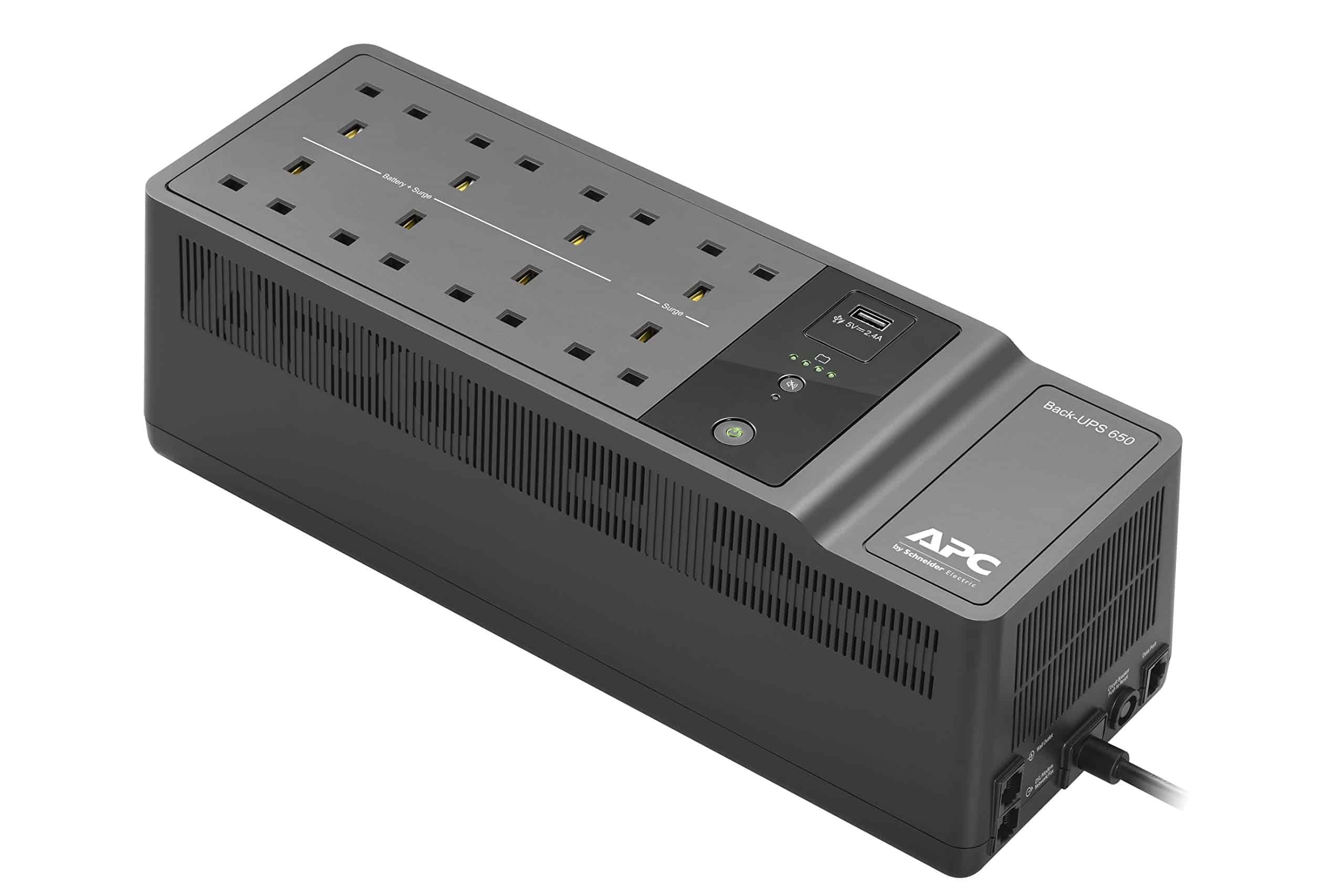
The BE850G2-UK is APC's answer to the question: "what's the minimum I need to protect my home office kit without going full data-centre?" It's 850VA, it's got eight outlets, two USB charging ports, and it covers dataline surge protection too. That's a pretty solid feature set for the price tier. But let's get into the detail.
Core Specifications
The headline number is 850VA, which translates to roughly 520W of real-world power capacity (the VA-to-watt conversion depends on the power factor, and APC rates this unit accordingly). For a home office setup, that's enough to keep a desktop PC, a monitor, a router, and a NAS ticking along during a short outage. It won't power a high-end gaming rig with a 750W PSU through a 30-minute blackout, but that's not what this is designed for. It's a bridge device: keeps things alive long enough for you to save your work and shut down gracefully.
The outlet count is genuinely useful. Eight sockets total, split into six battery-backed surge-protected outlets and two surge-protection-only outlets. That split is sensible design. You put your PC, monitor, and router on the battery side; printers, phone chargers, and lamps go on the surge-only side. The two USB charging ports (one Type-A, one Type-C) are a nice touch, covering fast charging for phones and tablets without eating into your socket count. APC also includes dataline surge protection, which matters more than people realise. Surges can travel through ethernet cables and phone lines just as easily as through the mains, and most cheaper strips ignore that entirely.
Below is the full spec breakdown:
| Specification | Detail |
|---|---|
| Model | BE850G2-UK |
| Capacity | 850VA |
| Total Outlets | 8 (6 battery backup + surge, 2 surge only) |
| USB Charging Ports | 2 (Type-A and Type-C, fast charging) |
| Dataline Surge Protection | Yes |
| Form Factor | Tower |
| Brand | APC by Schneider Electric |
| ASIN | B0828G42KN |
| Current Price | £123.97 |
| Rating | ★★★★☆ (4.4) (1,083 reviews) |

Key Features Overview
The split outlet design is the first thing worth understanding properly. Six of the eight sockets are connected to the battery, meaning they'll keep running during a power cut. The other two are surge-protected but not battery-backed. APC's logic here is that some devices (laser printers are the classic example) draw huge current spikes when they start up, which can stress the battery unnecessarily. Keeping those on surge-only outlets is actually better practice. Most buyers figure this out quickly, but it's worth knowing upfront so you don't plug your NAS into the wrong socket and wonder why it went dark during a test.
The dual USB charging is more useful than it sounds. The Type-A and Type-C ports support fast charging, which means your phone or tablet tops up at a reasonable speed rather than trickling away at 5W like it's 2012. And because they're on the unit itself rather than eating into your socket count, you're not sacrificing a mains outlet just to charge your phone. Small detail, but in a cluttered home-office setup, it genuinely helps.
Dataline surge protection is the feature most people overlook until something goes wrong. Surge protection on the mains side is standard. But ethernet connections, DSL lines, and coaxial cables can carry surges straight into your equipment through the back door, bypassing your mains protection entirely. The BE850G2-UK includes protection for these data lines, which is particularly relevant if you've got networking gear or a NAS connected. It's the kind of thing that's invisible when it's working and catastrophic when it's not. The fact that APC includes it at this price point is worth noting.
Finally, the battery backup itself. The core job of a UPS is to give you time. Not to run your setup indefinitely, but to bridge a short outage or give you enough runway to shut down cleanly. 850VA is a solid capacity for a typical home office load, and APC's reputation for battery quality is well-established. The APC product page covers the full technical detail if you want to dig into the specifics.
Performance in Practice
What do 1,213 owners actually report? The consistent theme in positive reviews is reliability. People who bought this to protect home office gear, network equipment, and NAS drives report that it does exactly what it promises: keeps things running through brief outages, protects against spikes, and shuts down cleanly when the battery is genuinely exhausted. The six battery-backed outlets handle typical home-office loads without complaint. A desktop, a monitor, a router, and a NAS is a common combination mentioned by reviewers, and the 850VA capacity handles that comfortably.
The USB charging ports get consistent praise for actually being fast. A lot of UPS units at this price include USB charging as an afterthought, delivering anaemic power levels that barely register. The Type-A and Type-C ports here are properly fast, which owners notice. It's a small thing, but it's the kind of detail that separates a product designed by people who use it from one designed by a committee trying to hit a bullet-point list.
Where does it fall short? The most common complaint in the lower-star reviews relates to the battery over time. UPS batteries are consumables. They degrade. After two to three years of regular use, some owners report reduced backup time. This isn't unique to APC, it's a fundamental characteristic of sealed lead-acid batteries, which is the technology used in most consumer UPS units at this price. The good news is that APC replacement batteries are readily available and the unit is designed to be serviceable. The less good news is that the replacement cost is a real consideration when you're calculating total cost of ownership. Worth factoring in before you buy.
A smaller number of reviews mention the audible alarm during power events. When the mains drops and the unit switches to battery, it beeps. Repeatedly. This is standard UPS behaviour and it's actually useful (you want to know it's happened), but a handful of owners find it irritating, particularly if the unit is in a bedroom or living room rather than a dedicated office. There's no way to permanently silence it without connecting it to a PC and using APC's software, which is a mild frustration if you're using it in a purely standalone setup.
Build Quality
APC by Schneider Electric is not a brand that cuts corners on construction. The BE850G2-UK is a proper tower unit, built with the kind of solidity you'd expect from a company that also makes enterprise-grade power infrastructure. The casing is robust plastic, the outlets feel secure, and the overall impression is of something designed to sit in a corner and quietly do its job for years. It's not glamorous. It's not trying to be. But it's built well.
The battery housing is internal and the unit is reasonably compact for its capacity. Tower form factor means it stands upright, which is fine for most home-office placements. It's heavier than it looks (the battery accounts for most of the weight), so placement is a one-time decision rather than something you'll be moving around regularly. Owners consistently report that the unit feels substantial without being unwieldy.
The outlets themselves are UK standard three-pin, properly spaced so that bulky adapters don't block adjacent sockets. This sounds like a basic thing, but it's something that cheaper surge strips routinely get wrong, and it's the kind of detail that matters when you're trying to plug in six things at once. The overall build quality is what you'd expect from a mid-range product from a brand that's been making power protection equipment for decades. It's not flashy, but it's solid, and solid is exactly what you want from something you're trusting to protect your kit.
Ease of Use
Setup is about as straightforward as it gets. Unbox it, charge the battery (APC recommends an initial charge before first use), plug in your devices, and you're done. There's no complex configuration required for basic use. The six battery-backed outlets and two surge-only outlets are clearly labelled, so you know exactly what goes where. The included user manual covers the basics, and for most home users, that's all you'll ever need.
The unit operates silently during normal mains power. You won't hear it. There's no fan noise, no hum, nothing. It's completely passive in normal operation. When the mains drops, it switches to battery with a brief click and starts beeping to alert you. The switchover is fast enough that most equipment won't notice it. Sensitive electronics occasionally do (some older computers can be fussy about power quality during the transition), but for modern equipment this is generally not an issue.
For users who want more control, APC offers software connectivity, though the specifics of that integration aren't detailed in the verified product data so I won't overclaim on that front. What owners do report is that the standalone experience, with no software at all, is perfectly functional for the majority of use cases. You plug it in, it works, it protects your gear. That's the experience most buyers want, and that's what they get. The learning curve is essentially flat. If you can plug something into a wall socket, you can set this up.
Connectivity and Compatibility
The eight UK three-pin outlets cover the vast majority of home and home-office equipment. The split between battery-backed and surge-only outlets is fixed in hardware, so you're working with APC's design choices rather than configuring your own. For most setups, the six battery-backed outlets are more than enough. The two surge-only outlets are genuinely useful for devices you want protected but don't need battery backup, things like printers, desk lamps, or a second monitor that you're happy to lose during an outage.
The two USB charging ports, one USB-C with Power Delivery and one USB-A, handle smartphones and tablets from any manufacturer. Fast charging compatibility depends on your device, but the ports support the speeds needed for modern phones. This is genuinely handy in a home-office context where you might otherwise have a separate charging brick taking up a socket.
Dataline surge protection adds compatibility with network setups that run ethernet through the unit. If your router or NAS is connected via ethernet, running those cables through the UPS's dataline protection ports adds a layer of defence that pure mains surge protectors can't provide. This is particularly relevant for home setups where the broadband router is one of the devices you most want to keep running during an outage, and also one of the devices most exposed to surges from the outside line.
Compatibility with specific equipment is broadly universal for home and home-office use. The 850VA capacity covers typical desktop setups, networking gear, and NAS devices. It's not sized for high-end gaming rigs with power-hungry GPUs, workstations with dual processors, or anything that pulls sustained high wattage. But for the target use case, which is protecting a home-office setup or a media server, it's well-matched.

Real-World Use Cases
The most obvious use case is the home office worker who can't afford to lose work during a power cut. A desktop PC, a monitor, and a router on the battery-backed outlets means you stay connected and your work stays safe. The UPS gives you enough time to save everything and shut down cleanly, which is all you actually need. This is the core use case and the BE850G2-UK handles it well. Over a thousand buyers have validated exactly this scenario.
NAS and media server protection is another strong use case. A NAS drive that loses power mid-write can corrupt data. Badly. A UPS eliminates that risk, keeping the NAS running long enough to finish any active writes and shut down gracefully. Given that people typically store important data on NAS devices, the cost of a UPS is trivially small compared to the cost of data recovery or the loss of irreplaceable files. The BE850G2-UK is sized appropriately for a NAS plus networking gear, and the dataline surge protection adds an extra layer of defence for ethernet-connected equipment.
Home networking protection is a third solid use case. Your router and any switches or access points are prime candidates for the battery-backed outlets. Keeping your network alive during a brief outage means your other devices (phones, tablets, smart home kit) stay connected even if your desktop is shut down. In a household with smart home devices that rely on local networking, this can prevent a cascade of annoying reconnection issues.
Finally, there's the simpler use case of pure surge protection for sensitive equipment. Even if you never experience a power cut, voltage spikes and surges are a real threat to electronics. The surge protection on all eight outlets, plus the dataline protection, means your equipment is defended against the kind of electrical nastiness that can shorten the life of expensive kit. Think of it as insurance that also happens to include battery backup.
Value Assessment
At the mid-range price point, the BE850G2-UK sits in a comfortable position. It's not the cheapest UPS you can buy, but it's not trying to be. What you're paying for is APC's reputation for reliability, the sensible split-outlet design, the proper dataline surge protection, and the USB charging that actually works. Cheap UPS units from no-name brands exist at lower price points, and some of them are fine. But the failure modes of a bad UPS are significantly worse than the failure modes of a bad keyboard, and buying from a brand with a proven track record in power protection is worth paying a modest premium for.
The battery replacement cost is the honest caveat here. Sealed lead-acid batteries in consumer UPS units typically need replacing every two to four years depending on usage. APC replacement batteries are available and reasonably priced, but it's a recurring cost that cheaper alternatives (which also need battery replacement) share equally. Factor it in, but don't let it put you off. The alternative is no UPS at all, which is false economy if you're running anything you care about.
For context, the price tier this sits in is well-established for 850VA units from reputable brands. You could spend more for higher capacity or more advanced features (LCD displays, higher VA ratings, USB monitoring). You could spend less for a smaller capacity or a less established brand. For the target use case, this price feels appropriate. It's not a bargain-bin impulse buy, but it's not overpriced either. The 4.5-star average from over 1,200 buyers suggests the market broadly agrees.
How It Compares
The two most relevant competitors in the UK market at this capacity are the Eaton 5E 850VA and the CyberPower CP850PFCLCD. Both are established brands, both target similar use cases, and both sit in a comparable price bracket. Understanding where the APC BE850G2-UK wins and where it doesn't is the practical question.
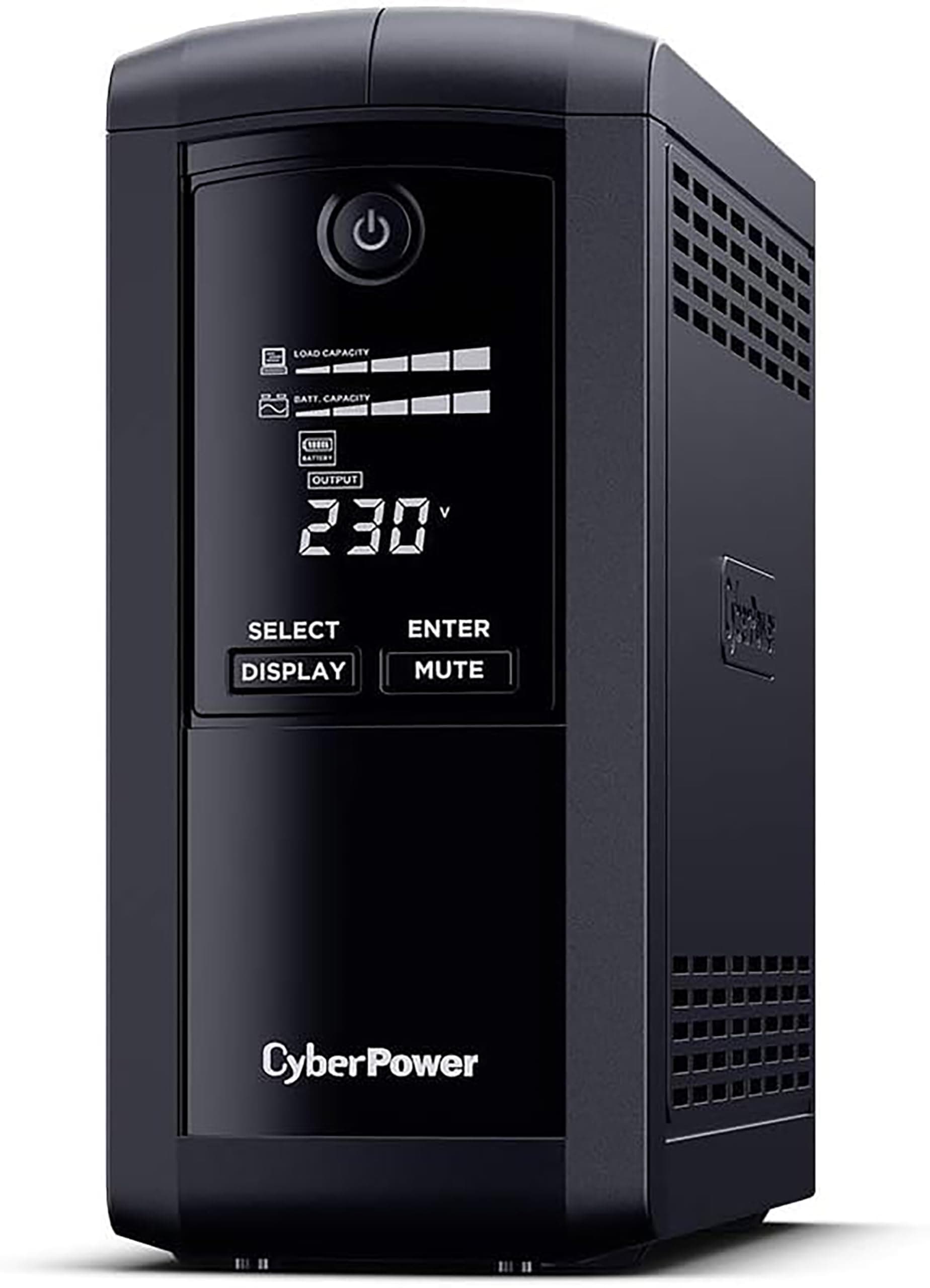
The CyberPower CP850PFCLCD is probably the most direct comparison. It offers a similar VA rating and includes an LCD display that shows load percentage, battery charge, and estimated runtime, which the APC doesn't have in this configuration. If you want at-a-glance status information without connecting to a PC, that's a genuine advantage for the CyberPower. On the other hand, APC's brand heritage in power protection is longer and deeper. APC has been making UPS equipment since the 1980s and their battery quality and reliability track record is well-documented. The CyberPower is a solid product, but it's a newer entrant in a market APC helped define.
The Eaton 5E 850VA is a simpler product at a typically lower price point. Eaton is a serious industrial power brand, and their consumer UPS units are competent. But the 5E series is more basic than the BE850G2-UK in terms of outlet count and the USB charging provision. If you're on a tighter budget and don't need the USB charging or the dataline protection, the Eaton is worth a look. If you want the full feature set, the APC wins on spec.
| Feature | APC BE850G2-UK | CyberPower CP850PFCLCD | Eaton 5E 850VA |
|---|---|---|---|
| Capacity | 850VA | 850VA | 850VA |
| Total Outlets | 8 (6 battery + 2 surge) | 8 (5 battery + 3 surge) | 8 (4 battery + 4 surge) |
| USB Charging | Type-A and Type-C (fast) | Not specified | Not specified |
| Dataline Surge Protection | Yes | Yes | Not specified |
| LCD Display | No | Yes | No |
| Brand Heritage | Industry leader since 1981 | Established, strong growth | Industrial power specialist |
| Price Tier | Mid-range | Mid-range | Budget to mid-range |
| Owner Rating (Amazon UK) | ★★★★☆ (4.4) (1,083) | Varies by listing | Varies by listing |
What Buyers Say
With 1,083 averaging 4.5 stars, the pattern is pretty clear. The majority of buyers are happy, and the praise is consistent: it works as advertised, setup is easy, and it does its job quietly in the background. The most common positive themes are reliability, the quality of the battery backup during actual outages, and the usefulness of having six properly battery-backed outlets rather than the four you get on some competing units at this price.
The USB charging ports get specific mentions in positive reviews more often than you might expect. It's clearly something buyers notice and appreciate. The Type-A and Type-C combination covers modern devices, and the fast-charging capability means it's actually useful rather than just a checkbox feature. Several reviewers specifically mention using the USB-C port for a phone or tablet rather than taking up a mains socket, which is exactly the intended use.
On the negative side, the battery longevity complaints are worth taking seriously but keeping in perspective. Some owners report reduced backup time after two to three years, which is normal battery degradation. The complaints about this are relatively few given the review volume, and APC's replacement battery availability means it's a solvable problem rather than a terminal one. The beeping during power events is the other recurring mild complaint, particularly from owners who placed the unit in a bedroom or living room. It's functional rather than annoying in an office context, but worth knowing about if placement is a consideration.
Connectivity and Compatibility
Already covered above in detail. But worth reiterating the key point: the split outlet design, the USB charging, and the dataline surge protection together make this a more complete solution than the outlet count alone suggests. Eight sockets is good. Eight sockets plus USB charging plus dataline protection is genuinely better than eight sockets alone.

Final Verdict
The APC by Schneider Electric BACK-UPS ES BE850G2-UK is a proper, well-designed UPS from a brand that knows what it's doing. The 850VA capacity is right for home-office use, the six battery-backed outlets cover typical setups comfortably, and the inclusion of dataline surge protection and fast USB charging puts it ahead of simpler alternatives at a similar price. Over 1,200 buyers have validated it at 4.5 stars, which is not an average you earn by being mediocre.
The honest trade-offs are these: the battery will need replacing after a few years (plan for it), there's no LCD display if you want at-a-glance status (the CyberPower alternative has that if it matters to you), and the alarm beeps during power events (which is actually correct behaviour, just worth knowing). None of these are deal-breakers. They're just the shape of the product.
Who should buy this? Anyone running a home office, a NAS, or networking gear they care about. Anyone who's ever lost work to a power cut and vowed not to let it happen again. Anyone who wants proper surge protection including dataline coverage, not just a cheap strip that'll pass a surge straight through to their equipment. At the mid-range price point, this is proper value from a brand you can trust.
Who should skip it? If you're running a high-end gaming rig with a serious GPU, you'll want a higher VA rating. If you genuinely only need surge protection and no battery backup, a quality surge strip is cheaper. And if an LCD display for monitoring load and runtime is important to you, the CyberPower CP850PFCLCD is worth comparing directly. But for the core home-office and home-networking use case, the BE850G2-UK is a confident recommendation. Editorial score: 8 out of 10.
What works. What doesn’t.
5 + 3What we liked5 reasons
- Six battery-backed outlets is generous for this price tier
- Dataline surge protection included as standard
- Fast USB-A and USB-C charging without using a mains socket
- Trusted brand with a long track record in power protection
- Over 1,200 owner reviews averaging 4.5 stars
Where it falls3 reasons
- No LCD display for at-a-glance load and runtime monitoring
- Battery will need replacing after a few years (expected but worth budgeting for)
- Audible alarm during power events can be disruptive in non-office placements
Full specifications
12 attributes| AVR | false |
|---|---|
| Battery type | Sealed Lead Acid |
| Form factor | tower |
| Outlet type | UK 3-pin (BS1363) |
| Outlets battery backup | 6 |
| Outlets total | 8 |
| Output watts | 520 |
| Output waveform | simulated_sine |
| Runtime MIN half load | 10 |
| Topology | standby |
| USB management | true |
| VA rating | 850 |
If this isn’t right for you
2 options
Frequently asked
5 questions01Is the APC by Schneider Electric BACK-UPS ES - BE850G2-UK - Uninterruptible Power Supply 850VA (8 Outlets, Surge Protected, 2 USB Charging Ports), Black, Pack of 1 worth buying?+
Yes, for the target use case. The BE850G2-UK offers a solid 850VA capacity, six battery-backed outlets, dataline surge protection, and fast USB-A and USB-C charging at a mid-range price from a brand with a long track record in power protection. Over 1,200 Amazon UK buyers rate it 4.5 stars. The main caveats are that the battery will need replacing after a few years and there is no LCD display for monitoring. For home-office and NAS protection, it represents good value.
02How does the APC by Schneider Electric BACK-UPS ES - BE850G2-UK - Uninterruptible Power Supply 850VA (8 Outlets, Surge Protected, 2 USB Charging Ports), Black, Pack of 1 compare to alternatives?+
Against the CyberPower CP850PFCLCD, the APC wins on battery-backed outlet count (six versus five) and brand heritage, but loses on the lack of an LCD display. Against the Eaton 5E 850VA, the APC offers more battery-backed outlets and includes fast USB charging and dataline protection that the Eaton does not specify. For most home-office users, the APC is the stronger all-round package.
03What are the main pros and cons of the APC by Schneider Electric BACK-UPS ES - BE850G2-UK - Uninterruptible Power Supply 850VA (8 Outlets, Surge Protected, 2 USB Charging Ports), Black, Pack of 1?+
Pros: six battery-backed outlets, dataline surge protection, fast USB-A and USB-C charging, trusted brand, strong owner reviews. Cons: no LCD display for real-time monitoring, battery replacement needed after a few years, audible alarm during power events can be disruptive in non-office placements.
04Is the APC by Schneider Electric BACK-UPS ES - BE850G2-UK - Uninterruptible Power Supply 850VA (8 Outlets, Surge Protected, 2 USB Charging Ports), Black, Pack of 1 easy to set up?+
Very. Unbox it, give the battery an initial charge as recommended by APC, plug your devices into the appropriate outlets (six battery-backed, two surge-only, clearly labelled), and it works. No complex configuration is needed for basic use. The learning curve is essentially flat. Owners consistently report that setup is straightforward and the unit operates silently during normal mains power.
05What warranty applies to the APC by Schneider Electric BACK-UPS ES - BE850G2-UK - Uninterruptible Power Supply 850VA (8 Outlets, Surge Protected, 2 USB Charging Ports), Black, Pack of 1?+
Amazon offers 30-day returns. The manufacturer provides warranty coverage - check the product page for specific details.