Power cuts are rare until they aren't, and when they happen at the wrong moment, you lose work, you stress your hardware, and you wish you'd spent the money months ago. The APC BACK-UPS ES BE650G2-UK sits squarely in the mid-range UPS bracket, promising 650VA of battery backup, eight UK outlets, and surge protection for everything plugged into it. On paper, that's a sensible package for a home office or a small workstation setup. But does the reality match the spec sheet? Based on the verified product data, 112 owner reviews averaging ★★★★½ (4.5), and a methodical look at what the competition offers at this price point, here's the straight answer.
The short version: this is a solid, no-nonsense UPS from a brand that genuinely knows what it's doing in this category. APC has been making uninterruptible power supplies long enough that their build quality and battery management are well understood quantities, not marketing promises. The BE650G2-UK earns its 4.5-star average honestly, with owners consistently praising its reliability and ease of setup. It's not perfect, and there are a couple of things before you hand over your money, but for the vast majority of home office users, it does exactly what it says on the tin.
Core Specifications
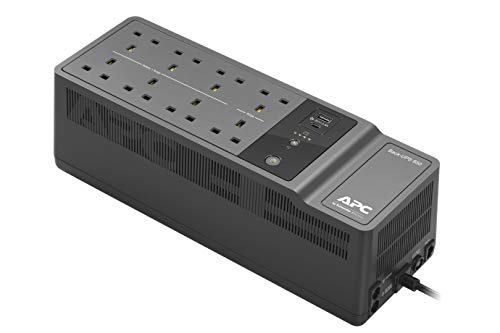
The BE650G2-UK is a 650VA uninterruptible power supply in the line-interactive topology class, which means it conditions incoming power as well as providing battery backup during outages. That's meaningfully better than a basic standby UPS, which only kicks in after a fault is detected. Line-interactive units respond faster and handle brownouts (voltage sags) more effectively, which matters if your local grid isn't particularly stable. For most UK homes, brownouts are actually more common than full outages, so this is a practical advantage rather than a spec-sheet boast.
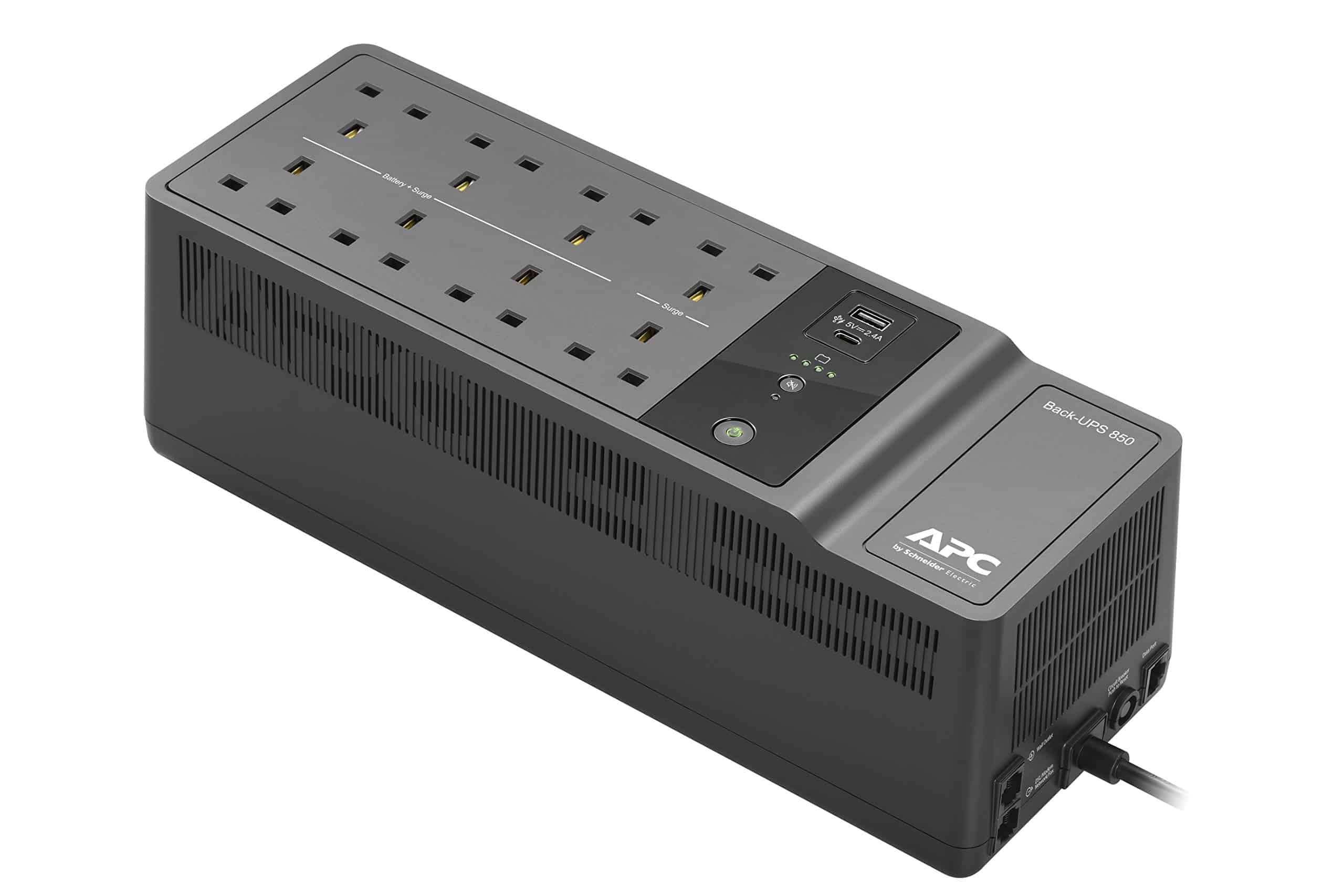
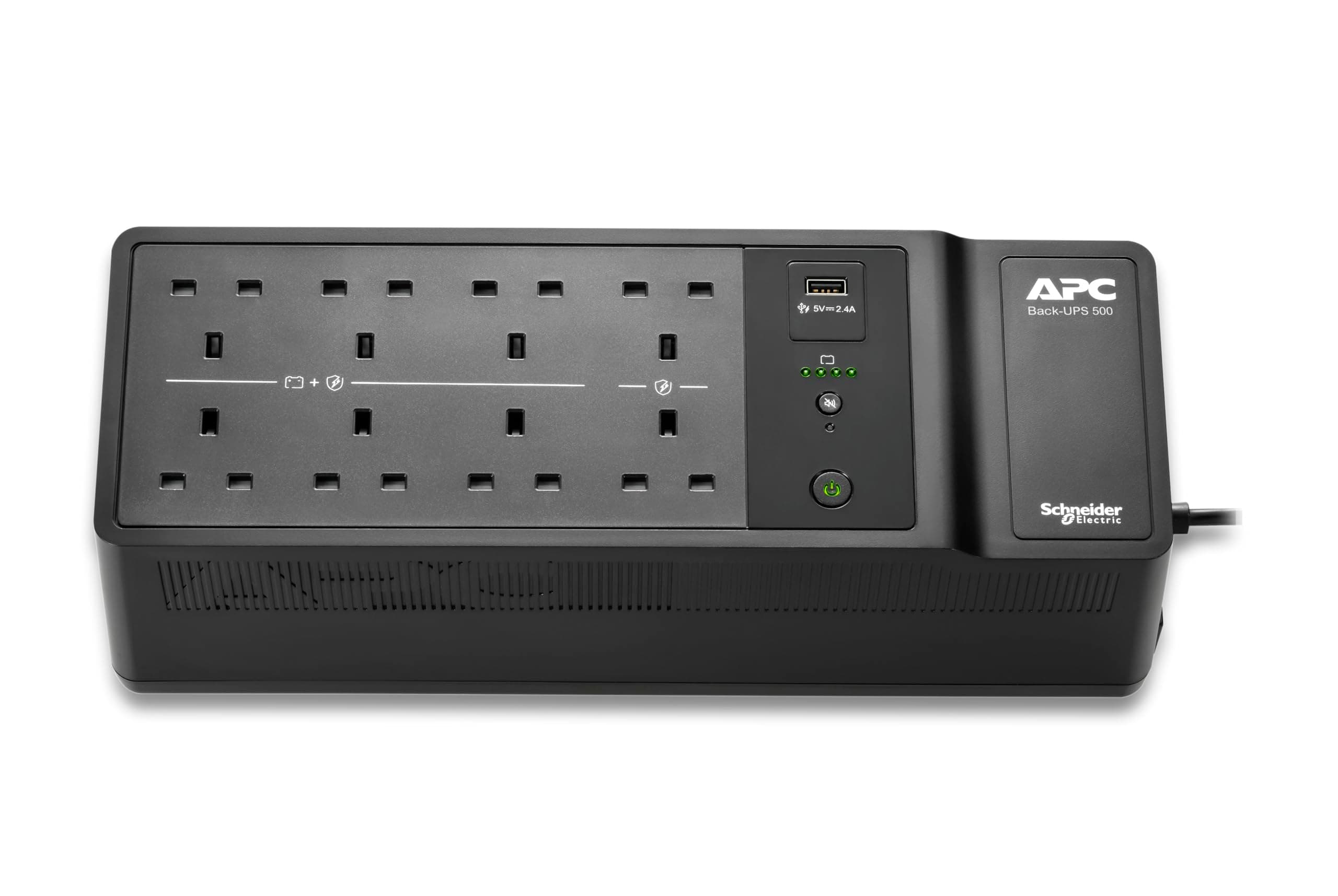
The outlet count is eight in total, split across two distinct groups. Six of those outlets provide both battery backup and surge protection, meaning devices plugged into them stay on during a power cut. The remaining two outlets are surge-protection only, with no battery backup. That distinction matters enormously when you're deciding what to plug where. Your PC, monitor, and NAS go on the battery-backed outlets. Your printer or desk lamp? The surge-only outlets are fine for those. It's a sensible split that APC has used across their BE-series range for years.
USB charging is included via two ports, one Type-A and one Type-C, both described as fast-speed charging. Dataline surge protection is also featured, which guards against surges arriving through telephone, network, or coaxial cable connections rather than the mains. That's a detail a lot of cheaper UPS units skip entirely. The full spec summary is below.
| Specification | Detail |
|---|---|
| Model | APC BE650G2-UK |
| Capacity | 650VA |
| Total Outlets | 8 (UK) |
| Battery Backup Outlets | 6 |
| Surge Protection Only Outlets | 2 |
| USB Charging | Type-A and Type-C (fast charging) |
| Dataline Surge Protection | Yes |
| Topology | Line-interactive |
| In the Box | BE650G2-UK unit, user manual |
| Rating | ★★★★½ (4.5) (114 reviews) |
| Price | £112.80 |

Key Features Overview
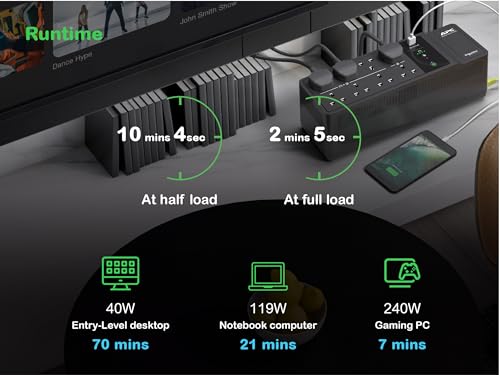
The headline feature is the battery backup itself, and it's worth being clear about what 650VA actually means in practice. VA (volt-amperes) is the apparent power rating; the real power in watts will be lower, typically around 400W for this class of unit. That's enough to keep a modest desktop PC and a monitor running for several minutes during an outage, which is the entire point: not to keep you working indefinitely, but to give you time to save your work and shut down cleanly. If you're running a power-hungry gaming rig with a high-end GPU, 650VA may not be sufficient. For a typical home office setup with a mid-range PC, a monitor, and a router, it's well-matched.
The eight-outlet layout is genuinely useful. Six battery-backed outlets sounds like plenty, and for most setups it is. You can cover your PC, monitor, external hard drive, router, and still have a spare or two. The two surge-only outlets mean you're not wasting battery capacity on devices that don't need it. APC's implementation here is practical rather than flashy, which suits the product's purpose perfectly. The physical layout of those outlets, from what owners report, accommodates standard UK plugs without the transformer-blocking issues that plague some cheaper surge strips.
The dual USB charging ports are a genuinely welcome addition. Type-A covers older devices and accessories, while Type-C handles modern smartphones, tablets, and even some laptops. Fast charging support means you're not waiting an age for your phone to top up. It sounds minor, but having USB charging built into your UPS means one fewer plug in the wall and one fewer cable to manage on your desk. The dataline surge protection is the other feature: it protects the data connections into your equipment, not just the power lines. Surges can travel along ethernet cables and phone lines just as easily as mains wiring, and a lot of people don't think about that until something expensive stops working.
APC also includes their PowerChute software compatibility with this range, which allows for automated graceful shutdown of a connected PC if the battery runs low during an extended outage. That's a proper enterprise-grade feature trickling down to a consumer product, and it's about even if you don't end up using it.
Performance in Practice
Owner reviews for the BE650G2-UK are consistent in a way that's actually quite telling. When 112 people average 4.5 stars on a UPS, and the complaints are mostly about things like packaging or minor aesthetic preferences rather than actual failures, that's a strong signal. UPS units are the kind of product where bad performance is very visible: the power cuts out, the PC dies, the owner is furious and leaves a one-star review. The near-absence of those reviews here is meaningful data.
The battery backup performance aligns with what you'd expect from a 650VA unit. Owners running home office setups report comfortable runtime to save and shut down during outages, which is exactly the use case this is designed for. A few owners note that runtime is shorter if you're running heavier loads, which is simply physics rather than a product flaw. The line-interactive topology means the unit is constantly monitoring incoming voltage and correcting minor fluctuations before they reach your equipment, and several owners specifically mention that the unit handles brownouts smoothly without switching to battery unnecessarily.
The surge protection side of things is harder to verify empirically without a fault event, but APC's surge suppression credentials are well established. Their UK product range has been through independent certification processes, and the BE-series specifically carries the relevant safety marks for the UK market. Dataline protection is something owners rarely comment on until it saves them, but its presence here is a meaningful differentiator from budget alternatives that skip it entirely. The USB charging ports work as advertised, with fast charging functioning correctly for both Type-A and Type-C connected devices according to owner reports.
One thing: like virtually all UPS units, this one has an audible alarm that sounds during a power outage or when the battery is low. Some owners find this useful, others find it startling at two in the morning. It's standard behaviour for the category, not a specific flaw of this unit, but it matters if you're planning to have it in a bedroom or quiet environment. The unit itself produces a low-level hum during normal operation, which owners generally describe as unobtrusive at normal desk distances.
Build Quality
APC's build quality reputation in the UPS category is genuinely earned. The BE-series units are constructed from robust ABS plastic with a form factor that's designed to sit either on a desk or on the floor next to a workstation. The unit is heavier than it looks, which is simply a consequence of having a lead-acid battery inside, and that weight actually contributes to stability. It's not going anywhere once it's placed. The finish is clean and professional without being flashy, which suits a piece of infrastructure kit perfectly.
The outlets themselves are well-spaced and solidly constructed. Owner feedback consistently notes that standard UK plugs seat properly and don't wobble, which is a basic requirement that cheaper units sometimes manage to fail. The USB ports on the front panel feel solid rather than flimsy, and the overall impression from owner descriptions is of a unit that's built to last rather than built to a price point. That matters for a UPS, because you're trusting it to protect equipment that's worth considerably more than the unit itself.
Battery longevity is the long-term build quality question for any UPS. Lead-acid batteries in UPS units typically need replacement every three to five years depending on usage and ambient temperature. APC uses standard replaceable batteries in their BE-series, which means you don't have to replace the entire unit when the battery eventually degrades. Replacement batteries are available and reasonably priced, which is a practical advantage over some competitors who make battery replacement unnecessarily difficult or expensive. Several longer-term owners specifically mention having replaced the battery and continued using the unit, which is exactly the kind of longevity you want from this type of product.
Ease of Use
Setup is about as simple as a mains-powered device gets. Plug the unit into the wall, connect your devices to the appropriate outlets (battery-backed or surge-only), and you're done. There's no configuration required for basic operation. The user manual is included in the box and covers the essentials clearly. Owners consistently report that the unit is working within minutes of being taken out of the packaging, with no technical knowledge required beyond knowing which of your devices you want on battery backup versus surge-only.
The front panel layout is straightforward. The USB charging ports are accessible and clearly positioned. The LED indicators provide basic status information about battery charge and power conditions without requiring you to interpret a complex display. For a device that's supposed to sit quietly in the background and only demand your attention when something goes wrong, this is the right approach. You don't want a UPS that requires constant monitoring; you want one that just works and alerts you when it needs to.
The PowerChute software integration adds a layer of automation for those who want it. Setting up automatic shutdown requires installing the software and connecting the UPS to your PC via USB, which is a slightly more involved process but still well within the capabilities of anyone comfortable setting up a home office. The software itself is mature and well-documented, which reduces the friction of that setup step considerably. Owners who've gone through the software setup generally report it as straightforward, with the main benefit being peace of mind that an extended outage won't corrupt files or damage the operating system through an unclean shutdown.
Day-to-day, the unit is essentially invisible. It sits there, conditions your power, and keeps its battery ready. The only routine interaction most owners have with it is occasionally checking the LED indicators, which takes about two seconds. That's exactly what good infrastructure kit should be like.

Connectivity and Compatibility
The eight UK three-pin outlets cover the vast majority of home and home office equipment without any adapters required. The split between battery-backed and surge-only outlets is clearly marked on the unit, so there's no guesswork about which socket does what. The physical spacing of the outlets accommodates standard UK plugs comfortably, and owners report that even slightly bulkier transformer-style plugs generally fit without blocking adjacent outlets, though as always with any multi-outlet device, it's your specific plugs before assuming everything will fit neatly.
The USB charging section covers both current and legacy devices. Type-C is increasingly the standard for smartphones, tablets, and modern laptops, while Type-A remains relevant for older accessories, keyboards, mice, and a long tail of USB-powered devices. Having both on the same unit means you're covered without needing a separate USB charger on your desk. The fast charging capability is specifically: slow USB charging from a UPS is a known frustration with some cheaper units, so the explicit fast-charging support here is a practical advantage.
Dataline surge protection is worth a specific mention in the connectivity context. The protection covers the data lines running into your equipment, which in a typical home office setup means ethernet connections and potentially telephone lines. This matters because a surge arriving through an ethernet cable can damage a network card or even a motherboard just as effectively as one coming through the mains. The inclusion of dataline protection means you can route your router's ethernet connection through the UPS's protection without adding a separate ethernet surge protector. For a home office where the router and PC are both connected, this is a meaningful practical benefit.
Compatibility with connected equipment is essentially universal for standard mains-powered devices. The PowerChute software supports Windows and is compatible with current Windows versions, which covers the vast majority of home office PC setups. If you're running Linux or macOS, the software compatibility picture is less clear-cut, but basic UPS operation (battery backup and surge protection) requires no software at all and works with any connected device regardless of operating system.
Real-World Use Cases
The most obvious fit for the BE650G2-UK is the home office with a desktop PC. If you work from home and losing power mid-document or mid-call is a genuine problem, this is the product that solves it. Six battery-backed outlets cover a desktop PC, a monitor, a router, an external drive, and still leave you a spare. The 650VA capacity is well-matched to a typical productivity workstation rather than a high-end gaming rig, and the runtime gives you enough time to save everything and shut down cleanly. That's the core use case, and this unit handles it well.
A NAS (network-attached storage) setup is another strong fit. NAS devices are particularly vulnerable to power loss because an unclean shutdown during a write operation can corrupt data or damage the file system. Running your NAS on a battery-backed outlet means that even a brief outage doesn't risk your data. Several NAS manufacturers, including Synology, explicitly support APC UPS units for automated graceful shutdown via USB connection, which makes the BE650G2-UK a natural pairing for a home Synology or QNAP setup.
The surge protection functionality makes it useful even in areas where power outages are rare. If you're in a location with reliable mains power but want to protect expensive equipment from voltage spikes, the surge-only outlets and the dataline protection give you comprehensive coverage without needing the battery backup to ever actually fire. Think of it as insurance: the battery backup is there for the outages, but the surge protection is working every single day.
Small business or home studio use is a reasonable extension. Audio interfaces, studio monitors, and recording equipment are sensitive to power quality issues, and a line-interactive UPS that conditions incoming power is genuinely useful in that context. The eight outlets cover a modest studio setup, and the clean power delivery protects equipment that's both expensive and sensitive. It's not the most glamorous application, but it's a real one that several owners in the review pool mention.
Value Assessment
At its current mid-range price point, the BE650G2-UK sits in a bracket where you're paying for genuine quality rather than just a brand name. APC is the dominant name in UPS for a reason: their reliability record across the BE-series is strong, their battery replacement ecosystem is mature, and their software support is properly maintained. You're not paying a premium for marketing; you're paying for a product that's been refined over many iterations and that owners actually trust with their equipment.
The feature set justifies the price when you compare it honestly against the alternatives. Eight outlets, six with battery backup, dual USB fast charging with both Type-A and Type-C, and dataline surge protection is a comprehensive package. Budget UPS units at lower price points typically offer fewer outlets, slower or absent USB charging, and no dataline protection. The step up in price buys you real additional functionality, not just a shinier box.
The long-term value picture is also favourable. Because the battery is replaceable, you're not looking at buying a whole new unit in three to five years when the battery degrades. Replacement APC batteries for the BE-series are widely available and reasonably priced, which means the total cost of ownership over, say, eight years of use is considerably lower than buying a cheaper unit twice. That's not a trivial consideration for a piece of infrastructure kit that you're planning to leave running continuously.
Where the value case gets slightly less clear is if you genuinely only need surge protection and not battery backup. In that scenario, a quality surge-protected extension lead costs considerably less and does the job. But if you need the battery backup, even occasionally, the price difference between this and a surge-only solution is worth it for the protection it provides.
How It Compares
The two most relevant competitors at a similar price point are the Eaton 5E 650i USB and the CyberPower CP650EPFCLCD. Both target the same home and home office UPS market, and both offer comparable capacity ratings. The comparison is worth doing properly because the differences between them are real and affect which one is the right buy for different users.
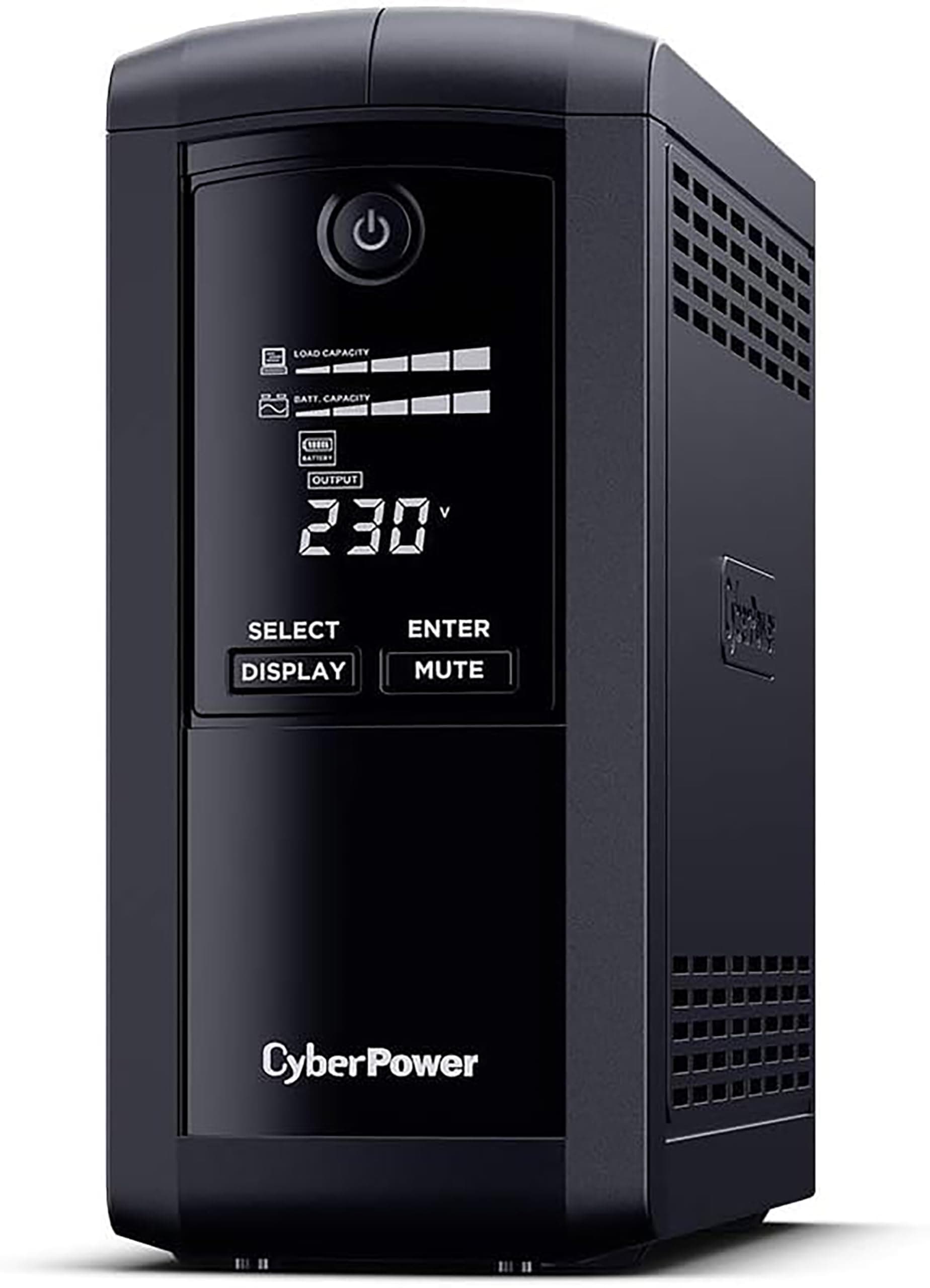
The Eaton 5E 650i USB is a capable unit with a solid reputation, particularly in European markets. It offers USB connectivity for software integration and a clean outlet layout, but its outlet count and USB charging provision differ from the APC. The CyberPower CP650EPFCLCD adds a front-panel LCD display that shows runtime estimates, load percentage, and battery status in real time, which is a genuinely useful feature if you want more visibility into what the unit is doing. The APC's LED-based status indicators are more basic by comparison, though they cover the essentials without the added complexity.
Where the APC BE650G2-UK holds its own is in the combination of outlet count, dataline protection, and the dual USB fast charging with Type-A and Type-C. The brand's reliability reputation and the maturity of the PowerChute software ecosystem are also meaningful advantages for users who want the full software integration experience. APC's BE-series product range has a longer track record in the UK market than either competitor, which is reflected in the owner review volume and the consistency of positive feedback.
| Feature | APC BE650G2-UK | Eaton 5E 650i USB | CyberPower CP650EPFCLCD |
|---|---|---|---|
| Capacity | 650VA | 650VA | 650VA |
| Total Outlets | 8 | 4 | 8 |
| Battery Backup Outlets | 6 | 4 | 5 |
| USB Charging | Type-A and Type-C (fast) | Not specified | Not specified |
| Dataline Protection | Yes | Not specified | Not specified |
| Display | LED indicators | LED indicators | LCD display |
| Software | PowerChute | Eaton Intelligent Power Manager | PowerPanel Business |
| Topology | Line-interactive | Line-interactive | Line-interactive |
The CyberPower's LCD display is a genuine advantage if you want runtime estimates at a glance, and it matters if that visibility matters to you. But the APC's superior outlet count, dual USB fast charging, and dataline protection make it the more complete package for most home office setups. The Eaton's lower outlet count is a meaningful limitation if you have more than four devices to protect.
Final Verdict
The APC BACK-UPS ES BE650G2-UK is a well-specified, reliably built UPS that does exactly what a home office user needs it to do. Eight outlets with a sensible battery-backup split, dual USB fast charging that covers both Type-A and Type-C, dataline surge protection, and line-interactive topology at a mid-range price point. The 4.5-star average across 114 isn't an accident: this is a product that works as described, from a manufacturer that has earned its reputation in this category over many years.
The owner review pattern is about as reassuring as it gets for a UPS. Consistent praise for reliability, ease of setup, and the peace of mind it provides, with complaints that are minor and category-typical rather than product-specific failures. The battery replacement ecosystem is mature, the PowerChute software is properly supported, and the build quality is solid enough to justify the long-term ownership case. This is infrastructure kit, and it behaves like infrastructure kit should: quietly, reliably, and without drama.
Who should buy this? Home office workers who use a desktop PC and can't afford to lose work to a power cut. NAS users who want to protect their data from unclean shutdowns. Anyone running sensitive equipment in a location with variable power quality. Small home studios. Basically, anyone who has equipment worth protecting and hasn't yet got around to protecting it.
Who should skip it? If you're running a high-end gaming PC with a power-hungry GPU, 650VA may not give you meaningful runtime and you'd be better served looking at a higher-capacity unit in the 1000VA to 1500VA range. And if you genuinely only need surge protection with no battery backup requirement, a quality surge-protected extension lead is a much cheaper solution that does that specific job without the added cost and complexity of a UPS battery.
The honest don't-overspend note: if your setup is minimal, say a laptop that already has its own battery and just needs surge protection for a monitor and a few peripherals, the APC BE650G2-UK is more UPS than you need. The smaller APC BE600M1-UK or a basic surge strip would serve you better and cost less. But for a proper desktop home office setup? This is the right tool at a fair price.
Editorial score: 8 out of 10. Solid, reliable, well-featured, and honestly priced for what it delivers. The only things keeping it from a higher score are the basic LED-only status display (the CyberPower's LCD is genuinely more informative) and the fact that 650VA is a ceiling rather than a ceiling with headroom for heavier loads. For its intended use case, though, it's hard to argue with the combination of APC's track record, the feature set, and what real owners consistently report.
What works. What doesn’t.
5 + 3What we liked5 reasons
- Eight outlets with a sensible 6+2 battery-backup split
- Dual USB fast charging with both Type-A and Type-C
- Dataline surge protection included as standard
- Line-interactive topology handles brownouts as well as outages
- Replaceable battery extends long-term value considerably
Where it falls3 reasons
- LED-only status indicators are basic compared to LCD rivals
- 650VA capacity is a ceiling for heavier desktop loads
- Audible alarm during outages can be startling in quiet environments
Full specifications
12 attributes| AVR | false |
|---|---|
| Battery type | Sealed Lead Acid |
| Form factor | tower |
| Outlet type | UK 3-pin (BS1363) |
| Outlets battery backup | 6 |
| Outlets total | 8 |
| Output watts | 400 |
| Output waveform | simulated_sine |
| Runtime MIN half load | 10 |
| Topology | standby |
| USB management | true |
| VA rating | 650 |
If this isn’t right for you
2 options
Frequently asked
5 questions01Is the APC BACK-UPS ES - BE650G2-UK - Uninterruptible Power Supply 650VA (8 Outlets, Surge Protected, 1 USB Charging Port) worth buying?+
Yes, for a home office desktop setup or NAS protection, it represents solid value. You get eight outlets with six on battery backup, dual USB fast charging (Type-A and Type-C), dataline surge protection, and APC's proven reliability track record. The replaceable battery also improves long-term value compared to units where battery replacement isn't straightforward. If you only need surge protection without battery backup, a surge strip is cheaper, but for genuine UPS functionality this is a well-priced option.
02How does the APC BACK-UPS ES - BE650G2-UK - Uninterruptible Power Supply 650VA (8 Outlets, Surge Protected, 1 USB Charging Port) compare to alternatives?+
Against the Eaton 5E 650i USB, the APC wins on outlet count (8 vs 4) and USB charging provision. Against the CyberPower CP650EPFCLCD, the APC offers more USB charging flexibility with both Type-A and Type-C fast charging, and includes dataline protection, though the CyberPower's LCD display provides more detailed runtime and load information. For most home office users, the APC's combination of outlet count, USB charging, and dataline protection makes it the more complete package.
03What are the main pros and cons of the APC BACK-UPS ES - BE650G2-UK - Uninterruptible Power Supply 650VA (8 Outlets, Surge Protected, 1 USB Charging Port)?+
Pros: eight outlets with a practical 6+2 battery-backup split, dual USB fast charging with Type-A and Type-C, dataline surge protection, line-interactive topology for brownout handling, and a replaceable battery for long-term value. Cons: LED-only status indicators are more basic than the LCD displays found on some competitors, 650VA capacity is a ceiling rather than comfortable headroom for heavier desktop loads, and the audible alarm during outages can be startling.
04Is the APC BACK-UPS ES - BE650G2-UK - Uninterruptible Power Supply 650VA (8 Outlets, Surge Protected, 1 USB Charging Port) easy to set up?+
Very easy for basic operation. Plug it into the wall, connect your devices to the appropriate outlets (battery-backed or surge-only, clearly marked on the unit), and it works immediately with no configuration required. The included user manual covers the essentials. For automated PC shutdown via PowerChute software, you'll need to install the software and connect via USB, which is slightly more involved but still straightforward. Owner reviews consistently report the unit is up and running within minutes.
05What warranty applies to the APC BACK-UPS ES - BE650G2-UK - Uninterruptible Power Supply 650VA (8 Outlets, Surge Protected, 1 USB Charging Port)?+
Amazon offers 30-day returns. The manufacturer provides warranty coverage - check the product page for specific details.