The number on the box is a fantasy. Marketing teams love printing aggregate theoretical maximums because it sounds impressive on a shelf, but your actual desktop PC sitting two rooms away from the router doesn't care about lab conditions. What matters is whether plugging this dongle into a USB port actually fixes the problem you have right now, which is almost certainly a desktop or tower PC that's too far from the router to run an Ethernet cable, and whose built-in Wi-Fi is either nonexistent or completely useless.
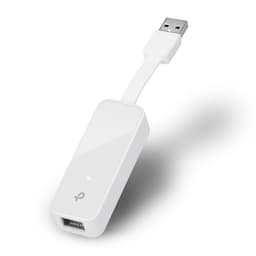
The TP-Link Archer TX50UH WiFi Dongle is a USB Wi-Fi 6 adapter aimed squarely at that problem. It's budget-tier kit, priced accordingly, and it brings Wi-Fi 6 connectivity to machines that don't have it. At this price point, with 5,660 owner reviews averaging ★★★★☆ (4.2), it has clearly done the job for a lot of people. But the spec sheet has some things worth understanding before you buy, and the verdict on whether it's the right choice depends on what you're actually trying to fix.
Short version: it's a solid, well-priced USB Wi-Fi 6 adapter with a genuinely useful USB 3.0 connection that keeps transfer speeds from being the bottleneck. The high-gain antennas and beamforming give it a range advantage over cheaper flat dongles. For a desktop that needs wireless connectivity added or improved, this does what it says. For gaming or heavy streaming from a far room with weak signal, there are caveats.
Core Specifications: TP-Link Archer TX50UH WiFi Dongle
The TX50UH is a dual-band Wi-Fi 6 (802.11ax) USB adapter. That means it connects to both the 2.4 GHz and 5 GHz bands on your router, and it supports the Wi-Fi 6 standard on both. The headline speeds TP-Link quotes are 2402 Mbps on 5 GHz and 574 Mbps on 2.4 GHz. As always, those are theoretical maximums under ideal conditions. Real-world throughput will be lower, and how much lower depends on your router, your signal strength, and how many other devices are competing for airtime.
The USB connection is USB 3.0, which matters more than people realise. A lot of cheaper adapters ship with USB 2.0 connections, which cap out at around 480 Mbps. On a Wi-Fi 6 adapter rated for over 2 Gbps on 5 GHz, a USB 2.0 interface would be a serious bottleneck. USB 3.0 gives you up to 5 Gbps of interface bandwidth, so the connection between the dongle and your PC isn't the thing slowing you down. TP-Link explicitly calls this out as SuperSpeed USB 3.0, and it's a meaningful spec, not just box-filler.
The high-gain antennas are another distinguishing feature. Most entry-level USB adapters are flat and compact, which makes them convenient but limits range. The TX50UH has external antennas, which means it's physically larger but should pull in a better signal at distance. Beamforming support means the adapter and a compatible router can focus the signal toward each other rather than broadcasting in all directions equally. Combined with OFDMA and MU-MIMO support (more on those in the device capacity section), this is a more capable adapter than the bare-minimum budget options.
| Specification | Detail |
|---|---|
| Wi-Fi Standard | Wi-Fi 6 (802.11ax) |
| Frequency Bands | Dual-band: 2.4 GHz + 5 GHz |
| Max Speed (5 GHz) | 2402 Mbps (theoretical) |
| Max Speed (2.4 GHz) | 574 Mbps (theoretical) |
| USB Interface | USB 3.0 (SuperSpeed) |
| Antennas | High-gain external antennas with Beamforming |
| Security | WPA3 |
| Key Technologies | OFDMA, MU-MIMO |
| Amazon Rating | ★★★★☆ (4.2) (5,696 reviews) |
| Price | £29.99 |

Real-World Coverage and Range
Coverage for a USB adapter works slightly differently from a router review. You're not asking "how far does the signal reach from this device" but rather "how well does this device pick up a signal that's already there." The TX50UH's high-gain antennas and beamforming support are specifically designed to help it pull in a usable signal from further away than a compact flat dongle would manage. That's the practical benefit of the external antenna design: it's less convenient to carry around, but it's more capable at the edge of your router's range.
Owner feedback consistently backs this up. People who switched from flat USB adapters, or from the built-in Wi-Fi on older motherboards, report noticeably better signal levels in the same location. The 5 GHz band is faster but shorter range; the 2.4 GHz band travels further through walls but tops out at a lower speed. The TX50UH supports both, and a decent Wi-Fi 6 router will handle band steering automatically, pushing the adapter onto 5 GHz when you're close enough and falling back to 2.4 GHz at range. Whether your router does that intelligently is a router question, not an adapter question.
What the spec sheet cannot tell you is how well it'll work through your specific walls, floors, and interference. Concrete, brick, and anything with metal in it will eat signal. A single floor in a modern UK semi-detached, the TX50UH should handle comfortably based on owner reports. Two floors up with the router at the other end of the house is where you'd want to check owner experiences for your specific layout, because no adapter spec sheet is honest about worst-case penetration. The antennas help, but physics is physics.
Sustained Speed Under Load
Those headline numbers, 2402 Mbps on 5 GHz, are not what you'll see in practice. They're the theoretical maximum under ideal conditions: one device, close to the router, no interference, perfect channel conditions. Real-world throughput through a USB Wi-Fi 6 adapter in a normal home will be a fraction of that. But here's the thing: for most people, that's completely fine. UK broadband connections, even fast ones, top out well below what this adapter can sustain in good conditions. If your broadband is 500 Mbps or under, you're not going to hit the adapter's ceiling.
Where sustained speed matters more is for local network transfers, like copying files between a NAS and your PC, or streaming from a local media server. The USB 3.0 interface is the right call here because it means the adapter-to-PC connection isn't the bottleneck. Owner reports suggest the TX50UH holds up well for 4K streaming and general browsing, with the most common praise being that it simply works reliably without needing to be fiddled with. That's the bar for a USB adapter: stable, consistent, not dropping out.
For gaming, the picture is a bit more nuanced. The adapter supports OFDMA and MU-MIMO, which help with efficient use of airtime when multiple devices are active. Latency on Wi-Fi will always be slightly higher than a wired connection, and that's not something any adapter can fully overcome. But owners using this for online gaming generally report acceptable latency, not the kind of packet loss and jitter that makes games unplayable. If you're a competitive gamer who cares deeply about single-digit ping, run a cable. For casual to moderate gaming, this is fine.
Mesh and Backhaul: Not Applicable, But Here's What Matters
The TX50UH is a client adapter, not a router or mesh node, so the usual backhaul conversation doesn't directly apply here. It doesn't create a network; it connects to one. But understanding your router's setup does matter for getting the best out of this adapter. If you're running a mesh system with a dedicated backhaul band, the TX50UH will benefit from the cleaner, less congested 5 GHz band that a good mesh setup provides to its clients. If your router is a cheap ISP-supplied box with no band management, the adapter will still work but you might not get the best out of it.
What's relevant here is how the TX50UH connects to your existing network. It's a single-radio dual-band adapter, meaning it connects to one band at a time. It won't simultaneously use 2.4 GHz and 5 GHz the way some higher-end adapters can. That's normal for this price tier and for most use cases it makes no difference at all. Your router's band steering will put it on whichever band is most appropriate for your signal level. If you want to force it onto 5 GHz, you can typically do that through the adapter settings or by connecting to the 5 GHz SSID directly.
If the reason you're looking at this adapter is that your router's signal is genuinely weak at your desktop's location, the TX50UH's high-gain antennas will help, but they're not a substitute for a better router or a mesh networking setup if your home has serious dead zones. An adapter can only receive what's being broadcast. If the signal at your desk is genuinely terrible, a mesh node or a wired connection is the proper fix. The TX50UH is for situations where there's a usable signal but the receiving end is the weak link, not for situations where the signal doesn't reach at all.
Device Capacity and Network Efficiency
MU-MIMO (Multi-User, Multiple Input, Multiple Output) and OFDMA (Orthogonal Frequency Division Multiple Access) are two of the headline improvements that Wi-Fi 6 brought over Wi-Fi 5. MU-MIMO allows the router to communicate with multiple devices simultaneously rather than taking turns. OFDMA goes further by allowing a single transmission to carry data for multiple devices at once, subdividing the channel into smaller resource units. The TX50UH supports both, which means it's a well-behaved client on a busy Wi-Fi 6 network.
In practical terms, this matters most in homes with lots of devices competing for airtime. The average UK household now has somewhere between 20 and 40 connected devices when you count phones, tablets, laptops, smart TVs, consoles, smart speakers, cameras, doorbells, and all the IoT stuff that's crept in over the years. On a busy network, an adapter that supports OFDMA is more efficient because the router can schedule its transmissions more intelligently. It's not going to make a huge difference on a quiet network, but on a loaded one it keeps latency lower and throughput more consistent.
The WPA3 security support is also here. WPA3 is the current standard for Wi-Fi security and offers better protection against brute-force password attacks compared to WPA2. If your router supports WPA3 (most modern ones do), the TX50UH can take advantage of it. This isn't a daily-visible feature but it's the right thing to have, especially on a home network that's connected to banking apps, smart home devices, and everything else people run these days, and pairing that with a good VPN adds a further privacy layer that also keeps you protected on public Wi-Fi when you're away from home. An adapter that only supports WPA2 in 2025 is one you'd want to replace sooner.
Wi-Fi Standard and Future-Proofing: TP-Link Archer TX50UH WiFi Dongle
Wi-Fi 6 (802.11ax) is the sweet spot right now for most buyers. Wi-Fi 6E adds a 6 GHz band for less congestion and higher throughput, but it requires both your router and your adapter to support it, and the 6 GHz band has shorter range than 5 GHz. Wi-Fi 7 is starting to appear in high-end routers and adapters, but it's expensive and the performance gains over Wi-Fi 6 are marginal for typical home use cases. For a USB adapter at this price, Wi-Fi 6 is the right call. You're not leaving meaningful performance on the table by not going to 6E or 7.
The TX50UH's dual-band Wi-Fi 6 support means it'll work properly with any Wi-Fi 6 router you buy now or in the near future. And it'll still work with older Wi-Fi 5 routers, just at Wi-Fi 5 speeds. So if you're buying this now with a plan to upgrade your router later, the adapter will grow with you. That's the right way to think about future-proofing at this price tier: not "does it support Wi-Fi 7" but "will it still be relevant in three years," and the answer here is yes.
One honest note: if your PC's motherboard already has a decent Wi-Fi 6 card built in, you don't need this. The TX50UH is for machines that either have no wireless at all (common with older desktops and budget builds) or have poor onboard Wi-Fi (also common). If you're on a laptop with a soldered Wi-Fi 5 card that you can't replace, a USB adapter like this is a reasonable workaround. But if your machine already has Wi-Fi 6, adding a USB adapter on top isn't going to do anything useful.

Features and QoS
As a client adapter rather than a router, the TX50UH doesn't handle QoS (Quality of Service), parental controls, or VPN directly. Those features live in your router, not in the device connecting to it. What the TX50UH does bring is clean, standards-compliant Wi-Fi 6 connectivity with WPA3 security, which means it plays nicely with routers that do have those features. If your router has QoS configured to prioritise gaming traffic or video calls, the TX50UH will respect that prioritisation as a well-behaved Wi-Fi 6 client.
The beamforming support is a genuine feature rather than marketing noise. Beamforming works by having the router and adapter exchange information about the signal path and then focus the transmission directionally rather than broadcasting omnidirectionally. The practical effect is stronger, more consistent signal between the two devices. It requires both ends to support it, and most Wi-Fi 6 routers do. If you're using an older router that doesn't support beamforming, the adapter will still work, it just won't use that particular trick.
There's no companion app for the TX50UH in the way there is for TP-Link's router products. You install the driver, connect to your network through Windows or your OS's standard Wi-Fi interface, and that's largely it. For most people that's exactly what you want: no extra software to manage, no app to update, no account to create. TP-Link does provide driver downloads and a utility if you want more control over band selection or connection settings, but it's optional. The simplicity is a feature at this price point.
Firmware, App and Security Updates
TP-Link has a reasonable track record for driver and firmware updates on their USB adapters, though it's worth being realistic about what this means for a budget USB dongle. This isn't a router that needs monthly security patches; it's an adapter that runs on your PC's operating system. The security is largely handled by WPA3 at the protocol level and by Windows Update at the OS level. Driver updates from TP-Link tend to come when there are compatibility issues with new OS versions or when bugs are found, rather than on a regular schedule.
Owner reports don't flag any significant driver stability issues with the TX50UH. The most common complaint pattern in the reviews is around initial setup on specific Windows configurations, which is pretty standard for any USB Wi-Fi adapter and usually sorted by downloading the latest driver from TP-Link's support page rather than relying on Windows' built-in driver database. Once the driver is properly installed, reports of dropouts or instability are relatively rare in the review set.
The reboot question, which matters a lot for routers, is less relevant for a USB adapter. You're not running it 24/7 as network infrastructure; it's connected to a PC that you switch on and off. Owners don't report needing to unplug and replug it to fix connectivity issues on a regular basis, which is the USB adapter equivalent of the router reboot cycle. That's the bar you want cleared, and it seems to be cleared here based on the volume and pattern of positive reviews.
Setup and Management
Setup is straightforward. Plug it into a USB 3.0 port (use a blue port if your machine has them, that's how you identify USB 3.0 on older systems), install the driver either from TP-Link's site or let Windows find it, and connect to your Wi-Fi network. Most people are up and running in under ten minutes. The external antennas fold out and you can position them for best signal, which is a small but useful bit of flexibility compared to a fixed flat dongle.
One thing: USB 3.0 can sometimes cause 2.4 GHz Wi-Fi interference, because USB 3.0 operates at frequencies that overlap with the 2.4 GHz band. This is a known issue with USB Wi-Fi adapters generally, not specific to the TX50UH. The fix is usually to use a short USB extension cable to move the dongle away from the PC's USB ports, which reduces the interference. TP-Link and others have documented this, and it matters if you notice 2.4 GHz performance is worse than expected after installation. On 5 GHz, this isn't an issue.
There's no ongoing management to speak of. You're not logging into a web interface or managing firmware. Windows handles the connection, and if you want to switch bands or see connection details, TP-Link's utility is there but optional. For a non-technical buyer, that's genuinely good news. The faff factor is low. Plug it in, connect to Wi-Fi, done. If something goes wrong, the most likely fix is downloading the latest driver from TP-Link's site, which is a two-minute job.
Ports and Connectivity: TP-Link Archer TX50UH WiFi Dongle
The TX50UH connects to your PC via a single USB 3.0 port. That's the only physical connection, and it's the right one for this job. USB 3.0 provides up to 5 Gbps of interface bandwidth, which is well above what the Wi-Fi 6 connection will deliver in practice. Using a USB 3.0 port rather than USB 2.0 is important: USB 2.0's 480 Mbps ceiling would actually constrain the adapter's performance on a strong 5 GHz connection. If you're plugging this into an older machine, check that you're using a USB 3.0 port rather than a USB 2.0 one. The speed difference is real.
The USB 3.0 specification also carries enough power for the adapter without needing a separate power source, which keeps things simple. There's no powered hub required, no wall adapter, just the dongle in the port. That matters for desktop builds where you might be tight on desk space or cable management options.
There are no other ports or connectivity options on the TX50UH because it's a client adapter, not a router or hub. It doesn't add Ethernet ports, it doesn't act as a switch, and it doesn't share its connection to other devices. It does one job: give your PC Wi-Fi 6 connectivity through a USB 3.0 connection. If you need to share that connection to other devices or add wired ports, you'd need a different product entirely. But for the stated purpose, the USB 3.0 connection is properly specified and not a weak link in the chain.
How It Compares
The TX50UH sits in a busy market. USB Wi-Fi adapters are everywhere, ranging from tiny flat nano adapters for a few pounds to more capable units with external antennas. The two most relevant competitors at this tier are the TP-Link Archer T3U Plus (Wi-Fi 5, cheaper) and the ASUS USB-AX56 (Wi-Fi 6, typically a bit more expensive). Here's how they stack up on the things that actually matter.
The Archer T3U Plus is because some buyers don't need Wi-Fi 6 and could save money by going with it. If your router is Wi-Fi 5, you won't see any benefit from a Wi-Fi 6 adapter. The T3U Plus also has high-gain antennas and covers the same dual-band setup. It's the honest cheaper alternative if your router isn't Wi-Fi 6. The ASUS USB-AX56 is a direct Wi-Fi 6 competitor with similar specs but typically costs more, and the real-world performance difference between the two is marginal for most home use cases. The TX50UH sits in a good position between those two options.
| Feature | TP-Link Archer TX50UH | TP-Link Archer T3U Plus | ASUS USB-AX56 |
|---|---|---|---|
| Wi-Fi Standard | Wi-Fi 6 (802.11ax) | Wi-Fi 5 (802.11ac) | Wi-Fi 6 (802.11ax) |
| Bands | Dual-band (2.4 + 5 GHz) | Dual-band (2.4 + 5 GHz) | Dual-band (2.4 + 5 GHz) |
| USB Interface | USB 3.0 | USB 3.0 | USB 3.0 |
| OFDMA | Yes | No | Yes |
| MU-MIMO | Yes | Yes | Yes |
| WPA3 | Yes | No | Yes |
| External Antennas | Yes (high-gain) | Yes | Yes |
| Price | £29.99 | Typically cheaper | Typically more expensive |

Final Verdict
The TP-Link Archer TX50UH WiFi Dongle does what it's supposed to do, and it does it without making your life difficult. Wi-Fi 6 on both bands, a proper USB 3.0 connection that won't be the bottleneck, high-gain antennas that outperform flat budget dongles at range, WPA3 security, OFDMA and MU-MIMO for efficient operation on a busy network. At this price, that's a genuinely good spec list. The 4.2-star average across nearly 5,696 tells you it's not just good on paper; it works for real people in real homes.
The caveats are honest ones. It won't fix a router signal that doesn't reach your room at all; that's a mesh or extender problem, not an adapter problem. USB 3.0 interference with 2.4 GHz is a real thing and about before you assume the adapter is faulty. And if your router is still Wi-Fi 5, you'll get most of the practical benefit from the cheaper Archer T3U Plus without paying for Wi-Fi 6 features you can't use yet.
But if you have a Wi-Fi 6 router and a desktop PC that needs wireless connectivity added or improved, the TX50UH is the right tool. It's not the cheapest option but it's properly specified, and the USB 3.0 connection alone puts it ahead of adapters that save a few pounds by shipping with USB 2.0. For a desktop in a home with a modern router, this is sorted.
The smarter buy if you don't need Wi-Fi 6: the TP-Link Archer T3U Plus. It's cheaper, has external antennas, and will deliver everything a Wi-Fi 5 router can give you. Don't pay for Wi-Fi 6 if your router doesn't support it.
What works. What doesn’t.
5 + 3What we liked5 reasons
- USB 3.0 interface avoids the bottleneck that kills cheaper USB 2.0 adapters
- Wi-Fi 6 with OFDMA and MU-MIMO for efficient performance on busy networks
- High-gain external antennas give better range than flat budget dongles
- WPA3 security support is the current standard, not an afterthought
- Strong owner satisfaction across nearly 5,700 reviews at 4.2 stars
Where it falls3 reasons
- USB 3.0 can cause 2.4 GHz interference if the dongle is too close to the PC chassis
- No use if your router is Wi-Fi 5 or older, you won't see the Wi-Fi 6 benefits
- External antennas make it bulkier than flat nano adapters
Full specifications
8 attributes| Antennas | 2 |
|---|---|
| Launch year | 2024 |
| Mesh capable | false |
| Ports | 1x USB 3.0 |
| Security protocols | WPA3 |
| TOP speed mbps | 3000 |
| Type | router |
| Wifi standard | Wi-Fi 6 |
Frequently asked
5 questions01Will the TP-Link Archer TX50UH WiFi Dongle cover my whole house?+
The TX50UH is a client adapter, not a router, so it doesn't broadcast coverage itself. What it does is receive your router's signal more effectively than a flat budget dongle, thanks to its high-gain external antennas and beamforming support. In a typical UK semi-detached or terraced house, owners report it handles one to two floors well when there's a usable signal to receive. If the signal from your router genuinely doesn't reach your room, the adapter won't fix that. You'd need a mesh node, a range extender, or a better router placement for that problem.
02Do I really need Wi-Fi 6E or Wi-Fi 7 instead of the TP-Link Archer TX50UH WiFi Dongle?+
Almost certainly not. Wi-Fi 6E adds a 6 GHz band for less congestion, but it requires your router to support it too, and most home routers still don't. Wi-Fi 7 is at the very high end of the market and the performance gains over Wi-Fi 6 for typical home use are marginal. If your router is Wi-Fi 6, the TX50UH is the right match. If your router is Wi-Fi 5, you don't need Wi-Fi 6 in the adapter at all and should look at a cheaper option.
03Is the TP-Link Archer TX50UH WiFi Dongle better than a mesh system or range extender?+
They solve different problems. The TX50UH improves how well your PC receives an existing Wi-Fi signal. A mesh system or range extender extends where that signal reaches in the first place. If your desktop is in a room with a decent signal but poor onboard Wi-Fi, the TX50UH is the right fix. If the signal doesn't reach your room at all, you need a mesh node or extender instead. The two approaches aren't in competition; they address different weak links.
04Is the TP-Link Archer TX50UH WiFi Dongle easy to set up and reliable?+
Setup is straightforward: plug into a USB 3.0 port, install the driver (download from TP-Link's site rather than relying on Windows to find it automatically for best results), connect to your Wi-Fi network. Most owners are up and running in under ten minutes. Reliability reports are positive across the review set, with no consistent pattern of dropouts or instability once the driver is properly installed. One thing to know: USB 3.0 can interfere with 2.4 GHz Wi-Fi if the dongle is too close to the PC. Using a short USB extension cable to move it away from the chassis usually resolves this.
05What warranty and returns apply to the TP-Link Archer TX50UH WiFi Dongle?+
Specific warranty terms are not listed in the verified product data for this adapter. When buying through Amazon UK, you're covered by Amazon's standard 30-day returns policy and the A-to-Z Guarantee, which protects your purchase if the item isn't as described or doesn't arrive. For warranty queries beyond that, check TP-Link's UK support pages directly.