Nobody actually cares what number is printed on the box. What matters is whether your laptop in the back bedroom can actually get online without the connection dropping every twenty minutes, and whether plugging something into a USB port is genuinely going to fix that. That's the real question with the TP-Link Archer T3U Nano WiFi Dongle, and it's worth being straight about what this little thing can and can't do before you click buy.
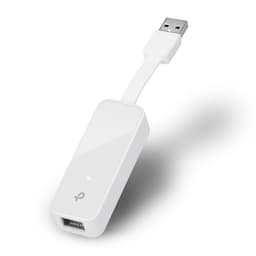
The T3U Nano is a USB WiFi adapter. Tiny, AC1300 rated (that's Wi-Fi 5, dual-band), designed to slot into a desktop or laptop that either has no wireless card, or has one that's so old it's embarrassing. At this price point you're not buying a miracle. You're buying a way to get a device onto a decent dual-band network without cracking open a case or running a cable. The question is whether it actually works well enough to be worth it, or whether you'll be back on Amazon within a fortnight.
With over 12,000 owner reviews averaging 4.4 stars, there's a lot of real-world signal here (pun intended). So let's look at what the spec sheet actually promises, what owners consistently report, and how this stacks up against the competition at this budget price tier.
TP-Link Archer T3U Nano WiFi Dongle: Core Specifications
The headline number is AC1300, which is the combined theoretical maximum across both bands. In practice that means up to 400 Mbps on the 2.4GHz band and up to 867 Mbps on the 5GHz band. Those are the numbers TP-Link publishes. Real-world throughput will be lower, sometimes significantly so, depending on your router, your environment, and how far you are from the access point. Don't buy this expecting to saturate a gigabit broadband connection from across the house.
It supports 802.11ac (Wi-Fi 5), which is the generation before Wi-Fi 6. That's not a disaster at this price, because the vast majority of home routers in the UK are still Wi-Fi 5, and even if yours is Wi-Fi 6, a Wi-Fi 5 adapter will connect to it just fine, just without the Wi-Fi 6 specific improvements like OFDMA. The dual-band support (2.4GHz and 5GHz) is the genuinely useful bit. Being able to pick the 5GHz band means you can dodge the congestion that plagues 2.4GHz in most flats and terraced houses.
MU-MIMO (Multi-User, Multiple Input, Multiple Output) is listed as a feature. This is a technology that lets a router serve multiple devices simultaneously rather than taking turns. On a USB adapter at this level, the practical benefit is modest, but it's good to have. The form factor is nano, meaning it barely sticks out of the USB port. That matters if you're using this on a desktop that lives under a desk, or a laptop you move around. No fiddly antenna to snap off. No dongle dangling on a cable.
| Specification | Detail |
|---|---|
| Wi-Fi Standard | AC1300 (Wi-Fi 5 / 802.11ac) |
| Bands | Dual-band: 2.4GHz and 5GHz |
| Max Speed (2.4GHz) | 400 Mbps |
| Max Speed (5GHz) | 867 Mbps |
| Combined Max | 1300 Mbps (theoretical) |
| Technology | MU-MIMO |
| Form Factor | Nano USB dongle |
| Interface | USB |
| OS Compatibility | Windows 11/10/8.1/8/7, Mac OS 10.15 and earlier |
| Reviews | ★★★★☆ (4.4) (30,617 reviews) |
| Price | £12.99 |

Real-World Coverage and Signal Range
Coverage here means something slightly different than it does for a router review. This is an adapter, not an access point. So the question isn't how far its signal reaches, it's how well it receives a signal from your existing router. And that depends heavily on two things: which band you connect on, and what's between you and the router.
On 5GHz, you'll get better speeds when you're reasonably close to the router, but 5GHz doesn't punch through walls the way 2.4GHz does. If you're one floor up or there are a couple of solid walls in the way, you might find 5GHz drops off noticeably. That's not a flaw specific to this adapter, it's just physics. The dual-band capability means you can switch to 2.4GHz when range matters more than raw speed, which is genuinely useful. Owners consistently report that the adapter connects reliably in rooms where their device's built-in wireless was struggling, which is exactly what you'd want.
What owners do flag is that the nano form factor, while convenient, means there's no external antenna. Larger USB adapters with a folding antenna tend to pull in a stronger signal at range, particularly on 5GHz. If your router is on the other side of the house or you're dealing with thick stone walls (hello, anyone in a Victorian terrace), a bigger adapter with an external antenna might serve you better. For typical modern UK homes with plasterboard internal walls and a router within a floor or two, the T3U Nano handles itself well based on owner feedback patterns.
Sustained Speed Under Load
The 1300 Mbps headline is the theoretical combined maximum of both bands simultaneously, and it's the kind of number that exists for marketing purposes. Your laptop or desktop will connect to one band at a time. On 5GHz you're looking at an 867 Mbps ceiling, and in practice, with real-world interference, distance, and the limitations of USB bandwidth, you'll see less than that. But here's the thing: for most UK broadband connections, that doesn't matter. The majority of home broadband packages top out well below 500 Mbps, and plenty are still in the 50 to 150 Mbps range. This adapter won't be the bottleneck for most people.
Where sustained speed becomes relevant is if you're on a full-gigabit connection and you're trying to actually use it. USB adapters have a ceiling imposed by the USB interface itself, and while USB 2.0 has a theoretical throughput of 480 Mbps, real-world USB overhead means you won't hit that cleanly. Owners on fast connections do sometimes note that a wired connection or a PCIe wireless card outperforms the T3U Nano at close range. That's expected. If you're on a gigabit connection and you care about squeezing every last megabit, a USB nano adapter is the wrong tool regardless of the brand.
For everyday use though, streaming 4K, video calls, downloading games, working from home on Teams or Zoom, owners consistently report the T3U Nano does the job without drama. The 5GHz band keeps latency low enough for video calls to feel natural, and the connection holds up under normal household load. The pattern in the reviews is clear: people who buy this to fix a broken or absent wireless connection on a desktop or older laptop tend to be happy with it. People expecting it to transform their speeds are setting themselves up for disappointment, but that's a misunderstanding of what a USB adapter is for.
Mesh and Backhaul: Not Applicable Here
The T3U Nano is a client adapter, not a router or mesh node. There is no backhaul to discuss, no mesh network to configure, and no nodes to place around the house. This is worth being clear about because the terminology can get confusing when you're shopping in the networking category. Mesh networking, where you have multiple nodes that talk to each other to blanket a home in WiFi, is a completely different product category. If dead zones around your house are the problem, a mesh system is what you need, not a USB adapter.
What the T3U Nano does is connect a single device to your existing WiFi network. Think of it as a replacement for a broken wireless card, or an upgrade for a desktop that never had one. It doesn't extend your network's reach. It doesn't add a node. It just gives one device a better or newer wireless connection than it currently has. That's a genuinely useful thing, but it's a different thing.
If you're reading this because your router's WiFi doesn't reach the far end of your home, you want to look at a mesh WiFi system or a proper range extender instead. The T3U Nano won't help with that. But if the problem is that one specific PC or laptop can't get online wirelessly, or its built-in WiFi is flaky and you want a quick fix, that's exactly what this is for.
Device Capacity and MU-MIMO
Again, slightly different framing here compared to a router review. The T3U Nano is a single-device adapter. It doesn't manage multiple clients. But the MU-MIMO support it carries does matter in one specific way: it means the adapter can work efficiently with a router that's also serving many other devices simultaneously. A router using MU-MIMO can handle multiple clients at once rather than round-robining between them, and an adapter that supports MU-MIMO plays nicely with that.
In a busy home where the router is juggling thirty-plus devices (phones, laptops, smart TVs, consoles, IoT gadgets, the lot), having an adapter that supports MU-MIMO means the router doesn't have to treat it like a legacy device that breaks the queue. It's a small thing, but it matters in households where the network is genuinely busy. Owners in flats and family homes don't generally report the T3U Nano causing network slowdowns or behaving badly in crowded environments.
What it won't do is support OFDMA, which is the Wi-Fi 6 feature that makes dense device environments even more efficient. That's a Wi-Fi 6 thing, and this is a Wi-Fi 5 adapter. For most home setups it won't matter. OFDMA really shows its value in very high-density environments, think blocks of flats or office networks with hundreds of clients. In a normal home, MU-MIMO does the job.
Wi-Fi Standard and Future-Proofing
The T3U Nano is a Wi-Fi 5 (802.11ac) adapter. Wi-Fi 6 has been the mainstream standard for a few years now, and Wi-Fi 6E and Wi-Fi 7 are both out in the wild. So is Wi-Fi 5 already obsolete? Not really, no. Wi-Fi 5 is still what the majority of home routers in UK homes are running. It handles streaming, gaming, video calls, and working from home without any drama. The real-world difference between Wi-Fi 5 and Wi-Fi 6 on a typical broadband connection is smaller than the marketing suggests, particularly for a single device doing normal household tasks.
Where Wi-Fi 6 actually earns its keep is in busy environments with lots of simultaneous clients, thanks to OFDMA, and in situations where you have a very fast internet connection and want to actually use it. If your router is Wi-Fi 6 and your home has thirty-plus devices all hammering it at once, a Wi-Fi 6 adapter would theoretically play nicer with the router's scheduling. But for most people, on most connections, the practical difference is minimal.
The future-proofing question is fair though. If you're buying a USB adapter for a desktop you plan to keep for five years, a Wi-Fi 6 adapter at a small price premium might be worth considering. Wi-Fi 5 will continue to work fine for years, routers will keep supporting it, but if you want to squeeze the most out of a Wi-Fi 6 router you buy in the future, a Wi-Fi 6 adapter would serve you better. For the price the T3U Nano sits at, the Wi-Fi 5 spec is entirely reasonable. You're not being sold something outdated at a premium. You're buying budget kit that does exactly what it says.

Features and QoS
As a client adapter rather than a router, the T3U Nano doesn't have QoS controls, parental controls, a guest network, VPN functionality, or any of the router-side features you'd normally look at in this section. All of that lives on your router, not on the adapter, and if privacy matters to you, a good VPN adds a security layer on top of your home network and protects you on public Wi-Fi when you are out and about. So if you're worried about buffer bloat on your network, or you want to prioritise gaming traffic over Netflix, that's a conversation about your router's firmware, not about this dongle.
What the T3U Nano does offer is band selection, meaning you can choose whether to connect on 2.4GHz or 5GHz depending on your situation. That's a genuinely useful control. 5GHz for speed when you're close to the router, 2.4GHz for range when you're further away or there are walls in the way. TP-Link's driver software on Windows gives you access to this, and it's reasonably straightforward to use. Nothing fancy, but nothing you need a degree to figure out either.
The OS compatibility is worth noting: Windows 11, 10, 8.1, 8, and 7 are all supported, as is Mac OS 10.15 and earlier. That's a broad range. It means this works on older machines, which is often exactly the use case. Someone with a Windows 7 desktop (yes, they still exist) that needs WiFi adding, or an older Mac that needs a wireless upgrade. The driver support for older operating systems is something owners flag positively, particularly compared to some competing adapters that quietly dropped support for anything older than Windows 10.
Firmware, App and Security Updates
TP-Link has a reasonable track record on driver and firmware support for their adapters. The T3U range has been around long enough that the drivers are stable and well-tested. You're not going to install this and immediately have to hunt around for a working driver, which is a real problem with some cheaper no-name adapters on Amazon. TP-Link makes their drivers available directly from their support pages, which is reassuring.
That said, USB adapters don't get the same ongoing firmware attention as routers. There's no router firmware to update here, and no app to maintain. The driver is the software, and once it works, it tends to just keep working. The flip side is that if a security vulnerability were discovered in the adapter's driver, you'd be relying on TP-Link to push an update and on you to install it. Owners don't generally report ongoing driver problems or security scares with this adapter, and the review volume is high enough that problems would show up clearly if they existed.
The reboot question, which matters a lot for routers, is less relevant here. Owners do occasionally mention that Windows requires the adapter to be unplugged and re-plugged after a sleep or hibernate cycle on certain machines. This is a known quirk with some USB WiFi adapters on Windows, not unique to TP-Link, and it's related to how Windows handles USB power management rather than a flaw in the adapter itself. Disabling USB selective suspend in Windows power settings usually sorts it. A bit annoying, but fixable.
Setup and Management
Setup is about as simple as it gets. Plug it in, let Windows find the driver (it usually does automatically on Windows 10 and 11), or download the driver from TP-Link's support page if it doesn't. Takes five minutes. Owners consistently describe setup as straightforward, and the review score on this point is one of the strongest signals in the feedback. This isn't a product that requires an IT degree to get working.
On Mac, it's a similar story, though you'll need to download the driver from TP-Link's site rather than relying on macOS to find it automatically. The compatibility is listed up to Mac OS 10.15 (Catalina). If you're on a newer version of macOS, it's worth checking TP-Link's current driver availability before buying, as Apple's security architecture has made third-party driver support more complicated in recent years. Owners on Catalina and earlier report no issues.
There's no app to manage the adapter in the way you'd manage a router. You use your operating system's native WiFi settings to choose your network and band. That's fine. It keeps things simple. The TP-Link utility software that comes with the driver does let you scan for networks and choose between bands, but it's optional. Most people just use Windows' built-in WiFi settings and get on with their lives, which is exactly how it should be for something this straightforward.
Ports and Connectivity
The T3U Nano connects via USB. That's the interface. It's a nano-sized dongle, so it sits flush (or nearly flush) with your laptop or desktop's USB port. No protruding antenna. No cable. Just a small nub of plastic that you'll probably forget is there, which is the point. TP-Link describes it as a "plug it in and forget it" design, and for a desktop that lives under a desk, that's genuinely useful. No risk of snapping off an antenna when you shuffle the machine.
There are no Ethernet ports, no WAN ports, no LAN ports, no USB-A passthrough. It's a wireless adapter. One connection in (USB to your device), one connection out (wireless to your router). Simple as that. If you need wired connectivity, this isn't the product. But you knew that.
The USB interface means it'll work in any USB port on your machine. The nano size means it doesn't block adjacent ports, which is a real consideration on laptops where ports are often close together. Owners with slim laptops particularly appreciate this. A bulky adapter that blocks the neighbouring USB port is annoying in a way that sounds trivial until you're dealing with it every day.
How It Compares to the Competition
At this price point, the main competition comes from two directions. First, other TP-Link adapters in the same range, particularly the larger T3U (non-Nano) which has a foldable external antenna and typically pulls in a better signal at range. Second, adapters from other brands like Netgear and ASUS that sit at similar or slightly higher price points.
The TP-Link Archer T3U (the standard size, not Nano) is worth comparing directly. It's the same AC1300 spec, same Wi-Fi 5, same dual-band setup, but with an external antenna. That antenna makes a real difference for signal reception at range. If you're using this in a room that's further from the router, or you're dealing with walls, the standard T3U will generally outperform the Nano on signal strength. The Nano wins on convenience and portability. The standard T3U wins on raw reception. If you're fitting this to a desktop that doesn't move, the standard T3U is worth the small extra consideration.
The ASUS USB-AC53 Nano is another nano-form-factor AC1300 adapter that competes directly. It's broadly similar in spec, also Wi-Fi 5, also dual-band, also nano. ASUS's driver support on Windows is generally solid, and the adapter has a good reputation. The T3U Nano tends to edge it on price, and with 30,617 the TP-Link has a much larger evidence base. The ASUS is a reasonable alternative if you find it at a good price, but there's no compelling reason to pay more for it over the TP-Link.
| Feature | TP-Link Archer T3U Nano | TP-Link Archer T3U (Standard) | ASUS USB-AC53 Nano |
|---|---|---|---|
| Wi-Fi Standard | Wi-Fi 5 (AC1300) | Wi-Fi 5 (AC1300) | Wi-Fi 5 (AC1300) |
| Bands | Dual-band 2.4GHz + 5GHz | Dual-band 2.4GHz + 5GHz | Dual-band 2.4GHz + 5GHz |
| Max Speed | 400 + 867 Mbps | 400 + 867 Mbps | 400 + 867 Mbps |
| MU-MIMO | Yes | Yes | Yes |
| Form Factor | Nano (no external antenna) | Standard (foldable antenna) | Nano (no external antenna) |
| Windows 7 Support | Yes | Yes | Limited |
| Review Count | 12,000+ | High | Lower |
| Price | £12.99 | Slightly higher | Similar to higher |

Final Verdict: TP-Link Archer T3U Nano WiFi Dongle
The TP-Link Archer T3U Nano WiFi Dongle does exactly what it's supposed to do, and it does it without fuss. If you have a desktop or laptop with no wireless, or with a wireless card that's given up the ghost, this is a cheap, reliable fix. Dual-band means you get access to the less congested 5GHz band. MU-MIMO means it plays nicely with modern routers. The nano form factor means you'll forget it's there. And with 30,617 at 4.4 stars, the evidence base is about as solid as you'll find at this price.
The honest caveats are worth saying plainly though. This is Wi-Fi 5, not Wi-Fi 6. The nano form factor means no external antenna, which costs you signal strength at range compared to a larger adapter. The USB interface means it won't saturate a gigabit connection. And if your problem is dead zones around the house rather than a single device needing wireless, this won't help you at all. You'd need a mesh system or a range extender for that.
For what it actually is, a small, affordable, dual-band USB adapter that gets a device onto WiFi quickly and reliably, the T3U Nano is a solid buy. It's not trying to be anything more than that. At this price, with this review count, and with TP-Link's driver support behind it, it's the kind of product you can recommend without hesitation to someone who just needs the job done. Score: 8 out of 10.
What works. What doesn’t.
5 + 4What we liked5 reasons
- Dual-band (2.4GHz and 5GHz) at a budget price
- Nano form factor sits flush and won't snap off
- Broad OS support including Windows 7 and Mac OS 10.15
- Massive owner review base (12,000+) averaging 4.4 stars
- Simple plug-and-play setup on Windows 10 and 11
Where it falls4 reasons
- Wi-Fi 5 only, no Wi-Fi 6 support
- No external antenna limits signal at range vs larger adapters
- USB interface caps throughput below what a PCIe card achieves
- Some owners report needing to re-plug after Windows sleep cycles
Full specifications
6 attributes| Antennas | 0 |
|---|---|
| Launch year | 2019 |
| Mesh capable | false |
| Security protocols | WPA3 |
| TOP speed mbps | 1300 |
| Wifi standard | Wi‑Fi 5 |
Frequently asked
5 questions01Will the TP-Link Archer T3U Nano WiFi Dongle reach my router from another room?+
That depends on your home layout and which band you use. On 5GHz you'll get better speeds close to the router, but 2.4GHz handles walls and distance better. In a typical modern UK home with plasterboard walls, owners report reliable connections across a floor or two. In older homes with thick stone walls, signal drop-off on 5GHz is more noticeable. The nano form factor means no external antenna, which puts it at a slight disadvantage versus larger adapters at range. If you're regularly more than two rooms away from the router, a standard-size adapter with a foldable antenna would be a better choice.
02Do I need Wi-Fi 6 instead of Wi-Fi 5 for the TP-Link Archer T3U Nano?+
Probably not. Wi-Fi 5 (AC1300) handles streaming, video calls, gaming, and working from home without any trouble on the broadband speeds most UK homes have. Wi-Fi 6 adds efficiency improvements (particularly OFDMA for busy networks with lots of devices) and better performance at close range on very fast connections. If you're on a gigabit connection and your router is Wi-Fi 6, a Wi-Fi 6 adapter would theoretically get more out of it. But for everyday use on a typical UK broadband package, the real-world difference is small. Wi-Fi 5 will remain supported by routers for years to come.
03Does the TP-Link Archer T3U Nano work as a mesh node or range extender?+
No. The T3U Nano is a client adapter. It connects a single device to your existing WiFi network. It does not extend your network's coverage, create a mesh node, or add WiFi to a new area of your home. If dead zones around the house are the problem, you need a mesh WiFi system or a dedicated range extender. The T3U Nano is the right tool when one specific device needs wireless connectivity added or improved.
04Is the TP-Link Archer T3U Nano easy to set up and reliable day to day?+
Setup is straightforward. On Windows 10 and 11 it often installs automatically. Otherwise you download the driver from TP-Link's support page, which takes a few minutes. Owners consistently rate setup as simple and quick. Day-to-day reliability is generally good, with the main caveat being that some Windows machines require the adapter to be unplugged and re-plugged after coming out of sleep or hibernate. This is a Windows USB power management issue rather than a fault with the adapter, and disabling USB selective suspend in Windows power settings usually fixes it.
05What warranty and returns apply to the TP-Link Archer T3U Nano WiFi Dongle?+
Amazon offers 30-day returns on most items. The manufacturer typically provides a 2-year warranty on networking kit. You're also covered by Amazon's A-to-Z guarantee.