A USB Wi-Fi dongle is one of those things that sounds boring until your desktop is sat in the corner of a room with no Ethernet run and your ISP router's Wi-Fi signal arriving like a whisper through two walls. The TP-Link Archer T2UB Nano WiFi Dongle exists to fix that specific problem, and based on the spec sheet and what over a hundred thousand owners have said about it, it does a pretty decent job of exactly that. Nothing more, nothing less.
So here's the quick answer: if you've got a PC or laptop that needs Wi-Fi adding, and you don't want to spend a lot of money doing it, this is probably fine. It's AC600, which means Wi-Fi 5, dual-band, and it also throws in Bluetooth 4.2 in a dongle roughly the size of a 50p piece. At this price tier, that combination is genuinely useful. But there are things you should know before you click buy, because the headline spec hides a few real-world limitations that matter depending on what you're trying to do with it.
Core Specifications: TP-Link Archer T2UB Nano WiFi Dongle
The T2UB Nano is an AC600 dual-band USB adapter, which means it's Wi-Fi 5. The AC600 designation breaks down as 150Mbps on the 2.4GHz band and 433Mbps on the 5GHz band, giving you that 600Mbps theoretical combined figure. Nobody gets 600Mbps from this. That's the sum of both bands simultaneously under ideal conditions, which is not how USB dongles work in practice. What you actually get is one band at a time, whichever one the adapter connects to.
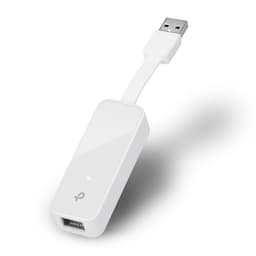
The Bluetooth 4.2 is a genuinely useful bonus. It's not the latest Bluetooth 5.3, but for connecting a wireless keyboard, mouse, or headphones to a PC that doesn't have built-in Bluetooth, it does the job. TP-Link have bundled two functions into one USB port, which on a desktop with limited USB slots is actually worth something. The nano form factor means it barely sticks out of the port, which matters if the PC is in a tight spot or you're using it in a laptop bag.
On the security side, TP-Link list WPA3 support, which is the current Wi-Fi security standard and a meaningful inclusion at this price. WPA2 is still fine for most home networks, but WPA3 offers better protection against brute-force attacks on your password, so having it available is a plus even if most home routers are still running WPA2 by default. Windows support covers 11, 10, 8.1, and 7, with the Bluetooth functions confirmed for Windows 11, 10, 8.1, and 7 too. Mac and Linux aren't officially listed.
| Specification | Detail |
|---|---|
| Wi-Fi Standard | Wi-Fi 5 (802.11ac), dual-band |
| Frequency Bands | 2.4GHz (up to 150Mbps) and 5GHz (up to 433Mbps) |
| Combined Theoretical Speed | AC600 (theoretical maximum, not real-world) |
| Bluetooth | Bluetooth 4.2 |
| Security | WPA3, WPA2, WPA, WEP |
| USB Interface | USB 2.0 |
| Form Factor | Nano (low-profile) |
| OS Support (Wi-Fi) | Windows 11 / 10 / 8.1 / 7 |
| OS Support (Bluetooth) | Windows 11 / 10 / 8.1 / 7 |
| Antenna | Internal (nano form factor) |
| Price | £9.99 (Price checked 23:30, 2 Oct 2026, UK time) |

Real-World Coverage: What Owners Actually Report
Coverage from a nano USB dongle is always going to be limited compared to a router or even a range extender, and it's important to set expectations correctly here. This adapter has an internal antenna crammed into a form factor smaller than a thumb drive. The spec sheet doesn't give a coverage rating in square metres, because that's a router metric. What this does is receive the Wi-Fi signal your router is already broadcasting. The question is how well it receives it.
What owners consistently say, across a review pool of 102,061 averaging ★★★★☆ (4.4), is that it works reliably in the same room as the router and one room away through a standard internal wall. At two rooms' distance or through a floor, results get more variable. That's not a knock on this specific product, it's the physics of a nano internal antenna. If you're trying to bridge a signal across a large house from a distant router, a nano dongle is not the right tool. A USB adapter with an external antenna, or better yet a powerline adapter or MoCA adapter running a wired connection, would serve you better in that scenario.
For the intended use case, though, which is a desktop PC or laptop sitting in reasonable proximity to a decent router, the coverage is reported as solid. Owners mention picking up 5GHz reliably in the same room and 2.4GHz further away, which is exactly how the physics should work. The 2.4GHz band travels further through walls but carries less throughput; the 5GHz band is faster but shorter range. The T2UB Nano gives you access to both, and your device will typically negotiate the best available band automatically.
Sustained Speed Under Load: The Reality Behind AC600
AC600 is the theoretical combined maximum of both bands. Nobody hits it, and you shouldn't expect to. On the 5GHz band, the 433Mbps ceiling is the theoretical single-stream maximum for 802.11ac at this class. Real-world throughput through a USB 2.0 interface (which this uses) will be lower, because USB 2.0 has a practical bandwidth ceiling of around 480Mbps shared across everything on that bus. So the 5GHz band and USB 2.0 are already close to parity in theory, and in practice you'll see rather less than that.
What does that mean in plain terms? For most home broadband connections in the UK, which sit anywhere from 50Mbps to a few hundred Mbps, this adapter will not be your bottleneck. If you're on a 100Mbps FTTC connection, the T2UB Nano will handle that without breaking a sweat. If you're on a gigabit full-fibre connection and you want to actually use that gigabit wirelessly through a USB dongle, this is not the adapter for that. You'd want something with a USB 3.0 interface and a higher-tier Wi-Fi spec, like the TP-Link Archer T3U or similar AC1300 class adapters.
Owner reports back this up. People using the T2UB Nano for general web browsing, video streaming, and video calls are happy with it. People trying to do large local network file transfers or saturate a gigabit connection are less happy, but they're also using the wrong tool. The sustained speed is adequate for the connection speeds most UK households actually have, and for the tasks most people actually do. Owners specifically mention stable streaming and video call performance, which requires consistent low-latency throughput rather than peak burst speed, and the T2UB Nano appears to deliver that reliably.
Mesh and Backhaul: Not Applicable, But Here's What Matters Instead
The T2UB Nano is a client adapter, not a router or mesh node, so backhaul in the traditional sense doesn't apply here. There's no dedicated backhaul band to worry about, no node-to-node communication, and no mesh network being managed. What this does is connect one device to your existing network. That's it. So the backhaul question becomes: what network is it connecting to, and does the adapter do that well?
The relevant consideration is whether you're running a mesh network at home already. If you are, the T2UB Nano will connect to whichever mesh node or access point is closest and strongest, just like any other Wi-Fi client. It doesn't know or care that it's a mesh network. It sees SSIDs and connects. If your mesh system does band steering (automatically pushing clients to the best band), the T2UB Nano will respond to that normally. So there's no compatibility issue with mesh systems, it's just a standard Wi-Fi client.
What this adapter does not do is extend your network. It's not a range extender or a repeater. If your problem is dead zones in your home, a USB dongle on your PC won't solve that for the rest of your devices. A dead zone problem needs a different solution: a mesh networking system, a powerline kit with a wireless access point, or a proper range extender. The T2UB Nano solves one specific problem: adding Wi-Fi and Bluetooth to a device that doesn't have them. It does that well. It doesn't pretend to be anything else.
Device Capacity: One Device, Done Right
Device capacity is normally where this section gets interesting when reviewing routers, because cheap routers choke when you throw thirty smart home devices and four streaming TVs at them simultaneously. The T2UB Nano sidesteps this entirely because it's a single-device adapter. It connects one machine to your network. That's its entire job. There's no MU-MIMO to worry about, no OFDMA scheduling, no client table filling up.
What does matter for single-device performance is how well the adapter handles the connection it has. On that front, owner reports are consistently positive for typical use. The adapter maintains a stable connection without constant drops, which is the main thing you want from a USB Wi-Fi adapter. Some cheaper, less well-regarded dongles will connect fine and then randomly drop out every hour or so, requiring the USB to be replugged or the driver to be restarted. Owners of the T2UB Nano don't report this as a pattern, which given the review volume is meaningful.
The Bluetooth 4.2 side of the device capacity question is also relevant. Running both Wi-Fi and Bluetooth simultaneously from a single USB dongle is something cheaper combo adapters sometimes struggle with, particularly interference between the 2.4GHz Wi-Fi band and Bluetooth (which also operates in the 2.4GHz spectrum). Owners don't flag this as a significant problem with the T2UB Nano, though If you're running Bluetooth and 2.4GHz Wi-Fi simultaneously, there's potential for minor interference. Using the 5GHz band for Wi-Fi while using Bluetooth sidesteps this neatly.
Wi-Fi Standard and Future-Proofing: TP-Link Archer T2UB Nano WiFi Dongle in 2026
Wi-Fi 5 (802.11ac) is not the latest standard. Wi-Fi 6 brought better efficiency for dense device environments and improved performance at range through technologies like OFDMA and target wake time. Wi-Fi 6E added the 6GHz band. Wi-Fi 7 is now shipping in routers and high-end devices. So where does an AC600 Wi-Fi 5 adapter sit in 2026?
Honestly? It's fine for what it is. Wi-Fi 6 and Wi-Fi 7 adapters exist at higher price points, but the headline improvements of those standards matter most in dense multi-device environments, not on a single PC connecting to a home router. OFDMA helps when you've got dozens of devices fighting for airtime. On a single adapter connecting one machine to a router in your living room, you won't notice the difference between Wi-Fi 5 and Wi-Fi 6. The throughput ceiling of your broadband connection is almost certainly lower than what either standard can deliver at this range.
Future-proofing is a fair concern though. Wi-Fi 5 will be supported by routers for years yet, it's not going anywhere soon. But if you're buying a USB adapter for a machine you plan to keep for five or more years and you're on a gigabit broadband connection, it might be worth spending a bit more on a Wi-Fi 6 adapter now. For most people on standard FTTC or FTTP connections up to a few hundred Mbps, the T2UB Nano will not be the limiting factor in your network experience for the foreseeable future. The WPA3 security support is a genuine plus for longevity, keeping you on the current security standard even though the Wi-Fi generation is one step back.
Features and QoS: It's a Dongle, Not a Router
There's no QoS here. No parental controls, no guest network, no VPN client, no buffer-bloat management. None of that. This is a USB adapter. It connects your device to Wi-Fi. The features live in your router, not in the adapter. So if you're looking for network management features, that's the wrong conversation for this product entirely.
What the T2UB Nano does offer beyond basic connectivity is dual-band access (so you can choose 2.4GHz or 5GHz depending on your situation), WPA3 security support for when your router catches up to the current standard, and Bluetooth 4.2 for wireless peripherals. For a device at this price tier, that's a reasonable feature set. The dual-band capability is genuinely useful because it gives you options: 2.4GHz if you need range, 5GHz if you need speed and your router is nearby.
The Bluetooth 4.2 support is worth dwelling on for a moment because it's the feature that sets this apart from a plain Wi-Fi dongle. If your PC doesn't have Bluetooth built in, adding it usually means either a separate Bluetooth USB dongle or a PCIe card. The T2UB Nano gives you both Wi-Fi and Bluetooth from one USB port. For a desktop with a limited number of USB ports, or a laptop where you'd rather not have two dongles sticking out, that's a practical convenience. Bluetooth 4.2 supports the standard Bluetooth Low Energy profiles and will work with most wireless mice, keyboards, headphones, and speakers without issue.
Firmware, App and Security Updates
USB adapters don't have firmware in the same way routers do. There's no web interface, no companion app to manage, no nightly reboot question. The driver is the critical piece here, and TP-Link maintain Windows drivers for the T2UB Nano on their official support page. Driver updates for USB adapters aren't frequent, but TP-Link have a reasonable track record of maintaining drivers for their adapter range, and the T2UB Nano's Windows 11 compatibility is confirmed, which is the current OS you should be running.
Security updates for an adapter come through the driver rather than firmware. There's less attack surface here than on a router, because the adapter isn't a network gateway, it's a client device. The WPA3 support means the security of your wireless connection is as good as your router allows, and the driver itself is a small, focused piece of software without the complexity that makes router firmware a security concern. TP-Link have had some high-profile router security issues in the past, but those relate to their router products, not USB adapter drivers.
The owner review pool doesn't flag driver instability as a recurring issue, which is the main thing to watch for with USB Wi-Fi adapters. A bad driver will cause random disconnects, blue screens, or failure to reconnect after sleep. None of these appear as patterns in the T2UB Nano's review base. Windows 11 compatibility specifically gets positive mentions from owners who've upgraded from older Windows versions, which suggests TP-Link have kept the driver current. That matters more than it might seem, because some older USB adapters have been stranded on Windows 10 drivers that cause problems on Windows 11.
Setup and Management
Setup is about as simple as it gets. Plug it in, install the driver from the included CD (if your machine has an optical drive, which most don't anymore) or download it from TP-Link's support page, and you're done. Windows 10 and 11 will often detect the adapter and install a basic driver automatically, though owners recommend using the official TP-Link driver for best performance and Bluetooth functionality. The whole process takes a few minutes.
There's no app to install for ongoing management. You use Windows' built-in Wi-Fi settings to connect to networks, and Windows' Bluetooth settings to pair devices. If you take the laptop out and about, it is worth pairing it with a good VPN to add a privacy layer over whatever network you join and to protect you on public Wi-Fi away from home. If you're comfortable with those, you're sorted. There's nothing proprietary to learn. For non-technical buyers, this is actually the best possible setup experience: it works like any other piece of Windows hardware, using interfaces you already know.
The only slight faff some owners mention is the driver installation step, particularly on machines without a disc drive. You need to download the driver from TP-Link's website before you can use the adapter's Wi-Fi, which means you need another way to get online first, either a wired Ethernet connection or another device to download the driver and transfer it via USB stick. It's a minor chicken-and-egg situation that anyone who's set up a USB Wi-Fi adapter before will recognise. It's not unique to this product, but if you're setting up a machine with no other internet access.
Ports and Connectivity
The T2UB Nano uses a USB 2.0 interface. This is the main technical limitation worth understanding. USB 2.0 has a theoretical maximum bandwidth of 480Mbps, but practical throughput is lower due to protocol overhead, typically in the 200 to 300Mbps range for sustained transfers. For the 5GHz Wi-Fi band's 433Mbps theoretical ceiling, USB 2.0 is a mild bottleneck. For the 2.4GHz band's 150Mbps ceiling, it's not a bottleneck at all.
In practice, for the broadband speeds most UK users have, USB 2.0 is not a meaningful constraint. If you're on a 100Mbps or 200Mbps broadband connection, the USB 2.0 interface will not limit your internet speeds. If you're on a gigabit connection and want to use it fully over Wi-Fi, you'd want a USB 3.0 adapter with a higher Wi-Fi tier anyway, because the Wi-Fi spec itself would be the first bottleneck before USB 2.0 became relevant.
The nano form factor means there are no external antennas, no USB extension cable in the box, and no adjustable positioning. What you see is what you get: a small dongle that sits flush in a USB port. If signal strength is marginal in your location, a USB adapter with an external antenna and a short extension cable would give you more flexibility to position it for best reception. The T2UB Nano prioritises convenience and size over maximum antenna performance, which is the right trade-off for most use cases but if you're in a difficult signal environment.
How It Compares: TP-Link Archer T2UB Nano WiFi Dongle vs the Competition
The main alternatives at this price tier are the TP-Link Archer T3U Nano (AC1300, USB 3.0, no Bluetooth) and the EDUP EP-AC1621 (AC600 with external antenna, no Bluetooth). The T3U Nano steps up to AC1300 and USB 3.0, giving you meaningfully more headroom on faster broadband connections, but drops the Bluetooth. The EDUP AC600 with external antenna trades the compact form factor for better signal reception at range, but again, no Bluetooth.
The T2UB Nano's differentiator is the Bluetooth 4.2 combo in a nano package. If you need both Wi-Fi and Bluetooth added to a machine, it's genuinely the most convenient option at this price. If you only need Wi-Fi and you're on a fast broadband connection, the T3U Nano is worth the small extra spend for the USB 3.0 interface and higher Wi-Fi tier. If signal range is your primary concern and you don't need Bluetooth, an adapter with an external antenna will serve you better.
The 4.4 average from 102,061 is a strong signal. That's not a product that's been reviewed by a few hundred enthusiasts who sought it out; that's a product that's been bought by a very large number of ordinary people and worked well enough for them to leave a positive review. The negative reviews cluster around driver installation issues (the chicken-and-egg problem mentioned above) and expectations mismatch (people expecting gigabit speeds from an AC600 adapter), rather than product defects or reliability failures.
| Feature | TP-Link Archer T2UB Nano | TP-Link Archer T3U Nano | EDUP EP-AC1621 |
|---|---|---|---|
| Wi-Fi Standard | Wi-Fi 5 (AC600) | Wi-Fi 5 (AC1300) | Wi-Fi 5 (AC600) |
| Dual Band | Yes (2.4GHz + 5GHz) | Yes (2.4GHz + 5GHz) | Yes (2.4GHz + 5GHz) |
| USB Interface | USB 2.0 | USB 3.0 | USB 2.0 |
| Bluetooth | 4.2 | None | None |
| Antenna | Internal (nano) | Internal (nano) | External (adjustable) |
| WPA3 Support | Yes | Yes | WPA2 |
| Form Factor | Nano | Nano | Standard with antenna |
| Price | £9.99 (Price checked 23:30, 2 Oct 2026, UK time) | Slightly higher | Similar |

Final Verdict: Should You Buy the TP-Link Archer T2UB Nano WiFi Dongle?
The TP-Link Archer T2UB Nano WiFi Dongle does exactly what it says it will do, for the people it's designed for. If you've got a desktop PC without built-in Wi-Fi or Bluetooth, or a laptop where those features have failed, this is a cheap and reliable fix. The dual-band Wi-Fi 5 covers the speeds that most UK broadband connections actually deliver, the Bluetooth 4.2 handles wireless peripherals without fuss, and the nano form factor means it's not hanging off your machine looking awkward. The 4.4 rating from over 102,000 owners isn't something you can argue with.
The limitations are real but obvious. USB 2.0 caps your theoretical throughput. The internal antenna means range is limited compared to adapters with external antennas. Wi-Fi 5 is one generation behind the current standard. And if you're on a gigabit broadband connection and want to actually use it wirelessly, this adapter will be your bottleneck before your router is. These are not hidden flaws, they're the natural consequences of the price point and the nano form factor, and they're worth understanding before you buy.
Who should buy this: anyone who needs to add Wi-Fi and Bluetooth to a Windows PC that doesn't have them, is within reasonable range of a decent router, and is on a standard UK broadband connection of up to a few hundred Mbps. Students, home workers, anyone setting up an older desktop in a room without an Ethernet port. It's a practical, no-drama solution to a common problem.
Who should skip it: anyone on a gigabit connection who wants to actually saturate it wirelessly (get the T3U or a Wi-Fi 6 adapter instead), anyone trying to bridge a signal across a large house through multiple walls (get an adapter with an external antenna, or better yet run a cable or use powerline), and anyone who needs Mac or Linux support (TP-Link don't officially list those for this model).
If you only need Wi-Fi and don't need the Bluetooth, the TP-Link Archer T3U Nano is worth a look for the USB 3.0 interface and higher Wi-Fi tier. It's a small step up in price for a meaningful step up in headroom on faster connections. But if Bluetooth matters to you, the T2UB Nano is the smarter buy at this price, because a separate Bluetooth dongle would cost you extra anyway.
Editorial score: 8 out of 10. It's not exciting. But it works, it's cheap, it's well-supported, and over a hundred thousand people have told you so. Sometimes that's all you need.
What works. What doesn’t.
5 + 4What we liked5 reasons
- Combines dual-band Wi-Fi 5 and Bluetooth 4.2 in a single nano USB dongle
- WPA3 security support is a genuine plus at this price tier
- Nano form factor barely protrudes from the USB port
- Stable connection performance reported consistently across a massive owner review pool
- Covers the real-world speeds most UK broadband connections actually deliver
Where it falls4 reasons
- USB 2.0 interface caps throughput, not suitable for gigabit broadband users
- Internal antenna limits range compared to adapters with external antennas
- No official Mac or Linux support
- Wi-Fi 5 (AC600) is one generation behind current standard
Full specifications
6 attributes| Antennas | 0 |
|---|---|
| Launch year | 2023 |
| Mesh capable | false |
| Ports | 1x USB 2.0 |
| TOP speed mbps | 600 |
| Wifi standard | Wi-Fi 5 |
Frequently asked
5 questions01Will the TP-Link Archer T2UB Nano WiFi Dongle cover my whole house?+
This is a client adapter, not a router or range extender, so it doesn't broadcast Wi-Fi or extend coverage. It connects one device to your existing Wi-Fi network. How well it receives that signal depends on how far you are from your router and what's in between. The internal nano antenna performs well in the same room and one room away through standard internal walls. At greater distances or through multiple floors, signal quality becomes more variable. If your problem is whole-house coverage, you need a mesh system or range extender, not a USB adapter.
02Do I really need Wi-Fi 6 or Wi-Fi 6E instead of the Wi-Fi 5 in the TP-Link Archer T2UB Nano WiFi Dongle?+
For most UK home broadband connections and typical home use, no. Wi-Fi 6 brings real benefits in dense multi-device environments through technologies like OFDMA, but for a single PC connecting to a home router, the practical difference between Wi-Fi 5 and Wi-Fi 6 is small. If you're on a connection of up to a few hundred Mbps, the T2UB Nano's AC600 Wi-Fi 5 will not be your bottleneck. If you're on a gigabit connection and want to use it fully, then a Wi-Fi 6 adapter with a USB 3.0 interface would be worth the extra spend.
03Is the TP-Link Archer T2UB Nano WiFi Dongle mesh compatible?+
Yes, in the sense that it connects to any Wi-Fi network, including mesh systems. It's a standard Wi-Fi client and will work with mesh networks from TP-Link Deco, Eero, Google Nest, or any other brand. It doesn't add mesh capability to your network or act as a node. It simply connects one device to whichever access point or mesh node has the strongest signal. If your mesh system uses band steering, the adapter will respond to that normally.
04Is the TP-Link Archer T2UB Nano WiFi Dongle easy to set up and reliable?+
Setup is straightforward: plug it in and install the driver from TP-Link's support page (or the included disc if you have an optical drive). Windows 10 and 11 will often auto-detect it, but the official TP-Link driver is recommended for full Bluetooth functionality. The one slight complication is that you need another internet connection to download the driver if you don't have the disc, since you can't use the adapter's Wi-Fi before the driver is installed. Reliability is consistently reported as good across the large owner review pool, with no widespread reports of random disconnects or driver instability on Windows 10 or 11.
05What warranty and returns apply to the TP-Link Archer T2UB Nano WiFi Dongle?+
Specific warranty terms aren't confirmed in the product listing data we have. When buying through Amazon UK, you're covered by Amazon's standard 30-day returns policy and the A-to-Z Guarantee, which gives you a reasonable safety net if the product arrives faulty or not as described. For manufacturer warranty queries, TP-Link's UK support team can confirm what applies to this model.