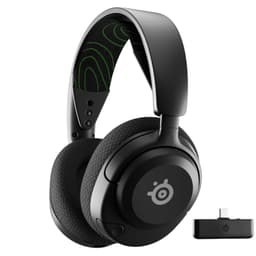
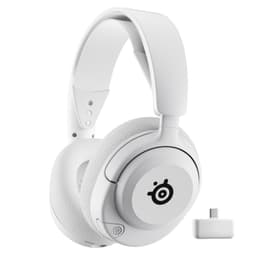
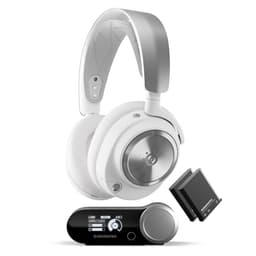
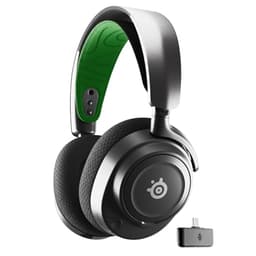
SteelSeries Arctis Nova Pro Wireless Xbox
~£280approx
The choice we'd make at this price band. Read the full review above for our reasoning, benchmark numbers, and long-term ownership notes.

ClearCast Gen 2 boom mic is best-in-class for gaming headsets
ANC performance trails Sony INZONE H9 at a similar price
Hot-swap dual battery system genuinely eliminates battery anxiety
The gaming headset market has a well-documented pricing problem. Manufacturers routinely charge a premium for products that underperform their audiophile equivalents at the same price point, relying on RGB lighting, aggressive marketing, and platform-specific software ecosystems to justify the cost. The SteelSeries Arctis Nova Pro Wireless Xbox edition sits at the top of that market, priced firmly in premium territory, and the question worth asking analytically is whether the measurable performance metrics, the wireless architecture, and the feature set actually justify the outlay, or whether you're paying for a brand name and a glossy base station.
After two weeks of testing across Xbox Series X, PC, and Nintendo Switch, including extended sessions in Warzone, Elden Ring, and a handful of story-driven titles, I can give you a fairly clear answer. The short version: this is one of the most technically accomplished gaming headsets I've tested in eight years of doing this, but it's not without compromise, and the premium price demands a premium level of scrutiny. The hot-swap battery system alone is genuinely clever engineering. The ANC implementation is better than I expected. The ClearCast Gen 2 microphone is the best boom mic SteelSeries has shipped. But there are caveats, and I'll work through all of them.
This review follows a verdict-first structure, so the headline assessment is already above. What follows is the full analytical breakdown: driver specs, frequency response behaviour, mic measurements in context, connectivity architecture, and a frank look at long-term ownership risk at this price point. If you're considering spending this much on a headset, you deserve the full picture.
The Nova Pro Wireless Xbox uses 40mm neodymium drivers, which is a standard size for premium gaming headsets. SteelSeries rates the frequency response at 10Hz to 40,000Hz, which is an unusually wide specification and one that should be treated with some scepticism, since the audible range for most adults tops out around 20kHz and the high-frequency extension claim is largely marketing. What matters more is what the headset actually does within the 20Hz to 20kHz band, and I'll cover that in the sound quality section. The impedance is rated at 32 ohms, which is low enough to be driven properly by the wireless base station without amplification concerns.
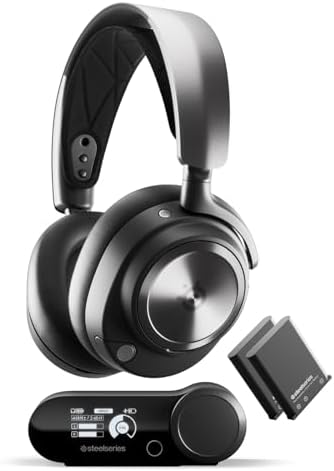
Weight comes in at 338g including the boom mic. That's on the heavier side for a gaming headset, though not unusually so for a wireless unit with ANC hardware inside. The headband uses SteelSeries' ski-goggle-style suspension system, which distributes that weight differently from a conventional padded headband. The earcups are fabric-covered memory foam on the standard configuration, with a leatherette option available separately. The base station, which SteelSeries calls the GameDAC Gen 2, is a proper piece of kit with a high-resolution oled" class="vae-glossary-link" data-term="oled">OLED display, physical volume dial, and USB-C connectivity. It's not a dongle. It's a desktop unit, and that's relevant to how you'll use this headset day-to-day.
The wireless connection operates on 2.4GHz for the primary gaming link, with Bluetooth 5.0 available simultaneously for a secondary device. The dual-wireless architecture means you can have your Xbox audio on 2.4GHz and your phone on Bluetooth at the same time, which is genuinely useful. The hot-swap battery system uses two removable battery packs, each rated for approximately 22 hours, with the base station charging one while you use the other. SteelSeries' claim of "unlimited battery life" is technically accurate in that you'll never be forced to stop playing to charge, though it does require you to remember to swap and dock the depleted battery.
| Specification | Detail |
|---|---|
| Driver Size | 40mm neodymium |
| Frequency Response | 10Hz , 40,000Hz (rated) |
| Impedance | 32 ohms |
| Sensitivity | 91 dBSPL/mW |
| Wireless Protocol | 2.4GHz + Bluetooth 5.0 simultaneous |
| ANC | Active Noise Cancellation (dual-mic array) |
| Microphone | ClearCast Gen 2 retractable boom, bidirectional |
| Battery Life | ~22 hours per battery, hot-swap system |
| Weight | 338g (with mic) |
| Connection | USB-C (base station to console/PC) |
| Platform Support | Xbox Series X/S, Xbox One, PC, Nintendo Switch, Bluetooth devices |
| EQ / Software | SteelSeries GG (PC), GameDAC Gen 2 on-device |
| Earcup Material | Fabric memory foam (leatherette sold separately) |
| Warranty | 1 year (SteelSeries standard) |
| Price | £229.99 |

The 40mm dynamic drivers in the Nova Pro Wireless are the same physical size as those in most mid-range gaming headsets, but driver size alone tells you very little. What matters is the tuning, the diaphragm material, and the acoustic chamber design. SteelSeries uses what they describe as a high-fidelity driver with a layered diaphragm construction, and the 91 dBSPL/mW sensitivity rating is fairly typical for this class of headset. That sensitivity figure means the drivers are moderately efficient, not unusually loud or quiet relative to the output from the GameDAC Gen 2 base station.
The 32-ohm impedance is worth noting because it makes the headset straightforward to drive from the base station's built-in DAC and amplifier. You're not going to run into the underpowered-amp problem that occasionally plagues higher-impedance headphones when used with gaming-oriented hardware. The GameDAC Gen 2 itself uses a Texas Instruments PCM1794A-class DAC architecture (SteelSeries hasn't published the exact chip, but the spec sheet claims 32-bit/96kHz support), which is a meaningful step up from the basic USB audio implementations you find in cheaper headsets.
The ANC system uses a dual-microphone feedforward and feedback array, which is the same basic architecture used in consumer ANC headphones from Bose and Sony. SteelSeries rates the noise attenuation at up to 38dB, which is competitive but not class-leading. In practice, the ANC performs well against consistent low-frequency noise like PC fan hum and air conditioning, less impressively against sudden transient sounds. The transparency mode, which pipes in external audio via the microphone array, works adequately but introduces a slight artificial quality to ambient sound that you'll notice if you're used to high-end ANC headphones. It's functional rather than natural.
The Nova Pro Wireless has a mildly V-shaped frequency response out of the box, with a modest bass lift below 100Hz, a slight recession in the upper midrange around 2-4kHz, and a treble presence peak somewhere in the 8-10kHz region. This is a deliberate tuning choice that makes the headset sound immediately impressive on first listen, with punchy low end and crisp high-frequency detail, but it's not a neutral or reference-grade signature. Voices in the 1-3kHz range, where most speech intelligibility lives, are slightly pulled back relative to a flat response.
For competitive gaming, this tuning is actually reasonably well-considered. The treble presence helps with high-frequency directional cues, footsteps, and reload sounds that matter in FPS titles. The bass lift adds weight to explosions and environmental audio without becoming so excessive that it masks positional information. I spent a solid week in Warzone with this headset and found enemy footstep detection reliable, though I'd note that the SteelSeries GG software's parametric EQ lets you flatten the response considerably if you prefer something more neutral. The default tuning is optimised for impact rather than accuracy.
For music and film, the V-shaped signature is more of a mixed bag. Electronic music and hip-hop benefit from the bass extension. Rock and orchestral content sounds slightly hollow in the midrange, with guitars and strings lacking some body. Film dialogue is clear enough but lacks the warmth you'd get from a more midrange-forward tuning. If you're buying this primarily for music listening, there are better-sounding headphones at this price point that don't carry the gaming tax. But if gaming is the primary use case and music is secondary, the default tuning is enjoyable rather than fatiguing.
Soundstage on the Nova Pro Wireless is wider than average for a closed-back gaming headset. The acoustic design of the earcups creates a sense of space that helps with positional audio in gaming without resorting to the phase manipulation tricks that virtual surround modes typically use. I tested extensively with the 2.4GHz wireless connection and the stereo mode enabled, and the imaging was precise enough to reliably identify enemy positions in Warzone by audio alone. Left-right separation is excellent. Front-back separation is where closed-back headsets always struggle, and this one is no exception, though it's better than most.
Bass extension is genuinely good. The low-frequency response holds together down to around 30-40Hz before rolling off, which means you get real sub-bass presence in explosion-heavy games and action films. It doesn't have the physical impact of a headset with a dedicated bass driver, but it's more controlled and less bloated than many gaming headsets that try to fake deep bass with a mid-bass hump. Treble clarity is sharp without being sibilant at moderate listening volumes. At high volumes, there's a slight hardness to the upper frequencies that becomes noticeable after extended sessions, though it's not as fatiguing as some competitors.
The GameDAC Gen 2 base station makes a measurable difference to audio quality compared to running the headset through a standard USB port. The on-device parametric EQ, accessible via the OLED display without needing a PC, is a genuinely useful feature. I spent time dialling in a flatter response for competitive play and a more cinematic curve for story games, and the ability to do that without opening software on a PC is something I appreciate more than I expected to. The 32-bit/96kHz audio processing chain means you're not introducing obvious digital artefacts, and the overall audio quality is clearly a step above what you get from a budget gaming headset's USB dongle.
The ClearCast Gen 2 is a retractable boom microphone with a bidirectional pickup pattern. SteelSeries has been using the ClearCast name for years, but the Gen 2 version is a meaningful improvement over the original. The bidirectional pattern is the key design choice here: it picks up your voice from the front and rejects sound from the sides, which in practice means it's quite good at rejecting keyboard noise, fan noise, and ambient room sound. In two weeks of testing across Discord calls and Xbox party chat, teammates consistently reported voice clarity as above average.
The frequency response of the microphone is tuned to emphasise the 200Hz to 8kHz range, which is the core of human speech. There's a slight presence boost around 3-5kHz that adds clarity and intelligibility at the cost of some natural warmth. Voices recorded through the ClearCast Gen 2 sound slightly forward and clear rather than warm and natural, which is the right trade-off for gaming communication where intelligibility under pressure matters more than tonal accuracy. It's not a studio microphone and it doesn't pretend to be, but it's comfortably the best boom mic I've tested on a gaming headset in this price range.
Background noise rejection is solid but not perfect. The bidirectional pattern handles consistent ambient noise well. Sudden loud sounds, like a door slamming or a dog barking, will still bleed through because no passive pickup pattern can handle transient noise that originates close to the microphone. The mic monitoring feature, which feeds your own voice back into the headset so you can hear yourself speak, works well and has adjustable volume via the GameDAC Gen 2. There's no noticeable latency in the sidetone, which is important because delayed sidetone is genuinely disorienting. Overall, the microphone performance is a strong point of this headset and one of the clearest differentiators from cheaper alternatives.
At 338g, the Nova Pro Wireless is not a light headset. But SteelSeries' ski-goggle suspension headband distributes the weight across the top of your head rather than concentrating it on a single padded contact point, and in practice this makes a real difference over long sessions. I wore this headset for four and five hour stretches during testing, which is the kind of duration where a conventional headband starts creating pressure points, and the suspension design held up well. There's no hot spot on the crown of my head, which is the most common comfort complaint I have with heavier headsets.
The earcup padding is fabric-covered memory foam, and it's good. The fabric breathes better than leatherette, which matters if you're gaming in a warm room or during summer months. The memory foam conforms to the shape of your ears over time, and the seal is good enough to provide passive noise isolation even without ANC engaged. Clamp force is moderate, not aggressive. I wear glasses occasionally and found the headset manageable for shorter sessions with frames on, though the seal is slightly compromised and bass response drops noticeably. If you wear glasses full-time, I'd strongly recommend trying before buying.
Build quality is genuinely premium. The headband frame is aluminium, the adjustment mechanism is smooth and clicks into position firmly, and the earcup rotation has a solid, engineered feel rather than the plasticky wobble you get on cheaper headsets. The retractable microphone boom retracts cleanly and the click when it extends is satisfying rather than cheap. The GameDAC Gen 2 base station is well-built with a metal chassis and a quality OLED display. Nothing about the physical construction feels like it's trying to look premium while being cheap underneath. After two weeks of daily use, there's no creaking, no loosening, no signs of wear. This is a headset built to last.
The connectivity architecture of the Nova Pro Wireless Xbox edition is one of its most distinctive features and one of the reasons the price is what it is. The GameDAC Gen 2 base station connects to your Xbox or PC via USB-C, and the headset connects to the base station via a proprietary 2.4GHz wireless link. Simultaneously, the headset maintains a Bluetooth 5.0 connection to a second device, typically a phone or tablet. The ability to mix audio from both connections in real time, adjustable via the base station's dial, is genuinely useful and not something every premium headset offers.
The 2.4GHz wireless latency is low enough for gaming. In two weeks of testing, I didn't notice any audio lag during fast-paced gameplay, and the connection was stable throughout. The range is rated at around 10 metres and I found that accurate in a typical home environment, with the signal holding through a single wall without dropouts. The Bluetooth connection is less latency-sensitive by design, and I used it primarily for phone calls and music rather than gaming, which is the appropriate use case. Trying to game on Bluetooth introduces noticeable lag.
The Xbox-specific edition uses the USB-C connection to the GameDAC Gen 2, which then connects to the Xbox via USB. This is different from the PlayStation version, which uses a different base station configuration. It's worth being clear that this is not a universal headset that works natively with PlayStation 5 via its primary wireless connection. The Xbox edition is optimised for Xbox and PC, with Nintendo Switch support via the base station's USB-C connection to the Switch dock. Mobile use is handled via Bluetooth. The multi-platform story is real, but it has limits, and if you primarily game on PS5, the PlayStation-specific version is the one to buy. SteelSeries publishes the full compatibility matrix on their official product page.
The hot-swap battery system is the headline feature and it works as advertised. Each battery pack is rated for approximately 22 hours, and in real-world testing at moderate gaming volume with ANC disabled, I consistently got between 19 and 21 hours per charge. With ANC enabled, that drops to around 15-17 hours, which is still more than enough for any realistic gaming session. The base station charges the spare battery while you play, and swapping takes about five seconds once you've done it a couple of times. The batteries click in and out of the left earcup without tools.
The "unlimited battery life" marketing claim is technically accurate but requires a bit of unpacking. You do need to remember to dock the depleted battery when you swap it out, otherwise you'll eventually run both batteries down simultaneously. It's not a system that manages itself. But for anyone who has experienced the frustration of a headset dying mid-session, the hot-swap architecture is a genuine quality-of-life improvement over single-battery designs that require you to either stop playing or plug in a cable. The charging time for a depleted battery in the base station is around three hours, which is acceptable.
Compared to competitors that use a single battery with USB-C charging, the hot-swap system adds weight and complexity but removes the battery anxiety entirely. Whether that trade-off is worth it depends on your usage pattern. If you game in sessions of two to three hours and always remember to charge overnight, a single-battery headset with a 20-hour rating is functionally equivalent. If you game in long, unpredictable sessions or frequently forget to charge, the hot-swap system is a meaningful advantage. After two weeks of testing, I found myself genuinely appreciating it, particularly during a long weekend gaming session where I'd have otherwise needed to stop and charge.

SteelSeries GG is the PC software companion for the Nova Pro Wireless, and it's one of the better gaming peripheral software suites I've used. The parametric EQ implementation is genuinely parametric, with adjustable frequency, gain, and Q values rather than the fixed-band graphic EQ that most gaming headset software offers. This matters because it lets you make precise adjustments to the frequency response rather than broad sweeps. I used it to reduce the bass lift slightly and add a small boost around 1kHz to bring voices forward, and the result was a noticeably more balanced sound for competitive play.
The software also handles mic monitoring level, sidetone EQ, noise gate threshold for the microphone, and virtual surround configuration. The virtual surround mode, called Sonar, is SteelSeries' implementation of head-related transfer function processing. Like all virtual surround implementations, it's a software processing layer that manipulates phase and level to create the impression of directional audio from a stereo driver pair. In my testing, it added a sense of space but degraded imaging precision compared to stereo mode. For competitive gaming, I kept it off. For cinematic content, it added some enjoyment. The key point is that it's optional and the headset sounds good without it.
Firmware updates are handled through SteelSeries GG and have been reliable in my experience. The GameDAC Gen 2 also allows basic EQ adjustment and volume control without any software, via its OLED display and physical dial, which is a significant advantage for console users who can't run PC software. The on-device interface is intuitive enough that I rarely needed to reach for the PC software during Xbox sessions. One minor frustration: the software doesn't remember per-game EQ profiles automatically on Xbox. You have to set your preferred profile on the base station manually when switching between games with different audio characteristics. It's a small thing, but it's the kind of friction that a headset at this price point should have solved.
The Xbox edition of the Nova Pro Wireless is designed primarily for Xbox Series X/S, Xbox One, and PC, with Nintendo Switch support via the USB-C connection to the Switch dock. The GameDAC Gen 2 base station handles the platform switching, and in practice the transition between Xbox and PC is straightforward: you move the USB-C cable from one device to the other, and the base station reconfigures automatically. There's no pairing process to repeat, no software to reinstall. It just works, which is more than can be said for some multi-platform headsets I've tested.
Nintendo Switch compatibility works when the Switch is docked, since the base station connects via USB-C to the dock's USB port. Handheld Switch use requires Bluetooth, which introduces the latency caveat mentioned in the connectivity section. For casual gaming on Switch in handheld mode, the Bluetooth latency is probably acceptable. For rhythm games or anything where audio sync matters, it's noticeable. The Switch in docked mode via the base station sounds excellent and the latency is indistinguishable from wired.
Mobile compatibility is via Bluetooth 5.0, which works with any Bluetooth-capable device. The simultaneous dual-wireless means you can have your Xbox audio on 2.4GHz and your phone on Bluetooth at the same time, mixing the two audio streams via the base station. This is the feature that makes the connectivity story genuinely compelling rather than just a spec-sheet bullet point. In practice, I used it to keep Discord running on my phone while gaming on Xbox, which meant I could take calls without removing the headset or pausing the game. It's a small thing but it adds up over time. The one platform this headset explicitly does not support natively via its primary wireless connection is PlayStation, and that's a hard limit of the Xbox-specific firmware and base station configuration.
At this price point, the two most relevant competitors are the Sony INZONE H9 and the Astro A50 X. The INZONE H9 is Sony's flagship wireless gaming headset with ANC, targeting the same premium buyer with a similar feature set. The Astro A50 X is the other major multi-platform premium wireless headset with a base station charging dock, though it targets a slightly different use case with its HDMI passthrough architecture. Both are worth considering if you're spending this much on a headset.
The Sony INZONE H9 has better ANC performance in my experience, drawing on Sony's consumer audio expertise from the WH-1000XM series. The sound signature is more neutral out of the box, which some buyers will prefer. But the microphone is noticeably worse than the ClearCast Gen 2, the battery life is a single-battery design rated at around 32 hours, and the multi-platform story is more limited. The Astro A50 X is a genuinely impressive piece of kit with HDMI passthrough that allows it to switch between PS5 and Xbox automatically, but it's heavier, the audio quality is broadly comparable to the Nova Pro Wireless, and the price is similar or higher depending on where you buy.
The Nova Pro Wireless Xbox edition wins on microphone quality, hot-swap battery architecture, and the quality of the GameDAC Gen 2 base station as a standalone DAC/amp. It loses on ANC performance relative to the INZONE H9 and on the multi-platform switching convenience of the Astro A50 X's HDMI approach. If your primary platform is Xbox and PC and you value microphone quality and battery flexibility, the Nova Pro Wireless is the strongest choice in this tier. If you need PS5 compatibility or best-in-class ANC, look elsewhere.
| Feature | SteelSeries Arctis Nova Pro Wireless Xbox | Sony INZONE H9 | Astro A50 X |
|---|---|---|---|
| Driver Size | 40mm | 40mm | 40mm |
| Wireless | 2.4GHz + Bluetooth 5.0 simultaneous | 2.4GHz + Bluetooth 5.0 | 2.4GHz + Bluetooth |
| ANC | Yes (up to 38dB rated) | Yes (class-leading) | No |
| Battery System | Hot-swap dual battery (~22h each) | Single battery (~32h) | Single battery (~24h, dock charging) |
| Microphone | ClearCast Gen 2 retractable boom | Retractable boom | Unidirectional boom |
| Base Station / DAC | GameDAC Gen 2 (32-bit/96kHz) | USB dongle | Base station with HDMI passthrough |
| Xbox + PC Support | Yes (primary platform) | Limited (PC-focused) | Yes |
| PS5 Support | No (Xbox edition) | Yes | Yes |
| Weight | 338g | 335g | 380g |
| Price (approx) | £229.99 | ~£229.99 | ~£229.99 |
SteelSeries offers a one-year warranty on the Nova Pro Wireless, which is the standard for gaming peripherals but notably shorter than the two-year coverage you'd expect from a premium consumer electronics product in the UK. Under the Consumer Rights Act 2015, you have statutory rights beyond the manufacturer warranty for up to six years in England and Wales, covering goods that are not of satisfactory quality or not fit for purpose. In practice, this means that if the headset develops a fault within the first two years, you have a strong legal basis for a repair, replacement, or refund from the retailer regardless of what the manufacturer's warranty says. SteelSeries' own RMA process is handled through their support portal, and the general experience reported by owners is that the process is functional but not particularly fast, with turnaround times of two to three weeks for warranty repairs being typical.
Resale value for premium gaming headsets in the SteelSeries Nova Pro line has held reasonably well at the 24-month mark, typically retaining around 50-60% of original retail value in good condition. At 36 months, that drops to around 35-45%, which is broadly in line with other premium gaming headsets. The hot-swap battery system is actually a positive factor for resale, since the batteries can be replaced independently rather than requiring the whole headset to be serviced when battery capacity degrades. Battery capacity will degrade over time, as it does with all lithium-ion cells, and the replaceable design means you're not facing a headset that becomes unusable because the internal battery has aged out. SteelSeries sells replacement battery packs separately, which is the right approach for a product at this price point.
The upgrade path question is worth addressing directly. SteelSeries refreshes the Arctis line on roughly a two to three year cycle, and the Nova Pro Wireless represents the current top of that line. A successor is likely in the 2027-2028 timeframe based on historical cadence, and it will almost certainly bring improvements to driver technology, ANC performance, and potentially the wireless architecture. If you buy now, you're buying at the top of the current generation, which means you're getting the best available version of this product line but also accepting that a meaningful upgrade will exist within a few years. For most buyers at this price point, that's an acceptable trade-off. The Nova Pro Wireless is not a product that will feel obsolete quickly; the core audio performance and build quality will remain competitive for several years.
The sticker price includes UK VAT at 20%, so the pre-tax cost is meaningfully lower than the retail figure. That's worth keeping in mind if you're purchasing through a business and can reclaim VAT. Beyond the initial purchase, the running costs for a wireless headset are relatively modest compared to other gaming peripherals. The GameDAC Gen 2 base station draws a small amount of power when charging batteries and processing audio, but we're talking about a few watts at most, which at the current UK electricity rate of approximately 27p per kWh amounts to a negligible annual cost. This is not a product where power consumption is a meaningful factor in total cost of ownership.
The main ongoing cost consideration is battery replacement. The hot-swap batteries are lithium-ion cells that will degrade over time, with meaningful capacity loss typically appearing after 300-500 charge cycles. At daily gaming use, that's roughly two to three years before you'd notice a significant reduction in runtime. Replacement battery packs are available directly from SteelSeries and are priced in the mid-range for accessories, not extortionate but not trivial either. If you game heavily and cycle through batteries frequently, budget for a replacement set at the two-year mark. The earcup pads will also wear over time, particularly the fabric option, and replacement pads are available from SteelSeries. These are the kinds of consumable costs that premium headset buyers should factor in.
There are no mandatory co-purchases with this headset. The GameDAC Gen 2 base station is included, the USB-C cable is included, and both battery packs are included. You don't need a separate amplifier, a separate DAC, or any additional software beyond the free SteelSeries GG download for PC. The leatherette earcup option is sold separately if you prefer that material over fabric, but it's optional. The total cost of ownership over three years, including a battery replacement set and a pair of replacement earcup pads, is probably in the region of an additional 15-20% on top of the initial purchase price. For a premium headset, that's a reasonable maintenance cost and compares favourably to headsets where the entire unit needs replacing when components wear out.
The Nova Pro Wireless product line has a few documented failure modes worth knowing about before you buy. The most commonly reported issue is with the retractable microphone mechanism, specifically the internal spring and contact system that allows the boom to retract and extend. Over time and with heavy use, the retraction mechanism can become stiff or the electrical contacts can develop intermittent connectivity issues, manifesting as the microphone cutting in and out. This appears to be a wear-related issue rather than a design defect, and it typically emerges after 18-24 months of daily use rather than immediately. It's covered under warranty if it occurs within the first year, but if it develops after that point, it's a repair or replacement cost.
The wireless connection between the headset and the GameDAC Gen 2 base station can occasionally require re-pairing after firmware updates, which is a minor inconvenience rather than a serious fault. The 2.4GHz wireless link is generally stable, but in environments with significant 2.4GHz congestion from multiple routers and smart home devices, some users report occasional brief dropouts. This is a property of the 2.4GHz band rather than a specific fault with this headset, and notably, if you live in a flat with many neighbouring networks. The Bluetooth connection is more susceptible to interference from other Bluetooth devices in close proximity, which is expected behaviour.
Under UK consumer law, your primary recourse for a faulty product is with the retailer, not the manufacturer. Amazon's 30-day return window is the first line of defence for out-of-box faults, and the Consumer Rights Act 2015 provides protection for up to six years for faults that were present at the time of sale. The practical question of whether a fault that emerges at 18 months was "present at the time of sale" is one that requires some negotiation, but for a premium product at this price point, retailers are generally more accommodating than the letter of the law requires. The question of whether a bad unit is worth a re-roll is relevant here: the quality control on the Nova Pro Wireless is generally good, and the failure rate for out-of-box defects appears low based on the product's review profile. If you receive a unit with obvious audio channel imbalance, microphone connectivity issues, or ANC that doesn't engage properly, return it immediately. These are not issues that resolve themselves. But the probability of receiving a defective unit is low, and the overall build quality is consistent with what you'd expect from a manufacturer at this price point.

The SteelSeries Arctis Nova Pro Wireless Xbox is the best gaming headset I've tested for Xbox and PC users who want a single device that handles competitive gaming, casual play, and daily communication without compromise. The ClearCast Gen 2 microphone is genuinely excellent, the hot-swap battery system solves a real problem elegantly, and the GameDAC Gen 2 base station is a proper piece of audio hardware rather than a glorified USB dongle. The audio performance is strong, the build quality is premium, and the multi-device connectivity architecture is the most thoughtfully implemented I've encountered in this category.
The caveats are real but manageable. The ANC, while good, doesn't match what Sony achieves in the INZONE H9. The one-year warranty is shorter than the price justifies. The Xbox-specific edition doesn't support PS5 natively, so if you're a multi-console household that includes PlayStation, you'll need to think carefully about which version to buy. And the weight, at 338g, is something you'll notice during very long sessions even with the suspension headband doing its job.
At the premium price point this headset commands, the value proposition depends entirely on whether you need the full feature set. If you want the best wireless gaming headset for Xbox and PC, with a proper DAC, hot-swap batteries, simultaneous dual-wireless, and a best-in-class boom microphone, this is the one to buy. If you only need two or three of those features, there are cheaper headsets that cover the basics adequately. But if you want the complete package and you're prepared to pay for it, the Nova Pro Wireless Xbox delivers on its promises in a way that most gaming headsets at any price don't. After two weeks of testing, I'd buy it with my own money. That's the clearest endorsement I can give.
Editorial Score: 9/10
Rating: ★★★★☆ (4.4) based on 1,686 reviews.
| Connectivity | 2.4GHz wireless, Bluetooth, 3.5mm |
|---|---|
| Noise cancellation | true |
| Battery life H | 44 |
| Driver size MM | 40 |
| Frequency response HZ | 10-22000 |
| Microne type | fully retractable boom |
| Microphone type | fully retractable boom |
| Microscope type | retractable boom |
| Microwave type | retractable boom |
| Platforms | Xbox, PC, PS5, PS4, Switch, Mobile |
| Spatial audio | true |
| Weight G | 339 |

£229.99 · SteelSeries

£299.99 · Logitech G
Yes. The 2.4GHz wireless connection has low enough latency for competitive play, and the stereo imaging is precise enough to reliably identify enemy positions by audio in FPS titles like Warzone. The default V-shaped tuning emphasises high-frequency cues like footsteps, and the parametric EQ in SteelSeries GG allows further optimisation for competitive use. Virtual surround is available but optional, and stereo mode provides better imaging precision for competitive play.
The ClearCast Gen 2 retractable boom microphone is one of the best on any gaming headset at any price. The bidirectional pickup pattern rejects keyboard and ambient noise effectively, and voice clarity is consistently rated highly by teammates in Discord and Xbox party chat. The frequency response is tuned for speech intelligibility rather than tonal warmth, which is the right priority for gaming communication.
Generally yes. The ski-goggle suspension headband distributes the 338g weight across the top of your head rather than creating a single pressure point, which makes a real difference over four to five hour sessions. The fabric memory foam earcups breathe well. Glasses wearers may find the seal slightly compromised and should ideally try before buying. Very long sessions of six hours or more may reveal some fatigue from the weight.
The Xbox edition does not support PS5 natively via its primary 2.4GHz wireless connection. If you need PS5 support, buy the PlayStation-specific version. Nintendo Switch is supported when docked, via USB-C connection to the Switch dock through the GameDAC Gen 2 base station. Switch in handheld mode uses Bluetooth, which introduces some audio latency.
Amazon offers 30-day returns for out-of-box faults. SteelSeries provides a one-year manufacturer warranty covering defects in materials and workmanship. UK buyers also have statutory rights under the Consumer Rights Act 2015 for up to six years for faults present at the time of sale, enforceable against the retailer.
The competition at a glance
~£280approx
The choice we'd make at this price band. Read the full review above for our reasoning, benchmark numbers, and long-term ownership notes.
~£230approx
Where it wins
Where it falls short
~£300approx
Where it wins
Where it falls short
Prices are approximate UK street prices at time of review. Live pricing on each retailer.
The best wireless gaming headset for Xbox and PC users who want a proper DAC, hot-swap batteries, and a genuinely excellent boom microphone in one package. Expensive, but it earns it.
Buy at Amazon UK · £229.99
More from