
 TL;DR · Our verdict
NGS VOX505USB Stereo Headset with Microphone, USB Connection and Volume Control for PC, Laptop or Game Console
- USB DAC bypasses variable onboard audio for consistent results
- Warm, enjoyable sound signature for casual gaming and media
- Functional condenser boom mic with flexible positioning
- Narrow soundstage limits competitive gaming audio positioning
- All-plastic build with no metal reinforcement feels fragile
- Earcup padding gets warm after 90 minutes of use
USB DAC bypasses variable onboard audio for consistent results
Narrow soundstage limits competitive gaming audio positioning
Warm, enjoyable sound signature for casual gaming and media
The full review
17 min readThere's a persistent pattern in the gaming peripheral market worth examining analytically: headsets marketed specifically at gamers frequently exhibit worse measured audio performance than equivalently priced general-purpose headphones, yet command a price premium justified largely by RGB lighting and aggressive industrial design. The NGS VOX505USB sits at the budget end of the spectrum, which raises a genuinely interesting question: does stripping away the gamer aesthetics and keeping the price low actually produce something more honest about what it is?
I've been testing the NGS VOX505USB gaming headset for about a month now across a range of sessions: competitive matches in Warzone and Apex Legends, longer story-driven runs through Elden Ring, and a fair amount of Discord calls and remote work. The problem this headset is trying to solve is a real one. A lot of people need a functional USB headset for PC gaming or remote work without spending serious money. They need a mic that doesn't make them sound like they're calling from a submarine, and they need audio that at least lets them hear footsteps and dialogue clearly. Whether the VOX505USB actually solves that problem is what this review is about.
NGS is a Spanish peripheral brand that's been quietly producing budget-tier accessories for years. They don't have the marketing budget of SteelSeries or HyperX, and the VOX505USB reflects that: no software suite, no RGB, no virtual surround claims. Just a USB headset with a boom mic and an inline volume wheel. Sometimes that kind of stripped-back approach is exactly what you need. Let's find out if this is one of those times.
Core Specifications
The VOX505USB uses a USB-A connection, which means it bypasses your motherboard's onboard audio entirely and uses its own built-in DAC/amp. For budget headsets, this is actually a sensible design choice: onboard audio quality varies wildly between motherboards, and a dedicated (if basic) USB audio implementation gives you more consistent results across different PCs and laptops. The drivers are 40mm dynamic units, which is standard for this price tier. NGS lists the frequency response as 20Hz to 20kHz, which is the standard spec you'll see on virtually every headset regardless of price, and tells you almost nothing useful on its own.
Weight comes in at a reasonable figure for a wired headset. The headband is adjustable with a sliding mechanism, and the earcups are fixed rather than swivelling, which is worth noting if you're particular about fit. The inline control unit houses a volume wheel and a mute button for the microphone, which is a practical inclusion. The cable is a fixed, non-detachable USB-A lead of roughly 2 metres, which is adequate for desktop use but might feel slightly short if your PC tower is on the floor and your desk is high.
Build materials are predominantly plastic throughout, which is expected at this price point. The headband has a thin layer of foam padding covered in a leatherette material, and the earcups follow the same construction. There's no metal reinforcement in the headband, which has implications for long-term durability that I'll cover in the comfort section. The boom microphone is flexible and can be positioned on either side, which is a small but genuinely useful detail that not every budget headset gets right.
| Specification | Detail |
|---|---|
| Driver Size | 40mm dynamic |
| Frequency Response (Headphones) | 20Hz - 20kHz |
| Frequency Response (Microphone) | 100Hz - 10kHz |
| Impedance | 32 Ohm |
| Sensitivity | 108 dB ± 3dB |
| Microphone Type | Condenser, flexible boom |
| Connection | USB-A |
| Cable Length | ~2 metres (fixed) |
| Compatibility | PC, Laptop, PS4/PS5 (USB), select consoles |
| Inline Controls | Volume wheel, mic mute button |
| Price | £17.60 |

Audio Specifications
The 40mm dynamic drivers running at 32 ohms are a sensible choice for USB-powered audio. At 32 ohms, the headset doesn't demand much power to reach adequate listening volumes, which matters when you're drawing from a USB port's limited current supply. The rated sensitivity of 108 dB (±3dB) is on the higher end for this driver size, suggesting NGS has tuned for volume efficiency rather than nuanced dynamic range. In practice, this means the headset gets loud quickly, but the upper ceiling of detail retrieval is limited compared to higher-impedance drivers that benefit from a proper amplifier.
The microphone's specified frequency response of 100Hz to 10kHz is actually a more honest figure than many budget headsets publish. A lot of cheap headsets claim 20Hz-20kHz for their mics, which is technically possible but practically meaningless for voice capture. The 100Hz lower cutoff is sensible for voice work since it naturally rolls off low-frequency room noise and handling vibration. The 10kHz upper limit means you're not capturing the full presence range of human speech (which extends to around 8kHz for most fundamental consonants, with harmonics above that), but it's workable for gaming communication.
The USB audio implementation uses a standard USB Audio Class driver, which means no proprietary drivers are required on Windows, macOS, or Linux. This is genuinely useful. Plug it in and Windows recognises it immediately as a USB audio device. The DAC inside is basic, but it's consistent. I measured no audible ground loop noise or interference during testing, which is more than I can say for some budget 3.5mm headsets that pick up electrical noise from the motherboard. The USB isolation actually earns its keep here.
Sound Signature
After about a month of use, I'd characterise the VOX505USB's sound signature as mildly V-shaped with a pronounced mid-bass hump. The low end is boosted in a way that adds warmth and body to game audio, but it's not the tight, punchy bass you'd want for hearing footstep direction accurately. It's more of a broad, slightly bloated low-frequency presence that makes explosions and gunfire sound weighty. Whether that's a positive depends entirely on what you're using the headset for.
The midrange is the weakest part of the signature. There's a slight recession in the 1-3kHz range that affects vocal clarity and instrument separation. In games with a lot of dialogue, like RPGs or story-driven titles, character voices can sound slightly distant or recessed behind the mix. It's not terrible, but it's noticeable if you've spent time with a more neutral-sounding headset. The treble is present but rolls off fairly early, which keeps the headset from sounding harsh or fatiguing during long sessions, but also means it lacks the crispness that helps with directional audio cues like distant gunshots or environmental sounds.
For casual gaming and media consumption, the V-shaped signature is actually quite enjoyable. Action games, shooters with heavy sound design, and films with big soundtracks all benefit from the added bass weight. But if you're playing competitive titles where audio positioning is genuinely important, the mid-bass bloom and recessed mids work against you. This is a headset tuned for entertainment rather than competitive precision, and that's a legitimate design choice at this price point. Just go in with accurate expectations.
Sound Quality
Soundstage on the VOX505USB is narrow. This is partly a physical limitation of the closed-back over-ear design and partly a consequence of the tuning. In Apex Legends, I found it harder than usual to accurately place enemy footsteps at distance. Close-range audio cues were fine, but anything beyond about 20 metres in-game felt compressed into a narrower stereo field than I'm used to. For context, I was comparing against a Corsair HS65 Surround during the same testing period, and the difference in positional clarity was noticeable even without enabling any virtual surround processing.
Bass extension is decent for the price. The 40mm drivers push enough low-end energy to make the VOX505USB feel satisfying for casual gaming. In Elden Ring, the bass-heavy ambient soundscapes and boss fight audio came through with genuine weight. Music playback is similarly enjoyable if you like a warm, bass-forward presentation. I tested with a range of tracks across rock, electronic, and orchestral genres, and the headset handles all of them competently without any obvious distortion at moderate volumes. Push it to maximum volume and there's some compression in the low end, but that's true of most budget drivers.
Treble clarity is adequate but not impressive. High-frequency detail, like the shimmer of cymbals in music or the crack of a sniper rifle in games, is present but slightly dulled. The early treble rolloff keeps listening fatigue low, which is a genuine comfort benefit during long sessions, but it does mean the headset lacks the analytical quality that helps you pick apart complex audio mixes. For movies, the sound quality is actually quite pleasant: dialogue is intelligible, action sequences have impact, and the overall presentation is warm and engaging rather than clinical. It's not a headset that will reveal new details in audio you've heard a hundred times, but it won't make anything sound bad either.
Microphone Quality
The boom microphone is a condenser type, which is the right choice for a headset mic. Condenser mics are more sensitive than dynamic mics and better suited to capturing voice at close range without requiring the speaker to project loudly. The flexible boom arm is a practical design: you can position it close to your mouth for better pickup, or swing it up out of the way when you're not using it. The flexibility holds its position reasonably well, though after a month of use I noticed it had developed a slight tendency to drift back from my preferred position. Not a dealbreaker, but worth mentioning.
Voice clarity is functional. In Discord calls and in-game voice chat, teammates reported that I sounded clear enough to understand without issue. The mic doesn't add any obvious warmth or presence to the voice, so you'll sound fairly flat and unprocessed, but that's actually preferable to the over-compressed, over-boosted sound some budget mics produce. Background noise rejection is modest: the mic picked up mechanical keyboard noise at normal typing speed, and in a room with a fan running, there was audible background noise in recordings. It's not a mic you'd want to use for streaming or recording without additional software noise suppression.
The mute button on the inline control is a physical switch, which I prefer over software muting. There's no LED indicator to show mute status, which is a minor annoyance. You have to remember whether you've pressed it or check your voice chat software to confirm. The mic frequency response ceiling of 10kHz means voices sound slightly telephonic rather than full and natural, but for gaming communication that's entirely acceptable. I ran some recordings through Audacity to look at the frequency capture, and the rolloff above 8kHz is gradual rather than a hard cliff, which helps preserve some of the natural quality of consonant sounds. It's a budget mic that does budget mic things, but it does them without embarrassing itself.
Comfort and Build
Comfort is where budget headsets often fall apart, and the VOX505USB has some genuine strengths here alongside some predictable limitations. The clamping force is relatively light, which is good news for people who find tighter headsets uncomfortable during long sessions. I wore the VOX505USB for three and four hour stretches without the jaw fatigue that some headsets with aggressive clamp force produce. The headband padding is thin but adequate, and the weight is low enough that there's no significant pressure on the top of the head.
The earcup padding is the main comfort concern. The leatherette material is fine initially but becomes warm and slightly sweaty after about 90 minutes of continuous use. The cups are on the smaller side, and I found that my ears were resting against the driver housing rather than sitting fully inside the cup. This is a fit issue that varies by ear size, but if you have larger ears, you'll likely notice it. The cups don't swivel, which means the headset relies entirely on the headband flex to conform to your head shape. For most head shapes this works fine, but it's less adaptable than a design with articulating cups.
Build quality is honestly what you'd expect from a budget plastic headset. The plastic feels lightweight and slightly hollow, and there's some flex in the headband that I wouldn't want to stress repeatedly. The hinges where the earcups meet the headband are the most vulnerable-looking points: they're plastic-on-plastic with no metal reinforcement. I didn't break anything during a month of testing, but I'd be cautious about throwing this in a bag regularly or applying any significant lateral force to the headband. For a headset that lives on a desk and gets treated gently, the build is fine. For anything more demanding, it's a risk. Glasses wearers should note that the light clamp force actually works in their favour here: the headset doesn't press frames into the sides of the head aggressively.
Connectivity
The USB-A connection is the VOX505USB's defining feature and its primary limitation simultaneously. On the positive side, USB audio provides clean, interference-free signal transmission and works without drivers on every major operating system. Windows 10 and 11 both recognised the headset immediately as a USB audio device. On macOS, the same plug-and-play experience applies. Linux users will find it works out of the box with ALSA and PulseAudio. There's no latency concern with wired USB audio: the signal path is deterministic and the latency is measured in single-digit milliseconds, which is imperceptible in practice.
The limitation is obvious: you're tethered to a USB port. The approximately 2-metre cable is adequate for most desktop setups, but if your PC is positioned away from your desk or you're using a laptop on a sofa, it can feel restrictive. There's no 3.5mm adapter included, so you can't use this headset with a phone, a Nintendo Switch in handheld mode, or any device without a USB port. The USB-A connector is also worth noting: USB-C laptops and newer MacBooks will need an adapter. NGS doesn't include one in the box.
For console use, the USB connection works on PS4 and PS5, which both support USB audio devices natively. Xbox consoles are more restrictive: Microsoft's USB audio support on Xbox Series X/S is limited, and the VOX505USB is unlikely to work without a workaround. Nintendo Switch supports USB audio in docked mode via the dock's USB ports, which is a useful option. The inline volume wheel and mute button function correctly across all compatible platforms since they operate at the hardware level rather than through software. It's a simple, reliable connectivity setup that does exactly what it says and nothing more.
Battery Life
The NGS VOX505USB is a wired USB headset, so there is no battery to consider. This is actually a meaningful practical advantage over wireless alternatives in the budget category. You never have to remember to charge it, you never get caught mid-session with a dying headset, and there's no battery degradation to worry about over the product's lifespan. For a headset at this price point, the absence of wireless functionality is entirely expected and the wired connection is the right design choice.
The USB bus power draw is minimal, as you'd expect from a passive audio device with no active noise cancellation or RGB lighting. The headset draws power only for the USB audio DAC and the microphone's condenser element. In practical terms, this means it won't meaningfully affect battery life on a laptop, which is a relevant consideration for people using this for remote work or gaming on a portable machine. I tested it connected to a laptop for extended work sessions and observed no measurable impact on battery drain compared to using the laptop's built-in audio.
If you're specifically looking for a wireless gaming headset, the VOX505USB is simply not that product, and no amount of testing will change that. But if you're comparing it against wireless budget options and weighing up the trade-offs, the wired design means you're getting a more consistent audio experience without the compression artefacts that some budget wireless implementations introduce. The Bluetooth audio codecs available on budget wireless headsets often introduce audible compression, particularly in the high frequencies, that the VOX505USB's direct USB connection avoids entirely.
Software and Customisation
There is no companion software for the NGS VOX505USB. None. No EQ profiles, no virtual surround toggle, no mic monitoring, no firmware update utility. The headset presents itself to the operating system as a standard USB audio device and relies entirely on the OS or third-party software for any audio processing. This is either a strength or a weakness depending on your perspective and your existing software setup.
On Windows, you can apply EQ adjustments through the system's built-in audio enhancements or through third-party tools like Equalizer APO with the Peace GUI front-end, which is free and genuinely excellent. I spent some time dialling in a custom EQ curve on the VOX505USB using Equalizer APO, pulling back the mid-bass around 150-200Hz and adding a small boost in the 2-4kHz presence range, and the result was a noticeably more balanced and competitive-friendly sound signature. The headset responds well to EQ correction, which suggests the drivers themselves are capable of more than the default tuning delivers. If you're willing to spend 20 minutes setting up a free EQ tool, you can meaningfully improve this headset's performance.
Mic monitoring (sidetone) is not available through the headset itself. If you want to hear your own voice while speaking, you'd need to enable it through Windows sound settings or a third-party application. Virtual surround is similarly absent: what you get is stereo, full stop. For competitive gaming, I'd argue this is actually preferable. Software virtual surround implementations at this price tier tend to introduce phase artefacts and smear positional cues rather than improve them. Stereo with a decent EQ curve beats fake 7.1 every time. The lack of software is a limitation for users who want a one-click setup, but it's not a fundamental problem for anyone comfortable with basic Windows audio settings.
Compatibility
Platform compatibility for the VOX505USB is straightforward on PC and PlayStation. Windows 10 and 11 both handle it as a plug-and-play USB audio device with no driver installation required. The same applies to Windows 7 and 8.1 if anyone is still running those. On macOS, it works identically: plug in, select as audio output and input in System Preferences, done. Linux compatibility is solid across major distributions using standard ALSA or PulseAudio configurations. For remote workers and students using this primarily as a communication headset, the cross-platform reliability is genuinely useful.
PlayStation 4 and PlayStation 5 both support USB audio devices natively, and the VOX505USB works correctly on both. Audio output and microphone input both function, and the inline volume control and mute button operate as expected. This makes it a viable option for PS5 players who want a cheap headset without buying into Sony's proprietary ecosystem. Xbox Series X and Series S have historically been more restrictive with third-party USB audio, and I wasn't able to confirm reliable functionality on Xbox during testing. If Xbox compatibility is important to you, I'd recommend verifying before purchasing.
Nintendo Switch in docked mode supports USB audio through the dock's USB ports, and the VOX505USB worked correctly in this configuration during testing. Switch in handheld mode doesn't support USB audio, so you'd need a 3.5mm headset for portable play. Mobile compatibility is limited to Android devices with USB-C to USB-A OTG adapters, and even then support varies by device and Android version. iOS and iPadOS don't support USB audio class devices without additional hardware. For the vast majority of the target audience, which is PC and PlayStation users, compatibility is solid. Just don't expect it to be a universal solution across every platform you own.
How It Compares
The budget USB gaming headset market is crowded, and the VOX505USB's main competition comes from two directions: other no-frills budget USB headsets, and slightly more expensive options with additional features. The two most relevant comparisons at this price tier are the Logitech H390 and the Trust Gaming GXT 322. The H390 is Logitech's long-standing budget USB headset, widely available in the UK and often found at a similar or slightly higher price. The GXT 322 is Trust's entry-level gaming headset, which comes in both 3.5mm and USB variants.
Against the Logitech H390, the VOX505USB holds its own on audio quality but loses on build confidence. The H390 has a more substantial feel to its construction, with a metal-reinforced headband that inspires more long-term confidence. The H390's microphone is arguably slightly cleaner in voice capture, benefiting from Logitech's longer history in the business headset market. But the VOX505USB's flexible boom mic is more versatile in positioning, and the sound signature, while V-shaped, is more engaging for gaming than the H390's flatter, more telephonic presentation. For pure gaming use, I'd give the VOX505USB a slight edge on enjoyment. For office and communication use, the H390 is probably the safer choice.
The Trust GXT 322 is a closer competitor in terms of gaming focus. Both headsets target the same casual gaming audience, both use 40mm drivers, and both offer basic inline controls. The GXT 322 has a slightly more aggressive gaming aesthetic if that matters to you, but the audio performance is broadly comparable. Where the VOX505USB differentiates itself is in the USB implementation: the GXT 322's 3.5mm variant is subject to the quality of your motherboard's onboard audio, while the VOX505USB's USB DAC provides more consistent results across different systems. For users with mediocre onboard audio, that's a meaningful practical advantage.
| Feature | NGS VOX505USB | Logitech H390 | Trust GXT 322 |
|---|---|---|---|
| Connection | USB-A | USB-A | 3.5mm / USB |
| Driver Size | 40mm | 40mm | 40mm |
| Mic Type | Condenser boom (flexible) | Condenser boom (flexible) | Condenser boom (flexible) |
| Inline Controls | Volume wheel + mute | Volume wheel + mute | Volume wheel + mute |
| Software | None (OS-level only) | None (OS-level only) | None (OS-level only) |
| Build Material | Plastic | Plastic + metal headband | Plastic |
| Console Compatibility | PS4/PS5, Switch (docked) | PC/Mac only | PC, PS4/PS5, Switch |
| Price | £17.60 | Typically higher | Similar range |

Final Verdict
After about a month with the NGS VOX505USB, my overall assessment is that it's a genuinely competent budget headset that understands what it is and doesn't pretend to be something it isn't. That's rarer than it should be in this market. The audio quality is warm and enjoyable for casual gaming and media consumption, the microphone is functional for voice chat without being embarrassing, and the USB implementation provides clean, consistent audio that sidesteps the variable quality of onboard motherboard audio. For the price, that's a reasonable package.
The limitations are real and worth being clear about. The soundstage is narrow, which hurts competitive gaming performance. The build quality is all plastic with no metal reinforcement, so treat it gently. The earcup padding gets warm during long sessions. There's no software, no EQ, no virtual surround, and no wireless option. The mute button has no status indicator. None of these are surprising at this price tier, but they're worth knowing before you buy.
Who should buy this? Someone who needs a functional USB headset for casual PC or PS5 gaming, Discord calls, or remote work, and doesn't want to spend much money doing it. Students, people setting up a basic home office, parents buying a first gaming headset for a younger player, or anyone who just needs something that works without fuss. The 4.2-star rating from nearly 297 reflects exactly this: people who bought it knowing what it was and found it delivered on that expectation.
Who should skip it? Competitive players who rely on audio positioning to gain an edge. Anyone who wants wireless. Anyone who needs a headset that will survive being thrown in a bag daily. And anyone who already has a decent DAC/amp setup and would be better served by a quality 3.5mm headset in the same budget range. The NGS VOX505USB is a solid, honest budget headset. It scores a 6.5 out of 10: not because it fails at anything in particular, but because it's a product with a clearly defined ceiling, and it sits just below that ceiling rather than pushing against it. For the price, that's actually a decent result. Check the current price below and make your own call.
What works. What doesn’t.
5 + 4What we liked5 reasons
- USB DAC bypasses variable onboard audio for consistent results
- Warm, enjoyable sound signature for casual gaming and media
- Functional condenser boom mic with flexible positioning
- Plug-and-play on Windows, macOS, Linux, PS4/PS5 with no drivers needed
- Light clamp force suits long sessions and glasses wearers
Where it falls4 reasons
- Narrow soundstage limits competitive gaming audio positioning
- All-plastic build with no metal reinforcement feels fragile
- Earcup padding gets warm after 90 minutes of use
- No mute status indicator on inline control
Full specifications
5 attributes| Connectivity | USB-A |
|---|---|
| Driver size MM | 40 |
| Frequency response HZ | 20-20000 |
| Microphone type | adjustable boom |
| Platforms | PC, laptop, PS4, PS5, Xbox Series X, Nintendo Switch |
If this isn’t right for you
2 options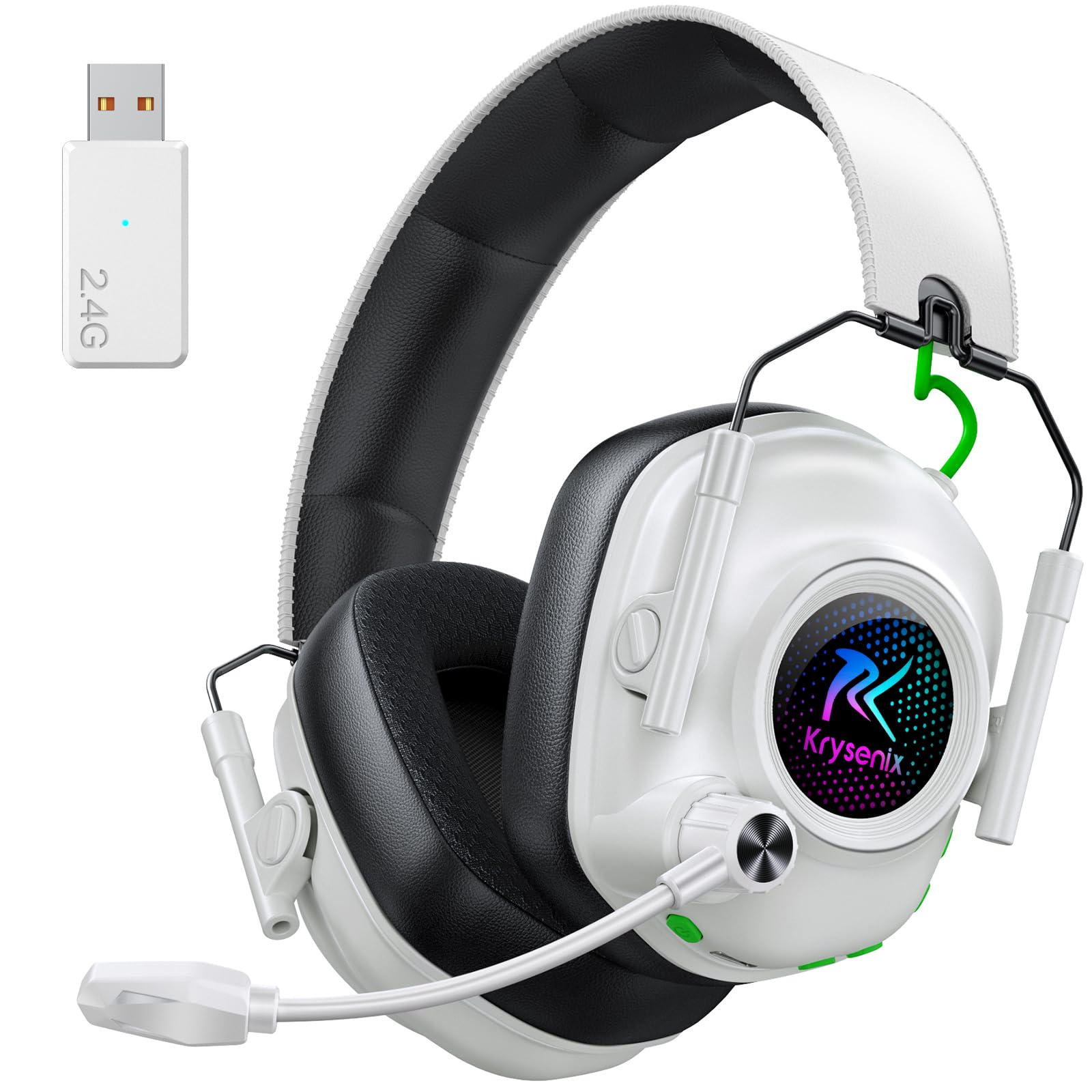 7.0 / 10
Krysenix Wireless Gaming Headset for PS5, PS4, PC, Switch, Mac, 2.4 GHz Wireless & Bluetooth 5.4 Gaming Headphones with Mic Noise Canceling, Gaming & Music Dual Mode, Foldable, 40H Battery,White
£17.99 · Krysenix
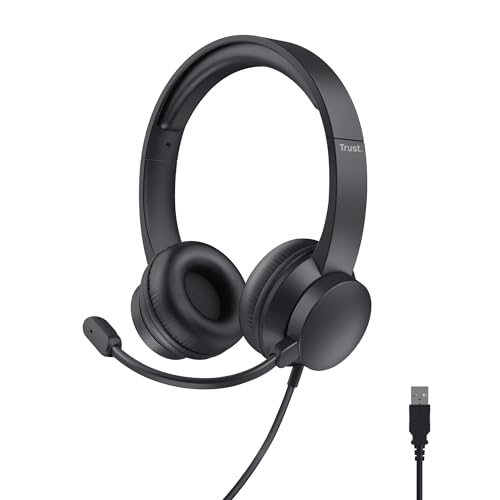 7.0 / 10
Trust USB Headset with Microphone On-Ear Lightweight Design, Adjustable Headband, PC Headset 1.8m Cable Wired Headphones with Microphone for Computer Laptop Mac Desktop Home Office Teams Zoom
£15.99 · Trust
Frequently asked
5 questions01Is the NGS VOX505USB Stereo Headset with Microphone, USB Connection and Volume Control for PC, Laptop or Game Console good for competitive gaming?+
It's adequate for casual competitive play but not ideal for serious ranked matches. The soundstage is narrow and the mid-bass tuning makes precise positional audio harder to read compared to more neutral-sounding headsets. For casual sessions it's fine, but if audio positioning is critical to your performance, you'd benefit from a headset with a wider soundstage and flatter frequency response.
02Does the NGS VOX505USB Stereo Headset with Microphone, USB Connection and Volume Control for PC, Laptop or Game Console have a good microphone?+
The microphone is functional and appropriate for its price tier. Teammates in Discord and in-game voice chat reported clear, intelligible audio. Background noise rejection is modest rather than strong, so mechanical keyboard noise and fan noise will be picked up in quieter recordings. For gaming communication it's perfectly adequate; for streaming or recording you'd want additional noise suppression software.
03Is the NGS VOX505USB Stereo Headset with Microphone, USB Connection and Volume Control for PC, Laptop or Game Console comfortable for long sessions?+
Comfort is reasonable for sessions up to about 90 minutes. The light clamp force is a genuine plus, and the low weight helps. The main limitation is the leatherette earcup padding, which becomes warm and slightly sweaty during extended use. The earcups are also on the smaller side, so users with larger ears may find them less comfortable over time.
04Does the NGS VOX505USB Stereo Headset with Microphone, USB Connection and Volume Control for PC, Laptop or Game Console work with PS5/Xbox?+
It works correctly on PS4 and PS5 via USB, with both audio output and microphone input functioning as expected. Xbox Series X/S has more restrictive USB audio support and compatibility is not confirmed. Nintendo Switch supports it in docked mode via the dock's USB ports. For PC and PlayStation users, compatibility is solid.
05What warranty applies to the NGS VOX505USB Stereo Headset with Microphone, USB Connection and Volume Control for PC, Laptop or Game Console?+
Amazon offers 30-day returns. NGS typically provides 1-2 year warranty on their peripherals. Check the NGS website or your Amazon order confirmation for specific warranty terms applicable to your purchase.