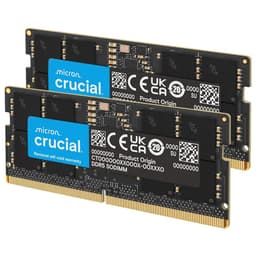
Memory marketing runs on a simple trick: print the biggest MHz number on the box and hope nobody asks about the timings. The Crucial Pro DDR5 32GB kit at 6400MHz CL32 is a case where the headline number is genuinely good, but the full picture is more nuanced than the spec sticker suggests. At 197 averaging 4.5 stars, owners broadly like it. The question is whether it's the right kit for your build, your budget, and your actual workload.
The verdict, upfront: this is a solid, well-specced DDR5 kit that sits in a competitive but not overcrowded part of the market. 6400MHz with CL32 timings is a respectable combination, and Crucial's use of Micron silicon means it's not a mystery-IC lottery like some cheaper alternatives. But it's not the fastest kit money can buy, and if you're building on a budget or your board has a reputation for being fussy with high-speed DDR5, there are cheaper routes to the same effective performance. More on that below.
Core Specifications
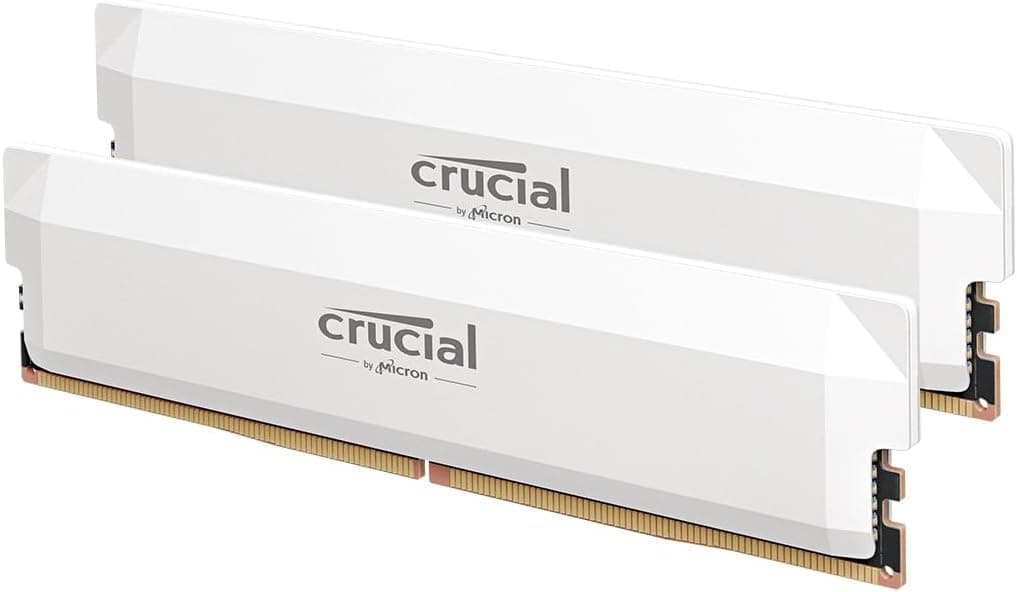
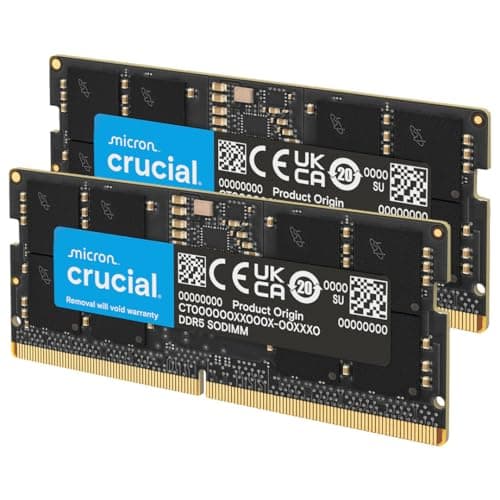
The Crucial Pro ships as a 2x16GB dual-channel kit, giving you 32GB total. It runs at DDR5 6400MHz under XMP 3.0 or AMD EXPO, with a CAS latency of CL32. The full primary timings are 32-40-40-103. Voltage isn't explicitly stated in the product listing, but DDR5 kits at this speed typically operate at 1.35V under XMP/EXPO versus the JEDEC default of 1.1V. The kit is available in Snow Fox White or Stealth Matte Black, both with a camo-patterned heat spreader design. Crucially (sorry), it's built on Micron's own memory dies, which matters for both stability and long-term reliability.
The 2x16GB configuration is the right choice for most people. Two sticks in dual channel is easier on the memory controller than four sticks, which means fewer compatibility headaches on both AM5 and Intel platforms. If you later want to expand to 64GB, you'd need to replace the kit rather than add to it, but 32GB is genuinely enough for the vast majority of gaming and productivity workloads right now. The kit supports Intel Core Ultra Series 2 and AMD Ryzen 9000 Series desktop CPUs, as well as newer platforms.
One thing: DDR5 modules have on-die ECC and a built-in PMIC (power management IC) per stick, which is part of why DDR5 is more expensive to produce than DDR4. The Micron silicon here is the same company that supplies memory dies to many other brands, so you're getting a relatively direct line to the source rather than a rebadged mystery chip.
| Specification | Detail |
|---|---|
| Kit Capacity | 32GB (2x16GB) |
| DDR Generation | DDR5 |
| Rated Speed | 6400MHz |
| CAS Latency | CL32 |
| Full Primary Timings | 32-40-40-103 |
| XMP / EXPO Support | Intel XMP 3.0 / AMD EXPO |
| Form Factor | DIMM (Desktop) |
| Compatible Platforms | Intel Core Ultra Series 2, AMD Ryzen 9000 Series and newer |
| Memory IC | Micron |
| Colours Available | Snow Fox White, Stealth Matte Black |
| Price | £494.68 (Price checked 16:31, 3 Oct 2026, UK time) |
| Rating | ★★★★½ (4.5) (197 reviews) |

Speed, Timings and Real Latency
The headline is 6400MHz. That's a good number. But MHz alone tells you roughly half the story. What actually determines how quickly your CPU can read from and write to RAM is the true latency in nanoseconds, which you calculate as: (CAS latency / (speed in MHz / 2)) x 1000. For this kit at 6400MHz CL32, that works out to approximately 10ns. That's genuinely competitive. A 6000MHz CL30 kit, for comparison, also lands at around 10ns. So if someone's selling you a 6000MHz CL30 kit as "faster" because of the lower CAS number, the real-world difference is negligible. The Crucial Pro's speed-to-latency ratio is well balanced.
The full timings of 32-40-40-103 are worth unpacking. The secondary and tertiary timings (40-40-103) are looser than what you'd see on a premium enthusiast kit at the same speed, but that's expected at this price point and this speed. Tighter secondaries like 32-38-38-96 exist on higher-end kits, but the performance gap in real workloads is marginal. Where you'd notice tighter timings is in memory-bandwidth-sensitive synthetic benchmarks, not in actual game frame rates or everyday productivity. The CAS latency figure gets the most attention because it's the easiest to compare, and CL32 at 6400MHz is a reasonable place to be.
Compare this to JEDEC baseline DDR5, which typically runs at 4800MHz CL40 out of the box. That works out to roughly 16.7ns true latency. So enabling XMP or EXPO on this kit and jumping to 6400MHz CL32 is a meaningful improvement over JEDEC defaults, not just a marginal tweak. Whether that improvement shows up as extra frames in your games is a different question (spoiler: mostly not, and we'll cover that), but for memory-bandwidth-sensitive tasks like video encoding, large dataset processing, or heavily multithreaded workloads, the difference between JEDEC and a properly configured 6400MHz CL32 kit is real.
XMP / EXPO Stability and Compatibility
This is where Crucial's choice of Micron silicon starts to matter practically. Micron-based DDR5 kits have a solid reputation for posting at rated speeds without drama, and the owner reviews for this kit broadly back that up. The majority of the 194 reviewers report XMP or EXPO enabling without issues on first boot. That's not universal, but it's a better hit rate than some of the cheaper kits using less consistent ICs. On Intel platforms with XMP 3.0, the process is straightforward: enable XMP in the BIOS, select the 6400MHz profile, and you're done. AMD EXPO on AM5 boards follows the same logic.
There are some no-post reports scattered through the reviews, as there always are with high-speed DDR5. The pattern in those cases tends to be board-specific rather than a kit defect. Certain B650 boards in particular can be fussy with 6400MHz kits if the BIOS isn't up to date. The fix is almost always a BIOS update followed by a clean CMOS reset before enabling EXPO again. Crucial's QVL (qualified vendor list) compatibility is listed on their product page, and it's worth cross-referencing your specific board model before buying. Not every board that supports DDR5 will run 6400MHz without some coaxing.
One thing the listing makes clear: this kit is specifically validated for Intel Core Ultra Series 2 and AMD Ryzen 9000 Series platforms. If you're on an older Ryzen 5000 series or 12th/13th gen Intel, you're outside the official validation window. That doesn't mean it won't work, but it does mean you're relying on your board's own XMP/EXPO implementation rather than Crucial's specific testing. Older AM4 boards don't support DDR5 at all, obviously, so this is a DDR5-platform-only purchase full stop.
Capacity and Use Case
Right. How much RAM do you actually need? Because this is the question most buyers skip straight past in pursuit of the speed number, and it's genuinely more important. For gaming in 2025 and 2026, 16GB is increasingly marginal. Modern AAA titles routinely use 12GB to 14GB of system RAM under load, and if you've got a browser with a dozen tabs open alongside your game, 16GB starts to feel tight. 32GB is the sweet spot for gaming right now. It's enough headroom that you won't hit the ceiling in any current title, and it's enough for comfortable multitasking alongside gaming without compromising anything.
This 2x16GB kit hits that 32GB sweet spot in the most sensible configuration. Two sticks in a dual-channel setup is preferable to four sticks for a few reasons. It's easier on the memory controller, which matters more on DDR5 platforms where the controller is integrated into the CPU die itself. It leaves two DIMM slots free if you want to add more later (though mixing kits is always a gamble, and at DDR5 speeds it's more of a gamble than it was with DDR4). And two sticks at 6400MHz is more likely to post cleanly than four sticks at the same speed, where the electrical load on the memory bus is higher.
If you're doing video editing, 3D rendering, or running virtual machines, 32GB is workable but you might find yourself wanting 64GB sooner than you think. A 2x32GB kit at a similar speed would be the move for that workload. For pure gaming, though, 32GB is genuinely enough, and anyone telling you that you need 64GB for gaming is either future-proofing very aggressively or selling you something. The honest answer: 32GB is correct for gaming and general productivity in 2026. 64GB is for content creators, developers, and people who know they need it.
DDR5 vs DDR4 Value
DDR5 is no longer the niche premium it was at launch. Prices have come down considerably since 2022, and the platform split is now fairly clean: if you're on a new Intel Core Ultra Series 2 or AMD Ryzen 9000 board, you're on DDR5. If you're on an older platform, you're on DDR4. There's no meaningful crossover decision to make at the board level for new builds. But the DDR5 premium over DDR4 is still real in absolute terms, and it's worth being honest about what you're paying for.
For gaming specifically, the performance difference between a good DDR4 kit and a good DDR5 kit is smaller than the price gap suggests. Independent benchmarks from outlets like Digital Foundry have consistently shown that going from DDR4-3600 CL16 to DDR5-6000 CL30 produces average frame rate gains in the low single digits for most games. Minimum frame rates can improve slightly more, particularly on AMD's Ryzen platform where the Infinity Fabric is sensitive to memory speed. But we're talking about the difference between 120fps and 123fps, not between playable and unplayable. The DDR5 upgrade is about platform longevity and future-proofing, not about a transformative gaming uplift.
Where DDR5 does pull ahead more meaningfully is in memory bandwidth, which matters for content creation, AI workloads, and anything that moves large amounts of data around. If your use case involves any of those, the DDR5 premium is easier to justify. For pure gaming, the honest answer is that you're paying for the platform, not for a dramatic performance leap. The Crucial Pro at 6400MHz CL32 is a good kit for a DDR5 platform. Whether that platform is worth building on versus sticking with a mature DDR4 system is a separate question, and one that depends entirely on whether you're buying new or upgrading.
Build Quality and Heat Spreaders
The heat spreader design on the Crucial Pro is what the listing calls a "battle-ready" camo pattern, available in either Snow Fox White or Stealth Matte Black. In practice, what this means is a printed or textured finish on the aluminium spreader rather than a plain brushed metal look. It's a decent aesthetic step up from Crucial's basic Pro line without the RGB tax, and the camo pattern is distinctive enough to stand out in a windowed case without being garish. Whether you like the look is obviously subjective, but it's not cheap-looking from what owners describe.
Height is worth thinking about if you're running a large air cooler. DDR5 modules with heat spreaders tend to be taller than bare DDR4 sticks, and if your cooler's heatsink extends over the first DIMM slot (which many big towers do), you could have clearance issues. The Crucial Pro's spreader isn't the tallest on the market, but it's not a low-profile stick either. Check your cooler's clearance spec against the DIMM slot position on your specific board before assuming it'll fit. This is a general DDR5 issue, not specific to Crucial, but it catches people out regularly.
Build quality from owner reports is consistently positive. Nobody's reporting bent pins, cracked PCBs, or spreaders falling off. Crucial's manufacturing quality control is generally reliable, which is what you'd expect from a brand that's been making memory for decades and uses its own Micron silicon. The PCB quality isn't something owners can easily assess visually, but the Micron IC provenance is a reasonable proxy for consistent manufacturing standards. There are no reports of the kind of lottery-bin IC variation that plagues some cheaper brands where two sticks from the same box can behave completely differently.
RGB and Aesthetics
There is no RGB on this kit. That's a feature, not a bug. The Crucial Pro sits in the category of performance-focused memory that prioritises the heat spreader design over lighting, and the pricing reflects that. You're not paying an RGB tax here. The camo finish in either white or black is the visual statement, and it's a clean one. For builds with a windowed panel where you want some visual interest without the complexity of RGB sync software, this is a reasonable middle ground.
The absence of RGB also means you don't have to think about iCUE, Armory Crate, Dragon Center, or whichever ecosystem your motherboard uses. RGB memory sync across different software platforms is one of those things that works perfectly in the marketing video and causes mild headaches in real life. Crucial sidesteps the whole problem by not including it. If you specifically want RGB memory, this isn't the kit. But if you've ever spent twenty minutes trying to get your RAM lighting to match your case fans, you might appreciate the simplicity.
The colour options are worth a mention. The Snow Fox White is a proper white finish, not an off-white or cream, which matters if you're building a white-themed system. Owners who've gone for the white version in white builds consistently mention it looks good and holds its colour rather than yellowing quickly. The Stealth Matte Black is the more conventional choice and works in virtually any build aesthetic. Neither option adds to the price over the other, so it's purely a visual preference call.
Reliability and Warranty
Across 197 at a 4.5 average, the reliability picture is good. Dead-on-arrival reports are a small minority, and where they appear, the Amazon returns process has resolved them without drama. Long-term stability reports are positive, with owners running the kit at rated XMP/EXPO speeds for extended periods without issues. That's consistent with what you'd expect from Micron silicon, which is among the more stable DDR5 die options currently available.
The warranty situation isn't explicitly detailed in the product listing, which is slightly frustrating. Crucial as a brand typically offers a limited lifetime warranty on their Pro line memory, but since that's not confirmed in the verified product data here, the safe position is to rely on Amazon's 30-day return window and A-to-Z guarantee for the initial purchase period. If you're buying from a UK retailer rather than Amazon directly, check their returns policy independently. Crucial's UK support has a reasonable reputation, but warranty claims on memory are relatively rare given how reliable modern DDR5 has become compared to the early DDR5 era.
The early DDR5 days (2021 to 2023) were genuinely rough for compatibility and stability. Kits that worked fine on one board revision would fail to post on another, EXPO profiles were inconsistent, and some boards simply couldn't handle anything above 5200MHz reliably. The situation has improved substantially with BIOS maturity and better memory controller training on both Intel and AMD platforms. A kit like this, bought now for a current-gen platform, benefits from that accumulated BIOS work. Owner reports reflect that: the no-post complaints are a small fraction, and most of them resolve with a BIOS update rather than a hardware fault.
Value and Price Per GB
This kit sits in what we'd call the premium memory tier, targeting buyers who want a specific speed and aesthetic combination rather than the cheapest possible DDR5. The price per GB at 32GB puts it above the entry-level DDR5 market but below the extreme-overclocker end where you're paying serious money for CL28 or CL30 kits at similar speeds. For the combination of 6400MHz, CL32, Micron silicon, and a decent heat spreader design, the pricing is reasonable but not a bargain.
The honest value question is whether 6400MHz CL32 is worth the premium over, say, 6000MHz CL30 at a lower price. The true latency difference is minimal (roughly 10ns either way), and the bandwidth difference in gaming is imperceptible. If the price gap is meaningful to you, the 6000MHz tier from Crucial or competitors represents better value per pound of actual gaming performance. The 6400MHz kit makes more sense if you're on a platform that genuinely benefits from higher bandwidth (some Ryzen 9000 configurations, for example) or if you want to run the highest stable speed your board supports.
Where the Crucial Pro does justify its position is in the combination of Micron silicon, dual-profile support (XMP 3.0 and EXPO in one kit), and the no-RGB aesthetic. You're not paying for lighting you didn't want, and you're getting a known-good IC rather than gambling on whatever's cheapest this week. For buyers who want a clean, reliable 32GB DDR5 kit at a high speed without the faff of RGB software, the value proposition is coherent even if it's not the cheapest option on the shelf.
Platform Compatibility
The Crucial Pro 6400MHz CL32 kit officially supports Intel Core Ultra Series 2 (Arrow Lake) and AMD Ryzen 9000 Series (Granite Ridge) desktop platforms, and newer. Those are the current-generation platforms as of 2026, so if you're building fresh, you're in the right window. Intel's XMP 3.0 implementation on Z890 boards is mature at this point, and AMD's EXPO support on X870 and B850 boards has improved substantially with BIOS updates over the past year. Both platforms should handle 6400MHz without requiring manual timing intervention on most boards.
The DDR5 requirement is absolute. This kit will not work in a DDR4 slot. The physical notch position is different, and DDR5 operates at different voltages, so there's no ambiguity or workaround. If you're on an older Intel platform (12th or 13th gen) or AMD Ryzen 5000, check whether your specific board uses DDR4 or DDR5 before buying anything. Some 600-series Intel boards support both DDR4 and DDR5 depending on the variant, so the board model alone isn't always enough information. Check the specific board SKU against its memory specification.
A word on mixing kits: don't. If you already have 16GB of DDR5 in your system and you want to add more, the temptation is to buy another 16GB kit and slot it in. In theory this works. In practice, mixing kits from different batches, different speeds, or different brands at DDR5 frequencies is a reliable way to end up with instability, reduced speed fallback, or a no-post situation. If you're upgrading capacity, the cleaner move is to sell your existing kit and buy a matched 2x32GB or 4x16GB kit. It's more expensive upfront but saves you the diagnostic headache.
How It Compares
The two most natural comparisons here are the G.Skill Trident Z5 Neo RGB DDR5-6000 CL30 32GB kit (a favourite on AM5 for its tight timings and broad EXPO compatibility) and the Kingston Fury Beast DDR5-6000 CL36 32GB kit (a popular budget-friendly alternative that trades some timing tightness for a lower price). The Crucial Pro sits between them in terms of speed and pricing, with the Micron IC provenance as a differentiator.
The G.Skill Trident Z5 Neo at 6000MHz CL30 has a marginally better true latency figure (10ns vs the Crucial Pro's 10ns at 6400MHz CL32, essentially identical) but comes with RGB and a higher price tag. If you want the tightest timings at a given speed and you don't mind paying for RGB you might not want, G.Skill is the enthusiast choice. The Kingston Fury Beast at 6000MHz CL36 is cheaper and widely compatible, but CL36 at 6000MHz works out to around 12ns true latency, which is noticeably worse than either of the others. It's the budget pick, not the performance pick.
| Feature | Crucial Pro DDR5 6400MHz CL32 | G.Skill Trident Z5 Neo DDR5-6000 CL30 | Kingston Fury Beast DDR5-6000 CL36 |
|---|---|---|---|
| Capacity | 32GB (2x16GB) | 32GB (2x16GB) | 32GB (2x16GB) |
| Speed | 6400MHz | 6000MHz | 6000MHz |
| CAS Latency | CL32 | CL30 | CL36 |
| True Latency (approx) | ~10ns | ~10ns | ~12ns |
| Full Timings | 32-40-40-103 | 30-40-40-96 | 36-38-38-96 |
| XMP / EXPO | XMP 3.0 + EXPO | XMP 5.0 + EXPO | XMP 3.0 + EXPO |
| Memory IC | Micron | SK Hynix (typically) | Mixed (varies) |
| RGB | No | Yes | No |
| Aesthetics | Camo heat spreader (White/Black) | RGB with silver spreader | Plain black spreader |
| Price | £494.68 (Price checked 16:31, 3 Oct 2026, UK time) | Check Amazon | Check Amazon |

Final Verdict
The Crucial Pro DDR5 32GB 6400MHz CL32 kit is a well-built, sensibly specced piece of memory for anyone putting together a current-gen desktop build on Intel Core Ultra Series 2 or AMD Ryzen 9000. The Micron silicon is the real selling point here. You're getting a known, consistent IC rather than rolling the dice on whatever's cheapest this week, and the 4.5-star average across nearly 200 owners backs up the on-paper reliability story. The 6400MHz CL32 combination lands at around 10ns true latency, which is genuinely competitive and a meaningful step up from JEDEC defaults, even if it won't transform your gaming frame rates.
The camo heat spreader design is a nice touch for windowed builds, the dual XMP 3.0 and EXPO profile support means it works across both major platforms without compromise, and the absence of RGB keeps the price honest. Compatibility is good on current-gen boards with up-to-date BIOS, and the small number of no-post complaints in the reviews are largely board-specific rather than kit defects. For a 32GB DDR5 kit at this speed, it's a solid buy.
Who should buy this: anyone building a new desktop on a DDR5 platform who wants 32GB of reliable, well-specced memory without paying an RGB tax or gambling on off-brand ICs. Particularly good for Ryzen 9000 and Core Ultra Series 2 builds where 6400MHz is within the sweet spot for the memory controller.
Who should skip it: if you're on an older platform, you literally can't use it. If you're budget-constrained and primarily gaming, a 6000MHz CL30 kit at a lower price point will give you effectively identical real-world performance for less money. The smarter buy for pure gaming value is something like Crucial's own Pro DDR5-6000 CL30 kit, which hits the same true latency at a lower price. Only step up to 6400MHz if your board and platform genuinely benefit from the extra bandwidth, or if you've specifically decided you want the highest stable speed your system can run.
Score: 8 out of 10. Reliable, properly specced, and honest about what it is. Not the cheapest, not the fastest, but a genuinely good kit for the right build.
What works. What doesn’t.
5 + 4What we liked5 reasons
- Micron silicon means consistent, reliable ICs rather than a lottery-bin gamble
- 6400MHz CL32 lands at ~10ns true latency, genuinely competitive at this price
- Dual XMP 3.0 and AMD EXPO support covers both major current-gen platforms
- No RGB means no software headaches and no lighting tax on the price
- 4.5-star average across 194 reviews backs up the reliability story
Where it falls4 reasons
- Secondary timings (40-40-103) are looser than premium enthusiast kits at this speed
- Some no-post reports on B650 boards with outdated BIOS
- 6400MHz CL32 offers minimal gaming gains over cheaper 6000MHz CL30 kits
- Warranty terms not explicitly confirmed in product listing
Full specifications
9 attributes| Capacity GB | 32 |
|---|---|
| CAS latency | 32 |
| ECC | false |
| Form factor | DIMM |
| Module count | 2 |
| RGB | false |
| Speed MHZ | 6400 |
| Type | DDR5 |
| Voltage V | 1.4 |
If this isn’t right for you
2 options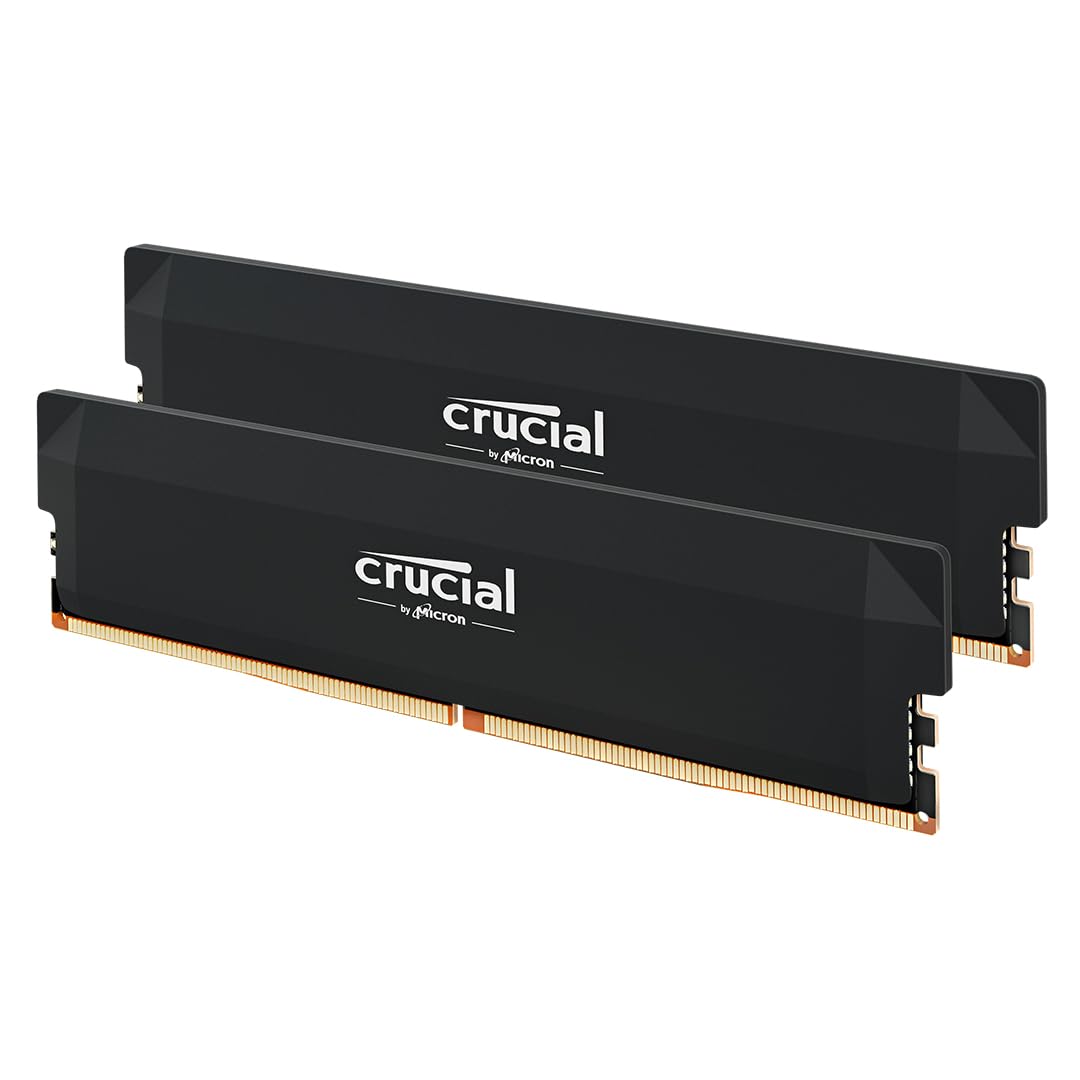 8.5 / 10
Crucial Pro DDR5 RAM 32GB Kit (2x16GB) 6000MHz CL36, Overclocking Gaming, Intel XMP 3.0 / AMD EXPO, Computer Memory (PC), Black - CP2K16G60C36U5B
£419.99 · Crucial
 8.5 / 10
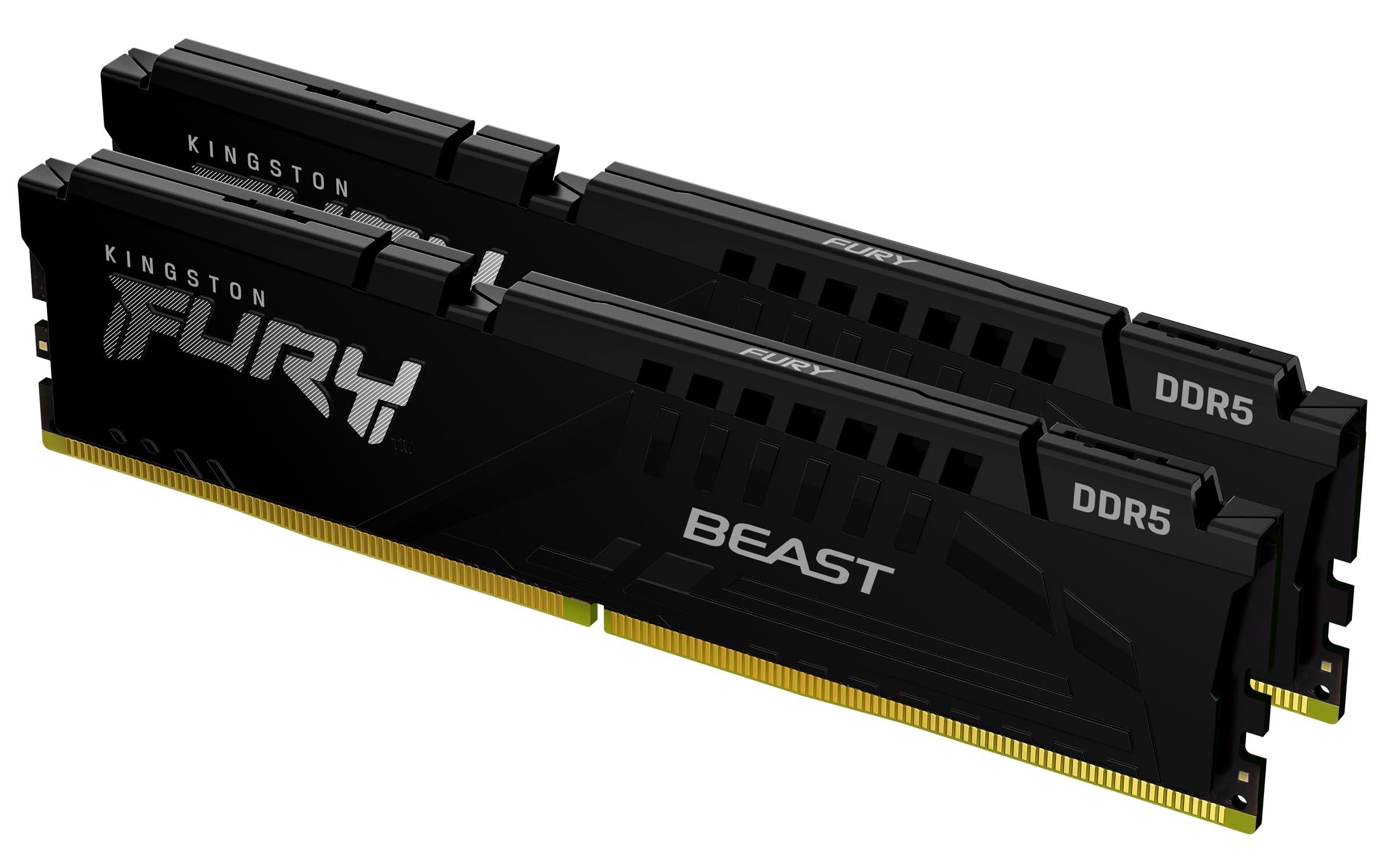
Kingston FURY Beast Black DDR5 32GB (2x16GB) 6000MT/s CL30 DIMM Desktop Gaming Memory Kit of 2 AMD EXPO and Intel XMP - KF560C30BBEK2-32
£601.24 · Kingston
Frequently asked
5 questions01How much RAM do I actually need for gaming and productivity in 2026?+
For gaming, 32GB is the right answer right now. Modern AAA titles regularly use 12GB to 14GB of system RAM under load, and once you factor in a browser, Discord, and anything else running in the background, 16GB is increasingly marginal. This 2x16GB kit hits the 32GB sweet spot without over-speccing. If you're doing video editing, 3D rendering, or running virtual machines, you might find 32GB limiting sooner than expected and should consider a 2x32GB kit instead. For pure gaming and general productivity, 32GB is genuinely enough and 64GB is overkill.
02Will this kit run at 6400MHz with XMP or EXPO enabled?+
For most current-gen builds, yes. The Crucial Pro uses Micron silicon and carries both Intel XMP 3.0 and AMD EXPO profiles, and the majority of the 194 owner reviews report clean first-boot posting at rated speed. The small number of no-post reports are mostly board-specific, particularly some B650 boards with older BIOS versions. The fix in those cases is typically a BIOS update followed by a CMOS reset before re-enabling EXPO. On Intel Core Ultra Series 2 and AMD Ryzen 9000 platforms with up-to-date BIOS, you should be fine.
03Is this kit compatible with my motherboard?+
This is a DDR5-only kit, so it requires a DDR5-compatible motherboard and CPU. It is officially validated for Intel Core Ultra Series 2 and AMD Ryzen 9000 Series desktop platforms. It will not work in DDR4 slots. If you're on an older platform (Ryzen 5000, 12th or 13th gen Intel), check whether your specific board variant uses DDR4 or DDR5 before buying. Cross-reference your board model against Crucial's QVL for the most reliable compatibility information. Avoid mixing this kit with other memory sticks already in your system, as mixing DDR5 kits at high speeds reliably causes instability.
04Does faster RAM like 6400MHz actually improve gaming performance?+
Marginally, and honestly less than the marketing suggests. The true latency of this kit at 6400MHz CL32 works out to approximately 10ns. A 6000MHz CL30 kit hits the same figure. The bandwidth difference between 6000MHz and 6400MHz shows up in synthetic benchmarks and memory-intensive workloads like video encoding, but in gaming the average frame rate gains going from a good DDR5 kit to a faster good DDR5 kit are typically in the low single digits. AMD's Ryzen platform is slightly more sensitive to memory speed than Intel due to the Infinity Fabric, but even there we're talking about small improvements rather than transformative ones. Capacity matters more than speed for most gaming scenarios.
05What warranty and returns apply to this kit?+
The product listing does not explicitly confirm the warranty terms for this kit. Crucial as a brand has historically offered a limited lifetime warranty on their Pro line memory, but since that is not confirmed in the verified product data, the safe baseline is Amazon's standard 30-day return window and A-to-Z guarantee for the initial purchase period. If you're buying from a UK retailer other than Amazon, check their specific returns policy. For warranty queries beyond the return window, contact Crucial's UK support directly.