RAM shopping is one of those things that looks simple until you actually start doing it. You type "32GB DDR5" into Amazon and get back forty listings, half of which have "GAMING" in bold capitals and a heatsink that looks like it was designed by someone who really loves Transformers. So when you're looking at the Patriot Viper Venom DDR5 32GB (2 x 16GB) 6400MT/s UDIMM Desktop Gaming Memory KIT PVV532G640C32K, the useful question isn't "does it look cool" but rather: does the spec sheet actually hold up, and what do the people who've bought and installed it actually say about whether it posts at rated speed first try?
Patriot's Viper Venom line sits in the middle of the DDR5 performance market. Not the absolute cheapest DDR5 you can find, but not the silly-money flagship tier either. At 6400 MT/s with XMP 3.0 support, it's pitching itself at builders who want something meaningfully above JEDEC base speeds without paying the premium for the very top-bin kits. The 32GB capacity in a 2x16GB configuration is the sweet spot most people building a mid-to-high-end gaming or content creation rig should be looking at right now. Whether it actually delivers on that pitch is what we're here to figure out.
With 148 owner reviews averaging ★★★★☆ (4.2), there's a decent signal to work with. That score is good but not perfect, and the negative reviews are worth reading carefully because they tend to cluster around specific issues rather than general unhappiness. Compatibility and first-boot behaviour at rated speed are, predictably, where most of the friction shows up. That's not unique to this kit, but it's worth knowing going in.
Speed, Timings and Real Latency on the Patriot Viper Venom DDR5 32GB 6400MT/s Kit
The headline is 6400 MT/s. That's a solid speed for mainstream DDR5, sitting comfortably above the base JEDEC DDR5 spec (which starts at 4800 MT/s) and above the commonly recommended 6000 MT/s sweet spot for AMD AM5 platforms. But speed alone tells you almost nothing about real-world performance. What actually matters is CAS latency alongside that speed, because the two together determine true memory latency in nanoseconds.
The product listing doesn't publish the full primary timings for this kit, which is a bit annoying. What we can say is that at 6400 MT/s, you'd want to see CAS latency in the CL32 range to keep true latency competitive. The formula is simple enough: true latency in nanoseconds equals (CAS latency divided by speed in MHz) multiplied by 2000. A 6400 MT/s CL32 kit works out to roughly 10ns true latency. A 6000 MT/s CL30 kit hits the same 10ns. A 6000 MT/s CL36 kit comes in at 12ns, which is noticeably worse despite the lower headline number. This is the bit that marketing copy never tells you, and it's the reason you shouldn't just chase the highest MT/s number you can afford.
At 6400 MT/s, the Viper Venom is fast enough to keep up with most of what the competition offers in this class. The XMP 3.0 profile handles the heavy lifting on Intel platforms, and on AMD you're relying on XMP compatibility (more on that in the next section). For gaming, the honest truth is that the difference between 6000 MT/s and 6400 MT/s is going to be a few frames per second at most in the titles that are most sensitive to memory bandwidth, and genuinely invisible in most others. Where speed matters more is in memory-bandwidth-hungry workloads like video editing, large dataset processing, or running a bunch of virtual machines. For pure gaming, capacity matters more than speed once you're above the JEDEC baseline.

XMP and EXPO Stability and Compatibility
This is the section that separates the kits that look good on paper from the ones that actually work in your specific board. The Patriot Viper Venom DDR5 kit carries XMP 3.0 support, which is Intel's automatic overclocking profile standard. You enable it in the BIOS, it reads the profile off the SPD on the stick, and in theory your system boots at 6400 MT/s without any manual fiddling. In practice, on well-supported Intel platforms (Z790, Z890), this tends to work cleanly. The product listing specifically notes it has been tested across the latest Intel DDR5 platforms, which is a reasonable confidence signal.
AMD AM5 is a different conversation. AMD's native standard is EXPO, not XMP. Most DDR5 kits aimed at Intel will carry XMP profiles, and many AM5 boards will attempt to read an XMP profile and apply it, but this is not the same as having a validated EXPO profile. Some boards handle it fine. Others are fussier, particularly at higher speeds. At 6400 MT/s, you're pushing the memory controller harder than you would at 6000 MT/s, and that's where marginal compatibility issues tend to surface. If you're building on AM5 and this kit isn't on your board's QVL (qualified vendor list), I'd check that before buying. The QVL is the board manufacturer's tested-and-confirmed list, and it's the single most useful thing you can look at before buying any RAM kit.
Looking at the owner review patterns, the compatibility picture is broadly positive but not without exceptions. Most buyers report it posting at rated speed without drama on supported Intel boards. There are a handful of reports of initial no-post situations, which is common enough with high-speed DDR5 and usually resolved by clearing CMOS and re-enabling XMP, or by updating the BIOS to a more recent version. The 4.2 average rating suggests the majority of buyers have a smooth experience, but the lower ratings that drag it down from a perfect score do tend to involve compatibility friction. That's not a Patriot-specific problem, it's a DDR5-at-high-speeds problem, and it's worth being realistic about going in.
Capacity and Use Case
So, do you actually need 32GB? The honest answer for most people in 2025 and 2026 is: probably yes, and you'll be glad you have it. 16GB was fine for gaming a few years ago, but modern titles are increasingly hungry. Games like Alan Wake 2, Hogwarts Legacy, and the more recent open-world releases regularly push past 12GB of system RAM usage when you factor in background processes, a browser with a few tabs open, and Discord running. 16GB can leave you with less headroom than you'd like, and you'll notice it as stuttering when the system starts swapping to page file.
32GB is the comfortable sweet spot right now. It's enough for gaming without compromise, enough for light to moderate content creation (video editing in Premiere or DaVinci Resolve at 1080p to 4K, Lightroom with large catalogues), and enough for running a couple of virtual machines for development work. The 2x16GB configuration in this kit is the right way to get there. Two sticks means you're running in dual channel, which gives the memory controller two 64-bit channels to work with simultaneously, effectively doubling the available bandwidth compared to a single stick. Always run dual channel if your board supports it, which every mainstream desktop board does.
If you're doing serious video production at high resolutions, 3D rendering, or running multiple VMs simultaneously, 64GB starts to make sense. But for the vast majority of gamers and general content creators, 32GB is genuinely the right answer right now. The 2x16GB format also leaves two DIMM slots free on a standard ATX board, which means you can add another kit later if you do find yourself needing 64GB. That's a nicer upgrade path than being stuck with 4x8GB and having to replace the whole lot.
DDR5 vs DDR4 Value
DDR5 is the only option on current Intel and AMD platforms. If you're building on Intel 12th gen or later (Alder Lake onwards) or AMD Ryzen 7000 series (AM5), you need DDR5. There's no choice to make here. But if you're upgrading an older system that supports DDR4, the question of whether to switch platform entirely to get DDR5 is more nuanced. DDR5 does offer higher bandwidth potential, on-die ECC for improved data integrity, and better scalability at high speeds. In gaming, though, the real-world performance difference between a good DDR4 kit and a good DDR5 kit is, again, marginal. We're talking single-digit frame rate differences in the most memory-sensitive titles.
The DDR5 premium has come down significantly from the early days when DDR5 kits cost twice what comparable DDR4 cost. The gap has narrowed, and for a new build on a current platform, DDR5 is simply what you buy. The Patriot Viper Venom sits in the performance tier of DDR5, above the budget 4800 MT/s to 5600 MT/s kits but below the absolute top-end 7200 MT/s to 8000 MT/s stuff that costs considerably more and requires very careful board and BIOS selection to run stably.
The honest assessment is that the DDR5 vs DDR4 debate is largely academic for anyone building new today. You're on DDR5 whether you like it or not if you want a current-gen platform. The real question is which DDR5 kit to buy, and within that, whether paying more for 6400 MT/s over a 6000 MT/s kit is worth it. For most gaming workloads, probably not. For bandwidth-heavy tasks, there's a case for it. For the bragging rights of a higher number in CPU-Z, absolutely not worth the premium.
Build Quality and Heat Spreaders
The Viper Venom line has a distinctive heatspreader design, angular and aggressive-looking, which fits the "gaming" branding without being completely over the top. The aluminium heatspreader does a legitimate job of dissipating heat from the ICs, which matters more on DDR5 than it did on DDR4 because DDR5 modules run at higher voltages and generate more heat as a result. DDR5 also has the power management IC on the module itself rather than on the motherboard, which adds to the thermal load.
Height is worth checking before you buy if you're running a large tower cooler. Tall heatspreaders can foul the first DIMM slot on some cooler configurations, particularly with coolers that have wide bases or fans that overhang the DIMM area. The Viper Venom heatspreaders are on the taller side of mainstream DDR5 kits, so it's worth measuring your clearance or checking the cooler manufacturer's RAM clearance spec if you're running something like a Noctua NH-D15 or a large be quiet! cooler. Low-profile DDR5 options exist if clearance is a concern, but they're a different product category.
PCB quality on Patriot's Viper line is generally well-regarded. The ICs used in specific production runs can vary (this is true of virtually every memory manufacturer), and Patriot doesn't publish which ICs are in this kit, which is frustrating if you care about overclocking beyond the rated XMP profile. Owner reports don't flag any widespread PCB or soldering quality issues, which is consistent with a product that's averaging 4.2 from 162. Dead-on-arrival rates seem low based on the review distribution, with the negative reviews skewing toward compatibility issues rather than physical defects.
RGB and Aesthetics
The Viper Venom DDR5 kit does include RGB lighting. The lighting runs along the top of the heatspreader and is visible through a diffuser strip, giving a reasonably clean look rather than the blinding-lighthouse effect some kits go for. It's not the most elaborate RGB implementation in the market, but it does the job if you're building in a case with a glass panel and want something that looks the part.
Sync support is the usual story with RGB RAM: it works with the major motherboard ecosystem software (ASUS Aura Sync, MSI Mystic Light, Gigabyte RGB Fusion, ASRock Polychrome Sync) through Patriot's Viper RGB software, but getting everything to talk to each other cleanly can require some patience. If you're mixing brands of RGB components, expect some fiddling. If you're all-in on one ecosystem, it's generally fine. Worth noting that RGB adds nothing to performance, and the kits without RGB are typically cheaper for the same underlying specs. If you don't care about the lighting, there are non-RGB versions of similar performance kits that cost less.
The RGB tax here isn't enormous, but it's real. If the aesthetics matter to you and you're building a showcase system, the Viper Venom's look is decent. If you're building a workhorse that lives under a desk, the RGB is genuinely pointless and you're paying for it regardless. That's a personal call, but it's worth being clear-eyed about. The heatspreader design itself, separate from the lighting, is functional and gives the sticks a premium feel that's appropriate for the price tier.
How It Compares
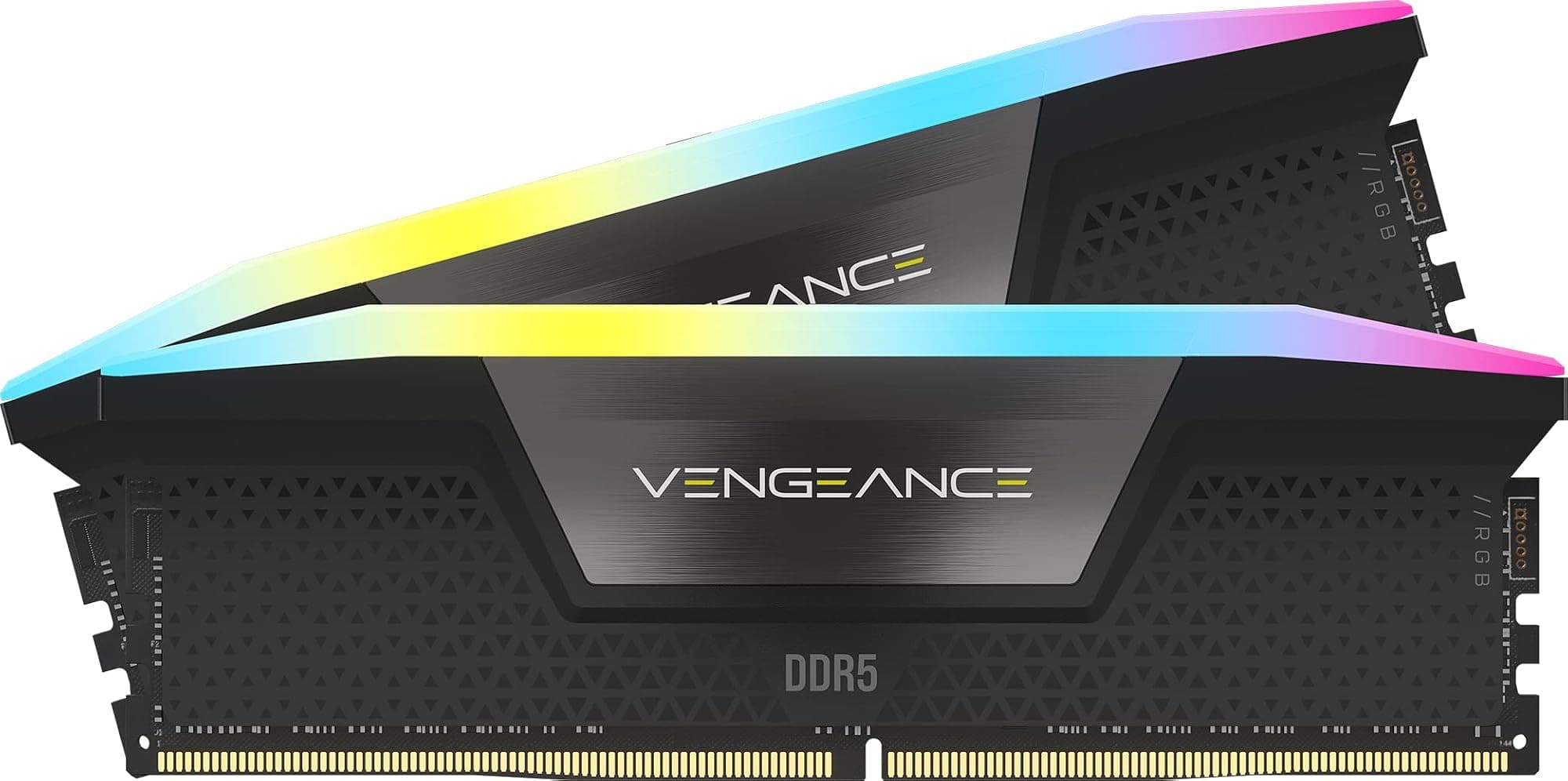
At 6400 MT/s in a 32GB DDR5 kit, the Patriot Viper Venom is competing in a reasonably crowded field. The two most obvious alternatives are the Corsair Vengeance DDR5 32GB 6400MT/s and the Kingston Fury Beast DDR5 32GB 6400MT/s. Both are well-established kits from brands with strong QVL presence across Intel and AMD boards, and both sit in a similar price bracket.
The Kingston Fury Beast DDR5 is probably the most direct competitor. It's widely available, has strong QVL coverage on both Intel and AMD platforms, and Kingston's support and RMA process has a solid reputation. The Corsair Vengeance DDR5 brings Corsair's iCUE software into the mix, which is either a selling point or an annoyance depending on your view of Corsair's software ecosystem. iCUE is powerful but resource-hungry and not everyone wants it running in the background.
| Feature | Patriot Viper Venom DDR5 32GB 6400MT/s | Kingston Fury Beast DDR5 32GB 6400MT/s | Corsair Vengeance DDR5 32GB 6400MT/s |
|---|---|---|---|
| Capacity | 32GB (2x16GB) | 32GB (2x16GB) | 32GB (2x16GB) |
| Speed | 6400 MT/s | 6400 MT/s | 6400 MT/s |
| Profile | XMP 3.0 | XMP 3.0 / EXPO | XMP 3.0 |
| RGB | Yes | No (Beast) / Yes (Beast RGB) | Yes |
| Warranty | Limited Lifetime | Limited Lifetime | Limited Lifetime |
| Format | UDIMM | UDIMM | UDIMM |
| Price | £449.99 | Check Amazon | Check Amazon |
The Kingston Fury Beast has a slight edge in terms of explicit EXPO support for AM5, which makes it a cleaner choice if you're on an AMD Ryzen 7000 or 9000 series build. The Patriot Viper Venom's Intel-first testing focus is fine if you're on a Z790 or Z890 board, but AMD builders should do their QVL homework first. The Corsair Vengeance is a solid kit but you're partly paying for the Corsair brand and the iCUE software integration, which may or may not be relevant to you. At similar price points, all three are competent choices and the decision often comes down to which one is on your specific board's QVL.

What Buyers Say
The 162 averaging 4.2 tell a broadly positive story. The majority of buyers report the kit installing cleanly, XMP enabling without drama on supported Intel boards, and the system running stably at 6400 MT/s. Several reviewers specifically mention the aesthetics positively, with the heatspreader design and RGB getting good marks from builders who care about case presentation. A number of reviewers coming from DDR4 comment on the noticeable improvement in system responsiveness, though notably, that much of that feeling comes from the platform upgrade as a whole rather than the RAM speed specifically.
The complaints cluster in a few areas. A handful of buyers report initial no-post situations when enabling XMP, which as noted above is a common DDR5 high-speed issue and usually resolvable with a BIOS update or CMOS clear. A smaller number report compatibility friction specifically on AMD boards, which tracks with the Intel-focused testing Patriot highlights. There's the occasional dead-on-arrival report, but the frequency doesn't appear higher than the industry norm for memory kits. Patriot's warranty handling gets a mixed but mostly positive mention in the reviews where it comes up.
The pattern in the reviews that's most useful to a prospective buyer is this: people who checked their board's QVL before buying and are on a well-supported Intel platform are almost universally happy. People who had compatibility issues are more likely to have been on AMD or on older boards with less mature DDR5 support. That's a useful signal for how to approach the purchase decision rather than a reason to avoid the kit outright.
Value and Price Per GB
The Patriot Viper Venom DDR5 32GB 6400MT/s kit sits in the performance tier of the DDR5 market. It's not budget, but it's not the flagship tier either. For a 32GB kit at 6400 MT/s with XMP 3.0, RGB, and a lifetime warranty, the pricing is competitive within its class. The price-per-GB works out to a reasonable figure for performance DDR5, though it's worth comparing directly against the Kingston Fury Beast and Corsair Vengeance equivalents at time of purchase, as prices in this segment shift fairly regularly.
The question of whether the money is better spent on more capacity or faster speed is worth thinking about. If you're currently on 16GB and considering this 32GB kit, the capacity upgrade is almost certainly more impactful than any speed difference. If you're already on 32GB at 6000 MT/s and considering this as an upgrade purely for the 400 MT/s speed bump, the honest answer is: don't bother. The performance difference in gaming will be within margin of error. The case for this kit is as a first-time DDR5 purchase where you want solid performance without paying for the absolute top-bin speed tiers.
It's also worth factoring in the RGB. If you don't care about lighting, there are non-RGB versions of similar kits that come in cheaper. The Viper Venom's RGB is decent quality, but you are paying for it. If your build is going in a closed case or you just don't care about aesthetics, that's money that could go toward a larger SSD or a better cooler. Personal priorities matter here, but the value calculation changes meaningfully depending on whether you want the RGB or not.
Reliability and Warranty
Patriot offers a limited lifetime warranty on the Viper Venom DDR5 kit. A lifetime warranty on memory is the industry standard among reputable brands and it's the right answer. Memory either works or it doesn't, and if it fails after a year or three years, you want to know you're covered. The limited lifetime warranty means it covers manufacturing defects for the life of the product, which is what you'd expect.
From the owner reviews, the warranty process gets mentioned a few times, generally in the context of dead-on-arrival replacements. The experiences reported are mostly positive, with replacements arriving reasonably quickly. There are a couple of less positive experiences, but the ratio isn't alarming. Patriot as a brand has been around long enough to have an established RMA process, and the Viper line specifically has been on the market for several generations, which is a reasonable indicator of a mature product line rather than a fly-by-night kit.
Long-term stability is harder to judge from reviews because most people don't come back to update their review after two years of trouble-free use. What the reviews do show is that the kits that post cleanly at rated speed tend to stay stable. There are no widespread reports of kits that worked initially and then developed instability over time, which would be a more serious concern. The failure mode pattern, where it exists, is either DOA or compatibility-related at installation, not gradual degradation. That's a normal and acceptable pattern for memory.
Platform Compatibility
The Patriot Viper Venom DDR5 32GB 6400MT/s kit is a NON-ECC Unbuffered DIMM, which is the standard format for consumer desktop motherboards. It's not compatible with server platforms that require registered (RDIMM) or fully buffered memory. For a gaming or workstation build on a consumer Intel or AMD board, UDIMM is exactly what you want.
On the Intel side, this kit is compared across current DDR5 platforms, which covers Z790 and Z890 chipsets (13th, 14th, and 15th gen Intel Core). XMP 3.0 is Intel's own standard, so support is native on any Intel board that supports DDR5 overclocking profiles, which is all the enthusiast and mid-range boards. On AMD, you need an AM5 board (Ryzen 7000 or 9000 series) since AM4 is DDR4 only. As discussed, the XMP vs EXPO question is relevant here, and checking your specific board's QVL on the manufacturer's website is the single most important thing you can do before buying any RAM kit.
Mixing this kit with other sticks is generally not recommended. Running matched pairs from the same kit is always the safer approach. If you want to expand to 64GB later, buy a second identical kit rather than a different one. Even two kits of the same model number can sometimes have different IC revisions if they were manufactured at different times, which can cause instability. This isn't a Patriot-specific issue, it's a universal memory advice point, but it's worth stating clearly. The 2x16GB configuration in this kit is the right starting point for a 32GB build.
Core Specifications of the Patriot Viper Venom DDR5 32GB 6400MT/s UDIMM Kit
The spec sheet for the Patriot Viper Venom DDR5 kit (PVV532G640C32K) covers the essentials clearly. It's a 32GB kit in a 2x16GB dual-channel configuration, running at 6400 MT/s under the XMP 3.0 profile. The format is NON-ECC Unbuffered DIMM, which is standard for consumer desktop builds. The kit carries a limited lifetime warranty, which is the right answer for memory and matches what the better-regarded brands offer.
What the listing doesn't publish are the full primary timings (CAS latency, tRCD, tRP, tRAS) or the operating voltage. This is a genuine frustration. Timings and voltage are essential to understanding the real performance picture, and any kit that buries them is making you work harder to do the comparison properly. Based on the speed class and what's typical for 6400 MT/s DDR5, you'd expect something in the CL32 to CL36 range, but without confirmation from the spec sheet, that's an educated inference rather than a stated fact. If timings matter to your purchase decision (and they should), it's worth checking Patriot's own product page or the full datasheet for the confirmed figures.
The XMP 3.0 profile is the headline feature for Intel platform users. XMP 3.0 introduced more flexibility than XMP 2.0, including support for multiple profiles on a single module and better voltage and timing granularity. In practice, for most users, you enable XMP in the BIOS and the system runs at the rated speed. The complexity of XMP 3.0 is mostly relevant for enthusiasts who want to fine-tune beyond the rated profile. For everyone else, it's just the thing you turn on to get the speed you paid for.
| Specification | Detail |
|---|---|
| Total Capacity | 32GB (2 x 16GB) |
| Speed | 6400 MT/s |
| DDR Generation | DDR5 |
| Kit Configuration | 2 x 16GB Dual Channel |
| Profile Support | XMP 3.0 |
| ECC | Non-ECC |
| Form Factor | Unbuffered DIMM (UDIMM) |
| Platform Compatibility | Intel DDR5 platforms (tested) |
| Warranty | Limited Lifetime |
| Part Number | PVV532G640C32K |
| Price | £449.99 |

Final Verdict
The Patriot Viper Venom DDR5 32GB (2 x 16GB) 6400MT/s UDIMM Desktop Gaming Memory KIT PVV532G640C32K is a solid performance DDR5 kit that does what it says on the tin for the right buyer. On supported Intel DDR5 platforms with XMP 3.0 enabled, it's a clean, no-drama install that delivers genuine performance above the JEDEC baseline. The 32GB capacity in a 2x16GB dual-channel config is the right amount for a modern gaming or content creation rig, and the lifetime warranty is the appropriate level of coverage for memory.
The caveats are real though. The Intel-first testing focus means AMD AM5 builders need to do their QVL homework before committing. The missing full timings in the product listing is an irritant that forces you to dig for information that should be front and centre. And the honest truth about 6400 MT/s vs 6000 MT/s for gaming is that you won't feel the difference in most titles. If you're on Intel, you want 32GB, and you want something that looks decent in a windowed case, this kit earns its 4.2 rating and is a reasonable buy at its price point. If you're on AMD or you're purely chasing value per GB, there are alternatives worth considering first.
Editorial score: 7.5 out of 10. Good kit, sensible capacity, honest performance for the tier. Loses points for the Intel-centric positioning, the missing timing data, and the fact that the speed premium over a 6000 MT/s kit is hard to justify purely on gaming grounds. But for the builder who wants a solid, well-warranted DDR5 kit without going full flagship, it's a proper choice.
What works. What doesn’t.
5 + 4What we liked5 reasons
- Solid 6400 MT/s DDR5 speed with XMP 3.0 for clean Intel platform setup
- 32GB in 2x16GB dual-channel is the right capacity for modern gaming and content creation
- Limited lifetime warranty is the correct answer for memory
- Clean RGB implementation without being excessive
- 4.2 average from 148 reviews indicates broadly reliable real-world experience
Where it falls4 reasons
- Intel-focused testing means AMD AM5 buyers need to verify QVL before purchasing
- Full primary timings and voltage not published in the product listing
- Speed premium over 6000 MT/s kits is marginal for pure gaming workloads
- RGB adds cost with no performance benefit for buyers who don't care about aesthetics
Full specifications
9 attributes| Capacity GB | 32 |
|---|---|
| CAS latency | 32 |
| ECC | false |
| Form factor | DIMM |
| Module count | 2 |
| RGB | false |
| Speed MHZ | 6400 |
| Type | DDR5 |
| Voltage V | 1.4 |
If this isn’t right for you
2 options 9.0 / 10
CORSAIR VENGEANCE RGB DDR5 32GB (2x16GB) DDR5 6000MHz CL30 AMD EXPO Intel XMP iCUE Compatible Computer Memory – Gray (CMH32GX5M2B6000Z30K)
£307.56 · Corsair
 8.5 / 10
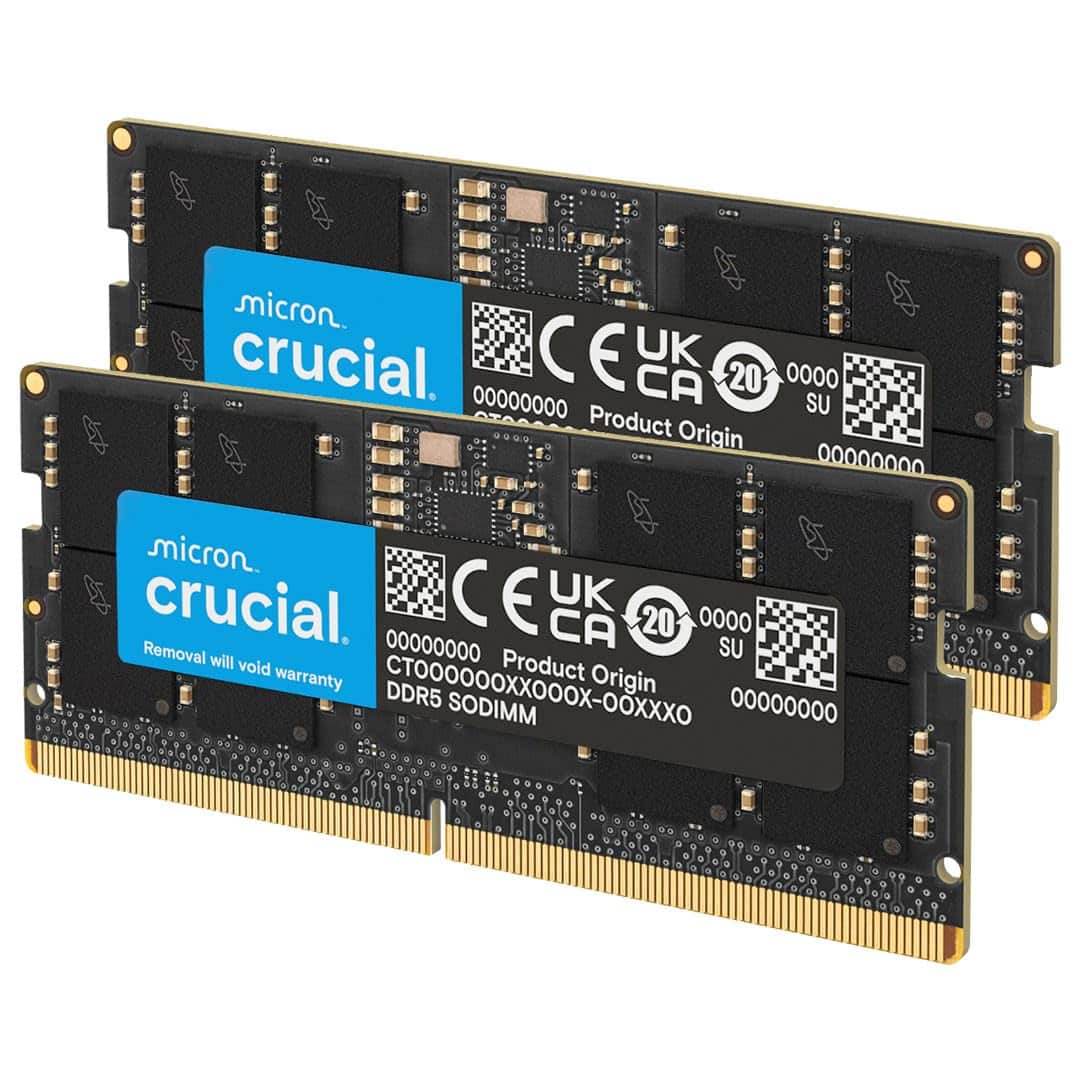
Crucial DDR5 RAM 32GB Kit (2x16GB) 5600MHz SODIMM, Laptop Computer Memory, Mini PC (or 5200MHz, 4800MHz) CL46 - CT2K16G56C46S5
£554.27 · Crucial
Frequently asked
5 questions01How much RAM do I actually need for the Patriot Viper Venom DDR5 32GB (2 x 16GB) 6400MT/s UDIMM Desktop Gaming Memory KIT - PVV532G640C32K's use case?+
For most gamers in 2025 and 2026, 32GB is the right amount. 16GB is increasingly tight as modern titles regularly use 12GB or more of system RAM when combined with background processes. 32GB gives you comfortable headroom for gaming, light to moderate content creation, and general multitasking. 64GB only becomes relevant for serious video production at high resolutions, 3D rendering, or running multiple virtual machines simultaneously. The 2x16GB configuration in this kit also leaves two DIMM slots free for a future upgrade if you ever do need 64GB.
02Will the Patriot Viper Venom DDR5 32GB (2 x 16GB) 6400MT/s UDIMM Desktop Gaming Memory KIT - PVV532G640C32K run at its rated speed with XMP or EXPO?+
On supported Intel DDR5 platforms (Z790, Z890), enabling XMP 3.0 in the BIOS should bring the kit up to 6400 MT/s without manual intervention. Patriot specifically notes testing across current Intel DDR5 platforms. On AMD AM5, the kit uses XMP rather than a native EXPO profile, which most AM5 boards can read but compatibility is less guaranteed than on Intel. A handful of owner reviews mention initial no-post situations that were resolved by clearing CMOS and updating the BIOS. Checking your board's QVL before purchasing is the most reliable way to confirm compatibility.
03Is the Patriot Viper Venom DDR5 32GB (2 x 16GB) 6400MT/s UDIMM Desktop Gaming Memory KIT - PVV532G640C32K compatible with my motherboard?+
This is a DDR5 UDIMM kit, compatible with consumer desktop motherboards that support DDR5. On Intel, that means 12th gen (Alder Lake) and later platforms with DDR5 support. On AMD, you need an AM5 board (Ryzen 7000 or 9000 series). It is not compatible with AM4 (DDR4 only) or server platforms requiring registered memory. The most important step is checking your specific motherboard's QVL (qualified vendor list) on the manufacturer's website to confirm this kit is listed. Do not mix this kit with different sticks; always run matched pairs from the same kit.
04Does faster RAM like the Patriot Viper Venom DDR5 32GB (2 x 16GB) 6400MT/s UDIMM Desktop Gaming Memory KIT - PVV532G640C32K actually improve gaming performance?+
Honestly, the gains are marginal for most gaming workloads. Real memory latency depends on both speed and CAS latency together, not just the MT/s figure. The difference between a 6000 MT/s kit and a 6400 MT/s kit in gaming is typically a few frames per second in the most memory-sensitive titles, and invisible in most others. Where faster memory makes a more meaningful difference is in bandwidth-heavy workloads like video editing, large file processing, or running virtual machines. For pure gaming, capacity (having 32GB rather than 16GB) matters far more than the speed tier once you're above the JEDEC baseline.
05What warranty and returns apply to the Patriot Viper Venom DDR5 32GB (2 x 16GB) 6400MT/s UDIMM Desktop Gaming Memory KIT - PVV532G640C32K?+
Amazon offers 30-day returns on most items. The manufacturer provides a limited lifetime warranty on this memory kit, which covers manufacturing defects for the life of the product. You're also covered by Amazon's A-to-Z guarantee for purchases made through Amazon. Owner reviews suggest Patriot's RMA process is functional, with replacement units arriving in reasonable timeframes for the majority of reported cases.