Most gaming chairs feel great for the first fortnight. The foam is fresh, the fabric is clean, and you're telling yourself you finally made the right call. Then three months pass. The seat cushion compresses. The lumbar pillow migrates. The armrests wobble. What matters, ergonomically speaking, isn't the out-of-box experience but the material properties, adjustment range, and structural engineering that determine whether a chair is still doing its job six months in. That's the lens worth applying to the Corsair T3 RUSH gaming chair UK 2026.
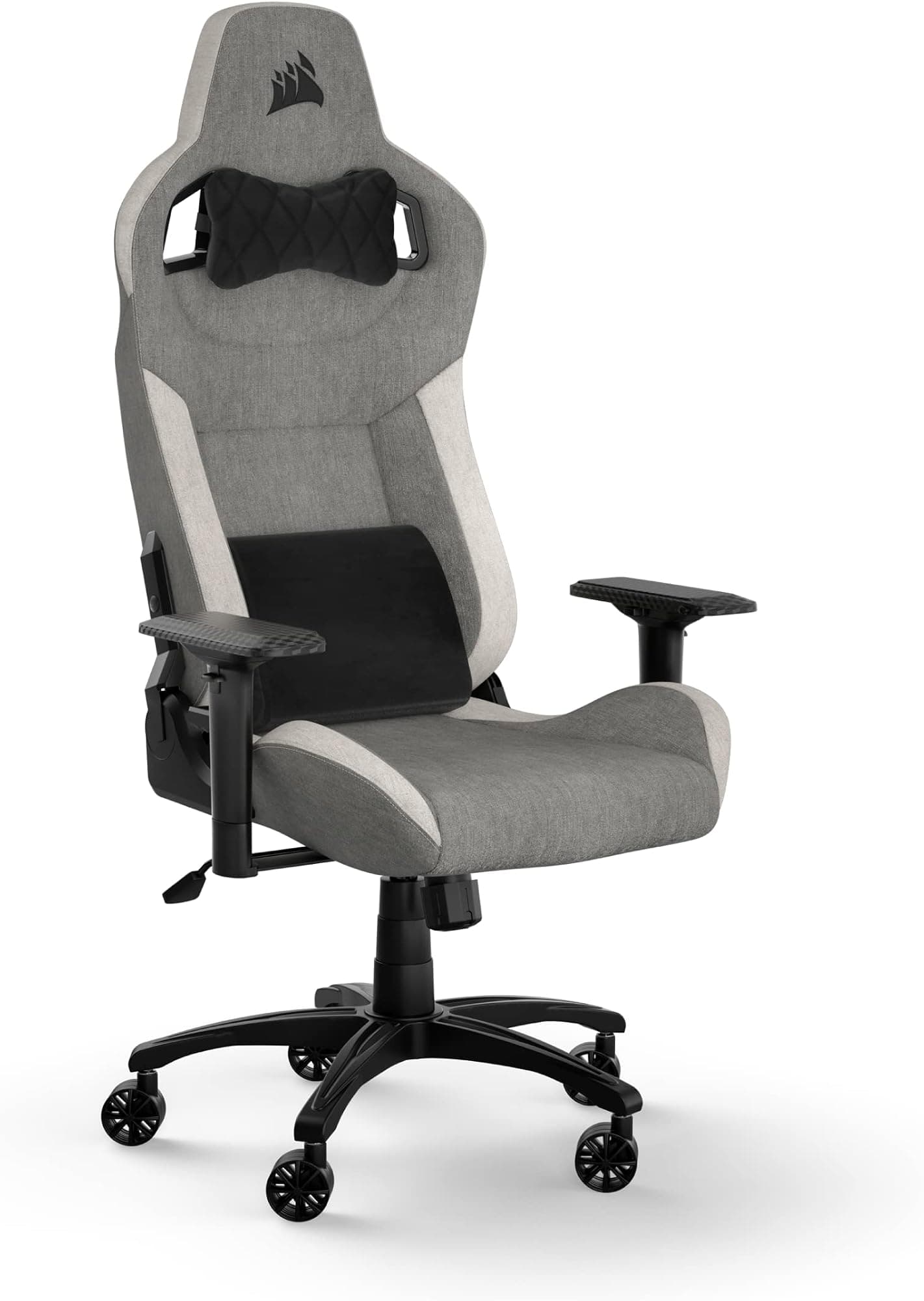
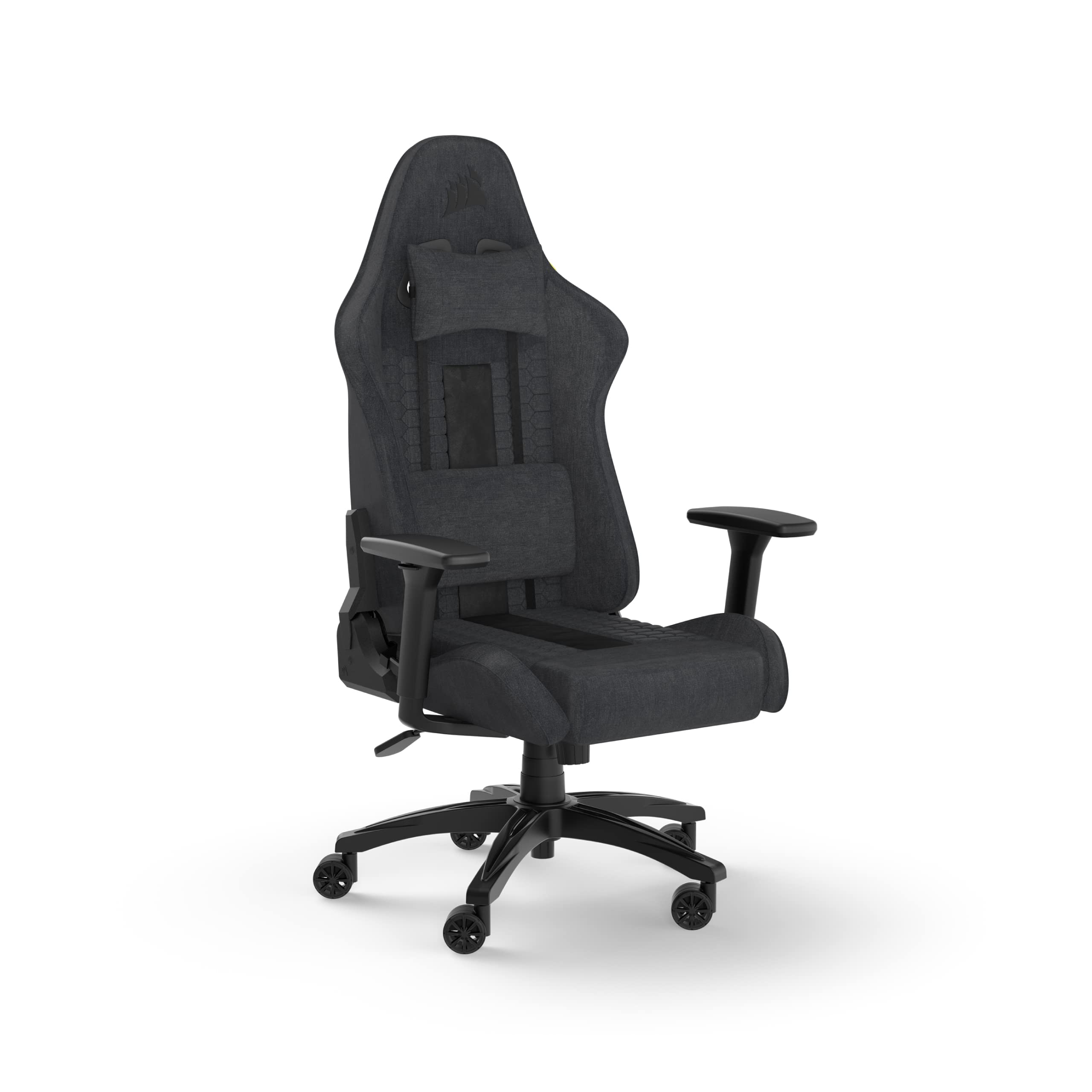
The T3 RUSH sits in Corsair's mid-tier lineup, sitting above the entry-level T1 RACE and below the full-ergonomic TC200. The headline differentiator is the fabric exterior. Most gaming chairs at this price point still default to PVC leatherette, which looks slick in product photos and becomes a sweaty, cracking nightmare after a year. Corsair went with a soft woven fabric cover here, and that single decision shapes almost everything else about this chair's long-term comfort story. Pair that with a memory foam lumbar cushion, a padded neck pillow, and 4D armrests, and on paper you've got a proper upper mid-range package.
With 1,202 owner reviews averaging ★★★★☆ (4.2) on Amazon, there's a meaningful body of real-world feedback to work with. That's not a handful of early adopters being generous. That's enough data to spot patterns, both good and bad. So let's look at what the specs actually promise, what owners actually report, and whether this chair deserves your money at upper mid-range pricing.
Core Specifications
The T3 RUSH is built around a steel frame, which is the right answer at this price. Corsair specifies a maximum weight capacity of 120 kg, which is fairly standard for the category. Recommended user height sits in the 170 cm to 195 cm range, so it's pitched at average to tall adults rather than shorter users. The seat height adjusts from approximately 42 cm to 52 cm from the floor, which gives you a 10 cm range of vertical adjustment. That's a decent spread, though it won't suit shorter users who need to sit lower.
Recline goes from 90 degrees all the way to 165 degrees. That's nearly flat, which is genuinely useful for breaks rather than active work posture. The tilt mechanism includes a tension adjustment knob, so you can tune the resistance to your body weight rather than fighting a spring calibrated for someone heavier or lighter. The armrests are 4D, meaning they adjust in height, width, depth, and pivot angle. On paper that's one of the better armrest specs in this price bracket. The seat dimensions are approximately 54 cm wide and 48 cm deep, and the chair ships with both the memory foam lumbar cushion and the padded neck pillow included.
The base is a five-star nylon base with 60 mm caster wheels. Corsair doesn't specify the gas lift class in the marketing copy, but owner reports and the chair's weight capacity suggest a Class 4 lift, which is the standard for chairs in this weight range. The overall chair weight comes in at around 25 kg, which is relevant for assembly and for anyone who moves their setup around regularly. Below is the full spec breakdown.
| Specification | Detail |
|---|---|
| Frame Material | Steel |
| Cover Material | Soft woven fabric |
| Weight Capacity | 120 kg |
| Recommended Height | 170 cm to 195 cm |
| Seat Height Range | 42 cm to 52 cm |
| Recline Range | 90 to 165 degrees |
| Armrests | 4D (height, width, depth, pivot) |
| Seat Width | Approx. 54 cm |
| Seat Depth | Approx. 48 cm |
| Lumbar Support | Memory foam cushion (adjustable position) |
| Neck Support | Padded neck pillow (adjustable position) |
| Base | Five-star nylon |
| Casters | 60 mm |
| Chair Weight | Approx. 25 kg |
| Colour (this listing) | Charcoal |
| Price | £258.59 |

Ergonomics
The T3 RUSH takes the standard gaming-chair approach to lumbar support: a detachable memory foam cushion that straps to the backrest, rather than a built-in lumbar mechanism. This is worth being honest about. Proper office ergonomics chairs, like those from Herman Miller or equivalent, build lumbar adjustment directly into the backrest structure so the support moves with you. A cushion that straps on doesn't do that. What it does do is let you position the support exactly where your lumbar curve sits, which is actually useful if the fixed built-in lumbar on a cheaper chair sits in the wrong place for your spine.
The memory foam material matters here. Standard polyurethane foam compresses and loses its shape over time, which is why so many gaming chair cushions feel flat after six months. Memory foam is more resilient under sustained load because it distributes pressure more evenly rather than compressing to a hard base. Owner reviews on this chair broadly support that the lumbar cushion holds its shape better than expected, with several longer-term reviewers noting it still provides meaningful support after extended use. That's not a guarantee of longevity, but it's a better sign than the flat-foam horror stories you see on cheaper chairs.
The neck pillow is a padded cushion on an adjustable strap, positioned at the top of the high backrest. For taller users in the 180 cm to 195 cm range, this lands roughly where a neck pillow should. Shorter users in the lower end of the recommended range may find it sits too high for comfortable contact. The backrest itself is tall enough to support the full spine, which is the baseline requirement. The racing-style side bolsters on the backrest provide lateral support, though they're more pronounced than on a flat-back office chair. If you have broader shoulders, check the internal width of the backrest before buying, as bolsters can press awkwardly on wider frames.
Size and Fit
Corsair targets the 170 cm to 195 cm height range, and that's a bracket you should take seriously rather than treat as a vague guideline. The seat depth of approximately 48 cm is the key measurement. Proper seated posture requires your back to contact the backrest while your knees bend at roughly 90 degrees, with a few centimetres of clearance between the seat edge and the back of your knees. If you're shorter than 170 cm, the seat depth may be too long, pushing your lower back away from the lumbar cushion to get your knees in the right position. That defeats the purpose of the lumbar support entirely.
The 120 kg weight limit is realistic for the steel frame and Class 4 gas lift. Users close to that limit should be aware that seat foam compression will be more pronounced over time, which affects long-term comfort more than structural safety. The seat width at around 54 cm is generous enough for most builds, but the side bolsters on the seat pan do narrow the effective hip width. If you're carrying broader hips, sit in something similar before committing, because the bolsters can create pressure points on the outer thighs during long sessions. Several owner reviews specifically mention this, particularly from users who describe themselves as broader-built.
The seat-to-floor height range of 42 cm to 52 cm means your desk height needs to accommodate the chair's range. Standard desks sit at around 72 cm to 75 cm, and at the chair's maximum height of 52 cm, you'd want your desk at the upper end of that range to maintain a comfortable elbow angle. If you're using a fixed-height desk, check the maths before buying. At the lower end of 42 cm, the chair works well for users whose feet need to sit flat on the floor at a lower position. The footprint is fairly standard for the category, so it won't dominate a smaller room more than any other full-size gaming chair.
Armrests
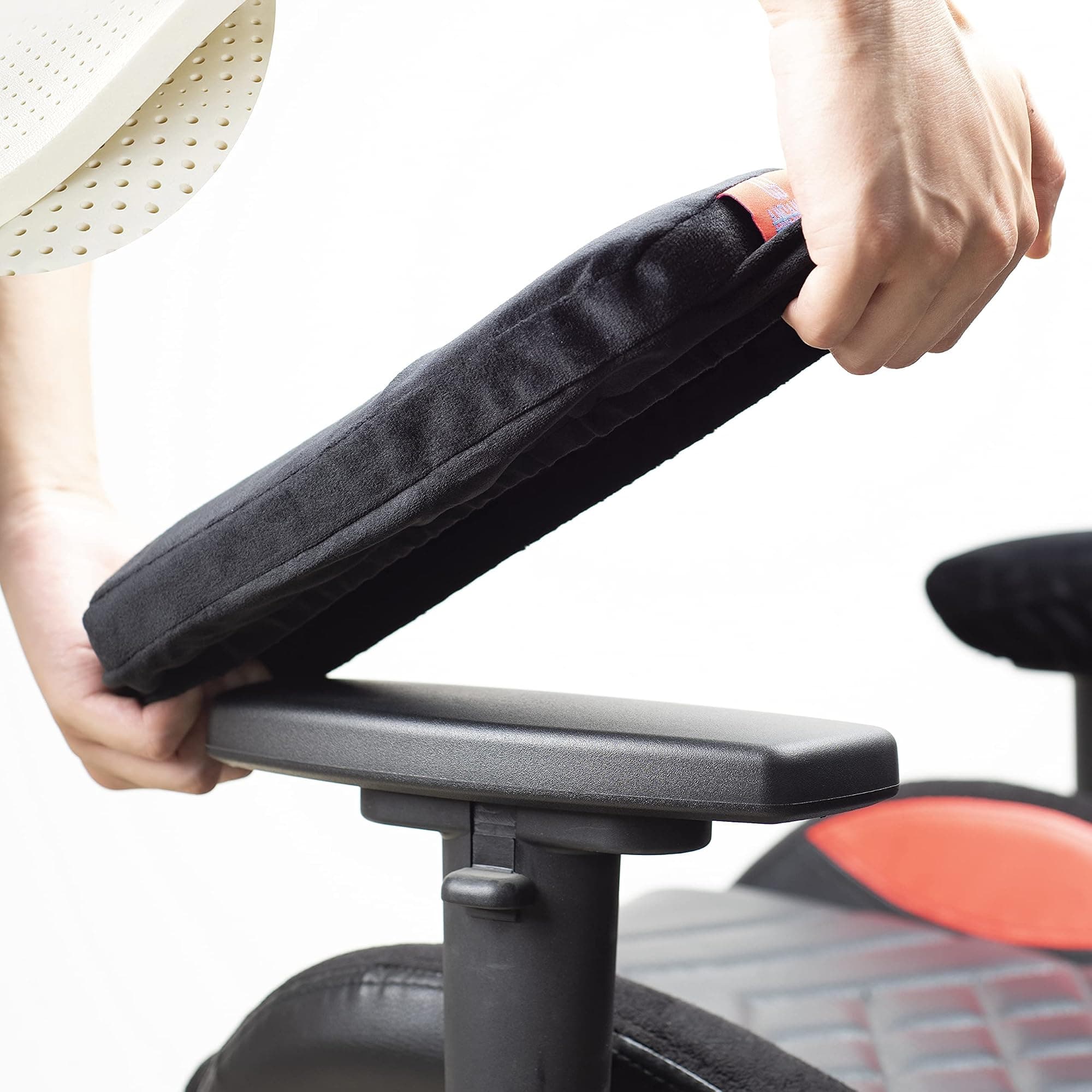
4D armrests are one of those specs that sounds impressive and can be genuinely useful, or can be implemented so poorly that the adjustment range is nearly useless. The T3 RUSH's armrests adjust in four axes: height, forward-back depth, inward-outward width, and pivot angle. Height adjustment is the most important for wrist and shoulder health, and the range here is sufficient to position your forearms parallel to the desk surface at most standard desk heights. Width adjustment lets you bring the armrests in close to your body, which reduces shoulder abduction and is genuinely good for long-term shoulder health.
The pivot function lets you angle the pad surface to match your natural forearm angle, which is a nice touch. Most people's forearms don't sit perfectly parallel to their desk edge, so being able to rotate the pad slightly inward or outward reduces the micro-tension in your wrist and forearm over hours of use. Owner feedback on the armrests is generally positive, with most reviewers finding the adjustment range useful rather than gimmicky. The padding quality gets decent marks, described as firm enough to not bottom out but not so hard that it creates pressure points.
One recurring note in owner reviews is that the armrest adjustment mechanisms, particularly the width and depth settings, can loosen slightly over time. This is a common issue across gaming chairs in this price bracket and isn't unique to Corsair. The armrests don't fall out of position dramatically, but some owners report needing to re-tighten adjustment bolts after a few months of heavy use. It's worth checking the adjustment hardware periodically and tightening as needed. Not a dealbreaker, but worth knowing rather than being surprised by it six months in.
Comfort Over Long Sessions
This is where the fabric exterior earns its keep. Leatherette gaming chairs trap heat against your back and thighs during long sessions, and in a UK summer or a warm room, that becomes genuinely unpleasant within an hour or two. Fabric breathes. Not as well as mesh, but meaningfully better than PVC. Owner reviews consistently highlight the fabric as a comfort advantage during extended use, with multiple reviewers specifically comparing it favourably to their previous leatherette chairs. The difference is real and it compounds over a long session.
The seat cushion foam is where most gaming chairs eventually disappoint, and the T3 RUSH is not immune to this. The foam is denser than budget-tier chairs, and the memory foam lumbar cushion adds meaningful lower back support for the first few hours. But owner reviews from people who've had the chair for six months or more do note some compression in the seat cushion, particularly in the centre where most body weight concentrates. This is physics rather than a manufacturing defect. The question is whether the compression is gradual and manageable or rapid and severe. Based on the review pattern here, it's the former. The chair doesn't collapse; it settles.
Pressure points are the other long-session concern. The seat bolsters can create lateral pressure on wider hips during extended sitting, as mentioned earlier. The backrest bolsters are less of an issue for most users because the back naturally shifts position more than the seated pelvis does. The neck pillow gets mixed reviews for long sessions specifically: some owners find it supportive for gaming posture, others remove it entirely because it pushes their head forward during upright work posture. The ability to remove it is the right design choice. If it works for you, great. If it doesn't, it's not in the way.
Materials and Breathability
The soft woven fabric cover is the T3 RUSH's most distinctive material choice and the one that most directly affects day-to-day comfort. Corsair doesn't publish the specific fabric composition in their marketing materials, but the texture and performance described by owners is consistent with a polyester-blend woven fabric, which is the standard for fabric gaming chairs. Polyester weaves are durable, relatively easy to clean with a damp cloth, and meaningfully more breathable than PVC leatherette. They won't match the airflow of a full mesh back like you'd find on a proper ergonomic office chair, but for a gaming chair with a padded backrest, it's the right material call.
Durability of fabric covers is a legitimate concern. Leatherette chairs crack and peel, which looks terrible but happens slowly. Fabric chairs can pill, snag, or wear thin at high-contact points like the seat front edge and armrest pads. Owner reviews on the T3 RUSH don't flag significant fabric deterioration at normal use timelines, which is encouraging. The charcoal colourway is also a practical choice: it doesn't show wear, pet hair, or general grime as obviously as lighter colourways, and it doesn't attract the same level of fading from light exposure that darker solid colours sometimes do.
The armrest pads are a different material from the main fabric cover, using a denser foam pad with a smooth fabric top. These do show wear faster than the seat and backrest in owner reports, which is expected given the friction they experience. The neck pillow uses the same soft fabric as the main chair body, and it holds up well based on available feedback. Overall, the material package is appropriate for the price point and genuinely better suited to long sessions than the leatherette alternative. If you run warm, sit for long periods, or just find leatherette chairs unpleasant, the fabric cover is a meaningful upgrade worth paying for.

Tilt and Recline
The 90 to 165 degree recline range is one of the T3 RUSH's stronger specs. At 90 degrees you're in upright work posture. At 165 degrees you're nearly horizontal, which is genuinely useful for breaks, watching films, or just decompressing your spine after a long session. The mechanism uses a standard ratchet-style recline with a lever on the side of the seat, and it locks at multiple positions across that range rather than just at the extremes. Owner reports describe the recline mechanism as smooth and the lock as reliable, with no significant reports of the position slipping under load.
The tilt tension knob is a feature that's easy to overlook but genuinely important for comfort. Without tension adjustment, a chair's tilt resistance is calibrated for a specific body weight, and if you're lighter or heavier than that target, the chair either tips back too easily or barely moves at all. The T3 RUSH's tension knob lets you dial in the right resistance for your weight, which means the rocking motion (if you use it) feels natural rather than fighting you. Owners who mention the tilt function generally find it useful for passive rocking during less intensive tasks.
The tilt lock lets you fix the chair in a specific recline position, which is the mode most people will use for active gaming or work. At full lock the chair is stable and doesn't shift under normal use. The 165 degree maximum recline is enough for a comfortable rest position but doesn't go fully flat, so it's not a substitute for a proper recliner if that's what you're after. For gaming and work use, the recline range is more than adequate. The mechanism feels solid based on owner feedback, and there are no widespread reports of the recline system failing or becoming stiff over time.
Build Quality
The steel frame is the right foundation for a chair at this price. Aluminium frames are lighter and look more premium, but for a gaming chair that lives under a desk and takes sustained body weight load, steel's rigidity and weld strength matter more than weight savings. Corsair doesn't publish the specific steel gauge, but the chair's 120 kg weight capacity and the general absence of structural failure reports in the owner reviews suggest the frame is appropriately specified. The chair doesn't creak or flex under normal use, which is the practical test that matters.
The five-star nylon base is the standard choice at this price point. Aluminium bases are stiffer and more durable under heavy use, but nylon bases are entirely adequate for the weight capacity specified and are significantly less expensive to produce. The 60 mm casters are a reasonable size for smooth rolling on hard floors. Owner reports don't flag caster quality as a concern, which is notable because cheap casters are a common failure point on budget gaming chairs. The gas lift, assumed to be Class 4 based on the weight rating and performance reports, handles the height adjustment smoothly with no reports of slow sinking, which is the key gas lift failure mode to watch for.
The overall build quality impression from owner reviews is that this is a chair that feels solid without feeling exceptional. The bolts and adjustment hardware are functional. The stitching on the fabric cover is consistent and doesn't show early signs of unravelling at the seams in the review timeframes available. A few owners mention that some plastic components, particularly around the armrest adjustment mechanisms, feel slightly less premium than the rest of the chair. That's a fair observation. Corsair has clearly put the budget where it matters most, which is the frame, the cover material, and the foam, and the plastic trim is where the cost-saving shows.
Assembly Experience
Owner reports on assembly are broadly positive, with most people describing the process as straightforward and achievable solo. The component count is standard for a gaming chair: base, gas lift, seat mechanism, backrest, armrests, lumbar cushion, and neck pillow. The packaging from Corsair is described as well-organised, with components separated and protected adequately for transit. The instructions are illustrated rather than text-heavy, which is the right approach for assembly guides of this type, and owners generally find them clear enough to follow without needing to look up supplementary guidance.
Assembly time reported by owners clusters around 30 to 45 minutes for a single person. That's on the faster end for a gaming chair of this size, which suggests the component tolerances are good and the parts go together without forcing. The main assembly steps are attaching the casters to the base, inserting the gas lift, mounting the seat mechanism to the seat, attaching the backrest to the seat mechanism, and fitting the armrests. The backrest attachment is the heaviest and most awkward step for a solo assembler, at around 25 kg total chair weight. Having a second person for that step makes it easier, but owners report managing it alone.
The tools required are minimal. Corsair includes an Allen key in the box, and that's essentially all you need for the bolted connections. No power tools, no specialist hardware. A few owners mention that some bolts required more torque than the included Allen key comfortably delivers, and they switched to a longer-handled tool for those connections. Worth having a proper Allen key set to hand rather than relying solely on the included tool. The lumbar cushion and neck pillow attach via adjustable straps and require no tools at all. Overall, assembly is not a barrier to purchase for most people.
How It Compares
The T3 RUSH's main competition at upper mid-range pricing comes from the Secretlab Titan Evo and the Noblechairs HERO. These are the chairs most buyers will be cross-shopping, and the comparison is instructive. The Secretlab Titan Evo is the more expensive option, with a built-in magnetic memory foam lumbar adjustment system that's genuinely superior to the T3 RUSH's cushion approach. The Titan Evo also offers a broader range of cover materials including their SoftWeave fabric, which competes directly with the T3 RUSH's fabric cover. If budget allows, the Titan Evo's integrated lumbar is worth the premium for people who prioritise that feature.
The Noblechairs HERO sits closer to the T3 RUSH in price and takes a different approach: it uses cold foam rather than memory foam, a leatherette cover as standard (though fabric versions exist), and a built-in lumbar support cushion rather than a detachable one. The HERO is a heavier, more substantial chair with a higher weight capacity and a slightly more office-chair feel to its ergonomics. For users who prefer a firmer seat and find memory foam too soft, the HERO is worth considering. But for breathability and fabric cover quality, the T3 RUSH has the advantage.
Below the T3 RUSH in price, you're looking at chairs like the GT Racing GT099 and similar budget options that use standard polyurethane foam, leatherette covers, and 3D or 2D armrests. The gap between those chairs and the T3 RUSH is meaningful in terms of long-term comfort, material quality, and armrest adjustability. The T3 RUSH justifies its upper mid-range positioning against that competition. The question is whether it justifies the step up from those chairs for your specific use case and budget.
| Feature | Corsair T3 RUSH | Secretlab Titan Evo | Noblechairs HERO |
|---|---|---|---|
| Cover Material | Soft woven fabric | SoftWeave fabric / leatherette / NAPA | Leatherette (fabric available) |
| Lumbar Support | Detachable memory foam cushion | Integrated magnetic memory foam | Built-in cushion |
| Armrests | 4D | 4D | 4D |
| Recline | 90 to 165 degrees | 85 to 165 degrees | 90 to 135 degrees |
| Weight Capacity | 120 kg | 130 kg | 150 kg |
| Frame | Steel | Steel | Steel |
| Price Tier | Upper mid-range | Premium | Upper mid-range to premium |
| Amazon Rating | ★★★★☆ (4.2) (151) | Sold direct primarily | Varies by retailer |

Final Verdict
The Corsair T3 RUSH gaming chair UK 2026 is a well-specified upper mid-range gaming chair that gets the important things right. The fabric cover is the standout feature and the primary reason to choose this over the leatherette competition at similar prices. It breathes better, it feels better against skin during long sessions, and it doesn't carry the peeling-and-cracking risk that plagues PVC leatherette chairs after a year of regular use. The memory foam lumbar cushion is a genuine improvement over the standard foam cushions found on cheaper chairs, and the 4D armrests give you enough adjustment range to actually dial in a comfortable position rather than settling for whatever the factory preset happens to be.
The compromises are real but predictable for the category. The detachable lumbar cushion is less ergonomically sophisticated than an integrated lumbar mechanism. The nylon base and some plastic trim components feel slightly below the quality of the fabric and frame. The seat cushion will compress over time, as all foam does. And users shorter than 170 cm or significantly broader than average will find the size and bolster geometry a poor match for their body. None of these are hidden flaws. They're the honest trade-offs of a chair at this price point that's chosen to put its money into the fabric cover and memory foam rather than into a premium base or integrated lumbar engineering.
For the target user, which is someone in the 170 cm to 195 cm range who spends four to eight hours a day at a desk, runs warm, and wants a meaningful upgrade from budget gaming chair territory without spending premium money on a Secretlab or Herman Miller, the T3 RUSH makes a solid case. The 4.5 star average across 151 is not a fluke. This is a chair that delivers on its core promise. It's not perfect. But it's proper.
Corsair's official product page lists the full specification and available colourways if you want to verify the details before buying. At upper mid-range pricing, this chair competes honestly and wins on breathability and fabric quality against most of its direct rivals. Editorial score: 7.5 out of 10.
What works. What doesn’t.
5 + 4What we liked5 reasons
- Soft woven fabric cover breathes far better than leatherette alternatives at this price
- Memory foam lumbar cushion holds its shape better than standard foam over time
- 4D armrests offer genuinely useful adjustment range including pivot angle
- 165 degree recline with smooth, reliable locking mechanism
- Strong 4.5 star average across 1,202 owner reviews
Where it falls4 reasons
- Detachable lumbar cushion is less ergonomically effective than an integrated mechanism
- Seat bolsters can create pressure points for broader-hipped users
- Nylon base and some plastic trim feel slightly below the fabric and frame quality
- Seat foam compression reported by longer-term owners at heavier use
Full specifications
7 attributes| Material | fabric |
|---|---|
| Lumbar support | memory foam cushion |
| Armrest type | 4D |
| Footrest | false |
| Headrest | true |
| MAX weight KG | 120 |
| Recline angle MAX | 160 |
If this isn’t right for you
2 options 7.5 / 10
Corsair T3 RUSH Fabric Gaming Chair (2023) – Racing-Inspired Design – Soft Fabric Exterior – Padded Neck Cushion – Memory Foam Lumbar Support – Adjustable Seat Height – Grey & White
£294.62 · Corsair
 7.5 / 10
Corsair TC100 RELAXED Gaming Chair - Fabric - Racing-Inspired Design - Lumbar Pillow - Detachable Memory Foam Neck Pillow - Adjustable Seat Height - Adjustable Armrests - Grey & Black
£196.00 · Corsair
Frequently asked
5 questions01Is the Corsair T3 RUSH Fabric Gaming Chair (2023), Racing-Inspired Design, Soft Fabric Exterior, Padded Neck Cushion, Memory Foam Lumbar Support, Adjustable Seat Height, Charcoal comfortable for long gaming sessions?+
For users in the recommended 170 cm to 195 cm height range, the T3 RUSH holds up well across four to eight hour sessions. The fabric cover breathes better than leatherette, reducing heat build-up significantly. The memory foam lumbar cushion provides meaningful lower back support, though some seat foam compression is reported by owners after several months of heavy use. Broader-hipped users may find the seat bolsters create pressure points over longer sessions.
02What height and weight range is the Corsair T3 RUSH Fabric Gaming Chair (2023), Racing-Inspired Design, Soft Fabric Exterior, Padded Neck Cushion, Memory Foam Lumbar Support, Adjustable Seat Height, Charcoal suitable for?+
Corsair recommends the T3 RUSH for users between 170 cm and 195 cm tall, with a maximum weight capacity of 120 kg. The seat depth of approximately 48 cm means shorter users may struggle to maintain proper lumbar contact with the backrest. The seat height adjusts from 42 cm to 52 cm from the floor, which suits most standard desk heights. Users significantly outside the recommended height range or carrying broader hip widths should consider alternative models.
03Does the Corsair T3 RUSH Fabric Gaming Chair (2023), Racing-Inspired Design, Soft Fabric Exterior, Padded Neck Cushion, Memory Foam Lumbar Support, Adjustable Seat Height, Charcoal have good lumbar support?+
The T3 RUSH uses a detachable memory foam lumbar cushion that attaches via an adjustable strap, allowing you to position it at the right height for your lumbar curve. Memory foam distributes pressure more evenly than standard polyurethane foam and holds its shape better over time. Owner reviews generally rate the lumbar cushion positively. However, it is not an integrated lumbar mechanism, so it does not move dynamically with your posture the way built-in lumbar systems on premium ergonomic chairs do.
04Is the Corsair T3 RUSH Fabric Gaming Chair (2023), Racing-Inspired Design, Soft Fabric Exterior, Padded Neck Cushion, Memory Foam Lumbar Support, Adjustable Seat Height, Charcoal difficult to assemble?+
Assembly is rated as straightforward by most owners, with an average completion time of 30 to 45 minutes for a single person. The instructions are illustrated and clear, and Corsair includes an Allen key in the box. The main challenge is attaching the backrest solo due to the chair's weight, and having a second person for that step makes it easier. A longer-handled Allen key set is useful as some bolts require more torque than the included tool comfortably delivers.
05What warranty applies to the Corsair T3 RUSH Fabric Gaming Chair (2023), Racing-Inspired Design, Soft Fabric Exterior, Padded Neck Cushion, Memory Foam Lumbar Support, Adjustable Seat Height, Charcoal?+
Amazon offers 30-day returns on eligible orders. Corsair typically provides a 2-year warranty on their gaming chairs, covering manufacturing defects. Check the Corsair UK support pages for the current warranty terms applicable to your purchase, as these can vary by region and product generation.