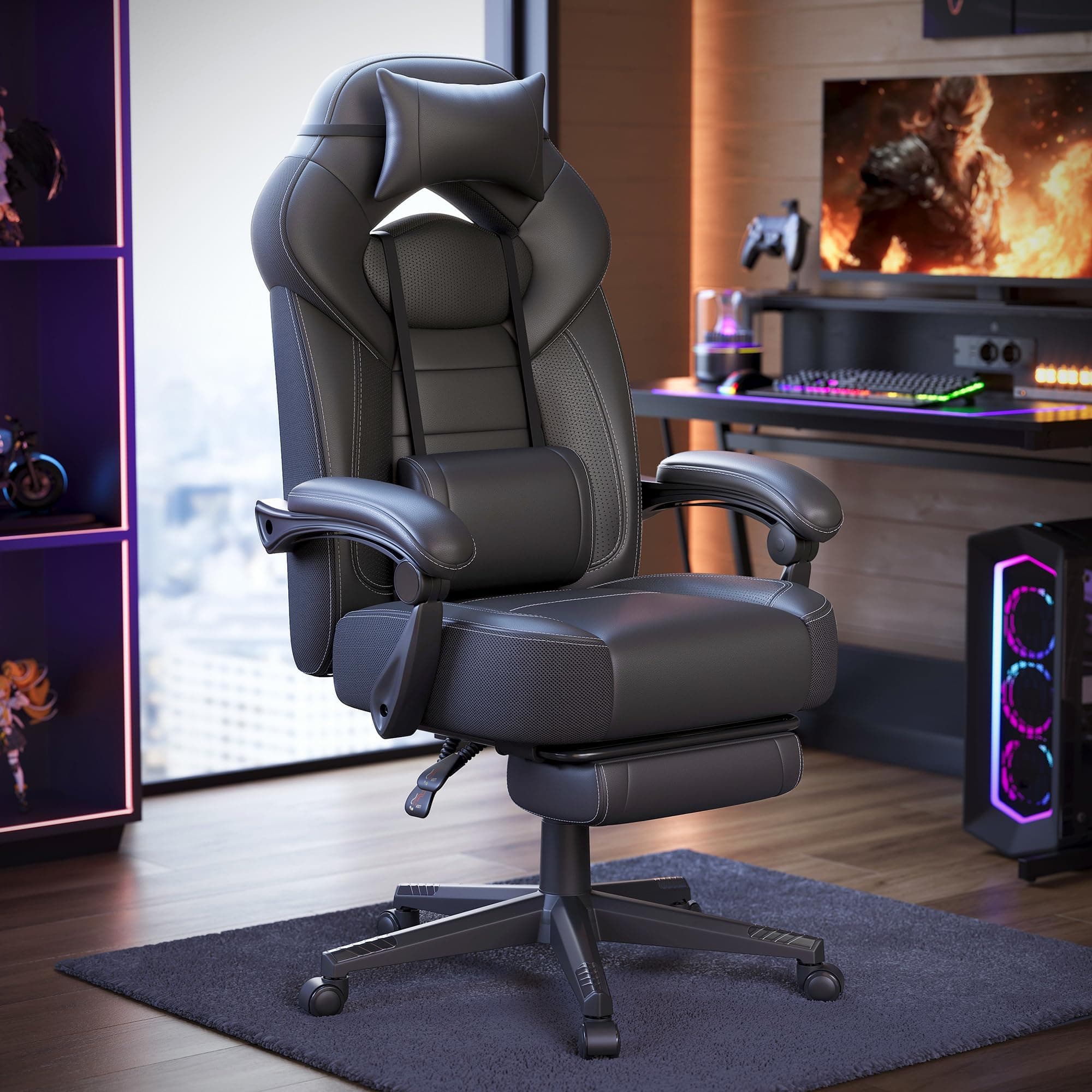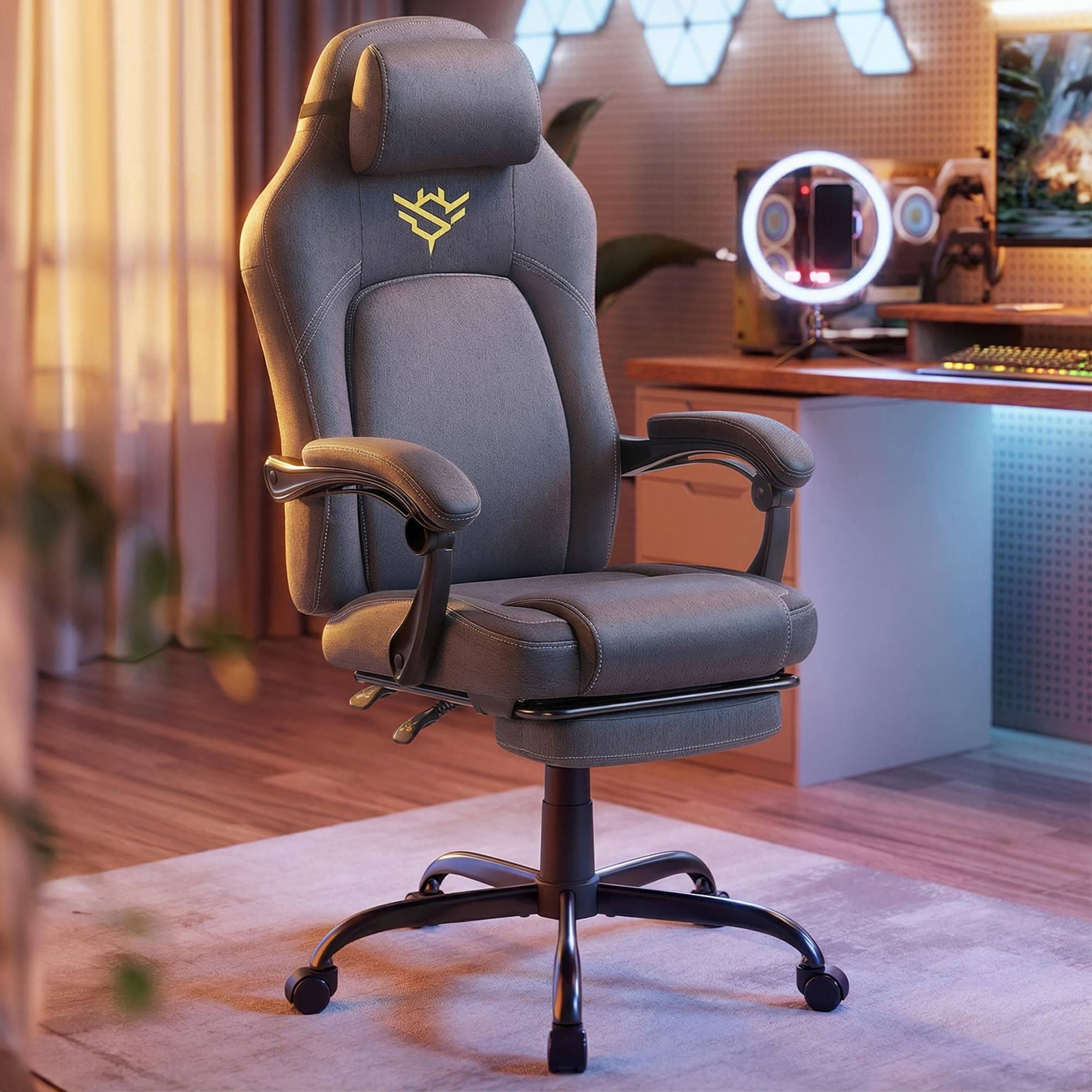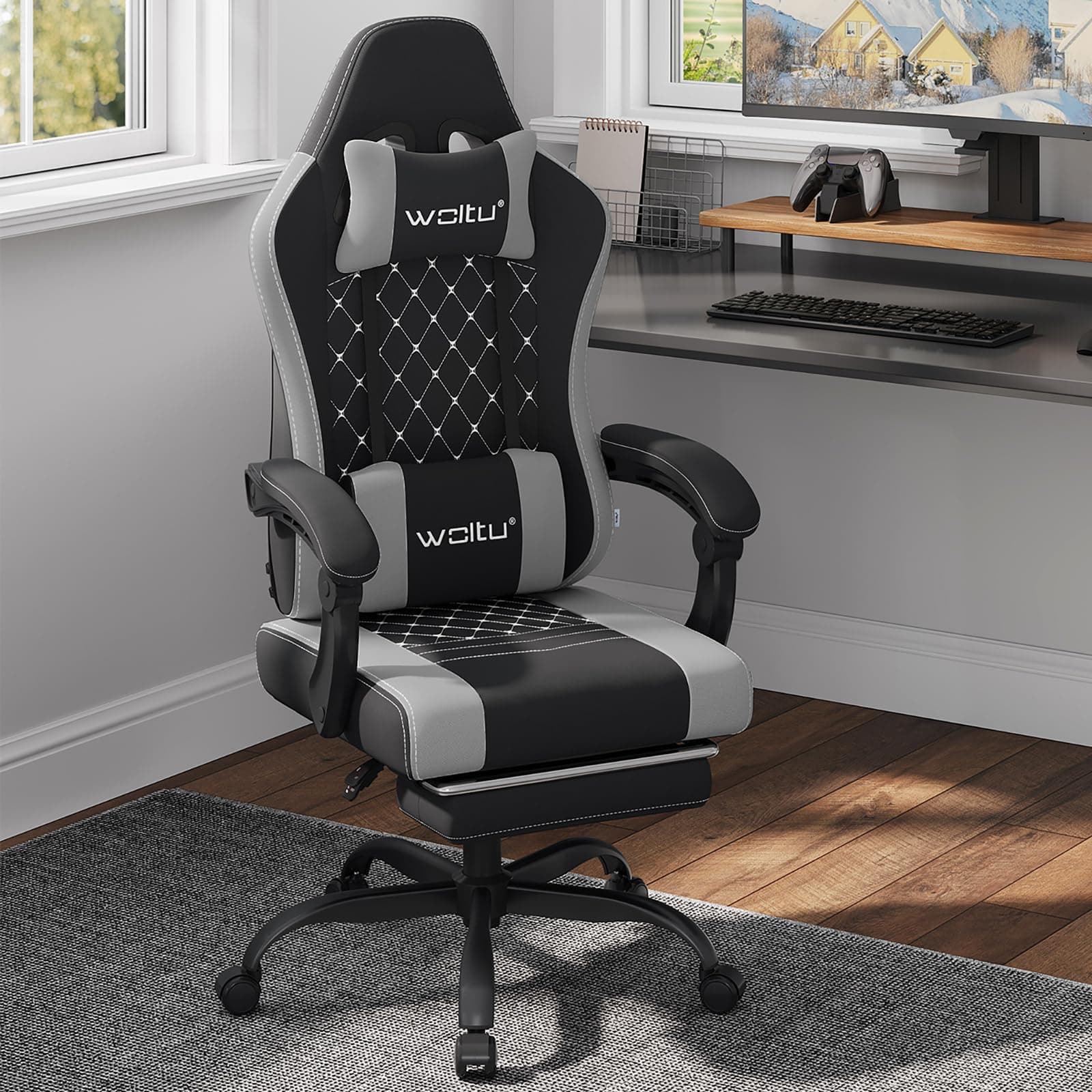
Comfort ratings at the point of purchase are almost meaningless for a gaming chair. What actually tells you something is how owners describe it after six months of daily use, once the initial impression has worn off and the foam has done whatever foam is going to do. The Corsair T3 RUSH Fabric Gaming Chair sits in the upper mid-range bracket, priced where you'd reasonably expect decent materials and real ergonomic thought rather than just a racing livery slapped on a budget frame. Based on over a hundred owner reviews with a good overall rating, plus a close look at the spec sheet, the picture is largely positive but not without caveats.
The short verdict: the T3 RUSH is a genuinely good chair for medium-build users who prioritise breathability and clean aesthetics over maximum adjustability. The fabric cover is the headline feature, and it earns its place. The memory foam lumbar is a step up from the strap-on cushions most rivals use at this price. But the armrests are 4D in name only, the recline range is conservative, and if you're tall or broad, the seat dimensions will frustrate you faster than the price tag.
This is a chair that rewards the right buyer and disappoints the wrong one. The spec sheet and owner feedback together paint a clear enough picture to know which you are.
Core Specifications
The T3 RUSH is built around a steel frame, which is the right call at this price point. Corsair rates it to 120 kg, which is a fairly standard ceiling for this category. The seat height adjusts across a 50 mm to 60 mm range via a Class 4 gas lift, putting the seat pan between roughly 430 mm and 530 mm from the floor depending on configuration. That range suits users from around 160 cm to 190 cm in height, though the sweet spot is more like 165 cm to 185 cm before the proportions start to feel off. The backrest reclines from 90 degrees to 165 degrees, which sounds generous until you compare it to chairs at this price that hit 180 degrees flat.
The cover material is the defining spec here. Rather than the faux leather that dominates this price tier, Corsair has gone with a soft fabric exterior. It's a microfibre-style weave that owners consistently describe as noticeably cooler than PU leather in warm rooms. The seat cushion uses high-density foam, and the lumbar support is a fixed memory foam unit integrated into the backrest rather than a separate pillow. The neck cushion is a separate padded piece that attaches via an elastic strap. The armrests are described as 4D, meaning they adjust on four axes: height, width, depth, and pivot angle.
The base is a five-star nylon unit with dual-wheel castors. Nylon bases are lighter than aluminium but flex slightly more under load. The castors are designed to work on hard floors without scratching, though several owners on hard flooring note the wheels feel a touch stiff initially and loosen up after a few weeks. The chair weighs approximately 22 kg assembled, which is typical for a steel-framed chair in this class.
| Specification | Detail |
|---|---|
| Weight Capacity | 120 kg |
| Recommended Height | 160 cm to 190 cm |
| Seat Height Range | Approx. 430 mm to 530 mm |
| Recline Range | 90 to 165 degrees |
| Armrests | 4D (height, width, depth, pivot) |
| Lumbar Support | Integrated memory foam |
| Neck Cushion | Padded, strap-attached |
| Cover Material | Soft fabric (microfibre-style) |
| Frame | Steel |
| Gas Lift Class | Class 4 |
| Base Material | Nylon five-star |
| Assembled Weight | Approx. 22 kg |
| Colour (this variant) | Grey and White |
| Price | £239.99 · Details |
| Rating | ★★★★☆ (4.2) (153 reviews) |

Ergonomics
The integrated memory foam lumbar is the ergonomic headline and it genuinely matters. Most gaming chairs at this price attach a separate cushion to the backrest with an elastic strap. That approach works initially, but the cushion migrates, the strap stretches, and within a few months you're either constantly repositioning it or you've thrown it in a cupboard. Corsair's decision to build the lumbar support into the backrest itself removes that problem entirely. The foam is contoured to sit in the lumbar curve, and because it's fixed, it's actually there when you lean back rather than having slipped three inches downward while you weren't paying attention.
The memory foam composition means it responds to body heat and conforms gradually rather than pushing back with a fixed resistance. For most users this feels more natural than a rigid lumbar. The trade-off is that you can't adjust the lumbar's vertical position. If your lumbar curve sits higher or lower than the chair's fixed point, you're stuck. Taller users in particular report the lumbar landing too low on the back, which is a real limitation and something Corsair should address in a future revision. A height-adjustable lumbar at this price exists on some competitors, so the fixed position is a genuine compromise.
The neck cushion is a padded pillow on an elastic strap. It's fine. It does the job for users who recline past about 120 degrees, but in an upright working position it tends to push the head slightly forward rather than supporting the cervical curve. That's a design problem inherent to strap-attached neck pillows on racing-style chairs, not specific to Corsair. If you sit primarily upright, you'll likely remove it after a week. Several owners say exactly that in their reviews, and it's an honest reflection of how these pillows actually work in practice. The backrest itself has a slight curve that provides some passive upper-back support even without the pillow, which helps.
Size and Fit
The T3 RUSH is a medium-build chair. The seat pan is approximately 510 mm wide and 510 mm deep. For users with a hip width under about 450 mm, that's comfortable. For broader users, the bolstered sides of the racing-style seat will create pressure points on the outer thighs. This is the fundamental tension in racing-bucket design applied to office use: the bolsters that look sporty actively work against comfort for anyone who doesn't fit neatly inside them. Corsair hasn't solved that problem here, and they haven't tried to pretend otherwise.
Seat depth is the other dimension that catches people out. At 510 mm, users with shorter legs, roughly under 170 cm in height, may find the seat pan too deep, meaning the front edge presses into the back of the knees before they can sit fully back against the lumbar support. This is a common complaint in the owner reviews from shorter users. The chair doesn't offer a seat depth adjustment, which is disappointing at this price. Chairs like the Secretlab Titan do offer seat depth adjustment at a similar price point, and it makes a significant difference to comfort for anyone outside the average height range.
For users in the 170 cm to 185 cm range with a medium build, the fit is genuinely good. The seat height range is wide enough to accommodate desk heights from about 700 mm to 780 mm without awkward angles at the hip or knee. The backrest height suits users up to around 185 cm before the headrest area starts to feel misaligned. Above 190 cm, owners consistently report the chair feels cramped vertically, with the lumbar and neck cushion both landing at the wrong heights. Corsair does make a larger variant for taller users, and if you're above 185 cm, that's the one to look at rather than forcing this one to fit.
Armrests
Four-axis armrests sound impressive on a spec sheet. In practice, the quality of each axis matters as much as the number of them. The T3 RUSH armrests adjust for height via a button mechanism, for width by sliding the entire armrest laterally, for depth by sliding the pad forward and backward on the arm, and for pivot angle by rotating the pad. Height adjustment is smooth and locks reliably at each click. Width adjustment requires loosening bolts on some configurations, which is less convenient than a tool-free slider but not unusual at this price.
The depth adjustment range is modest, roughly 50 mm of forward and backward travel. For touch typists who need their arms close to the keyboard, this may not be enough to bring the armrests fully out of the way. Pivot angle is the most useful axis for many users: being able to angle the pad inward to match a natural wrist position reduces forearm fatigue during long sessions. The pivot range on the T3 RUSH is approximately 20 degrees inward, which is adequate but not as wide as some competitors. The Secretlab Titan's armrests, for comparison, offer a wider pivot range and a more positive lock.
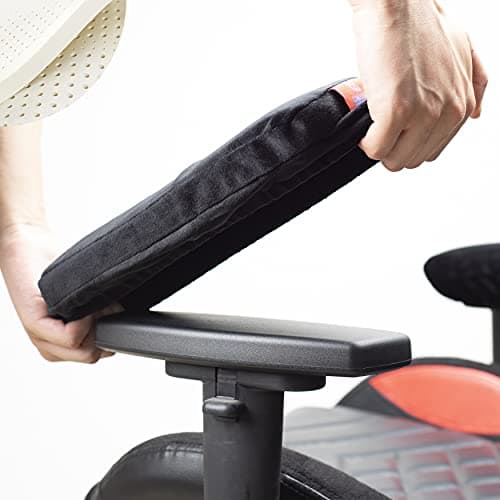
The armrest padding itself is a PU leather-topped foam pad. It's adequately soft initially. Owner reviews don't flag premature wear on the pads at the six-month mark, which is a decent sign. The arm structure feels solid with no lateral wobble when you lean on it, which is the most important thing. Some cheaper chairs flex noticeably at the armrest joint under sustained load, and that's not a problem reported here. So: four-axis adjustment that's real rather than theoretical, with a depth range that could be wider and a pivot that could be broader, but nothing that's going to actively annoy you day to day.
Comfort Over Long Sessions
This is where the owner review data becomes most useful. Short-term impressions are almost always positive for chairs at this price; the foam is fresh, the fabric is clean, and the novelty is doing some of the ergonomic work. The signal worth paying attention to is what owners say at the three-month and six-month mark, and the T3 RUSH holds up reasonably well. The integrated lumbar gets consistent praise for staying in place and maintaining its shape. Memory foam does compress over time, but the density Corsair has used appears sufficient to resist significant flattening within the first year based on owner reports.
Pressure points are the main long-session complaint. The bolstered seat sides create lateral pressure on the outer thighs for anyone who fills the seat width. After two or three hours, this becomes noticeable. Users who are a good fit for the seat width don't mention it. The seat cushion itself, the base foam under you, is firm enough to support without bottoming out, which is the key failure mode in cheaper chairs. Bottoming out, where the foam compresses fully and you're essentially sitting on the wooden or metal base, typically happens in budget chairs within six to twelve months. No owners report that here.
Breathability during long sessions is covered in more detail in the materials section, but the short version is that the fabric cover makes a meaningful difference to comfort over a four-to-eight-hour session compared to PU leather. Owners in warmer rooms and those who run hot consistently highlight this. It's not a mesh chair, so airflow is still limited compared to something like an ErgoChair Pro, but it's a genuine step up from the faux leather that dominates this category. Overall, for a medium-build user in the right height range, this is a chair that holds up across a working day. For users outside that fit window, fatigue sets in earlier.
Materials and Breathability
The fabric cover is the T3 RUSH's biggest differentiator at this price. Most gaming chairs up to and beyond this price use polyurethane (PU) leather, which is cheap to produce, easy to clean, and looks good in product photos. The problem is that PU leather traps heat, peels at stress points after a year or two, and becomes genuinely unpleasant in rooms above about 22 degrees Celsius. Corsair's fabric choice avoids all three of those problems. The microfibre-style weave allows some air movement across the surface, which prevents the sweaty-back feeling that PU leather produces within an hour in a warm room.
The durability picture for fabric is different from PU leather rather than simply better. Fabric doesn't peel, but it can pill, absorb odours over time, and is harder to wipe clean after a spill. Owners who've had the chair for six months or more don't report significant pilling or fabric degradation, which suggests Corsair has used a reasonably tight weave. Spot cleaning with a damp cloth handles most surface marks. A full fabric cleaner spray works for deeper cleaning. What it won't handle easily is a full coffee spill, which would soak in rather than beading on the surface as it would on PU leather. That's a genuine trade-off, not a flaw.
The underside of the seat and the back panel use a different, harder-wearing material, which is standard practice. The stitching quality is consistently described as clean in owner reviews, with no reports of seam separation in the first year. The armrest pads are PU leather, which is a reasonable choice for a high-contact surface that needs to be wipe-clean. The overall material package feels appropriate for the price: the fabric where it matters most for comfort, PU where durability and cleanability take priority. Corsair's product page lists the full material breakdown if you want to cross-reference the specifics.

Tilt and Recline
The recline range runs from 90 degrees to 165 degrees. That 165-degree maximum is honest and usable. Some chairs advertise 180 degrees flat but the mechanism binds before it gets there, or the chair tips forward alarmingly when you try. The T3 RUSH's 165-degree recline is smooth and actually reaches the stated angle without drama. The mechanism uses a standard ratchet-style lock with multiple fixed positions across the range, so you can set a working angle and return to it consistently.
The tilt tension control is a knob under the seat on the right side. It adjusts the resistance of the rocking motion when the tilt lock is disengaged. The range is adequate: light enough for a gentle rock during a relaxed session, firm enough to feel stable during active use. Owners don't report the tilt mechanism loosening over time, which is a common failure point in cheaper chairs where the tension knob gradually loses its grip. The tilt lock itself clicks solidly and doesn't creep forward under load, which is important. A tilt lock that slowly gives way under sustained pressure is one of those small annoyances that becomes a major one after six months.
There's no full-flat capability. If you want to nap in your chair (no judgement), 165 degrees is close but not flat. For gaming and working, it's entirely sufficient. The recline action is smooth throughout the range with no sticky points reported in owner reviews. One thing to note: at full recline, the neck cushion's position becomes more relevant, as it's the only thing supporting your head at that angle. Users who've removed the neck cushion and recline past 140 degrees will want something else behind their head. That's a minor point, but it's the kind of thing you only realise once you've settled into a reclined session and your head has nowhere comfortable to rest.
Build Quality
The steel frame is the right foundation. At this price, a steel frame should be non-negotiable, and Corsair delivers it. The frame doesn't flex under normal use, and owners don't report any creaking from the backrest or seat pan joints at the six-month mark. Creaking is one of the most reliable indicators of a chair that's going to degrade faster than it should, so its absence in the owner feedback is a good sign. The backrest-to-seat connection feels solid, with no lateral play when you push sideways on the backrest.
The Class 4 gas lift is the correct specification for a chair rated to 120 kg. Class 4 gas lifts are rated to higher loads and longer service lives than the Class 3 units that appear in budget chairs. In practice, this means the height adjustment should remain smooth and hold its position without slowly sinking over the course of a year. Gas lift sinking is one of the most common complaints about budget gaming chairs, and the Class 4 specification here should largely prevent it. No owners report sinking issues, which supports that.
The nylon base is the one area where Corsair has made a cost-conscious choice. A five-star aluminium base is stiffer, heavier, and more resistant to cracking under impact than nylon. Nylon bases are standard across most of this price tier, so it's not a knock specific to Corsair. But if you're heavy-footed or you move the chair frequently across hard floors, an aluminium base would be more durable long-term. The castors are dual-wheel units that roll smoothly on both carpet and hard floors. A handful of owners on polished hardwood note the wheels are slightly stiff initially, but this resolves with use and no scratching is reported on hard floors.
Assembly Experience
Owner reviews consistently describe assembly as straightforward and achievable alone. The process follows a standard sequence: attach the castors to the base, insert the gas lift into the base, attach the seat mechanism to the gas lift, bolt the backrest to the seat, and fit the armrests. The instructions are described as clear with well-labelled diagrams. All required tools come in the box, which is a small thing that cheaper brands often skip and which makes a meaningful difference to the experience of actually putting it together.
Assembly time reported by owners runs from about 30 minutes for people who've assembled chairs before to around 45 minutes for first-timers. The heaviest single step is lifting the assembled backrest and seat together to attach to the base, which is manageable alone but easier with a second person holding the base steady. Nothing in the process requires unusual strength or dexterity. The bolts are standard hex-head and the Allen key provided fits them properly, which sounds obvious but isn't always the case with budget flat-pack furniture.
Packaging quality is described positively. The components are foam-wrapped individually and the chair arrives without damage in the vast majority of cases. There are occasional reports of minor cosmetic marks on the armrests from transit, but nothing structural. Corsair's customer support response to the few cases where parts arrived damaged has been described as prompt by the owners who mention it, which matters if you're unlucky enough to be in that minority. Overall, assembly is one of the less stressful parts of owning this chair.
How It Compares
The two most direct comparisons at this price are the Secretlab Titan Evo (Softweave fabric version) and the AndaSeat Kaiser 3. The Secretlab Titan Evo Softweave sits at a similar price point and is the most direct like-for-like: fabric cover, steel frame, integrated lumbar, upper mid-range positioning. The AndaSeat Kaiser 3 in fabric is slightly cheaper and targets a larger body type, with a wider seat and higher weight rating.
The Secretlab Titan Evo wins on adjustability. Its lumbar support is height-adjustable and can be swapped for a magnetic lumbar pillow accessory. The armrests have a wider pivot range and the seat depth is adjustable, which the T3 RUSH's is not. The Softweave fabric on the Titan Evo is also widely praised for durability and breathability. If ergonomic adjustability is your priority, the Titan Evo is the stronger choice at a comparable price. Corsair's advantage is that the T3 RUSH is often available at a lower street price than the Titan Evo, and the integrated memory foam lumbar is genuinely good for users who fit the chair's fixed geometry.
The AndaSeat Kaiser 3 is the better choice for larger users. Its seat is wider and deeper, the weight rating is higher, and the overall dimensions suit taller and broader builds that the T3 RUSH's medium-frame design doesn't accommodate comfortably. The Kaiser 3's cover material in fabric form is also well-regarded. For users in the T3 RUSH's target range, the Kaiser 3 can feel oversized, with the bolsters too far apart to provide any lateral support. So the comparison is less about which chair is better and more about which chair fits you.
| Feature | Corsair T3 RUSH (Fabric) | Secretlab Titan Evo (Softweave) | AndaSeat Kaiser 3 (Fabric) |
|---|---|---|---|
| Cover Material | Soft fabric | Softweave fabric | Fabric / Linen |
| Lumbar Support | Integrated memory foam (fixed height) | Integrated, height-adjustable + magnetic pillow | Separate cushion, adjustable strap |
| Seat Depth Adjustment | No | Yes | No |
| Armrests | 4D | 4D (wider pivot range) | 4D |
| Recline Max | 165 degrees | 165 degrees | 165 degrees |
| Weight Capacity | 120 kg | Varies by size (up to 130 kg) | Up to 180 kg |
| Target Build | Medium (165 to 185 cm) | Small to XL variants available | Large (175 to 200 cm) |
| Base Material | Nylon | Aluminium | Aluminium |
| Price Tier | Upper mid-range | Upper mid-range to premium | Mid-range to upper mid-range |

Final Verdict
The Corsair T3 RUSH Fabric Gaming Chair is a well-made, well-thought-out chair for a specific buyer. If you're between 165 cm and 185 cm tall, medium build, and you spend long hours at a desk in a warm room, this chair does a lot of things right. The fabric cover is genuinely better than PU leather for all-day comfort and long-term durability. The integrated memory foam lumbar is a meaningful upgrade over the strap-on cushions most rivals use. The build quality is solid, the assembly is painless, and the positive overall rating across over a hundred reviews reflects a product that mostly does what it promises.
The gaps are real though. No seat depth adjustment is a frustrating omission at this price, and it's the single biggest reason shorter users will struggle. The fixed lumbar height is a problem for taller users whose lumbar curve sits higher than the chair's fixed position. The armrests are functional but not exceptional, and the nylon base is the one place where cost-cutting shows relative to competitors like the Secretlab Titan Evo, which uses an aluminium base. None of these are dealbreakers for the right user. For the wrong user, one or more of them will matter a lot.
If you're on a tighter budget, the original Corsair T3 RUSH (the non-2023 version) is often available significantly cheaper and shares much of the same DNA. If maximum ergonomic adjustability is your priority and you can stretch the budget, the Secretlab Titan Evo Softweave is the more configurable chair. But if you fit the T3 RUSH's target profile and the upper mid-range price works for you, this is a chair you can buy with confidence. It's not trying to be everything to everyone, and the chairs that do usually end up being nothing to anyone.
What works. What doesn’t.
5 + 4What we liked5 reasons
- Fabric cover is genuinely cooler and more durable than PU leather alternatives
- Integrated memory foam lumbar stays in place and holds its shape
- Solid steel frame with Class 4 gas lift for long-term reliability
- Clean, straightforward assembly with all tools included
- Breathability makes a real difference during long sessions in warm rooms
Where it falls4 reasons
- No seat depth adjustment, a real problem for shorter users
- Fixed lumbar height suits medium builds only
- Armrest pivot range is narrower than key competitors
- Nylon base rather than aluminium at this price point
Full specifications
9 attributes| Material | soft fabric |
|---|---|
| Lumbar support | adjustable memory foam cushion |
| Armrest type | 4D |
| Footrest | false |
| Headrest | true |
| Height range CM | 150-188 |
| MAX weight KG | 120 |
| Recline angle MAX | 160 |
| Warranty years | 2 |
If this isn’t right for you
2 options

Frequently asked
5 questions01Is the Corsair T3 RUSH Fabric Gaming Chair (2023), Racing-Inspired Design, Soft Fabric Exterior, Padded Neck Cushion, Memory Foam Lumbar Support, Adjustable Seat Height, Grey & White comfortable for long gaming sessions?+
For users in the 165 cm to 185 cm height range with a medium build, yes. The integrated memory foam lumbar stays in position across long sessions, the fabric cover prevents the heat build-up that makes PU leather chairs uncomfortable after a couple of hours, and the seat foam is dense enough not to bottom out. Users outside that fit range, particularly those who are shorter or broader, report pressure points from the seat depth and bolstered sides that become uncomfortable after two to three hours.
02What height and weight range is the Corsair T3 RUSH Fabric Gaming Chair (2023), Racing-Inspired Design, Soft Fabric Exterior, Padded Neck Cushion, Memory Foam Lumbar Support, Adjustable Seat Height, Grey & White suitable for?+
Corsair rates the chair for users up to 120 kg. The height sweet spot is approximately 165 cm to 185 cm. Below that range, the seat depth becomes an issue as the front edge presses into the back of the knees before shorter users can sit fully back. Above 185 cm, the lumbar and neck cushion positions start to feel misaligned. Corsair makes a larger variant for taller users, which matters if you're above 185 cm.
03Does the Corsair T3 RUSH Fabric Gaming Chair (2023), Racing-Inspired Design, Soft Fabric Exterior, Padded Neck Cushion, Memory Foam Lumbar Support, Adjustable Seat Height, Grey & White have good lumbar support?+
The lumbar support is one of the chair's strongest features. It's integrated directly into the backrest as a memory foam unit rather than a separate cushion attached by a strap. This means it stays in position and maintains its shape. The main limitation is that the lumbar height is fixed and cannot be adjusted vertically. For users whose lumbar curve aligns with the chair's fixed position, it works very well. For taller users whose lumbar sits higher, the fixed position is a genuine frustration.
04Is the Corsair T3 RUSH Fabric Gaming Chair (2023), Racing-Inspired Design, Soft Fabric Exterior, Padded Neck Cushion, Memory Foam Lumbar Support, Adjustable Seat Height, Grey & White difficult to assemble?+
No. Owner reviews consistently describe assembly as straightforward and achievable by one person. The process takes roughly 30 to 45 minutes depending on experience. All required tools are included in the box, instructions use clear diagrams, and the components are well-labelled. The heaviest step is lifting the backrest and seat assembly, which is easier with a second person but manageable alone.
05What warranty applies to the Corsair T3 RUSH Fabric Gaming Chair (2023), Racing-Inspired Design, Soft Fabric Exterior, Padded Neck Cushion, Memory Foam Lumbar Support, Adjustable Seat Height, Grey & White?+
Corsair's warranty terms for gaming chairs are listed on their official support pages and can vary by region, so check the Corsair UK website directly for the current warranty period applicable to your purchase. At minimum, Amazon's standard 30-day return window and A-to-Z Guarantee apply to purchases made through Amazon UK.