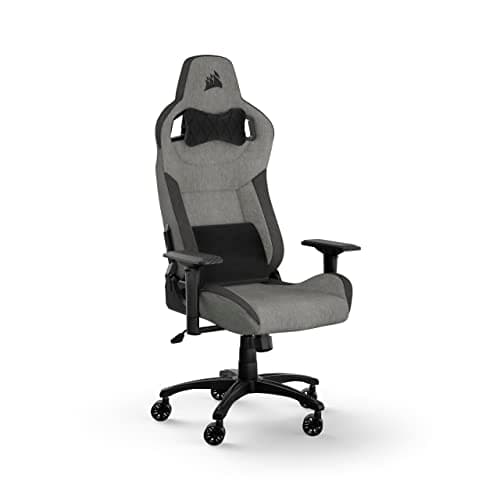
Most gaming chairs are selling you a fantasy. Red stitching, bolsters that squeeze your hips like a vice, and a bucket seat so aggressively shaped it'd be more at home in a track-day Civic than a home office. Your lower back, after four hours in one of those things, will let you know exactly what it thinks. The Corsair TC100 RELAXED takes a different approach: wider seat, softer bolstering, fabric upholstery, and a name that tells you exactly what it's going for. Whether it actually delivers on that promise is what we're here to figure out.
Corsair is best known for RAM, keyboards, and peripherals, but they've been making chairs long enough to understand what their audience actually needs. The TC100 RELAXED sits in their Relaxed Series family, which is designed around the idea that not everyone wants to feel like they're strapped into a Formula 1 car. It's a mid-range chair sitting at £149.99, with a ★★★★☆ (4.1) rating from 444 owners. That's a decent sample size, and a score that suggests mostly happy customers without the suspiciously perfect reviews you sometimes see on newer listings.
So who is this for? Broadly: anyone who spends serious time at a desk and has given up on the idea that looking like a racing driver is worth sacrificing their spine for. If you're broader in the hips, tend to run warm, or have found that most gaming chairs leave you with a sore back by mid-afternoon, this chair is at least asking the right questions. Whether the answers are good enough, read on.
Core Specifications
The TC100 RELAXED's headline number is the 375mm seat width. That's genuinely wider than the majority of gaming chairs in this price bracket, most of which hover around 340mm to 360mm. For anyone who has ever felt pinched by a standard gaming chair's bolsters, that extra width matters more than it sounds. The Relaxed Series branding isn't just marketing fluff; the relaxed bolstering is a real design choice that prioritises room over the sporty, hugging feel of traditional racing-style seats.
The seat height adjustment runs on a Class 4 gas lift, which is the standard you want at this price. Class 3 lifts, common on cheaper chairs, are less reliable over time and carry lower weight ratings. The steel construction here is a good sign. You get 100mm of height adjustment range, which is enough to accommodate a reasonable spread of user heights, though we'll get into the specifics of who fits best in the size section. The frame itself is steel, which is the right call for longevity.
Upholstery is fabric rather than PU leather or mesh, which is a deliberate choice and one that has real implications for comfort and breathability. The lumbar pillow is high-density foam and adjustable in position, and the neck pillow is memory foam and detachable. Both are included in the box. Armrests are adjustable. Here's the full spec rundown:
| Specification | Detail |
|---|---|
| Seat Width | 375mm |
| Seat Height Adjustment Range | 100mm |
| Gas Lift Class | Class 4 (steel construction) |
| Upholstery Material | Soft fabric |
| Lumbar Support | Adjustable high-density foam pillow (included) |
| Neck Pillow | Detachable memory foam (included) |
| Armrests | Adjustable |
| Design Style | Racing-inspired with relaxed bolstering |
| Colour | Grey and Black |
| Chair Family | Corsair RELAXED Series |
| ASIN | B0BN4LHDYR |
| Rating | ★★★★☆ (4.1) (474 reviews) |
| Price | £149.99 |

Ergonomics
This is where the TC100 RELAXED either earns its money or doesn't, and it's worth being specific about what good ergonomics actually means for a chair you're going to sit in for six to eight hours. The lumbar region is the first thing to go wrong in a poorly designed chair. Most gaming chairs address this with either a fixed lumbar curve built into the backrest foam, or a pillow strapped on with an elastic band. The TC100 goes the pillow route, using a high-density foam lumbar pillow that you can position up or down the backrest to hit the right spot on your lower back. High-density foam matters here: cheap lumbar pillows flatten out within weeks, which defeats the entire point.
The neck pillow is memory foam, which is a step up from the standard foam you get on many chairs at this price. Memory foam responds to the shape of your head and neck rather than just pushing back uniformly, which reduces pressure points during long sessions. It's also detachable, which is worth mentioning because not everyone wants a neck pillow at all. If you're taller and your head naturally rests above the pillow's position, being able to remove it without it getting in the way is a genuine quality-of-life feature. Owner reviews broadly confirm the neck pillow is comfortable, though a handful of taller users note that positioning it correctly takes some fiddling.
The relaxed bolstering on the seat and backrest is arguably the most important ergonomic decision Corsair made with this chair. Traditional racing-style bolsters are great if you're a specific body shape, but for anyone wider in the hips or thighs, they create pressure points that build into real discomfort over time. A 375mm seat width with relaxed bolstering means the chair isn't fighting your body shape; it's accommodating it. That's a more sensible approach to all-day sitting than trying to look like you're on a podium. The full-body support framing of the backrest, combined with the adjustable lumbar, gives you a reasonable chance of finding a position that works for your spine rather than against it.
Size and Fit
The 375mm seat width is the defining number for fit. To put that in context, a lot of standard gaming chairs come in at around 340mm to 360mm, so the TC100 RELAXED is meaningfully wider. If you've ever sat in a gaming chair and felt like the bolsters were pushing your thighs inward or squeezing your hips, this chair is likely to feel noticeably more comfortable from the first minute. It's specifically designed for people who find the standard racing-seat shape too narrow or too restrictive, and the RELAXED Series name reflects that design intent rather than just being a marketing label.
The 100mm of height adjustment via the gas lift means you can set the seat at a range of heights to suit your legs. For the chair to work ergonomically, you want your feet flat on the floor and your knees at roughly a 90-degree angle. Whether the TC100's adjustment range covers your specific height depends on your leg length, but 100mm of travel is a reasonable spread for most adults of average to above-average height. Shorter users may find even the lowest setting still leaves their feet dangling slightly, which is a common issue with gaming chairs generally rather than a specific failing of this one. A footrest is an easy fix if that's you.
The RELAXED Series is built around the idea of wider seating and plush contact points, so this chair will suit people who want a bit of room to shift around rather than being locked in one position. If you tend to sit cross-legged, lean to one side, or generally move around a lot during long sessions, the wider seat gives you the space to do that without feeling constrained. Corsair's own product page for the TC100 RELAXED positions it explicitly for users who want more room and more comfort than a standard racing-style chair offers, and the spec backs that positioning up.
Armrests
Adjustable armrests are listed as a feature, and this matters more than people give it credit for. Fixed armrests are one of the most common sources of shoulder and neck tension in gaming chairs because they either sit too high (forcing your shoulders up) or too low (giving you nothing useful to rest on). Being able to adjust the height means you can position your arms so your shoulders stay relaxed, which over a long session makes a real difference to how your neck and upper back feel. The spec confirms adjustability; the exact axes of adjustment (height only, or also width and depth) aren't broken out in the verified data, but adjustable armrests at this price tier typically cover at least height.
Owner feedback on the armrests is broadly positive, with most users finding them functional and comfortable enough for long sessions. A few reviewers mention that the padding is adequate rather than exceptional, which is pretty typical at this price point. Armrest padding that's too soft compresses quickly; padding that's too firm creates pressure on the forearms. The TC100 sits in the middle, which is where you want it. No one in the owner reviews is flagging the armrests as a deal-breaker, which is a reasonable signal that they're doing their job.
One thing worth understanding about armrests on gaming chairs generally: they work best when you're using them as a place to rest your arms between active use of the keyboard and mouse, not as a permanent support while you're typing. If you're resting your wrists on the armrests while typing, you're probably causing more harm than good regardless of what chair you're in. Set them so your arms can drop naturally when you're not actively using peripherals, and you'll get the most out of them. The TC100's adjustability gives you the range to do that properly.
Comfort Over Long Sessions
This is the real test for any chair. Initial comfort is easy. Lots of chairs feel great for the first thirty minutes and then slowly become instruments of lower back misery. The TC100 RELAXED's design choices, wider seat, relaxed bolstering, high-density lumbar pillow, memory foam neck pillow, are all oriented toward sustained comfort rather than just a good first impression. The fabric upholstery helps here too, because it doesn't trap heat the way PU leather does, which means you're not sitting in a pool of your own warmth after an hour.
Owner reviews at 4.1 from 444 people suggest the comfort holds up reasonably well in real-world use. The pattern in the reviews is fairly consistent: people who found previous gaming chairs too narrow or too firm are generally happy with the TC100. The lumbar pillow gets positive mentions for actually working, which sounds like a low bar but isn't when you consider how many chairs ship with lumbar pillows that are either too firm, too soft, or positioned in completely the wrong place. High-density foam holds its shape better than cheaper alternatives, and that's what you want for something that's going to be pressed against your lower back for hours at a time.
Where some owner reviews flag issues is around the longer-term foam compression in the seat cushion, which is a common complaint across gaming chairs in this price bracket. Foam that feels great at month one can start to feel noticeably thinner by month six, depending on how much you use the chair and how much you weigh. This isn't unique to the TC100, but it's worth being aware of. If you're a heavier user or you're in the chair eight-plus hours a day, the seat foam will compress faster than it would for a lighter user doing shorter sessions. That's physics, not a product defect, but it's honest to flag it.
Materials and Breathability
The fabric upholstery is one of the TC100 RELAXED's strongest practical selling points. Corsair describes it as a soft fabric designed to keep you comfortable and cool, and the basic physics back that up. Fabric is more breathable than PU leather because it allows air to circulate through the surface rather than trapping it. In a warm room, or during an intense gaming session where your body temperature rises, that difference is noticeable. PU leather chairs can get genuinely unpleasant in summer, with that sticky, sweaty feeling that builds up over an hour or two. Fabric chairs don't do that to anything like the same degree.
The trade-off with fabric is durability and cleanability. PU leather wipes down easily; fabric absorbs spills and can be harder to clean. It also tends to show wear differently, with fabric potentially pilling or fading over time in a way that PU leather doesn't. That said, PU leather has its own durability issues, specifically peeling and cracking after a year or two of heavy use, which is a very common complaint with cheaper gaming chairs. A fabric chair that pills slightly after two years is arguably in better shape than a PU leather chair that's shedding flakes of fake leather all over your clothes. So it depends on what kind of wear you'd rather deal with.
The grey and black colourway is sensible for a home office or gaming setup. It's not going to clash with much, and grey fabric tends to show dirt less obviously than black fabric does. The racing-inspired aesthetic is present but not overwhelming, which is probably the right call for a chair that's supposed to appeal to people who don't want something that looks like it belongs in an eSports arena. It looks like a decent chair, which is exactly what it is. Textile upholstery in gaming chairs has been growing in popularity precisely because users have figured out that breathability matters more than aesthetics when you're sitting for hours at a stretch.

Tilt and Recline
The verified spec data doesn't give us a specific recline angle range for the TC100 RELAXED, so we're not going to invent one. What Corsair does confirm is that the RELAXED Series is designed to give you the flexibility to lean or recline with full support, which suggests the recline function is a genuine feature rather than a token one. The design intent is comfort across a range of positions, not just bolt-upright desk posture. That's the right philosophy for a chair used across long gaming or work sessions where you might want to lean back during a cutscene or a meeting.
Reclining properly matters for back health. Being able to open the angle between your torso and thighs slightly reduces the pressure on your lumbar discs compared to sitting bolt upright at 90 degrees. Neutral spine positioning research generally supports a slightly reclined posture for extended sitting, somewhere in the 100 to 110 degree range, as being less fatiguing than a rigid upright position. A chair that lets you find that position and stay there comfortably is doing something genuinely useful for your long-term back health, not just giving you an excuse to slouch.
Owner reviews don't flag the recline mechanism as a problem area, which is a reasonable indicator that it works as expected. The most common recline complaints on gaming chairs in this price range are either a mechanism that's too stiff to adjust easily, or one that's so loose it won't hold a position. Neither appears to be a consistent issue with the TC100 based on the review pattern. The RELAXED Series framing suggests Corsair has prioritised a comfortable lean over an aggressive full-flat recline, which makes sense for a chair positioned around everyday comfort rather than LAN party nap breaks.
Build Quality
The steel frame and Class 4 gas lift are the two build quality indicators we can speak to with certainty from the verified spec data, and both are good signs. Steel frames are heavier than aluminium but more forgiving of stress over time, particularly important at the seat-back junction which takes a lot of repeated load from reclining. Class 4 gas lifts are the standard for quality office and gaming chairs; they carry higher weight ratings and are more reliable over time than Class 3 lifts. The fact that Corsair specifies both tells you they're not cutting corners on the structural components, which is where cutting corners actually matters.
The base material and wheel type aren't specified in the verified data, so we won't guess. What we can say is that at this price tier, most chairs use a nylon base with standard PU-coated wheels, and there's nothing in the owner reviews to suggest the TC100 is an exception in either direction. Wheel quality is worth paying attention to if you're on hard flooring, because hard plastic wheels can scratch and are noisier than soft PU-coated ones. If you're on carpet, it matters less. If you're on hardwood or laminate, it's worth checking whether the wheels that ship with the chair are floor-friendly.
Corsair's build quality reputation in the gaming peripheral space is generally solid. They're not a budget brand trying to punch above their weight; they're an established brand with a reputation to protect. The TC100 RELAXED's 4.1 rating from 474 doesn't suggest widespread build quality failures, and the absence of consistent complaints about creaking, wobbling, or structural issues in the owner reviews is a reasonable positive signal. Chairs that have frame or mechanism problems tend to generate a very specific and vocal pattern of complaints. That pattern isn't present here.
Assembly Experience
Gaming chair assembly is one of those things that's almost universally described as slightly annoying but manageable. The TC100 RELAXED is no exception. Owner reviews suggest it can be done by one person, though having a second pair of hands for the backrest attachment makes things easier. The most awkward part of assembling any gaming chair solo is usually attaching the backrest to the seat base, because you're trying to hold a heavy, unwieldy piece of foam and fabric in the right position while also aligning bolts. It's doable alone, but it's the kind of task that makes you wish you'd asked a housemate to help.
Assembly time for most gaming chairs in this category runs to roughly thirty to sixty minutes for someone doing it for the first time, and the TC100 is in that range based on owner accounts. The instructions are reported as adequate, which in gaming chair terms means they're illustrated rather than text-heavy and cover the key steps without being actively misleading. A Phillips screwdriver is the main tool you'll need; most chairs include an Allen key for any hex bolts. The packaging is typically well-padded to protect the components in transit, and the TC100 doesn't appear to have a pattern of DOA or transit-damage complaints in the reviews.
One practical tip: when you attach the gas lift to the base and then lower the seat onto it, make sure the lift is properly seated before you put your full weight on it. It should click or drop firmly into position. This is true of any gas-lift chair and isn't specific to the TC100, but it's the step where people occasionally panic because the seat feels wobbly before the lift is properly engaged. Once everything is tightened and the lift is seated correctly, the wobble disappears. If it doesn't, check the bolts at the seat-back junction first; that's the most common source of post-assembly wobble on gaming chairs generally.
How It Compares
The TC100 RELAXED's closest natural competitors in the mid-range fabric gaming chair space are the Secretlab Titan Evo (in its fabric variant) and the Noblechairs HERO. Both sit at a similar or slightly higher price point and target a similar audience of serious gamers or home workers who want a proper chair rather than a budget placeholder. The comparison is worth making because the TC100 is making specific design choices, wider seat, relaxed bolstering, pillow-based lumbar, that not every competitor makes, and those choices suit some users better than others.
The Secretlab Titan Evo is probably the most direct competitor. It's well-regarded, offers an integrated lumbar adjustment (a dial rather than a pillow), and comes in a range of sizes. The integrated lumbar is arguably more elegant than a pillow system, but it's also less flexible; you can adjust the firmness but not the vertical position. The TC100's pillow-based lumbar can be moved up or down the backrest to hit exactly the right spot for your spine, which some users will prefer. The Titan Evo is also a more traditional racing-style shape with more aggressive bolstering, which suits slimmer users but can feel restrictive for broader ones. The TC100's 375mm seat width gives it a clear advantage for anyone who finds the Titan Evo's seat too narrow.
The Noblechairs HERO is another solid option at a similar price. It offers a wider seat than many gaming chairs and has a reputation for good build quality, but its upholstery is primarily PU leather or a hybrid material rather than fabric, which means it runs warmer than the TC100 in sustained use. If breathability is a priority, the TC100's fabric wins that comparison outright. The HERO's lumbar support is also pillow-based, so that's a wash. Build quality on both is generally well-regarded, though the Noblechairs tends to feel slightly more premium in terms of materials.
| Feature | Corsair TC100 RELAXED | Secretlab Titan Evo | Noblechairs HERO |
|---|---|---|---|
| Seat Width | 375mm | Varies by size (up to ~360mm) | Wider than standard |
| Upholstery | Soft fabric | SoftWeave fabric / leatherette | Primarily PU leather / hybrid |
| Lumbar Support | Adjustable high-density foam pillow | Integrated adjustable dial | Adjustable pillow |
| Neck Pillow | Detachable memory foam | Memory foam (included) | Memory foam (included) |
| Gas Lift Class | Class 4 (steel) | Class 4 | Class 4 |
| Seat Height Adjustment | 100mm range | Not specified | Not specified |
| Price Tier | Mid-range | Mid to premium | Mid to premium |
| Bolstering Style | Relaxed (wider fit) | Traditional racing | Moderate racing |

Final Verdict
The gaming chair market has a habit of selling you the look of motorsport while delivering the back health of a long-haul flight. The TC100 RELAXED is genuinely trying to do something different, and mostly succeeding. The 375mm seat width and relaxed bolstering make this one of the more practically comfortable options at this price point for anyone who isn't built like a racing driver. The fabric upholstery keeps things cooler than the PU leather alternatives. The high-density lumbar pillow and memory foam neck pillow are both functional rather than decorative. And the Class 4 gas lift on a steel frame means the structural fundamentals are sound.
Is it perfect? No. The lumbar pillow system, while flexible in positioning, requires more fiddling than an integrated lumbar mechanism. Longer-term foam compression in the seat is a potential issue for heavier users or those in the chair all day every day. And the exact recline angle range and armrest adjustability axes aren't specified, which means you're taking some things on trust. But at a mid-range price, with a 4.1 from 444 real owners, the TC100 RELAXED is a chair that's clearly making the right people happy.
If you've been burned by gaming chairs that looked great and felt rubbish after a month, or if you've found that the standard racing-seat shape just doesn't work for your body, this is one of the more sensible options in the mid-range bracket. It's not trying to be the flashiest chair in the room. It's trying to be the one you're still comfortable in at hour seven. Based on the evidence, it gets a lot closer to that goal than most of its competitors do.
Editorial score: 7.5 out of 10. Solid ergonomic thinking, good materials choice, and a wider fit that genuinely sets it apart. Held back slightly by the pillow-based lumbar (which works but requires adjustment) and the lack of detailed specs on recline range and armrest axes. For the target audience, a confident recommendation.
What works. What doesn’t.
5 + 3What we liked5 reasons
- 375mm seat width is genuinely wider than most competitors, suits broader body types
- Fabric upholstery is noticeably more breathable than PU leather alternatives
- High-density lumbar pillow holds its shape better than cheap foam alternatives
- Memory foam neck pillow is detachable and comfortable for most users
- Class 4 gas lift on a steel frame means solid structural fundamentals
Where it falls3 reasons
- Pillow-based lumbar requires manual repositioning and more fiddling than integrated mechanisms
- Seat foam may compress over time with heavier or all-day users
- Recline angle range and armrest adjustability axes not fully specified
Full specifications
12 attributes| MAX weight capacity | 264 lbs / 120 |
|---|---|
| Recline | Yes |
| Material | fabric |
| Lumbar support | adjustable cushion |
| Adjustable back angle | 90-160° |
| Adjustable lumbar pillow | Yes |
| Adjustable neck pillow | Yes |
| Adjustable tilt angle | 0-10° |
| Armrest adjustability | up/down, side to side |
| Armrest PAD size | 25.5 x 8.5 x 2.5cm |
| Armrest type | 2D |
| Backrest height | 79cm |
If this isn’t right for you
2 options 8.0 / 10
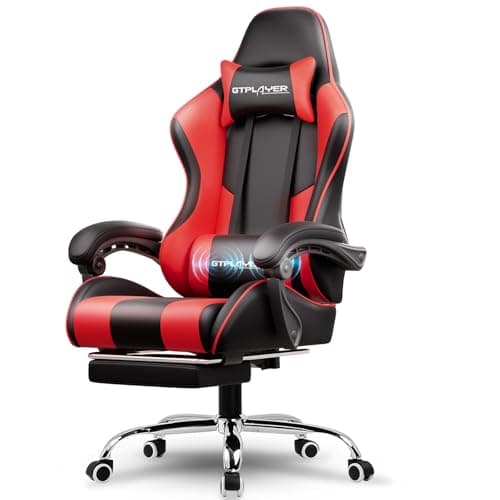
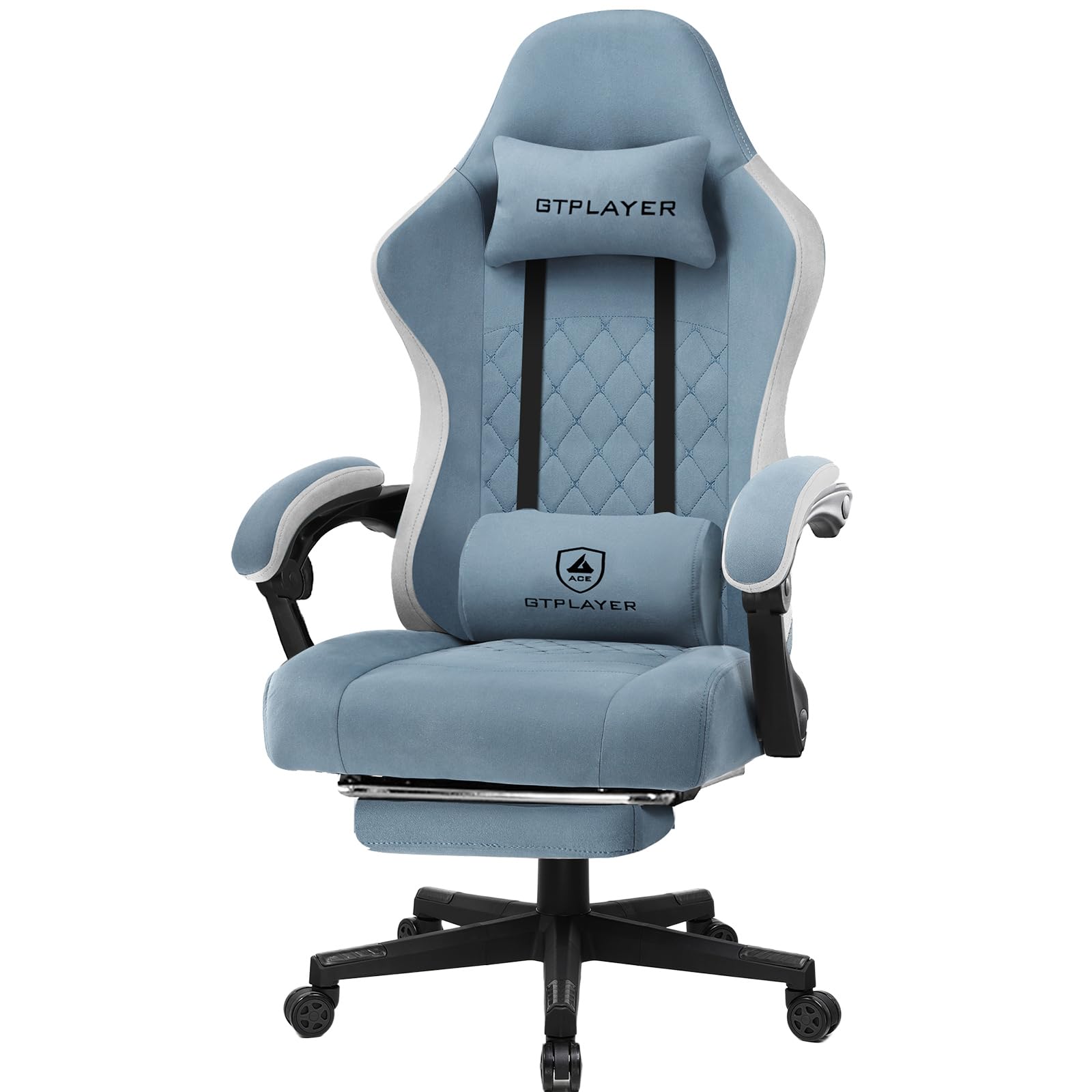
GTPLAYER Fabric Gaming Chair, Ergonomic Computer Chair with Footrest and Lumbar Support Height Adjustable Home Office with 360°-Swivel Seat and Headrest
£139.99 · GTPLAYER
 7.5 / 10
GTPLAYER Fabric Gaming Chair with Footrest, Ergonomic Computer Desk Chair with Pocket Spring Cushion Home Office High Back Support Lumbar Support Heavy Duty Wide
£129.99 · GTPLAYER
Frequently asked
5 questions01Is the Corsair TC100 RELAXED Gaming Chair comfortable for long gaming sessions?+
Based on the spec design and 444 owner reviews averaging 4.1 out of 5, the TC100 RELAXED holds up well for extended sessions. The high-density foam lumbar pillow, memory foam neck pillow, and fabric upholstery all contribute to sustained comfort. The wider 375mm seat and relaxed bolstering reduce pressure points that typically build up over hours in a standard racing-style chair. Some users report seat foam compression over longer ownership periods, which is common at this price tier.
02What height and weight range is the Corsair TC100 RELAXED Gaming Chair suitable for?+
The verified spec data does not specify exact height or weight limits for the TC100 RELAXED. The 100mm seat height adjustment range via a Class 4 gas lift accommodates a reasonable spread of user heights. The 375mm seat width and relaxed bolstering make it particularly well-suited to broader users who find standard gaming chairs too narrow. Very short users may find even the lowest height setting leaves their feet slightly off the floor, in which case a footrest is a practical fix.
03Does the Corsair TC100 RELAXED Gaming Chair have good lumbar support?+
Yes. The TC100 RELAXED includes an adjustable high-density foam lumbar pillow that can be repositioned up or down the backrest to hit the right point on your lower back. High-density foam holds its shape better than standard foam, which matters for long-term effectiveness. The pillow system is more flexible in vertical positioning than an integrated lumbar mechanism, though it does require manual adjustment to find the right spot. Owner reviews broadly confirm it works as intended.
04Is the Corsair TC100 RELAXED Gaming Chair difficult to assemble?+
Assembly is manageable for one person but easier with two, particularly for attaching the backrest to the seat base. Most users report a build time of roughly 30 to 60 minutes. Instructions are illustrated and cover the key steps adequately. A Phillips screwdriver is the main tool required. Make sure the gas lift is fully seated in the base before applying full weight, as this is the most common source of post-assembly wobble.
05What warranty applies to the Corsair TC100 RELAXED Gaming Chair?+
Amazon offers a standard 30-day return window. Corsair typically provides a 2-year manufacturer warranty on their gaming chairs, though you should verify current warranty terms directly on the Corsair website at the time of purchase, as these can change. Keep your proof of purchase regardless.