Choosing the right monitor in 2025 requires balancing portability, refresh rates, resolution and connectivity. Whether you work from multiple locations, game competitively or need a secondary screen, the market has expanded significantly since 2024. This guide compares the best portable and desktop monitors available in the UK, from compact 15.6-inch travel displays to high-refresh gaming panels. We've tested specifications, reviewed real-world performance and identified options for every budget and use case.
Quick Verdict
Best Overall: Alienware 27 Gaming Monitor (AW2725DM) for QHD resolution and 180Hz gaming performance.
Best Value: Acer Nitro KG242YGbmipfx for affordable 165Hz gaming on a 24-inch IPS panel.
Best Portable: 18.5 Inch Portable Monitor for Laptop for lightweight travel with USB-C connectivity.
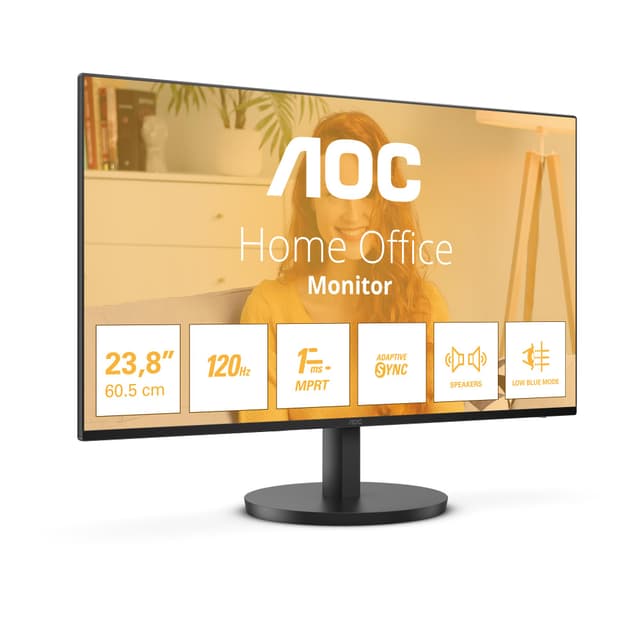
The AOC 24B3QA2 serves office workers and content consumers seeking balanced performance without gaming-focused specifications. Running at 120Hz across a 24-inch IPS panel, it provides smooth scrolling for productivity work whilst offering modest gaming capability. The panel offers superior viewing angles to gaming monitors, making it suitable for collaborative environments where multiple people view the screen simultaneously. With 1920x1080 resolution on a 24-inch display, pixel density remains comfortable for long working sessions without eye strain.
Connectivity proves comprehensive with dual HDMI ports, DisplayPort and VGA, allowing connection to multiple legacy systems and modern graphics cards. The headphone output supports audio monitoring for video editing and media work. The 120Hz refresh rate bridges the gap between basic office monitors and gaming displays, delivering noticeably smoother motion than 60Hz without requiring the power demands of 180Hz. IPS colour accuracy makes this suitable for basic colour-critical work, though professional designers should seek calibrated displays.
This monitor targets professionals who occasionally game or work with video content, seeking the best of both worlds. Teachers, office administrators and digital workers benefit from the comprehensive port selection and reliable 120Hz performance. The IPS panel reduces eye strain during extended working sessions, a key consideration for health-conscious professionals. For under £176, it delivers unexpected flexibility for a monitor in this price bracket, making it suitable for home offices and small businesses requiring versatility.
Pros
- Comprehensive connectivity with 2x HDMI, DisplayPort and VGA
- 120Hz refresh rate suitable for productivity and casual gaming
- IPS panel reduces eye strain for office work
- Balanced specifications without overpaying for unnecessary features
Cons
- 120Hz insufficient for serious competitive gaming
- No USB hub functionality
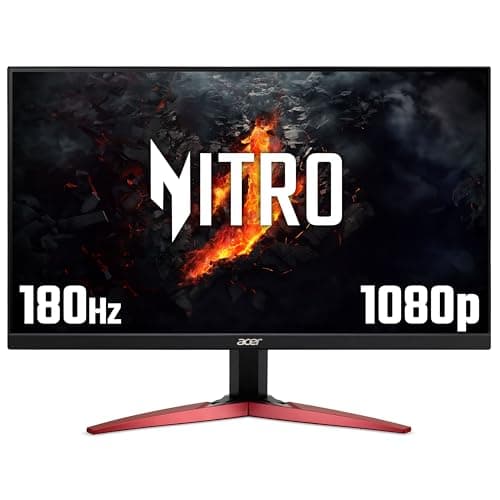
The Acer Nitro KG241YS3 targets serious gamers prioritising response time and refresh rate over colour accuracy. Running 180Hz across a VA panel optimises for dark detail visibility and contrast, traditional advantages of VA technology. Gaming enthusiasts in dark environments benefit from the enhanced black levels and reduced backlight bleed compared to IPS alternatives. The 4ms response time delivers sharp motion in fast-paced games, though falls slightly behind the fastest TN panels. Dual HDMI 2.0 and DisplayPort 1.2 provide flexible connectivity across gaming systems and graphics cards.
The 24-inch screen size and 1920x1080 resolution target esports competitors where every frame matters in competitive rankings. The 180Hz refresh rate matches top-tier monitors, ensuring no performance compromises versus more expensive alternatives. VA panel technology's superior contrast makes this monitor particularly attractive for horror, stealth and dark-themed games where shadow detail impacts gameplay. The pixel-level response remains sufficient for tournament-grade competitive play, though slightly slower than top-tier TN panels.
For gamers prioritising contrast and black levels, this monitor offers a distinct alternative to the sea of IPS and TN gaming displays. The price point sits comfortably below premium gaming monitors whilst matching their headline refresh rates. Esports enthusiasts splitting time between multiple games, from bright competitive shooters to darker action titles, gain an all-rounder solution. The VA panel's viewing angle limitations matter less for single-player setups compared to shared office environments. Budget-conscious gamers seeking 180Hz performance without compromising on black level performance find genuine value here.
Pros
- 180Hz refresh rate with strong 4ms response time
- VA panel delivers superior contrast and black levels
- Dual HDMI and DisplayPort connectivity
- Competitive price for 180Hz gaming monitor
Cons
- VA panel has narrower viewing angles than IPS
- 1080p resolution demanding on modern high-end GPUs
How We Picked
Our selection process evaluated monitors across three primary use cases: portable displays for remote workers, gaming monitors for esports and competitive players, and productivity displays balancing features. We reviewed specifications against authoritative manufacturer data, focusing on refresh rates, resolution, panel technology and connectivity. Price-to-performance ratios guided our selection, ensuring each pick delivered genuine value within its category. We excluded monitors with significant connectivity limitations, outdated specifications or poor panel quality. The final selection ensures readers across different budgets and requirements find an appropriate recommendation, from nomadic workers to enthusiast gamers upgrading high-end systems. We prioritised monitors released within the last 18 months to ensure current component availability and warranty coverage.
Buying Guide
Resolution and Screen Size: The fundamental decision pairs screen size with resolution. Portable monitors typically offer 1920x1080 on 15.6-inch screens for comfortable mobile use. Desktop monitors range from 24-inch at 1080p for gaming to 27-inch at 1440p for productivity work. Larger screens demand higher resolution to maintain pixel density; a 27-inch 1080p display produces noticeably blurry text compared to 1440p variants. Consider your viewing distance when selecting size, as monitors viewed from one metre require larger screens than those positioned closer.
Refresh Rate and Panel Technology: Refresh rates above 60Hz improve scrolling smoothness and gaming responsiveness. Gaming-focused monitors typically offer 120Hz, 144Hz, 165Hz or 180Hz depending on budget. Panel technology significantly impacts visual quality: IPS panels provide superior colour accuracy and wide viewing angles, ideal for creative work and office environments. VA panels deliver excellent contrast and black levels, favoured by gamers in dark rooms. TN panels offer the fastest response times but inferior colour accuracy and narrow viewing angles. Choose refresh rates matching your hardware and gaming genres; competitive shooters benefit most from 180Hz, whilst narrative games prioritise visual quality.
Connectivity and Flexibility: Ensure the monitor includes ports matching your systems. DisplayPort and HDMI 2.0 support modern graphics cards, while VGA ports accommodate older equipment. Portable monitors require USB-C for power and display, simplifying single-cable connectivity. USB hub functionality streamlines peripheral management in multi-device setups. Audio outputs prove useful for professionals doing video work or streamers managing sound from monitors. Consider future-proofing by selecting monitors with multiple connectivity options rather than relying on single ports.
Portability and Build Quality: Portable monitors prioritise lightweight construction and compact dimensions for travel, typically weighing under 500 grammes. Desktop monitors benefit from robust stands with tilt and height adjustment, reducing neck strain during extended work. Premium gaming monitors often feature aesthetic design reflecting gamer preferences, whilst office monitors emphasise understated professional appearance. Check warranty coverage and manufacturer support, particularly for expensive gaming monitors where long-term reliability impacts value. Read user reviews focusing on reliability rather than subjective design preferences.
Final Verdict
The Alienware 27 Gaming Monitor AW2725DM emerges as the overall winner, combining QHD resolution with 180Hz performance and premium build quality. For gamers and professionals demanding the best visual fidelity and responsiveness, the investment delivers measurable improvements over budget alternatives. The comprehensive connectivity, including USB hub functionality, elevates productivity beyond basic gaming. For most users, however, the Acer Nitro KG242YGbmipfx offers unbeatable value, delivering 165Hz gaming performance on an IPS panel at less than £65. The balance between performance and price makes it the sensible choice for budget-conscious gamers and productivity workers. Portable workers prioritising mobility should select the 18.5 Inch Portable Monitor for its USB-C convenience and 100% sRGB colour accuracy. All six monitors represent genuine best-in-class options within their respective categories and price brackets. Your final choice depends on budget, primary use case and desired specifications, with this guide providing the framework for an informed decision.