The 24-inch monitor sweet spot has never been more competitive. Whether you are upgrading from an ageing 60Hz panel, building a first gaming rig on a tight budget, or simply need a reliable second screen for work-from-home duties, the options available for under £150 in 2025 are genuinely impressive. This year has seen a wave of fast-IPS panels push into the sub-£150 bracket, with refresh rates climbing to 180Hz and 200Hz at prices that would have seemed impossible two years ago. The picks below cover five distinct use cases: pure gaming performance, eye-care office work, all-round value, budget-first simplicity, and the best balance of speed and image quality. All five are 23.8 or 24 inches, all run at 1080p, and all sit comfortably under the £150 ceiling. Sizes are close enough to 24 inches that the difference is invisible in everyday use.
Quick Verdict
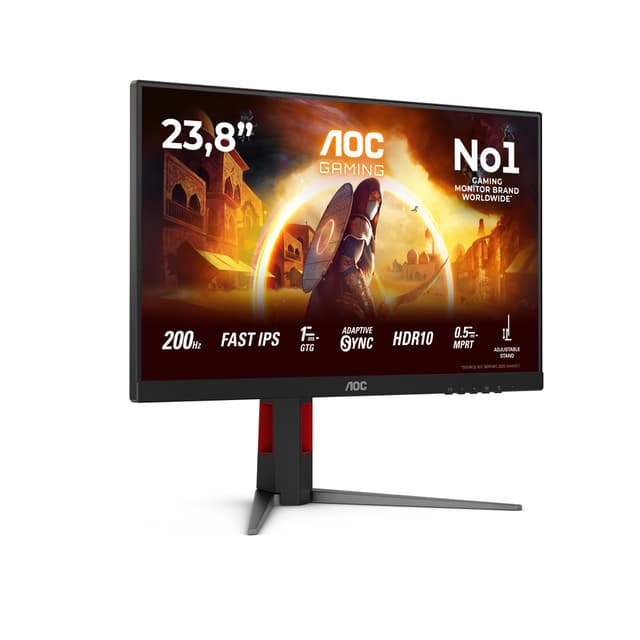
Best Overall: AOC 24G15N2, a 180Hz IPS panel with DisplayPort and dual HDMI that punches well above its price tag for gaming and general use alike.
Best Value: BenQ GW2490E, which delivers a flicker-free IPS panel with excellent eye-care credentials and two HDMI ports, making it the easiest recommendation for office and casual gaming use.
The BenQ GW2490E is the monitor you recommend to someone who wants a reliable, comfortable, well-built 24-inch IPS screen without spending more than £80. BenQ has long been associated with eye-care technology, and the GW2490E carries that heritage forward with its Brightness Intelligence Plus system, which adjusts backlight output based on ambient light, and a certified flicker-free backlight that reduces eye strain during long work sessions. The Low Blue Light Plus mode can be toggled on without the colour shift that plagues cheaper implementations, making it genuinely useful rather than just a marketing checkbox.
The panel itself is a 1920x1080 IPS unit running at 100Hz, which is a meaningful step up from the 60Hz screens it replaces in most home offices. IPS technology means viewing angles are wide, colours stay consistent whether you are sitting directly in front or slightly to the side, and the general image quality is noticeably better than VA panels at similar price points when it comes to everyday content like web browsing, documents, and video calls. The 100Hz refresh rate is not going to satisfy serious competitive gamers, but for casual gaming, productivity, and media consumption it is more than sufficient.
Connectivity is a genuine strength here. Two HDMI ports and a DisplayPort input mean you can connect a desktop PC, a laptop, and a games console simultaneously, switching between them without unplugging cables. That is a feature you would expect to pay more for, and it makes the GW2490E a particularly versatile choice for mixed-use desks. The stand offers tilt adjustment, and the overall build quality feels solid for the price, with a clean borderless aesthetic on three sides.
The 100Hz ceiling is the only real limitation. If you are planning to pair this with a mid-range gaming GPU and want to push frame rates above 100fps, you will feel constrained. For everyone else, this is a near-perfect budget 24-inch monitor. The BenQ name also carries a degree of reassurance on build quality and after-sales support that some of the newer budget brands cannot yet match.
Verdict: The best all-round 24-inch monitor under £100, combining genuine eye-care features, versatile connectivity, and reliable IPS image quality in a package that suits home office workers and casual gamers equally well.
Pros
- Two HDMI ports plus DisplayPort for flexible multi-device connectivity
- Certified flicker-free backlight with effective Brightness Intelligence Plus eye-care
- Wide IPS viewing angles and consistent colour reproduction for office and media use
Cons
- 100Hz refresh rate is limiting for competitive gaming above 100fps
- No height or pivot adjustment on the stand, only tilt
Amazon's own-brand monitor range has grown quietly into a credible option for buyers who want a no-fuss, well-priced screen without any of the brand premium. The Amazon Basics 23.8-inch monitor sits at around £80 and offers something the BenQ GW2490E does not: a 120Hz refresh rate combined with a three-port connectivity suite that includes HDMI, DisplayPort, and VGA. That VGA port is increasingly rare on modern monitors and will matter to anyone connecting an older desktop PC or a work laptop that lacks HDMI output.
The IPS panel at 1920x1080 delivers the wide viewing angles and accurate colour reproduction you expect from the technology. At 23.8 inches, the pixel density is comfortable for everyday use at a typical desk distance of 60 to 80 centimetres, with text appearing sharp and images looking clean without any obvious pixelation. The 120Hz refresh rate is a step up from the 100Hz BenQ and makes a perceptible difference in mouse cursor smoothness and general desktop responsiveness, even outside of gaming contexts.
For gaming, 120Hz is a solid baseline. Most console games now target 120fps on current-generation hardware, and PC gamers with mid-range cards will find 120fps easily achievable in less demanding titles. The IPS panel technology means motion clarity is not quite as sharp as a VA panel at equivalent refresh rates, but the trade-off in colour accuracy and viewing angle is well worth it for most users.
The Amazon Basics branding means you get the reliability of Amazon's fulfilment and returns process, which is a practical consideration when buying electronics. The monitor itself is straightforward to set up, with an OSD that covers the basics without unnecessary complexity. The stand is simple, offering tilt adjustment only, and the overall aesthetic is clean and functional rather than stylish. VESA mounting compatibility means you can replace the stand with a monitor arm if desk space is at a premium.
The main trade-off is that Amazon Basics monitors do not carry the same brand heritage as BenQ or AOC, and long-term reliability data is limited. That said, for a secondary screen, a budget home office setup, or a first monitor upgrade, it represents exceptional value.
Verdict: A quietly impressive budget pick that combines 120Hz, IPS quality, and three-port connectivity at a price that undercuts most of the competition, making it ideal for cost-conscious buyers who do not want to compromise on versatility.
Pros
- 120Hz IPS panel at around £80 offers excellent value for the refresh rate
- VGA port alongside HDMI and DisplayPort covers legacy device connections
- VESA compatible for monitor arm installation
Cons
- Amazon Basics brand has limited long-term reliability track record compared to established monitor manufacturers
- Stand offers tilt only, with no height or swivel adjustment
The Acer SB242Y H1bi occupies a specific niche on this list: it is the professional and home office pick from a major, trusted brand at a price just under the £150 ceiling. Acer's SB series is designed for business and productivity environments, and the SB242Y reflects that focus with a clean aesthetic, an IPS panel optimised for colour accuracy and comfortable extended use, and a price that sits, making it the second most expensive option here. For buyers who want a monitor from one of the world's largest display manufacturers and need a screen primarily for work rather than gaming, this is the natural choice.
The 23.8-inch IPS panel at 1920x1080 is well-suited to productivity tasks. Text rendering is sharp, colours are accurate enough for basic photo editing and design work, and the wide viewing angles mean the image does not shift when you move slightly in your chair. The 100Hz refresh rate is the same as the BenQ GW2490E, which is sufficient for casual gaming and noticeably smoother than 60Hz for everyday desktop use.
Acer has positioned this monitor as a professional tool, and that shows in the build quality and the overall presentation. The bezels are slim on three sides, the stand is stable, and the OSD is straightforward to navigate. The monitor is ZeroFrame design, meaning the bezels are minimal and the screen-to-body ratio is high, which is aesthetically pleasing on a desk and makes multi-monitor setups look cleaner.
Connectivity is the area where the SB242Y shows its budget constraints most clearly. The port selection is limited to a single HDMI 1.4 and a single VGA, which means you can connect one modern device and one legacy device, but no more. There is no DisplayPort, which is a notable omission at this price point. For a single-device home office setup this is fine, but anyone wanting to connect multiple modern devices simultaneously will need to use an HDMI switch or consider one of the other picks on this list.
The Acer brand carries genuine weight in the UK market, with established warranty support and a track record of reliable panels. For buyers who prioritise brand confidence, professional aesthetics, and IPS image quality over raw gaming performance, the SB242Y is a solid choice, though the limited port selection is a genuine consideration.
Verdict: A well-built professional IPS monitor from a trusted brand that suits home office and productivity use well, though the limited port selection and 100Hz ceiling mean it is not the best choice for gaming or multi-device setups.
Pros
- Acer brand reliability and established UK warranty support
- ZeroFrame slim-bezel design looks clean in professional and multi-monitor setups
- IPS panel delivers accurate colours and wide viewing angles for productivity tasks
Cons
- Only one HDMI 1.4 and one VGA port, with no DisplayPort, limiting modern connectivity
- 100Hz refresh rate and no adaptive sync make it a poor choice for gaming
Buying Guide
Is 24 inches a good monitor size?
For most people, yes. A 24-inch 1080p monitor at a typical desk distance of 60 to 80 centimetres fills your field of view comfortably without requiring you to move your head to see the edges of the screen. The pixel density at 1080p on a 24-inch panel is approximately 92 pixels per inch, which is sharp enough for text, web browsing, and video at normal viewing distances. It is the most popular monitor size sold in the UK for a reason: it works well for the widest range of use cases without taking up excessive desk space.
Is there a big difference between 24 and 27 inches?
At 1080p, moving from 24 to 27 inches actually reduces pixel density, which means text and images can look slightly less sharp on a 27-inch 1080p screen than on a 24-inch equivalent. If you want a 27-inch monitor, the ideal resolution is 1440p, which maintains a similar pixel density to 24-inch 1080p. For purely 1080p content, 24 inches is the better fit. If desk space is not a constraint and you prefer a larger canvas for productivity or media, 27 inches is fine, but the pixel density trade-off is real and worth considering.
Is a curved or flat monitor better?
For 24-inch monitors, flat is generally the better choice. Curved screens are most beneficial at larger sizes, typically 27 inches and above, where the curvature helps wrap the edges of the screen into your peripheral vision more naturally. At 24 inches, the curvature radius is too shallow to provide a meaningful immersive benefit, and flat panels are easier to position correctly on a desk. All five monitors on this list are flat, which is appropriate for the size.
How far should you sit from a 24-inch monitor?
The general recommendation for a 24-inch 1080p monitor is 50 to 80 centimetres from your eyes to the screen. At 60 centimetres, the pixel density is high enough that individual pixels are not visible, and the screen fills a comfortable portion of your field of view. Sitting closer than 50 centimetres can cause eye strain over long sessions and may make individual pixels visible. Sitting further than 80 centimetres reduces the effective size of the screen and may make text harder to read without scaling up the display settings.
Panel type: IPS vs VA for this budget
All five monitors on this list use IPS or Fast IPS panels, which is the right technology choice for a 24-inch budget monitor. For a broader overview of what's available across different price points and use cases, our guide to best pc accessories and monitors available covers the full spectrum of options. IPS panels offer wider viewing angles (typically 178 degrees horizontal and vertical), more accurate colour reproduction, and better performance for mixed-use scenarios that combine gaming, productivity, and media. VA panels offer higher contrast ratios, which can improve perceived depth in dark scenes, but at 24 inches and under £150, the IPS advantages in everyday use outweigh the VA contrast benefit for most buyers. Fast IPS, as found in the KOORUI G2411P, adds reduced response times on top of standard IPS advantages.
Refresh rate: what do you actually need?
For office work and casual use, 100Hz is a genuine improvement over 60Hz and is sufficient for most people. For gaming, 144Hz was the previous standard, but 180Hz and 200Hz are now available at this price point and represent a meaningful step up in competitive gaming smoothness. If you play fast-paced games like first-person shooters, aim for 180Hz or above and pair your monitor with best gaming peripherals. If your primary use is productivity with occasional gaming, 100Hz or 120Hz is perfectly adequate and may save you money for other components.
Connectivity: what ports do you need?
At minimum, look for one HDMI port. DisplayPort is preferable for PC gaming as it supports higher refresh rates and adaptive sync more reliably than HDMI 1.4. If you want to connect multiple devices, dual HDMI or HDMI plus DisplayPort is ideal. VGA is only relevant if you have older hardware. The AOC 24G15N2 offers the best port selection on this list with dual HDMI 2.0 and DisplayPort 1.4.
The AOC 24G15N2 is the best 24-inch monitor under £150 for most buyers. Its combination of 180Hz IPS performance, dual HDMI 2.0 plus DisplayPort 1.4 connectivity, AMD FreeSync Premium, and the reliability of the AOC brand makes it the most complete package on this list. It handles gaming, productivity, and media equally well, and the port selection means it will accommodate multiple devices without compromise.
For buyers on a tighter budget, the BenQ GW2490E at around £80 is the standout value pick. Its eye-care credentials, dual HDMI ports, and IPS image quality make it an excellent all-rounder for home office and casual gaming use at half the price of the AOC. The KOORUI G2411P deserves a mention for competitive gamers who want the highest refresh rate available at this budget, delivering 200Hz Fast IPS performance at under £135. The Amazon Basics 23.8-inch monitor offers the best connectivity-to-price ratio in the sub-£85 bracket, while the Acer SB242Y H1bi suits buyers who prioritise brand confidence and professional aesthetics over gaming performance.