For most people in the UK, the right mobile broadband device is a portable 4G MiFi, and the TP-Link M7000 is the one we point most readers towards. If you need whole-home coverage without a fixed line, the TP-Link Deco X50-5G is the 5G mesh system that genuinely replaces one. Below are the six devices from our own review catalogue, ranked, with live UK pricing on every one. The budget end of this market has become properly competitive, and the gap between the cheapest pocket hotspot here and the dearest one is narrower than it looks, so the more useful question is usually portable versus fixed rather than cheap versus expensive. Whether you want something that slips into a jacket pocket or a device to anchor a home office, this guide covers the differences, the specs that matter, and the trade-offs behind each pick.
Quick Verdict
Best Overall: The TP-Link M7000 4G MiFi is the pick for the job most readers actually arrive with, which is portable internet that works without fuss. Our review scores it 7.0 out of 10 and sums it up as reliable and fuss free for occasional use, though sluggish speeds will frustrate regular users. It is cheap, it is pocketable, and it works out of the box on any major UK network SIM. Keep reading for the devices that suit heavier use, whole-home coverage, or travel abroad.
Best for Whole-Home 5G: TP-Link Deco X50-5G, the highest-scoring device here at 8.0 out of 10 and the only one that combines a 5G modem with a real Wi-Fi 6 mesh system. It is also by far the most expensive, and it only makes sense where 5G coverage is strong.
Best Budget: ZTE U10S Pro, a no-nonsense travel hotspot that covers the basics at the lowest price in this group.
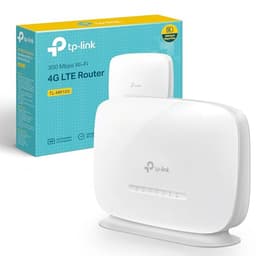
Best Home Router: TP-Link TL-MR105, a mains-powered 4G router with Ethernet ports, aimed at rural properties and temporary accommodation rather than a pocket.
Best for Travel: ZTE MF920, genuinely unlocked for any network or international SIM, with guest network support and a generous device limit.
Best Compact: TP-Link M7200, the longest battery life of the budget hotspots here and the simplest to set up.
At £260.00 the Deco X50-5G is the most expensive device on this list by a wide margin, and it is also the only one that is not really a MiFi at all. It is a 5G router and a Wi-Fi 6 mesh system in one box, aimed at households beyond the reach of fibre who want a proper home network rather than a hotspot everyone tethers to. Our review scores it 8.0 out of 10, the highest score in this group, with the verdict that brilliant mesh meets 5G convenience, but only if your signal actually holds up. Verified specs record AX3000 dual-band Wi-Fi 6, one 2.5 Gbps port alongside two Gigabit ports, and WPA3 support.
The caveat in that verdict is the whole decision. Performance depends heavily on 5G coverage quality at your address, and the external antenna ports exist precisely because marginal signal is common. Check your network's 5G coverage map before committing this much money.
Who it suits: rural homeowners and renters with poor fibre access but decent 5G coverage who need whole-home Wi-Fi, enthusiasts who want a backup WAN connection, and small businesses in areas with limited wired options. Who should skip it: anyone who already has full fibre installed, homes in 5G blackspots, competitive gamers who need very low latency, and anyone on a capped mobile data plan rather than an unlimited home allowance. Our review is blunt about that split: with decent 5G coverage and an unlimited plan this can be transformative, and in a blackspot or alongside working fibre you should look elsewhere. It is expensive for what is essentially a 5G modem and a mesh router in one chassis, but the integration is the part you are paying for, and it does work as advertised.
Pros
- Genuine mesh system with excellent whole-home coverage
- Fast 5G speeds with automatic 4G fallback, and works with all UK 5G carriers
- External antenna ports allow signal improvement where 5G is marginal
- Simple setup and management through the app
Cons
- Expensive compared with carrier-branded alternatives
- Performance depends heavily on 5G coverage quality at your address
- App lacks advanced configuration options
- Needs an unlimited data plan to work as home broadband
The U10S Pro costs £34.99 and is the cheapest way onto this list. It is a plain 4G pocket hotspot with a SIM slot, sold unlocked, and our review scores it 7.5 out of 10 with the verdict that it is reliable 4G on a tight budget, but daily users will outgrow it fast. That last clause is the honest limit: it suits day trips, holidays and backup, not a full working week as your only connection.
Two listing claims are worth flagging. The listing quotes 229 Mbps and a ten-hour battery, while our own review records Cat 4 4G and a battery that will not last a full working day under heavy use. Where the listing and our review disagree, take the review.
Who it suits: occasional travellers, students who need backup internet, and home workers who want a cheap failover connection for the days the main line goes down. Who should skip it: heavy daily users treating mobile broadband as their primary internet, anyone who needs all-day battery under continuous use, and anyone regularly connecting eight or more devices. Our review's framing is the useful test: if you need mobile broadband a few times a month rather than every day, this is the sensible choice, and if you need it every day you should be spending more. The plastic construction and dated web interface are obvious cost-cutting, but the core function works reliably and setup is foolproof.
Pros
- Exceptional value for money in the budget MiFi category
- Genuinely simple setup that works out of the box with major UK networks
- Reliable 4G connectivity with minimal disconnections
- Compact, portable design that fits easily in a bag
Cons
- Battery will not last a full working day under heavy use
- Performance degrades noticeably beyond eight connected devices
- No mobile app, so management is through a dated web interface
- Cat 4 4G only, with no 5G and no faster Cat 6 speeds
At £83.43 the M7000 is the device we recommend to most people who just want portable internet that works. Our review scores it 7.0 out of 10, with the verdict that it is reliable and fuss free for occasional use, though sluggish speeds will frustrate regular users. Verified specs record Wi-Fi 4 and a 150 Mbps Cat 4 modem, which tells you exactly where the ceiling sits.
What earns it the recommendation is not the specification, it is the absence of friction. Setup is genuinely foolproof, the build holds up to being thrown in a bag, and connection stability is good with minimal drops. If you want faster than this you are looking at a different price bracket, not a different budget MiFi.
Who it suits: travellers needing occasional internet without spending much, households wanting affordable backup broadband, and students in shared accommodation sharing a basic data plan across a few devices. Who should skip it: anyone who needs 5G speeds, streams 4K regularly, or intends to use this as their primary connection. Heavy multitaskers with many devices connected at once will hit the ceiling quickly, as will anyone unwilling to live with micro-USB charging. Our review's own summary puts it plainly: it is not fast and it is not feature rich, but it is reliable and simple, which is exactly what matters for occasional use.
Pros
- Excellent value for basic 4G connectivity needs
- Simple setup and daily use, genuinely foolproof
- Solid build quality that holds up to travel
- Reliable connection stability with minimal drops
Cons
- Cat 4 speeds are noticeably slower than modern alternatives
- 2.4 GHz only Wi-Fi limits range and increases interference
- Micro-USB charging feels dated
- Performance drops significantly with several active devices
The TL-MR105 costs £59.77 and is the only mains-powered router in the group other than the Deco. It takes a SIM, sits on a desk or shelf, and gives you two LAN/WAN ports for wired kit. Our review scores it 7.5 out of 10 and calls it a solid budget pick for rural broadband replacement or temporary accommodation, especially if you need failover capability. Verified specs record Wi-Fi 4 N300, two antennas and two 100 Mbps LAN/WAN ports.
The dual-mode WAN is the genuinely unusual feature at this price: it will fall back to 4G when a fixed line drops, which is rare in a budget router. Skip it if you are in a congested urban flat that needs 5 GHz, or on gigabit fibre, because the 100 Mbps ports and single-band Wi-Fi will bottleneck a faster connection.
Who it suits: anyone in a rural area replacing slow DSL with 4G, people in temporary accommodation who want a proper Wi-Fi network rather than a phone hotspot, and small home offices that want cost-effective 4G failover. Who should skip it: flat dwellers surrounded by competing networks, who will feel the missing 5 GHz band most, anyone on gigabit fibre hoping to use the wired WAN mode, and anyone in a genuinely weak signal area who needs a directional antenna, because there are no external antenna ports to attach one to. That last one is a hard limitation rather than an inconvenience, so check your signal before ordering.
Pros
- Plug and play setup works with most major UK SIMs out of the box
- 4G failover capability is genuinely rare at this budget price point
- The Tether app is clean and functional, with no cloud account required
- Competitive pricing for the feature set, especially the dual-mode WAN
Cons
- 2.4 GHz only Wi-Fi, with no 5 GHz band for congested environments
- 100 Mbps Ethernet ports bottleneck a fast fixed-line connection
- No external antenna ports to boost signal in weak 4G areas
At £29.99 the MF920 is the one to take abroad. Our review scores it 7.5 out of 10 and records it as genuinely unlocked and good for a full day, though speeds disappoint power users. Being truly unlocked matters more than it sounds: you can drop in a local SIM in another country without the device arguing about it, which is not a given even on hardware sold SIM free. Verified specs record Wi-Fi N300, a 150 Mbps modem, WPA2 security and a micro-USB charging port.
Battery is the claim to treat carefully. The box advertises ten hours; our review records a working day, roughly six to seven hours in practice. Plan around that rather than the number on the packaging.
Who it suits: international travellers who need unlocked SIM flexibility, budget-conscious buyers who want contract-free mobile broadband, small businesses wanting a backup connection, and families sharing data on holiday. Who should skip it: heavy daily users relying on it as a primary internet source, anyone who needs all-day battery without recharging, and anyone expecting premium build or modern charging standards. Our review's conclusion is that the battery and the build are the compromises here, and at this price they are reasonable ones to accept.
Pros
- One of the cheapest genuinely unlocked 4G MiFi routers available
- Takes any network or international SIM without restrictions
- Generous 32-device capacity handles a family or a small team
- Guest network capability for sharing a connection safely
Cons
- Battery falls short of the advertised ten hours, realistically six to seven
- Basic plastic construction feels cheap and shows scratches easily
- Dated micro-USB charging rather than USB-C
- Performance degrades noticeably beyond ten simultaneous connections
The M7200 costs £34.99 and is the battery pick of the budget hotspots. Our review scores it 7.5 out of 10 with the verdict that it is reliable 4G on a tight budget, but 2.4 GHz only Wi-Fi will frustrate you. It records a genuine eight-hour battery, which is the longest honest figure in this group, and a setup that takes under two minutes.
It is the oldest design here, and the compromises show in the Wi-Fi rather than the modem. In a quiet house or a hotel room it is fine. In a block of flats with dozens of competing networks on 2.4 GHz, it is the first thing that will annoy you.
Who it suits: occasional travellers needing backup connectivity, students in shared accommodation without reliable broadband, and anyone wanting temporary internet during a work trip, a festival or a house move. Who should skip it: heavy multitaskers running six or more devices at once, anyone needing 5G or dual-band Wi-Fi, anyone streaming 4K, and anyone who needs a dependable connection for important video calls. Our review's verdict is that it delivers exactly what it promises, provided you understand the limitations before you buy rather than after.
Pros
- Genuine eight-hour battery life for full-day use
- Plug and play setup takes under two minutes
- Compact and lightweight for travel
- Works with any UK network SIM, and supports ten simultaneous connections
Cons
- 2.4 GHz Wi-Fi only, so it struggles in congested environments
- Budget plastic construction feels cheap and scratches easily
- Occasional connection dropouts require a restart
- Performance degrades noticeably beyond six active devices
Buying Guide
4G vs 5G: Does It Matter for You?
The most important decision when choosing a mobile broadband device is whether to opt for 4G or 5G. The honest answer is that 5G only matters if you are in an area with reliable 5G coverage. The UK's 5G network has expanded significantly since 2024, with EE, Three, Vodafone, and O2 all offering 5G in most major cities and many large towns. However, coverage drops off sharply in rural and semi-rural areas, where 4G remains the dominant standard. Before spending extra on a 5G device, check the coverage maps for your most-used locations on each network's website. If 5G is available where you spend most of your time, the speed improvement is real and worthwhile. If not, a straightforward 4G MiFi like the TP-Link M7000 will serve you better at a fraction of the price.
MiFi vs Home Router: Which Type Do You Need?
Mobile broadband devices fall into two broad categories. Portable MiFi devices are battery-powered, compact, and designed to be carried with you. They are the right choice for commuters, travellers, remote workers, and anyone who needs internet access across multiple locations. Home routers like the TP-Link Deco X50-5G and the cheaper TP-Link TL-MR105 are mains-powered, larger, and designed to stay in one place. They typically offer better Wi-Fi range, wired Ethernet ports, and higher simultaneous device limits. If your primary need is replacing a fixed broadband connection at home, a mains-powered router is the better choice. If you need connectivity on the move, a MiFi device is the right tool.
Network Compatibility and SIM Cards
Most devices sold SIM-free in the UK are compatible with all four major networks. However, it is worth checking that the device supports the specific frequency bands used by your preferred network. For 4G, band 20 (800 MHz) is the most important for rural coverage, and band 3 (1800 MHz) is commonly used for capacity in urban areas. For 5G, band n78 (3.5 GHz) is the primary band used by all UK networks. Some devices also support band n28 (700 MHz) 5G, which offers better range and indoor penetration. If you plan to use the device abroad, check that it supports the bands used in your destination countries, and check that the device is genuinely unlocked rather than merely sold without a SIM.
Data Plans and Running Costs
The device is only part of the equation. You will also need a SIM-only data plan to use it. The UK mobile data market has become increasingly competitive, with Three, Smarty, iD Mobile, and VOXI all offering large or unlimited data plans at reasonable monthly costs. For heavy users, an unlimited data SIM from Three or Smarty is often the most cost-effective option. For occasional users, a pay-as-you-go or low-cap monthly plan from any major network will suffice. Check whether your chosen plan includes tethering, as some cheaper plans restrict the use of data through a hotspot or router device.
Battery Life and Charging
If you are using a portable MiFi device away from a power source for extended periods, battery life matters, and advertised figures in this category are optimistic more often than not. Our own reviews record the ZTE MF920 falling short of its advertised ten hours, at roughly six to seven in practice, while the TP-Link M7200 delivers a genuine eight. Treat the number on the box as a ceiling, not an expectation. Charging is the other thing to check: the budget hotspots here still use micro-USB rather than USB-C, so you will be carrying a second cable unless your other devices are equally old.
The TP-Link M7000 is the mobile broadband device most UK buyers should start with. It is cheap, it works on any major network SIM, setup is genuinely foolproof, and our review scores it 7.0 out of 10 for exactly the use case most people have, which is portable internet that needs to work without being fiddled with. Its Cat 4 modem and 2.4 GHz Wi-Fi are the price of that simplicity, and if you use a hotspot every day rather than occasionally, you will feel both.
If you want to drop a fixed line entirely and you have strong 5G at your address, the TP-Link Deco X50-5G is the most capable device here and the highest-scoring at 8.0 out of 10, though it costs many times what the hotspots do. For a rural property or temporary accommodation on 4G, the TP-Link TL-MR105 does the same job for far less with the bonus of 4G failover. For travelling abroad, the ZTE MF920 is genuinely unlocked and takes a local SIM without complaint. For the longest battery on a budget, the TP-Link M7200 holds eight hours. And if you simply want the cheapest thing that works for occasional use, the ZTE U10S Pro is the entry point.