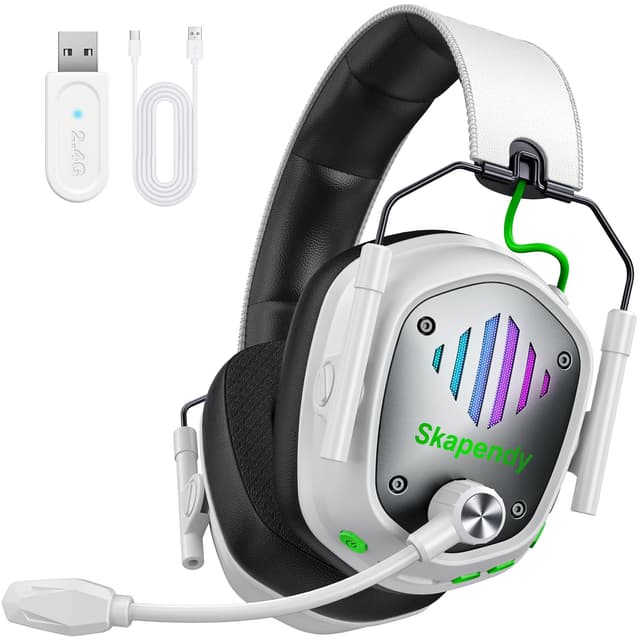
Best Overall Value
Price: £66.49 | Rating: ★★★★☆ (4.4)
Here's the thing: getting wireless, ENC microphone tech, and a 100-hour battery in a single headset under £70 used to be impossible. The Picun G2 changes that. For PC gaming specifically, the 2.4GHz connection at 5ms latency is the one you'll use most, and it's genuinely solid. No audio lag, no dropout issues in normal use. Bluetooth 5.4 is there if you want to pair it to your phone simultaneously, which is a handy touch for Discord calls on mobile.
The ENC (Environmental Noise Cancellation) mic does a proper job of cutting background noise. It won't match a Blue VO!CE setup, but for in-game comms and casual streaming it's more than good enough. Virtual 7.1 surround works reasonably well in shooters for positional cues, though like most virtual surround at this price, it's best left on for FPS games and switched off for music.
Build quality is decent for the price. The headband has some flex to it and the earcups are comfortable for two to three hour sessions. The RGB is subtle rather than garish, which some people will appreciate. Battery life is the headline feature and it genuinely delivers. You're not charging this thing every other day.
Limitations? The 7.1 virtual surround isn't going to compete with dedicated DAC setups. And the mic, while good, doesn't detach. But at this price, with this feature set, it's hard to argue with the Picun G2 as the best gaming headset for PC in the budget-to-mid range bracket.
Pros
- Triple connectivity: 2.4GHz, Bluetooth 5.4, and wired
- 100-hour battery is genuinely class-leading at this price
- 5ms low latency on 2.4GHz, ideal for PC gaming
- ENC mic handles background noise well
- Comfortable for extended sessions
Cons
- Mic is not detachable
- Virtual 7.1 is decent but not exceptional
- Relatively new brand with limited long-term track record
Buy on Amazon£66.49
Best Build Quality
Rating: ★★★★☆ (4.4)
The G733 is a premium wireless headset and it shows. The suspension headband is genuinely clever design. Instead of clamping down on your head, it distributes weight across a fabric strap. For long PC gaming sessions, that makes a real difference. You stop noticing you're wearing it after about 20 minutes.
Blue VO!CE microphone technology is the other big selling point. On PC, you get access to Logitech's G HUB software which lets you apply filters, EQ, and noise reduction to your mic in real time. For streamers or anyone who cares about how they sound in Discord, this is a proper step up from the competition. The PRO-G drivers deliver a wide soundstage that works well in open-world games and competitive shooters alike.
LIGHTSPEED wireless at 20m range means you can wander around your room without cutting out. 29 hours of battery is solid, though the Picun G2 beats it significantly on that front. The build feels premium throughout, with quality plastics and a headband that doesn't creak.
The price is the honest limitation here. It's a lot of money. But if you want the best build quality and mic tech in a wireless PC headset without going full flagship, the G733 delivers.
Pros
- Suspension headband is genuinely comfortable for long sessions
- Blue VO!CE mic tech is excellent for PC streaming and comms
- LIGHTSPEED wireless is reliable and fast
- 20m wireless range is generous
- Premium build quality throughout
Cons
- Expensive for a budget roundup inclusion
- 29-hour battery is good but not class-leading
- G HUB software can be resource-heavy on older PCs
Buy on Amazon
Best Bundle Deal
Price: £49.99 | Rating: ★★★★☆ (4.0)
This is a bundle, and it's worth being upfront about that. You're getting the G PRO X headset alongside the G PRO mechanical keyboard. For PC gamers setting up a new desk or upgrading both peripherals at once, the combined price can represent decent value compared to buying separately.
The G PRO X headset itself is a wired USB headset with PRO-G drivers and Blue VO!CE mic technology. On PC, the USB connection means you get full software support through G HUB, including mic filtering and EQ. The detachable boom mic is a nice touch. You can remove it when you just want to listen to music without looking like you're about to take a call.
Sound quality is genuinely good. The PRO-G drivers have a balanced profile that works well across games, music, and voice chat. The build is solid aluminium and steel, which feels reassuringly sturdy. The G PRO keyboard adds tactile mechanical switches to the package, which is a proper upgrade for PC gaming if you're still on a membrane board.
The main caveat: if you already have a decent keyboard, this bundle loses some of its appeal. The headset alone is excellent, but you're paying for both items here.
Pros
- G PRO X headset has excellent PRO-G drivers
- Detachable boom mic with Blue VO!CE tech
- Bundle value if you need both peripherals
- Solid aluminium and steel build
Cons
- Wired only, no wireless option
- Bundle is poor value if you don't need the keyboard
- G HUB software is required for full features
Buy on Amazon
Best Premium Pick
Rating: ★★★★☆ (4.3)
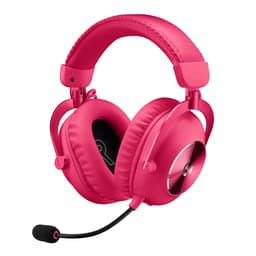
Right. This is the expensive one. And yes, it costs a lot. But the G PRO X 2 LIGHTSPEED is genuinely the best headset in this entire roundup on pure audio performance. The 50mm graphene drivers are the key. Graphene is lighter and more responsive than standard mylar, which translates to faster transient response and cleaner high frequencies. In practice, footsteps in competitive shooters are more distinct, and music sounds noticeably more detailed.
DTS:X Headphone 2.0 virtual surround is among the better implementations of the technology on PC, especially when paired with G HUB. Multi-platform wireless (LIGHTSPEED, Bluetooth, and 3.5mm) means this headset works across your entire setup without swapping cables. The detachable boom mic with Blue VO!CE is the same quality you get on the G733.
For serious PC gamers who spend hours every day at their desk, this is the headset that justifies its price. For casual players, it absolutely doesn't. Know your own usage before spending this much.
Pros
- 50mm graphene drivers are genuinely exceptional
- DTS:X 7.1 surround is one of the best virtual implementations available
- Triple wireless connectivity
- Detachable Blue VO!CE boom mic
Cons
- Very expensive, hard to justify for casual gamers
- White colourway shows dirt easily
- Requires G HUB for full feature access on PC
Buy on Amazon
Best Under £100
Price: £61.99 | Rating: ★★★★½ (4.6)
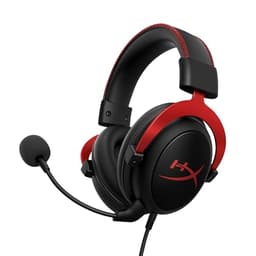
The HyperX Cloud II has been around for years. And it's still here because it's still good. That's not nothing. The 53mm drivers are larger than most competitors at this price, and the passive noise isolation from the closed-back design is excellent for PC gaming in a busy household. You genuinely don't need active noise cancellation when the earcup seal is this good.
On PC, the USB sound card adapter gives you virtual 7.1 surround and mic monitoring. The mic itself is detachable and performs well for voice chat and casual streaming. The aluminium frame feels solid and the leatherette earcups are comfortable, though they can get warm during long sessions.
The honest limitation is age. The Cloud II hasn't changed much and the competition has caught up in some areas. But the core audio quality and build are still genuinely competitive under £65, and the brand reputation means you know what you're getting. No nasty surprises.
Pros
- 53mm drivers deliver a wide, detailed soundstage
- Excellent passive noise isolation
- Detachable mic with solid voice clarity
- Proven reliability over many years
Cons
- Design is showing its age
- Leatherette earcups can get warm
- No wireless option
Buy on Amazon£61.99
Best Under £50
Price: £39.99 | Rating: ★★★★½ (4.6)
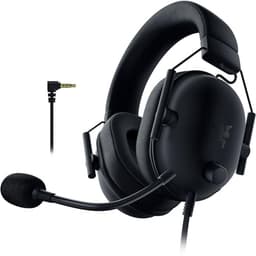
Don't let the Xbox branding put you off. The BlackShark V2 X connects via 3.5mm, which means it works perfectly on PC. And for under £40, it's a surprisingly capable headset. The 50mm TriForce drivers are borrowed from Razer's more expensive models and the difference in audio detail compared to generic budget headsets is noticeable.
The cardioid mic is the real standout. Cardioid pickup patterns reject side and rear noise more effectively than omnidirectional mics, which is why this headset sounds noticeably better in voice chat than most competitors at this price. For PC gaming where you're talking to teammates regularly, that matters.
It's lightweight at around 240g and the memory foam earcups are comfortable. The noise-isolating closed-back design helps with focus during gaming. The limitation is the 3.5mm only connection. No USB, no software EQ, no surround sound processing on PC unless you use third-party software. But the raw audio quality is good enough that most people won't miss it.
Pros
- Cardioid mic is genuinely better than most at this price
- 50mm TriForce drivers from Razer's premium line
- Lightweight and comfortable for long sessions
- Works on PC via 3.5mm, no drivers needed
Cons
- 3.5mm only, no USB or wireless
- No software EQ or surround processing included
- Xbox branding may confuse buyers
Buy on Amazon£39.99
Best for Long Sessions
Price: £62.99 | Rating: ★★★★☆ (4.2)
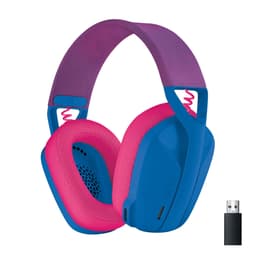
165 grams. That's genuinely light for a wireless gaming headset. The G435 is designed around comfort and portability, and for PC gamers who spend four or more hours at a desk, the reduced weight makes a real difference. Headache from headset clamp pressure is a real thing, and the G435 largely avoids it.
LIGHTSPEED wireless connects to PC via USB dongle with low latency. Bluetooth adds secondary device pairing. The built-in beamforming mics are the compromise you make for the lightweight design. They're fine for casual voice chat but won't satisfy anyone who cares about mic quality. There's no boom arm, no cardioid pickup, just two small mics in the earcups.
Audio quality is decent for the price. The soundstage is a bit narrow compared to larger-driver headsets, but the overall tuning is pleasant for gaming and music. 18 hours of battery is enough for most daily use. If you prioritise comfort above all else for long PC gaming sessions, the G435 is the pick.
Pros
- 165g is exceptionally light for wireless
- LIGHTSPEED and Bluetooth dual wireless
- Comfortable for very long gaming sessions
- Eco-friendly materials (recycled plastic)
Cons
- Built-in beamforming mics are a significant compromise
- Narrower soundstage than larger-driver competitors
- 18-hour battery is adequate but not impressive
Buy on Amazon
Best Mid-Range
Price: £99.98 | Rating: ★★★★☆ (4.4)
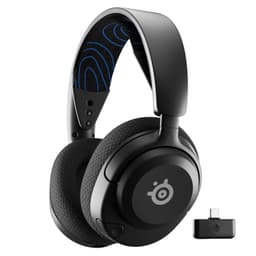
SteelSeries has a strong reputation for PC gaming peripherals, and the Arctis Nova 5P sits in a sensible mid-range position. The Nova series uses SteelSeries' updated driver design with a wider frequency response than older Arctis models. On PC, the SteelSeries GG software gives you proper EQ control and mic settings, which is a genuine advantage over headsets that rely on basic hardware-only tuning.
The Arctis headband design is well established and comfortable. The ski-goggle-style suspension keeps pressure off the top of your head, similar in concept to the G733's suspension band. For PC gaming specifically, the software ecosystem is one of the best available. You can save EQ profiles per game, which is a nice touch for people who switch between competitive shooters and story games.
At around £99, it sits above the budget bracket but below the premium tier. It's a solid choice if you want a known brand, good software support, and reliable audio without spending flagship money.
Pros
- Excellent SteelSeries GG software for PC EQ and mic control
- Comfortable Arctis suspension headband design
- Per-game EQ profile saving
- Trusted brand with good UK support
Cons
- Sits above the budget bracket at £99
- Software is required to unlock full potential
Buy on Amazon
Best Cheap Wireless
Price: £22.99 | Rating: ★★★★☆ (4.4)
Under £27 for a 2.4GHz wireless headset. That's the headline. And it does work on PC via the USB dongle. The 40-hour battery claim is ambitious but real-world use suggests you'll get a solid 30 plus hours, which is still impressive for the price.
Be honest about expectations here. The audio quality is functional rather than impressive. The virtual 7.1 surround is basic and the mic, while noise-cancelling in name, picks up more background noise than the ENC systems on pricier headsets. Build quality is lightweight plastic that feels it.
But. If you genuinely cannot spend more and you want wireless for PC gaming, this works. It connects, it plays audio, the mic is usable for casual voice chat. Just don't expect it to compete with anything above £40.
Pros
- 2.4GHz wireless at a very low price
- 40-hour battery claim is broadly accurate
- Works on PC via USB dongle
Cons
- Audio quality is basic
- Mic noise cancellation is limited
- Build quality feels cheap
- Unknown brand with uncertain longevity
Buy on Amazon
Best Battery Life Budget
Price: £19.99 | Rating: ★★★★☆ (4.1)
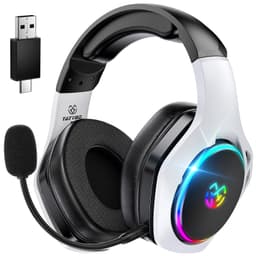
The Buwnia sits just above the cheapest wireless options and adds Bluetooth 5.3 alongside 2.4GHz, which is useful for PC gamers who want to take calls on their phone without removing the headset. The 40-hour battery is the main selling point and it's a genuine one. You're not going to run out mid-session.
Lossless audio via 2.4GHz is the marketing claim, and while the connection is stable, the drivers themselves limit how much detail you'll actually hear. The mic is adequate for voice chat. RGB lighting is present if that matters to your setup aesthetic. On PC, it connects plug-and-play with no software required, which keeps things simple.
It's a step above the cheapest no-name options but not quite in the same league as the Picun G2 for overall quality. Fine for casual PC gaming on a tight budget.
Pros
- 40-hour battery is genuinely long-lasting
- Dual wireless: 2.4GHz and Bluetooth 5.3
- Plug-and-play on PC, no software needed
- RGB lighting for desk aesthetics
Cons
- Driver quality limits audio detail
- Mic clarity is average
- Build feels budget
Buy on Amazon
Best for Beginners
Rating: ★★★★☆ (4.4)
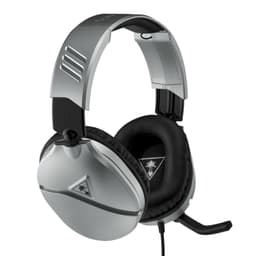
Turtle Beach has been making gaming headsets for a long time, and the Recon 70 is their entry-level wired option. For someone buying their first proper gaming headset for PC, it's a sensible starting point. The 3.5mm connection works on any PC with a headphone jack, and the flip-up mic means you can mute yourself quickly without fumbling for a button.
The 40mm drivers are smaller than some competitors but the tuning is decent for gaming. Bass is present without being overwhelming, and voice clarity in games is good. The build is lightweight plastic but it doesn't feel flimsy. Turtle Beach's reputation for comfort holds up here, with cushioned earcups that work for two to three hour sessions.
It's not going to blow anyone away on audio quality. But for a beginner PC gamer who wants something reliable from a known brand without spending much, the Recon 70 does the job cleanly.
Pros
- Trusted brand with good UK availability
- Simple 3.5mm connection, works on any PC
- Flip-up mic is convenient for quick muting
- Comfortable for beginner-length sessions
Cons
- 40mm drivers are smaller than competitors
- No USB option for PC software features
- Audio quality is functional rather than impressive
Buy on Amazon
Best Under £25
Price: £17.99 | Rating: ★★★★☆ (4.4)
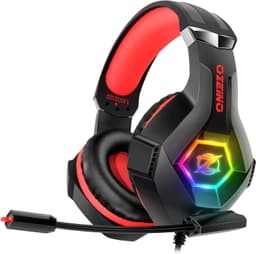
Under £25 and it has memory foam earcups. That's the thing that sets the Ozeino apart from most of the competition at this price. Memory foam makes a real difference to comfort during longer sessions, and most headsets at this price point use basic foam or thin padding that flattens out quickly.
The flexible mic arm is another genuine plus. You can position it close to your mouth for better voice pickup, which matters for PC gaming voice chat. The noise cancellation is basic but it does reduce some background hum. RGB lighting is present, which looks fine on a gaming desk setup.
For PC, it connects via 3.5mm. Simple, no drivers, no software. Just plug in and play. Audio quality is what you'd expect at this price: decent bass, acceptable mids, nothing special in the highs. But for a first headset or a spare for a secondary PC, the Ozeino punches above its price on comfort and mic usability. It's our pick for the best budget gaming headset for PC if you're working with a very tight budget.
Pros
- Memory foam earcups at a very low price
- Flexible mic arm for better positioning
- Simple 3.5mm plug-and-play on PC
- RGB lighting included
- Good value for money overall
Cons
- Audio quality is basic
- Noise cancellation is limited
- Build quality won't last years of heavy use
Buy on Amazon