In competitive gaming, the difference between winning and losing often comes down to information. Specifically, hearing where a threat is before it reaches you. A headset that gives you accurate positional audio isn't a luxury, it's a practical tool. And at an enthusiast price point, the Logitech G PRO X 2 LIGHTSPEED had better deliver exactly that.
The G PRO X 2 is Logitech's flagship wireless gaming headset, built around 50mm graphene drivers and aimed squarely at competitive players who want pro-tier audio without a cable trailing across their desk. It's worn by esports professionals, endorsed by Logitech's G PRO line pedigree, and carries a price tag that demands justification. With 1,828 owner reviews averaging ★★★★☆ (4.3), there's clearly something here. But averages hide nuance, so let's get into what actually matters.
This white version is the same hardware as the black model, just a different finish. If you're considering the Logitech G PRO X 2 LIGHTSPEED Wireless Gaming Headset with its detachable boom mic, 50mm graphene drivers, and DTS:X Headphone 2.0 surround for PC, PS5, PS4, or Nintendo Switch, this review will tell you whether it earns its spot at the enthusiast tier or whether you're paying for the badge.
Core Specifications
The headline spec is those 50mm graphene drivers. Graphene is a genuinely interesting material choice here. It's stiffer and lighter than the mylar used in most gaming headset drivers, which in theory means faster transient response and less distortion at higher volumes. Whether that translates to a meaningful real-world difference over a well-tuned mylar driver is debatable, but it's not marketing nonsense either. Graphene diaphragms are used in higher-end audio gear for legitimate acoustic reasons.
The headset supports three connection methods: 2.4GHz LIGHTSPEED wireless via USB dongle, Bluetooth, and a 3.5mm analogue connection. That's proper multi-platform flexibility. The LIGHTSPEED wireless is Logitech's own low-latency 2.4GHz protocol, which they've refined over several generations of mice and headsets. It's one of the better wireless implementations in gaming peripherals, consistently delivering sub-millisecond latency figures that make it genuinely viable for competitive play rather than just casual use.
The mic is detachable, which matters more than people give it credit for. It means you can use the headset as a clean pair of wireless cans when you're not gaming, without looking like you work in a call centre. The DTS:X Headphone 2.0 virtual surround is software-based and available via PC. Full spec table below.
| Specification | Detail |
|---|---|
| Driver Size | 50mm graphene |
| Wireless Protocol | 2.4GHz LIGHTSPEED |
| Additional Connectivity | Bluetooth, 3.5mm, USB |
| Microphone | Detachable boom mic |
| Virtual Surround | DTS:X Headphone 2.0 (7.1) |
| Compatible Platforms | PC, PS5, PS4, Nintendo Switch |
| Rating (Amazon) | ★★★★☆ (4.3) (2,020 reviews) |
| Price | £149.99 (Price checked 16:31, 3 Oct 2026, UK time) |

Audio Specifications
The 50mm graphene drivers are the core of what Logitech is selling here. Driver size alone doesn't tell you much, a 50mm driver can sound brilliant or terrible depending on tuning, but the graphene diaphragm material is the more interesting part of the equation. Graphene as a material has exceptional stiffness-to-weight ratio, which means the diaphragm can move quickly and accurately without flexing unpredictably at the edges. In practice, owners consistently report a clean, detailed sound that doesn't feel artificially boosted in the way many gaming headsets do.
The frequency response covers the range you'd expect from a full-size gaming headset. What matters more than the raw numbers is how the drivers are tuned within that range. Based on owner feedback patterns across the 2,020, the G PRO X 2 sits closer to a balanced-to-slightly-warm signature than the V-shaped bass-heavy tuning that characterises a lot of gaming headsets. That's actually the right call for competitive gaming, where mid-range clarity and accurate imaging matter more than thumping bass.
Sensitivity and impedance specs aren't published by Logitech in the standard product listing, which is a mild frustration. What we do know from the driver spec and owner reports is that the headset drives to comfortable volumes from both PC and console sources without needing a dedicated amp. The 3.5mm connection works fine from a Switch or PS5 controller, which is the practical test that matters for most users. No one's running this through a headphone amplifier on their gaming desk, and it doesn't need one.
Sound Signature
The G PRO X 2 doesn't try to impress you with the first five seconds of bass-heavy music the way a lot of gaming headsets do. That's either a good sign or a disappointment depending on what you're after. For competitive gaming, it's a good sign. The tuning prioritises clarity across the mid-range, which is exactly where footsteps, reload sounds, and voice chat live. You're not going to miss an enemy repositioning because the low-end is drowning out the detail.
Owners who use this for music and movies as well as gaming generally describe the sound as natural and detailed rather than exciting or punchy. If you're coming from a headset that had exaggerated bass, the G PRO X 2 might initially feel a bit flat. Give it time. What you're hearing is accuracy, and once you adjust, going back to artificially boosted audio feels like watching a film with the colour saturation cranked up. It looks impressive for about ten minutes, then it just gets tiring.
The graphene drivers do seem to handle the upper frequencies particularly well. Treble on cheaper headsets often comes across as harsh or sibilant, especially at higher volumes. Multiple owners specifically call out the treble as being detailed without being fatiguing, which is genuinely hard to achieve in a gaming headset at any price. It makes a difference in games with complex audio environments, where you need to parse a lot of simultaneous sounds without your ears giving up after an hour.
Sound Quality
Soundstage and imaging are where this headset justifies its enthusiast price tag. Imaging, specifically the ability to place sounds accurately in three-dimensional space, is the competitive gaming metric that matters most. The G PRO X 2 performs well here in stereo mode, which is honestly where you want to be for competitive titles anyway. The spatial cues are accurate enough that experienced players report it making a genuine difference in games like CS2, Valorant, and Warzone, where audio positioning is a core mechanic.
The DTS:X Headphone 2.0 virtual surround is available on PC via Logitech's software, and it's better than most virtual surround implementations. But here's the honest take: for competitive play, most experienced players turn virtual surround off. It adds a sense of space that sounds impressive in demos, but it also introduces phase effects that can smear precise directional cues. Use it for story games and films. Keep it off for anything where you're trying to win. The fact that the headset's stereo imaging is strong enough to stand on its own is the more important point.
Bass extension is solid without being dominant. Explosions and low-frequency game audio have weight, but they don't mask the detail above them. Music playback is genuinely enjoyable, which isn't something you can say about a lot of gaming headsets at this price. Owners who use this for extended music listening sessions report it holds up well, particularly with rock, electronic, and acoustic genres. It's not going to replace a dedicated pair of audiophile headphones, but it's not embarrassing either, which puts it well ahead of most gaming headset competition.
Microphone Quality
The detachable boom mic is one of the G PRO X 2's stronger features. Boom mics on gaming headsets vary enormously in quality, from genuinely useful to sounding like you're communicating through a tin can. The G PRO X 2's mic sits firmly in the useful category. Owner feedback consistently rates the mic clarity as above average for a gaming headset, with teammates able to hear speech clearly without the caller needing to shout or sit unnaturally close to the mic.
Noise rejection is decent but not exceptional. In a quiet room, it performs well. In a noisier environment, some background sound bleeds through. It's not going to embarrass you in a squad game, but if you're streaming or recording and you have background noise to deal with, you'll want to pair it with noise suppression software like NVIDIA RTX Voice or similar. That's true of most boom mics at this price point though. A dedicated USB microphone will always beat a headset mic for streaming quality, but that's not what this is competing with.
The detachable design is worth emphasising again. When the mic isn't plugged in, the headset looks clean enough to wear in a video call or while commuting. That versatility is a real practical benefit. Some owners report that the mic connection point feels slightly less solid than the rest of the build, which is a minor concern. The vast majority report no issues with it, but it's something to be aware of if you're regularly plugging and unplugging the mic rather than leaving it in place.
Comfort and Build
Build quality on the G PRO X 2 is genuinely good. It feels like a premium product when you pick it up, not plasticky or cheap. The materials are a mix of aluminium and high-quality plastic, with the headband and earcup padding using memory foam covered in leatherette. Owners who've had it for extended periods report that the materials hold up well, with no peeling or deterioration that plagues cheaper headsets after six months of regular use.
Comfort for long sessions is where owner feedback gets interesting. The majority of owners rate it highly for extended wear, with the memory foam padding and relatively moderate clamp force making it viable for multi-hour gaming sessions. A minority of owners with larger heads report that the clamp force is a bit firm initially, though most note it loosens up with use. If you've got a big head (no judgement), it's worth being aware that the first few weeks might feel tighter than ideal. It does seem to break in.
The headset is on the lighter end for a full-featured wireless gaming headset, which helps with long sessions. Weight is a factor that doesn't get enough attention in headset reviews. A heavy headset that's comfortable for 30 minutes can become genuinely uncomfortable after two or three hours, and that matters if you're doing long gaming sessions or working from home with it on. The G PRO X 2's weight management is one of the things owners consistently praise. Glasses wearers report mixed experiences, as leatherette earcups and glasses frames are never an ideal combination, but the earcup depth seems to accommodate most frame sizes without excessive pressure.

Connectivity
Three connection options is the right spec for a headset at this price. The 2.4GHz LIGHTSPEED wireless is the primary connection for PC gaming, and it's excellent. Logitech's LIGHTSPEED technology, which you can read more about on Logitech's site, has been refined over multiple product generations and consistently delivers low-latency wireless that's genuinely competitive with wired connections. For gaming, you won't notice any lag. The range is strong enough to cover a typical room with ease, and owners report stable connections without dropout in normal home environments.
Bluetooth adds a layer of flexibility that's genuinely useful. You can use it with your phone for calls or music when you're not at your PC, or connect it to a Switch in handheld mode. The Bluetooth connection has slightly higher latency than LIGHTSPEED, which is expected, but it's fine for casual use and music. Some owners use LIGHTSPEED for their PC and Bluetooth simultaneously for phone audio, which works if your use case involves monitoring two audio sources at once. That's a neat trick that not every headset supports.
The 3.5mm connection covers you for PS5 (via the DualSense controller), older consoles, and any situation where you need a wired analogue connection. USB covers PC and PS5 direct connection. The platform coverage is genuinely good. The one thing to note is that LIGHTSPEED wireless is primarily optimised for PC. On PS5, you're using USB or 3.5mm rather than the LIGHTSPEED dongle in the way you'd use it on PC, which is worth knowing if PS5 is your primary platform. It still works well, just through different connection methods.
Battery Life
Battery life on the G PRO X 2 is one of its headline practical advantages. Logitech rates it highly, and owner feedback broadly confirms that you're getting long wireless sessions on a single charge. Real-world usage reports from owners suggest the battery comfortably handles full gaming days without needing a top-up, which is exactly what you want from a wireless headset. The frustration of a headset dying mid-session is real, and the G PRO X 2 largely avoids it.
Charging is via USB-C, which is the right call in 2026. Proprietary charging connectors on headsets are an unnecessary annoyance, and USB-C means you're not hunting for a specific cable. Charge times are reasonable based on owner reports, with most noting that a relatively short charge gets you back to a usable level quickly if you do run it down. The headset can also be used wired via USB while charging, so you're never actually stuck without audio even if the battery is empty.
A few owners note that battery life decreases noticeably if you're running the lighting features (if applicable to your variant) at full brightness. The white version's battery performance in standard use is consistently reported as strong. If you're the kind of person who charges peripherals at the end of each session rather than waiting for them to die, you'll never have a battery problem with this headset. It's the kind of battery life that stops being a thing you think about, which is the best outcome.
Software and Customisation
Logitech G HUB is the software companion for the G PRO X 2, and it's one of the better peripheral software suites available. It's not perfect, but it's functional and actively maintained. Through G HUB you get access to EQ customisation, mic monitoring settings, virtual surround controls, and firmware updates. The EQ options are meaningful rather than just marketing, with enough bands to actually shape the sound signature to your preference. If the default tuning feels slightly bass-light for your taste, you can add some low-end without it becoming a mess.
The DTS:X Headphone 2.0 implementation lives within G HUB on PC, and it's worth experimenting with. As mentioned earlier, most competitive players will end up turning it off for FPS games, but for story games and cinematic experiences it adds genuine depth. The software also handles the simultaneous LIGHTSPEED and Bluetooth connection management, which works reliably according to owner reports. G HUB has had a history of stability issues in older versions, but the current version is generally reported as solid.
Mic customisation options include adjustable sidetone (mic monitoring), which lets you hear your own voice through the headset while speaking. This is a feature that sounds minor but makes a real difference in how natural your communication feels over long sessions. Without sidetone, people tend to speak too loudly because they can't hear themselves. The G PRO X 2's sidetone implementation is adjustable in G HUB, which means you can dial it to whatever level feels natural. Firmware updates push through G HUB automatically, so you're not having to manually check for updates.
Compatibility
The G PRO X 2 covers PC, PS5, PS4, and Nintendo Switch explicitly in its product spec. That's a solid range. On PC it's the full experience, LIGHTSPEED wireless, full G HUB software, DTS:X surround, and all customisation options. On PS5 and PS4 you're using USB or 3.5mm, which still gives you good audio quality but without the LIGHTSPEED wireless protocol or PC-specific software features. The headset still sounds great on PlayStation, it's just a more basic connection.
Nintendo Switch compatibility via 3.5mm works in both docked and handheld modes. In handheld mode via Bluetooth, you get wireless convenience for portable play, which is a genuinely useful combination. The Switch's Bluetooth audio implementation has latency considerations for gaming, but for casual play it's fine. The 3.5mm connection on the Switch is the lower-latency option if you're playing something timing-sensitive.
Xbox isn't explicitly listed in the compatibility spec, which is worth noting if you're primarily an Xbox player. The 3.5mm connection via the Xbox controller will work for audio, but wireless LIGHTSPEED on Xbox isn't supported in the way it is on PC. If Xbox is your main platform, check current compatibility before purchasing. The headset's multi-platform strengths are clearly oriented around PC as primary with PlayStation and Switch as secondary platforms. That covers a lot of people, but it's not universal.
How It Compares
At the enthusiast price tier, the G PRO X 2 is competing with the SteelSeries Arctis Nova Pro Wireless and the Astro A50 Gen 5. Both are serious headsets with their own strengths, and the comparison is worth making properly rather than just declaring a winner.
The SteelSeries Arctis Nova Pro Wireless is arguably the G PRO X 2's closest direct competitor. It features active noise cancellation, which the G PRO X 2 doesn't advertise, and a hot-swap battery system that gives it a practical advantage for very long sessions. The Arctis Nova Pro Wireless also supports simultaneous multi-device connection more explicitly. However, owners of both headsets generally rate the G PRO X 2's audio quality as slightly more natural and detailed, particularly in the mid-range. The graphene drivers do seem to make a difference. SteelSeries' own product page makes strong claims for the Nova Pro, and it's a genuinely good headset, but the G PRO X 2 holds its own.
The Astro A50 Gen 5 is the other major competitor. It's built around a charging base station that doubles as a DAC/amp, which is a different approach to the problem. The base station is convenient for always-charged wireless use, but it also means you're committed to a specific desk setup. The G PRO X 2's USB-C charging is more flexible. Audio quality between the two is close, with the A50's base station potentially offering better DAC performance on PC. But the G PRO X 2 is typically available at a lower price point, and the LIGHTSPEED wireless is arguably more reliable than the A50's proprietary wireless. For most competitive players, the G PRO X 2 is the more practical choice.
| Feature | Logitech G PRO X 2 LIGHTSPEED | SteelSeries Arctis Nova Pro Wireless | Astro A50 Gen 5 |
|---|---|---|---|
| Driver Size | 50mm graphene | 40mm neodymium | 40mm |
| Wireless | 2.4GHz LIGHTSPEED | 2.4GHz + Bluetooth | 5GHz proprietary |
| Bluetooth | Yes | Yes | No |
| 3.5mm | Yes | Yes | Yes |
| Detachable Mic | Yes | Yes (retractable) | Yes |
| Active Noise Cancellation | Not specified | Yes | Not specified |
| Charging | USB-C | USB-C / hot-swap battery | Base station |
| PS5 Compatible | Yes | Yes | Yes |
| Price Tier | Enthusiast | Enthusiast | Enthusiast |

Final Verdict
The Logitech G PRO X 2 LIGHTSPEED is a proper enthusiast gaming headset that earns its price tag through audio quality and wireless performance rather than feature bloat. The 50mm graphene drivers deliver a sound signature that's more accurate and less fatiguing than most gaming headsets at this tier. The LIGHTSPEED wireless is genuinely low-latency. The three-connection setup (2.4GHz, Bluetooth, 3.5mm) gives you real flexibility across platforms. And the detachable boom mic is good enough to use without embarrassment in competitive gaming, even if it won't replace a dedicated streaming microphone.
The 4.2 average across 2,020 is a meaningful signal. That's a large enough sample to smooth out the outliers, and it reflects a headset that consistently delivers for the majority of buyers. The complaints that do appear in the reviews are mostly about clamp force for larger heads and the expected limitations of a gaming headset mic in noisy environments. Neither of those is a fundamental flaw, and both are manageable.
Who should skip it? If your primary platform is Xbox, check compatibility carefully before committing. If you're a streamer who needs broadcast-quality mic audio, you'll want a dedicated USB mic regardless of which headset you buy. And if you're primarily a casual gamer who plays a few hours a week, there are solid options at lower price points that will serve you fine. The G PRO X 2 is built for people who spend serious time gaming and want audio that keeps up with them. At the enthusiast tier, it's one of the most sensible choices you can make. The graphene drivers are a genuine differentiator, the LIGHTSPEED wireless is class-leading, and the overall package is coherent rather than a collection of marketing bullet points.
For competitive PC gaming specifically, this is about as good as wireless gaming audio gets without crossing into dedicated audiophile headphone territory. That's a strong position to be in. Logitech's official product page has the full technical breakdown if you want to cross-reference specs. But based on what the spec sheet shows and what nearly 1,900 owners report, the G PRO X 2 is the real deal.
What works. What doesn’t.
5 + 3What we liked5 reasons
- 50mm graphene drivers deliver accurate, detailed audio with non-fatiguing treble
- LIGHTSPEED 2.4GHz wireless is genuinely low-latency for competitive gaming
- Three connection options (LIGHTSPEED, Bluetooth, 3.5mm) covers most platforms
- Detachable boom mic is clean enough to use without embarrassment
- USB-C charging with wired use while charging
Where it falls3 reasons
- Clamp force can feel tight initially for larger heads
- LIGHTSPEED wireless not optimised for Xbox
- Mic not good enough to replace a dedicated streaming microphone
Full specifications
12 attributes| Connectivity | 2.4GHz LIGHTSPEED wireless, Bluetooth, 3.5mm, USB |
|---|---|
| Surround | 7.1 |
| Microphone | detachable boom |
| Noise cancellation | false |
| Battery life H | 50 |
| Driver size | 50mm |
| Driver size MM | 50 |
| Frequency response HZ | 20-20000 |
| Microscope type | detachable boom |
| Platforms | PC, PS5, PS4, Nintendo Switch |
| Spatial audio | true |
| Type | over-ear |
If this isn’t right for you
2 options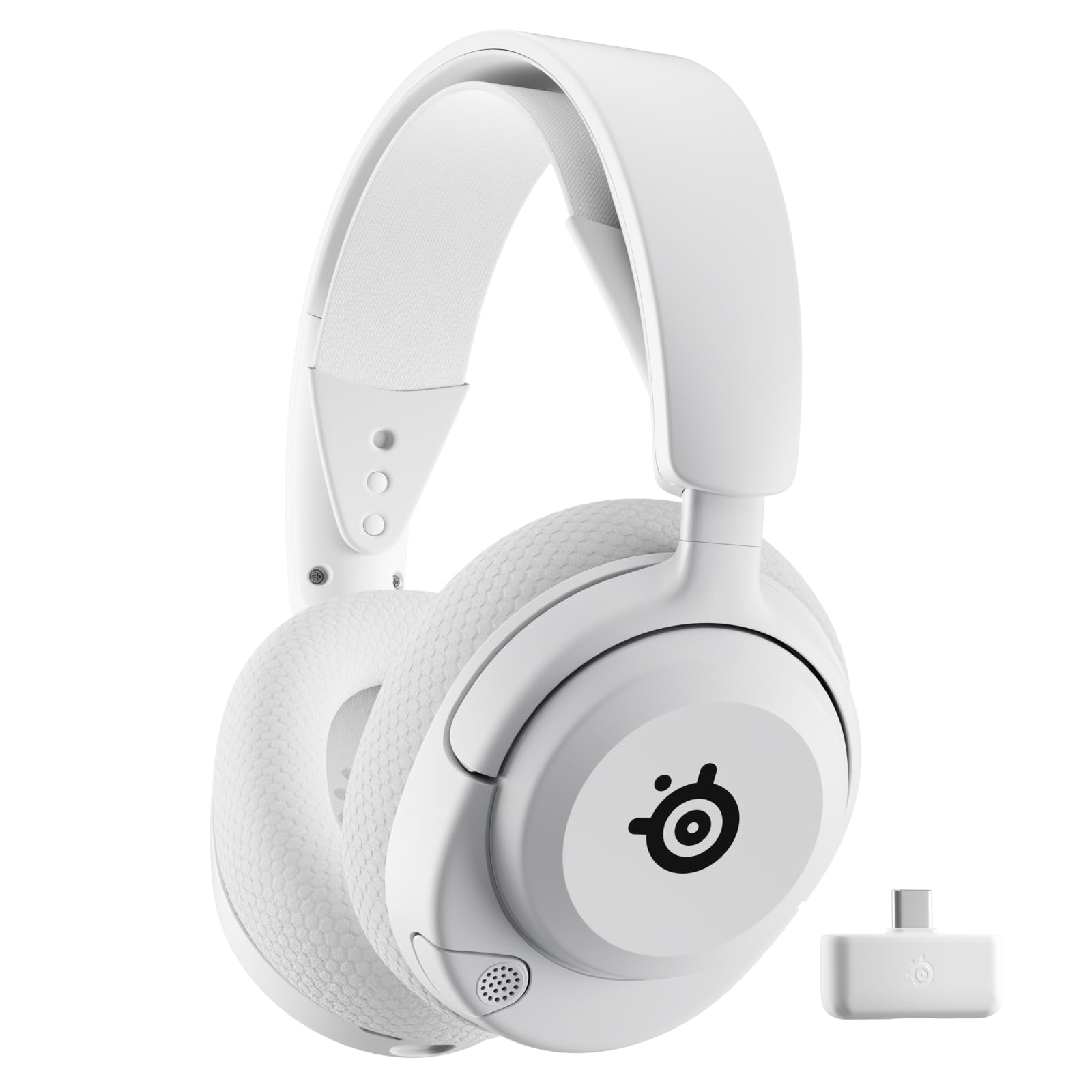 8.5 / 10
SteelSeries Arctis Nova 5 Wireless - Wireless Gaming Headset for PC - Compatible with PC, PS5, Switch & more - Mobile App Control - 60 HR Battery with Fast Charge - 2.4GHz/Bluetooth - White
£129.00 · SteelSeries
 8.5 / 10
Logitech G Astro A50 LIGHTSPEED Wireless Gaming Headset + Base (Gen 5), PRO-G GRAPHENE, 3-System Switching, USB-C to Xbox, PS5, PC/Mac, Nintendo Switch, Switch 2, Bluetooth - Black
£199.99 · Logitech G
Frequently asked
5 questions01Is the Logitech G PRO X 2 LIGHTSPEED Wireless Gaming Headset good for competitive gaming?+
Yes, it's one of the better options at the enthusiast tier for competitive play. The 50mm graphene drivers produce accurate mid-range detail where footsteps and positional audio cues live, and the LIGHTSPEED 2.4GHz wireless delivers low-latency performance that's genuinely viable for FPS and battle royale titles. Most competitive players report using it in stereo mode rather than virtual surround for the most precise directional imaging.
02Does the Logitech G PRO X 2 LIGHTSPEED Wireless Gaming Headset have a good microphone?+
The detachable boom mic is above average for a gaming headset. Teammates can hear you clearly in squad games without you needing to speak unnaturally close to the mic. Noise rejection is decent in quiet environments. It won't replace a dedicated USB microphone for streaming or recording, but for in-game communication it performs well and the detachable design means you can remove it when not needed.
03Is the Logitech G PRO X 2 LIGHTSPEED Wireless Gaming Headset comfortable for long sessions?+
Generally yes. The memory foam padding and moderate weight make it suitable for extended gaming sessions, and the majority of owners rate comfort positively. Some owners with larger heads report that the clamp force feels firm initially, though most note it loosens with use. Glasses wearers have mixed experiences, as leatherette earcups and glasses frames aren't an ideal combination, but the earcup depth accommodates most frame sizes.
04Does the Logitech G PRO X 2 LIGHTSPEED Wireless Gaming Headset work with PS5 and Xbox?+
It's explicitly compatible with PS5 and PS4 via USB or 3.5mm connection. Xbox compatibility is not listed in the product spec, so if Xbox is your primary platform, verify current compatibility before purchasing. The headset's wireless strengths are oriented around PC as the primary platform, with PlayStation and Nintendo Switch as well-supported secondary platforms.
05What warranty applies to the Logitech G PRO X 2 LIGHTSPEED Wireless Gaming Headset?+
Amazon offers 30-day returns on most purchases. Logitech typically provides a 2-year limited hardware warranty on G PRO series products. Check Logitech's official warranty terms for your region at the time of purchase, as terms can vary.