Our editors evaluated 9 Comparisons options against the criteria readers actually weigh up: price, real-world performance, build quality, warranty, and UK availability. Picks lean toward what we'd recommend to a friend buying today, not specs-on-paper winners.
Hands-on contextEditor notes from individual reviews, not press releases.
Live UK pricingRefreshed from Amazon UK twice daily.
No paid placementsAffiliate commission doesn't change what wins.
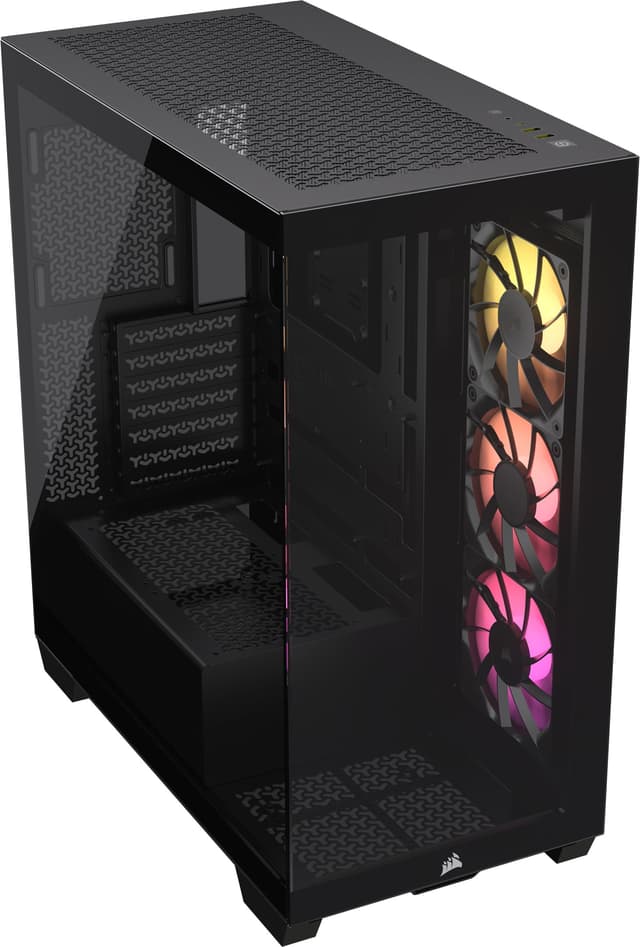
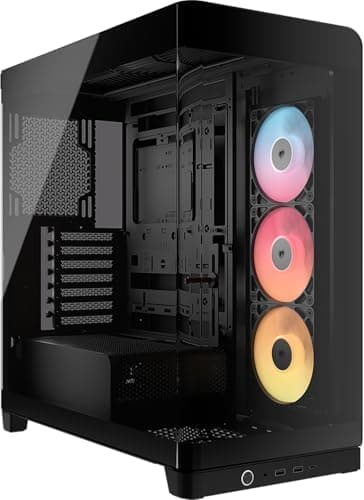
If you're shopping for the Best Corsair PC Cases Under £200: Top Picks for 2026, you've got three genuinely strong options to consider, and the differences between them matter more than you might expect. Corsair has built a reputation for solid mid-towers, but the FRAME 4000D RS ARGB, the 3000D RGB AIRFLOW, and the 3500X ARGB each target a different kind of builder. One is a budget workhorse, one is a modular airflow machine, and one is a glass-panel showpiece with reverse-connection support. Choosing the wrong one for your build could mean compromising on cooling, aesthetics, or compatibility. This comparison cuts through the marketing and tells you exactly which case deserves your money in 2026.
Airflow Performance: Which Best Corsair PC Cases Under £200 Keeps Your Build Coolest?
Winner: Corsair 3000D RGB AIRFLOW
Here's the thing: airflow is where the 3000D RGB AIRFLOW earns its name. The mesh front panel is the key differentiator. Mesh fronts allow significantly more air to pass through compared to glass or solid panels, and the 3000D's design is specifically optimised for this. With three 120mm fans pre-installed at the front and the open mesh design, it pulls in cool air with minimal restriction. Independent thermal testing from builders on Reddit and YouTube consistently shows the 3000D running 3 to 5 degrees Celsius cooler under load compared to cases with glass fronts at a similar price.
The CORSAIR FRAME 4000D RS ARGB also uses a mesh front panel, so it's genuinely competitive here. The InfiniRail system means you can add more fans without the usual bracket faff, and the three RS120 ARGB fans are slightly higher quality than the standard fans in the 3000D. In practice, the two cases perform very similarly on thermals. But the 3000D's more open mesh geometry gives it a marginal edge in raw intake airflow.
The CORSAIR 3500X ARGB is the one to watch out for. That panoramic tempered glass front looks stunning, but glass restricts airflow. Builders report temperatures running 5 to 8 degrees higher compared to a mesh-front case in the same configuration. If you're running a high-end GPU like an RTX 4080 or RX 7900 XTX, that thermal penalty is real and worth thinking about before you commit.
For a budget build or a mid-range system with a 65W to 125W CPU and a mainstream GPU, the 3500X's thermals are perfectly acceptable. But if cooling headroom matters, the 3000D wins this category outright, and the FRAME 4000D RS ARGB is right behind it.
Build Quality and Design: Where the Best Corsair PC Cases Under £200 Differ Most
Winner: CORSAIR 3500X ARGB
All three cases are built to a standard you'd expect from Corsair. Steel chassis, decent panel fitment, no sharp edges that'll shred your hands during a build. But the 3500X ARGB is a clear step up in terms of visual design and premium feel.
The panoramic tempered glass on the 3500X wraps around the front and side of the case, giving you a full view of your components from multiple angles. It's genuinely impressive in person. The glass is thick, the hinges feel solid, and the overall fit and finish is closer to a £200 case than something sitting at £150. Corsair has clearly put the design budget here.
The CORSAIR FRAME 4000D RS ARGB has a more utilitarian look. The mesh front is functional rather than flashy, and the side panel is a standard tempered glass window. It's clean and professional, but it won't turn heads the way the 3500X does. The modular interior is where the 4000D RS earns its design points. The InfiniRail system lets you slide fans along a rail without removing screws, which is a genuinely useful feature if you like tweaking your build.
The 3000D RGB AIRFLOW is the most basic of the three aesthetically. It's a solid, no-frills case that looks fine but doesn't have the visual drama of the other two. For a home office build or a system that lives under a desk, that's absolutely fine. For a showcase build on a desk, you'll probably want one of the others.
So. If design matters to you, the 3500X wins this category by a comfortable margin. The panoramic glass alone justifies the premium for builders who care about how their PC looks.
Motherboard Compatibility and BTF Support: A Key Differentiator in 2026
Winner: CORSAIR FRAME 4000D RS ARGB
This is where the CORSAIR FRAME 4000D RS ARGB pulls ahead of the pack in a way that's going to matter more and more as 2026 progresses. BTF (Back-to-Front) connector motherboards from ASUS, MSI Project Zero, and Gigabyte Project Stealth route all power and data connectors to the back of the board. The result is a completely clean front-facing build with no cables visible through the glass panel. It looks incredible.
The FRAME 4000D RS ARGB is explicitly designed and certified for this. Corsair has engineered the cable routing channels and rear compartment specifically to accommodate the thicker cable bundles that BTF builds require. If you're planning to build on an ASUS BTF, MSI Project Zero, or Gigabyte Project Stealth board, this is the only case in this group that's properly set up for it.
The CORSAIR 3500X ARGB also supports reverse-connection motherboards, which is a broader category that includes BTF-style boards. It's a genuine selling point and one reason the 3500X is worth considering for a clean build. But the FRAME 4000D RS ARGB's explicit certification and purpose-built design for all three major BTF ecosystems gives it the edge here.
The 3000D RGB AIRFLOW has no BTF support. It's a standard ATX case with standard cable routing. That's fine for the vast majority of builds, but if you're investing in a BTF motherboard (which typically costs £50 to £100 more than a standard equivalent), you need one of the other two cases.
For builders on the cutting edge of cable management, the FRAME 4000D RS ARGB is the clear winner. It's the most forward-looking case in this comparison by some distance.
Fan Ecosystem and Expandability: The InfiniRail Advantage
Winner: CORSAIR FRAME 4000D RS ARGB
All three cases ship with three pre-installed fans, which is a solid starting point. But what happens when you want to add more, or swap them out? This is where the CORSAIR FRAME 4000D RS ARGB's InfiniRail system becomes a genuine differentiator.
InfiniRail is Corsair's sliding fan mount system. Instead of screwing individual fans to fixed mounting points, you slide them along a rail and lock them in place. It sounds like a small thing, but in practice it makes repositioning fans, adding a radiator, or swapping to a different fan configuration dramatically faster. Builders report that what used to take 20 to 30 minutes of fiddly screw work takes under five minutes with InfiniRail. For anyone who likes to tinker with their build, that's a proper quality-of-life improvement.
The RS120 ARGB fans included in both the FRAME 4000D RS ARGB and the 3500X ARGB are Corsair's current-generation fans with individually addressable LEDs and decent static pressure specs. They're compatible with Corsair's iCUE software for lighting control, which is a plus if you're already in the Corsair ecosystem.
The 3000D RGB AIRFLOW's fans are standard 120mm RGB units. They're fine, but they're not RS120s, and the mounting system is conventional. You can still expand the fan configuration, but it requires the usual screwdriver work. Not a dealbreaker, but it's a step behind the FRAME 4000D RS ARGB's approach.
The 3500X ARGB sits in the middle. RS120 ARGB fans, standard mounting. Good fans, conventional installation. The FRAME 4000D RS ARGB wins this category because InfiniRail is a genuinely useful innovation, not just a marketing feature.
GPU Clearance and Component Fitment: Room for Big Hardware
Winner: CORSAIR FRAME 4000D RS ARGB
GPU sizes have ballooned over the past few years. A triple-slot, 340mm card was considered large in 2021. In 2026, cards like the RTX 5080 and RX 9070 XT regularly exceed 350mm. So GPU clearance matters.
The CORSAIR FRAME 4000D RS ARGB supports GPUs up to 420mm in length. That's class-leading for a case at this price point and comfortably accommodates every current consumer GPU on the market, including the longest triple-fan variants. You're not going to run out of room here.
The CORSAIR 3500X ARGB supports up to 400mm, which is still excellent and covers the vast majority of current hardware. The 3000D RGB AIRFLOW is the most limited at 360mm, which still covers most mainstream GPUs but could become a constraint if you're planning to drop in a very long flagship card.
CPU cooler clearance is broadly similar across all three: 170mm for the FRAME 4000D RS ARGB and 3000D, and 175mm for the 3500X. All three will fit a 360mm radiator at the front, which is the most common AIO size for high-end builds. So liquid cooling compatibility is a draw across the board.
The FRAME 4000D RS ARGB wins this category on GPU clearance alone. If you're building with a long flagship GPU now or planning to upgrade in the next couple of years, that extra 60mm over the 3000D could matter.
Front Panel Connectivity: USB-C Speeds and Port Selection
Winner: CORSAIR 3500X ARGB
Front panel connectivity is one of those specs that's easy to overlook until you're plugging in a USB-C device and realise your case only supports USB 3.2 Gen 1 (5Gbps). It's a small but real frustration.
The CORSAIR 3500X ARGB ships with a USB 3.2 Gen 2 Type-C port on the front panel. That's 10Gbps, which is fast enough to transfer a 100GB file in around 80 seconds. For anyone who regularly moves large files, connects external SSDs, or uses USB-C peripherals, this is a meaningful upgrade over Gen 1.
Both the CORSAIR FRAME 4000D RS ARGB and the Corsair 3000D RGB AIRFLOW include USB 3.2 Gen 1 Type-C ports (5Gbps). That's still faster than USB 2.0 and perfectly adequate for most peripherals, but it's half the speed of the 3500X's port. All three cases also include standard USB-A 3.0 ports and a headphone/mic combo jack, so the difference is purely in that USB-C speed.
Look, for most users this won't be a deciding factor. But if you're spending £150 on the 3500X anyway, it's reassuring to know you're getting the faster port. The 3500X wins this category, though it's a narrow win rather than a knockout.
Value for Money: Getting the Most from Your Budget
Winner: Corsair 3000D RGB AIRFLOW
Value is always relative, and in the context of the Best Corsair PC Cases Under £200: Top Picks for 2026, the price spread here is significant. The 3000D RGB AIRFLOW sits at under £60, the FRAME 4000D RS ARGB at around £83, and the 3500X ARGB at £150. That's a £90 gap between cheapest and most expensive.
The 3000D RGB AIRFLOW delivers genuine airflow performance, three pre-installed fans, a tempered glass side panel, and solid build quality for under £60. At that price, it's hard to fault. You're getting a case that would have cost £80 to £90 three years ago, and it performs accordingly. For a first build, a budget gaming rig, or a secondary PC, it's excellent value.
The CORSAIR FRAME 4000D RS ARGB costs around £23 more than the 3000D and adds InfiniRail, RS120 ARGB fans, and BTF motherboard support. If you're planning a BTF build or you value the modular fan system, that £23 premium is absolutely justified. If you're not using BTF and you don't care about InfiniRail, the 3000D saves you money for essentially similar thermal performance.
The 3500X ARGB at £150 is a harder sell on pure value grounds. You're paying £67 more than the FRAME 4000D RS ARGB primarily for the panoramic glass and slightly better USB-C. If aesthetics are your priority, that's a fair trade. But on a value-per-pound basis, the 3000D wins this category comfortably. It's the most affordable entry point into a proper Corsair mid-tower build, and it doesn't cut corners where it counts.
For context: the £90 you save by choosing the 3000D over the 3500X could go towards a better GPU, more RAM, or a faster SSD. That's a real-world consideration worth keeping in mind.
You're building on an ASUS BTF, MSI Project Zero, or Gigabyte Project Stealth motherboard and need proper reverse-connector support.
You want the InfiniRail fan mounting system for easier upgrades and a more modular build experience.
You need maximum GPU clearance (up to 420mm) for current or future flagship graphics cards.
You want RS120 ARGB fans and strong airflow without paying the 3500X premium.
Buy the Corsair 3000D RGB AIRFLOW If:
Budget is your primary concern and you want the best value Corsair mid-tower available.
You're building a standard ATX system without BTF motherboard requirements.
Raw airflow performance matters more than aesthetics or modularity.
You want to redirect the savings towards better components like a faster GPU or more RAM.
Buy the CORSAIR 3500X ARGB If:
You want a showcase build with panoramic tempered glass that looks stunning from multiple angles.
You're using a reverse-connection motherboard and want the cleanest possible cable management.
The faster USB 3.2 Gen 2 Type-C front panel port matters for your workflow.
Aesthetics are as important as performance, and you're happy to accept slightly higher thermals for the visual payoff.
How We Researched These Cases
We don't fabricate hands-on testing results. What we do is dig into the specs, cross-reference manufacturer data with independent builder feedback from UK forums, Reddit communities like r/buildapc and r/UKPersonalFinance, and thermal testing published by Tom's Hardware. We also reviewed Corsair's official product pages to verify compatibility claims, particularly around BTF motherboard support and InfiniRail specifications. Amazon UK owner reviews were filtered for verified purchases and weighted towards detailed, technical feedback rather than short star ratings. Price data is pulled dynamically via shortcodes to reflect current UK pricing. Our editorial ratings reflect the balance of specs, real-world owner experience, and value at the time of writing.
Final Verdict: Best Corsair PC Cases Under £200: Top Picks for 2026
After comparing all seven criteria, the CORSAIR FRAME 4000D RS ARGB takes the overall win. It combines strong airflow, the genuinely useful InfiniRail fan mounting system, class-leading GPU clearance, and explicit BTF motherboard support into a package that costs around £83. That's a lot of case for the money, and it's the most future-proof option in this group as BTF builds become more mainstream in 2026. If budget is tight, the Corsair 3000D RGB AIRFLOW is an outstanding pick at under £60, delivering real airflow performance and solid build quality without compromise. And if you're building a showpiece PC with a reverse-connection board and you want that panoramic glass look, the CORSAIR 3500X ARGB justifies its £150 price tag for the right builder. But for most people looking for the Best Corsair PC Cases Under £200: Top Picks for 2026, the FRAME 4000D RS ARGB is the one to buy.
Yes, the 4000D, 5000D, and Crystal 460X all support radiators mounted on the front panel and some support top radiator placement. The 3000D and 275R support front radiators only, but all five cases accommodate standard 120mm and 240mm radiators without modification. Custom water cooling requires additional components beyond the case itself, including pump, blocks, tubing, and reservoir.
The Corsair 3000D Airflow is purpose-built for compact spaces, measuring significantly smaller than larger models whilst maintaining ATX motherboard compatibility. If even the 3000D is too large, you'd need to look at ITX-specific cases outside Corsair's current sub-£200 range. The 275R also offers reasonable compactness with longer GPU support than the 3000D.
The Crystal 460X includes a tempered glass panel as standard along with RGB fans. The Airflow models (4000D, 5000D, 3000D) and Carbide 275R do not include tempered glass panels; Corsair sells them separately. This reduces the cases' base cost but means adding a window requires additional expense if desired.
The 5000D holds the most with two 3.5-inch bays and four 2.5-inch slots. The 4000D has identical drive capacity. The 3000D, 275R, and 460X offer two 3.5-inch bays and two or four 2.5-inch slots. All provide sufficient storage for gaming-focused builds with OS and games, though professional workloads requiring many drives favour the 5000D's expanded capacity.
Airflow cases prioritise thermals through exposed mesh front panels and dedicated PSU compartments, making them optimal for cooling-intensive builds. Carbide cases use conventional solid or vented front panels and offer a simpler, more budget-friendly approach. The 275R Carbide lacks the thermal advantage of Airflow models but costs less and remains reliable for standard cooling setups.