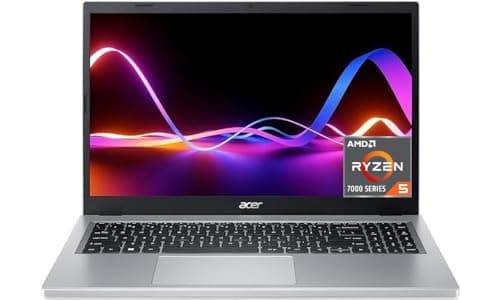
Frequent travellers need a laptop that pulls double duty: a proper productivity machine in the office, a tablet-style canvas on the plane, and something light enough that it does not wreck your back through airport security. The 2-in-1 convertible category has matured considerably since last year, with Intel's Core Ultra processors now appearing across mid-range and premium models, bringing meaningfully better efficiency and AI-accelerated features. OLED panels have also filtered down to sub-£600 price points, and Thunderbolt 4 connectivity is increasingly standard even on mid-market machines. This guide focuses on convertibles and travel-optimised laptops that genuinely suit a life lived out of a carry-on bag, balancing screen quality, port selection, build quality and battery endurance rather than chasing raw benchmark scores that matter little at 35,000 feet.
Quick Verdict
Best Overall: Samsung Galaxy Book4 Pro 360 16", a stunning AMOLED display, versatile 360-degree hinge, and a premium build make it the standout travel convertible for professionals who can stretch the budget.
Best Value: Acer Aspire Spin 14, a genuine 2-in-1 with an OLED panel, Thunderbolt 4 ports and Intel Core Ultra 5 performance at a price that undercuts rivals by hundreds of pounds.
The Samsung Galaxy Book4 Pro 360 is the machine frequent travellers dream about when they are tired of compromising. It is a full 360-degree convertible, meaning it rotates from laptop to tent to tablet mode, and it does so with a hinge that feels reassuringly solid even after months of repeated folding. The 16-inch Dynamic AMOLED 2X panel running at 2880×1800 resolution is the headline feature, and rightly so: colours are vivid, blacks are genuinely deep, and the panel is bright enough to use in a sunlit airport lounge without squinting. For anyone who edits photos, reviews contracts or watches content on long-haul flights, this screen is genuinely transformative compared with a standard IPS panel.
Under the hood, the Intel Core Ultra 7 155H processor belongs to Intel's latest Meteor Lake generation, offering a dedicated neural processing unit for AI tasks alongside a healthy uplift in efficiency over the previous 13th-generation chips. Paired with 16GB of RAM and a 512GB SSD, it handles multi-tab browsing, video calls, light photo editing and document work without breaking a sweat. The Intel Arc integrated graphics are capable enough for casual creative tasks and even light gaming during a long layover.
Port selection is excellent for a slim convertible: two Thunderbolt 4 ports give you fast data transfer and the ability to drive an external monitor, while a full-size HDMI port means you can connect to hotel room TVs or projectors without carrying a dongle. A USB-A port and a microSD slot round out the connectivity, making this one of the better-equipped convertibles in its class. The S Pen stylus is included in the box, adding genuine note-taking and sketching utility in tablet mode, which is a meaningful bonus for professionals who attend meetings or conferences.
Samsung's Galaxy ecosystem integration is a real-world advantage if you carry a Galaxy smartphone: you can share your phone's screen on the laptop, transfer files wirelessly, and even use your phone's camera as a webcam. The build quality uses aluminium throughout, keeping the chassis rigid without adding unnecessary weight. Battery life is competitive for a 16-inch machine, though the large AMOLED panel at full brightness will drain the cell faster than smaller-screened rivals.
The price is the main barrier. This is a premium machine, and there are capable alternatives at half the cost. But for the frequent business traveller who needs a single device that works as a laptop, tablet and stylus canvas, the Galaxy Book4 Pro 360 justifies its position at the top of this list.
Pros
- 16" Dynamic AMOLED 2X display with 2880×1800 resolution delivers exceptional colour accuracy and contrast for content creation and media consumption
- Dual Thunderbolt 4 ports plus full-size HDMI eliminate the need for a dongle in most hotel and conference room scenarios
- S Pen stylus included in the box, adding genuine tablet-mode utility for note-taking and annotation
- Intel Core Ultra 7 155H offers strong multi-threaded performance with improved AI acceleration over previous-generation chips
Cons
- Premium price places it out of reach for budget-conscious travellers
- 16-inch footprint is larger than many travellers prefer, making it less comfortable on cramped economy tray tables
The Apple MacBook Air with M1 chip was a watershed moment when it launched, and it remains a genuinely excellent travel laptop even as newer M2 and M3 models have arrived. Its continued availability at a reduced price makes it one of the most sensible purchases for travellers who are already embedded in the Apple ecosystem or who prioritise fanless silent operation and exceptional battery life above all else.
The M1 chip is a unified memory architecture design that integrates CPU, GPU, Neural Engine and memory onto a single die. The practical result is impressive performance from a fanless chassis: the MacBook Air M1 never throttles under sustained load because it generates so little heat that it does not need active cooling. For travellers who need a machine that works silently in quiet environments, whether a library, a meeting room or a long-haul flight cabin, this is a meaningful advantage.
The 13.3-inch Retina IPS display at 2560×1600 resolution is sharp and accurate, with Apple's True Tone technology adjusting the white balance to match ambient lighting. It is not an OLED panel, so contrast and black levels do not match the Samsung or Acer picks, but the display is bright, colour-accurate and very comfortable for extended use. The 16:10 aspect ratio is well-suited to document work and web browsing.
Battery life is the MacBook Air M1's trump card. Apple's quoted figure of up to 18 hours is optimistic, but real-world usage consistently delivers 10 to 14 hours of mixed productivity work, which is enough to cover a long-haul flight without reaching for the charger. The machine is also genuinely light and slim, making it comfortable to carry in a bag all day.
The main limitations are the port selection, which is restricted to two Thunderbolt/USB 4 ports and a 3.5mm jack, and the base configuration's 8GB of RAM and 256GB storage, which are tight by 2025 standards. The MacBook Air is also a clamshell only, with no touchscreen or convertible capability. For Apple users who want the best battery life in the smallest package and can live with macOS, it remains a compelling choice. For Windows users or those needing more storage, the value calculation becomes less favourable.
Pros
- Fanless M1 chip delivers silent operation and exceptional battery life of 10 to 14 hours under real-world mixed workloads
- 2560×1600 Retina display is sharp, accurate and comfortable for extended document and media use
Cons
- Only two Thunderbolt/USB 4 ports with no USB-A or HDMI means dongles are essential for most hotel and conference room setups
- 8GB RAM and 256GB storage feel restrictive for power users in 2025, and upgrading requires buying a higher-spec model at additional cost
- No touchscreen or convertible hinge limits versatility compared with dedicated 2-in-1 machines
Buying Guide
Form Factor: True 2-in-1 or Slim Clamshell?
The first question to answer is whether you genuinely need a convertible hinge. A 360-degree machine like the Samsung Galaxy Book4 Pro 360 or the Acer Aspire Spin 14 gives you the flexibility to use the machine as a tablet for reading, sketching or watching content, but it adds some weight and cost compared with a slim clamshell. If you know you will use tablet mode regularly, perhaps for annotating documents in meetings or sketching on flights, the convertible form factor is worth the premium. If you primarily type and rarely touch the screen, a slim clamshell like the MacBook Air or Dell XPS 13 may serve you better.
Display Technology
OLED panels offer superior contrast, deeper blacks and more vivid colours than IPS alternatives, and they are now available at mid-range price points thanks to the Acer Aspire Spin 14. For travellers who review creative work, watch films or simply want the best possible visual experience, OLED is worth prioritising. IPS panels are perfectly adequate for document work and video calls, and they tend to sustain higher brightness levels for longer without the risk of burn-in. If you are buying a machine primarily for spreadsheets and emails, an IPS panel will not hold you back.
RAM and Storage
Sixteen gigabytes of RAM is the recommended minimum for a travel laptop in 2025. Eight gigabytes is workable for light use but will feel constrained if you run multiple browser tabs, a video call and a document editor simultaneously. Storage requirements depend on your workflow: 256GB is tight if you store large media files locally, while 512GB covers most users comfortably. If you rely heavily on cloud storage and stream rather than download media, 256GB may suffice.
Port Selection and Dongle Dependency
Travelling with a bag full of dongles is nobody's idea of fun. Prioritise machines with at least one USB-A port for legacy peripherals, a USB-C port that supports charging, and either a built-in HDMI port or Thunderbolt that can drive an adapter. Thunderbolt 4 is the most versatile standard, supporting fast data transfer, external displays and charging through a single cable. A microSD or SD card slot is a useful bonus for photographers.
Battery Life
Manufacturer battery life claims are consistently optimistic. A machine quoted at 18 hours will typically deliver 10 to 14 hours under real mixed workloads. For a full travel day without access to power, aim for a machine with a quoted figure of at least 12 hours, which should translate to a comfortable 8 to 10 hours in practice. USB-C charging is strongly preferable to proprietary barrel connectors, as it allows you to share a charger with your phone or use a power bank in an emergency.
Weight and Size
A 13 or 14-inch machine is the sweet spot for most travellers, fitting comfortably in a carry-on bag and on a standard economy tray table. Sixteen-inch machines like the Samsung Galaxy Book4 Pro 360 offer a better working experience at a desk but are less comfortable in confined spaces. If you frequently work on aircraft or in coffee shops with limited table space, a 13 or 14-inch machine is the more practical choice.
The Samsung Galaxy Book4 Pro 360 16" is the overall winner for frequent travellers who want the best possible experience and can justify the investment. Its Dynamic AMOLED 2X display is genuinely class-leading, the 360-degree hinge with included S Pen adds real versatility, and the port selection is comprehensive enough to eliminate most dongle dependency. For travellers on a tighter budget, the Acer Aspire Spin 14 is the pick: it delivers a genuine 2-in-1 convertible with an OLED panel, Thunderbolt 4 connectivity and Intel Core Ultra 5 performance at a price that makes it accessible to a much wider audience. Between these two machines, the vast majority of frequent travellers will find everything they need.