Finding a laptop that doubles as a tablet while still delivering the frame rates competitive gaming demands is genuinely difficult. The market for 2-in-1 gaming machines has matured considerably since 2024, with Intel's Arc GPU architecture improving meaningfully in driver stability, and Nvidia's RTX 50-series now appearing in dedicated gaming slabs that pair well with the convertible lifestyle. This guide is aimed at players who want one device for ranked sessions at home, casual browsing or note-taking on the sofa, and the occasional LAN event. Whether you prioritise a true 360-degree hinge, a high-refresh display, or raw GPU muscle for titles like Valorant, Counter-Strike 2, and Apex Legends, the five picks below cover the full spectrum. Prices have shifted since last year: genuine OLED convertibles have become more affordable, while RTX 50-series gaming laptops carry a significant premium that is only justified if you are playing at the highest settings or streaming simultaneously.
Quick Verdict
Best Overall: Samsung Galaxy Book4 Pro 360, which combines a genuine 360-degree hinge, a stunning Dynamic AMOLED 2X display, and Intel Core Ultra 7 performance in a chassis light enough to carry to tournaments. Best Value: Acer Aspire Spin 14, which delivers a true OLED convertible experience with Thunderbolt 4, Intel Arc graphics, and solid everyday gaming capability at a fraction of the flagship price. If raw competitive frame rates are your only priority and portability is secondary, the Alienware 16x Aurora and MSI Raider 18 represent the peak of dedicated gaming performance available in this catalogue.
The Samsung Galaxy Book4 Pro 360 is the pick for competitive gamers who refuse to compromise on display quality or versatility. Its 360-degree hinge means you can flip it into tablet mode for map study, strategy planning, or simply watching VODs of your own matches, then snap it back into laptop mode for a ranked session. The 16-inch Dynamic AMOLED 2X panel running at 2880x1800 resolution is genuinely exceptional: colours are vivid, contrast is near-infinite, and the panel's touch response makes stylus annotation of game footage a pleasure. Samsung includes an S Pen in the box, which is a thoughtful addition for players who like to annotate replays or sketch out team strategies.
Under the hood, the Intel Core Ultra 7 155H is a capable processor for esports titles. Valorant, CS2, League of Legends, and Rocket League all run comfortably on integrated Intel Arc Graphics at 1080p with competitive settings. Do not expect to max out graphically demanding AAA titles, but the Arc GPU has improved substantially with recent driver updates and handles the esports catalogue well. The 16GB of LPDDR5 RAM is adequate for multitasking between a game, Discord, and a browser, while the 512GB SSD keeps load times short. Connectivity is strong: two Thunderbolt 4 ports, a full-size HDMI output for connecting to a monitor at home, a USB-A port, and a microSD slot for expanding storage with game libraries.
The chassis is impressively slim for a 16-inch device, making it practical to carry to LAN events or university. Battery life is solid for a machine of this class. Windows 11 is pre-installed and the Galaxy ecosystem integration, including Samsung DeX support and phone link features, adds genuine value for players already in the Samsung world. The main limitation is the absence of a discrete Nvidia GPU, which means frame rates in more demanding titles will lag behind the dedicated gaming machines in this list. However, for the player whose priority is a premium, versatile machine that handles competitive esports titles well and doubles as a productivity and creative device, the Galaxy Book4 Pro 360 is the best all-round answer in this catalogue.
Verdict: The finest true 2-in-1 convertible in this selection, with a display that embarrasses most gaming monitors and enough CPU grunt for the full esports catalogue.
Pros
- Dynamic AMOLED 2X display with 2880x1800 resolution delivers exceptional colour accuracy and contrast for competitive gaming
- Genuine 360-degree hinge with S Pen included, making it a true 2-in-1 for strategy work and VOD review
- Two Thunderbolt 4 ports plus full-size HDMI cover all connectivity needs at home and at events
Cons
- Intel Arc integrated graphics cannot match discrete Nvidia GPUs in demanding or graphically intensive titles
- 512GB SSD fills quickly when installing multiple competitive game clients simultaneously
The MSI Raider 18 is the most powerful machine in this entire catalogue by a considerable margin, and it is priced accordingly. Equipped with an Intel Core Ultra 9 285HX processor and an NVIDIA GeForce RTX 5090 24GB GDDR7 GPU, it is effectively a desktop gaming rig in laptop form. For competitive gamers who also create content, stream to large audiences, render video, or run AI-assisted coaching tools, the Raider 18 offers a level of headroom that no other machine in this list can approach. The 64GB of RAM and 5TB of NVMe SSD storage are extraordinary specifications for a laptop and reflect MSI's positioning of this machine as a professional-grade workstation as much as a gaming device.
The 18-inch QHD+ (2560x1600) IPS display at 240Hz is large, sharp, and fast. Competitive players who have always gamed on large monitors will appreciate the extra screen real estate, and the 240Hz refresh rate is appropriate for the GPU's output capability. The RTX 5090 will push frame rates in CS2 and Valorant into the thousands at 1080p, far exceeding what any monitor can display, but this headroom means the system runs with minimal latency even at higher resolutions. For players who compete at 1440p or use high-resolution external monitors, the Raider 18 is the only machine in this list that can sustain competitive frame rates without compromise.
Connectivity is exceptional: two Thunderbolt 5 ports, three USB-A 3.2 Gen 2 ports, HDMI 2.1, an RJ45 ethernet port (critical for competitive play), and an SD card reader. The inclusion of a wired ethernet port is a significant advantage over the convertible options in this list, as competitive players should always prefer a wired connection for the lowest possible latency. The Thunderbolt 5 ports support external GPU enclosures and ultra-fast storage, future-proofing the machine for years.
The obvious limitations are size, weight, and price. The Raider 18 is a large, heavy machine that is not designed for commuting or casual portability. It has no convertible functionality. At its price point, it is a serious investment that only makes sense for players who genuinely need desktop-replacement performance. For everyone else, the Alienware or Samsung options offer better value.
Verdict: The absolute pinnacle of gaming laptop performance, with RTX 5090 GPU power and desktop-class specifications, but only justified for players who need the very best and have the budget to match.
Pros
- NVIDIA GeForce RTX 5090 24GB GDDR7 is the most powerful mobile GPU available, delivering unmatched frame rates in all titles
- RJ45 wired ethernet port ensures the lowest possible network latency for competitive online play
- Two Thunderbolt 5 ports plus comprehensive USB and display connectivity future-proof the machine for years
Cons
- Price is extremely high and difficult to justify unless you require desktop-replacement performance for both gaming and professional workloads
- Large, heavy chassis with no convertible functionality makes it impractical for frequent travel or LAN events
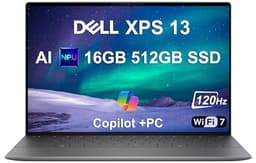
The Dell XPS 13 9345 is the most portable and premium-feeling ultrabook in this selection, powered by Qualcomm's Snapdragon X Plus processor and positioned as a Copilot+ AI PC. For competitive gamers, it occupies a specific niche: players who spend significant time travelling, attending university, or working in professional environments and want a single device that handles productivity, content consumption, and light gaming without the bulk of a dedicated gaming machine. The 13.4-inch FHD+ IPS display at 120Hz is sharp and smooth enough for esports titles, and the Snapdragon X Plus delivers exceptional battery life that outperforms x86 competitors.
It is important to be transparent about the gaming limitations. The Snapdragon X Plus uses integrated Qualcomm graphics, which are capable for everyday tasks and some lighter esports titles, but cannot match Intel Arc or any discrete Nvidia GPU for gaming performance. Additionally, ARM-based Windows 11 Pro has improved compatibility considerably in 2024 and 2025, but some competitive game anti-cheat systems have historically been slower to support ARM architecture. Players should verify that their specific titles and anti-cheat software are fully compatible before purchasing. CS2, Valorant, and League of Legends have all improved their ARM compatibility, but the situation continues to evolve.
Where the XPS 13 9345 excels is in build quality, display sharpness, and portability. The chassis is machined aluminium, the keyboard is excellent, and the 13.4-inch form factor makes it genuinely pocketable in a jacket or small bag. The 16GB of RAM and 512GB PCIe 4 NVMe SSD are appropriate for the price. Windows 11 Pro is included, which is a step up from the Home edition found on most competitors. The AI features enabled by the Snapdragon X Plus, including on-device AI processing for noise cancellation and background removal in communications apps, are genuinely useful for streamers and content creators.
For the competitive gamer who prioritises portability and productivity above all else, and who plays primarily in lighter esports titles, the Dell XPS 13 9345 is a refined, premium choice. For anyone who needs consistent high frame rates in demanding titles, the other options in this list are more appropriate.
Verdict: A beautifully built ultrabook with outstanding portability and battery life, best suited to competitive gamers who prioritise mobility and productivity alongside lighter esports titles.
Pros
- Exceptionally portable 13.4-inch chassis with premium aluminium construction and outstanding battery life from the Snapdragon X Plus
- Windows 11 Pro included as standard, with Copilot+ AI features useful for streamers and content creators
Cons
- Integrated Qualcomm graphics cannot deliver competitive frame rates in GPU-demanding titles or at higher resolutions
- ARM architecture means some anti-cheat software and game clients may have compatibility limitations that require verification before purchase
Buying Guide
Display: Refresh Rate and Resolution
For competitive gaming, display refresh rate is arguably the single most important specification. A 120Hz display, as found on the Dell XPS 13, is the minimum acceptable for competitive play, as it halves the maximum frame time compared to a 60Hz panel. The Samsung Galaxy Book4 Pro 360 and Alienware 16x Aurora both offer displays at or above 240Hz, which is the current standard for serious competitive play. Higher refresh rates reduce motion blur and perceived input lag, giving a genuine advantage in fast-paced titles. Resolution matters too: higher resolutions provide more visual information, making it easier to spot enemies at distance, but they also increase the GPU load required to maintain competitive frame rates. For integrated graphics, 1080p or the Acer Spin's 2048x1280 is the practical ceiling for smooth play.
GPU: Integrated vs Discrete
The fundamental divide in this list is between machines with integrated graphics (Samsung, Acer, Dell) and those with discrete Nvidia GPUs (Alienware, MSI). Integrated graphics, particularly Intel Arc, have improved dramatically and handle the esports catalogue well at 1080p. If you play primarily Valorant, CS2, League of Legends, or Rocket League, integrated Arc graphics are entirely adequate. If you play GPU-intensive titles, want to stream at high quality, or need future-proofing for upcoming releases, a discrete Nvidia GPU is necessary. The RTX 5070 in the Alienware and the RTX 5090 in the MSI Raider are both exceptional, with the 5090 being overkill for most competitive players but transformative for content creators.
RAM and Storage
16GB of RAM is the minimum for comfortable competitive gaming in 2025, allowing the game, Discord, a browser, and background processes to coexist without slowdown. The Alienware's 32GB and the MSI Raider's 64GB are appropriate for streaming and content creation workloads. Storage speed matters for load times: NVMe PCIe SSDs, found in all the premium picks, load game maps and assets significantly faster than older SATA drives. 512GB is adequate for a focused competitive player, but those with large libraries should consider external storage or the MSI Raider's 5TB configuration.
Connectivity and Peripherals
Competitive players typically use external peripherals: a gaming mouse, mechanical keyboard, and headset at minimum. Ensure the machine has enough USB-A ports for your setup, or budget for a USB hub. Thunderbolt 4 or 5 ports are valuable for connecting to external monitors and high-speed storage. For online competitive play, a wired ethernet connection is strongly preferable to Wi-Fi: only the MSI Raider in this list includes an RJ45 port natively, though USB-C to ethernet adapters are inexpensive and work well with Thunderbolt-equipped machines.
2-in-1 vs Traditional Clamshell
True 2-in-1 convertibles, the Samsung and Acer in this list, offer genuine versatility for players who want one device for gaming, studying, and content consumption. The 360-degree hinge and touchscreen add weight and complexity compared to traditional clamshells, but the flexibility is real and useful. If you will never use tablet or tent mode, the Alienware or MSI offer better gaming performance per pound. If portability and versatility matter as much as raw performance, the Samsung or Acer are the wiser investments.
The Samsung Galaxy Book4 Pro 360 is the overall winner for competitive PC gamers seeking a genuine 2-in-1 experience. Its Dynamic AMOLED 2X display, Intel Core Ultra 7 processor, comprehensive Thunderbolt 4 connectivity, and true 360-degree hinge make it the most complete package in this catalogue for players who want one versatile machine. It handles the full esports catalogue at competitive settings, looks extraordinary doing so, and is light enough to carry to events. The Acer Aspire Spin 14 is the best-value alternative for budget-conscious players who still want a true convertible with an OLED display. For players who prioritise raw gaming performance above all else, the Alienware 16x Aurora's RTX 5070 and 240Hz G-Sync display represent the best gaming-focused option, with the MSI Raider 18 reserved for those who need desktop-replacement power and have the budget to match.