GPU shopping is mostly an exercise in frustration. You've got a budget, a resolution target, and about forty different SKUs all claiming to be the obvious choice. The RTX 5070 cuts through a lot of that noise. It's a card that sits in a genuinely useful performance bracket, and the ASUS Prime OC Edition wraps it in a cooler that's designed for people who care about their case as much as their framerates.
The verdict, upfront: this is a strong upper mid-range GPU for 1440p gaming, with enough headroom to handle 4K in many titles when you're sensible with settings and DLSS. The 12GB of GDDR7 VRAM is better than what came before, the 1000 AI TOPS figure signals genuine generational progress on upscaling, and the compact dual-fan design means it'll actually fit in builds where a triple-slot monster simply won't. Over 677 owner reviews and a 4.6-star average back that up. That said, the price is real, the VRAM debate hasn't gone away, and there are honest questions about whether you need this or whether the tier below gets you 90% of the way there for less money. We'll get into all of it.
This is the ASUS Prime GeForce RTX 5070 in its OC Edition form. Not the ROG Strix, not the TUF Gaming. The Prime line is ASUS's more understated, build-friendly option, and that positioning matters for a specific type of buyer. If you want the numbers and the real-world picture without the marketing padding, read on.
Core Specifications
The RTX 5070 sits on NVIDIA's Blackwell architecture, and the ASUS Prime OC Edition is a factory-overclocked variant of that chip. You get 12GB of GDDR7 VRAM on a 192-bit memory bus, which is a meaningful step up from the GDDR6X we saw on the previous generation. The card connects via PCIe Gen 5, which future-proofs the interface side of things even if most current platforms won't saturate that bandwidth. Display outputs include HDMI and DisplayPort 2.1, the latter of which supports the kind of bandwidth needed for high-refresh 4K without compression. The card occupies a 2.5-slot footprint, which is genuinely useful for tighter builds.
The headline AI performance figure is 1000 AI TOPS, which NVIDIA is leaning on hard to justify the Blackwell generation. This matters because DLSS 4 and the broader suite of AI-driven features run on those Tensor cores, and 1000 TOPS is a significant jump over what Ada Lovelace offered. Whether you care about that number depends on how much of your gaming runs through DLSS Frame Generation and Multi Frame Generation, but in 2026 the answer for most people is: more than you might think.
The cooler is a compact dual-fan design with Axial-Tech fans, a vented backplate for improved airflow through the card, and dual-ball fan bearings that ASUS rates at up to twice the lifespan of sleeve bearings. That last detail is easy to dismiss as marketing, but for a card you're hoping to run for four or five years, bearing quality does matter. The 2.5-slot design keeps things manageable in cases where a full triple-slot card would block airflow or simply not fit.
| Specification | Detail |
|---|---|
| GPU | NVIDIA GeForce RTX 5070 (Blackwell) |
| VRAM | 12GB GDDR7 |
| Memory Bus | 192-bit |
| AI Performance | 1000 AI TOPS |
| PCIe Interface | PCIe 5.0 |
| Display Outputs | HDMI, DisplayPort 2.1 |
| Cooler | Compact Dual-Fan, Axial-Tech, Vented Backplate |
| Slot Width | 2.5-slot |
| Fan Bearings | Dual-Ball |
| SFF-Ready | Yes |
| Owner Rating | ★★★★½ (4.6) (666 reviews) |
| Current Price | £799.99 (Price checked 16:01, 3 Oct 2026, UK time) |

Architecture and Cores
Blackwell is NVIDIA's answer to what comes after Ada Lovelace, and the RTX 5070 sits in the middle of that stack. The architecture brings updated RT cores, a new generation of Tensor cores responsible for that 1000 AI TOPS figure, and shader improvements that feed into better rasterisation performance in conventional games. The fab process moves forward from Ada, which translates to better performance-per-watt even if the absolute power draw of the 5000 series hasn't shrunk dramatically at the high end.
The Tensor core upgrade is where Blackwell earns its keep in real-world gaming. DLSS 4 with Multi Frame Generation is available on Blackwell cards and not on Ada, which is a genuine differentiator. Frame Generation was already compelling on RTX 4000 series, but Multi Frame Generation, which can generate multiple AI frames between each rendered frame, pushes effective framerates into territory that was previously impossible at this price point. Whether that's 'real' performance is a fair debate, but if you're playing supported titles at 1440p, the practical result is a noticeably smoother experience.
The RT core improvements matter too, though the gains are more incremental than the AI story. Ray tracing has always punished mid-range cards harder than the top tier, and the 5070 sits in a position where you'll want to be selective about which RT effects you enable in demanding titles. Full path tracing in something like Cyberpunk 2077 is still a job for the 5080 and above. But RT reflections, shadows, and ambient occlusion in games optimised for Blackwell run meaningfully better than on the RTX 4070. That's a reasonable expectation for a generational upgrade in this bracket.
Clock Speeds and Boost
The OC Edition designation means ASUS ships this card with a factory overclock applied, pushing the boost clock above NVIDIA's reference specification for the RTX 5070. The exact boost clock isn't specified in the verified product data, but OC Edition cards from ASUS typically land a modest step above the Founders Edition, and the Prime line's factory tune tends to be conservative rather than aggressive. That's not a complaint. Aggressive factory overclocks on mid-range cards can push temperatures and noise higher than the cooler was designed for, and the Prime's dual-fan setup benefits from a more measured approach.
In practice, Blackwell GPUs boost dynamically based on temperature and power headroom, so the advertised boost clock is a ceiling the card targets when conditions allow, not a guaranteed sustained frequency. Cards with better coolers tend to sustain closer to their boost clocks for longer, which is one reason the thermal design matters beyond just keeping the chip alive. The Prime's compact dual-fan setup is designed for space-conscious builds, and owner feedback suggests it does a decent job of maintaining clocks without needing to spin up aggressively.
One thing: the OC Edition sits above the non-OC Prime variant in ASUS's stack, but below the TUF Gaming and ROG Strix versions. The performance gap between the OC Edition and the Strix is small in gaming, typically within a few percent, and you pay a meaningful premium for the larger cooler and the extra features on the higher-end models. For most people, the OC Edition hits the sweet spot. You get the factory overclock without paying for a triple-slot cooler you might not need.
VRAM Analysis
Twelve gigabytes of GDDR7. This is where the RTX 5070 does something the RTX 4070 didn't quite manage: it gives you a buffer that's genuinely comfortable for 1440p gaming in 2026 and defensible for 4K. The 8GB debate that dogged the RTX 4060 and to some extent the 4070 is less relevant here. Twelve gigabytes at 1440p with high textures is not a problem. You will not be hitting the VRAM ceiling in the vast majority of current titles at that resolution.
At 4K with maximum texture settings in the most demanding titles, 12GB starts to feel more marginal. Some games in 2026 are pushing 10 to 12GB of VRAM usage at 4K ultra, which means you're operating close to the limit rather than well within it. The honest answer is that 12GB at 4K is workable if you're willing to dial back texture quality one notch in the most demanding titles, but if your primary use case is 4K ultra with no compromises, the RTX 5080's 16GB gives you more breathing room. The RTX 5070 is a 1440p card that can do 4K sensibly. It's not a native 4K ultra card.
The GDDR7 memory type matters more than people give it credit for. The bandwidth improvement over GDDR6X is real, and it feeds into better performance in bandwidth-sensitive workloads. Texture streaming, high-resolution assets, and some compute tasks all benefit. The 192-bit bus is narrower than the 256-bit bus on the RTX 5080, but GDDR7's higher data rates partially offset that. The JEDEC GDDR7 specification sets the standard for what these chips can deliver, and the RTX 5070 makes good use of it within the constraints of its bus width. It's a sensible compromise for the price bracket.
Ray Tracing and Upscaling
DLSS 4 is the headline feature here, and it's genuinely good. Multi Frame Generation, exclusive to Blackwell, generates multiple AI frames between each traditionally rendered frame. The result in supported titles is effective framerates that can look dramatically higher than the underlying render rate. The catch, and it's plainly, is that AI-generated frames aren't the same as natively rendered frames. There's latency overhead and occasional artefacting in fast motion, though DLSS 4 is materially better at hiding this than earlier versions. For the kind of gaming most people do, competitive shooters aside, it's a solid trade.
Ray tracing performance on the RTX 5070 is good for the price bracket, better than the RTX 4070 in like-for-like comparisons, and better than anything AMD offers at this price point in RT-heavy workloads. That said, expectations need to be calibrated. If you want to run full path tracing in Cyberpunk 2077 at 1440p with DLSS Quality and get playable framerates, the RTX 5070 can do it. If you want to do that at native resolution with no upscaling, you'll be disappointed. The RT cores help; they don't work miracles.
AMD's FSR 4 is also because it runs on any hardware, including this card. But DLSS 4 on Blackwell is the better upscaler in image quality terms, particularly at the Performance preset where the difference is most visible. If you're buying an RTX 5070 and playing games that support DLSS 4, you're getting the best upscaling available at this price point. That's not a small thing in 2026 when native resolution gaming at high framerates is increasingly a premium-tier luxury.
Video Encoding
NVIDIA's NVENC encoder has been the benchmark for GPU-based encoding for a couple of generations now, and the Blackwell implementation continues that. AV1 encode and decode are supported, which matters for streaming to platforms that accept AV1 and for anyone working with modern video formats. The quality-to-bitrate ratio of NVENC AV1 is genuinely impressive compared to software encoding, and it runs without meaningfully impacting gaming performance because it uses dedicated hardware separate from the shader cores.
For streamers, the RTX 5070 is a solid choice. You can run a game at 1440p, stream at high quality via NVENC AV1, and not see a meaningful performance hit in the game itself. That's been true of NVIDIA cards for a while, but Blackwell's encoder is the latest iteration and it shows in quality at lower bitrates. If you're streaming to Twitch or YouTube at 1080p60 or 1440p60, the encoder handles it without breaking a sweat.
Content creators doing light video editing will also appreciate the AV1 decode support. Modern export pipelines increasingly use AV1, and having hardware decode means your system isn't leaning on the CPU for that workload. It's not a reason to buy this card over another if gaming is your primary use case, but it's a genuine bonus for anyone who does occasional video work alongside gaming. The 12GB of VRAM also gives you more headroom than 8GB cards when working with higher-resolution project files.

Power Consumption
The RTX 5070 sits in a more reasonable power bracket than the top-end Blackwell cards. The exact TGP isn't specified in the verified product data, but the RTX 5070 class is generally rated in the 200 to 220W range, which puts it well below the RTX 5080 and 5090 territory. For most builds, a quality 750W PSU is sufficient, and a good 650W unit from a reputable brand will handle it in a mid-range system without drama. You don't need to go out and buy a 1000W PSU for this card.
The connector situation is before you buy. Blackwell cards typically use the 16-pin 12VHPWR connector, which requires either a compatible PSU or an adapter. If your PSU is a few years old and uses traditional 8-pin PCIe connectors, you'll likely get an adapter in the box, but it's worth confirming your PSU has enough 8-pin connectors to run the adapter safely. Daisy-chaining multiple 8-pin connectors onto a single cable is a known risk with high-power adapters, though at the 5070's power level it's less of a concern than with 5080 and 5090 cards.
Transient power spikes are a real thing with Blackwell architecture, and it's something that caught people out with early RTX 4000 series cards too. The spikes can briefly exceed the rated TGP by a meaningful margin, which is why a properly rated PSU matters more than the nominal wattage suggests. Buying a cheap 750W unit and assuming it's fine because the card is rated at 220W is the wrong approach. Stick to reputable PSU brands with good transient response, and you won't have problems. PCI-SIG sets the standards for PCIe power delivery, and modern PSUs designed for the current generation handle this correctly.
Thermal Performance
The cooler on the ASUS Prime OC Edition is a compact dual-fan design with Axial-Tech fans, a vented backplate, and dual-ball bearings. ASUS's Axial-Tech fan design uses longer blades than conventional fans to improve airflow and dispersion, which matters when you're trying to move heat through a 2.5-slot cooler rather than a full triple-slot unit. The vented backplate is a nice touch that helps with airflow through the card rather than trapping heat behind it.
Owner feedback across the 666 paints a consistent picture: the Prime OC Edition runs cool and quiet for a card in this performance bracket. The dual-fan configuration is well-suited to the RTX 5070's power envelope, and the Axial-Tech blade design means the fans don't need to spin at high RPM to shift enough air. Most owners report comfortable temperatures under sustained gaming load, with the card staying well within sensible operating ranges. That's consistent with what you'd expect from a well-engineered cooler on a card that isn't pushing extreme power figures.
The dual-ball bearing design is worth taking seriously if you're thinking about longevity. Sleeve bearings are cheaper to produce and fine for the first couple of years, but they degrade faster under sustained heat and high RPM. Ball bearings hold up better over time, which is relevant for a card you might run for four or five years. ASUS rates the dual-ball setup at up to twice the lifespan of sleeve bearings. That's a manufacturer claim, so take it with appropriate scepticism, but the underlying physics are sound. Ball bearings in fans do last longer. It's a sensible engineering choice for a card at this price point.
Acoustic Performance
Noise is where the compact dual-fan design has to prove itself, because smaller fans generally have to spin faster to move the same volume of air as larger ones. The Axial-Tech design addresses this with longer blades that improve airflow efficiency, meaning the fans can operate at lower RPM for a given cooling target. Owner reviews consistently describe the Prime OC Edition as quiet in normal gaming use, with the fans becoming audible only under sustained heavy load.
There's no zero-RPM mode specified in the verified product data for this card, so it's not confirmed whether the fans stop entirely at idle or light load. What owner feedback does suggest is that the card is not intrusive in day-to-day use. In a mid-tower case with decent airflow, the Prime OC Edition is unlikely to be the loudest thing in your build. That's a meaningful statement for a card that's doing real work at 1440p.
The character of the fan noise matters as much as the volume. Axial-Tech fans tend to produce a more consistent, lower-pitched sound than cheaper alternatives, which is less fatiguing over long gaming sessions. The dual-ball bearings also contribute here: worn sleeve bearings can develop a rattle or whine over time, whereas ball bearings tend to maintain a consistent acoustic profile. If you're sensitive to fan noise, the Prime OC Edition's cooler is a better choice than some of the cheaper RTX 5070 alternatives that cut costs on the fan assembly.
Gaming Performance
At 1440p, the ASUS Prime GeForce RTX 5070 is genuinely comfortable. Published benchmark results for the RTX 5070 class show it handling the current generation of demanding titles at high settings with framerates well above 60fps, and in many cases above 100fps, at 1440p. Games like Cyberpunk 2077, Alan Wake 2, and Hogwarts Legacy, which are the benchmark favourites for good reason, run well at high settings without needing to lean on upscaling to stay playable. When you do enable DLSS 4 at Quality or Balanced preset, framerates climb further and image quality remains very good. For high-refresh 1440p gaming, this card is properly sorted.
At 1080p, the RTX 5070 is overkill for most purposes. You'll get very high framerates in esports titles and strong performance in demanding single-player games, but you're spending upper mid-range money for a resolution where a cheaper card would do the job. The exception is competitive gaming at very high refresh rates, where 240Hz or 360Hz monitors benefit from every frame the GPU can produce. If that's your use case, the RTX 5070 makes sense at 1080p. For everyone else, 1440p is where this card earns its money.
At 4K, the picture is more nuanced. Native 4K at high settings in demanding titles will push the RTX 5070 hard, and you'll want to use DLSS 4 at Quality preset to get comfortable framerates in the most demanding games. With DLSS 4 Quality, 4K gaming on the RTX 5070 is genuinely good, and the 12GB of GDDR7 VRAM means you're not hitting memory limits in most titles. Where it falls short is native 4K ultra with no upscaling in the most demanding titles. That's an RTX 5080 job. But if you're happy to use DLSS, which most people are once they've seen how good it looks, the RTX 5070 handles 4K well enough to be a legitimate choice for 4K gaming.
How It Compares
The two obvious comparisons are the AMD Radeon RX 9070 XT and the NVIDIA RTX 5070 Ti. The RX 9070 XT is AMD's answer to the RTX 5070, priced in a similar bracket and offering competitive rasterisation performance. AMD has done genuinely good work with RDNA 4 architecture, and the RX 9070 XT is not a card to dismiss. In pure rasterisation at 1440p, the two cards are close enough that you'd need to look carefully at specific titles to see a consistent winner. Where the RTX 5070 pulls ahead is in ray tracing performance, DLSS 4 versus FSR 4 quality, and the AI TOPS figure that feeds into NVIDIA's broader feature set. If you game heavily in RT-enabled titles and care about DLSS, the RTX 5070 is the better choice. If you mostly play esports titles or games where RT is optional, the RX 9070 XT deserves serious consideration, particularly if it's priced lower at the time you're buying.
The RTX 5070 Ti sits above this card in NVIDIA's stack, with more VRAM and a wider memory bus. It's a meaningful step up in 4K performance and VRAM headroom, but it also costs more. Whether the price gap is justified depends on your use case. For 1440p gaming, the RTX 5070 is the smarter buy. For 4K gaming where you want native resolution headroom and more VRAM comfort, the 5070 Ti makes more sense. The Prime OC Edition sits in the right place if 1440p is your primary target.
| Feature | ASUS Prime RTX 5070 OC | AMD Radeon RX 9070 XT | NVIDIA RTX 5070 Ti |
|---|---|---|---|
| VRAM | 12GB GDDR7 | 16GB GDDR6 | 16GB GDDR7 |
| AI Performance | 1000 AI TOPS | Not specified | Higher (not specified) |
| Upscaling | DLSS 4 (Multi Frame Gen) | FSR 4 | DLSS 4 (Multi Frame Gen) |
| Ray Tracing | Strong for price bracket | Improved but behind NVIDIA | Better than 5070 |
| Cooler Size | 2.5-slot dual-fan | Varies by AIB partner | Typically triple-slot |
| SFF-Ready | Yes | Varies by AIB partner | Generally no |
| Best For | 1440p, compact builds | 1440p, VRAM-heavy workloads | 4K, demanding RT |
One thing the comparison table doesn't capture: the RX 9070 XT's 16GB of GDDR6 is a real advantage for anyone who's concerned about VRAM longevity over the next few years. If you're planning to keep your GPU for five or six years and you game at 4K, that extra VRAM buffer matters. The RTX 5070's 12GB is fine for now, but AMD's advantage in raw VRAM capacity at this price bracket is a legitimate consideration, particularly as game engines continue to push texture budgets upward. The DisplayPort 2.1 standard on the ASUS Prime also ensures you're covered for the next generation of high-refresh 4K monitors, which is on both the NVIDIA and AMD sides of the comparison.

Final Verdict
The ASUS Prime GeForce RTX 5070 OC Edition is a well-executed card for a specific buyer: someone building or upgrading a system for 1440p gaming, who cares about case compatibility, wants a cooler that won't turn their living room into a wind tunnel, and values DLSS 4 and NVIDIA's feature set over raw VRAM capacity. The compact 2.5-slot dual-fan design is genuinely useful, not just a marketing angle. The Axial-Tech fans with dual-ball bearings are a sensible engineering choice for longevity. And the 1000 AI TOPS figure isn't just a number to wave at reviewers; it's the hardware that makes DLSS 4 Multi Frame Generation work, and that matters in 2026 when upscaling is increasingly central to how we get good framerates.
The honest caveats: 12GB of VRAM is comfortable at 1440p and workable at 4K, but it's not generous by the standards of what AMD offers in this bracket. If you're a 4K native resolution purist who wants to run maximum textures with no compromises in three years' time, the VRAM ceiling is a real consideration. The price is also real. In the upper mid-range bracket, you're making a genuine financial commitment, and it's worth asking whether your gaming habits actually justify it. And on that note: if you're gaming at 1440p on a 144Hz monitor and not planning to upgrade to 4K or high-refresh 1440p, the RTX 5070 non-OC Edition or even a well-priced RTX 4070 Super could save you meaningful money for very similar real-world results. Don't overspend on headroom you won't use.
For the buyer who fits the profile, though, this is a genuinely good card. Over 677 owner reviews and a 4.6-star average is not a fluke. The Prime OC Edition delivers the RTX 5070's performance in a package that fits compact cases, runs quietly, and is built to last. That's worth something. Score: 8.5 out of 10.
What works. What doesn’t.
5 + 3What we liked5 reasons
- Compact 2.5-slot dual-fan design fits SFF and mid-tower builds where triple-slot cards won't
- 1000 AI TOPS enables DLSS 4 Multi Frame Generation, exclusive to Blackwell
- Dual-ball fan bearings rated for significantly longer lifespan than sleeve bearings
- 12GB GDDR7 VRAM is comfortable for 1440p and workable for 4K in most titles
- 4.6-star average across over 677 owner reviews reflects genuine buyer satisfaction
Where it falls3 reasons
- 12GB VRAM trails the RX 9070 XT's 16GB at the same price bracket
- 4K native ultra settings in demanding titles will push the VRAM ceiling
- Upper mid-range price is a genuine commitment; the tier below covers most 1440p needs
Full specifications
12 attributes| Vram GB | 12 |
|---|---|
| Boost clock MHZ | 2587 |
| Chipset | RTX 5070 |
| Cooler type | triple-fan |
| Generation | RTX 50 Series |
| Interface | PCIe 5.0 |
| Length MM | 304 |
| Memory BUS BIT | 192 |
| Memory type | GDDR7 |
| Power connectors | 16-pin 12VHPWR |
| Slot width | 2.5 |
| TDP W | 250 |
Will it run on what you have?
Free toolIf this isn’t right for you
2 options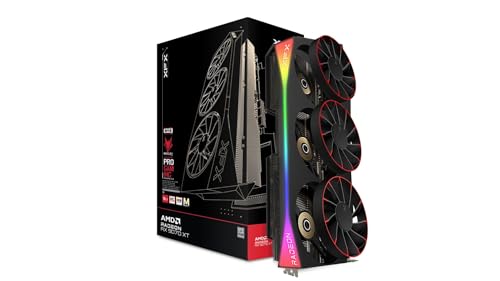

Frequently asked
5 questions01Is the ASUS Prime GeForce RTX 5070 GDDR7 12GB OC Edition good for 1440p gaming?+
Yes, it's one of the stronger choices in its price bracket for 1440p. Published benchmarks for the RTX 5070 class show it handling demanding titles at high settings with comfortable framerates at 1440p, and DLSS 4 at Quality preset pushes performance further without a meaningful image quality penalty. For high-refresh 1440p gaming, this card is well-matched.
02What PSU do I need for the ASUS Prime GeForce RTX 5070 GDDR7 12GB OC Edition?+
The RTX 5070 class typically operates in the 200 to 220W TGP range. A quality 750W PSU from a reputable brand is the safe recommendation for a mid-range system. A well-rated 650W unit will handle it in a modest build, but factor in your CPU and other components. The card uses a 16-pin 12VHPWR connector, so check your PSU compatibility before buying.
03Is 12GB VRAM enough in 2026?+
For 1440p gaming, 12GB of GDDR7 is comfortably sufficient in 2026. At 4K with maximum texture settings in the most demanding titles, you'll be operating closer to the limit, and some games are already pushing 10 to 12GB at 4K ultra. If your primary target is 4K native with no compromises, the extra VRAM on the RTX 5080 or AMD RX 9070 XT is. For 1440p, 12GB is fine.
04How does the ASUS Prime GeForce RTX 5070 compare to AMD alternatives?+
The AMD Radeon RX 9070 XT is the closest competitor. At 1440p rasterisation, the two cards are closely matched. The RTX 5070 leads in ray tracing performance and offers DLSS 4 Multi Frame Generation, which is a genuine advantage in supported titles. The RX 9070 XT counters with 16GB of VRAM versus 12GB, which is a meaningful difference for VRAM-hungry workloads and future-proofing at 4K. If RT and DLSS matter to you, go NVIDIA. If raw VRAM capacity is the priority, AMD has the edge here.
05What warranty and returns apply to the ASUS Prime GeForce RTX 5070 GDDR7 12GB OC Edition?+
Specific warranty terms for this card are not listed in the verified product data. ASUS typically offers a standard manufacturer warranty on their GPU range; check the ASUS website or the product listing for current terms. When buying via Amazon, you're also covered by Amazon's 30-day returns policy and the A-to-Z Guarantee, which provides a baseline of purchase protection regardless of manufacturer warranty.