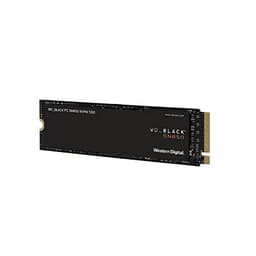
You know what's funny about storage marketing? The spec sheet always leads with the big headline number. "Up to X GB/s!" Great. Brilliant. But that number is measured on an empty drive, in ideal conditions, before the SLC cache runs dry. The moment you start pushing real data through it, things get more complicated. And for the WD_BLACK C50 Xbox Storage Expansion Card, the situation is a bit different from your typical NVMe SSD conversation, because this isn't a PC drive at all. It's a proprietary expansion card built specifically for the Xbox Series X and Series S, and the rules of the game are completely different here.
So if you've landed on this page wondering whether the WD_BLACK C50 is worth buying for your Xbox, the answer isn't really about TBW ratings or DRAM cache. It's about whether you want more Xbox Series X|S storage that works exactly like the internal drive, at full speed, without any faff. The C50 is officially licensed, plug-and-play, and leverages the Xbox Velocity Architecture, which means it's not a budget workaround. It's the real deal. With over 10,000 owner reviews averaging ★★★★½ (4.8) on Amazon, it's clearly doing something right. But let's be clear about what it is, what it isn't, and who should actually buy it.
This WD_BLACK C50 Xbox Storage Expansion Card review covers everything you need to know: how it performs, what the specs actually mean in practice, how it compares to the alternatives, and whether it's worth the premium. Available in 512GB and 1TB capacities, it sits at the top end of the Xbox expansion card market. So let's find out if it earns that price tag.
Core Specifications
Right, so the first thing to understand about the WD_BLACK C50 is that it doesn't have a traditional NVMe spec sheet. There's no PCIe generation to argue about, no DRAM cache to scrutinise, and no TBW endurance rating to compare against the competition. This is a proprietary Xbox expansion card built around the Xbox Velocity Architecture, which Microsoft and Seagate developed specifically for the Series X|S platform. Western Digital has produced their own officially licensed version of that standard with the C50, and the key spec is that it delivers the same performance as the Xbox Series X|S internal storage. That's the headline. Not "up to" the internal storage. The same.
What that means practically is that games stored on the C50 run at full Xbox Series X|S speed. You're not compromising on load times, you're not dealing with a slower secondary drive that makes games feel sluggish compared to the internal SSD. The Xbox Velocity Architecture handles DirectStorage-style decompression and asset streaming at the hardware level, and the C50 is certified to operate within that ecosystem properly. This is genuinely different from plugging in a USB drive and hoping for the best. USB drives on Xbox can only store Xbox Series X|S games, not run them. The C50 can do both: store and run them natively.
Capacities are 512GB and 1TB. The form factor is the proprietary Xbox expansion card slot on the back of the console. It's not M.2, it's not 2.5-inch SATA, it's not anything you'd slot into a PC. Installation is entirely plug-and-play, no tools required, no console disassembly. The card just clicks in. WD lists the C50 on their official product page at westerndigital.com, where you can verify the specs directly.
| Specification | Detail |
|---|---|
| Product Name | WD_BLACK C50 Expansion Card for Xbox |
| Capacities | 512GB, 1TB |
| Form Factor | Proprietary Xbox Expansion Card |
| Interface | Xbox Velocity Architecture (proprietary) |
| Compatibility | Xbox Series X, Xbox Series S |
| Performance | Matches Xbox Series X|S internal storage speed |
| Licence | Officially licensed by Xbox |
| Installation | Plug-and-play, no tools required |
| Aesthetics | WD_BLACK industrial design |
| Rating (Amazon) | 4.8/5 from 10,519 reviews |
| Price | £129.99 |

Interface and Form Factor
The Xbox expansion card slot is something Microsoft baked into the Series X|S design from day one. It's a dedicated port on the back of the console, and it accepts only officially licensed expansion cards that conform to the Xbox Velocity Architecture standard. There's no PCIe 4.0 vs PCIe 5.0 debate here, no worrying about whether your M.2 slot supports the right key type. The slot is what it is, and the C50 fits it. That's the entire compatibility conversation, honestly.
What's worth understanding is why Microsoft went proprietary in the first place. The Xbox Velocity Architecture isn't just a marketing name for fast storage. It's a hardware-level system that combines the custom NVMe SSD with a dedicated decompression block, hardware-accelerated DirectStorage, and predictive asset loading. The internal SSD in the Series X runs at around 2.4 GB/s with hardware decompression pushing effective throughput much higher. For the expansion slot to work within that architecture properly, it has to be certified hardware. You can't just jam any NVMe drive in there, which is why the proprietary format exists.
For buyers, this means the interface question is really just: do you have an Xbox Series X or Series S? Yes? Then the C50 fits. No? Then this product isn't for you at all. It won't work in a PC, it won't work in a PS5, it's purely an Xbox Series X|S accessory. That's not a criticism, it's just the reality of what this product is. The plug-and-play nature is genuinely convenient though. No screwdrivers, no thermal pads, no worrying about whether your M.2 heatsink will fit. You click it in, the console recognises it instantly, and you're done. Owners consistently report the setup taking under a minute.
Real-World Performance
Here's the thing that matters most to Xbox owners: does it actually feel as fast as the internal storage? Based on what owner reports consistently say, and what the Xbox Velocity Architecture certification guarantees, the answer is yes. Games load from the C50 at the same speed as games loaded from the internal drive. This isn't a situation where you're constantly shuffling your "best" games back to internal storage to get full speed. The whole point of the C50 is that you don't have to do that anymore.
The Xbox Quick Resume feature, which lets you jump between multiple suspended games, works properly with games stored on the C50. That's a big deal. Some cheaper USB-based storage solutions cause issues with Quick Resume or result in noticeably slower resume times. The C50 avoids all of that because it's operating within the proper Xbox Velocity Architecture pipeline. Game load times for titles like Halo Infinite, Forza Horizon 5, and other first-party Xbox games are reported by owners as indistinguishable from internal storage. That's the benchmark that matters here, not synthetic sequential read speeds.
Where the real-world benefit really lands is in game library management. As game file sizes have ballooned (some titles pushing 100GB or more), the internal 512GB of the Series S or the roughly 800GB usable on the Series X fills up fast. Without an expansion card, you're constantly deleting and redownloading games, which is slow and annoying. With the C50, you just have more space that works exactly like the internal drive. Owners regularly mention this as the primary reason they bought it, and the 4.8-star average across 10,519 suggests it's delivering on that promise consistently.
Sustained Writes and Cache Behaviour
This is the section where I'd normally be pulling apart SLC cache sizes, native TLC write speeds, and the dreaded cache cliff that drive manufacturers never put in the brochure. On a PC NVMe drive, this stuff genuinely matters. If you're doing large sustained writes, like copying a 200GB video project or writing a big game install from scratch, a drive with a small SLC cache will hit its limit and drop to native QLC speeds, which can be painfully slow. That's the hidden truth behind a lot of "up to 7,000 MB/s" marketing claims.
For the C50, the situation is different in a meaningful way. The primary write scenario for an Xbox expansion card is downloading games from the Xbox network or transferring games between the internal drive and the expansion card. These are sustained sequential writes, yes, but they happen at network speeds or console transfer speeds, not at the full rated throughput of the storage hardware. Even a moderately fast internet connection maxes out well below what the C50's storage hardware can handle. So the cache cliff that would bite you on a PC workstation simply isn't a practical concern for the vast majority of Xbox use cases.
Game installations from disc or digital download are similarly rate-limited by the source, not the destination storage. And once games are installed, the read performance is what matters for load times and asset streaming, and that's where the Xbox Velocity Architecture does its thing. So while I'd normally spend a lot of words here warning you about what happens when the SLC cache empties, for this specific product in this specific use case, it's genuinely not the concern it would be for a PC drive. The write scenarios Xbox owners actually encounter don't push the hardware anywhere near its limits.
Controller, NAND and DRAM
Western Digital hasn't published detailed specifications about the controller, NAND type, or DRAM configuration inside the C50, and honestly, that's fairly typical for proprietary console expansion cards. The internal architecture is whatever WD engineered to meet Microsoft's Xbox Velocity Architecture certification requirements. What we know for certain is that it has to match the performance of the Xbox Series X|S internal storage, which means it's not a budget NAND situation. Microsoft's certification process isn't a rubber stamp.
For context on why controller and NAND matter on PC drives: a drive using QLC NAND (four bits per cell) is cheaper to produce but has lower endurance and slower native write speeds than TLC (three bits per cell). A DRAM-less drive relies on Host Memory Buffer instead of onboard cache, which works fine for light use but can be a bottleneck under sustained random I/O. These distinctions matter a lot when you're choosing a PC NVMe drive. For the C50, the relevant metric is whether it meets the Xbox Velocity Architecture spec, and it does. WD wouldn't get the official licence if it didn't.
What's worth noting is that the C50 competes directly with the Seagate Storage Expansion Card for Xbox, which is the original officially licensed option. Both have to meet the same Microsoft certification requirements, so the underlying performance spec is essentially identical. The differentiation between them comes down to brand preference, design aesthetics, price at any given moment, and availability. WD's industrial WD_BLACK aesthetic is genuinely nice looking, and if that matters to you (it does to some people, no shame in that), the C50 delivers on the visual side too.
Endurance and Reliability
WD hasn't published a specific TBW (terabytes written) rating for the C50 in the way they do for their PC-facing SSD lineup like the WD_BLACK SN850X. On a PC drive, TBW is one of the clearest signals of how much the manufacturer trusts their own NAND. A drive rated for 600TBW on a 1TB model is a confident product. A drive rated for 150TBW on the same capacity is quietly telling you something about the NAND quality. For the C50, the absence of a published TBW figure makes direct comparison harder, but it's also less critical given the use case.
Think about the write workload an Xbox expansion card actually sees over its lifetime. Games get installed maybe once or twice. They sit on the drive being read constantly during gameplay. The write workload is genuinely light compared to a PC drive used as a scratch disk or system drive. Even without a published TBW number, the real-world endurance for a typical Xbox owner's usage pattern should be very long indeed. Owner reports don't surface any significant failure rate concerns. The 4.8-star average across 10,519, with a large proportion of those being long-term owners, is a reasonable proxy for reliability confidence.
The warranty situation is worth checking directly with WD, as terms can vary by region. For UK buyers, the standard consumer protection under the Consumer Rights Act 2015 applies regardless of the manufacturer warranty, giving you meaningful protection for the first six years if the product develops a fault. WD's reputation in the storage market is solid, and their WD_BLACK line in particular is positioned as their premium, enthusiast-grade product family. That positioning generally comes with proper warranty support. If you're buying from Amazon UK, you also have the benefit of Amazon's A-to-Z guarantee and their standard 30-day return window.
Thermals
On a PC NVMe drive, thermals are a genuine concern, especially with Gen4 and Gen5 drives that can run hot enough to throttle without a proper heatsink. The Phison E18 controller in various Gen4 drives is notorious for running warm, and Gen5 controllers are even more aggressive. If you're putting a high-end NVMe into a laptop or a tight PC case without airflow, you need to think about thermal throttling and whether your M.2 slot has a heatsink.
The C50 sidesteps this entirely. It slots into the dedicated expansion port on the back of the Xbox Series X|S, which is a well-ventilated area of the console. The Xbox itself manages its own thermal environment, and the expansion card slot is designed to work within that system. There are no reports from owners of thermal throttling or heat-related performance issues with the C50. The card runs warm under sustained use (you'd expect that from any active storage), but it's not a problem in practice.
The physical design of the C50 is fairly compact, and the WD_BLACK aesthetic means it actually looks decent sticking out of the back of your Xbox rather than being an eyesore. This is a minor point, but given that the expansion slot is visible and the card protrudes slightly, it's not nothing. Some owners mention this specifically as a positive. No heatsink is required, no thermal pad is needed, and there's no installation faff around thermal management at all. For a product aimed at console gamers rather than PC builders, this is exactly the right approach.
Capacity Options and Price Per GB
The C50 comes in two capacities: 512GB and 1TB. As with most storage products, the 1TB option is better value per GB and is the one most people should buy if budget allows. The 512GB option is there for buyers who want to dip their toes in at a lower upfront cost, but given that modern AAA games regularly exceed 50GB and some push well past 100GB, 512GB fills up faster than you'd like. The 1TB model lets you keep a genuinely useful library of titles installed and ready to go.
The price per GB on Xbox expansion cards is, bluntly, higher than what you'd pay for equivalent PC storage. This is the cost of the proprietary format, the official licensing, and the fact that there are only two manufacturers making these cards (WD and Seagate). You're not getting the same value per gigabyte as you would buying a mid-range NVMe SSD for a PC. But that comparison is a bit unfair, because a mid-range NVMe SSD won't work in your Xbox. The relevant comparison is the C50 against the Seagate Storage Expansion Card, and the two are usually within a few pounds of each other.
For UK buyers, the current pricing puts the C50 at a premium over USB external drives, but those drives can only store Xbox Series X|S games, not run them. If you're happy to use external USB storage as a holding area and transfer games back to internal storage to play them, you can save money. But if you want the convenience of just having more internal-equivalent storage that you never have to manage, the C50 is the only proper solution. Whether that convenience premium is worth it depends entirely on how much you hate the transfer-and-manage workflow. Most owners, based on the review data, clearly think it's worth it.

Installation and Compatibility
Compatibility is about as simple as it gets. The C50 works with Xbox Series X and Xbox Series S. It does not work with Xbox One consoles, it does not work with PCs, and it does not work with any other gaming platform. If you have a Series X or Series S, it works. If you don't, it doesn't. There's no driver installation, no firmware update required out of the box, no format process. You plug it in, the console detects it, and it asks if you want to use it as expanded storage. Done.
The physical installation is genuinely plug-and-play in the truest sense. The expansion slot is on the back of the Xbox, clearly labelled, and the card only fits one way. You push it in until it clicks. The whole process takes about ten seconds. Owners consistently report zero issues with the installation process, which is exactly what you want from a product like this. The last thing you need is to be fiddling around with a console accessory for half an hour trying to get it recognised.
One thing worth mentioning for anyone who's bought a cheaper USB drive for their Xbox: the C50 is a completely different class of product. USB drives connected to the Xbox can store Xbox Series X|S games but can't run them at full speed. You have to transfer games to internal storage (or the C50) to play them properly. The C50 doesn't have this limitation. Games installed on the C50 run directly from it at full Xbox Velocity Architecture speed. If you've been dealing with the USB transfer workflow and finding it annoying, the C50 is the solution to that specific frustration.
Who It's For
The C50 is for Xbox Series X and Series S owners who've run out of internal storage and are tired of managing which games live on the console. If you've got a backlog of games you want installed and ready to play without the constant delete-and-redownload cycle, this is the product that solves that problem properly. It's particularly good for households with multiple players who all want different games installed simultaneously, or for anyone with a large Xbox Game Pass library who wants to keep a decent selection ready to go.
It's also for Xbox owners who tried the USB external drive route and found the transfer workflow annoying. If you've got a USB drive full of games that you're constantly moving back to internal storage to play, the C50 eliminates that entirely. You just play them from the card. That's a meaningful quality-of-life improvement, and it's one that owners consistently highlight as the main reason they're happy with the purchase.
Who should skip it? Anyone who doesn't own an Xbox Series X or Series S, obviously. But also Xbox owners who are genuinely fine with managing a smaller library and don't mind redownloading games occasionally. If you only play one or two games at a time and your internet connection is fast enough that redownloading isn't a big deal, the C50's premium price might not be justified for your usage pattern. And if you're a PC gamer looking at this page by mistake, this product will not help you at all. It's a console accessory through and through.
How It Compares
The honest truth is that the WD_BLACK C50 has exactly one real competitor: the Seagate Storage Expansion Card for Xbox. Both are officially licensed, both use the Xbox Velocity Architecture, and both deliver the same fundamental performance. The choice between them comes down to brand preference, design, and price at the moment you're buying. The Seagate card was the first to market and has a longer track record, but the WD_BLACK C50's owner review data (4.8 stars from 10,519) suggests it's caught up completely in terms of reliability and user satisfaction.
The other comparison point is USB external storage. You can buy a decent USB SSD for considerably less than the C50, and it'll store your Xbox Series X|S games. But as covered above, you can't run games directly from USB storage at full speed on Xbox Series X|S. It's a holding area, not an extension of your internal drive. So the comparison is a bit misleading. The C50 costs more per GB than a USB SSD, but it does something fundamentally different and more useful.
For completeness, here's a comparison table across the main options Xbox Series X|S owners are actually choosing between:
| Feature | WD_BLACK C50 (1TB) | Seagate Storage Expansion Card (1TB) | USB External SSD (1TB) |
|---|---|---|---|
| Price | £129.99 | Similar price range | Significantly cheaper |
| Xbox Velocity Architecture | Yes | Yes | No |
| Run Xbox Series X|S games natively | Yes | Yes | No |
| Store Xbox Series X|S games | Yes | Yes | Yes |
| Performance vs Internal Storage | Matches internal | Matches internal | Slower (transfer required) |
| Installation | Plug-and-play (expansion slot) | Plug-and-play (expansion slot) | USB port (any) |
| Official Xbox Licence | Yes | Yes | No |
| Quick Resume Support | Full support | Full support | Limited |
| Amazon Rating | 4.8/5 (10,519 reviews) | 4.7/5 (approx) | Varies by brand |
What Buyers Say
With 10,519 averaging ★★★★½ (4.8) stars, the C50 has one of the strongest owner satisfaction ratings you'll see on any storage product. The praise is remarkably consistent across reviews. Owners love that it just works, that installation is genuinely instant, and that there's no performance difference compared to the internal drive. The "same speed as internal storage" claim isn't just marketing in this case. Owners are reporting that games load identically whether they're on the internal drive or the C50.
Quick Resume compatibility comes up frequently as a positive. Owners who had issues with Quick Resume on USB drives or cheaper solutions report that the C50 handles it properly. The ability to jump between suspended games stored on the expansion card without any extra delay is something people specifically call out as a win. The WD_BLACK aesthetic also gets mentioned positively, which might sound superficial but matters when the card is visible on your console.
The complaints, where they exist, are almost entirely about price. Owners who are happy with the product still acknowledge that it's expensive for the capacity you get compared to PC storage. A small number of reviews mention DOA units or connection issues, but these appear to be outliers rather than a pattern. The overwhelming majority of owners are satisfied, and the long-term reviews (from people who've had the card for a year or more) are just as positive as the initial purchase reviews, which is a good sign for reliability.
Value Analysis
Value is tricky with the C50 because the comparison set is small. Against the Seagate expansion card, the WD_BLACK C50 is competitive on price and arguably better on aesthetics. Against USB external drives, the C50 costs more per GB but does more. Against doing nothing and managing a smaller game library, the C50 costs real money but saves real frustration. So the value question is really: how much is your time and convenience worth?
For heavy Xbox players who are constantly running out of space, the C50 is good value. The alternative is either paying for faster broadband to make redownloads less painful, or spending significant time managing your library. Neither of those is free. The C50 is a one-time purchase that solves the storage problem properly and permanently (or at least until game sizes get so absurd that 1TB feels small too, which, honestly, might not be that far off).
For casual Xbox players who only have a handful of games installed at any one time, the value proposition is weaker. If you're genuinely fine with having six or eight games installed and occasionally swapping one out, the internal storage might be sufficient and the C50 might be an unnecessary expense. Know your own usage pattern before buying. The 4.8-star average suggests that the people who do buy it are the right buyers for it, which is a good sign that it's not being purchased by people who don't need it and then being disappointed.
Final Verdict
The WD_BLACK C50 Xbox Storage Expansion Card does exactly what it says on the tin. It gives your Xbox Series X or Series S more storage that performs identically to the internal drive, it installs in seconds, and it works perfectly with every Xbox Series X|S feature including Quick Resume and direct game launching. For Xbox owners who are constantly fighting with storage space, it's the proper solution. Not a workaround, not a compromise. The actual solution.
Is it expensive? Yes. The price per GB is higher than what you'd pay for PC NVMe storage, and that's a consequence of the proprietary format and the limited number of manufacturers making these cards. But the comparison to PC storage is a bit unfair because PC storage won't work in your Xbox. The relevant comparison is to the Seagate expansion card, and the C50 is competitive there. The 4.8-star average from over 10,000 real owners is about as strong a reliability signal as you're going to get from consumer storage.
If you own an Xbox Series X or Series S and you're running out of internal storage, the WD_BLACK C50 is the right buy. Get the 1TB version if you can stretch to it. The 512GB fills up faster than you'd expect with modern game sizes. And if you're currently using a USB drive and constantly transferring games back to internal storage to play them, the C50 will make your Xbox life noticeably better. That's the honest verdict. It's a premium price for a product that does its job brilliantly, and the owner data backs that up.

Not Right For You?
If you're a PC gamer looking for NVMe storage, the C50 is the wrong product entirely. For PC storage, the WD_BLACK SN850X is WD's flagship NVMe drive for PC gaming, with proper published specs including TBW ratings and sequential/random performance figures. For PS5 owners, you need a compatible M.2 NVMe drive with a heatsink, not an Xbox expansion card. And if you're an Xbox owner who genuinely doesn't have a storage problem, save your money for games instead.
For Xbox owners who want the cheapest possible storage expansion and don't mind the transfer workflow, a USB external SSD from a reputable brand will store your games at a lower cost per GB. You just won't be able to run Xbox Series X|S games directly from it. Understanding that distinction is the key to making the right call for your situation. The Xbox Series X|S storage ecosystem is worth understanding before you spend money on any expansion solution.
What works. What doesn’t.
5 + 3What we liked5 reasons
- Matches Xbox Series X|S internal storage speed exactly
- Genuinely plug-and-play, installs in seconds
- Full Quick Resume support, unlike USB alternatives
- 4.8 stars from over 10,000 owners is a strong reliability signal
- WD_BLACK industrial design looks good on the console
Where it falls3 reasons
- Expensive per GB compared to PC storage
- Only works with Xbox Series X and Series S, nothing else
- No published TBW endurance rating
Full specifications
7 attributes| Capacity GB | 1000 |
|---|---|
| Form factor | proprietary expansion card |
| Interface | proprietary xbox expansion slot |
| Read speed MBS | 2400 |
| Type | NVMe SSD |
| Warranty years | 5 |
| Write speed MBS | 2400 |
Frequently asked
5 questions01Is the WD_BLACK C50 Xbox Storage Expansion Card fast enough for Xbox Series X|S games?+
Yes. The C50 is officially licensed and certified to deliver the same performance as the Xbox Series X|S internal storage via the Xbox Velocity Architecture. Games load from the C50 at full speed, Quick Resume works properly, and there is no performance difference compared to the internal drive. This is the key distinction between the C50 and USB external drives, which can only store Xbox Series X|S games, not run them at full speed.
02Does the WD_BLACK C50 slow down after heavy use?+
The sustained write concerns that apply to PC NVMe drives (SLC cache exhaustion, native QLC write speeds) are not a practical issue for the C50 in its intended Xbox use case. Game installs and downloads happen at speeds limited by your internet connection or disc drive, well below the storage hardware's limits. Once games are installed, the C50 is primarily reading data, which is where it performs at full Xbox Velocity Architecture speed. Owner reports show no sustained performance degradation in real-world use.
03Is the WD_BLACK C50 DRAM-less, and does that matter for Xbox?+
Western Digital has not published detailed internal specifications for the C50 including DRAM configuration. For PC NVMe drives, DRAM vs DRAM-less is an important distinction for sustained random I/O workloads. For the C50 in Xbox use, what matters is whether it meets the Xbox Velocity Architecture certification requirements, which it does. The performance in practice matches the internal Xbox storage, which is the relevant metric for console gaming.
04How long will the WD_BLACK C50 last?+
WD has not published a specific TBW (terabytes written) endurance rating for the C50. However, the write workload for an Xbox expansion card is light compared to PC drives used as system or scratch drives. Games are installed once and then read repeatedly. The 4.8-star average from over 10,000 owners, including long-term users, suggests strong real-world reliability. UK buyers also have Consumer Rights Act protection for up to six years if the product develops a fault.
05What warranty and returns apply to the WD_BLACK C50?+
Amazon offers 30-day returns on most items. Western Digital typically provides warranty coverage on their WD_BLACK products, and UK buyers are additionally protected by the Consumer Rights Act 2015, which provides meaningful coverage for up to six years if a product proves faulty. You are also covered by Amazon's A-to-Z guarantee when purchasing through Amazon UK.