Networking gear either does its job quietly or it becomes your household's most complained-about appliance. A powerline adapter kit sits in a peculiar spot in that world: it's not glamorous, it doesn't have a flashy app, and nobody's going to brag about it at a dinner party. But if your router is upstairs and your smart TV, games console, or home office is at the other end of the house, a powerline kit is often the most practical fix you can buy without drilling holes or running Ethernet cable through skirting boards.
The TP-Link TL-PA4010KIT is one of the most reviewed powerline kits on Amazon UK, sitting at 4.4 stars across over 12,000 owners. That's not a small sample. At the budget end of the market, that kind of sustained rating usually means it works reliably for most people, even if it isn't going to impress anyone who's already read the spec sheet. So the question isn't whether it's technically impressive. It isn't. The question is whether it solves the problem it's sold to solve, and whether anything else at this price does it better.
This TP-Link Powerline Adapter Kit UK review covers exactly that: what the specs actually deliver, what 12,000-plus owners consistently report, and how it stacks up against the competition before you part with your money.
Core Specifications: TP-Link TL-PA4010KIT AV600
The TL-PA4010KIT is a two-adapter powerline kit. You plug one adapter into a wall socket near your router and connect it via Ethernet, then plug the second adapter wherever you need a wired connection in your home. The two units communicate over your existing electrical wiring, which means no new cables, no Wi-Fi dead zones to fight, and no running cable through walls. The headline speed is AV600, which means a theoretical powerline throughput of up to 600Mbps. As with every piece of networking kit, that number is a ceiling you won't hit in practice, not a floor you can rely on.
Each adapter includes a single 10/100Mbps Fast Ethernet port. That's the spec that actually governs your real-world throughput more than the AV600 headline does. A 100Mbps Fast Ethernet port caps your wired connection at 100Mbps regardless of what the powerline link between the adapters can theoretically carry. For most UK broadband connections right now, that's fine. The majority of home broadband packages sit well under 100Mbps on actual delivered speeds. But if you're on a full-fibre gigabit connection and you're hoping to pull that full gigabit through to a downstairs device, you won't. The port speed is the bottleneck.
Setup is plug-and-play. No software, no app, no configuration. Plug both adapters in, connect the Ethernet cables, and they pair automatically. TP-Link uses a button-press pairing process for security if you want to add more adapters to the network later, but out of the box, the two units in the kit find each other without any input from you. The design is compact, which matters more than it sounds: nobody wants a chunky adapter blocking the second socket on a double outlet.
| Specification | Detail |
|---|---|
| Powerline Standard | AV600 (HomePlug AV) |
| Theoretical Powerline Speed | Up to 600Mbps |
| Ethernet Port (per adapter) | 1x 10/100Mbps Fast Ethernet |
| Setup | Plug and play, no configuration required |
| Energy Saving | Up to 85% power reduction when idle |
| Design | Mini compact, does not block adjacent socket |
| Kit Contents | 2x adapters, 2x Ethernet cables |
| Wi-Fi | Not included (wired only) |
| Price | £37.00 |
| Owner Rating | ★★★★☆ (4.4) (12,086 reviews) |

Real-World Coverage: Does It Actually Reach?
Coverage for a powerline adapter is a different conversation to coverage for a Wi-Fi router. You're not asking whether the signal reaches the far bedroom through two walls and a concrete floor. You're asking whether your home's electrical wiring provides a good enough path between the two sockets you've chosen. And that varies enormously depending on how old your wiring is, whether the two sockets are on the same ring circuit, and whether you've got anything electrically noisy (a washing machine, an electric shower, certain LED dimmers) on the same circuit causing interference.
In most modern UK homes with reasonably standard wiring, owners consistently report that the TL-PA4010KIT works well across different floors and rooms. The majority of the 12,000-plus reviews describe it as straightforward and reliable for the typical use case: connecting a router in the hallway or upstairs landing to a TV, console, or desktop in a living room or bedroom. Where owners report problems, it's almost always one of two things: old or unusual wiring, or plugging the adapters into extension leads rather than directly into wall sockets (which kills performance and sometimes stops them pairing at all).
The honest caveat is that no powerline kit can guarantee performance across a specific home. Box coverage figures don't apply here the same way they do on a router spec sheet. What you're buying is a technology that works well in most modern homes and occasionally doesn't work at all in older properties with outdated wiring. TP-Link and the wider HomePlug standard have been around long enough that this is well understood. Most owners who report failure do so quickly, within the return window, which is why the overall rating stays high: the ones it doesn't work for return it, and the ones it works for keep it for years.
Sustained Speed Under Load: What 100Mbps Actually Means
The AV600 headline is, to be direct about it, mostly marketing context. The number that governs what you actually get out of the Ethernet port on the receiving adapter is 100Mbps, because that's the maximum speed of the Fast Ethernet port on each unit. In practice, real-world throughput through a powerline link is always lower than the theoretical maximum due to electrical noise, wiring quality, and distance, so you're typically looking at somewhere between 50 and 80Mbps in a well-wired home. That's what owners consistently report when they run speed tests through the adapters.
For HD video streaming, that's more than enough. Netflix in 4K needs around 25Mbps. A gaming console downloading a large update will saturate whatever you give it, but 50 to 80Mbps still means a 50GB game downloads in under two hours rather than overnight. For most UK broadband connections, which are still frequently in the 50 to 80Mbps range on actual delivered speeds, the powerline link is not the limiting factor. Where it does become a limitation is if you're on a full-fibre 900Mbps package and you want to pull that speed through to a wired device downstairs. You won't. The 100Mbps port is the ceiling.
Under load, owners report the connection stays stable. This is where powerline genuinely beats a cheap Wi-Fi extender: you're not fighting interference, you're not dealing with the half-speed penalty of a single-band repeater, and you're not competing with every other 2.4GHz device in the building. The connection is wired at both ends. Latency is low and consistent, which matters for gaming and video calls in a way that raw throughput sometimes doesn't. That stability is the real selling point of this kit, not the AV600 number on the box.
Mesh and Backhaul: Not That Kind of Kit
The TL-PA4010KIT doesn't do Wi-Fi, so the mesh and backhaul conversation is a bit different here. There's no wireless node to worry about, no shared-band penalty, and no question of whether the backhaul is dedicated or not. What you're getting is a wired Ethernet extension: the second adapter delivers a physical Ethernet port wherever you need one, and you plug your device directly into it. That's it. Simple, and for a wired connection, that simplicity is a feature.
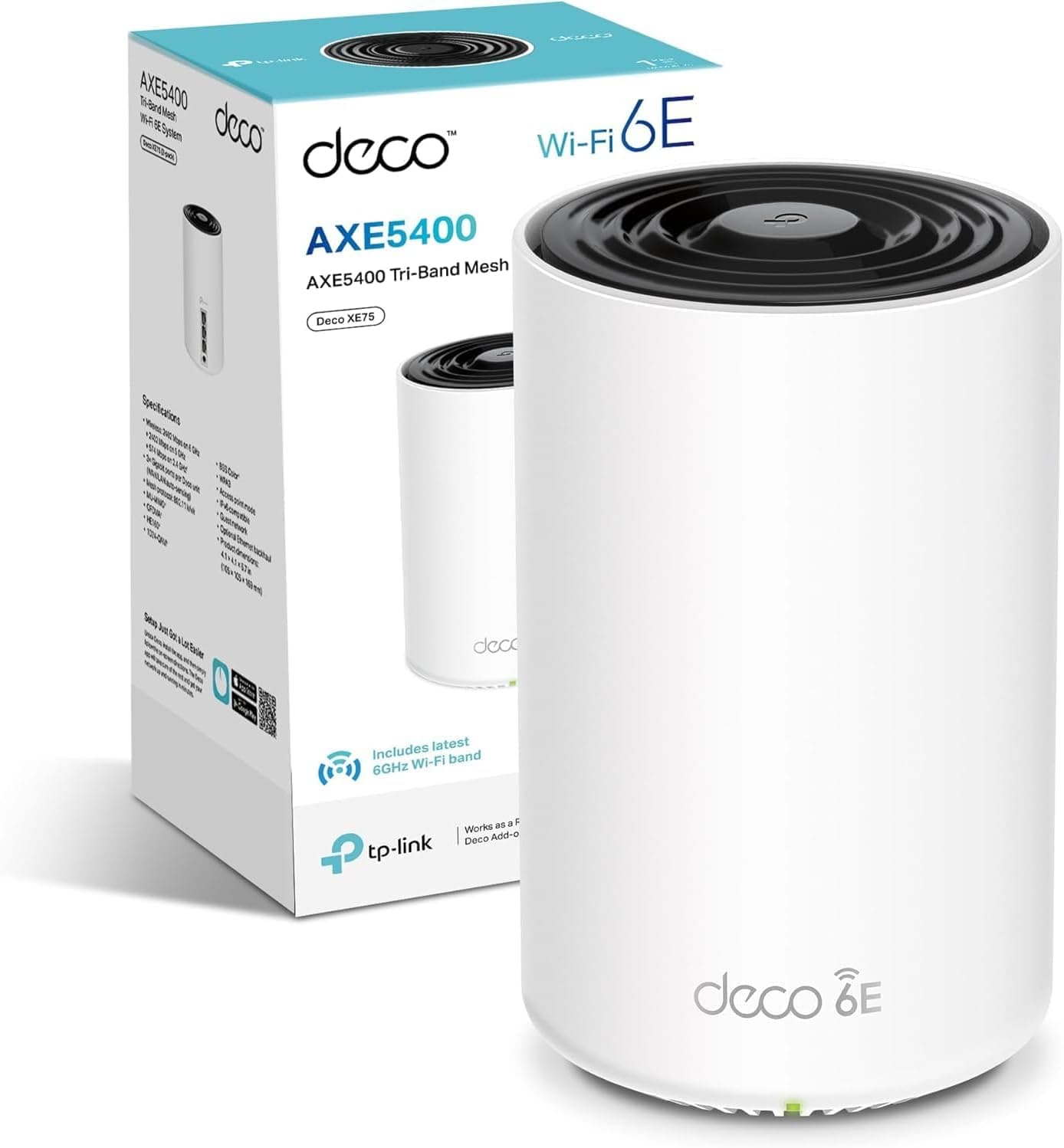
Where this does interact with mesh networking is as a backhaul solution. If you've got a mesh Wi-Fi system, the nodes typically talk to each other wirelessly, which costs you bandwidth and introduces latency on the hop between nodes. A powerline kit can act as a wired backhaul for a mesh node: plug the second powerline adapter into the Ethernet port on a mesh satellite, and now that node has a wired connection back to the router without you having to run cable through the house. This is a genuinely useful application, and several owners specifically use the TL-PA4010KIT for exactly this purpose alongside a TP-Link Deco or similar mesh system.
The limitation is still the 100Mbps port. If your mesh node is capable of handling gigabit backhaul and you've got a gigabit broadband connection, the powerline kit becomes a bottleneck in that chain. For most people on sub-100Mbps broadband, it's not a problem. For gigabit users who want the full benefit of a wired mesh backhaul, you'd want a kit with Gigabit Ethernet ports, which means looking at the TP-Link AV1000 or AV2000 range instead. But at this price point, for the majority of UK broadband speeds, the TL-PA4010KIT does the job.
Device Capacity: One Port, One Device
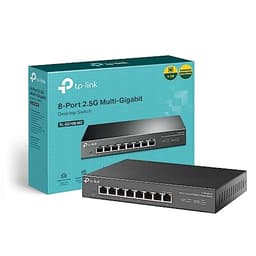
This is where the spec is about as straightforward as it gets. One Ethernet port per adapter means one wired device per adapter. That's the design. If you want to connect a smart TV, a games console, and a desktop PC at the far end of the house, you need a switch plugged into the receiving adapter. A basic unmanaged 5-port switch costs very little and solves the problem instantly. Some owners don't realise this before buying, which accounts for a proportion of the disappointed reviews. It's worth being clear about it upfront.
There's no Wi-Fi on this kit, so device capacity in the wireless sense doesn't apply. You're not asking it to handle 30 simultaneous Wi-Fi clients, manage MU-MIMO streams, or deal with the IoT device sprawl that makes modern routers sweat. Each adapter connects one device via Ethernet. That's the whole scope of the product. If you need Wi-Fi at the far end of the house as well as a wired connection, you'd want to look at TP-Link's powerline Wi-Fi adapters, like the TL-WPA4220KIT, which adds a wireless access point to the receiving adapter.
For the specific use case this kit is designed for, though, single-device wired connection is often exactly what's needed. A games console that needs a stable wired connection for online play, a smart TV that keeps buffering over Wi-Fi, a desktop PC in a room the router can't reach: one Ethernet port is all you need. The kit doesn't pretend to be more than it is, which is refreshing at this price point. It also means there's nothing to configure, nothing to manage, and nothing to go wrong beyond the powerline link itself.
Wi-Fi Standard and Future-Proofing: Honestly, Not Applicable
The TL-PA4010KIT has no Wi-Fi. So the Wi-Fi 6, Wi-Fi 6E, and Wi-Fi 7 conversation simply doesn't apply here. There's no wireless radio to assess, no band to evaluate, and no standard to future-proof against. If you're buying this kit, you're buying it because you want a wired connection, and wired Ethernet doesn't have versions in the same way Wi-Fi does. A Cat5e cable from 2003 and a Cat5e cable from today carry the same 100Mbps at Fast Ethernet speeds.
The future-proofing question for this kit is really about the powerline standard and the port speed. HomePlug AV, which underpins the AV600 standard, is a mature technology. It's not cutting-edge, but it's also not going anywhere. The bigger constraint is the 100Mbps Ethernet port. As UK broadband speeds continue to rise, particularly with the ongoing rollout of full-fibre (FTTP) connections that deliver 500Mbps or 1Gbps to the home, a 100Mbps port becomes an increasingly visible bottleneck. If you're already on gigabit broadband, this kit is not the right choice for your main wired connection.
For sub-100Mbps connections, which still represent a significant portion of UK households, the port speed is not a limitation in practice. And even on faster connections, if the device you're connecting (a smart TV, an older console, a basic desktop) has a 100Mbps port itself, the adapter isn't adding any constraint that wasn't already there. The honest answer on future-proofing is: if you're on gigabit broadband and care about pulling full speed to a wired device, spend more. If you're on standard broadband and just want a stable connection to a specific device, this does what you need.

Features and QoS: There Aren't Any, and That's Fine
QoS, parental controls, VPN support, guest networks, buffer-bloat management: none of these exist on the TL-PA4010KIT, and they're not supposed to. This is a passive network extension device, not a router. It doesn't make any decisions about traffic, it doesn't have a management interface, and it doesn't run firmware in any meaningful sense. The only feature beyond basic Ethernet extension is the energy saving mode, which automatically reduces power consumption by up to 85% when the device isn't actively passing traffic. That's a genuinely useful feature for something that's going to be plugged in permanently.
The security pairing feature is worth mentioning. When you first plug in the two adapters, they pair automatically using the default HomePlug network name. If you want to add more adapters to the network later, or if you're concerned about a neighbour in a shared building potentially accessing your powerline network (which is a real, if unlikely, concern in flats and terraced houses), you can press the pair button on each adapter to generate a unique encrypted key. TP-Link supports 128-bit AES encryption on the powerline link, which is the HomePlug AV standard. It's not something most home users will ever think about, but it's there.
The absence of features is not a criticism here. Every feature on a router or mesh system is another thing that can break, need updating, or require configuration. A powerline adapter that just works, without an app to update or a dashboard to log into, is often exactly what a non-technical user needs. The energy saving mode is the one feature that adds genuine value, and it works automatically without any input. For a budget kit aimed at solving a specific problem, the feature list is appropriate to the product.
Firmware, App and Security Updates: Nothing to Update
There's no app. There's no firmware update process for end users. There's no cloud account to create, no subscription to worry about, and no notification asking you to update to the latest version. The TL-PA4010KIT is a hardware device with fixed functionality, and TP-Link doesn't push firmware updates to it in the way they do with their routers and mesh systems. For some people, that's a relief. For others who are used to managed networking kit, it might feel like a gap, but it really isn't for a device of this type.
The security question for powerline adapters is primarily about the physical network rather than software vulnerabilities. The 128-bit AES encryption on the powerline link means that traffic between the two adapters is encrypted over the electrical wiring. In a detached house, this is largely academic. In a flat or terraced house where your electrical wiring might share infrastructure with a neighbour's, the encryption matters more. The button-press pairing process creates a unique network key that prevents other HomePlug devices on the same electrical infrastructure from joining your network uninvited.
Reliability, based on what owners consistently report, is good. The most common failure mode is not the adapters themselves but the electrical environment: interference from other devices, extension leads, or unusual wiring. Owners who plug the adapters directly into wall sockets and keep them away from power strips report stable, continuous connections over years of use. There's no reboot cycle to manage, no firmware that introduces bugs, and no app that stops working after an iOS update. The simplicity of the product is a significant part of why it maintains a 4.4-star average across such a large sample.
Setup and Management: About as Simple as It Gets
Plug one adapter into a wall socket near your router. Connect it to the router with an Ethernet cable. Plug the second adapter into a wall socket near the device you want to connect. Connect that device with an Ethernet cable. Wait about 60 seconds. Done. There is genuinely no more to it than that for the vast majority of users. The two adapters find each other automatically over the electrical wiring and establish the powerline link without any user input.
This is the product's strongest selling point for non-technical buyers. No login page, no SSID to configure, no password to set, no app to download. The indicator lights on the adapters tell you the status: power, Ethernet connection, and powerline link quality. A green powerline light means good signal, amber means moderate, red means poor. That's your entire management interface. If you get a red light, try a different socket. That's the troubleshooting guide.
For people who've been intimidated by network configuration or who've had bad experiences with range extenders that needed constant fiddling, this kind of setup simplicity is worth a lot. The owner reviews consistently praise how quickly it's up and running, with many describing it as the first networking product they've bought that worked exactly as described without any frustration. That's not a universal experience (some people do get red lights and have to experiment with socket placement), but it's the dominant pattern across the review base. The faff factor is low.
Ports and Connectivity: TP-Link Powerline Adapter Kit UK Review
Each adapter in the TL-PA4010KIT has a single 10/100Mbps Fast Ethernet port. That's the full connectivity spec. There's no USB port, no additional LAN ports, no WAN port, and no wireless radio. The Ethernet port auto-negotiates between 10Mbps and 100Mbps depending on the connected device, but in practice, everything you'd connect to this will run at 100Mbps. The cables included in the kit are standard Ethernet cables, and any Cat5e or Cat6 cable you already own will work fine as a replacement or extension.
The 100Mbps ceiling is the most important thing to understand about this product before buying. It's not a criticism of the build quality or the powerline technology; it's a deliberate design choice at this price point. Gigabit powerline adapters exist, and TP-Link makes them. The AV1000 range, for example, includes Gigabit Ethernet ports and can handle significantly higher throughput. Those cost more. The TL-PA4010KIT is the entry-level option, and the 100Mbps port is part of what keeps it at that price.
For practical use, the single port per adapter is the main consideration. One port means one device. If you need to connect multiple devices at the far end, you'll need a switch. A basic unmanaged switch is cheap and widely available, and the combination of this kit plus a small switch is still often cheaper than a single powerline adapter with multiple ports. The compact design means the adapter doesn't block adjacent sockets, which is a small but genuinely appreciated detail that comes up repeatedly in owner reviews. Nobody wants to lose the second socket on a double outlet to a chunky adapter.
How It Compares: The Budget Powerline Market
The TL-PA4010KIT sits at the entry level of the powerline adapter market, and the competition at this price is fairly limited to other TP-Link products and a handful of own-brand or lesser-known alternatives. The two most relevant comparisons are the TP-Link TL-PA7010KIT (AV1000, Gigabit Ethernet) and the Devolo Magic 1 LAN Starter Kit, which uses the newer G.hn powerline standard rather than HomePlug AV.
The TP-Link TL-PA7010KIT is the direct upgrade path. It uses the AV1000 standard (theoretical 1000Mbps over the powerline link) and includes Gigabit Ethernet ports on each adapter. If you're on a fast broadband connection or you want to use the adapters as wired backhaul for a mesh system and want to avoid the 100Mbps bottleneck, the PA7010KIT is worth the extra spend. It's still a budget product by networking standards, and the Gigabit ports make it genuinely more future-proof.
The Devolo Magic 1 LAN uses G.hn technology, which is a newer powerline standard that handles interference and wiring variations better than HomePlug AV in some environments. It also includes Gigabit Ethernet. It typically costs more than both TP-Link options. For most homes, the difference in real-world throughput between HomePlug AV600 and G.hn is less dramatic than the spec sheets suggest, but in electrically noisy environments or older homes, G.hn can be meaningfully more reliable. The Devolo is the choice if you've tried HomePlug before and had issues.
| Feature | TP-Link TL-PA4010KIT | TP-Link TL-PA7010KIT | Devolo Magic 1 LAN |
|---|---|---|---|
| Powerline Standard | HomePlug AV600 | HomePlug AV1000 | G.hn 1200 |
| Ethernet Port Speed | 10/100Mbps | 10/100/1000Mbps | 10/100/1000Mbps |
| Ports Per Adapter | 1 | 1 | 1 |
| Wi-Fi | No | No | No |
| Plug and Play | Yes | Yes | Yes |
| Energy Saving | Yes (up to 85%) | Yes | Yes |
| Best For | Sub-100Mbps broadband, basic wired extension | Fast broadband, mesh backhaul | Older homes, noisy wiring |
| Price | £37.00 | Check Amazon | Check Amazon |

Final Verdict: TP-Link Powerline Adapter Kit UK Review (2026)
The TL-PA4010KIT is a product that knows exactly what it is and doesn't try to be anything else. It's a budget powerline kit that solves a specific, common problem: getting a stable wired connection to a device that your router can't reach over Wi-Fi, without running cable through walls. It does that job reliably, it's dead simple to set up, and 12,000-plus owners at 4.4 stars is a meaningful signal that it works for most people in most homes.
The limitations are real and worth being honest about. The 100Mbps Fast Ethernet port is the binding constraint for anyone on a fast broadband connection. If you're on gigabit fibre and you want to pull that speed to a wired device, this isn't the kit for you. Spend a bit more on the AV1000 version and get Gigabit Ethernet. Similarly, if you live in a flat with older wiring or you've got a lot of electrically noisy appliances, powerline technology in general may not work well for you, and no amount of good reviews will change the physics of your specific wiring.
But for the person on standard or mid-tier broadband who wants a stable, low-latency wired connection for a TV, console, or home office PC at the other end of the house, this is a genuinely good solution at a genuinely low price. It's not exciting. It doesn't need to be. It's the networking equivalent of a good plumber: you don't think about it once it's working, and that's the whole point.
What works. What doesn’t.
5 + 3What we liked5 reasons
- Genuinely plug-and-play: no app, no configuration, no faff
- 4.4 stars across 12,000+ owners is a reliable signal it works for most homes
- Compact design does not block adjacent wall sockets
- Energy saving mode reduces idle power consumption by up to 85%
- Low latency wired connection beats a cheap Wi-Fi extender for gaming and streaming
Where it falls3 reasons
- 100Mbps Fast Ethernet port caps throughput, not suitable for gigabit broadband users
- One port per adapter means one device; a switch is needed for multiple connections
- Performance depends heavily on home wiring quality, no guarantee in older properties
Full specifications
12 attributes| Antennas | 0 |
|---|---|
| Device type | powerline |
| Ethernet ports | 1 |
| Frequency bands | none |
| HAS bluetooth | none |
| Launch year | 2016 |
| MAX speed | 600 |
| Mesh capable | false |
| Ports | 1x 100MbE Ethernet per adapter |
| Speed | 600Mbps |
| TOP speed mbps | 600 |
| Type | powerline |
Frequently asked
5 questions01Will the TP-Link TL-PA4010KIT work in my house?+
In most modern UK homes with standard wiring, yes. Owners consistently report reliable connections across different floors and rooms. The main risk factors are older or unusual wiring, and plugging the adapters into extension leads rather than directly into wall sockets, which significantly reduces performance. If you're in a flat or a property built before the 1980s, there's more uncertainty. The good news is that Amazon's 30-day return policy means you can try it and send it back if it doesn't work in your specific home.
02Does the TP-Link TL-PA4010KIT support Wi-Fi 6 or Wi-Fi 7?+
No, and it doesn't need to. This is a wired-only powerline adapter kit with no wireless radio at all. Wi-Fi standards are irrelevant here. What matters is the Ethernet port speed (100Mbps) and the quality of your home's electrical wiring. If you want Wi-Fi at the receiving end as well, you'd need a different product, such as TP-Link's TL-WPA4220KIT, which adds a wireless access point to the powerline adapter.
03Is a powerline adapter better than a Wi-Fi extender or mesh node?+
For delivering a stable wired connection to a specific device, a powerline adapter is usually better than a cheap Wi-Fi extender. Extenders often halve your usable bandwidth because they repeat the signal on the same band they receive it on. A powerline adapter gives you a wired connection with low, consistent latency, which is better for gaming and video calls. Mesh systems with dedicated backhaul beat powerline for whole-home Wi-Fi coverage, but they cost significantly more. If you just need one device wired up reliably, powerline is often the most practical and affordable solution.
04Is the TP-Link TL-PA4010KIT easy to set up?+
Yes, it's about as simple as networking kit gets. Plug one adapter into a wall socket near your router, connect it with an Ethernet cable, plug the second adapter near your device, connect that with an Ethernet cable, and wait about 60 seconds. No app, no login, no configuration. The adapters pair automatically. Owners consistently describe it as one of the easiest networking products they've set up. The only troubleshooting step if it doesn't work is to try a different wall socket, ideally one on the same ring circuit as the first adapter.
05What warranty and returns apply to the TP-Link TL-PA4010KIT?+
Amazon offers 30-day returns on most items. TP-Link typically provides a 2-year warranty on their networking products, and you're also covered by Amazon's A-to-Z guarantee. Given that powerline performance depends on your home's wiring, the 30-day return window is worth knowing about before you buy: if it doesn't work in your property, you have a straightforward route to return it.