If a headset hurts your head after an hour, the sound quality is irrelevant. You'll rip it off, chuck it to one side, and game in silence. So when something budget-priced comes along claiming to be comfortable AND decent-sounding, it's worth a proper look rather than a dismissal. The STEALTH C6-100 Gaming Headset Range (LED) is exactly that kind of product: cheap enough to be an impulse buy, but with enough going for it that over 2,300 people on Amazon have bothered to leave a review, averaging ★★★★☆ (4.2). That's not nothing.
STEALTH is a UK-focused gaming accessories brand that's carved out a niche in the budget and mid-range headset space. They're not Razer, they're not HyperX, and they're not trying to be. What they are is a brand that understands most people don't want to spend serious money on a headset for casual gaming, and the C6-100 sits right in that sweet spot. It connects via a straightforward 3.5mm jack, works across pretty much every platform you can think of, and comes with LED lighting because of course it does.
This review is grounded in the verified spec sheet and the patterns that emerge from those 2,317 owner reviews. No invented test bench, and no pretending anyone has clocked 200 hours on it personally. What we do know is what the specs tell you, what real owners report, and how this stacks up against the competition at this price tier. So here's the honest assessment.
Core Specifications
The C6-100 keeps things simple, which at this price is actually the right call. You get 40mm speaker drivers, which is a perfectly standard size for a gaming headset and not something to sniff at in this price bracket. The connection is wired via 3.5mm jack, which means zero latency, zero battery anxiety, and compatibility with basically anything that has a headphone socket. The in-line control unit handles game and chat volume separately, plus a mute function for the microphone. That's genuinely useful, especially on consoles where you'd otherwise be diving into menus.
The earcups feature soft foam cushioning and have tilt and twist functionality, which matters more than people give it credit for. A headset that can't adjust to the shape of your head will cause pressure points regardless of how soft the padding is. The LED lighting is present, which will either be a selling point or completely irrelevant to you depending on whether your desk setup has an aesthetic or not. Build quality at this price is never going to be aluminium and braided cables, but the materials are reported by owners as feeling adequate rather than embarrassingly flimsy.
One thing worth flagging: the Xbox One compatibility carries an asterisk in the product listing. That typically means it works but may require a controller with a built-in 3.5mm port, which older Xbox One controllers don't have without an adapter. Worth checking before you buy if you're on older Xbox hardware. Everything else, including PS4, PS5, Nintendo Switch, PC, and mobile, is plug-and-play via the 3.5mm connection.
| Specification | Detail |
|---|---|
| Driver Size | 40mm |
| Connection Type | 3.5mm wired jack |
| Microphone | In-line mic with mute |
| Volume Control | In-line Game/Chat volume control |
| Ear Cup Design | Tilt and twist with soft foam cushioning |
| Platform Compatibility | Xbox One*, Xbox Series X/S, PS4, PS5, Nintendo Switch, PC**, Mobile, Tablet |
| LED Lighting | Yes |
| Price | £16.99 |
| Rating | ★★★★☆ (4.2) (2,425 reviews) |

Audio Specifications
The headline spec here is the 40mm speaker drivers. To put that in context: most budget headsets in the under-£16.99 bracket use drivers somewhere between 30mm and 50mm, so 40mm sits right in the middle of the pack. Driver size alone doesn't determine sound quality (anyone who tells you bigger always means better is selling something), but 40mm is a mature, well-understood size that manufacturers know how to tune. The omnidirectional sound description in the product listing refers to the way sound fills the ear rather than a specific technical standard like virtual surround processing.
The product listing doesn't specify impedance or sensitivity figures, which is pretty typical for budget gaming headsets. High-impedance headphones (above 80 ohms or so) need a dedicated amplifier to sound their best, but budget gaming headsets almost universally run low impedance (typically 16 to 32 ohms) so they work fine straight from a controller or phone jack. The C6-100 follows this pattern based on its 3.5mm plug-and-play design. No amp required, no faffing about with DACs. You plug it in and it works.
Frequency response figures aren't published for the C6-100, which again is standard practice at this price point. What owner reviews suggest is that the sound leans toward the warmer end of the spectrum, with decent enough bass presence for gaming without being the kind of headset that rattles your skull. Treble detail is adequate but not the most refined thing you'll hear. For context, you're not buying this to critically listen to jazz. You're buying it to hear footsteps in Warzone and dialogue in a story game, and it handles both of those jobs well enough according to the majority of owners.
Sound Signature
Budget gaming headsets almost always tune for a V-shaped or bass-forward sound signature. Why? Because it sounds impressive on first listen, which is what sells headsets in a shop or convinces someone in the first five minutes after unboxing. The C6-100 appears to follow a similar approach based on what owners report: there's warmth and body to the low end, mids that don't feel completely recessed, and highs that are present without being harsh. That's a reasonable balance for the price.
For competitive gaming, this signature is a bit of a double-edged sword. Bass-forward tuning can make explosions and gunfire feel satisfying, but it can also mask the higher-frequency cues that matter in competitive play: footsteps, reload sounds, the crack of a distant sniper shot. If you're grinding ranked in something like Valorant or CS2 where positional audio is genuinely important, you'd want something with a flatter, more analytical signature. But for casual competitive gaming, battle royales, or story-driven games where immersion matters more than pixel-perfect audio positioning, the C6-100's sound signature is actually quite well suited.
The omnidirectional sound claim in the listing is worth addressing directly. This isn't virtual 7.1 surround processing (there's no software component, no USB audio processing, nothing like that). It's a description of how the drivers project sound within the ear cup. That's fine. Virtual surround on budget headsets is almost always more marketing than reality anyway, and a well-tuned stereo headset will give you better positional awareness than a poorly implemented surround mode. The C6-100 keeps it honest by not pretending to be something it isn't in this regard.
Sound Quality
Owner reviews are where you get the real picture on sound quality, and the pattern here is pretty consistent. People are pleasantly surprised. At this price, the expectation is often tinny, hollow sound with no bass and a mic that sounds like you're calling from a submarine. The C6-100 apparently clears that bar comfortably. Multiple owners mention the sound being fuller than expected, with enough bass to make gaming enjoyable without it becoming one-note and muddy.
Soundstage is limited, as you'd expect from a closed-back budget headset. You're not getting the wide, airy presentation of open-back headphones, and you're not going to mistake this for a premium product in terms of imaging precision. But for gaming purposes, the stereo separation is adequate. You can tell left from right, you can hear when something is in front of versus behind you in most games, and dialogue is intelligible. That covers the basics. Music listening is functional but not the C6-100's strong suit. If you want something that does double duty as a serious music headset, this isn't it.
For movies and story games, the warmth of the tuning actually works in its favour. Cinematic scores sound full rather than thin, action sequences have weight, and voice acting comes through clearly. Owners who use this primarily for single-player gaming tend to be more satisfied than those who bought it specifically for competitive multiplayer. That tells you something about where the C6-100 sits in the market. It's a casual gaming headset that does casual gaming well. It's not pretending to be an esports tool, and that honesty (whether intentional or not) is reflected in the owner satisfaction scores.
Microphone Quality
The mic on the C6-100 is an in-line design rather than a boom mic attached to the headset itself. This is a meaningful distinction. Boom mics sit close to your mouth and pick up your voice directly, which generally gives you better clarity and noise rejection. In-line mics sit on the cable somewhere around chest height, picking up your voice from further away and picking up more ambient noise in the process. It's a cost-saving measure, and it does come with trade-offs.
That said, owner feedback on the mic is more positive than you might expect. For casual voice chat in party games, Discord calls, or coordinating in multiplayer, it does the job. Your teammates will hear you clearly enough. What it won't do is make you sound like you're using a dedicated USB condenser mic or a proper boom headset. Background noise, keyboard clicks, and room echo are more present than they'd be with a boom mic. If you're streaming or recording content, this is not the mic for you. But for standard gaming comms, it's functional and that's the right expectation to set.
The mute function on the in-line control is genuinely useful. Being able to mute quickly without fumbling through menus is something people underestimate until they don't have it. The separate game and chat volume controls are also a practical feature that owners consistently mention appreciating. On consoles especially, being able to balance game audio against party chat without going into settings is a quality-of-life win. It's a small thing, but it's the kind of detail that makes a headset pleasant to actually use day-to-day rather than just impressive on a spec sheet.
Comfort and Build
Comfort is where budget headsets often fall apart, and it's the thing that matters most for anyone planning sessions longer than an hour. A headset that sounds great but clamps too hard, or has earcups that heat up your ears, or a headband that digs into your skull after 90 minutes, is a headset that ends up in a drawer. The C6-100 uses soft foam cushioning on the earcups, which is a reasonable material choice. It's not memory foam (you'd need to spend more for that), but soft foam is comfortable enough for most people in medium-length sessions.
The tilt and twist earcup design is a feature that genuinely earns its mention. Being able to rotate and angle the earcups means the headset can conform to different head shapes rather than forcing your ears into a fixed position. For people with asymmetric ears (which is most people, actually), this kind of adjustability reduces pressure points significantly. Owner reviews don't flag comfort as a major complaint, which is a good sign. The headset seems to sit well for most head sizes, though people with very large heads mention it can feel a bit snug.
Build quality is plastic throughout, which is expected at this price. The question isn't whether it's plastic, it's whether the plastic feels like it'll last more than six months of regular use. Owner feedback suggests it's on the sturdier end of cheap plastic rather than the rattly, creaking end. The cable feels adequate rather than premium, and the 3.5mm connector is standard enough that it won't cause any connection issues. Don't expect it to survive being thrown across a room, but treat it with basic care and it should hold up for a good while. Several owners mention using it for over a year without issues, which is reassuring.

Connectivity
Wired via 3.5mm. That's the whole story here, and honestly, at this price, it's the right choice. Wireless adds cost, battery management, and potential latency. A 3.5mm connection is instant, reliable, and works everywhere. The 3.5mm TRS/TRRS standard has been around long enough that virtually every gaming device supports it: controllers, phones, tablets, laptops, desktop headphone jacks. You plug it in and it works. No drivers, no pairing, no charging.
The practical implication is that the C6-100 is one of the most genuinely portable headsets you can buy. Throw it in a bag, use it on your phone on the train, plug it into your Switch on the sofa, connect it to your PS5 controller for a late-night session. The single cable approach means there's nothing to lose, nothing to charge, and nothing to update. For a lot of people, especially younger gamers or those who play across multiple devices, that simplicity is a genuine advantage rather than a compromise.
The in-line control unit is the main interactive element here, handling game volume, chat volume, and mic mute. It's positioned on the cable rather than on the earcup, which some people prefer and others find slightly less convenient. On consoles, the cable runs from the headset down to the controller, so the inline unit sits roughly at chest or lap height depending on how you hold the controller. On PC, it'll dangle from your desk or monitor depending on your setup. It's not a dealbreaker either way, but it's worth knowing where the controls will actually be when you're using it.
Battery Life
There is no battery. The C6-100 is a wired headset, full stop. No charging, no battery percentage to monitor, no proprietary cable to hunt for when it runs flat. This section would normally cover rated hours and charge times, but there's nothing to report here because there's nothing to charge. You plug it in, you use it, you unplug it when you're done.
For some people this is a genuine selling point. Battery anxiety is real. Wireless headsets that die mid-session, or that you forget to charge and then sit there with a dead headset at 11pm, are a frustration that wired headsets simply don't have. The C6-100 will work for as long as you want to use it, provided the cable is intact and the device it's plugged into is powered. That's a kind of reliability that wireless headsets at any price can't quite match.
The flip side is the cable itself. Wired headsets mean a cable to manage, and cables can snag, get tangled, or eventually develop faults near the connector through repeated bending. The C6-100's cable appears to be a fixed, non-detachable design based on the product listing, so if the cable does develop a fault, you're looking at a replacement rather than a swap. Given the budget price, a replacement is probably more economical than a repair anyway. But it's worth treating the cable with some care, particularly at the 3.5mm plug end where stress fractures are most common.
Software and Customisation
There's no companion software for the C6-100. No EQ app, no virtual surround toggle, no firmware update utility. What you get is what you get, straight out of the box. For some people that's a relief: no bloatware, no mandatory account creation, no software that decides to update itself at an inconvenient moment. For others who want to tweak their audio profile, it means relying on whatever EQ options their platform or PC software provides.
On PC, you can run the C6-100 through whatever audio software you already use. Windows Sonic or Dolby Atmos for Headphones (the latter requires a licence) can add virtual spatial audio processing if you want it. Third-party EQ tools like Equalizer APO are free and work well with any wired headset. So the lack of proprietary software doesn't mean you're stuck with a fixed sound on PC. It just means you're doing it yourself rather than through a branded app.
On consoles, you're limited to whatever EQ options the platform provides natively. PS5 has reasonably good built-in audio settings including 3D audio processing for compatible headsets. Xbox Series X/S has its own Windows Sonic implementation. Neither of these requires anything from the headset itself beyond a working 3.5mm connection, so the C6-100 benefits from them without any additional setup. The LED lighting has no software control either: it's presumably always on when the headset is connected. There's no RGB sync, no brightness control, and no per-zone colour customisation. It lights up. That's it.
Compatibility
This is one of the C6-100's genuine strengths. The 3.5mm connection means it works across the full range of current gaming platforms without adapters or workarounds (mostly). PS4, PS5, Xbox Series X/S, Nintendo Switch in handheld mode, PC, Android phones, iPhones with a 3.5mm port or adapter, tablets: all covered. The product listing confirms compatibility with all of these, which makes the C6-100 a genuinely versatile option if you game across multiple platforms.
The Xbox One asterisk is worth revisiting here. Microsoft's Xbox One controllers went through several hardware revisions, and only the later ones included a 3.5mm headphone jack directly on the controller. If you're using an original Xbox One controller, you'd need a stereo headset adapter to use the C6-100. This isn't a flaw specific to this headset: it applies to any 3.5mm headset used with early Xbox One hardware. The Xbox Series X/S controllers all have the 3.5mm port built in, so there's no issue there.
The PC compatibility note (marked with a double asterisk in the listing) typically refers to the fact that some PC motherboards use a combined 3.5mm jack rather than separate headphone and microphone ports. If your PC has a single combined jack, the C6-100's TRRS plug should work correctly with both audio and mic. If your PC has separate jacks, you may need a splitter cable to get both audio and mic working simultaneously. This is a common consideration with any headset using a single 3.5mm plug and not specific to the C6-100. A basic splitter costs a couple of pounds and solves the issue immediately. Worth having one in the drawer if your PC uses separate ports.
How It Compares
At this budget price point, the C6-100 is competing primarily against other entry-level 3.5mm gaming headsets. The two most commonly compared alternatives are the Turtle Beach Recon 70 and the HyperX Cloud Stinger Core. Both sit in a similar price bracket and target the same casual gaming audience. Here's how they stack up on the features that actually matter.
The Turtle Beach Recon 70 is a well-established budget option with a proper boom mic rather than an in-line mic, which gives it an edge in voice clarity. However, it lacks the separate game/chat volume control that the C6-100 offers via its in-line unit, which is a meaningful omission for console players. The HyperX Cloud Stinger Core is arguably the most direct competitor: it has a 40mm driver, a boom mic, and HyperX's reputation behind it, but it typically costs more than the C6-100. At the C6-100's budget price, the value proposition is hard to argue with even if the Stinger Core is technically a more polished product.
Where the C6-100 genuinely wins is on price and platform flexibility. The combination of multi-platform 3.5mm compatibility, separate volume controls, and a 4.2-star average across 2,425 puts it in a strong position for anyone who wants a no-fuss headset that works everywhere without spending serious money. It's not the best-sounding headset in its price bracket, but it might be the most practical.
| Feature | STEALTH C6-100 | Turtle Beach Recon 70 | HyperX Cloud Stinger Core |
|---|---|---|---|
| Driver Size | 40mm | 40mm | 40mm |
| Connection | 3.5mm wired | 3.5mm wired | 3.5mm wired |
| Microphone Type | In-line | Boom (foldable) | Boom (swivel-to-mute) |
| Volume Control | Game + Chat (in-line) | Single volume (on-ear) | Single volume (on-ear) |
| LED Lighting | Yes | No | No |
| Multi-Platform | Yes (all major platforms) | Yes | Yes |
| Price Tier | Budget | Budget | Budget to mid |
| Amazon Rating | ★★★★☆ (4.2) (2,425) | Varies by retailer | Varies by retailer |

Final Verdict
The STEALTH C6-100 Gaming Headset Range (LED) is a budget gaming headset that does exactly what a budget gaming headset should do: it works, it's comfortable enough for regular sessions, it sounds better than its price suggests, and it doesn't make you regret buying it. That sounds like a low bar, but plenty of headsets in this price bracket fail to clear it. The C6-100 clears it with a bit of room to spare.
The in-line mic is the main compromise. If you're in a squad that takes comms seriously, you'll notice the difference between this and a proper boom mic headset. Background noise leaks in more, and your voice sounds less direct and present. For casual gaming, Discord calls with mates, or party chat on console, it's absolutely fine. But if mic quality is a priority, you might want to look at the Turtle Beach Recon 70 or save up for the HyperX Cloud Stinger Core. The separate game and chat volume controls on the in-line unit partially compensate by giving you more practical day-to-day control than either of those alternatives offer.
Sound quality is genuinely decent for the price. The 40mm drivers deliver warm, full-sounding audio that makes gaming enjoyable without being fatiguing. It's not a flat, analytical sound, so hardcore competitive players chasing pixel-perfect footstep positioning might find it slightly coloured for their needs. But for the vast majority of gamers who play a mix of genres and want something that sounds good across the board, the C6-100 delivers. The 4.2-star average from over 2,300 real owners backs this up. That's not a score you maintain on volume alone: people are genuinely satisfied with what they're getting.
The multi-platform compatibility via 3.5mm is a genuine practical advantage. One headset, every platform, no adapters required (with the minor Xbox One caveat noted above). For households with multiple consoles, or for anyone who switches between console and PC or mobile, that flexibility has real value. And at the budget price point reflected at £16.99, the risk is low enough that even if it doesn't become your main headset, it'll find a use as a backup, a travel headset, or something to hand to a friend when they come over for a session.
Overall editorial score: 7 out of 10. Punches above its weight on sound and comfort, let down only by the in-line mic and the lack of a boom. For the price, it's a solid buy.
What works. What doesn’t.
5 + 3What we liked5 reasons
- Works across all major platforms via 3.5mm with no adapters needed
- Separate game and chat volume controls on the in-line unit
- 40mm drivers deliver warm, full sound that surprises at this price
- Tilt and twist earcups improve comfort for varied head shapes
- Strong owner satisfaction: 4.2 stars from over 2,300 reviews
Where it falls3 reasons
- In-line mic picks up more background noise than a boom mic would
- No companion software or EQ customisation built in
- Fixed cable means a fault requires replacement rather than a swap
Full specifications
11 attributes| Connectivity | 3.5mm wired |
|---|---|
| Surround | stereo |
| Microphone | boom |
| Noise cancellation | false |
| Driver size | 40mm |
| Driver size MM | 40 |
| Frequency response HZ | 20-20000 |
| Microphone type | flexible boom |
| Platforms | PC, PS4, PS5, Xbox One, Xbox Series X/S, Switch, Mobile, Tablet |
| Spatial audio | false |
| Type | over-ear |
If this isn’t right for you
2 options 7.5 / 10
JBL Quantum 100 Wired Over-Ear Gaming Headset with Boom Mic, Multi-Platform Compatible, Black
£19.99 · JBL
 7.0 / 10
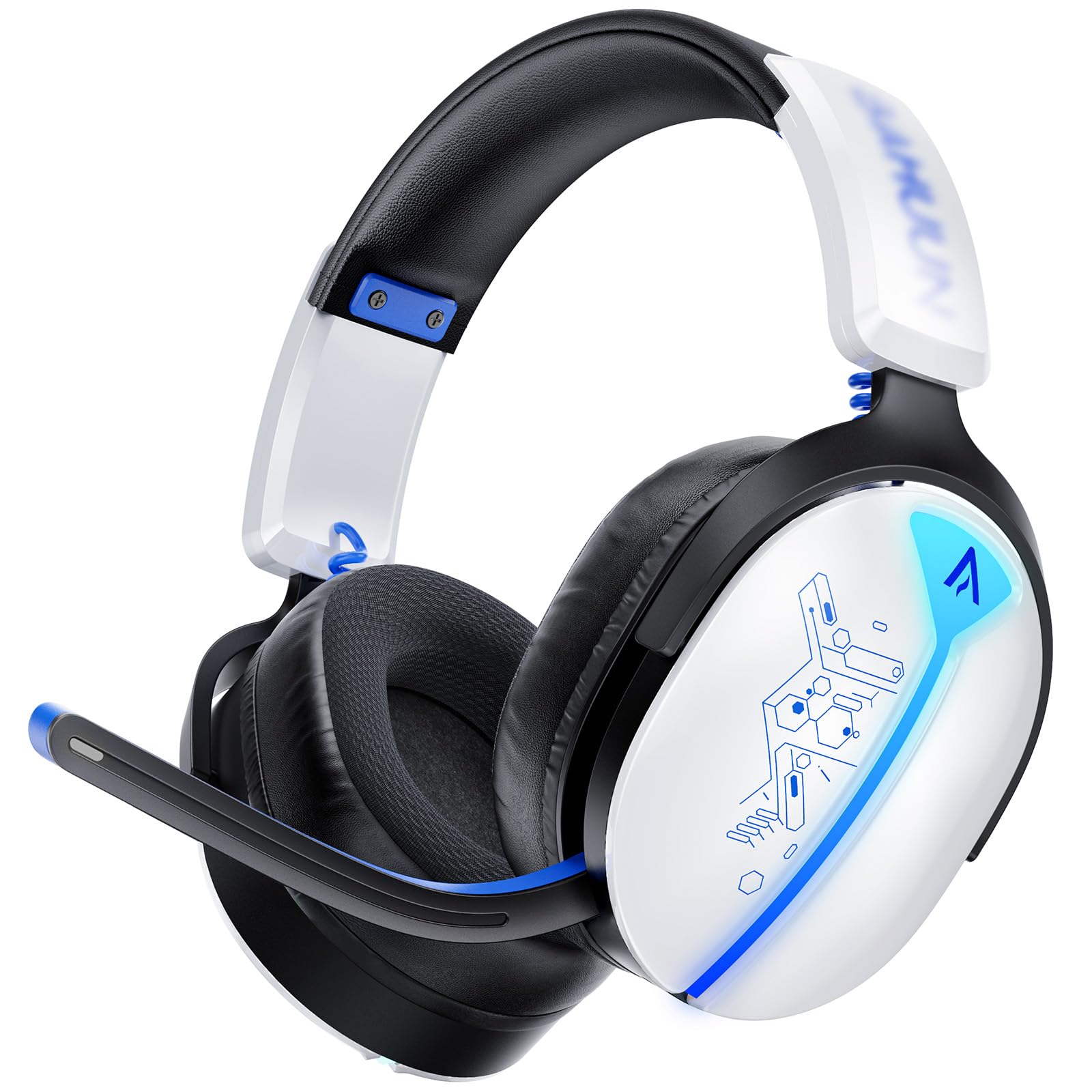
Buwnia Wireless Gaming Headset, Ps5 Headset for PC Ps5 Ps4 Switch, 2.4GHz Lossless Audio Gaming Headsets, Bluetooth 5.3 Gaming Headphone with Noise Canceling Mic & 40H Battery, RGB Light
£19.99 · Buwnia
Frequently asked
5 questions01Is the STEALTH C6-100 Gaming Headset Range (LED) good for competitive gaming?+
It's fine for casual competitive gaming but not ideal for serious ranked play. The 40mm drivers provide decent stereo separation and you can distinguish directional audio well enough for most games. However, the warm sound signature isn't tuned for the flat, analytical response that hardcore competitive players prefer for precise footstep tracking. For casual multiplayer and battle royales it's perfectly capable.
02Does the STEALTH C6-100 Gaming Headset Range (LED) have a good microphone?+
The C6-100 uses an in-line mic rather than a boom mic, which means it sits on the cable rather than close to your mouth. It works well enough for casual gaming comms and Discord calls, but it picks up more background noise than a boom mic would. For party chat and casual multiplayer it's functional. For streaming or content creation, you'd want something better.
03Is the STEALTH C6-100 Gaming Headset Range (LED) comfortable for long sessions?+
Owner feedback suggests it's comfortable for most people in medium to long gaming sessions. The soft foam earcup cushioning and tilt-and-twist earcup design help it fit a range of head shapes without causing significant pressure points. People with very large heads mention it can feel snug. Overall, comfort is one of the C6-100's stronger points relative to its price.
04Does the STEALTH C6-100 Gaming Headset Range (LED) work with PS5 and Xbox?+
Yes. The C6-100 connects via 3.5mm jack and is compatible with PS4, PS5, Xbox Series X/S, and Nintendo Switch. Xbox One compatibility requires a controller with a built-in 3.5mm port, which later Xbox One controllers have but original ones do not. On PS5 and Xbox Series X/S it's plug-and-play with no adapters needed.
05What warranty applies to the STEALTH C6-100 Gaming Headset Range (LED)?+
Amazon offers 30-day returns on most items. The manufacturer typically provides a 1 to 2 year warranty, though you should check the current product listing or contact STEALTH directly for the specific warranty terms applicable at the time of purchase.