Wireless gaming headsets have moved on considerably over the past twelve months. Budget options now routinely offer 2.4 GHz lossless connections that were once reserved for premium models, multi-platform compatibility has become standard rather than a selling point, and active noise cancellation has crept into the mid-range. Whether you are a PS5 player who wants spatial audio without cable clutter, a PC gamer chasing low-latency competitive play, or someone who simply wants decent sound for long sessions without spending a fortune, there is more choice than ever. This guide covers six carefully selected wireless gaming headsets available in the UK right now, ranging from budget picks under £30 to well-regarded mid-range performers around the £100 to £120 mark. Each has been assessed on sound quality, build, comfort over extended sessions, battery life, microphone performance, and value for money. Newcomers to the category and upgraders alike will find a clear recommendation for every budget below.
Quick Verdict
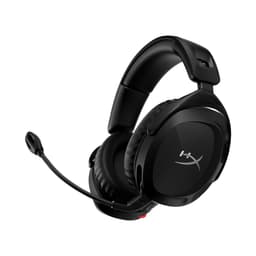
Best Overall: HyperX Cloud III S Wireless. It combines 2.4 GHz and Bluetooth, a strong 120-hour battery claim, and multi-platform support in a well-built package that suits most gamers.
Best Value: HyperX Cloud Stinger 2 Wireless. At its price point it delivers reliable 2.4 GHz wireless, a comfortable lightweight build, and noise-cancelling mic performance that punches above its cost.
The HyperX Cloud III S Wireless is the headset to beat in the sub-£110 bracket in 2025. It builds on the already well-regarded Cloud III Wireless by adding Bluetooth alongside the 2.4 GHz USB-C dongle, which means you can connect to your PC or PS5 for low-latency gaming and simultaneously pair your phone for calls or music. That dual-connection capability is genuinely useful rather than a marketing checkbox, particularly for streamers who monitor Discord on mobile while playing.
The headline specification is the battery life claim of up to 120 hours, which is extraordinary for a headset at this price. Real-world figures will fall short of that depending on volume and whether spatial audio is active, but even at 60 to 70 hours of practical use you will rarely need to charge mid-week. The 53 mm drivers are larger than the 40 mm units found in most competitors here, and they deliver a wide soundstage with clear separation between footsteps, environmental audio, and dialogue. Bass is present without being overcooked, which suits both competitive shooters and story-driven games equally well.
Build quality is solid without being heavy. The earcups use memory foam covered in leatherette, and the headband distributes weight evenly enough for three to four hour sessions without discomfort. The detachable noise-cancelling microphone performs well for voice chat, picking up speech clearly and rejecting background noise such as mechanical keyboard clicks and fan noise. The USB-C dongle is compact and stores in the headset itself when travelling.
Platform support covers PC, PS5, PS4, and mobile via Bluetooth. Xbox users will need to look elsewhere as there is no USB-A dongle option and no 3.5 mm passthrough for console use on Microsoft hardware. For the majority of UK gamers on PlayStation or PC, however, this is a remarkably complete package at the price.
Verdict: The best all-round wireless gaming headset under £110, combining exceptional battery life, dual-connection flexibility, and strong audio performance in a comfortable build.
Pros
- Dual 2.4 GHz and Bluetooth connection covers gaming and mobile simultaneously
- 53 mm drivers deliver a wide, detailed soundstage for both competitive and story games
- Claimed 120-hour battery life means infrequent charging even for heavy users
Cons
- No Xbox or Nintendo Switch compatibility via the dongle
- Leatherette earcups can cause heat build-up during very long summer sessions
Sony's INZONE H5 is the go-to choice for PS5 owners who want deep platform integration without paying for the flagship H9. It connects via a 2.4 GHz USB-A dongle that plugs directly into the PS5's front port, and it supports Sony's 360 Spatial Sound for Gaming, which uses head-related transfer function personalisation through the INZONE Hub app to tailor the virtual surround effect to your specific ear shape. The result is noticeably more convincing positional audio than generic virtual surround implementations, which matters in games like Horizon Forbidden West or Returnal where environmental cues are critical.
Battery life is rated at up to 28 hours, which is modest compared to the HyperX options but perfectly adequate for a week of daily gaming without charging. The headset uses a 3.5 mm jack as a fallback connection, so it can be used wired with a controller when the battery runs low. The 40 mm drivers are tuned with a slight mid-bass lift that suits cinematic games and action titles, though competitive players who prefer a flat response may want to spend time in the equaliser.
Build quality reflects Sony's attention to detail. The headband uses a floating design that self-adjusts to head size, and the fabric-covered earcups are more breathable than leatherette alternatives, which is a genuine advantage during longer sessions. The microphone is a flip-to-mute boom that automatically silences when raised, a small but appreciated quality-of-life feature. Microphone clarity is good for party chat and streaming, though it does not quite match the noise rejection of the HyperX Cloud III S in noisy environments.
PC compatibility is solid via the same dongle, and the INZONE Hub software works on Windows for equaliser adjustments and spatial audio setup. There is no Bluetooth, which limits use with mobile devices, and the lack of Xbox support is expected given the platform focus. For PS5-primary households this is the most polished integration available at the price.
Verdict: The best choice for PS5 owners who want native platform integration and personalised spatial audio, with comfortable fabric earcups and reliable 2.4 GHz wireless.
Pros
- 360 Spatial Sound with personalised HRTF delivers convincing positional audio on PS5
- Fabric earcups are more breathable than leatherette, reducing heat during long sessions
- Flip-to-mute boom microphone with automatic mute detection is a practical convenience
Cons
- No Bluetooth means no simultaneous mobile connection
- 28-hour battery life is shorter than key rivals at a similar price
The SteelSeries Arctis Nova 5P Wireless is a strong contender for PS5 and PC gamers who want a feature-rich headset with an enormous library of audio presets. The headline figure is 100-plus audio presets accessible via the SteelSeries GG app, covering everything from specific game titles to music genres and communication modes. For gamers who do not want to manually tune an equaliser but still want optimised audio for their favourite titles, this is a genuinely useful feature rather than a gimmick. Presets for popular titles like Call of Duty, Fortnite, and FIFA are available at launch, with the library expanding via app updates.
The connection setup mirrors the HyperX Cloud III S with both 2.4 GHz (via USB-C dongle) and Bluetooth available simultaneously. Battery life is rated at up to 60 hours on 2.4 GHz, which is more realistic than some competitors' headline figures and comfortably covers a full week of daily play. The Bluetooth connection adds mobile device pairing for calls and music, and the simultaneous dual-connection mode works reliably in practice.
SteelSeries has used its proven ski-goggle-style headband on the Nova 5P, which distributes clamping force across the top of the head rather than the sides. Combined with the memory foam earcups, this makes it one of the more comfortable headsets for extended wear, particularly for users who find traditional headbands cause pressure points. The microphone is a retractable design that disappears into the left earcup when not in use, keeping the aesthetic clean. Microphone quality is clear for voice chat, though the retractable format limits the ability to position it optimally close to the mouth.
The 40 mm drivers produce a balanced sound signature that suits the preset system well, with enough clarity in the high-mids for competitive play and sufficient low-end weight for cinematic titles. The USB-C dongle is compatible with PS5, PS4, and PC. Switch and Xbox are not officially supported via the dongle, though Bluetooth can cover mobile and some Switch use cases.
Verdict: The best option for gamers who want a curated audio experience without manual equaliser tuning, backed by reliable dual-connection wireless and a genuinely comfortable headband design.
Pros
- 100-plus game and genre-specific audio presets remove the need for manual equaliser adjustment
- Ski-goggle headband design distributes pressure more evenly than conventional headbands
- Simultaneous 2.4 GHz and Bluetooth dual-connection works reliably for gaming and calls
Cons
- Retractable microphone cannot be positioned as close to the mouth as a boom mic
- No official Xbox or Nintendo Switch dongle support
The HyperX Cloud Stinger 2 Wireless is the most practical budget-to-mid option for PC gamers who want reliable 2.4 GHz wireless without paying for features they may not use. It strips back the feature set compared to the Cloud III S, removing Bluetooth and the larger 53 mm drivers, but retains the core qualities that make HyperX headsets popular: solid build, comfortable earcups, and a noise-cancelling microphone that performs well above its price bracket.
Battery life is rated at up to 120 hours, matching the Cloud III S's headline figure, which is remarkable at this price. The 40 mm drivers produce a warm, slightly bass-forward sound signature that suits action games, shooters, and RPGs. It is not the most analytically precise sound profile, but it is consistently enjoyable across genres, and the virtual 7.1 surround mode adds useful positional cues in supported titles via the NGENUITY software on PC.
The build uses a steel slider headband with leatherette earcups and memory foam padding. Clamping force is moderate, which suits most head sizes without causing discomfort during sessions of two to three hours. The swivel-to-mute microphone is a convenient design that physically mutes when rotated upward, and the noise cancellation does a reasonable job of rejecting keyboard and room noise during voice chat. The USB-A dongle is simple to set up and has a long reported wireless range of up to 20 metres.
Platform support is primarily PC-focused via the USB-A dongle. The headset is also compatible with PlayStation consoles when the dongle is plugged into the console's USB port, though the NGENUITY software features are only available on Windows. There is no Bluetooth, no USB-C dongle option, and no mobile connectivity, which is the main limitation compared to the Cloud III S. For pure PC gaming on a tighter budget, however, it is difficult to fault.
Verdict: The best value wireless gaming headset for PC gamers who want dependable 2.4 GHz performance, a long battery life, and a quality noise-cancelling microphone without paying for dual-connection extras.
Pros
- Claimed 120-hour battery life at a price well below premium competitors
- Swivel-to-mute microphone with effective noise cancellation for voice chat
- Steel headband construction feels durable despite the accessible price point
Cons
- No Bluetooth or mobile connectivity limits use outside of PC and PlayStation
- USB-A only dongle is less convenient on modern laptops with USB-C-only ports
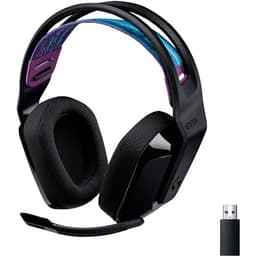
The Logitech G535 LIGHTSPEED Wireless is the lightest headset in this selection at 236 g, and that weight advantage is its defining characteristic. For gamers who suffer from headset fatigue during long sessions, or who simply prefer a less noticeable fit, the G535 is worth serious consideration. Logitech has achieved this low weight partly through the use of a flexible plastic headband and on-ear rather than over-ear earcup design, which keeps material volume low without sacrificing the core structural integrity.
The LIGHTSPEED 2.4 GHz wireless connection is Logitech's proprietary low-latency protocol, which has a strong reputation for reliability and range. The dongle is a USB-A nano receiver, and the headset supports both PC and PlayStation platforms. Battery life is rated at up to 33 hours, which is adequate for most weekly gaming schedules with a single mid-week charge. There is no Bluetooth on this model, keeping the connection setup simple.
The 40 mm drivers produce a clear, balanced sound with good stereo imaging. The G535 does not have a dedicated virtual surround mode, relying instead on Logitech G HUB software for equaliser adjustment and any spatial audio processing. The sound profile suits competitive gaming well, with clear high-mids that help with footstep detection and directional cues. The microphone is a flip-to-mute boom that delivers clean voice capture with decent background noise rejection, performing comparably to headsets at a higher price.
The on-ear design is worth noting as a potential comfort consideration. While the low weight reduces fatigue, on-ear cups apply direct pressure to the ear rather than surrounding it, which some users find uncomfortable after extended periods. The earcup padding is soft and the clamping force is light, which mitigates this to a degree, but users accustomed to over-ear designs should be aware of the difference. The G535 is available in black and white colourways, and the understated aesthetic suits a variety of desk setups.
Verdict: The best choice for gamers who prioritise low weight and long-session comfort above all else, with reliable LIGHTSPEED wireless and a clean sound profile suited to competitive play.
Pros
- 236 g weight is the lightest in this selection, reducing fatigue during extended sessions
- Logitech LIGHTSPEED protocol offers proven low-latency, reliable 2.4 GHz wireless
- Clean, balanced sound profile with good high-mid clarity for competitive gaming
Cons
- On-ear design may cause discomfort for some users during very long sessions
- No Bluetooth or virtual surround mode limits versatility compared to rivals
Buying Guide
2.4 GHz versus Bluetooth: which matters for gaming?
For gaming, 2.4 GHz wireless is the connection type you want. It operates on a dedicated radio frequency with latency typically under 20 milliseconds, which is low enough that audio and on-screen action remain synchronised. Bluetooth, even in its latest 5.x versions with gaming modes, introduces latency of 40 to 200 milliseconds depending on the codec and device, which creates a perceptible delay between what happens on screen and what you hear. Every headset in this guide uses 2.4 GHz as its primary gaming connection. Bluetooth is a useful secondary feature for pairing with a phone during gaming or for music listening away from your desk, but it should not be the primary connection for active play.
Battery life: what the numbers actually mean
Manufacturers measure battery life under controlled conditions, typically at moderate volume with RGB disabled and no active noise cancellation or spatial audio processing. Real-world figures are usually 20 to 40 per cent lower. A headset claiming 120 hours will realistically deliver 70 to 90 hours in daily use. A headset claiming 28 hours may deliver 18 to 22 hours. The practical question is how often you want to charge: a headset with a genuine 20-hour real-world life needs charging roughly twice a week for a daily two-hour gaming habit, while one with 70-plus hours real-world life needs charging once a week or less. USB-C charging is preferable to micro-USB for convenience, and quick-charge features that provide several hours of use from a short charge are worth looking for if you frequently forget to charge overnight.
Driver size and sound signature
Larger drivers, such as the 53 mm units in the HyperX Cloud III S, generally produce a wider soundstage and more physical bass response. Smaller 40 mm drivers are more common and can sound equally detailed when well-tuned. More important than driver size is the tuning: a bass-heavy sound signature suits cinematic and action games but can obscure high-frequency positional cues in competitive shooters. A flatter or mid-forward tuning suits competitive play but may sound thin for story-driven titles. Equaliser software, where available, allows you to adjust this to taste.
Microphone quality: what to prioritise
For casual voice chat, most gaming headset microphones are adequate. For streaming or content creation, noise rejection and voice naturalness become more important. Cardioid polar patterns reject side and rear noise better than omnidirectional designs. Noise-cancelling algorithms, such as Logitech's Blue VO!CE or HyperX's noise-cancellation processing, make a meaningful difference in environments with keyboard noise, fan noise, or background conversation. A flip-to-mute or swivel-to-mute mechanism is more reliable than a button mute, as it provides a clear physical indicator that the microphone is off.
Platform compatibility
PS5 and PC are the most widely supported platforms among wireless gaming headsets. Xbox requires either a dedicated Xbox Wireless connection or a USB dongle plugged into the console, and not all headsets support this. Nintendo Switch in handheld mode requires Bluetooth or a USB-C dongle. Check compatibility carefully before purchasing if you game across multiple platforms, and consider whether simultaneous dual-connection matters for your workflow.
Weight and comfort for long sessions
Headset weight becomes noticeable after 90 minutes or more of continuous wear. Headsets under 250 g are generally comfortable for extended sessions for most users. Earcup material matters too: leatherette retains heat and can cause sweating, while fabric or velour earcups breathe better. Clamping force should be firm enough to keep the headset in place during movement but not so tight that it causes pressure headaches. If possible, try a headset before buying, or check the return policy to allow for a trial period at home.
The HyperX Cloud III S Wireless is the overall winner of this roundup. Its combination of 53 mm drivers, simultaneous 2.4 GHz and Bluetooth dual-connection, an extraordinary claimed battery life of up to 120 hours, and broad PC and PlayStation compatibility make it the most complete wireless gaming headset available under £110 in the UK right now. It suits the widest range of gamers, from competitive PC players to PS5 enthusiasts and streamers who need mobile connectivity alongside their main gaming setup.
For those on a tighter budget, the HyperX Cloud Stinger 2 Wireless delivers the core HyperX reliability, a matching 120-hour battery claim, and a strong noise-cancelling microphone at a significantly lower price, making it the best value pick for PC-primary gamers. PS5 owners who want the deepest platform integration should look at the Sony INZONE H5, while gamers who suffer from headset fatigue will find the 236 g Logitech G535 the most comfortable option for marathon sessions. The SteelSeries Arctis Nova 5P is the pick for those who want a curated preset-driven audio experience, and the Logitech G733 remains a strong choice for streamers who want expressive aesthetics and above-average microphone quality.