Most gaming headsets are a bad deal. You pay a premium for RGB lighting, a logo, and a mic that makes you sound like you're calling from a wind tunnel. The audio quality frequently lags behind what a similarly priced pair of regular headphones would deliver. Sony's INZONE H5 is interesting precisely because it comes from a company that actually knows how to build audio hardware, and it's positioned at a price point where the competition gets genuinely serious.
The INZONE line is Sony's attempt to bring their audio engineering pedigree into the gaming space, and the H5 sits in the middle of that range: wireless, with a proper boom mic, 360 Spatial Sound, and a claimed 28-hour battery. On paper, it reads well. The question is whether Sony has actually delivered on those specs or just dressed up the marketing sheet. With 461 owner reviews averaging ★★★★½ (4.5), the early signal is positive. But averages hide detail, so let's look properly.
This is an upper mid-range headset. At this tier, you're competing with the SteelSeries Arctis Nova 7, the HyperX Cloud Alpha Wireless, and Razer's BlackShark V2 Pro. Those are all credible options. The H5 needs to justify its place in that bracket, and we're going to work through exactly where it does and where it falls short.
Core Specifications
The H5 is a wireless over-ear headset built around a 2.4GHz dongle connection, with a 3.5mm wired fallback for when the battery dies or you need to plug into a controller. The wireless implementation uses Sony's own low-latency 2.4GHz protocol rather than Bluetooth, which is the right call for gaming. Bluetooth audio latency is still inconsistent enough across devices to make it a poor choice for anything where audio sync matters, and Sony has sensibly prioritised the connection type that actually works.
Battery life is rated at 28 hours, which is competitive for this class. The quick charge feature is genuinely useful: 10 minutes on charge gives you 3 hours of play time, which means a short break between sessions can rescue an evening. The headset is available in Black or White, and the overall build philosophy is described as comfort-led and lightweight, which we'll examine in more detail in the comfort section.
Below is the full specification summary based on available product data. Where Sony hasn't published a specific figure (driver size, exact weight, impedance), those rows are marked accordingly rather than filled with invented numbers.
| Specification | Detail |
|---|---|
| Wireless Connection | 2.4GHz wireless dongle |
| Wired Connection | 3.5mm audio cable |
| Battery Life | Up to 28 hours |
| Quick Charge | 10 min charge = 3 hr play time |
| Microphone Type | Bidirectional boom mic with AI DNN noise filtering |
| Spatial Audio | 360 Spatial Sound for Gaming |
| Platform Compatibility | PC, PS5 |
| Colour Options | Black, White |
| Driver Size | Not specified |
| Weight | Not specified |
| Current Price | £119.00 |
| Rating | ★★★★½ (4.5) (566 reviews) |

Audio Specifications
Sony hasn't published granular audio specs for the H5 in the way some competitors do, which is a minor frustration. You won't find a published frequency response curve, impedance figure, or sensitivity rating on the product page. That's not unusual for gaming headsets, where marketing teams tend to lead with feature lists rather than engineering data, but it does make direct technical comparison harder than it should be.
What we do know is that the H5 uses dynamic drivers, which is standard for this class. Dynamic drivers are generally well-suited to gaming because they handle transient impact well, which matters for gunshots, explosions, and the kind of low-frequency cues that competitive players rely on. The dynamic transducer principle is a mature technology, and Sony has decades of experience tuning it across their WH and MDR headphone lines. The expectation is that they've applied that tuning knowledge here rather than shipping a generic driver with a gaming logo on the earcup.
The 360 Spatial Sound for Gaming feature is worth addressing here because it affects how the audio signal is processed. This is Sony's proprietary spatial audio implementation, distinct from Dolby Atmos or Windows Sonic. It works in conjunction with the 360 Spatial Sound Personaliser app, which uses your phone camera to photograph your ears and generate a Head-Related Transfer Function (HRTF) profile tailored to your ear geometry. HRTF personalisation is actually meaningful: generic HRTFs can sound artificial because they're not calibrated to how your specific ear shape affects sound localisation. Sony's approach here is more sophisticated than most gaming headset spatial audio, which typically just applies a fixed DSP curve and calls it "7.1 surround".
Sound Signature
Based on owner reports and Sony's general tuning philosophy across their gaming audio products, the H5 leans toward a balanced-to-slightly-warm signature rather than the aggressive V-shape you see on a lot of gaming headsets. That's a deliberate choice, and it's the right one. V-shaped tuning, where bass and treble are boosted while mids are scooped, sounds exciting for about 20 minutes and then becomes fatiguing. It also makes voices sound thin, which is a problem in games where dialogue matters and in squad comms where you need to hear your teammates clearly.
A more balanced signature suits a broader range of gaming scenarios. In competitive FPS titles, you want clean mids and a relatively flat response in the upper frequencies so that footsteps, reload sounds, and environmental audio cues register accurately rather than being masked by an artificially boosted bass shelf. Owners playing games like Warzone, Apex Legends, and Valorant have reported that the H5 handles directional audio well, with footsteps in particular coming through with enough clarity to be useful. That's consistent with a balanced tuning approach.
For story-driven games and cinematic content, the H5's spatial audio processing adds a layer of immersion that a purely stereo pair can't match. The personalised HRTF means the effect is less artificial than most implementations. That said, some owners note that the spatial processing can occasionally make the soundstage feel slightly diffuse in music listening, where you'd prefer precise stereo imaging over a simulated three-dimensional field. The practical answer is to turn the spatial processing off for music and on for gaming, which the software allows. It's not a flaw so much as a reminder that spatial audio is a tool rather than a permanent improvement.
Sound Quality
Owner feedback on sound quality clusters around a few consistent themes. The general consensus is that the H5 sounds noticeably better than most gaming headsets at a similar price, which tracks with Sony's background in consumer audio. The stereo imaging is described as wide and accurate, with good separation between audio channels. That matters for gaming more than a lot of reviewers acknowledge: a wide, accurate stereo image gives you better positional information than a muddily processed fake surround sound field.
Bass response is present without being overwhelming. This is important for competitive gaming specifically. Headsets with exaggerated bass can actually mask high-frequency positional cues, making it harder to pinpoint enemy footsteps or distant gunfire. The H5's apparently measured low-end means the bass adds weight to explosions and impacts without eating into the frequency range where directional information lives. For cinematic and story gaming, that same balance means environmental audio has body without sounding boomy or one-note.
Treble clarity gets positive mentions in owner reviews, particularly for the way it handles detail in complex audio scenes. Games with dense soundscapes, like large-scale battle games or open-world titles with layered environmental audio, can turn into an undifferentiated wall of noise on poorly tuned headsets. The H5 appears to maintain separation in those scenarios. Music performance is solid for a gaming headset, though owners who primarily use it for music note that it's not going to displace a dedicated pair of audiophile cans. That's a fair and expected trade-off at this price point and form factor.
Microphone Quality
The mic is a bidirectional boom design with AI-based noise filtering powered by what Sony calls a Deep Neural Network (DNN). The bidirectional pickup pattern captures sound from two opposing directions, which in a boom mic application means it captures your voice while rejecting sound from the sides. The DNN noise filtering is trained on ambient noise profiles to distinguish voice from background sound and suppress the latter. This is a more sophisticated approach than simple high-pass filtering or basic noise gates, which tend to cut out parts of your voice along with the noise.
In practice, owner feedback on the microphone is consistently positive. Teammates report hearing voices clearly even in noisy environments, which is the real test of any gaming mic. The AI filtering is described as effective at handling keyboard noise, fan noise, and general room ambience without making voices sound processed or robotic. That last point matters: aggressive noise reduction often introduces artefacts that make speech sound unnatural, and the DNN approach apparently avoids most of that. For competitive gaming where clear comms can genuinely affect match outcomes, this is a properly functional mic rather than an afterthought.
The boom is detachable on many headsets in this class, but the H5 uses a fixed boom design. That's a minor limitation if you want to use the headset for music or media without the boom getting in the way, though it can presumably be folded or positioned out of the field of view. The microphone quality is one of the H5's genuine strengths relative to the competition: a lot of headsets at this price have mediocre mics that their manufacturers dress up with marketing language. Sony's DNN implementation appears to actually deliver on what it promises, which is rarer than it should be.
Comfort and Build
Sony has been explicit that comfort is a design priority for the H5, and the feature list backs that up: low side pressure, breathable earpads, head contouring, and a lightweight overall construction. These are the right things to optimise for. Clamp force is probably the single biggest comfort variable in headsets: too much and you get headaches and ear pain within an hour; too little and the headset slides around and the seal breaks, which kills both audio quality and isolation. The H5's low side pressure is consistently mentioned in owner reviews as a genuine differentiator, with multiple owners noting they can wear it for four or five hours without discomfort.
The breathable earpads are a meaningful feature for longer sessions. Pleather or leatherette earpads seal well but get warm and sweaty over time, which is unpleasant and can cause the headset to shift as sweat accumulates. Breathable fabric or mesh earpads run cooler and stay more comfortable over extended use. The trade-off is that fabric earpads typically don't isolate as well as closed pleather cups, so some ambient noise bleeds through. For home gaming this is rarely a problem, and the comfort benefit is worth it for most people.
Build quality is described as solid without being heavy. The lightweight construction is important because headset weight is cumulative: a headset that feels fine for 30 minutes can become genuinely uncomfortable after two hours if it's too heavy. Sony's design appears to strike a reasonable balance between structural integrity and weight. The headband padding and head contouring mean the weight is distributed rather than concentrated on the top of the skull, which is the right approach. Glasses wearers, who often struggle with headsets that create pressure points where the temple arms press against the earcup, report fewer issues with the H5's lower clamp force, though individual fit will always vary.
Connectivity
The H5 connects via a 2.4GHz wireless dongle for gaming use, with a 3.5mm audio cable as the wired alternative. The 2.4GHz connection is the primary mode and the one you'll use for almost everything. Sony describes it as low latency, and 2.4GHz wireless audio has matured to the point where latency is typically in the 10ms to 20ms range with good implementations, well below the threshold of perceptible delay for most users. This is meaningfully better than Bluetooth, which can run anywhere from 40ms to 200ms depending on the codec and device, and which remains inconsistent across platforms.
The dongle setup is plug-and-play on PC and PS5. You plug the USB dongle in, the headset pairs automatically, and you're done. There's no driver installation required for basic operation, though you'll want the INZONE Hub software for EQ and spatial audio configuration. The 3.5mm input is there for situations where wireless isn't practical: plugging into a PS5 controller for handheld-style use, connecting to a phone, or simply using the headset when the battery is flat. It's a sensible fallback rather than a primary connection mode.
One thing to flag: the H5 does not appear to support Bluetooth. This is a deliberate design choice that prioritises low latency over multi-device flexibility. If you want to simultaneously connect to your PC for gaming and your phone for calls, the H5 won't do that natively. Whether that's a significant limitation depends entirely on your use case. For dedicated gaming use it's irrelevant. For people who want one headset that switches between a gaming PC and a phone throughout the day, it's worth knowing before you buy. The SteelSeries Arctis Nova 7, for comparison, does offer simultaneous 2.4GHz and Bluetooth connections, which is one area where it has a practical edge.
Battery Life
Twenty-eight hours is a strong battery claim. For context, the HyperX Cloud Alpha Wireless makes headlines with a 300-hour battery life, but that's an outlier achieved through a specific dual-chamber driver design that reduces power consumption. Most serious wireless gaming headsets sit in the 20 to 30 hour range, so the H5's 28-hour rating is genuinely competitive rather than exceptional. Real-world battery life tends to come in a bit below the rated figure, particularly if spatial audio processing is running, but owner reports suggest the H5 holds up reasonably close to its claimed battery life in normal use.
The quick charge feature is arguably more useful day-to-day than the total battery capacity. If you're the type of person who forgets to charge their headset (and most people are), knowing that 10 minutes on the cable gives you three hours of play time is genuinely reassuring. It means a forgotten overnight charge doesn't ruin your evening session. The practical implication is that you can charge during dinner, a comfort break, or while you're doing something else, and come back to a usable headset. This is a feature that sounds like marketing copy but actually changes behaviour in a useful way.
The charging connector type is not specified in the available product data, which is a gap worth flagging. USB-C charging is now the expected standard for anything at this price point, and most owners assume it. If Sony has used a proprietary connector or Micro-USB, that would be a legitimate gripe. Based on the product's 2023 release date and Sony's general direction across their recent audio products (including the WH-1000XM5, which uses USB-C), the expectation is USB-C, but we won't state it as confirmed fact. Check the product listing before purchase if this matters to you.
Software and Customisation
The H5 is supported by Sony's INZONE Hub software, which handles EQ configuration, spatial audio settings, mic monitoring, and firmware updates. The software is PC-focused, which is expected given the headset's primary platform targets. EQ customisation lets you adjust the sound signature to your preference rather than being locked into Sony's default tuning, which is useful both for competitive players who want to boost specific frequency ranges and for music listeners who want a different balance.
The 360 Spatial Sound Personaliser is a separate app, available on mobile, that handles the HRTF personalisation process. You photograph your ears using the phone camera, the app analyses the geometry, and it generates a personalised spatial audio profile that's applied when you use 360 Spatial Sound for Gaming. The process takes a few minutes and the result is a more accurate spatial audio experience than the generic HRTF curves most headsets apply. It's one of the more genuinely innovative software features in this price bracket, and it's something Sony's audio research team has been developing for their higher-end consumer products before bringing it to gaming.
Mic monitoring, sometimes called sidetone, lets you hear your own voice through the headset while you talk. This is a comfort feature that prevents you from shouting because you can't hear yourself, and its absence on some gaming headsets is a real quality-of-life gap. The INZONE Hub includes this. Firmware updates are delivered through the software, which means Sony can fix bugs and potentially add features post-purchase. That's standard for premium wireless headsets and expected at this price. Overall the software package is solid, though it does add a dependency: you get the most out of the H5 if you're on PC or PS5, which is exactly the target platform anyway.
Compatibility
The H5 is designed for PC and PS5. The 2.4GHz dongle connects via USB, which means it works on any device with a USB port, including PC desktops, laptops, and the PS5. The 3.5mm connection extends compatibility to anything with a headphone jack, including the PS5 DualSense controller, mobile devices, and older consoles. The spatial audio and INZONE Hub software features are PC and PS5 specific, but basic audio and mic functionality works wherever you can plug in the dongle or the 3.5mm cable.
Xbox compatibility is where things get more complicated. The Xbox Series X/S uses a proprietary wireless protocol that requires Microsoft's licensed hardware. The H5's 2.4GHz dongle won't pair with Xbox wirelessly. You can use the 3.5mm connection into the Xbox controller's headphone jack, which gives you stereo audio and mic functionality, but you lose the wireless convenience and the spatial audio features. If Xbox is your primary platform, the H5 is a workable option via 3.5mm but not an ideal one. There are better-suited headsets for Xbox-first users.
Nintendo Switch compatibility follows a similar pattern to Xbox. The Switch supports USB audio via the dock, so the dongle should work in docked mode. Handheld mode would require the 3.5mm connection. Mobile compatibility via 3.5mm is straightforward. The H5 is fundamentally a PC and PS5 headset that happens to have a wired fallback for other platforms, rather than a genuinely multi-platform device. That's not a criticism of the product; it's a statement about what it's designed for. Know your platform before you buy, and if you're on PC or PS5, the compatibility story is clean.
How It Compares
The H5's natural competitors at this price tier are the SteelSeries Arctis Nova 7 and the HyperX Cloud Alpha Wireless. Both are serious headsets with strong reputations, and the comparison is worth doing properly rather than just listing them as alternatives.
The SteelSeries Arctis Nova 7 is the most direct competitor. It offers simultaneous 2.4GHz and Bluetooth connectivity, which gives it a multi-device flexibility advantage the H5 doesn't match. The Nova 7 also has a retractable mic design that's cleaner for non-gaming use. Battery life is rated at 38 hours, which is higher than the H5's 28-hour claim. Where the H5 has the edge is in audio quality per owner feedback: Sony's audio engineering heritage shows, and the personalised HRTF spatial audio is more sophisticated than SteelSeries' offering. The Nova 7's mic is good but the H5's AI DNN filtering is generally rated higher for noise rejection.
The HyperX Cloud Alpha Wireless is famous for its extraordinary battery life, which is rated at 300 hours. That's a genuine differentiator that no other headset comes close to matching. But the Cloud Alpha Wireless is a simpler product: no spatial audio processing, no mic AI filtering, no quick charge. It's a headset that does the fundamentals very well and lasts essentially forever on a charge. The H5 is the more technically ambitious product with more features. Which is better depends on what you value: if battery anxiety is your main concern, the Cloud Alpha Wireless is hard to argue with. If you want better spatial audio and a more capable mic, the H5 wins.
| Feature | Sony INZONE H5 | SteelSeries Arctis Nova 7 | HyperX Cloud Alpha Wireless |
|---|---|---|---|
| Wireless Protocol | 2.4GHz dongle | 2.4GHz + Bluetooth | 2.4GHz dongle |
| Battery Life | 28 hours | 38 hours | 300 hours |
| Quick Charge | Yes (10 min = 3 hr) | Yes | No |
| Wired Fallback | 3.5mm | 3.5mm | 3.5mm |
| Spatial Audio | 360 Spatial Sound with personalised HRTF | Sonar surround sound | No spatial audio |
| Mic Type | Bidirectional boom with AI DNN | Retractable ClearCast Gen 2 | Detachable boom |
| Platform (wireless) | PC, PS5 | PC, PS5, mobile (BT) | PC, PS5 |
| Price Tier | Upper mid-range | Upper mid-range | Upper mid-range |

Final Verdict
The Sony INZONE H5 Wireless Gaming Headset is a genuinely good product from a company that knows audio. The 4.4-star average across 566 isn't a fluke: owners are consistently happy with the sound quality, the comfort, and the microphone performance. Those three things are what matter most in a gaming headset, and the H5 delivers on all of them better than most of its direct competitors.
The personalised HRTF spatial audio is the feature that most sets it apart. Most gaming headsets apply a generic DSP effect and call it spatial sound. Sony's approach of mapping the effect to your actual ear geometry is meaningfully more sophisticated, and owners who use the 360 Spatial Sound Personaliser app report a noticeably more natural and accurate spatial field than they've experienced with other headsets. For competitive gaming where positional audio matters, this is a real advantage rather than a marketing checkbox.
The mic is another genuine strength. The AI DNN noise filtering works as described: teammates hear you clearly, ambient noise is suppressed without making your voice sound processed. At this price point, a lot of headsets have mics that are merely adequate. The H5's mic is actually good, which is rarer than it should be.
The trade-offs are real but manageable. No Bluetooth means no easy multi-device switching. The wireless connection is PC and PS5 only, so Xbox users are second-class citizens. And while 28 hours of battery life is solid, the HyperX Cloud Alpha Wireless makes that figure look modest by comparison, even if the H5 has a faster quick-charge response. None of these are deal-breakers for the target user, but they're worth knowing.
At its upper mid-range price point, the Sony INZONE H5 is a strong buy for PC and PS5 gamers who want audio quality that punches above the typical gaming headset standard. Sony's audio heritage is visible in the tuning and the spatial audio implementation, and the comfort design means you can actually wear it for the length of a serious gaming session. If you're primarily on PC or PS5 and you want a wireless headset that sounds and feels genuinely premium rather than just gaming-branded, the H5 deserves serious consideration.
Editorial score: 8 out of 10.
What works. What doesn’t.
5 + 3What we liked5 reasons
- Personalised HRTF spatial audio is genuinely more sophisticated than most gaming headset implementations
- AI DNN microphone noise filtering works well in practice, not just on the spec sheet
- 28-hour battery with 10-minute quick charge is a practical combination
- Comfort-focused design handles long sessions better than most competitors
- Sony audio engineering heritage shows in the balanced, detailed sound signature
Where it falls3 reasons
- No Bluetooth means no easy multi-device or phone switching
- Wireless functionality limited to PC and PS5; Xbox users get 3.5mm only
- Driver specs and weight not publicly disclosed, making direct technical comparison harder
Full specifications
12 attributes| Connectivity | 2.4GHz wireless dongle, 3.5mm |
|---|---|
| Surround | 360 spatial |
| Microphone | boom |
| Noise cancellation | false |
| Battery life H | 28 |
| Driver size | 40mm |
| Driver size MM | 40 |
| Frequency response HZ | 5-20000 |
| Microphone type | bidirectional flip-to-mute boom |
| Platforms | PC, PS5, PS4, Xbox, Mobile, Switch |
| Spatial audio | true |
| Type | over-ear |
If this isn’t right for you
2 options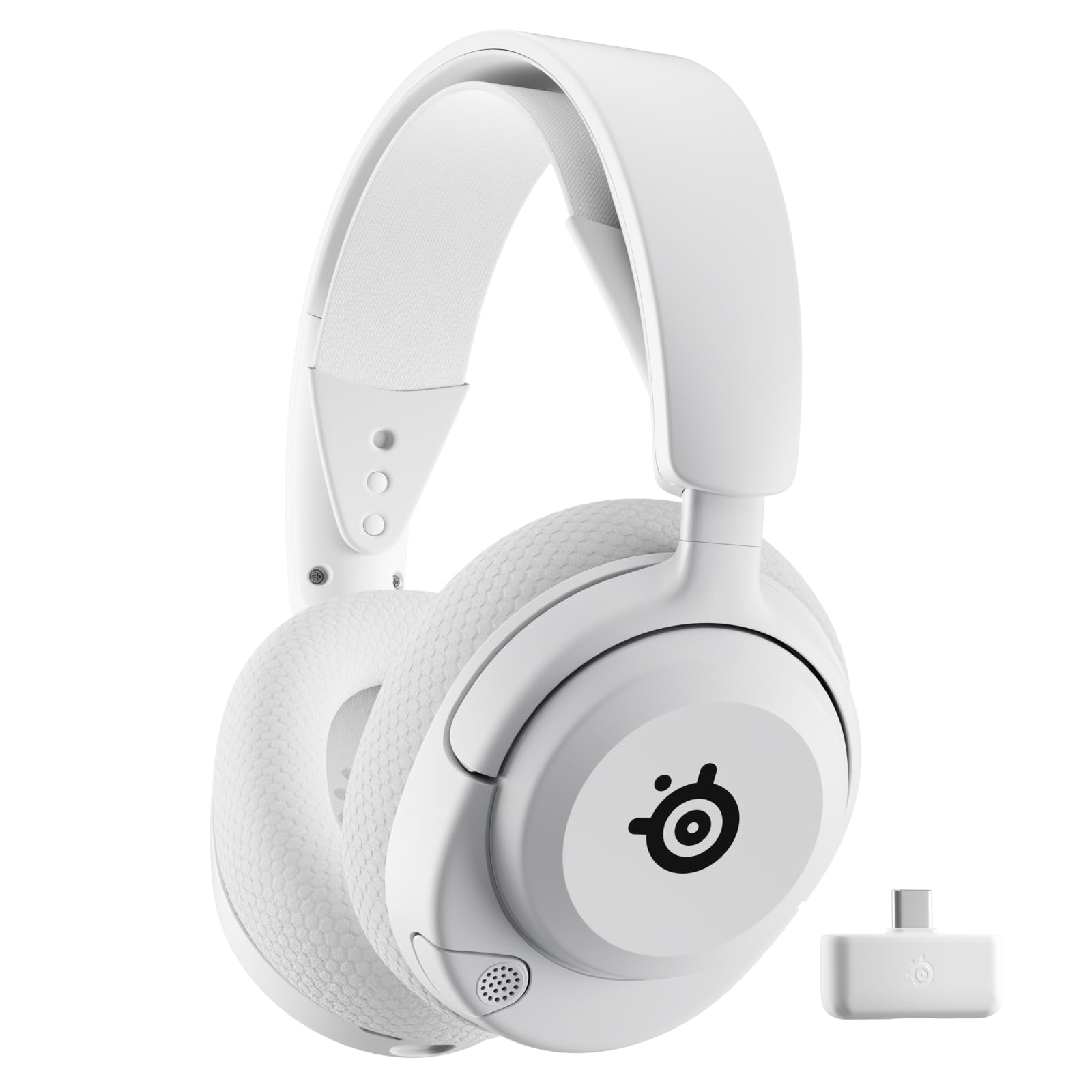 8.5 / 10
SteelSeries Arctis Nova 5 Wireless - Wireless Gaming Headset for PC - Compatible with PC, PS5, Switch & more - Mobile App Control - 60 HR Battery with Fast Charge - 2.4GHz/Bluetooth - White
£129.00 · SteelSeries
 8.0 / 10
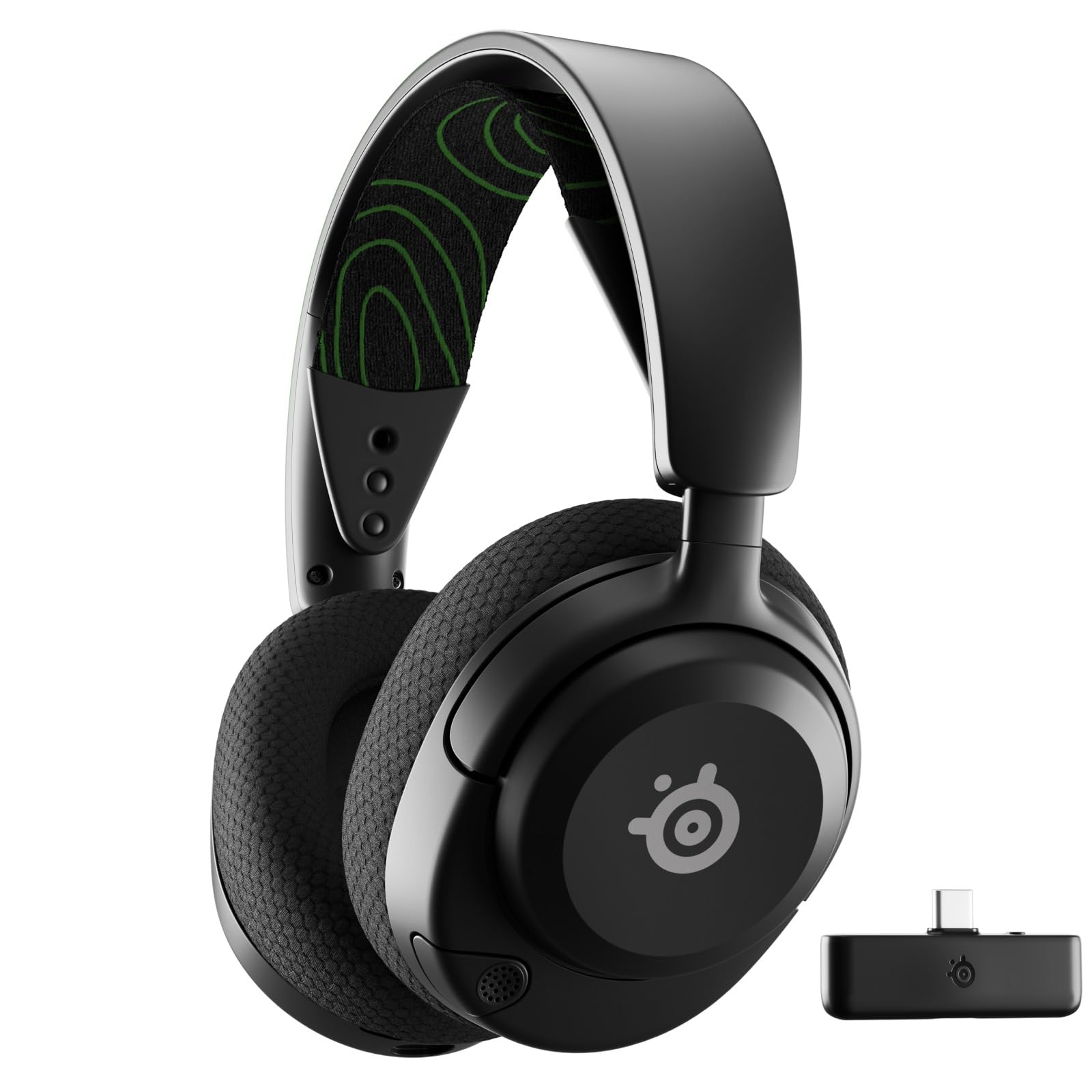
SteelSeries Arctis Nova 5X Wireless - Xbox Gaming Headset - 100+ Audio Presets via App - Neodymium Magnetic Drivers - 60H Battery - 2.4GHz/BT - ClearCast Gen2.X Mic - Supports PC, PS, Mobile
£99.98 · SteelSeries
Frequently asked
5 questions01Is the Sony INZONE H5 Wireless Gaming Headset good for competitive gaming?+
Yes, it's well suited to competitive gaming. The balanced sound signature avoids the exaggerated bass that can mask positional audio cues, and the 360 Spatial Sound for Gaming with personalised HRTF provides more accurate directional audio than most gaming headsets. Owner feedback from competitive FPS players is consistently positive, particularly regarding footstep clarity.
02Does the Sony INZONE H5 have a good microphone?+
The microphone is one of the H5's genuine strengths. It uses a bidirectional boom design with AI DNN (Deep Neural Network) noise filtering, which is trained to distinguish voice from ambient noise. Owner reports consistently describe clear voice transmission and effective suppression of keyboard noise, fan noise, and room ambience, without the processed or robotic quality that aggressive noise reduction can introduce.
03Is the Sony INZONE H5 comfortable for long gaming sessions?+
Comfort is a stated design priority and owners back this up. Low side pressure, breathable earpads, and a lightweight head-contouring design are the key features. Multiple owners report wearing it for four to five hours without significant discomfort. The lower clamp force also makes it more manageable for glasses wearers than many competing headsets.
04Does the Sony INZONE H5 work with PS5 and Xbox?+
It works fully with PS5 via the 2.4GHz wireless dongle, with spatial audio and all features available. Xbox compatibility is limited: the wireless dongle will not pair with Xbox consoles, but you can connect via the 3.5mm audio cable into the Xbox controller's headphone jack for basic stereo audio and mic use. The H5 is primarily designed for PC and PS5.
05What warranty applies to the Sony INZONE H5?+
Amazon offers 30-day returns on most products. Sony typically provides a 1 to 2 year manufacturer warranty on INZONE products, covering manufacturing defects. Check the product listing and Sony's support pages for the specific warranty terms applicable to your purchase.