Gaming with glasses presents a unique challenge: most headsets press uncomfortably against the frame and ear area after a few hours, creating pressure points and discomfort that distracts from gameplay. This guide focuses on headsets engineered with glasses wearers in mind, featuring lightweight builds, memory foam padding, and adjustable headbands that accommodate spectacles without causing fatigue. Whether you play on PC, PlayStation, Xbox, or Switch, we've identified models that prioritise comfort alongside sound quality and performance. The gaming headset market has evolved significantly this year, with manufacturers now addressing this overlooked audience through better padding materials and ergonomic designs.
Quick Verdict
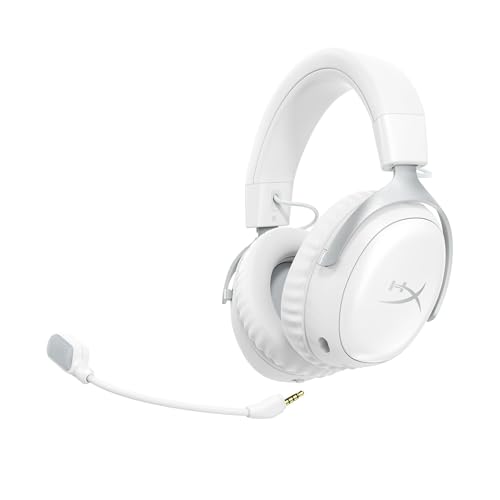
Best Overall: HyperX Cloud III S, combines wireless versatility, lightweight construction, and premium comfort padding ideal for extended wear with glasses.
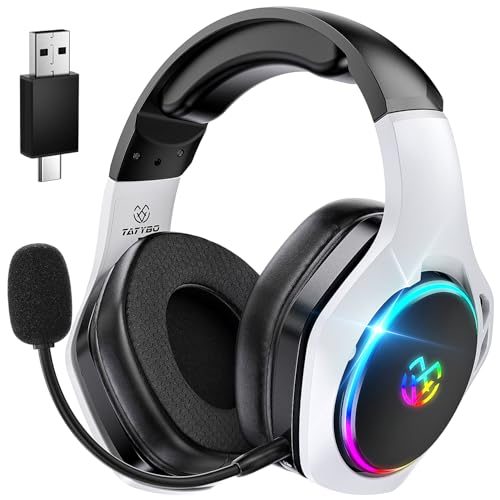
Best Value: Tatybo 2.4GHz Wireless, the lightest headset here at 260 grams, with 2.4GHz wireless, 7.1 virtual surround and 40-plus hours of battery at a budget price.
The HyperX Cloud III S represents the gold standard for glasses wearers seeking premium wireless performance. This headset achieves an exceptional balance of comfort and functionality through its thoughtfully engineered design. The ear cups feature memory foam padding with a distinctive dual-chamber construction that reduces pressure concentration, critical for users wearing spectacles for extended gaming sessions.
At 340 grams, the Cloud III S feels remarkably light despite its robust construction. The headband incorporates a padded suspension system that distributes weight evenly, preventing the common problem where glasses frames dig into the temples during long play sessions. Wireless connectivity via 2.4GHz or Bluetooth provides freedom of movement, whilst the 40-plus hour battery life means you'll rarely need to charge mid-session. The 7.1 virtual surround sound delivers competitive clarity in first-person shooters, and the detachable boom microphone offers flexible positioning for streamed content or team communication.
What sets this model apart for glasses wearers is the generously sized ear cup cavity. Unlike many headsets that compress the ear area excessively, the Cloud III S accommodates the additional bulk created by spectacle frames without creating uncomfortable pressure points. The leatherette padding is soft yet durable, and the headband adjustment range extends further than competing models, allowing precise fitting around glasses temples.
The wireless charging case provides convenience, though some users may find the 2.4GHz dongle unnecessary clutter if using Bluetooth exclusively on modern platforms. Sound tuning favours mid-range clarity over bass punch, which works well in competitive titles but may feel slightly subdued in narrative-heavy games.
Pros
- Memory foam ear cups with wide interior cavity accommodate glasses comfortably
- Lightweight at 340g with excellent weight distribution across headband
- 40-hour battery life supports multi-day gaming marathons
- Dual connectivity options provide flexibility across devices
Cons
- Premium pricing at nearly £130
- Bass response feels restrained compared to gaming-focused competitors
The Corsair HS55 Wireless bridges the gap between accessibility and premium features, offering a compelling option for glasses wearers seeking wireless convenience without flagship pricing. At 325 grams, the headset maintains reasonable lightness whilst providing sturdy construction that inspires confidence during extended sessions.
The low-latency 2.4GHz wireless connection pairs with 30-plus hour battery endurance, ensuring uninterrupted gaming marathons without cable tangles. The ear cups utilise soft memory foam padding engineered specifically to accommodate glasses wearers, with a design philosophy focused on reducing pressure concentration. The padding cavity has slightly more depth than typical gaming headsets, accommodating spectacle frames without forcing the ear cups to compress excessively.
The headband adjustment system offers extensive range and smooth operation, important for achieving proper fit when glasses occupy additional space on the head. The suspension padding distributes weight across a wider area of the scalp, preventing the localised pressure that causes discomfort during four-hour plus sessions. Bluetooth backup connectivity provides flexibility for mobile gaming or music listening between sessions.
The 7.1 virtual surround sound processing delivers competitive performance in shooters, with good directional cues and reasonable soundstage width. The detachable microphone boom features noise reduction processing suitable for team communication. Battery indicators keep you informed about remaining playtime, though the charging duration extends to approximately four hours for a full charge.
Sound tuning emphasises mids and treble, which enhances dialogue clarity but may feel slightly harsh in some audio scenarios. The plastic build, whilst solid, doesn't match the premium feel of higher-priced alternatives.
Pros
- Lightweight wireless design with 30-hour battery removes cable constraints
- Memory foam ear cups specifically designed for glasses accommodation
- Wide headband adjustment range with distributed padding
- Dual 2.4GHz and Bluetooth connectivity for flexibility
Cons
- Charging takes approximately four hours for full battery
- Sound signature emphasises treble, potentially fatiguing during extended sessions
The HyperX Cloud II remains a reliable choice for glasses wearers seeking proven comfort through wired connectivity. Despite its age relative to newer wireless models, the Cloud II maintains relevance through exceptional ergonomic design that specifically addresses glasses wearer needs. The headset weighs 320 grams, providing a good balance between durability and comfort weight distribution.
The memory foam ear cup padding is among the industry's most generous, with cavity depth that accommodates glasses frames without requiring excessive compression. The padding remains soft and responsive after extended use, unlike some budget alternatives that harden over time. The headband features a distinctive suspension design with padded contact points distributed across a wide area, crucial for preventing the pressure buildup that glasses wearers commonly experience.
Connectivity options provide flexibility through both USB and 3.5mm connections, supporting PC, PlayStation, Xbox, and Switch platforms. The 7.1 virtual surround sound processing delivers strong competitive performance, with particularly good directional accuracy in shooters. The removable microphone boom offers clean audio capture during team play, and the in-line volume controller provides convenient adjustment without navigating software menus.
The dual-chamber design of the ear cups reduces driver resonance, resulting in more natural sound reproduction compared to single-chamber competitors. The leatherette padding maintains its comfort characteristics through hundreds of hours of use, though the material does accumulate dust over time and benefits from occasional cleaning.
The wired connection remains a limitation for users prioritising movement freedom. Cable length at approximately two metres suits desk play but feels restrictive for standing or mobile gaming. Sound signature balances across the frequency spectrum, though bass impact feels somewhat restrained.
Pros
- Exceptionally generous memory foam ear cup padding designed for glasses compatibility
- Proven durability with excellent long-term padding retention
- Multi-platform connectivity through USB and 3.5mm
- Strong 7.1 surround sound performance for competitive gaming
Cons
- Wired connection limits mobility during gameplay
- No wireless option despite higher price positioning
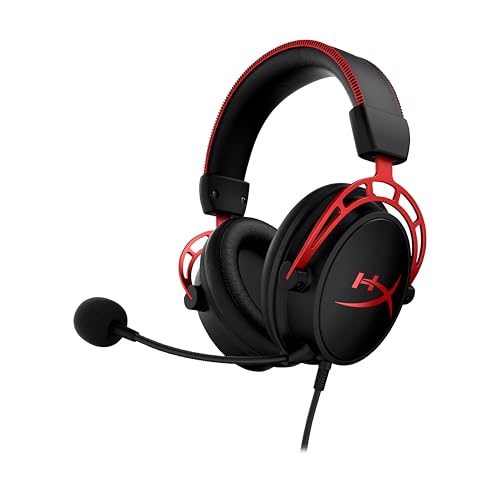
The HyperX Cloud Alpha offers an alternative for glasses wearers prioritising comfort and affordability over wireless convenience. Weighing just 290 grams, the Cloud Alpha sits among the lightest gaming headsets available, directly benefiting users wearing spectacles through minimal pressure accumulation during extended sessions. The lightweight construction doesn't compromise durability, as the aluminium build framework provides excellent structural integrity.
The ear cups feature two-layer padding with an inner memory foam layer designed to accommodate glasses frames without excessive compression. The padding cavity has generous proportions, allowing spectacle arms to sit comfortably without forcing the ear cup padding inward. The headband adjustment offers smooth operation and extends across a wide range, critical for fitting properly around glasses that occupy additional space above the ears.
Stereo audio reproduction focuses on clarity and naturalness rather than exaggerated surround sound simulation. For glasses wearers, this straightforward approach offers advantages: less processing complexity means lower latency, and the clean stereo soundstage proves surprisingly competitive for most gaming scenarios. The 3.5mm connection provides universal compatibility across platforms, with the in-line volume controller offering convenient adjustment during play.
The removable microphone boom delivers clear communication during team play, whilst the durable cable uses reinforced connectors designed to withstand extended use and frequent repositioning. The leatherette padding maintains its comfort characteristics through long-term use, resisting the hardening that affects lower-quality alternatives.
The absence of surround sound processing represents a limitation for users prioritising directional accuracy in competitive shooters. The wired connection restricts movement, and some users may find the stereo-only approach less immersive for single-player experiences. The price falls below many feature-rich competitors but higher than basic budget alternatives.
Pros
- Ultralight 290-gram construction minimises glasses-related pressure
- Aluminium framework provides exceptional durability and reliability
- Wide-cavity ear cups accommodate glasses frames without compression
- In-line volume control convenient for glasses wearers adjusting fit
Cons
- Stereo-only audio lacks surround sound for competitive positioning
- Wired 3.5mm connection requires cable management
The Tatybo wireless gaming headset delivers remarkable value for glasses wearers seeking budget-conscious wireless gaming without compromising essentials. Weighing just 260 grams, the Tatybo ranks among the lightest wireless headsets available, making it exceptional for extended wear with glasses. The minimal weight directly translates to reduced pressure accumulation on the bridge and temples, critical for comfortable long gaming sessions.
The ear cup padding employs memory foam material that moulds to individual head shapes whilst maintaining softness. The cavity proportions accommodate glasses frames without forcing excessive compression, and the padding doesn't create localised pressure points even after four-plus hours of continuous wear. The headband adjustment mechanism spans a generous range, allowing precise fitting when glasses occupy additional cranial space.
The 2.4GHz wireless connection provides stable low-latency performance suitable for competitive gaming, whilst the 40-plus hour battery endurance supports multi-day gaming marathons without charging interruptions. The 7.1 virtual surround sound processing delivers competitive positioning awareness across shooters and tactical titles. The omnidirectional microphone captures team communication clearly, and the detachable design allows temporary microphone removal for single-player play.
Build quality feels adequate for the price point, with solid plastic construction and reliable button mechanisms. The charging cable uses standard USB-A connectivity, meaning you likely have compatible cables readily available. The lightweight design does mean somewhat less robust construction than premium alternatives, though durability remains adequate for typical gaming use.
The plastic build lacks the premium feel of higher-priced models, and some users report occasional microphone positioning drift. Sound tuning emphasises mid-range clarity at the expense of deep bass, which works well for competitive gaming but feels slightly subdued for narrative-focused experiences.
Pros
- Exceptional 260-gram weight, lightest wireless option for glasses wearers
- 40-hour battery life supports extended multi-day gaming without charging
- Wide headband adjustment and spacious ear cup cavity accommodate glasses comfortably
- Excellent value at under £20 price point
Cons
- Plastic construction feels less durable than premium competitors
- Sound signature emphasises mids, lacking deep bass impact
Buying Guide
When selecting a gaming headset as a glasses wearer, weight becomes your primary consideration. Headsets exceeding 350 grams create noticeable pressure accumulation over two-hour plus sessions, particularly around the temples where glasses frames already create contact points. Look for models explicitly mentioning memory foam padding, which provides both immediate comfort and long-term durability. Basic foam padding hardens within months and loses its comfort benefits, whilst quality memory foam maintains responsiveness through years of use.
Ear cup cavity depth directly impacts glasses accommodation. Shallow cups force excessive compression against the frames, creating pressure points. Deeper cavities allow frames to sit naturally without pushing against the padding. The headband design deserves careful attention: suspension systems distributing weight across wider areas prevent the concentrated pressure that causes temporal headaches. Rigid headbands concentrating force on small contact points feel worse with glasses, regardless of padding quality.
Connection type influences your gaming versatility. Wireless headsets offer freedom of movement and multi-platform connectivity, essential for streaming content or mobile play between sessions. However, wireless models typically weigh slightly more due to batteries and electronics. Wired alternatives provide lighter construction and eliminate charging responsibilities, though cable management becomes necessary. Many glasses wearers prefer wired headsets for stationary PC gaming where mobility is minimal.
Sound quality matters less with glasses on, counterintuitively. Pressure from poorly fitted headsets causes subconscious tension that reduces audio enjoyment regardless of speaker quality. Prioritise comfort features over surround sound specifications, as a comfortable headset with stereo audio outperforms an uncomfortable premium model. Battery life becomes critical for wireless options, as charging interruptions during gaming sessions prove frustrating.
Consider your primary platform and connection requirements carefully. Console gamers benefit from 3.5mm compatibility offering broad support, whilst PC-exclusive gamers can prioritise optimal wireless performance. Test return policies where possible, as individual comfort perception varies significantly between users with different glasses styles and head shapes.
The HyperX Cloud III S emerges as the strongest overall recommendation for glasses-wearing gamers seeking a premium solution. The combination of lightweight construction, generously proportioned ear cups, sophisticated memory foam padding, and excellent wireless performance creates an exceptional experience for extended gaming sessions with spectacles. The 40-hour battery life removes the interruption of frequent charging, and the dual connectivity options provide flexibility across devices.
However, the £130 price point eliminates this option for budget-conscious users. For glasses wearers, comfort fundamentally drives headset selection more than for users without spectacles, making lighter weight and thoughtful padding design more important than feature richness.
Mid-range shoppers find strong options in the Corsair HS55 Wireless and HyperX Cloud II, depending on whether wireless connectivity or platform versatility takes priority. The Corsair excels for users demanding freedom of movement, whilst the Cloud II suits multi-platform gamers seeking proven comfort through established design. The HyperX Cloud Alpha provides an affordable wired alternative for stationary PC gamers, and the Tatybo surprises with exceptional wireless performance at ultra-budget pricing.
For glasses wearers specifically, choose the Cloud III S if you are willing to invest in premium comfort and performance, or the lightweight Tatybo if you are on a tight budget. Both designs specifically address the challenges glasses create. The difference between an ill-fitting headset and a properly designed glasses-accommodating model fundamentally shapes your gaming experience far more than marginal audio quality improvements.