The best Fractal Design computer cases under £100 represent some of the strongest value in the entire PC case market. Fractal Design has built a reputation for sensible engineering, clean aesthetics, and proper airflow, and the good news is you don't need to spend big to get those qualities. Whether you're building a compact mATX rig, a full-size gaming tower, or something in between, there's a Fractal case in this price bracket that fits. We've compared six models across form factor, airflow, included fans, and real-world usability to help you pick the right one without wasting money on features you don't need.
Price: £74.98 | Rating: ★★★★½ (4.7)
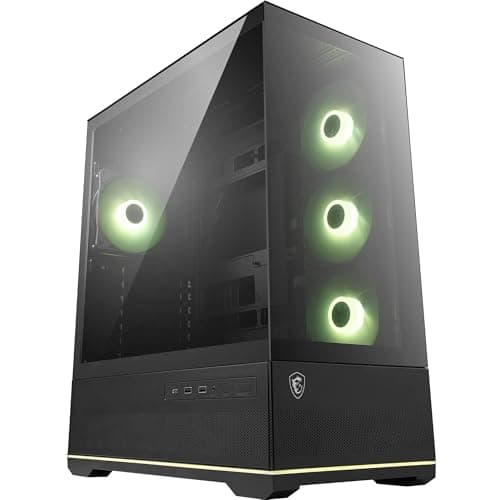
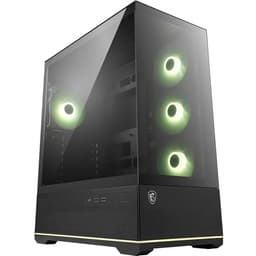
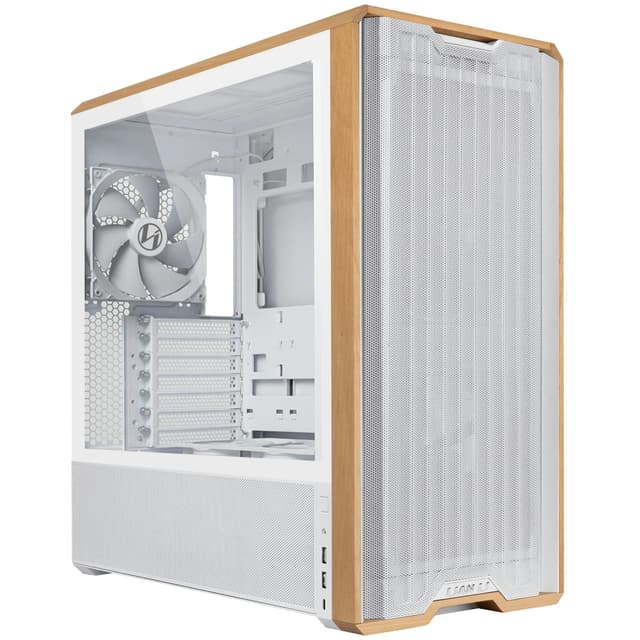
Right, this one's a bit different. The PANO 110R PZ is built around MSI's "PZ" concept, which supports back-connect motherboards. That means the cables plug into the rear of the board rather than the front face, so the main window shows components instead of a tangle of wires. If you buy a compatible back-connect board, the result is genuinely tidy. Standard ATX and Micro-ATX boards fit too, so you're not locked into the newer standard if you don't want it.
GPU clearance is the headline spec. There's room for cards up to 400mm long, which covers even the chunkiest current-generation triple-fan models with space to spare. Most cases in this bracket start getting tight around 340mm, so the extra length here is a real practical benefit rather than a number on a box.
Connectivity is a step ahead of the pack. The front panel includes a USB-C port running at 20Gbps, which is faster than the Type-C ports many rivals fit (and some skip Type-C entirely at this price). Removable dust filters on the intakes make cleaning simple, and they slide out without tools. Airflow is decent, though the front panel is more solid than a full mesh design, so it leans on the intake fans doing their job.
Build quality holds up. Panels feel sturdy, the tempered glass mounts securely, and cable management space behind the tray is generous. It's a sensible pick if you want modern features (back-connect support, fast USB-C, long GPU room) without pushing past the budget.
Two things to flag. First, it ships with fewer fans than some competitors here, so you may want to budget for a couple more. Second, the front panel isn't full mesh, so airflow, while fine, isn't class-leading. Neither is a dealbreaker, but worth knowing before you buy.
Pros
- Supports back-connect ATX and Micro-ATX boards for clean builds
- Huge 400mm GPU clearance fits the longest cards
- Fast USB-C 20Gbps front port
- Tool-free removable dust filters
- Sturdy chassis and roomy cable routing
Cons
- Ships with fewer fans than some rivals
- Front panel isn't full mesh, so airflow is good rather than exceptional
Buy on Amazon£74.98
Price: £79.99 | Rating: ★★★★½ (4.7)
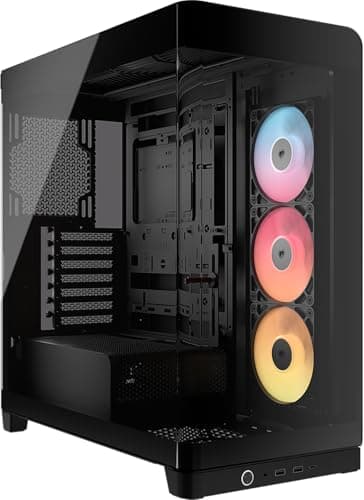
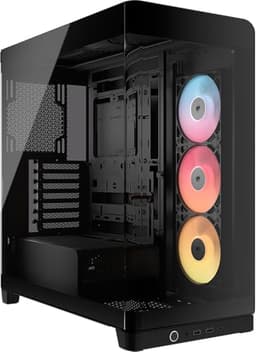
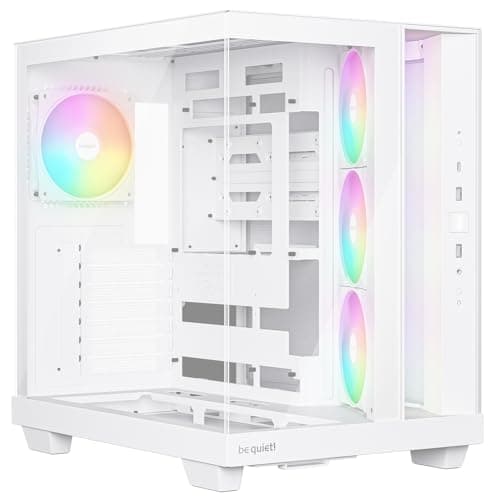
The FRAME 4500X is a slightly different animal to the rest of this list, and yes, it's a Corsair rather than a Fractal, but it earns its place because it competes directly with everything else here on price and specification. The panoramic glass design wraps around the front and side, so your build is on full display. Three RS120R ARGB fans come included, which is a proper head start on both lighting and airflow.
The standout feature is the InfiniRail mounting system. It lets you position radiators and fans across a continuous rail rather than fixed screw holes, so you're not fighting with hardware that almost lines up but doesn't quite. If you plan to add water cooling, this case takes dual 360mm radiators without much fuss, which is unusual at this price.
Corsair have also built in a GPU anti-sag bracket. Modern graphics cards are heavy, and over time that weight bends the PCIe slot and puts strain on the card. The bracket takes the load off, a small touch that shows some thought went into the design. Cable management behind the motherboard tray is tidy, with plenty of tie-down points and a decent gap for routing.
Build quality is solid throughout. Panels sit flush, the glass feels substantial, and the bundled RS120R fans are a step above the generic units you often find included at this level. For anyone who wants a case that looks the part through that panoramic glass and can grow with a water-cooling loop later, this one's hard to ignore.
The main drawback is the panoramic glass itself: it's gorgeous, but fingerprints show easily, and you'll be reaching for a microfibre cloth often. The three included fans are also 120mm rather than 140mm, so they run a touch faster to shift the same air.
Pros
- Three RS120R ARGB fans included from the factory
- InfiniRail system simplifies radiator and fan mounting
- Fits dual 360mm radiators for serious water cooling
- Built-in GPU anti-sag bracket protects heavy cards
- Panoramic glass gives a striking full view of your build
Cons
- Glass panels show fingerprints and need regular cleaning
- Included fans are 120mm rather than quieter 140mm units
Buy on Amazon£79.99
Buying Guide: What to Look For in the Best Fractal Design Computer Cases Under £100
Form factor first. Before anything else, match the case to your motherboard. ATX is the standard size and fits in most mid-towers. mATX is smaller and fits in both mini-towers and mid-towers. E-ATX is larger and needs a full tower like the Pop XL Air. Getting this wrong means your motherboard won't physically fit, so check your board's spec sheet before buying.
Airflow design matters more than you think. The front panel design has a huge impact on temperatures. Open mesh fronts like the Meshify C's angular design or the honeycomb pattern on the Pop range allow significantly more air in than solid panels. If you're running a mid-range to high-end GPU or a hot CPU, prioritise mesh fronts. Solid fronts restrict airflow and force temperatures up, which can affect performance and longevity.
Included fans are worth calculating. A case that includes three good fans is worth more than a cheaper case with one mediocre fan, once you factor in the cost of buying additional fans separately. 140mm fans (like those in the Epoch XL) move more air at lower noise levels than 120mm fans. Three 120mm fans can match two 140mm fans in airflow, but they'll typically run louder to do it.
Water cooling support. If you're planning a custom loop or an AIO cooler, check the radiator mounting positions and maximum radiator size. Most cases in this roundup support at least a 240mm radiator, and several support 360mm. The Meshify C and Epoch XL are particularly strong here.
Cable management. A PSU shroud hides the power supply and bottom cables. Wide routing channels behind the motherboard tray make tidying cables much easier. These features are present on most cases here except the Core 1100. If you care about a clean build, they're worth having.
GPU clearance. Modern graphics cards are large. Check the maximum GPU length supported by any case you're considering, especially in compact cases like the Pop Mini Air. Most full mid-towers in this roundup handle even the longest consumer GPUs without issue.
Avoid the temptation to buy on looks alone. Tempered glass and RGB are appealing, but a case with a solid front and a glass panel will run hotter than a mesh-front case without glass. Thermal performance should come before aesthetics, especially if you're running demanding hardware.