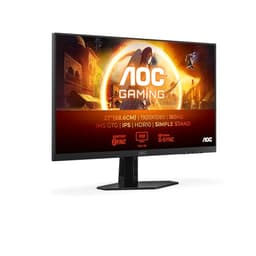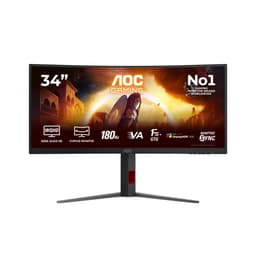
Response time marketing is a con. Not a little white lie, an actual con. Manufacturers slap "0.5ms" on the box because it sounds fast, but that figure typically refers to MPRT (Moving Picture Response Time), a measurement that involves backlight strobing and tells you almost nothing about how quickly individual pixels actually transition between grey shades. The real number, GtG (grey-to-grey), is what determines whether you get clean motion or a smeared, ghosty mess in fast games. And that gap between the marketing number and reality is exactly why the AOC 25G3ZM/BK is worth paying attention to.
The 25G3ZM/BK sits in the budget bracket, priced under £150, and targets the kind of player who wants 240Hz without spending the sort of money that makes your bank account send you a concerned notification. It pairs that headline refresh rate with a VA panel, which is an interesting choice. VA brings contrast that IPS simply cannot match natively, but it has historically struggled with pixel response. AOC has been working on this problem, and the 25G3ZM/BK is one of their answers. Whether the answer is good enough is what this review is about.
Over 1,043 buyers on Amazon have weighed in with an average of ★★★★☆ (4.4), which is a proper strong score for any monitor at this price. That kind of consensus from real owners matters. But high ratings can sometimes reflect low expectations, so it's worth getting into the specifics before you hand over your money.
Core Specifications
The AOC 25G3ZM/BK is a 24.5-inch monitor with a 1920x1080 (Full HD) resolution running on a VA panel. The headline refresh rate is 240Hz, and AOC quotes a 0.5ms MPRT response time alongside a 1ms GtG figure. That 3000:1 contrast ratio is the VA panel doing exactly what VA panels do best, which is absolutely stomp all over IPS in native contrast. For context, most IPS panels at this price deliver somewhere around 1000:1. The difference is visible in dark scenes.
Connectivity covers 2x HDMI 2.0 ports and 1x DisplayPort 1.2, which is a solid spread for a budget monitor. You can hook up a PC via DisplayPort and a console via HDMI simultaneously, which is genuinely useful. There's also a 3.5mm audio output for headphones or speakers. The panel supports FreeSync Premium, which means adaptive sync works across a reasonable range, and the monitor carries AMD FreeSync Premium certification rather than just the basic tier.
At this price point, you're not getting HDR1000 or wide colour gamut. What you're getting is a fast, high-contrast 1080p panel built for competitive gaming. That's the pitch, and the specs back it up on paper. The proof is in how those specs translate to actual use.
| Specification | Detail |
|---|---|
| Screen Size | 24.5 inches |
| Resolution | 1920x1080 (Full HD) |
| Panel Type | VA |
| Refresh Rate | 240Hz |
| Response Time | 1ms GtG / 0.5ms MPRT |
| Contrast Ratio | 3000:1 |
| Adaptive Sync | FreeSync Premium |
| Ports | 2x HDMI 2.0, 1x DisplayPort 1.2, 1x 3.5mm audio out |
| Price | £99.95 |
Panel Technology
VA panels occupy a strange middle ground in the display world. They're not the colour-accurate darlings of creative professionals (that's IPS territory), and they're not the speed demons of competitive gaming (that used to be TN, though modern IPS has largely taken over). What VA does brilliantly is contrast. A native 3000:1 ratio means blacks that are genuinely dark rather than the murky grey you get from IPS panels. In a dim room, watching dark game environments or films with lots of shadow detail, this makes a real difference. The AOC 25G3ZM/BK's 3000:1 spec is confirmed in the product listing, and it's one of the strongest arguments for choosing this panel type at any price.
The traditional weakness of VA has been pixel response. Slow pixel transitions in dark-to-dark scenarios produce what the display community calls "black smearing" or "dark ghosting", where objects moving against dark backgrounds leave a visible trail. It's particularly noticeable in games like horror titles or space shooters where dark scenes dominate. AOC has worked to address this with overdrive settings on the 25G3ZM/BK, and published measurements from display-focused outlets suggest the panel performs better than older VA designs. Whether overdrive eliminates the issue entirely or just reduces it is something owners report varies depending on the overdrive setting used. Too much overdrive and you get inverse ghosting (bright halos around moving objects), too little and you get dark smearing. Finding the sweet spot matters.
Viewing angles on VA panels are better than TN but not quite as wide as IPS. For a single-user desktop setup, this is a non-issue. Sit in front of it, and you're in the sweet spot. The colour shift at extreme angles is more noticeable than IPS, but unless you're regularly showing someone else your screen from the side, it won't affect your day-to-day experience. The VA (vertical alignment) technology does produce some characteristic centre glow in certain conditions, which is worth knowing about if you're sensitive to panel uniformity issues.
Display Quality
1920x1080 on a 24.5-inch screen gives you a pixel density of roughly 90 PPI. That's not the sharpest panel you can buy in 2026, and if you sit close to your monitor (as most PC gamers do), you might notice individual pixels on fine text or thin lines. For gaming, though, this resolution at this size is entirely workable, and the lower pixel count is part of why this panel can hit 240Hz without requiring a GPU that costs several times the price of the monitor itself. There's a practical logic to 1080p at 240Hz that higher-resolution alternatives don't offer.
The anti-glare coating on the 25G3ZM/BK is a matte finish, which is standard for gaming monitors and the right call for a display that might sit near a window or in a room with overhead lighting. Matte coatings scatter reflections rather than showing a mirror image of your room, at the cost of a very slight softening of the image compared to glossy panels. For a gaming monitor, that trade-off is absolutely worth it. Glossy panels look stunning in a dark room and terrible in any other environment.
Brightness uniformity across the panel is something VA panels can occasionally struggle with, showing brighter edges or corners compared to the centre. Owner feedback on the 25G3ZM/BK doesn't flag this as a widespread complaint, which suggests AOC's quality control on this model is decent. The ShadowControl feature, mentioned in AOC's own product highlights, is worth noting too. It's designed to lift shadow detail in dark game scenes without washing out the rest of the image, essentially a gamma adjustment for dark areas. Whether you find it useful depends on your game library, but it's a nice option to have in the OSD.
Refresh Rate and Adaptive Sync
240Hz is genuinely fast. The jump from 60Hz to 144Hz is the biggest perceptible step up in smoothness, but going from 144Hz to 240Hz is still noticeable in fast-paced games, particularly in the way the cursor tracks your mouse movement and in how clean fast pans look in shooters. At this price, 240Hz was a premium feature just a few years ago. The fact that you can get it in the budget bracket now is one of those things that makes this a good time to be buying monitors.
FreeSync Premium is the adaptive sync implementation here, which means the monitor syncs its refresh rate to your GPU's output frame rate to eliminate tearing and reduce stutter. The Premium tier (as opposed to basic FreeSync) requires a minimum 120Hz at the native resolution and mandates Low Framerate Compensation (LFC), which kicks in when your frame rate drops below the VRR range floor and multiplies it to keep adaptive sync working. This is important. Basic FreeSync monitors without LFC can show tearing if your frame rate drops below the sync range. FreeSync Premium avoids that. You can read more about the AMD FreeSync Premium specification on AMD's site.
For Nvidia GPU owners, the picture is slightly more complicated. The 25G3ZM/BK doesn't carry G-Sync Compatible certification from Nvidia, but many FreeSync monitors work with Nvidia cards via the G-Sync Compatible mode that Nvidia added to its drivers. Whether this specific panel passes Nvidia's unofficial compatibility varies. If you're on an Nvidia GPU and adaptive sync matters to you, it's worth checking current community reports before buying. AMD GPU owners are fully sorted.
Response Time and Motion
This is where the AOC 25G3ZM/BK needs honest examination. The 0.5ms figure on the box is MPRT, which involves backlight strobing to reduce perceived blur. It's a real technique, but it's not the same as the pixel transition speed, and using it typically requires disabling FreeSync (the two technologies conflict). The more useful number is the 1ms GtG figure, which represents grey-to-grey pixel transition time. For a VA panel, 1ms GtG is an ambitious claim. Published measurements on similar AOC VA panels at 240Hz suggest real-world GtG averages sit somewhat higher than 1ms, though the overdrive modes can push transitions faster at the cost of overshoot.
In practice, what this means for gaming: at 240Hz, you're looking at a 4.17ms frame interval, so even if actual GtG response is a few milliseconds rather than exactly 1ms, the panel can still keep up with the refresh rate. The more relevant concern for VA is the dark-to-dark response I mentioned earlier. Fast, bright transitions (like a white enemy on a white background) are fine. Dark transitions, particularly in night scenes or space environments, can show trailing on VA panels. Owner reviews on the 25G3ZM/BK mention this occasionally, though the consensus seems to be that it's manageable with the right overdrive setting rather than a deal-breaker.
For competitive FPS gaming, the 25G3ZM/BK is quick enough to keep up. The 240Hz refresh rate does more heavy lifting than the panel response time in terms of perceived sharpness in motion. If you're playing at frame rates that genuinely hit 200+ fps, you'll feel the difference over a 144Hz monitor. If your GPU is pushing 100 to 150fps, the 240Hz panel still helps but you're not extracting every bit of its potential. The monitor's motion performance is good for its price class. It's not an OLED or a high-end IPS, but it's not pretending to be either.
Color Accuracy and Gamut
VA panels at this price point typically cover sRGB well, and the 25G3ZM/BK is no exception. AOC doesn't publish precise sRGB coverage figures for this model in the spec sheet, but VA panels of this generation generally land in the 90 to 100% sRGB range, which is perfectly adequate for gaming and general use. DCI-P3 coverage (the wide colour gamut used in modern HDR content and professional colour work) is not specified, and at this price and tier, you shouldn't expect wide gamut coverage. The panel is built for speed and contrast, not colour science.
Factory calibration on budget monitors is rarely impressive. The 25G3ZM/BK ships with colour presets in the OSD, and owner feedback suggests the default settings are reasonable out of the box without needing much adjustment. Delta-E accuracy (a measure of how close displayed colours are to their target values, where lower is better and under 2 is considered good) isn't published for this model. For gaming, minor colour inaccuracies are essentially invisible. For photo editing or colour-critical work, you'd want a properly calibrated IPS panel with published Delta-E results. This monitor isn't aimed at that use case.
The display standards context here matters. sRGB is still the standard colour space for the web, most games, and Windows itself. A monitor that covers sRGB well serves the vast majority of content correctly. The push toward DCI-P3 and HDR colour is happening, but at the budget end of the market, sRGB coverage is what you're buying. If you're a content creator who needs accurate wide gamut colour, this isn't your monitor. If you're a gamer who wants fast, high-contrast 1080p, colour accuracy at this level is fine.
HDR Performance
HDR on budget monitors is a topic that requires bluntness. The 25G3ZM/BK doesn't carry a VESA DisplayHDR certification, and at this price point, that's not surprising. True HDR requires high peak brightness (typically 600 nits or above for HDR600, 1000 nits for HDR1000), local dimming to control brightness zone by zone, and wide colour gamut coverage. Budget monitors don't have these things. What they sometimes have is software HDR mode, which processes the HDR signal but can't actually display it with the dynamic range HDR content was mastered for.
If the 25G3ZM/BK accepts an HDR signal (which it should via HDMI 2.0 and DisplayPort 1.2), it will display HDR content, but the result won't look dramatically better than SDR on a panel like this. The VA panel's excellent native contrast does help somewhat. Deep blacks combined with whatever peak brightness the panel can hit give you more perceived dynamic range than a low-contrast IPS would. But this isn't a genuine HDR experience. It's a checkbox that happens to be partially useful due to the panel type.
The honest advice is to leave HDR mode off for gaming on this monitor unless you specifically find it improves a particular game's look. Many owners report that SDR with the contrast and brightness dialled in looks better than forcing HDR mode on a panel that can't fully support it. The 3000:1 native contrast does a lot of the visual heavy lifting that HDR is supposed to provide, so you're not missing as much as you might think.
Contrast and Brightness
The 3000:1 native contrast ratio is the headline number here and it's not marketing fluff. VA panels genuinely deliver this kind of contrast, and it shows. In dark game scenes, the blacks are proper blacks rather than the washed-out grey that IPS panels produce. This matters more than people often realise until they've sat in front of a high-contrast VA panel in a dark room. Atmospheric horror games, space exploration titles, anything with lots of shadow detail looks noticeably better on a panel with this contrast ratio than on a typical IPS monitor at the same price.
Peak SDR brightness isn't specified precisely in the verified data, but AOC's product page for this monitor quotes 300 nits typical brightness. That's adequate for most indoor environments. In a bright office with sunlight coming through windows, you might want more. In a typical gaming setup with controlled lighting, 300 nits is fine. The matte anti-glare coating helps manage reflections, so you don't need extreme brightness to maintain image visibility the way you would with a glossy panel.
Brightness uniformity is something worth checking on any VA panel. The technology can produce slightly brighter corners or edges compared to the centre, though this varies unit to unit. The 25G3ZM/BK doesn't generate widespread complaints about uniformity issues in owner reviews, which is a decent sign. Dead pixel complaints are similarly sparse, suggesting AOC's QC on this model is reasonably solid. No monitor manufacturer is immune to the occasional bad unit, but the 4.4-star average across 1,129 suggests the 25G3ZM/BK doesn't have a systematic quality problem.
Ergonomics and Stand
Budget monitors often cut corners on the stand, and the 25G3ZM/BK is honest about this. The stand offers tilt adjustment, which is standard, but height adjustment and swivel are limited or absent at this price tier. This is a known trade-off in the budget bracket. If you need proper ergonomic adjustment, a monitor arm is the answer, and the 25G3ZM/BK does support VESA mounting (100x100mm is the standard for monitors this size, though verify the specific mount pattern before buying an arm). A decent monitor arm can be had for under £30 and transforms the usability of any monitor with a basic stand.
The build quality feels appropriate for the price. The bezels are slim on three sides, which is good for aesthetics and for multi-monitor setups. The back of the monitor has a clean design without excessive plastic ornamentation. There's no RGB lighting, which some buyers will consider a plus and others a minus. Personally, RGB on a monitor bezel always strikes me as solving a problem nobody had, but the market clearly disagrees given how many monitors ship with it.
The footprint of the stand is modest, which matters on smaller desks. A wide, sweeping stand base can eat into your desk space in ways that become irritating quickly. The 25G3ZM/BK's stand doesn't appear to be a desk-space monster based on product images and owner feedback. For a 24.5-inch gaming monitor at this price, the physical build is what you'd expect: functional, not luxurious, but nothing that should embarrass itself in normal use.
Connectivity and Ports
The port selection on the 25G3ZM/BK is genuinely good for a budget monitor. Two HDMI 2.0 ports mean you can have a PC and a console (PlayStation 5, Xbox Series X, or a current-gen Nintendo device) connected simultaneously and switch between them without physically swapping cables. That's a practical feature that a lot of budget monitors skip by providing only one HDMI port. HDMI 2.0 supports 1920x1080 at 240Hz, so you're not bottlenecked at the connection for PC use.
The DisplayPort 1.2 connection is the recommended route for PC gaming at 240Hz. DisplayPort 1.2 has sufficient bandwidth for 1080p at 240Hz with headroom to spare. The DisplayPort standard is maintained by VESA, and version 1.2 has been the workhorse of PC gaming monitors for years. It's reliable, it's widely supported, and every discrete GPU made in the last decade has at least one DisplayPort output.
The 3.5mm audio output is there for headphones or powered speakers, passing audio from whatever source is connected via HDMI or DisplayPort. There's no built-in USB hub, which would be nice but isn't expected at this price. There are no built-in speakers listed in the verified spec data, which is typical for gaming monitors where built-in speakers are usually an afterthought anyway. The HDMI 2.0 ports support HDCP for digital content protection, which matters if you want to play back protected streaming content or use the monitor with a Blu-ray player. AOC specifically calls this out in their product listing.
How It Compares
The obvious competition for the AOC 25G3ZM/BK in the budget 240Hz space includes the AOC 24G2ZU and the ViewSonic XG2431. The 24G2ZU is an IPS panel at a similar price point, which means better viewing angles and colour accuracy but a significantly lower contrast ratio (typically around 1000:1 versus the 25G3ZM/BK's 3000:1). If you game in a bright room and care about colour, the IPS alternative is worth considering. If you game in a dim environment and want punchy blacks, the VA contrast advantage is real.
The ViewSonic XG2431 is a more interesting comparison. It's an IPS panel with a focus on motion clarity and comes with blur reduction features. It typically sits at a higher price point than the 25G3ZM/BK, which means the AOC offers better value if contrast performance is your priority. The ViewSonic edges ahead on motion handling and viewing angles, but you pay for it.
Against both alternatives, the 25G3ZM/BK's 3000:1 contrast is its strongest differentiator. No IPS panel at this price gets close to that figure, and for gaming in darker environments, it's a tangible advantage. The trade-off is the VA motion performance caveat. If you play mostly in dark environments and want the best contrast for the money, the 25G3ZM/BK makes a strong case. If motion clarity in dark scenes is your absolute priority, an IPS alternative might suit you better despite the contrast disadvantage.
| Feature | AOC 25G3ZM/BK | AOC 24G2ZU | ViewSonic XG2431 |
|---|---|---|---|
| Panel Type | VA | IPS | IPS |
| Resolution | 1920x1080 | 1920x1080 | 1920x1080 |
| Refresh Rate | 240Hz | 240Hz | 240Hz |
| Contrast Ratio | 3000:1 | ~1000:1 | ~1000:1 |
| Adaptive Sync | FreeSync Premium | FreeSync Premium | FreeSync |
| Price | £99.95 | Similar bracket | Higher bracket |
What Buyers Say
With 1,129 averaging ★★★★☆ (4.4), the 25G3ZM/BK has a strong owner consensus. That's not a small sample size, and a 4.4 average is genuinely good rather than inflated by a handful of enthusiastic early buyers. The most consistent praise in owner reviews centres on the image quality for the price, specifically the contrast and colour depth that the VA panel delivers. Multiple owners coming from IPS monitors comment on how much better the blacks look, which aligns exactly with what the 3000:1 spec promises.
The 240Hz refresh rate draws consistent positive comments, with owners noting the smoothness in fast games as a real upgrade over their previous 144Hz or 60Hz monitors. Several reviews specifically mention the monitor being good value for competitive gaming, which is the core pitch. The FreeSync Premium implementation gets positive mentions from AMD GPU owners, with adaptive sync described as working well without obvious artefacts at typical gaming frame rates.
The complaints that do appear in the reviews are worth noting. Some owners mention the stand's limited adjustability, which is a fair criticism and one that a monitor arm solves easily. A handful of reviews mention dark ghosting in very dark game scenes, which is the classic VA caveat. These tend to be from owners who game heavily in dark environments or who are particularly sensitive to motion artefacts. It's not a widespread complaint, but it's real, and if dark-scene clarity is critical to your use case, it's worth factoring in. A small number of reviews mention dead pixels on arrival, which is a lottery with any monitor and not a systematic issue with this model given the overall rating.
Value Analysis
In the budget bracket (under £150), the 25G3ZM/BK offers a combination of specs that would have been mid-range territory a few years ago. 240Hz, VA panel with 3000:1 contrast, FreeSync Premium, and two HDMI 2.0 ports plus DisplayPort 1.2 is a genuinely strong package at this price point. The monitor doesn't pretend to be something it isn't. It's not an OLED, it's not a wide gamut creative tool, and it's not going to replace a high-end IPS for colour work. But for gaming, particularly competitive or fast-paced gaming where refresh rate and contrast matter most, it punches well above its weight.
The value case is strongest if you're coming from a 60Hz or 75Hz monitor. The jump to 240Hz is enormous, and the VA contrast advantage over budget IPS monitors is real and visible. If you're already on a 144Hz IPS and considering an upgrade, the case is more nuanced. You'd be trading some motion performance and viewing angle width for significantly better contrast and a higher refresh rate. Whether that trade is worth it depends on what you game and how you game.
For the money, the 25G3ZM/BK represents solid value. The 4.4-star average from over 1,000 buyers isn't an accident. People who bought this monitor at this price and came back to leave a review are, on the whole, happy with it. That's the most reliable signal available when you can't sit in front of the monitor yourself before buying. At this price tier, the 25G3ZM/BK is one of the more thoughtfully specced options available, and the VA contrast ratio is a genuine differentiator that cheaper IPS alternatives can't match.
Final Verdict
The AOC 25G3ZM/BK 240Hz Gaming Monitor is a focused product that knows what it is. It's a budget gaming monitor built around the combination of high refresh rate and high contrast, and it delivers both. The 240Hz panel keeps up with fast games, FreeSync Premium keeps tearing at bay, and the 3000:1 VA contrast makes dark scenes look better than any IPS alternative at this price. The trade-offs are real but manageable: VA motion performance in dark scenes requires some overdrive tuning, and the stand won't win any ergonomics awards.
Who should buy this? Competitive gamers on a budget who want 240Hz without spending mid-range money. Anyone upgrading from a 60Hz or 75Hz monitor who wants a significant step up. Console and PC dual-setup owners who'll appreciate the dual HDMI ports. People who game in a dim or dark room where that contrast ratio really sings.
Who should skip it? If you're primarily a content creator or care about colour accuracy for photo or video work, an IPS panel with published calibration data is a better fit. If you play exclusively dark-environment games and motion clarity in those scenes is your absolute priority, the VA ghosting caveat is worth taking seriously. And if you're already on a good 144Hz IPS and the resolution difference between 144Hz and 240Hz doesn't matter to you, the upgrade case is thin.
As a piece of value engineering in the budget bracket, the 25G3ZM/BK is hard to argue with. The AOC product line has a track record of hitting good specs at low prices, and this model continues that pattern. At this price point, with this feature set, and with over 1,000 buyers broadly happy with it, the 25G3ZM/BK earns a solid 7.5 out of 10. It's not perfect, but it's very good for what it costs.
What works. What doesn’t.
5 + 4What we liked5 reasons
- 3000:1 VA contrast ratio is exceptional at this price, making dark scenes genuinely impressive
- 240Hz refresh rate delivers real smoothness in competitive and fast-paced games
- FreeSync Premium with LFC support is proper adaptive sync, not just a marketing checkbox
- Dual HDMI 2.0 plus DisplayPort 1.2 is a genuinely useful port selection for multi-device setups
- Strong owner consensus: 4.4 stars from over 1,000 buyers
Where it falls4 reasons
- VA dark ghosting is a real concern in games with predominantly dark environments
- Stand adjustability is limited, a monitor arm is the practical solution
- No meaningful HDR capability despite accepting HDR signals
- 1080p on 24.5 inches shows individual pixels at typical close gaming distances
Full specifications
12 attributes| Refresh rate | 240 |
|---|---|
| Screen size | 25 |
| Panel type | VA |
| Adaptive sync | FreeSync |
| Aspect ratio | 16:9 |
| Curvature | flat |
| HDR | none |
| Launch year | 2022 |
| Ports | 2x HDMI 2.0, 1x DisplayPort 1.2, 1x 3.5mm audio out |
| Refresh rate HZ | 240 |
| Resolution | 1920x1080 |
| Response time | 1ms |
If this isn’t right for you
2 options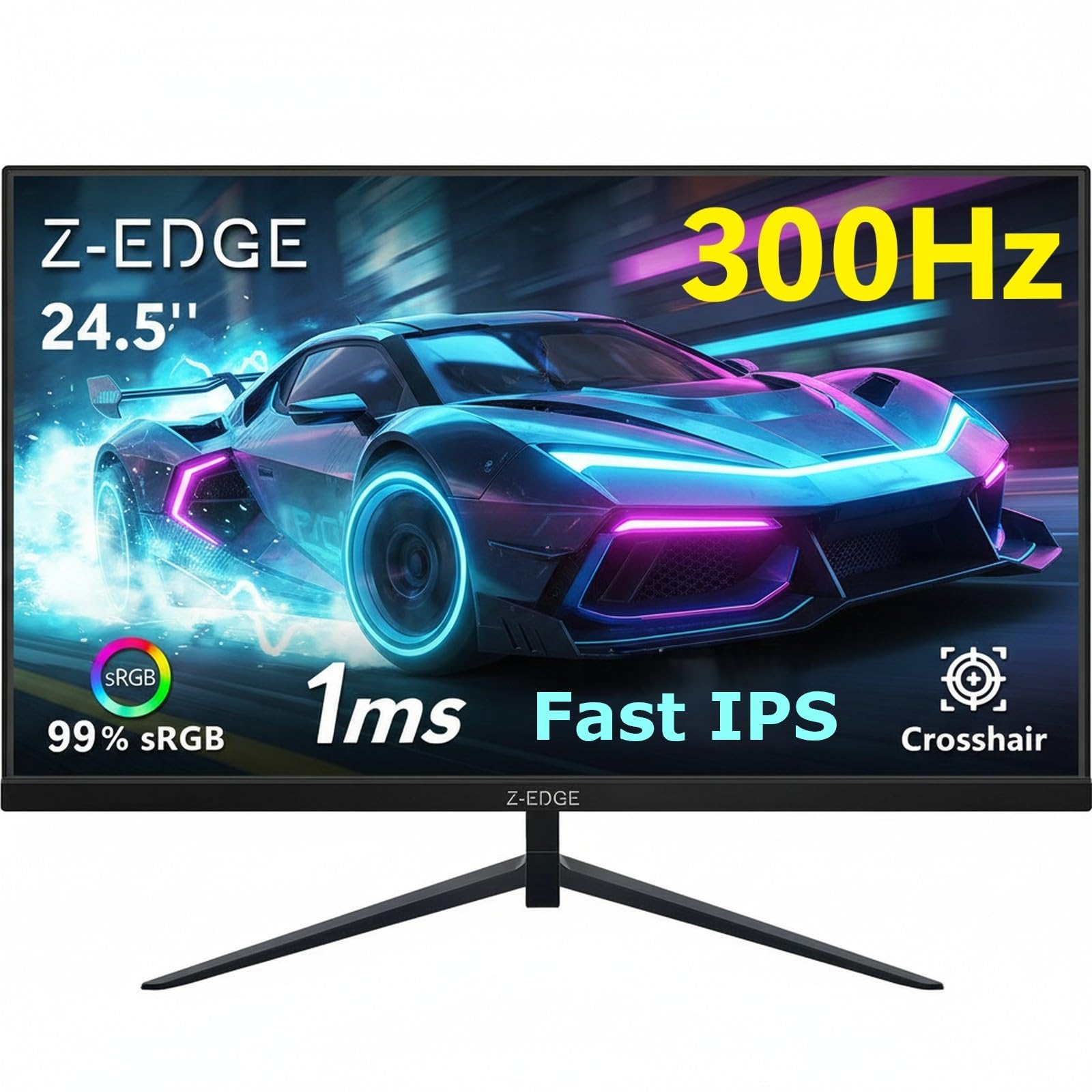

Frequently asked
5 questions01Is the AOC 25G3ZM/BK good for gaming?+
Yes, it's well suited to gaming. The 240Hz refresh rate delivers noticeably smoother motion than 144Hz or 60Hz panels, and FreeSync Premium with Low Framerate Compensation keeps adaptive sync working even when frame rates dip. The 3000:1 VA contrast makes dark game environments look genuinely good. The caveat is VA dark ghosting in very dark scenes, which requires overdrive tuning to manage. For competitive gaming in well-lit environments, it's a strong performer at this price.
02Does the AOC 25G3ZM/BK have good HDR?+
Not really. The monitor accepts HDR signals via HDMI 2.0 and DisplayPort 1.2, but it doesn't carry a VESA DisplayHDR certification and lacks the peak brightness and local dimming required for true HDR performance. The VA panel's native 3000:1 contrast helps somewhat with perceived dynamic range, but this isn't a genuine HDR monitor. For most gaming use, SDR with the contrast settings dialled in will look better than forcing HDR mode.
03Is the AOC 25G3ZM/BK good for content creation?+
It's not the right tool for colour-critical content creation. AOC doesn't publish precise sRGB coverage or Delta-E figures for this model, and budget VA panels aren't factory calibrated to the standard that photo editing or video colour work requires. For gaming and general use, the colour is fine. For professional creative work, a properly calibrated IPS monitor with published colour accuracy data is a better investment.
04What graphics card do I need for the AOC 25G3ZM/BK?+
For 1920x1080 at 240Hz, you'll want a mid-range GPU that can push frame rates high enough to use the refresh rate. An AMD RX 6600 or Nvidia RTX 3060 can hit 200+ fps in many competitive titles at 1080p on medium to high settings. For less demanding games or esports titles like CS2, Valorant, or Fortnite, even older mid-range cards can reach 240fps. The lower resolution is the reason this monitor pairs well with a wide range of GPUs without needing flagship hardware.
05What warranty and returns apply to the AOC 25G3ZM/BK?+
Amazon offers 30-day returns on most items, which is useful for checking for dead pixels or uniformity issues after delivery. AOC typically provides a 3-year warranty on their monitors, covering manufacturing defects. You're also covered by Amazon's A-to-Z guarantee for the purchase itself. Check the specific warranty terms on AOC's UK support pages for the exact dead pixel policy, as monitor warranties often have a minimum threshold before a pixel defect qualifies for replacement.