
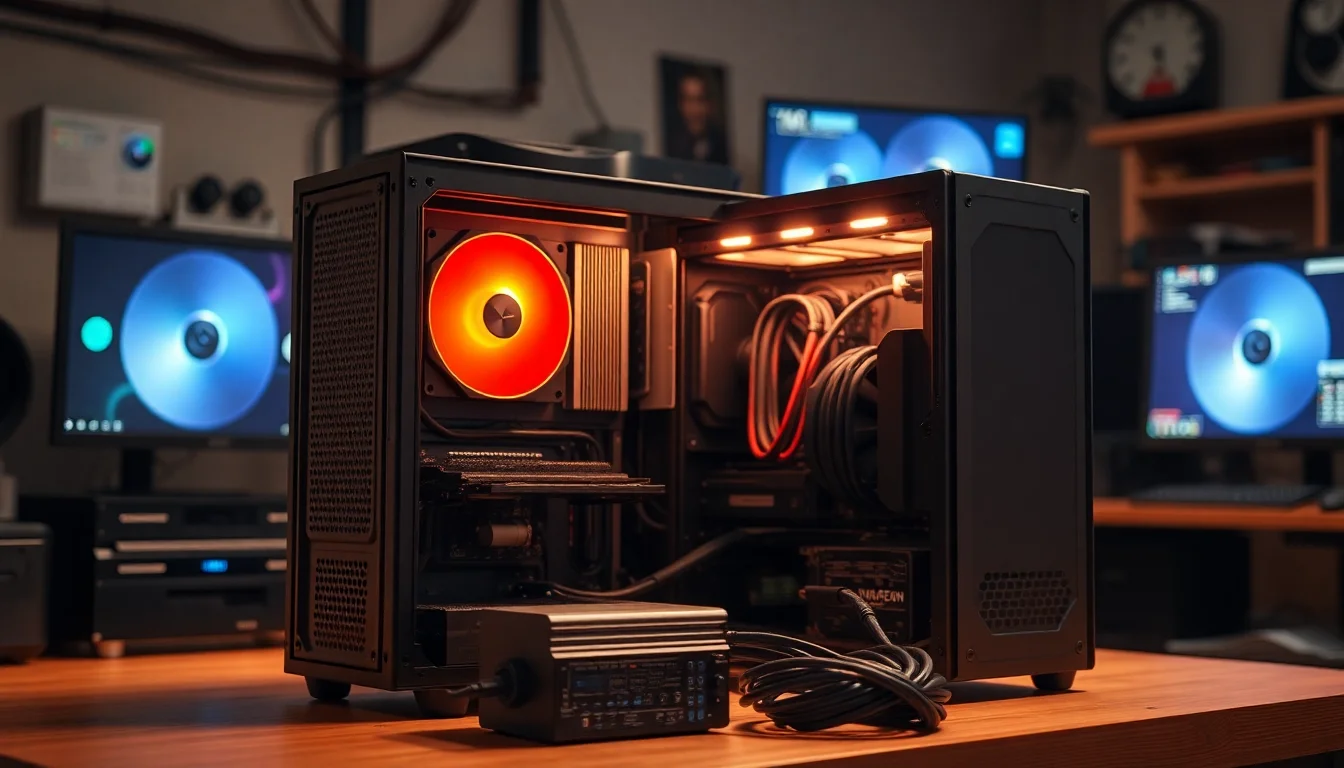
Choosing the right power supply unit is one of the most important decisions a PC builder can make, yet it remains one of the most overlooked. A poor-quality PSU can throttle an otherwise excellent system, cause instability under load, or worse, damage expensive components. In 2026, the landscape has shifted noticeably: ATX 3.1 has become the dominant standard, 12V-2x6 connectors are now far more common than the older 12VHPWR, and efficiency requirements have tightened as energy costs remain high across the UK. Both 750W and 850W units now sit in the sweet spot for mid-to-high-end builds pairing a modern GPU with a current-generation CPU. This comparison is aimed at enthusiasts, first-time builders, and upgraders who want reliable, efficient power delivery without overspending. Whether you are running an RTX 5080, an RX 9070 XT, or planning a future upgrade, the five PSUs reviewed here cover every realistic need in this wattage bracket.
Quick Verdict
Best Overall: Corsair RM850x (2024 Edition), exceptional build quality, fully modular, 80 Plus Gold rated, and whisper-quiet under all but the most extreme loads. It is the PSU we would recommend to the majority of UK builders without hesitation.
Best Value: be quiet! Pure Power 12 M 750W, solid German engineering, semi-modular convenience, and 80 Plus Gold efficiency at a price that leaves money in the budget for the GPU or CPU where it matters most.
Specification Comparison
| Model | Price | Wattage | Efficiency Rating | Modular | Fan / Noise | Connector (GPU) | Weight | Warranty |
|---|---|---|---|---|---|---|---|---|
| Corsair RM850x (2024) | Check price | 850W | 80 Plus Gold | Fully Modular | 135mm / Zero RPM mode | 12V-2x6 | 1.54 kg | 10 years |
| be quiet! Pure Power 12 M 750W | Check price | 750W | 80 Plus Gold | Semi-Modular | 120mm / Silent Wings | 12V-2x6 | 1.45 kg | 5 years |
| Seasonic Focus GX-850 | Check price | 850W | 80 Plus Gold | Fully Modular | 120mm / Hybrid Fan | 12V-2x6 (adapter) | 1.60 kg | 10 years |
| EVGA SuperNOVA 750 G7 | Check price | 750W | 80 Plus Gold | Fully Modular | 135mm / Eco Mode | 12V-2x6 | 1.38 kg | 7 years |
| Fractal Design Ion+ 2 Platinum 860W | Check price | 860W | 80 Plus Platinum | Fully Modular | 140mm / Silent | 12V-2x6 (adapter) | 1.70 kg | 10 years |
1. Corsair RM850x (2024 Edition)
The Corsair RM850x has long been a benchmark recommendation in UK PC building communities, and the 2024 edition earns that reputation all over again. Targeted squarely at enthusiast builders running high-end GPUs such as the RTX 5080 or RX 9070 XT alongside a modern 12th, 13th, or 14th-generation Intel or Ryzen 7000/9000 series CPU, this unit offers the headroom and reliability to handle demanding workloads without breaking a sweat.
The headline specification is 850W of continuous power delivery rated at 80 Plus Gold, meaning it operates at 87, 90% efficiency across typical load ranges. That translates to real-world savings on electricity bills compared with Bronze-rated alternatives, which matters more than ever given UK energy costs. The unit is built around a fully modular cable system, so you only attach the cables you actually need, reducing clutter inside the case and improving airflow. Corsair supplies a native 12V-2x6 cable for the GPU, which is the current standard and eliminates the adapter-related concerns that plagued early 12VHPWR implementations.
Noise is a genuine strong point. The 135mm fan operates in zero-RPM mode below approximately 40% load, meaning it is completely silent during everyday tasks, web browsing, and light gaming. Under sustained full load it spins up smoothly and remains unobtrusive. Voltage regulation is tight across the 12V, 5V, and 3.3V rails, staying well within ATX specification even during rapid transient load changes, which is exactly what modern GPUs demand.
Build quality feels premium. The cables are well-sleeved, the connectors click in firmly, and the unit carries a full ten-year warranty backed by Corsair's UK customer service. The chassis is compact enough to fit in most mid-tower cases without issue.
The only real drawback is price. The RM850x sits at the upper end of the Gold-rated market. If budget is genuinely tight, the be quiet! Pure Power 12 M 750W delivers comparable daily-use performance for less. However, for builders who want the peace of mind of a decade-long warranty, excellent transient response, and near-silent operation, the RM850x is the easiest recommendation in this entire roundup.
Verdict: The best all-round 850W PSU for UK builders in 2026. It does everything well and backs it up with a ten-year warranty.
Pros
- Zero RPM fan mode ensures complete silence below 40% load
- Native 12V-2x6 GPU cable included, no adapter required
- Ten-year warranty provides exceptional long-term peace of mind
- Tight voltage regulation handles GPU transient spikes reliably
Cons
- Premium pricing makes it harder to justify on tighter budgets
- 850W may be overkill for mid-range GPU pairings where 750W suffices
2. be quiet! Pure Power 12 M 750W
be quiet! has built a strong reputation among UK and European builders for producing well-engineered, quiet PSUs at prices that do not require a second mortgage. The Pure Power 12 M 750W is the brand's value-focused semi-modular offering, and in 2026 it remains one of the most sensible purchases in the 750W category for anyone building a mid-to-high-end gaming PC on a realistic budget.
The 750W output is 80 Plus Gold certified, which means efficiency figures of around 87, 90% at typical loads. For a build pairing something like an RTX 4070 Super or RX 7800 XT with a Ryzen 5 or Core i5 processor, 750W provides comfortable headroom without paying for capacity you will never use. The semi-modular design means the 24-pin ATX and EPS CPU cables are permanently attached, which some builders find mildly inconvenient, but it also reduces the risk of a loose connection on those critical rails.
The 120mm Silent Wings fan is the same technology be quiet! uses across its premium Dark Power range, and it shows. Under normal gaming loads the fan is barely audible, and it only becomes perceptible during extended stress-testing or rendering workloads. The unit includes a 12V-2x6 connector for the GPU, keeping it fully compatible with the latest graphics cards without needing an adapter.
Voltage regulation is good rather than exceptional. The 12V rail holds steady under load, though high-frequency transient response is not quite at the level of the Corsair RM850x or Seasonic Focus GX. For the vast majority of gaming workloads this is completely irrelevant, but it is worth noting for anyone running workstation-class GPU compute tasks.
The five-year warranty is shorter than the ten years offered by Corsair and Seasonic, which is the most meaningful compromise at this price point. That said, be quiet! units have an excellent track record for longevity, and five years is still a solid guarantee for a component that typically outlasts the rest of the build.
Verdict: The best value 750W PSU in this roundup. Quiet, efficient, and priced sensibly for mainstream UK builds.
Pros
- Competitive pricing makes Gold-rated efficiency accessible on a budget
- Silent Wings fan technology keeps noise levels genuinely low during gaming
- 12V-2x6 GPU connector included for compatibility with current graphics cards
Cons
- Semi-modular design means fixed ATX and EPS cables add minor cable management overhead
- Five-year warranty is shorter than the ten years offered by Corsair and Seasonic rivals
- Transient load response is slightly behind the best-in-class options at heavier workloads
3. Seasonic Focus GX-850
Seasonic is one of the few PSU manufacturers that actually designs and builds its own units from the ground up rather than relying on OEM platforms. That in-house expertise shows in the Focus GX-850, which is widely regarded as one of the most technically accomplished 850W Gold-rated power supplies available. It is the right choice for builders who prioritise engineering pedigree, long-term reliability data, and a ten-year warranty backed by a company that has been making PSUs since before most of its competitors existed.
The Focus GX-850 delivers 850W continuously at 80 Plus Gold efficiency, with Seasonic's own hybrid fan control system managing thermals. In Fanless Mode the unit runs completely passively below a certain load threshold, making it ideal for quiet builds or home theatre PCs where noise is a primary concern. Above that threshold the 120mm fan engages smoothly, and it remains quiet even under sustained load thanks to Seasonic's mature fan control algorithms.
Voltage regulation on the Focus GX is among the tightest in its class. Independent testing consistently shows the 12V rail staying within 0.5% of nominal voltage across the full load range, which is excellent. Transient response to the rapid current spikes generated by modern GPUs is handled confidently. The unit ships with a 12V-2x6 adapter cable rather than a native connector, which is a minor inconvenience compared with the Corsair RM850x, though it functions identically in practice.
The fully modular cable system is clean and well-organised. Cables are flat and flexible, making routing inside tight cases straightforward. The unit fits standard ATX cases without issue, though it is marginally heavier than the Corsair at 1.60 kg.
Pricing sits close to the Corsair RM850x, making the choice between the two largely one of brand preference and specific feature priorities. The Seasonic edges ahead on raw voltage regulation and has a longer track record of measured reliability data, while the Corsair wins on zero-RPM silence and the native 12V-2x6 cable.
Verdict: A technically outstanding 850W PSU with exceptional voltage regulation and a ten-year warranty. The preferred choice for builders who value engineering precision above all else.
Pros
- Best-in-class 12V voltage regulation, staying within 0.5% across the full load range
- Fanless passive mode below load threshold suits noise-sensitive builds
- Ten-year warranty backed by Seasonic's strong long-term reliability record
- Fully modular with flat, flexible cables for clean cable management
Cons
- Ships with a 12V-2x6 adapter rather than a native cable, adding a minor connection point
- Priced similarly to the Corsair RM850x, so value differentiation is limited
4. EVGA SuperNOVA 750 G7
EVGA's exit from the GPU market a few years ago raised questions about the brand's long-term commitment to PC components, but the SuperNOVA power supply line has continued to receive updates and remains available through UK retailers. The SuperNOVA 750 G7 is the latest iteration of a well-established platform, and it delivers a compelling fully modular 750W option for builders who want premium features without the premium price of the Corsair or Seasonic 850W units.
At 750W with 80 Plus Gold certification, the G7 is well-suited to mid-to-high-end gaming builds. The fully modular design is a step up from the semi-modular be quiet! Pure Power 12 M, allowing every cable to be removed for cleaner builds or easier servicing. EVGA includes a 12V-2x6 connector for the GPU, and the cable quality is solid throughout.
The 135mm fan operates in Eco Mode, which keeps it stationary at low and moderate loads. The fan engagement threshold is slightly lower than the Corsair RM850x, meaning it becomes audible during moderate gaming sessions rather than only under heavy load. It is not loud by any means, but noise-sensitive builders may notice it where they would not notice the Corsair.
Voltage regulation is good, with the 12V rail holding well under sustained load. Transient response is slightly behind the Seasonic Focus GX but ahead of the be quiet! Pure Power 12 M. The unit carries a seven-year warranty, which sits between the five years offered by be quiet! and the ten years from Corsair and Seasonic.
The main uncertainty with the EVGA SuperNOVA G7 is brand continuity. EVGA's reduced presence in the component market means long-term warranty support is a less certain proposition than with Corsair, Seasonic, or be quiet!. For builders who plan to keep their system for seven-plus years, this is worth factoring into the decision. For those who typically upgrade within five years, it is largely a non-issue.
Verdict: A capable fully modular 750W PSU with good performance and a seven-year warranty. The brand continuity question is the only meaningful reservation.
Pros
- Fully modular design at a price closer to semi-modular competitors
- Good 12V voltage regulation handles modern GPU loads reliably
- Seven-year warranty is competitive for the price bracket
Cons
- Fan engages at lower load thresholds than the Corsair RM850x, audible during moderate gaming
- EVGA's reduced market presence raises questions about long-term warranty support continuity
- Slightly heavier transient load response compared with Seasonic Focus GX at peak demand
5. Fractal Design Ion+ 2 Platinum 860W
Fractal Design is best known for its cases, but the Ion+ 2 Platinum represents a serious attempt to compete at the top of the PSU market. The 860W Platinum-rated unit is the most efficient option in this roundup, and it is aimed at builders who are willing to pay a premium for lower running costs, quieter operation, and the aesthetic consistency of keeping their build within the Fractal Design ecosystem.
The 80 Plus Platinum certification means efficiency figures of 90, 92% at typical loads, a meaningful step above the Gold-rated units in this comparison. Over several years of daily use, that difference in efficiency translates into measurable electricity savings, particularly in the UK where energy prices remain elevated. The 860W output sits between the 850W and 900W brackets, giving it a slight headroom advantage over the 850W Gold units when running demanding GPU workloads.
The 140mm fan is the largest in this roundup, and it moves more air at lower RPM than the 120mm and 135mm fans in competing units. The result is genuinely excellent acoustic performance under sustained load. At idle and light loads the fan is inaudible, and even at full load it stays among the quietest units around. The fully modular cable system is clean, and Fractal Design includes a 12V-2x6 adapter cable for GPU connectivity.
Voltage regulation is excellent, with the 12V rail staying tight across the load range. Build quality is premium throughout, with high-quality Japanese capacitors and a robust chassis. The ten-year warranty matches the Corsair and Seasonic offerings.
The drawback is price. The Ion+ 2 Platinum commands a noticeable premium over the Gold-rated 850W options, and the efficiency gains, while real, take several years to recoup through electricity savings. For builders who plan to keep their system for five-plus years and value near-silent operation, the premium is justifiable. For everyone else, the Corsair RM850x or Seasonic Focus GX-850 offer better value.
Verdict: The quietest and most efficient PSU in this roundup. Worth the premium for long-term builds where electricity costs and acoustics are priorities.
Pros
- 80 Plus Platinum efficiency reduces electricity costs over multi-year ownership
- 140mm fan delivers the best acoustic performance under sustained load in this roundup
- Ten-year warranty and premium Japanese capacitors support long-term reliability
Cons
- Premium pricing requires several years of use to recoup efficiency savings versus Gold-rated rivals
- Ships with a 12V-2x6 adapter rather than a native cable, adding a minor connection point
How We Picked
Each PSU in this roundup was evaluated against a consistent set of criteria relevant to UK PC builders in 2026. We considered efficiency certification (80 Plus Gold as the minimum acceptable standard, Platinum as a premium option), voltage regulation quality on the 12V rail under both sustained and transient loads, acoustic performance across idle, gaming, and stress-test scenarios, cable quality and modular flexibility, connector compatibility with current GPU standards including 12V-2x6, warranty length, and overall value relative to price. We cross-referenced independent laboratory measurements from reputable hardware testing publications alongside real-world user feedback from UK forums and retailer reviews. Only units currently available through major UK retailers were included. Price-to-performance ratio was weighted heavily, as was the availability of UK warranty support.
Buying Guide
How Much Wattage Do You Actually Need?
The 750W versus 850W question comes down to your specific component combination. A system built around a mid-to-high-end GPU such as an RTX 4070 Super, RTX 4080, or RX 7900 GRE paired with a mainstream CPU from AMD's Ryzen 7000 series or Intel's Core i7/i9 range will sit comfortably within 750W under gaming loads. If you are running an RTX 4090, RTX 5080, or RX 9070 XT, or if you plan to overclock aggressively, 850W provides meaningful headroom and reduces the PSU's average operating load percentage, which in turn extends its lifespan and keeps temperatures and noise lower.
As a general rule, aim for a PSU that runs at 50, 70% of its rated capacity during your typical workload. Running a PSU at 90%+ of capacity continuously shortens component life and increases noise. Running it at 20% or less wastes efficiency. A 750W unit running a 500W system load sits at 67% capacity, which is ideal.
Efficiency Ratings Explained
80 Plus Gold means the PSU is at least 87% efficient at 20% load, 90% at 50% load, and 87% at 100% load. 80 Plus Platinum improves those figures to 90%, 92%, and 89% respectively. In practical terms, a Gold-rated 850W PSU drawing 500W from the wall delivers approximately 450W to your components; a Platinum unit delivering the same 500W draws slightly less from the wall. The annual saving in electricity depends on usage hours and your energy tariff, but for most UK users the premium for Platinum over Gold takes three to five years to pay back. Gold is the sensible choice for most builders; Platinum makes sense for workstations or systems running 24/7.
Modular vs Semi-Modular vs Non-Modular
Fully modular PSUs allow every cable to be detached, which makes cable management cleaner and simplifies future upgrades. Semi-modular units have the 24-pin ATX and EPS CPU cables permanently attached, which is a minor inconvenience but rarely a practical problem since you always need those cables anyway. Non-modular PSUs are best avoided for mid-to-high-end builds where aesthetics and airflow matter. In the 750W, 850W bracket, fully modular options are available at reasonable prices and are worth prioritising.
The 12V-2x6 Connector
ATX 3.1 and the 12V-2x6 connector have replaced the older 12VHPWR as the standard for high-power GPU connections. The 12V-2x6 connector has a revised pin layout that reduces the risk of overheating at the connector, which was a concern with early 12VHPWR implementations. If you are buying a new PSU in 2026, ensure it either includes a native 12V-2x6 cable or a quality adapter. All five units in this roundup are compatible with current GPU standards.
Warranty and Brand Support
A PSU warranty is only as good as the company's ability to honour it. Corsair, Seasonic, and be quiet! all have strong UK warranty support infrastructure. Ten-year warranties from Corsair and Seasonic are genuinely exceptional for a component that typically outlasts the rest of the build. When comparing two similarly priced units, warranty length and brand support track record should be a meaningful factor in the decision.
Fan Size and Noise
Larger fans move more air at lower RPM, which generally means quieter operation. A 140mm fan running at 800 RPM will be significantly quieter than a 120mm fan running at 1,200 RPM to move the same volume of air. Zero-RPM and fanless modes, available on several units in this roundup, eliminate fan noise entirely during light use. If your build is in a quiet room or you are sensitive to fan noise, prioritise PSUs with zero-RPM modes and larger fan diameters.
Final Verdict
After evaluating all five units across efficiency, noise, build quality, connector compatibility, warranty, and value, the Corsair RM850x (2024 Edition) takes the overall win. It combines near-silent zero-RPM operation, a native 12V-2x6 GPU cable, tight voltage regulation, and a ten-year warranty into a package that suits the widest range of UK builders. The 850W capacity provides meaningful headroom for current and next-generation GPUs, and the fully modular cable system keeps builds clean.
For builders on a tighter budget, the be quiet! Pure Power 12 M 750W is the clear best-value pick. It sacrifices some cable flexibility with its semi-modular design and offers a shorter five-year warranty, but the core performance, Gold-rated efficiency, and genuinely quiet operation make it an excellent choice for mainstream gaming builds.
The Seasonic Focus GX-850 is the preferred alternative for builders who prioritise voltage regulation precision and have confidence in Seasonic's engineering heritage. The Fractal Design Ion+ 2 Platinum 860W is the right call for long-term, noise-sensitive builds where the Platinum efficiency premium will be recouped over time. The EVGA SuperNOVA 750 G7 is a capable option with a slight caveat around brand continuity that builders should weigh against their warranty expectations.
Frequently Asked Questions
For an RTX 4080 paired with a mainstream CPU such as a Ryzen 7 7700X or Core i7-14700, 750W is generally sufficient, as total system draw under gaming load typically sits between 450W and 600W. For an RTX 5080 or any heavily overclocked configuration, 850W provides safer headroom and keeps the PSU operating at a more efficient load percentage. Always use a PSU calculator with your specific components before purchasing.
80 Plus Gold delivers around 87 to 90% efficiency at typical loads, while Platinum improves that to 90 to 92%. For a gaming PC used four to six hours per day, the real-world electricity saving from Platinum over Gold is modest, typically a few pounds per year depending on your UK energy tariff. Platinum makes more financial sense for workstations or systems running continuously, where the premium can be recouped within a few years.
The 12V-2x6 connector is the updated GPU power standard introduced with ATX 3.1, replacing the earlier 12VHPWR connector used on some RTX 4000 series cards. It features a revised pin layout that reduces the risk of connector overheating under high current draw. If your GPU uses a 12V-2x6 or 12VHPWR connector, you need a PSU that either includes a native cable or a quality adapter. All five PSUs in this roundup are compatible with current GPU standards.
Fully modular PSUs allow every cable to be removed, which makes cable management tidier and simplifies future upgrades or component swaps. Semi-modular units have the essential 24-pin ATX and EPS CPU cables permanently attached, which is rarely a practical problem since you always need those cables. For mid-to-high-end builds where aesthetics and airflow matter, fully modular is worth the small price premium if budget allows.
A quality PSU from a reputable manufacturer, operated within its rated capacity and in a well-ventilated case, will typically last ten or more years. The capacitors inside a PSU degrade over time, particularly at high temperatures, which is why keeping the PSU cool and not running it near its maximum rated output continuously extends its lifespan. Warranty length is a useful proxy for manufacturer confidence: units with ten-year warranties, such as the Corsair RM850x and Seasonic Focus GX, are built to last the duration.