Ethernet adapters are one of those product categories where the marketing copy is almost insultingly simple, because the job is simple: take a USB port, turn it into a proper wired network port, stop messing about with Wi-Fi. The TP-Link UE300 USB 3.0 to Gigabit Ethernet Network Adapter does exactly that. No mesh topology to overthink, no Wi-Fi standard arms race, no question of whether your devices support the headline spec. You plug it in, your laptop gets a wired connection, and the wireless dead-zone problem becomes someone else's problem for the afternoon.
The verdict, stated plainly upfront: this is one of the most straightforward purchases in home networking. Over 16,000 owner reviews averaging 4.5 stars on Amazon tells you almost everything. At this price tier, the competition is thin and mostly worse. The UE300 supports full Gigabit Ethernet over USB 3.0, works without drivers on Windows, macOS, Chrome OS, and Linux in most cases, and folds small enough to forget it's in your bag. If you need a wired connection from a laptop that lost its RJ45 port, this is the answer. The only real question is whether you need this one specifically, or whether a cheaper USB 2.0 adapter would do the job just as well for your actual internet speed. We'll get to that.
The broader context matters here. Modern laptops, particularly ultrabooks and MacBooks, have been shedding their Ethernet ports for years. Thin chassis, USB-C everywhere, and the assumption that Wi-Fi is good enough. It often isn't. Flaky Wi-Fi on a video call, buffering on a wired NAS transfer, or simply needing a stable connection for remote work: these are the real problems the UE300 is solving. And unlike buying a new router or a mesh system, this is a fix that costs very little and works immediately.
Core Specifications: TP-Link UE300 USB 3.0 to Gigabit Ethernet Network Adapter
The spec sheet for the UE300 is deliberately short, because the device does one thing. The headline numbers are a USB 3.0 interface on the host side and a single 1GbE RJ45 port on the network side. The USB 3.0 connection provides more than enough bandwidth headroom for Gigabit Ethernet: USB 3.0 tops out at 5Gbps theoretical, so the 1Gbps Ethernet link is never the bottleneck from the adapter's side. That's the right way to spec this. A USB 2.0 adapter running Gigabit Ethernet is a different story, because USB 2.0's 480Mbps ceiling means you'll never actually see full Gigabit throughput. The UE300 sidesteps that problem entirely.
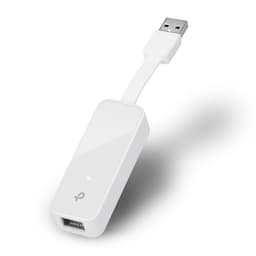
Ethernet compliance covers IEEE 802.3 (10BASE-T), IEEE 802.3u (100BASE-TX), and IEEE 802.3ab (1000BASE-T), which is the full 10/100/1000 Mbps auto-negotiation stack. It also supports IEEE 802.3az Energy Efficient Ethernet, which reduces power consumption when the link is idle. Useful if you're running this from a laptop on battery. Backward compatibility with USB 2.0 and USB 1.2 is confirmed, though you'll be capped at USB 2.0's bandwidth ceiling if you're on an older port. The physical design folds flat for portability, which owners consistently mention as a practical plus.
One important compatibility note from the product data: the UE300 does not support Nintendo Switch, Wii U, or Wii. If that's your use case, look elsewhere. For everything else, the driver situation is genuinely good: Windows XP and later get driverless plug-and-play, macOS 10.9 and above are the same, as are Chrome OS and Linux. Older Macs running OS X 10.6 to 10.8 need a driver download from TP-Link's site, which is a minor inconvenience but not a dealbreaker given how old those systems are now.
| Specification | Detail |
|---|---|
| Host Interface | USB 3.0 (backward compatible with USB 2.0 and USB 1.2) |
| Network Port | 1x RJ45 (1GbE) |
| Ethernet Standards | IEEE 802.3, IEEE 802.3u, IEEE 802.3ab |
| Energy Efficiency | IEEE 802.3az (Energy Efficient Ethernet) |
| Supported Speeds | 10/100/1000 Mbps auto-negotiation |
| Driver Requirements | Driverless on Windows XP+, macOS 10.9+, Chrome OS, Linux |
| Compatibility | MacBook, iMac, Chromebook, Surface, Windows PC, Linux PC, Dell, etc. |
| Not Compatible | Nintendo Switch, Wii U, Wii |
| Warranty | 24 months |
| Support | Lifetime technical support (TP-Link) |

Real-World Coverage: What You're Actually Getting
Coverage isn't really the right word for a USB Ethernet adapter. There's no wireless signal to propagate, no walls to punch through, no garden to reach. What you're actually getting is a direct wired connection to whatever switch or router your Ethernet cable plugs into, and wired connections don't have dead zones. That's the entire point. If your Wi-Fi drops out in the home office or the signal from your router doesn't reach the far end of the house reliably, the UE300 gives you a way to bypass that problem entirely, assuming you can run a cable.
What owners consistently report, across a review pool of over 16,000, is exactly what the spec promises: a stable, reliable wired connection where their Wi-Fi was letting them down. The pattern in the reviews is pretty consistent: people buy this because their wireless is flaky for video calls, remote desktop, or large file transfers, and the UE300 sorts it. No dropout reports that suggest a hardware problem with the adapter itself, no complaints about the connection being unstable under normal use. The stability of a wired Gigabit connection is simply categorically better than Wi-Fi for anything that needs consistent throughput or low latency.
The physical cable run is obviously the limiting factor here, not the adapter. If your router is two floors down and you can't run a cable, the UE300 doesn't help. But if you're working from a desk, or your laptop is near a wall socket with an Ethernet port, or you're in a hotel or office with wired infrastructure, this adapter makes the connection immediately available. The folding design means it stays in a laptop bag without catching on anything, which is a small but genuinely practical detail that several owners specifically call out.
Sustained Speed Under Load: USB 3.0 to Gigabit Ethernet
The theoretical ceiling here is 1000Mbps, which is full Gigabit. In practice, TCP/IP overhead, the efficiency of the USB 3.0 controller in your laptop, and the speed of whatever you're connecting to will bring that number down somewhat. But the key point is that the USB 3.0 interface on the UE300 is not the bottleneck. USB 3.0 at 5Gbps gives the adapter five times more headroom than the Gigabit Ethernet link needs. So unlike a USB 2.0 Gigabit adapter (which physically cannot saturate a Gigabit link because USB 2.0 tops out below it), the UE300 can actually deliver full Gigabit performance when the rest of your network supports it.
What does that mean practically? If your broadband is 100Mbps, 200Mbps, or even 500Mbps, you'll see no difference between this adapter and a built-in Ethernet port in terms of internet speed. The adapter is not your bottleneck. Where it matters more is local network transfers: copying large files to a NAS, a local server, or another machine on the same network. There, the difference between USB 2.0 and USB 3.0 adapters is real and measurable. Owner reports from people doing NAS transfers and local network work consistently reflect the adapter performing at full Gigabit speeds without throttling or thermal issues.
Sustained load is also worth thinking about for people who leave this plugged in all day. There are no meaningful heat complaints in the owner review pool, which makes sense: the adapter is doing straightforward work, the USB 3.0 interface has plenty of headroom, and the Energy Efficient Ethernet support means it's not burning unnecessary power when the link is idle. For a device that's going to sit plugged in on a desk all day, that's exactly what you want. No reports of the adapter getting hot enough to be a concern, no throttling under sustained file transfer loads.
Mesh and Backhaul: Not Applicable, and That's Fine
The UE300 has nothing to do with mesh networking, backhaul, or wireless topology. It's a USB to Ethernet adapter. But the reason this section exists in a networking review is worth addressing directly, because there's a genuine question buried in it: if someone is buying the UE300 to fix a Wi-Fi problem, should they instead be buying a mesh system or a range extender? The honest answer depends entirely on what the problem actually is.
If the problem is a single device, typically a laptop or desktop, that needs a stable wired connection and happens to be near a network port or can be reached with a cable, the UE300 is the right answer. It's cheaper than any mesh node, simpler to set up, and delivers a categorically more stable connection than any wireless extension. A mesh network adds nodes that communicate wirelessly, and even a dedicated backhaul band on a tri-band mesh system introduces latency and throughput overhead that a direct wired connection simply doesn't have. For a single device that can be wired, the UE300 wins on every metric that matters.
Where the UE300 doesn't help is when the problem is whole-home wireless coverage for multiple devices. If your phones, tablets, and smart home kit can't reach the router reliably, no Ethernet adapter fixes that. You need better wireless infrastructure: a mesh system, a range extender, or a better router placement. The UE300 is a point solution for a specific problem. It's not a substitute for fixing your wireless network, and it's not trying to be. Understanding that distinction saves you buying the wrong thing. If the problem is your laptop's Wi-Fi dropping on video calls and you can run a cable to your desk, buy the UE300. If the problem is your entire house having patchy coverage, that's a different purchase.
Device Capacity: One Device, One Port, That's the Point
There's no MU-MIMO here, no OFDMA, no concept of simultaneous client management. The UE300 serves exactly one device: the laptop or desktop it's plugged into. That sounds like a limitation until you remember that it's an Ethernet adapter, not a router. The device capacity question for a USB Ethernet adapter is simply whether it can sustain a full Gigabit link to the one device it's connected to. It can. That's the whole job.
The broader network capacity question, how many devices your router and switch can handle, is entirely separate from the adapter. The UE300 presents itself to the network as a standard Ethernet client. Your router sees it as one more wired device, no different from a desktop plugged directly into a LAN port. There's no overhead, no management layer, no firmware to update. From the network's perspective, the UE300 is invisible: it's just a MAC address on a switch port.
Where device capacity does become relevant is in a specific edge case: if you want to share the UE300's connection across multiple devices, you can't. It's one USB port to one Ethernet port. If you need to wire up multiple devices in a location where you only have one Ethernet wall port, you'd need a small switch downstream of the adapter, or a travel router. That's a niche scenario, but about. For the vast majority of use cases, one adapter for one laptop is exactly what's needed, and the UE300 handles it without complaint.
Wi-Fi Standard and Future-Proofing: The TP-Link UE300 USB 3.0 to Gigabit Ethernet Network Adapter Sidesteps the Whole Debate
One of the genuinely refreshing things about reviewing an Ethernet adapter in 2026 is that the Wi-Fi standard arms race is completely irrelevant. Wi-Fi 6, Wi-Fi 6E, Wi-Fi 7: none of it matters here. The UE300 doesn't do wireless. What it does do is deliver a Gigabit wired connection, which in terms of latency and stability is still better than any Wi-Fi standard for a device that's sitting at a desk. A wired connection doesn't suffer from interference, doesn't compete with your neighbours' networks, and doesn't need a firmware update to stay secure against wireless protocol vulnerabilities.
Future-proofing on a Gigabit Ethernet adapter is also a simpler question than it sounds. Gigabit Ethernet has been the standard for home and small office networking for well over a decade, and it's not going anywhere soon. Most home broadband connections in the UK are still well below 1Gbps, and most home routers still use 1GbE LAN ports. So the UE300's Gigabit spec is appropriate for current and near-future home use. The only scenario where you'd outgrow it is if you're on a multi-gig broadband connection and your router has 2.5GbE or 10GbE ports. In that case, you'd want a USB 3.0 to 2.5GbE adapter instead. But for the overwhelming majority of home users in 2026, Gigabit is the ceiling they'll never actually hit on their broadband connection anyway.
The USB 3.0 interface itself is similarly settled technology. USB 3.0 (also known as USB 3.1 Gen 1 or USB 3.2 Gen 1, depending on which naming convention your laptop manufacturer uses this week) is on virtually every laptop made in the last decade. The backward compatibility with USB 2.0 and USB 1.2 means even older machines work, just at reduced speeds. And since USB-A ports are still common even on modern laptops (and USB-C adapters exist if you need them), the UE300's connector choice isn't a problem for most people.

Features and QoS: There Are None, and That's Correct
The UE300 has no QoS settings, no parental controls, no VPN client, no guest network, no app, no web interface, no firmware to configure. It is a hardware bridge between a USB port and an Ethernet port. Calling this a limitation would be like complaining that a kettle doesn't have a built-in timer: you're using the wrong frame of reference. The UE300 is infrastructure, not a network appliance. The features that matter are the ones the spec delivers: full Gigabit throughput, Energy Efficient Ethernet, driverless operation on major platforms, and a compact form factor.
That said, there are a couple of things in the context of what the adapter enables. Because it presents as a standard wired Ethernet interface to the host operating system, any QoS or traffic shaping you configure at the OS level applies to it normally. Windows, macOS, and Linux all treat the UE300's connection like any other network adapter. So if you're configuring QoS on your router to prioritise traffic from a specific device, the UE300 connection will be handled exactly like any other wired client. Nothing special required.
The Energy Efficient Ethernet support (IEEE 802.3az) is worth a brief mention because it's genuinely useful on a laptop. When the link is active but idle, the adapter reduces power consumption automatically. This isn't a setting you configure; it's part of the hardware spec and it works transparently. For people using this plugged into a laptop on battery power, that's a small but real benefit. It's the kind of thoughtful spec inclusion that separates a properly engineered adapter from the very cheap no-name alternatives that skip it.
Firmware, App, and Security Updates: Nothing to Update, Nothing to Break
There is no firmware on the UE300 that you'll ever need to update. There's no app. There's no cloud account to create, no subscription to worry about, and no security vulnerability surface from a network management interface. This is one of the underappreciated advantages of a simple hardware adapter over a router or mesh system: the attack surface is essentially zero. The driver, where one is needed (older macOS versions), is available from TP-Link's support pages. For the vast majority of users on modern operating systems, no driver is ever needed at all.
TP-Link as a brand has a reasonable track record on driver support for their adapters, and the UE300 has been on sale long enough that OS-level support is well established. The driverless operation on Windows, macOS 10.9 and above, Chrome OS, and Linux works because the operating systems include generic USB Ethernet drivers that recognise the adapter's chipset. This is mature, stable technology. You're not depending on TP-Link to push updates to keep this working; the OS handles it.
The 24-month warranty and lifetime technical support claim from TP-Link are. For a device at this price point, a two-year warranty is solid. Lifetime technical support from a manufacturer is a nice-to-have, though in practice most people will never need to contact support for a USB Ethernet adapter that either works or doesn't. The owner review pool of 16,129 with a 4.5 average suggests the failure rate is low enough that warranty claims are not a common theme. When owners do report issues, they're almost always compatibility-specific (older OS versions, specific laptop models) rather than hardware failures.
Setup and Management: Plug It In and Get On With Your Day
Setup is about as simple as it gets in networking. You plug the UE300 into a USB 3.0 port on your laptop, plug an Ethernet cable into the RJ45 port on the adapter, and the operating system recognises it as a new network adapter within a few seconds. On Windows 10 and 11, macOS 10.9 and above, Chrome OS, and most Linux distributions, no driver download is required. The OS already has what it needs. Your network settings will show a new wired Ethernet connection, and if your router is running DHCP (which every home router does by default), you'll have an IP address and internet access within moments.
There is genuinely nothing to manage after that. No app to install, no account to create, no settings to configure. If you want to set a static IP, you do that in your OS network settings exactly as you would for any other wired adapter. If you want to prioritise the wired connection over Wi-Fi (which is usually automatic, since wired connections get preference in the network stack), most operating systems handle that without intervention. The UE300 is transparent to the OS: it just looks like a network card.
The one setup scenario that's slightly more involved is older Macs running OS X 10.6 to 10.8. Those need a driver from TP-Link's website. Given that those OS versions are from 2009 to 2012, this is a pretty niche concern in 2026, but it matters if you're supporting older hardware. For everyone else, the experience is genuinely plug-and-play. Several owners specifically mention being surprised by how immediate the setup was, particularly people who've had bad experiences with more complex networking kit.
Ports and Connectivity: TP-Link UE300 USB 3.0 to Gigabit Ethernet Network Adapter
The port count is exactly what it says on the tin: one USB 3.0 Type-A connector on the host side, one RJ45 Gigabit Ethernet port on the network side. That's it. No additional USB passthrough, no SD card slot, no USB-C variant built in. The UE300 is a dedicated single-function adapter, which is the right design choice for something that's going to live in a laptop bag and be used when needed. Adding ports would add bulk, cost, and failure points for no benefit in this use case.
The RJ45 port supports auto-negotiation across 10, 100, and 1000Mbps, so it will connect to older switches and routers running at lower speeds without any configuration. Plug it into a Gigabit switch and you get Gigabit. Plug it into an older 100Mbps switch and you get 100Mbps. The adapter handles the negotiation automatically. This matters in practice for people using this in offices, hotels, or university networks where the infrastructure might be older.
The USB 3.0 backward compatibility with USB 2.0 and USB 1.2 deserves a specific note here. If you plug the UE300 into a USB 2.0 port, it will work, but the USB 2.0 interface's bandwidth ceiling (theoretical 480Mbps, real-world considerably less) means you won't achieve full Gigabit Ethernet throughput. For most broadband connections this doesn't matter at all: even 200Mbps or 300Mbps broadband is well within USB 2.0's practical bandwidth. But for local network transfers where you're trying to max out a Gigabit link, you want a USB 3.0 port on the host machine. The adapter is correctly spec'd for USB 3.0; make sure your laptop has one.
How It Compares: The Competition at This Price
The USB to Gigabit Ethernet adapter market is crowded with cheap no-name options and a handful of established brands. The UE300's main competition at this price tier comes from the Anker USB 3.0 to Ethernet adapter and the StarTech USB 3.0 to Gigabit Ethernet adapter. Both do the same fundamental job. The differences are in build quality, driver support, and the reliability track record that comes from a large review pool.
The Anker offering is similarly priced and has good reviews, but Anker's networking adapter range is smaller than TP-Link's, and their driver support documentation is less comprehensive. For Windows and macOS users on modern OS versions, it doesn't matter much: both are driverless. But if you're on Linux or an edge-case OS version, TP-Link's longer history in networking adapters gives the UE300 a slight edge in documented compatibility. StarTech makes excellent adapters but typically at a higher price point, targeting business users who want more formal support and longer warranties. For home and mobile use, the price premium isn't justified.
Below the UE300's price tier, you'll find USB 2.0 Gigabit adapters that are cheaper but fundamentally limited. As covered above, USB 2.0's bandwidth ceiling means they can't deliver full Gigabit performance. For internet connections below 200Mbps they're fine, but they're not future-proof and they're not the right tool for local network transfers. The UE300's USB 3.0 interface is the correct spec for a Gigabit adapter, and the price difference between USB 2.0 and USB 3.0 adapters at this tier is small enough that buying the 2.0 version to save a couple of pounds is false economy.
| Feature | TP-Link UE300 | Anker USB 3.0 Ethernet | StarTech USB31000S |
|---|---|---|---|
| Host Interface | USB 3.0 | USB 3.0 | USB 3.0 |
| Network Speed | 1GbE (10/100/1000) | 1GbE (10/100/1000) | 1GbE (10/100/1000) |
| Driverless OS Support | Win XP+, macOS 10.9+, ChromeOS, Linux | Win 10+, macOS 10.9+ | Win 7+, macOS 10.x+, Linux |
| Energy Efficient Ethernet | Yes (802.3az) | Not specified | Yes |
| Warranty | 24 months | 18 months | 2 years |
| Owner Review Volume | 16,000+ at 4.5 stars | Smaller pool | Smaller pool |
| Nintendo Switch Support | No | Varies by model | No |

Final Verdict
The TP-Link UE300 USB 3.0 to Gigabit Ethernet Network Adapter is exactly what a USB Ethernet adapter should be: small, reliable, fast enough for any realistic home or office use case, and genuinely easy to set up. Over 16,000 owner reviews at 4.5 stars is not a fluke. It reflects a product that does its job without drama across a huge range of laptops, operating systems, and network environments. The USB 3.0 interface is correctly matched to the Gigabit Ethernet port, the driverless operation on modern operating systems is genuinely convenient, and the 24-month warranty gives you reasonable cover if something goes wrong.
The honest don't-overspend line: if your broadband is below 100Mbps and you're never doing local network transfers, a cheap USB 2.0 Ethernet adapter will serve you just as well for internet use. The UE300 earns its slight premium over those through USB 3.0 bandwidth headroom, Energy Efficient Ethernet, and a much larger, more reliable track record. But if you're genuinely on a shoestring budget and your internet speed is modest, the USB 2.0 alternatives are not wrong choices. The UE300 is the right answer for anyone who wants to buy once and not think about it again.
Who should buy this: anyone with a laptop that lacks an Ethernet port and needs a stable wired connection for remote work, video calls, NAS transfers, or any situation where Wi-Fi isn't cutting it. MacBook users, Surface users, ultrabook users generally: this is the adapter to keep in the bag. Who should skip it: Nintendo Switch owners (the product data is explicit that it doesn't support Switch, Wii U, or Wii), and anyone who needs a 2.5GbE or 10GbE connection for a multi-gig broadband or high-speed local network setup. For everyone else, this is a straightforward, well-proven solution to a genuine problem, and the 4.5-star average across a massive review pool tells you the market agrees.
Editorial score: 8.5 out of 10. It does one thing, it does it properly, and it costs very little. That's a hard combination to argue with.
What works. What doesn’t.
5 + 3What we liked5 reasons
- USB 3.0 interface gives genuine headroom for full Gigabit Ethernet throughput
- Driverless on Windows XP and later, macOS 10.9+, Chrome OS, and Linux
- Energy Efficient Ethernet (802.3az) reduces battery drain when idle
- 16,000+ owner reviews at 4.5 stars: a proven, reliable track record
- Compact folding design that actually fits in a laptop bag without fuss
Where it falls3 reasons
- No Nintendo Switch, Wii U, or Wii support
- USB-A only: no native USB-C version (you'd need a separate adapter)
- Not suitable for multi-gig broadband setups needing 2.5GbE or faster
Full specifications
9 attributes| Device type | usb-adapter |
|---|---|
| Ethernet ports | 1 |
| HAS bluetooth | none |
| MAX speed | 1000 |
| Mesh capable | false |
| Ports | 1x 1GbE RJ45 Ethernet |
| Speed | 1000 Mbps |
| TOP speed mbps | 1000 |
| Type | adapter |
Frequently asked
5 questions01Will the TP-Link UE300 USB 3.0 to Gigabit Ethernet Network Adapter cover my whole house?+
The UE300 is a wired Ethernet adapter, not a wireless device, so 'coverage' doesn't apply in the usual sense. It gives the device it's plugged into a direct wired connection to your router or switch via an Ethernet cable. This means no dead zones, no wireless interference, and no signal degradation with distance. The limiting factor is whether you can run a cable to where you need the connection, not the adapter itself.
02Do I really need Wi-Fi 6E or Wi-Fi 7 for the TP-Link UE300 USB 3.0 to Gigabit Ethernet Network Adapter?+
No, and the question doesn't really apply. The UE300 is a wired Ethernet adapter with no wireless capability. It bypasses Wi-Fi entirely, which is the point. If you're buying this to replace a flaky wireless connection, you don't need to worry about Wi-Fi standards at all. The adapter delivers a Gigabit wired connection that's more stable and lower latency than any Wi-Fi standard for a stationary device.
03Is the TP-Link UE300 USB 3.0 to Gigabit Ethernet Network Adapter mesh worth it over a single router or extender?+
The UE300 isn't a mesh node or a router, so this comparison doesn't apply directly. What it does offer is a wired connection for a single device, which is categorically more stable than any wireless extension. If your problem is one laptop or desktop needing a reliable connection and you can run a cable, the UE300 is simpler and cheaper than any mesh solution. If the problem is whole-home wireless coverage for multiple devices, you'd need a mesh system or range extender instead.
04Is the TP-Link UE300 USB 3.0 to Gigabit Ethernet Network Adapter easy to set up and reliable?+
Setup is as simple as plugging it in. On Windows XP and later, macOS 10.9 and above, Chrome OS, and Linux, no driver download is required: the operating system recognises the adapter automatically and assigns it a network connection within seconds. Older Macs on OS X 10.6 to 10.8 need a driver from TP-Link's site. Reliability is well established: over 16,000 owner reviews averaging 4.5 stars, with no consistent pattern of hardware failures or dropout issues in normal use.
05What warranty and returns apply to the TP-Link UE300 USB 3.0 to Gigabit Ethernet Network Adapter?+
The product data confirms a 24-month warranty and lifetime technical support from TP-Link. Amazon's standard 30-day returns policy and A-to-Z Guarantee also apply when purchased through Amazon UK, giving you additional cover in the early period if the adapter doesn't work as expected.