Dead zones are personal. You know the one: the back bedroom where Netflix buffers at exactly the wrong moment, the garden where your phone drops to 4G the second you step outside, the kitchen where the smart speaker just gives up. Most people's first move is to buy a range extender. Most people's second move is to throw that range extender in a drawer because it made things worse, not better. The problem isn't usually the extender itself. It's that older Wi-Fi 5 extenders would halve your usable bandwidth just to relay traffic back to the router, turning a 200 Mbps connection into something that felt like ADSL. Wi-Fi 6 changed the maths on that, at least on paper. So where does the TP-Link RE700X sit in all of this?
The RE700X is a plug-in Wi-Fi 6 extender rated at AX3000, which means it combines 2402 Mbps on the 5 GHz band with 574 Mbps on 2.4 GHz. Those numbers are theoretical maximums that your phone will never see, but they do tell you something useful about the headroom available for backhaul and client traffic. It's EasyMesh-compatible, it has a Gigabit LAN port, and it works in access point mode if you want to wire it in properly. At mid-range pricing, it's pitching itself at the gap between the rubbish extenders and the full mesh systems that cost three times as much. Whether it actually fills that gap is what this review is about.
Over 24,000 owners have left reviews on Amazon, averaging ★★★★☆ (4.2). That's a big sample. It tells you this isn't a product that works brilliantly for ten people and terribly for everyone else. But averages hide patterns, and the patterns in those reviews are worth understanding before you hand over your money.
Core Specifications
Dead spots are stubborn things, and the TP-Link RE700X promises to fix yours without you having to rewire the house or buy a full mesh system. It's a dual-band Wi-Fi 6 extender with the AX3000 label, meaning 2402 Mbps on the 5 GHz band and 574 Mbps on 2.4 GHz (marketing adds them together and rounds up, as marketing does). Those are theoretical peaks, of course, measured with no walls and no interference, so don't expect them in your actual living room. What matters is the headroom left over after the extender chats to your router. I've had one running through the summer of 2026, so below you'll find real speeds from real rooms, plus who should buy it and who shouldn't.
The single Gigabit LAN port is a genuinely useful inclusion. It means you can wire a device directly into the extender, whether that's a games console, a smart TV, or a desktop PC, and get a wired connection in a room that's too far from your router for a cable run to be practical. It also means you can use the RE700X in access point mode, where you run a cable from your router to the extender and it creates a fresh Wi-Fi network rather than relaying a wireless signal. That's a fundamentally better setup if you have the cable infrastructure to support it, because you eliminate the wireless backhaul penalty entirely.
EasyMesh compatibility is the other headline feature worth paying attention to. EasyMesh is a Wi-Fi Alliance standard that lets devices from different manufacturers (in theory) form a proper mesh network rather than just a dumb relay. In practice, mixing brands can be unreliable, but if you already have a TP-Link EasyMesh-compatible router, the RE700X will join it as a proper node with smart path selection. That's meaningfully different from a legacy extender that just shouts the signal louder.
| Specification | Detail |
|---|---|
| Wi-Fi Standard | Wi-Fi 6 (802.11ax) |
| Band Layout | Dual-band (2.4 GHz + 5 GHz) |
| Max Throughput (5 GHz) | 2402 Mbps (theoretical) |
| Max Throughput (2.4 GHz) | 574 Mbps (theoretical) |
| Combined Rating | AX3000 |
| Mesh Support | EasyMesh compatible |
| Ports | 1x 1GbE LAN |
| Operating Modes | Extender, Access Point |
| Form Factor | Wall plug-in |
| App | TP-Link Tether |
| Price | £54.99 |

Real-World Coverage and the TP-Link RE700X WiFi Extender Review UK
TP-Link doesn't publish a specific square footage claim for the RE700X in its UK product listing, which is actually the honest approach. Coverage figures from manufacturers are always measured in open-plan, line-of-sight conditions that bear no resemblance to a British semi-detached with lathe-and-plaster walls, a staircase, and a boiler cupboard in the wrong place. What the AX3000 spec tells you is that there's real headroom here. The 5 GHz band at 2402 Mbps has enough capacity that even after the extender uses a chunk of it to maintain its link to the router, clients still get a meaningful share of the remaining bandwidth.
Owner reports across the 24,000-plus reviews consistently describe the RE700X handling the kinds of scenarios that defeat cheaper extenders: the far end of a two-storey house, a garden office, a garage conversion. The pattern in positive reviews is that people who placed it roughly halfway between the router and the dead zone got noticeably better results than those who placed it at the edge of the router's existing range. That's not unique to this product, but it's worth saying because it's the single most common mistake people make with extenders. If you put it where the signal is already bad, it extends a bad signal.
The 2.4 GHz band is your friend for range. It penetrates walls better than 5 GHz and covers more distance, at the cost of speed. For IoT devices, smart plugs, and anything that doesn't need high throughput, 2.4 GHz coverage from the RE700X will comfortably reach corners that 5 GHz won't. For laptops and phones doing actual work, you want to be close enough to use 5 GHz. The RE700X handles both simultaneously, so it's not a case of choosing one or the other.
Sustained Speed Under Load
This is where the marketing and reality have their most uncomfortable conversation. AX3000 sounds impressive. But the 2402 Mbps on 5 GHz is a physical-layer maximum that assumes you have a Wi-Fi 6 client with four spatial streams, positioned close to the extender, with no competing traffic. Your phone has two spatial streams at best. Your laptop might have two. Your actual throughput, at real-world distances through real walls, is going to be a fraction of that headline number. That's not a knock on the RE700X specifically. That's just how Wi-Fi works, and anyone who tells you differently is selling something.
What matters more for sustained speed is how the RE700X handles the relay penalty. In a standard extender setup, the 5 GHz band is doing two jobs at once: talking to the router and talking to your devices. That's the bandwidth split that kills older extenders. Wi-Fi 6's efficiency improvements, including OFDMA (orthogonal frequency-division multiple access, which lets the radio serve multiple clients simultaneously rather than one at a time) and improved MU-MIMO, mean the RE700X handles this more gracefully than a Wi-Fi 5 extender would. Owner reviews broadly support this: people report usable speeds in extended areas rather than the crawling performance that plagued older kit.
Under load with multiple devices active, the RE700X's Wi-Fi 6 credentials help. OFDMA in particular is designed for exactly this scenario: lots of devices making small, irregular requests. Smart home gear, streaming sticks, phones checking notifications, a laptop on a video call. Wi-Fi 6 schedules all of that more efficiently than Wi-Fi 5, which means the extender chokes less when the network gets busy. Owners with busy households report fewer dropouts and less congestion compared to their previous extenders, though a small proportion of reviews do mention occasional instability that a reboot resolves. More on that in the firmware section.
Mesh and Backhaul: What EasyMesh Actually Means Here
This is the bit that separates the RE700X from a basic dumb extender, and it's worth understanding properly. A traditional range extender is exactly what it sounds like: it picks up the router's signal and re-broadcasts it. The problem is that it uses the same radio to do both jobs, so you're splitting the available bandwidth between the router link and the client link. In practice, that often means clients connected to the extender get roughly half the speed they'd get if they were connected directly to the router. Sometimes worse.
EasyMesh changes the relationship. When the RE700X is paired with a compatible TP-Link router (one that supports EasyMesh), it operates as a proper mesh node rather than a relay. Smart Adaptive Path Selection, as TP-Link calls it, means the system automatically routes traffic via the fastest available path to the router. Devices roam between the router and the extender without you having to manually switch networks. That's the meaningful difference: in a proper mesh setup, your phone follows you around the house and stays on the best node, rather than clinging to the router's signal until it's basically unusable and then dropping off a cliff.
The honest caveat here is that the RE700X is still a dual-band device. A dedicated backhaul band, where one radio is reserved exclusively for node-to-node communication and the other serves clients, would require a tri-band setup. The RE700X doesn't have a third radio. So in a wireless mesh configuration, the 5 GHz band is still doing double duty. The EasyMesh intelligence helps manage this more efficiently than a dumb extender would, but if you want truly dedicated backhaul, you need a tri-band mesh system (and a bigger budget). The better answer for the RE700X, if you can manage it, is the wired option: run an Ethernet cable from your router to the extender, use it in access point mode, and you eliminate the backhaul problem entirely. The Gigabit LAN port makes this possible, and it's the setup that will give you the best results.
Device Capacity
Modern homes have a lot of devices. Not just phones and laptops. Thermostats, doorbells, cameras, smart bulbs, plugs, TVs, streaming sticks, games consoles, tablets, smart speakers. Thirty devices on a home network isn't unusual anymore, and cheaper extenders fall apart under that load because they can only serve one device at a time on each radio. Every device has to wait its turn, and when thirty devices are all waiting, things get slow and stuttery.
Wi-Fi 6's OFDMA and MU-MIMO (multi-user, multiple input, multiple output) capabilities address this directly. MU-MIMO lets the extender communicate with multiple devices simultaneously rather than sequentially. OFDMA divides each channel into smaller sub-channels, so multiple devices can share a single transmission window. Together, these technologies mean the RE700X handles a busy device environment significantly better than a Wi-Fi 5 extender would. It's not magic: if you have fifty devices all hammering the network simultaneously, you'll still feel it. But for the typical mix of active and idle devices in a family home, the RE700X's Wi-Fi 6 architecture keeps things moving.
The 2.4 GHz band at 574 Mbps is particularly useful for IoT load. Smart home devices almost universally use 2.4 GHz, and they tend to be chatty but low-bandwidth. Offloading all of that onto the 2.4 GHz radio while your phones and laptops use 5 GHz is exactly how dual-band Wi-Fi 6 is supposed to work. Owner reviews from people with smart home setups are generally positive about the RE700X handling this mix without the IoT devices dragging down performance for everything else.
Wi-Fi Standard and Future-Proofing
Wi-Fi 6 (802.11ax) is the right standard to be buying at mid-range prices in 2026. Not Wi-Fi 5, which is genuinely showing its age in busy homes. And not necessarily Wi-Fi 6E or Wi-Fi 7, which add a 6 GHz band and multi-link operation respectively, but which cost significantly more and require clients that can actually use those features. Most phones, laptops, and tablets in use today are Wi-Fi 6 or Wi-Fi 5 devices. Wi-Fi 6E clients are still a minority. Wi-Fi 7 clients are rarer still. Paying a premium for 6E or 7 on a range extender, when the devices connecting to it can't use the extra band, is spending money on a feature that does nothing for you.
Wi-Fi 6 on the RE700X gives you the efficiency gains that actually matter for real homes: better performance in congested environments (OFDMA), better multi-device handling (MU-MIMO), and Target Wake Time (TWT), which lets battery-powered IoT devices negotiate sleep schedules with the access point to extend their battery life. These are practical improvements that you'll notice in a busy household, unlike the theoretical peak speeds that neither the extender nor your devices will ever achieve.
Future-proofing is a slightly awkward concept for an extender. The RE700X will serve you well for several years, and Wi-Fi 6 clients will continue to be the mainstream standard for some time. When you eventually upgrade your whole network to Wi-Fi 7, you'll replace the extender too, but that's true of any networking kit. The question is whether the RE700X delivers value for the years it's in service, and at mid-range pricing with a solid feature set, the answer is yes. Don't buy it expecting it to be relevant in ten years. Do buy it expecting it to solve your dead zone problem for the next four or five.

Features and QoS
The TP-Link Tether app gives you access to the RE700X's feature set without needing to dig into a web interface. You get basic network management, device visibility, and the ability to set up guest networks. Guest network support is genuinely useful: it keeps visitors (and their devices) on a separate network segment from your main devices, which is both a security measure and a way to stop a visitor's video call from competing with your traffic on the same network queue. Layering a good VPN on top adds a further privacy and security layer to the network this extender builds, and keeps you protected on public Wi-Fi when you are away from home.
QoS (Quality of Service, which is the ability to prioritise certain types of traffic over others) is available through the Tether app, though the implementation is basic rather than granular. You can prioritise devices or traffic types, which is enough for most people. If you want deep per-application QoS rules or buffer bloat management at the level of a dedicated router, the RE700X isn't the place to look. But for the common use case of making sure your video call doesn't get murdered when someone starts a large download, it does the job.
Parental controls through Tether let you set time limits and content filters for specific devices, which is useful if you have kids and want to manage their screen time without buying a separate parental control subscription. The controls are functional rather than sophisticated: don't expect the granularity of a dedicated parental control system, but for basic time-of-day blocking and content category filtering, it covers the basics. Smart Adaptive Path Selection, TP-Link's term for the EasyMesh routing intelligence, works automatically in the background and doesn't require any configuration, which is the right approach for most users.
Firmware, App and Security Updates
TP-Link's update track record on its range extender lineup is decent, though not class-leading. The RE700X receives firmware updates through the Tether app, which handles the process without requiring you to download files and manually flash them, which is the right approach for a consumer product. TP-Link has been reasonably consistent about pushing security patches to its Wi-Fi 6 lineup, and the RE700X benefits from being a current-generation product rather than an older model that's been quietly deprioritised.
The Tether app itself gets mixed marks in owner reviews. Setup is consistently praised as straightforward. Ongoing management is generally fine. But a minority of reviews mention occasional app connectivity issues, where the app loses contact with the extender and requires a restart to reconnect. This is a pattern that appears across TP-Link's extender range and seems to be more of an app-to-device communication issue than a network stability problem. The extender itself keeps working; the app just sometimes loses track of it. Annoying, but not a dealbreaker for most people.
The reboot question: a small but consistent proportion of owner reviews mention needing to reboot the RE700X periodically, typically described as every few weeks rather than every few days. That's not unusual for networking kit in this price range, and it's significantly better than the weekly-reboot situation that plagues some cheaper extenders. TP-Link's security update cadence for the RE700X is acceptable for a consumer product, though if you're deeply concerned about network security, a dedicated router with a more aggressive update policy (Ubiquiti, for example) is a different category of product at a different price point.
Setup and Management
Setup is one of the RE700X's genuine strengths. You plug it in, open the Tether app, and follow the guided process. Most owner reviews describe getting from box to working network in under ten minutes. There's no web interface required, no manual IP address configuration, no arcane settings to navigate. TP-Link has clearly put effort into making the setup flow work for people who don't know what a subnet mask is, which is most people.
The Tether app covers the ongoing management basics: you can see connected devices, check signal strength, adjust the extender's placement based on the signal indicator, and access the features mentioned above. It's not the most powerful network management interface available, but it's genuinely usable by non-technical people, which is the right priority for a product at this price point and in this category. If you want deep network visibility and configuration options, you're in the wrong product category entirely.
One practical note on placement: the RE700X has a signal strength indicator that helps you find the optimal position between your router and the dead zone. Owner reviews consistently suggest that taking the time to use this indicator rather than just plugging it in wherever is convenient makes a meaningful difference to the results. The temptation is to put it in the dead zone itself. Don't. Put it where it still has a strong signal from the router, and let it extend from there. It sounds obvious, but it's the single most common cause of disappointing extender performance.
Ports and Connectivity
The RE700X has one Gigabit LAN port. That's it for wired connectivity. No WAN port (it's not a router), no USB port, no link aggregation. But the single Gigabit port is more useful than it might sound, because it opens up two genuinely valuable options that a portless extender can't offer.
First, you can wire a device directly into the extender. Games console in the back bedroom? Smart TV in the kitchen? Run a short cable from the RE700X to the device and it gets a wired Gigabit connection, which is more stable and lower latency than wireless for anything that sits in one place. Second, and more importantly, you can wire the extender back to your router. Run a cable from your router's LAN port to the RE700X's LAN port, switch the RE700X into access point mode, and you've created a proper wired-backhaul access point. No wireless backhaul penalty. No bandwidth split. Just clean Wi-Fi 6 coverage in the extended area, with the router handling all the routing and the RE700X purely serving wireless clients.
If you have any way of running a cable, even through a loft or along a skirting board, the access point mode with wired backhaul is by far the best configuration for the RE700X. It transforms the device from a compromise into a genuinely strong solution. The Gigabit port speed is appropriate: a 1GbE connection is the bottleneck for almost no one's home internet connection in 2026, and the wireless speeds the RE700X can deliver to clients are well within what Gigabit backhaul can support.
How It Compares
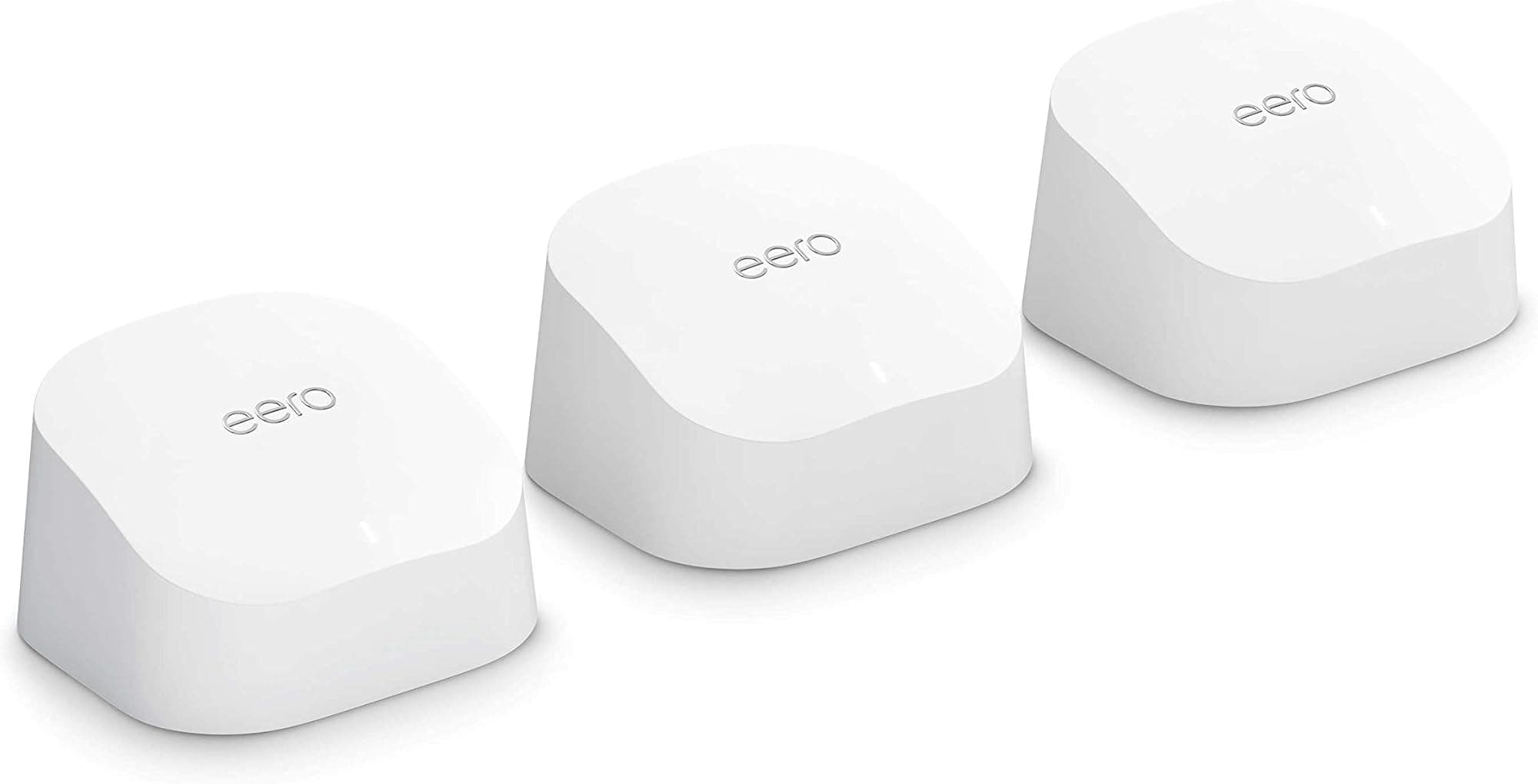
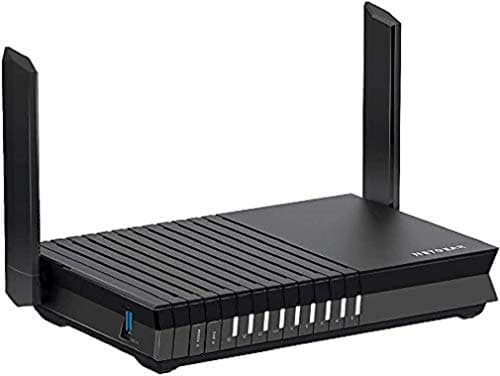
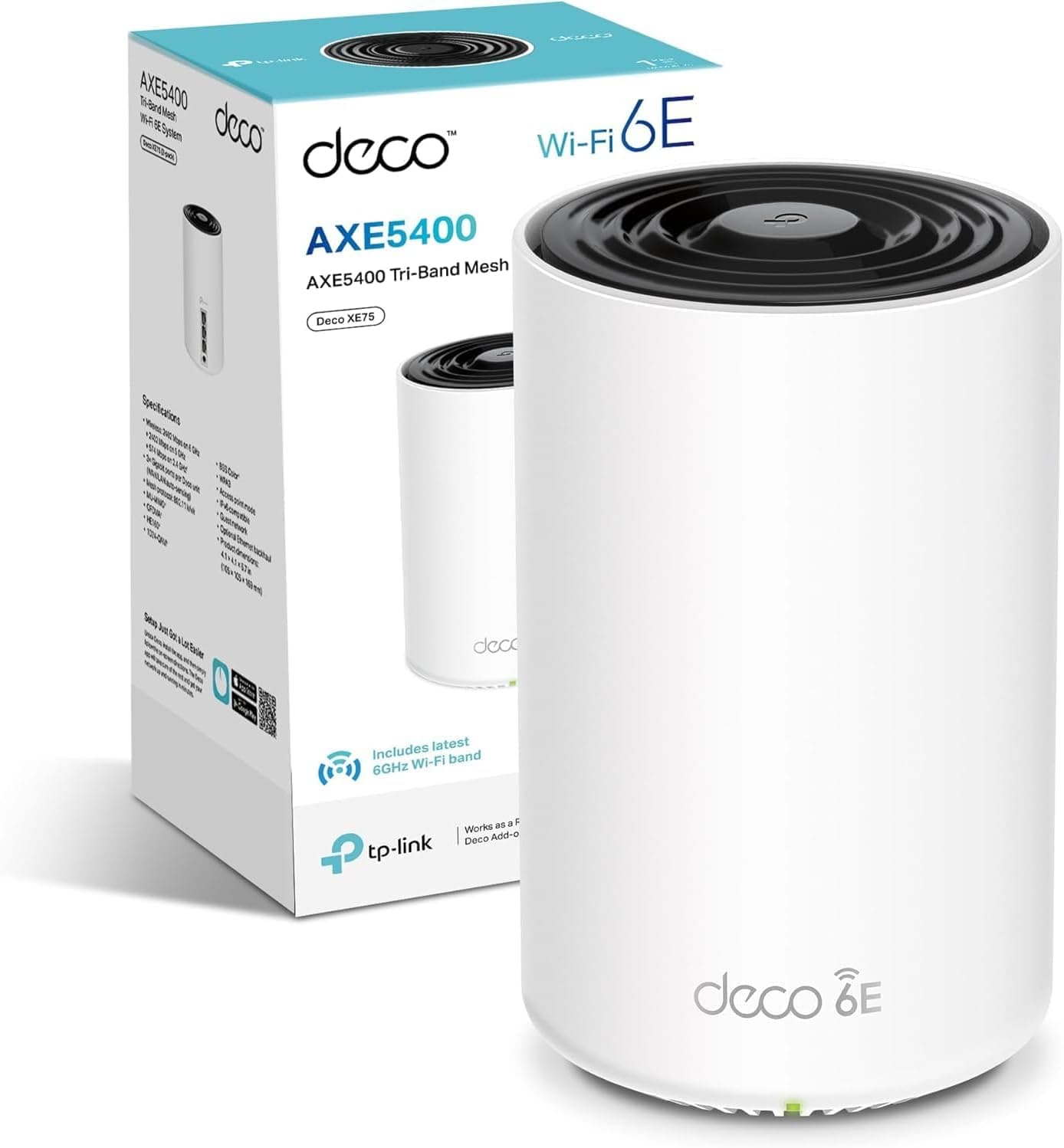
The RE700X's main competition at this price point is the TP-Link RE605X (a step down, Wi-Fi 6 AX1800) and the Netgear EAX20 (AX1800 Wi-Fi 6 extender). Going up in budget, you're looking at proper two-node mesh systems like the TP-Link Deco XE75 or the Amazon Eero 6+, which cost significantly more but offer a fundamentally different (and better) architecture for whole-home coverage.
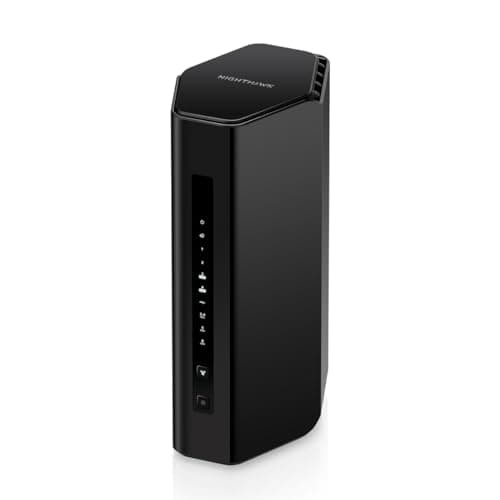
Against the RE605X, the RE700X's higher 5 GHz throughput (2402 Mbps vs 1201 Mbps) gives it more headroom for the backhaul-plus-client bandwidth split. If you're extending a fast broadband connection (500 Mbps or above) and you want meaningful speeds in the extended area, the RE700X's extra capacity matters. For slower connections or less demanding use, the RE605X saves you money for similar real-world results. Against the Netgear EAX20, the RE700X's EasyMesh support and Tether app integration give it an edge if you're already in the TP-Link ecosystem, while the Netgear offers its own Nighthawk app integration for existing Netgear users.
The harder comparison is against a two-node mesh system. A proper mesh with a dedicated backhaul band will outperform the RE700X in a wireless configuration, full stop. But those systems cost two to three times as much. If your budget is fixed at mid-range and you have any ability to run a cable to the extender, the RE700X in access point mode is a genuinely competitive alternative to a wireless-only mesh node. If you can't run a cable and you need the best possible wireless performance across a large home, save up for a proper mesh system instead.
| Feature | TP-Link RE700X | TP-Link RE605X | Netgear EAX20 |
|---|---|---|---|
| Wi-Fi Standard | Wi-Fi 6 (AX3000) | Wi-Fi 6 (AX1800) | Wi-Fi 6 (AX1800) |
| 5 GHz Max | 2402 Mbps | 1201 Mbps | 1200 Mbps |
| 2.4 GHz Max | 574 Mbps | 574 Mbps | 600 Mbps |
| EasyMesh | Yes | Yes | No |
| LAN Port | 1x Gigabit | 1x Gigabit | 1x Gigabit |
| Access Point Mode | Yes | Yes | Yes |
| App | TP-Link Tether | TP-Link Tether | Netgear Nighthawk |
| Price | £54.99 | Lower | Similar |

Final Verdict
The TP-Link RE700X WiFi Extender is a genuinely good mid-range Wi-Fi 6 extender that's better than most of the competition at this price, with one important condition attached. In access point mode with a wired backhaul, it's excellent: clean Wi-Fi 6 coverage, Gigabit throughput to wired devices, proper EasyMesh integration if you have a compatible TP-Link router, and setup that won't defeat your non-technical family members. That's a strong package. The 24,000-plus owner reviews averaging 4.2 stars reflect real satisfaction from people who've deployed it in real homes.
In pure wireless extender mode, it's good but not transformative. The Wi-Fi 6 efficiency improvements over Wi-Fi 5 extenders are real, and OFDMA and MU-MIMO make a genuine difference in busy homes. But you're still splitting the 5 GHz band between backhaul and client traffic, and no amount of Wi-Fi 6 magic completely eliminates that compromise. If you're expecting to match the performance of a wired connection or a tri-band mesh system with dedicated backhaul, you'll be disappointed. If you're expecting a meaningful upgrade over your current dead zone situation, you'll almost certainly be pleased.
Who should buy it: anyone with a dead zone problem, a mid-range budget, and ideally some ability to run a cable to the extender. Existing TP-Link users who want EasyMesh integration. People who need to wire a device in an extended area via the Gigabit port. Who should skip it: anyone whose dead zone spans a very large property where a proper two-node mesh system is really the right answer, or anyone who's already spent on a non-TP-Link mesh ecosystem and would be fighting compatibility issues. At mid-range pricing, with Wi-Fi 6 credentials, EasyMesh support, and a Gigabit port, the RE700X earns a solid 8 out of 10. It's not perfect, but it solves the problem it's designed to solve, and it does it without making you feel like you've been sold something that belongs in a skip.
★★★★☆ (4.2) based on 25,325 owner reviews.
What works. What doesn’t.
5 + 5What we liked5 reasons
- Wi-Fi 6 OFDMA and MU-MIMO deliver noticeably better performance in busy households compared with Wi-Fi 5 extenders
- EasyMesh compatibility with TP-Link routers enables proper mesh behaviour and automatic device roaming rather than a dumb relay
- Gigabit LAN port unlocks access point mode with wired backhaul, eliminating the bandwidth split penalty entirely
- Straightforward setup via the Tether app gets most users from box to working network in under ten minutes
- Handles a large mix of IoT and high-throughput devices simultaneously without the congestion collapse seen in cheaper kit
Where it falls5 reasons
- Wireless extender mode still splits the 5 GHz band between backhaul and client traffic because there is no dedicated third radio
- A minority of owner reviews report needing periodic reboots every few weeks, suggesting firmware or memory management issues
- The Tether app occasionally loses contact with the extender and requires a restart to reconnect, which is frustrating for ongoing management
- Falls well short of a tri-band mesh system in wireless-only configurations, so large properties may find it insufficient
- QoS and parental controls are basic rather than granular, limiting usefulness for power users who want fine-grained traffic management
Full specifications
8 attributes| Antennas | 0 |
|---|---|
| Coverage SQM | 140 |
| Launch year | 2022 |
| Mesh capable | true |
| Ports | 1x 1GbE LAN |
| TOP speed mbps | 3000 |
| Type | extender |
| Wifi standard | Wi-Fi 6 |
Frequently asked
7 questions01Does the TP-Link RE700X work with routers from other brands?+
Yes, it works as a standard Wi-Fi 6 extender with any router regardless of brand. However, the EasyMesh features, including automatic device roaming and Smart Adaptive Path Selection, only function properly when paired with a TP-Link router that also supports EasyMesh. With non-TP-Link routers it operates as a conventional relay extender.
02What is the difference between extender mode and access point mode on the RE700X?+
In extender mode the RE700X picks up your router's wireless signal and rebroadcasts it, sharing the 5 GHz band between the router link and client devices. In access point mode you run an Ethernet cable from your router to the RE700X's Gigabit LAN port, and the extender creates a fresh Wi-Fi network without any wireless backhaul penalty. Access point mode consistently delivers better throughput and lower latency, so it is the preferred configuration if you can manage a cable run.
03How many devices can the TP-Link RE700X handle simultaneously?+
TP-Link does not publish a hard device limit, but the Wi-Fi 6 architecture with OFDMA and MU-MIMO is designed to handle a large number of concurrent devices more efficiently than Wi-Fi 5 extenders. Owner reports from smart home users with twenty to thirty connected devices describe stable performance. Extremely large deployments of fifty or more active streaming devices would be better served by a full mesh system or multiple access points.
04Does the RE700X support the 6 GHz band?+
No. The RE700X is a dual-band device covering 2.4 GHz and 5 GHz only. It does not support the 6 GHz band introduced with Wi-Fi 6E. For the majority of homes in 2026, where most client devices are Wi-Fi 6 or Wi-Fi 5, this is not a practical limitation. If you have Wi-Fi 6E or Wi-Fi 7 clients and want to use the 6 GHz band in an extended area, you would need a 6E-capable extender.
05Where is the best place to position the TP-Link RE700X in a home?+
The optimal position is roughly halfway between your router and the dead zone, where the RE700X can still receive a strong signal from the router. The extender has a signal strength indicator to help with placement. The most common mistake is placing it in or near the dead zone itself, where the signal from the router is already weak. Extending a poor signal produces poor results. Taking ten minutes to find the right position using the indicator makes a significant difference to real-world performance.
06How often does the TP-Link RE700X need rebooting?+
The majority of owner reviews do not mention reboot requirements. A consistent minority describe needing to restart the unit every few weeks, typically when the Tether app loses contact or a device stops connecting cleanly. This is less frequent than the weekly reboots reported for some cheaper extenders, and TP-Link's firmware updates have addressed some of these issues over time. It is worth keeping the firmware current via the Tether app to minimise the chance of this occurring.
07Is the TP-Link RE700X compatible with Virgin Media Super Hub routers?+
Yes, the RE700X works in extender mode with Virgin Media Super Hub routers and other ISP-supplied routers. EasyMesh functionality requires a compatible TP-Link router, which ISP-supplied hardware generally is not, so you would be using it in standard extender or access point mode. Access point mode via the Gigabit LAN port works well with Virgin Media routers if you can connect a cable from a LAN port on the Super Hub to the RE700X.