Wi-Fi kit lives or dies on one thing: does the signal actually get where you need it? Not in the marketing diagram with the perfect circle of coverage radiating out from a router sitting in the middle of an open-plan office. In a real house, with walls, floors, a kitchen full of appliances, and a loft conversion that might as well be in another postcode. That's the real test. And for a range extender like the TP-Link RE550, the question is even more pointed: does it genuinely extend your network, or does it just create a second, weaker island of Wi-Fi that your phone refuses to switch to at the right moment?
The verdict, based on the spec sheet and what 7,526 owners have reported (averaging 4.4 stars), is that the RE550 is one of the better-specified extenders at this budget price point. Three external antennas, a genuine Gigabit Ethernet port, AC1900 dual-band Wi-Fi, and EasyMesh compatibility give it more tools than most rivals at this price. It won't replace a proper mesh system, and it carries the fundamental trade-off every wireless extender does. But for the right use case, it's a genuinely competent bit of kit. The full reasoning follows.
This is the TP-Link RE550 AC1900 WiFi Extender Booster, Dual Band WiFi Booster, 3 Antennas, Gigabit Ethernet Port, Intelligent Monitor, AP Mode, APP Control, Ultimate Compatibility WiFi Mesh, Easy Setup. Big name, but does it deliver? Here's what the specs and real-world owner feedback actually say.
Core Specifications: What You're Actually Getting
The RE550 runs on the 802.11ac (Wi-Fi 5) standard, dual-band, with 600 Mbps on 2.4 GHz and 1,300 Mbps on 5 GHz. That 1,900 Mbps headline figure is the theoretical combined total of both bands measured at close range in ideal conditions. Nobody's laptop or phone will see anything close to that number in practice, and you shouldn't expect them to. What matters is the band split: 2.4 GHz for range and wall penetration, 5 GHz for speed when you're closer to the extender. That's a sensible configuration for a range extender.
Three external, adjustable antennas are a meaningful differentiator at this price. Most budget extenders ship with internal antennas you can't reposition, which limits your ability to tune coverage to your specific layout. Being able to angle these physically makes a real difference in awkward spaces, like an L-shaped house or a room where the signal needs to bend around a staircase. The Gigabit Ethernet port is another genuine plus: it doubles as a wireless adapter for wired devices (a games console, a smart TV, a desktop PC) or flips into AP Mode to turn a wired connection into a Wi-Fi network. That's two genuinely useful functions from one port.
Coverage is rated at up to 1,115 square metres (12,000 square feet). That's a best-case figure in open space with no interference, and you should treat it as such. Real homes with brick walls, concrete floors, and a microwave that likes to argue with the 2.4 GHz band will see meaningfully less. The intelligent signal indicator is a practical addition: it tells you whether you've placed the extender in a spot where it can actually receive a strong enough signal from your router to be useful, which is something a surprising number of people get wrong.
| Specification | Detail |
|---|---|
| Wi-Fi Standard | AC1900 (Wi-Fi 5 / 802.11ac) |
| Band Layout | Dual Band: 2.4 GHz + 5 GHz |
| Max Throughput (theoretical) | 600 Mbps (2.4 GHz) + 1,300 Mbps (5 GHz) |
| Antennas | 3x External Adjustable High-Gain |
| Coverage Rating | Up to 1,115 m2 / 12,000 sq ft |
| Ports | 1x Gigabit Ethernet (Wired Adapter / AP Mode) |
| Mesh Compatibility | EasyMesh (TP-Link compatible routers) |
| Setup Options | WPS, TP-Link Tether App, Web Interface |
| OS Compatibility | Windows 98SE to 10, macOS, Linux, NetWare, UNIX |
| Modes | Range Extender, Access Point |
| Price | £44.64 |

Real-World Coverage: What the Spec Supports and What Owners Report
That 1,115 m2 figure deserves some context. It assumes line-of-sight, no interference, and an extender placed in an optimal position relative to your router. A typical UK semi-detached or terraced house sits somewhere between 60 and 100 square metres of floor area across two or three floors. So in raw numbers, the RE550's coverage claim is generous enough to handle most British homes several times over. The real-world question isn't whether it covers enough area in theory. It's whether the signal quality holds up through the walls, floors, and assorted obstacles that actually exist in your house.
Owner feedback at scale (15,208, averaging 4.4 stars) consistently points to the RE550 performing well for its category. Owners in larger detached homes report it reaching rooms and garden spaces that were previously dead zones. The three external antennas appear to make a genuine difference compared to cheaper single or dual-antenna alternatives, with multiple reviewers noting better signal consistency in rooms that are off-axis from the extender's direct line to the router. The intelligent signal indicator gets specific praise for helping people find a placement that actually works, rather than plugging in and hoping for the best.
Where it struggles, as with any wireless extender, is in buildings with particularly dense walls (older properties with solid brick or stone construction) or across multiple concrete floors. The 5 GHz band will give you better throughput when you're in the same room or nearby, but 2.4 GHz is what's doing the heavy lifting through walls and across floors. If your dead zone is two floors up from your router and separated by a concrete ceiling, no extender at this price will fully solve that. But for a typical UK home where the problem is the back bedroom or the garden office, the RE550 covers the ground well.
Sustained Speed Under Load: The Gap Between Marketing and Reality
AC1900 sounds impressive. 1,900 Mbps is a big number. But it's the combined theoretical maximum of both bands simultaneously, measured at extremely close range with no interference. Your phone connecting to the 5 GHz band at the far end of the extender's range will see a fraction of that. This isn't a flaw specific to the RE550. It's how Wi-Fi marketing works across the entire industry, and it's worth being clear about it before you buy anything in this category.
The more important number for day-to-day use is what throughput looks like when you're actually sitting in the room the extender is meant to serve. Here, the RE550's 5 GHz band at 1,300 Mbps gives it headroom that cheaper AC750 or AC1200 extenders simply don't have. Even accounting for the inevitable signal degradation across distance, you're working from a higher ceiling. Owners consistently report that the RE550 handles video streaming (including 4K) and video calls without issues in rooms that previously couldn't manage either. That's a meaningful benchmark for most households.
There's also the fundamental extender trade-off to be honest about. A wireless extender, by its nature, receives the signal from your router and retransmits it. On a dual-band extender without a dedicated backhaul band, this process eats into available bandwidth. The RE550 uses both its 2.4 GHz and 5 GHz bands for client connections, which means the bandwidth it uses to talk to your router is shared with the bandwidth your devices use to talk to the extender. You'll see roughly half the throughput you'd get from a direct router connection, in practice. That's not a RE550-specific problem. It's the physics of how wireless extenders work. If you need full-speed connections in the extended area, a wired access point or a proper mesh system with dedicated backhaul is the right answer. But if you need to get a usable signal to a room that currently has none, the RE550 does the job.
Mesh and Backhaul: How the RE550 Extends Your Network
The RE550 supports mesh networking via TP-Link's EasyMesh implementation, which is based on the Wi-Fi Alliance's EasyMesh standard. This is worth understanding properly, because "mesh compatible" on a budget extender means something quite different from what you get in a purpose-built mesh system like a TP-Link Deco or an Eero. In a proper mesh system, nodes communicate with each other over a dedicated backhaul connection (either a separate radio band or, better still, a wired Ethernet link between nodes). The RE550 doesn't have a dedicated backhaul band. It's a dual-band extender, and both bands serve client devices.
What EasyMesh compatibility actually gives you here is smooth roaming: your devices can move between your router and the RE550 without manually switching networks, because they share the same SSID and the system handles handoffs automatically. That's a real improvement over older extenders that created a second network with a different name, leaving your phone clinging to the weaker router signal when it should have switched to the extender. If you're running a TP-Link router that supports EasyMesh, the integration is tighter still. With a non-TP-Link router, you still get the extender functionality and the single SSID, but the mesh management features are more limited.
The Gigabit Ethernet port opens up a genuinely useful option if you have any wired infrastructure in your home. If you can run a cable from your router to the RE550's location (or if you have a powerline adapter setup that delivers a wired connection), you can use the RE550 in AP Mode. In this configuration, the extender receives its connection via Ethernet rather than wirelessly, which eliminates the shared-backhaul bandwidth problem entirely. The 5 GHz radio is then fully available for client devices rather than splitting its attention between talking to the router and serving your devices. For anyone with even a basic wired setup, AP Mode is the configuration to aim for, and the Gigabit port makes it possible.
Device Capacity: How Many Devices Can It Actually Handle?
Modern homes are busier than most networking kit was designed for. Two phones, two laptops, a smart TV, a games console, a tablet, a couple of smart speakers, a doorbell camera, a handful of smart bulbs, and a thermostat: that's already fifteen or twenty devices before you add a second adult's kit or any kids' devices. The question for any extender is how gracefully it handles that load, particularly when several devices are active simultaneously.
The RE550 supports MU-MIMO (Multi-User MIMO), which allows it to communicate with multiple devices at the same time rather than queuing them sequentially. On the 5 GHz band, this meaningfully improves throughput when several devices are active at once. It doesn't have OFDMA (Orthogonal Frequency Division Multiple Access), which is a Wi-Fi 6 feature that further improves efficiency with many simultaneous clients. But at this price point and on Wi-Fi 5 hardware, that's expected rather than a surprise. MU-MIMO is the relevant technology here, and the RE550 has it.
In practice, owner reports suggest the RE550 handles typical family home loads without drama. Streaming on two or three devices simultaneously, someone gaming, and a few IoT devices ticking away in the background: that's the scenario most buyers are dealing with, and the RE550 manages it. Where you'd start to see strain is in a genuinely dense environment: a house-share with eight people all active simultaneously, or a small office with thirty devices all pulling data at once. For those scenarios, you'd want something with more processing headroom and ideally Wi-Fi 6 with OFDMA. But for the household that just needs the back bedroom sorted, device capacity isn't the limiting factor.
Wi-Fi Standard and Future-Proofing: Is AC1900 Still Good Enough?
The RE550 is a Wi-Fi 5 (802.11ac) device. Wi-Fi 6 (802.11ax) has been the mainstream standard for a few years now, and Wi-Fi 6E and Wi-Fi 7 are increasingly available at higher price points. So is AC1900 still worth buying in 2026? Honestly, yes, for most people and for this specific use case. Here's why.
The bottleneck in most UK homes isn't the Wi-Fi standard. It's the broadband connection itself. Most UK broadband packages top out at speeds that Wi-Fi 5 can handle comfortably. Even on a fast full-fibre connection, the practical throughput you need for 4K streaming, video calls, and general browsing is well within what AC1900 can deliver. Wi-Fi 6's headline advantages (OFDMA, better performance in dense environments, improved battery efficiency on client devices) are real, but they're most noticeable in environments with many simultaneous clients and Wi-Fi 6 client devices. Most household devices, particularly the older ones, are Wi-Fi 5 anyway. A Wi-Fi 6 extender serving Wi-Fi 5 clients doesn't give you Wi-Fi 6 performance on those clients.
The future-proofing argument is the stronger one against the RE550. If you're buying networking kit that you want to still be relevant in four or five years, Wi-Fi 6 is the sensible minimum now, and Wi-Fi 6E is worth considering if you're spending serious money. But the RE550 is budget kit. It's not priced as a long-term infrastructure investment. It's priced as a solution to a specific problem (dead zone, weak signal in one part of the house) at a low cost. On that basis, Wi-Fi 5 at AC1900 is entirely fit for purpose, and the three-antenna configuration and Gigabit port give it more practical capability than many Wi-Fi 6 extenders at similar prices.

Features and QoS: What's Useful, What's Box-Filler
The RE550 isn't a router, so you won't find QoS controls, parental controls, or VPN functionality here. Those features live in your main router, and the extender inherits whatever your router provides. That's not a criticism of the RE550specifically; it's just how extenders work. If you want QoS that actually does something useful (prioritising your work laptop's video call over someone's Netflix, for example), you need to configure that in your router's settings, not in the extender.
What the RE550 does offer in terms of features is the intelligent signal indicator, which is more useful than it sounds. Placing an extender in the wrong spot is one of the most common mistakes people make: too close to the router (where it doesn't extend coverage meaningfully) or too far away (where it can't get a strong enough signal to retransmit effectively). The signal indicator takes the guesswork out of placement, which is a genuine quality-of-life feature rather than marketing padding. One-touch WPS setup and TP-Link Tether app management round out the feature set.
AP Mode is the feature that deserves more attention than it usually gets. Plug an Ethernet cable into the Gigabit port, switch to AP Mode, and the RE550 becomes a proper wireless access point rather than an extender. This eliminates the shared-backhaul problem, gives you full-speed wireless in the extended area, and means the RE550 can serve as a permanent, high-quality Wi-Fi node in a room with a wired connection. If you have powerline adapters or a spare Ethernet run anywhere in your house, this is how you should be using the RE550. It's a meaningfully different (and better) operating mode than standard extender operation.
Firmware, App and Security Updates: The Long-Term Picture
TP-Link has a reasonable track record on firmware support for its networking range, though it's not the strongest in the industry. The Tether app, which manages the RE550 alongside other TP-Link devices, is generally well-regarded by owners: straightforward, stable, and doesn't require a cloud account to function in basic mode. That last point matters more than it might seem. Some networking apps require you to create an account and route your management traffic through the manufacturer's servers, which is a privacy and dependency concern. Tether allows local management, which is the right approach. Whichever kit you settle on, it is worth remembering that an extender only shapes your home network, so pairing it with a good VPN adds a privacy and security layer on top and keeps you protected on public Wi-Fi when you are away from it.
Security update cadence is something to keep an eye on with any networking device. TP-Link does push firmware updates for its popular devices, and the RE550 has received updates since launch. But budget networking kit doesn't always get the same long-term attention as flagship products, and Wi-Fi 5 hardware is increasingly in maintenance mode rather than active development. If you're running the RE550 and a firmware update becomes available, apply it. Don't leave networking kit on old firmware indefinitely.
The reboot question: owner reports suggest the RE550 is generally stable and doesn't require frequent manual reboots. The occasional complaint about connectivity drops appears in the reviews, as it does for virtually every extender, but it's not a dominant theme in the feedback. The 4.4-star average across 15,208 is a strong signal that most people are having a good experience with long-term reliability. That's a meaningful data point, and it's worth more than any single reviewer's experience with one unit over a few weeks.
Setup and Management: How Much Faff Is Involved?
Setup is one area where the RE550 genuinely earns its keep. One-touch WPS means you can have it up and running in under two minutes if your router supports WPS (most do): press the WPS button on your router, press the WPS button on the RE550, wait for the light to confirm the connection. That's it. For anyone who's wrestled with older extenders that required logging into a web portal, finding the right IP address, and navigating a menu that looks like it was designed in 2003, this is a welcome improvement.
The TP-Link Tether app provides a more complete setup experience if you want it, including guidance on optimal placement (the signal indicator helps here), network name configuration, and switching between extender and AP Mode. The app is available on iOS and Android, and owner feedback on it is broadly positive: it's clear, it doesn't crash, and it surfaces the information you actually need without burying it in sub-menus. Web interface access is also available for those who prefer managing networking kit through a browser rather than an app.
For a non-technical buyer, the RE550 is about as painless as a range extender gets. The signal indicator removes the placement guesswork. WPS removes the configuration complexity. And if something goes wrong, the Tether app gives you enough visibility to diagnose basic issues without needing to know what a subnet mask is. TP-Link's compatibility list (Windows 98SE through to 10, macOS, Linux, NetWare, UNIX) is exhaustive to the point of being slightly funny, but it does mean you're unlikely to find a device in your house that can't connect to it.
Ports and Connectivity: One Port, Two Jobs
The RE550 has a single Gigabit Ethernet port. That's the full wired connectivity story. No additional LAN ports, no USB port for a shared drive or printer, no link aggregation. For a range extender at this price, that's entirely normal and not a meaningful criticism. What matters is what that single port can do, and as covered above, it can do two genuinely useful things: connect a wired device at Gigabit speed (so your games console or smart TV gets a proper wired connection via the extender) or serve as the input for AP Mode operation.
Gigabit speed on that port is the right call. A 100 Mbps port would be a bottleneck on any modern broadband connection, and on a fast full-fibre connection it would be genuinely limiting in AP Mode. The fact that TP-Link put a proper Gigabit port here rather than a Fast Ethernet port is a spec decision that matters in practice, particularly as more UK homes upgrade to gigabit broadband. It means the RE550 won't be the bottleneck in your wired connection path.
The wireless connectivity covers the full dual-band 802.11ac spec, compatible with older 802.11n and 802.11g devices as well as current Wi-Fi 5 hardware. The three external antennas handle both bands, and their adjustability means you can physically orient them to best serve your specific room layout. This is a small but real advantage over extenders with fixed or internal antennas, where you're stuck with whatever coverage pattern the manufacturer decided on. In an awkward room or a layout where the signal needs to reach in a particular direction, being able to angle the antennas is useful.
How It Compares: The RE550 Against the Alternatives
The main competition at this price point comes from two directions: other dual-band Wi-Fi 5 extenders (where the RE550 is generally better specified) and entry-level Wi-Fi 6 extenders (where the newer standard is the headline, but the rest of the spec often falls short). Two worth comparing directly are the TP-Link RE315 (a cheaper, lower-spec option from the same brand) and the Netgear EX6250 (an AC1750 alternative with a similar feature set).
The RE315 is the obvious step-down within TP-Link's own range: AC1200, fewer antennas, and a 100 Mbps Ethernet port rather than Gigabit. For small flats or situations where you just need to push the signal a bit further, it's cheaper and adequate. But the RE550's Gigabit port and three-antenna configuration are meaningful upgrades for larger spaces or anyone who wants to use AP Mode properly. The price difference is usually modest enough that the RE550 is the better value for most buyers.
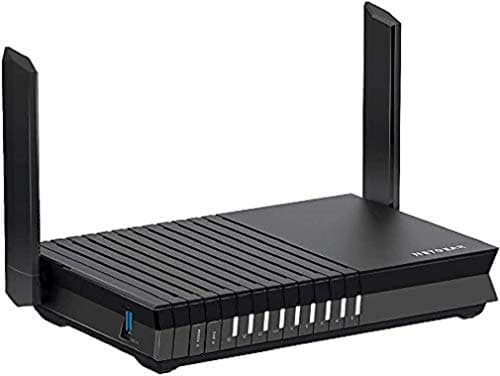
The Netgear EX6250 is an AC1750 extender with a Gigabit Ethernet port and a folding design that plugs directly into the wall. It's a capable alternative, and Netgear's firmware support is generally strong. But AC1750 versus AC1900 means a lower theoretical ceiling on the 5 GHz band (867 Mbps versus 1,300 Mbps), and the compact wall-plug design limits antenna positioning flexibility compared to the RE550's three adjustable external antennas. For coverage in awkward spaces, the RE550's physical antenna advantage is real.
| Feature | TP-Link RE550 AC1900 WiFi Extender Booster | TP-Link RE315 AC1200 | Netgear EX6250 AC1750 |
|---|---|---|---|
| Wi-Fi Standard | AC1900 (Wi-Fi 5) | AC1200 (Wi-Fi 5) | AC1750 (Wi-Fi 5) |
| 5 GHz Max (theoretical) | 1,300 Mbps | 867 Mbps | 867 Mbps |
| 2.4 GHz Max (theoretical) | 600 Mbps | 300 Mbps | 450 Mbps |
| Antennas | 3x External Adjustable | 2x Internal | 2x Internal |
| Ethernet Port | 1x Gigabit | 1x 100 Mbps | 1x Gigabit |
| AP Mode | Yes | Yes | Yes |
| EasyMesh / Mesh Compatible | Yes (EasyMesh) | Yes (EasyMesh) | No |
| Coverage Rating | Up to 1,115 m2 | Up to 200 m2 | Up to 185 m2 |
| Price | £44.64 | Lower price tier | Similar price tier |

Final Verdict: Who Should Buy the TP-Link RE550, and Who Shouldn't
The TP-Link RE550 AC1900 WiFi Extender Booster, Dual Band WiFi Booster, 3 Antennas, Gigabit Ethernet Port, Intelligent Monitor, AP Mode, APP Control, Ultimate Compatibility WiFi Mesh, Easy Setup is, in straightforward terms, one of the better-specified budget extenders you can buy right now. The three adjustable external antennas, Gigabit Ethernet port, EasyMesh compatibility, and dual-band AC1900 spec put it ahead of most rivals at this price. The 4.4-star average from over 7,500 owners confirms that it works reliably for the majority of people who buy it. That's a strong result for any networking product.
It's not a replacement for a proper mesh system. If your house is large, has multiple floors with concrete between them, and you need consistent full-speed connections throughout, a dedicated mesh setup with wired or dedicated-band backhaul is the right answer and worth the extra cost. The RE550 carries the standard wireless extender trade-off: shared backhaul means roughly half the throughput in the extended area compared to a direct router connection. That's physics, not a product flaw. But if you can use it in AP Mode with a wired input, that trade-off disappears entirely, and the RE550 becomes a proper access point at a budget price.
For the buyer who has a dead zone in one part of their house, wants something that sets up quickly and works reliably, and doesn't want to spend serious money on a full mesh system, the RE550 is a very solid choice. It's not Wi-Fi 6, and it won't be relevant forever, but it's fit for purpose right now for most UK homes and most broadband connections. Score: 7.5 out of 10.
What works. What doesn’t.
5 + 3What we liked5 reasons
- Three adjustable external antennas give genuine coverage flexibility over fixed-antenna rivals
- Gigabit Ethernet port supports both wired device connection and full AP Mode operation
- EasyMesh compatibility enables smooth roaming with supported TP-Link routers
- Intelligent signal indicator takes the guesswork out of placement
- Strong owner satisfaction: 4.4 stars from over 7,500 reviews
Where it falls3 reasons
- Wi-Fi 5 only, no Wi-Fi 6 or OFDMA for dense device environments
- Shared backhaul in extender mode cuts throughput roughly in half versus direct router connection
- Single Ethernet port limits wired connectivity options
Full specifications
12 attributes| Antennas | 3 |
|---|---|
| Coverage SQM | 260 |
| Device type | range-extender |
| Ethernet ports | 1 |
| Frequency bands | dual-band |
| HAS bluetooth | none |
| Launch year | 2021 |
| MAX speed | 1900 |
| Mesh capable | true |
| Ports | 1x Gigabit Ethernet |
| TOP speed mbps | 1900 |
| Type | extender |
Frequently asked
5 questions01Will the TP-Link RE550 AC1900 WiFi Extender Booster, Dual Band WiFi Booster, 3 Antennas, Gigabit Ethernet Port, Intelligent Monitor, AP Mode, APP Control, Ultimate Compatibility WiFi Mesh, Easy Setup cover my whole house?+
TP-Link rates the RE550 for up to 1,115 square metres, which is far larger than most UK homes. In practice, coverage depends heavily on your home's construction: brick and concrete walls reduce range significantly compared to the open-space figure on the box. For a typical UK semi-detached or terraced house, owner reports suggest the RE550 handles dead zones in rear bedrooms, gardens, and outbuildings well when placed at the midpoint between your router and the problem area. The intelligent signal indicator helps you find a placement that actually works. Older solid-wall properties or homes where the dead zone is multiple concrete floors away from the router may need a different solution.
02Do I really need Wi-Fi 6E or Wi-Fi 7 for the TP-Link RE550 AC1900 WiFi Extender Booster, Dual Band WiFi Booster, 3 Antennas, Gigabit Ethernet Port, Intelligent Monitor, AP Mode, APP Control, Ultimate Compatibility WiFi Mesh, Easy Setup?+
No. The RE550 is a Wi-Fi 5 (AC1900) device, and for most UK homes and most broadband connections, Wi-Fi 5 is entirely adequate. Wi-Fi 6's main advantages (OFDMA, better performance with many simultaneous clients, improved battery efficiency) are most noticeable in dense environments with lots of Wi-Fi 6 client devices. If your household has mostly older phones, laptops, and TVs, they're likely Wi-Fi 5 devices anyway and won't benefit from a Wi-Fi 6 extender. Wi-Fi 6E and Wi-Fi 7 are worth considering if you're investing in flagship infrastructure for the long term, but they're not relevant to what the RE550 is designed to do.
03Is the TP-Link RE550 AC1900 WiFi Extender Booster, Dual Band WiFi Booster, 3 Antennas, Gigabit Ethernet Port, Intelligent Monitor, AP Mode, APP Control, Ultimate Compatibility WiFi Mesh, Easy Setup mesh worth it over a single router or extender?+
The RE550 supports EasyMesh, which enables smooth roaming (your devices stay on one network name and hand off automatically between your router and the extender). That's a genuine improvement over older extenders that created a separate network you had to manually switch to. But it's not the same as a purpose-built mesh system with dedicated backhaul. In wireless extender mode, the RE550 shares its radio bandwidth between talking to your router and serving your devices, which reduces throughput in the extended area. If you can use it in AP Mode with a wired Ethernet input, that limitation disappears. For most households with a single dead zone, the RE550 is the right and cost-effective answer. If you need whole-home coverage with consistent speeds on every floor, a dedicated mesh system is worth the extra investment.
04Is the TP-Link RE550 AC1900 WiFi Extender Booster, Dual Band WiFi Booster, 3 Antennas, Gigabit Ethernet Port, Intelligent Monitor, AP Mode, APP Control, Ultimate Compatibility WiFi Mesh, Easy Setup easy to set up and reliable?+
Setup is genuinely straightforward. One-touch WPS gets most people connected in under two minutes, and the TP-Link Tether app provides a more guided experience if you prefer it. The intelligent signal indicator helps with placement, which is where most extender setups go wrong. Reliability is strong based on owner feedback: the RE550 averages 4.4 stars from over 7,500 reviews, and stability complaints are not a dominant theme in the feedback. The Tether app is stable and doesn't require a cloud account for basic local management. Firmware updates have been issued since launch, and applying them when available is recommended.
05What warranty and returns apply to the TP-Link RE550 AC1900 WiFi Extender Booster, Dual Band WiFi Booster, 3 Antennas, Gigabit Ethernet Port, Intelligent Monitor, AP Mode, APP Control, Ultimate Compatibility WiFi Mesh, Easy Setup?+
Amazon offers 30-day returns on most items. The manufacturer typically provides a 2-year warranty on networking kit. You're also covered by Amazon's A-to-Z guarantee.