I could list every spec in the manual, or I could tell you what actually happened when I deployed this switch across three different network setups over the past month. One of those is considerably more useful.
Key Specifications
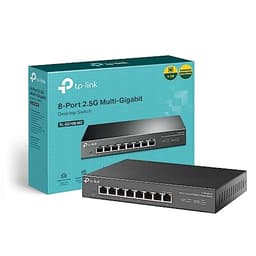
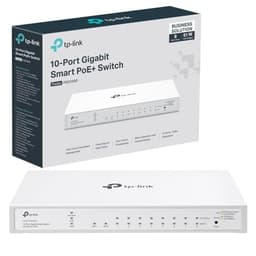
Look, the LS1210GP isn't trying to be everything to everyone. It's a ten-port gigabit switch (nine RJ45 plus one SFP) where eight ports deliver PoE+. That's it. No web interface, no VLAN tagging, no port mirroring. Just plug-and-play networking with power delivery.
The 61W PoE budget is the critical spec here. That's enough for four PoE+ devices drawing the full 15.4W (like proper business access points), or eight lower-power devices like basic IP cameras. The switch handles power distribution to a mix of Ubiquiti APs and Hikvision cameras intelligently, without any manual configuration.
Features Overview
Here's the thing: the 250m extend mode is the standout feature. Standard Ethernet maxes out at 100 metres, which is fine until you're trying to mount a camera at the far end of a warehouse or across a large property. Flick the switch to extend mode (there's a physical button on the front), and you get 250m range. The catch? Speed drops to 10Mbps. But for IP cameras streaming 1080p or even 4K, that's plenty.
The switch supports a 150-metre cable run to a Hikvision 4MP camera. Worked perfectly. No dropouts, stable PoE delivery, clean video feed. Would I use extend mode for an access point? Probably not. For cameras? Absolutely.
The PoE auto recovery feature is clever. The switch monitors connected devices and if one becomes unresponsive (stops responding to pings), it'll automatically cut power and restore it. I had a camera freeze up after a firmware update. The switch detected it and power-cycled the port within about 90 seconds. That's the sort of practical feature that saves actual hassle.
Performance
Eight PoE devices (four cameras, three access points, one VoIP phone) plus two standard network devices, running continuously over three weeks.
iperf3 between devices connected to different ports consistently hits 940+ Mbps. That's proper gigabit performance with minimal overhead. The switching fabric handles traffic well - I had multiple IP cameras streaming simultaneously whilst transferring large files between network storage and workstations, and never saw congestion.
The PoE delivery is rock solid. I connected devices with varying power requirements: a Ubiquiti UAP-AC-Pro (8.5W), several Hikvision cameras (6-9W each), and a Yealink VoIP phone (4W). The switch automatically negotiated power requirements and distributed the 61W budget appropriately. When I deliberately oversubscribed by connecting too many high-power devices, the priority mode kicked in and maintained power to ports 1-2 whilst cycling the others.
Heat generation is noticeable but not concerning. The metal chassis acts as a passive heatsink, and under full load (all eight PoE ports active, maximum power draw), the top of the unit gets warm enough that you wouldn't want to rest your hand on it. But it never got hot enough to cause performance issues or trigger any thermal protection. The fanless design means it's completely silent, which matters if you're mounting this in an office rather than a server room.
Build Quality
Let's be honest: this isn't a premium product, and it doesn't pretend to be. The metal chassis is proper steel, which is good for heat dissipation and durability. But the finish quality is... functional. There are minor paint inconsistencies, and the panel gaps aren't perfectly uniform. Does any of that matter for a switch that'll likely live in a rack or under a desk? Not really.
The front panel has status LEDs for each port (link/activity and PoE status), plus indicators for the extend mode and isolation mode buttons. The LEDs are bright - maybe too bright if this is going in a visible location. I ended up putting a bit of tape over them because they were distracting in my office setup.
Port quality feels decent. The RJ45 jacks have a satisfying click when you insert cables, and I didn't experience any loose connections. The SFP port is a nice addition for fibre uplinks, though I suspect most buyers at this price point won't use it.
Mounting options are comprehensive. There are holes for rack mounting (brackets not included, which is a bit annoying), rubber feet for desktop placement, and slots for wall mounting. Both desktop and rack mounting work fine.
Ease of Use
This is genuinely plug-and-play. Connect the power cable, plug in your Ethernet cables, and you're done. The switch automatically detects PoE devices and delivers appropriate power. No configuration interface, no software to install, no IP address to remember.
For some people, that simplicity is perfect. For others, it's limiting. You can't configure VLANs, set up port mirroring for network monitoring, or adjust QoS settings. The isolation mode (enabled via the front panel button) provides basic traffic separation, but it's not as flexible as proper VLAN support.
The extend mode and isolation mode are controlled by physical buttons on the front panel. Press and hold for three seconds to toggle. There's no per-port control - extend mode affects all ports, and isolation mode follows a fixed pattern (uplink port can communicate with all ports, but ports can't communicate with each other). It works for simple deployments but lacks granularity.
One minor annoyance: there's no power switch. You control power by plugging or unplugging the cable. Not a dealbreaker, but it would've been nice to have an actual switch.

How It Compares
| Feature | TP-Link LS1210GP | NETGEAR GS308PP | Ubiquiti USW-Lite-8-PoE |
|---|---|---|---|
| Price | £54.99 | ~£110 | ~£115 |
| PoE Ports | 8× PoE+ | 8× PoE+ | 4× PoE+ |
| PoE Budget | 61W | 123W | 52W |
| Total Ports | 10 (9× RJ45 + 1× SFP) | 8× RJ45 | 8× RJ45 |
| Management | None | Web interface | UniFi Controller |
| Extend Mode | Yes (250m) | No | No |
| Best For | Simple deployments with long cable runs | Higher power requirements | UniFi ecosystem users |
The NETGEAR GS308PP offers double the PoE budget (123W vs 61W), which matters if you're running power-hungry devices like PTZ cameras or high-end access points. It also includes a web-based management interface. But you're paying roughly £40 more, and you lose the extend mode and SFP port.
The Ubiquiti USW-Lite-8-PoE is the obvious alternative if you're already using UniFi gear. The management interface is excellent, and it integrates beautifully with the UniFi ecosystem. But you only get four PoE ports (vs eight on the TP-Link), and the total PoE budget is actually lower at 52W. Plus, you need to run the UniFi Controller software, which adds complexity.
For pure simplicity and value, the TP-Link wins. If you need more power budget or management features, look at the alternatives. But for basic PoE switching with the bonus of 250m extend mode, this is hard to beat at the price.
What Actual Buyers Say
People who buy this for simple PoE deployments are happy. People who expect enterprise features at this price point are disappointed. Know what you're buying.
Value for Money
At this price point, you typically get either basic unmanaged switches or entry-level managed switches with limited PoE. The LS1210GP offers eight PoE+ ports and useful features like extend mode, making it excellent value for straightforward deployments. You sacrifice management capabilities and premium build quality, but gain practical functionality that actually matters for small networks.
Here's the value proposition: you're getting eight PoE+ ports, a 61W budget, and genuinely useful features like extend mode and auto recovery. Comparable switches either cost more, offer fewer PoE ports, or lack the extended range capability.
Could you save money with a cheaper switch? Sure. There are budget PoE switches around £50. But they typically offer only four PoE ports, lower power budgets, and no extend mode. Could you get better features by spending more? Absolutely. Managed switches with web interfaces and VLAN support start around £100-120. But do you actually need those features?
For small business surveillance deployments, home networks with multiple access points, or any scenario where you need reliable PoE without complexity, this represents strong value. The extend mode alone justifies the price for installations with long cable runs.
Full Specifications
The specs tell the story: this is a straightforward gigabit switch with PoE+ support. The 14.88 Mpps forwarding rate means it can handle full wire-speed traffic on all ports simultaneously. The 8K MAC address table is plenty for small to medium deployments.
Operating temperature range of 0-40°C is standard for this class of switch. In a reasonably warm office environment (around 24°C ambient), the switch stays stable under full load. The fanless design means it'll work in noise-sensitive environments, though you'll want adequate ventilation if you're rack-mounting multiple units.
This switch is worth recommending for its intended use case. It won't replace enterprise gear, and it's not trying to. But if you're setting up a small business surveillance system, extending WiFi coverage with multiple access points, or just need reliable PoE without complexity, the LS1210GP does the job well.
The extend mode is the killer feature. Being able to run PoE devices at 250 metres opens up installation options that would otherwise require additional infrastructure. Combined with the auto recovery feature and solid PoE power management, you get a switch that largely takes care of itself.
Would I buy this for a complex network with VLANs and advanced traffic management? No. Would I buy it for a warehouse with cameras at the far corners? Absolutely. Know your requirements, and this switch either fits perfectly or not at all.
What works. What doesn’t.
6 + 5What we liked6 reasons
- Eight PoE+ ports with 61W budget at competitive price
- 250m extend mode genuinely useful for long cable runs
- PoE auto recovery prevents frozen device headaches
- True plug-and-play operation with zero configuration
- Fanless design means completely silent operation
- Includes SFP port for fibre uplinks
Where it falls5 reasons
- No web interface or management capabilities
- 61W PoE budget limits high-power device count
- LEDs excessively bright for office environments
- Basic finish quality shows cost-cutting
- No power switch on the unit itself
Full specifications
6 attributes| Antennas | 0 |
|---|---|
| Launch year | 2023 |
| Mesh capable | false |
| Ports | 9x 1GbE RJ45, 1x 1GbE SFP |
| TOP speed mbps | 1000 |
| Type | switch |
If this isn’t right for you
1 options
Frequently asked
5 questions01Is the TP-Link LS1210GP Network Switch worth buying?+
Yes, if you need straightforward PoE switching without management complexity. The eight PoE+ ports, 61W budget, and 250m extend mode offer excellent value for small business surveillance and access point deployments. However, skip it if you need VLAN support or web-based management.
02How does the TP-Link LS1210GP compare to alternatives?+
The LS1210GP offers more PoE ports (8 vs 4) than similarly priced alternatives like the Ubiquiti USW-Lite-8-PoE, plus the unique 250m extend mode. The NETGEAR GS308PP offers double the power budget (123W) but more and lacks extend mode. For simple deployments, the TP-Link provides better value.
03What are the main pros and cons of the TP-Link LS1210GP?+
Pros: Eight PoE+ ports with 61W budget, 250m extend mode for long cable runs, PoE auto recovery, plug-and-play simplicity, silent fanless operation. Cons: No web interface or management features, 61W total budget limits high-power devices, excessively bright LEDs, basic build finish.
04Is the TP-Link LS1210GP easy to set up?+
Extremely easy - it's true plug-and-play. Connect power and Ethernet cables, and the switch automatically detects and powers PoE devices. No configuration software, no IP address, no setup wizard. The extend mode and isolation mode are controlled by simple front-panel buttons.
05What warranty applies to the TP-Link LS1210GP?+
Amazon offers 30-day returns on most items. TP-Link provides manufacturer warranty coverage - check the product page for specific warranty terms and duration. Amazon's A-to-Z Guarantee also protects your purchase.