Most people buying a portable hard drive don't spend much time thinking about what's actually inside the enclosure. They see "2TB", they see the price, they think "sorted". And honestly, for a lot of buyers, that's fine. But knowing what you're actually getting, and what you're not, makes the difference between a drive that does the job for years and one that ends up in a drawer after a bad experience.
The Seagate 2TB Portable Hard Drive (model STGX2000400) is a spinning mechanical drive, USB 3.0, bus-powered, and built for exactly one thing: cheap, portable, high-capacity storage. It's not an SSD. It won't feel like one. But with over a quarter of a million owner ratings averaging 4.5 stars, it's clearly doing something right for a very large number of people. The question worth asking is whether it's right for you, and where the limits are.
This is a drive where the usual SSD vocabulary, NVMe, DRAM cache, SLC write buffers, QLC NAND, basically doesn't apply. This is mechanical storage. The performance conversation is completely different, and so is the use case. So rather than pretend otherwise, here's an honest look at what the specs, owner reports, and published findings actually tell us about this one.
Core Specifications
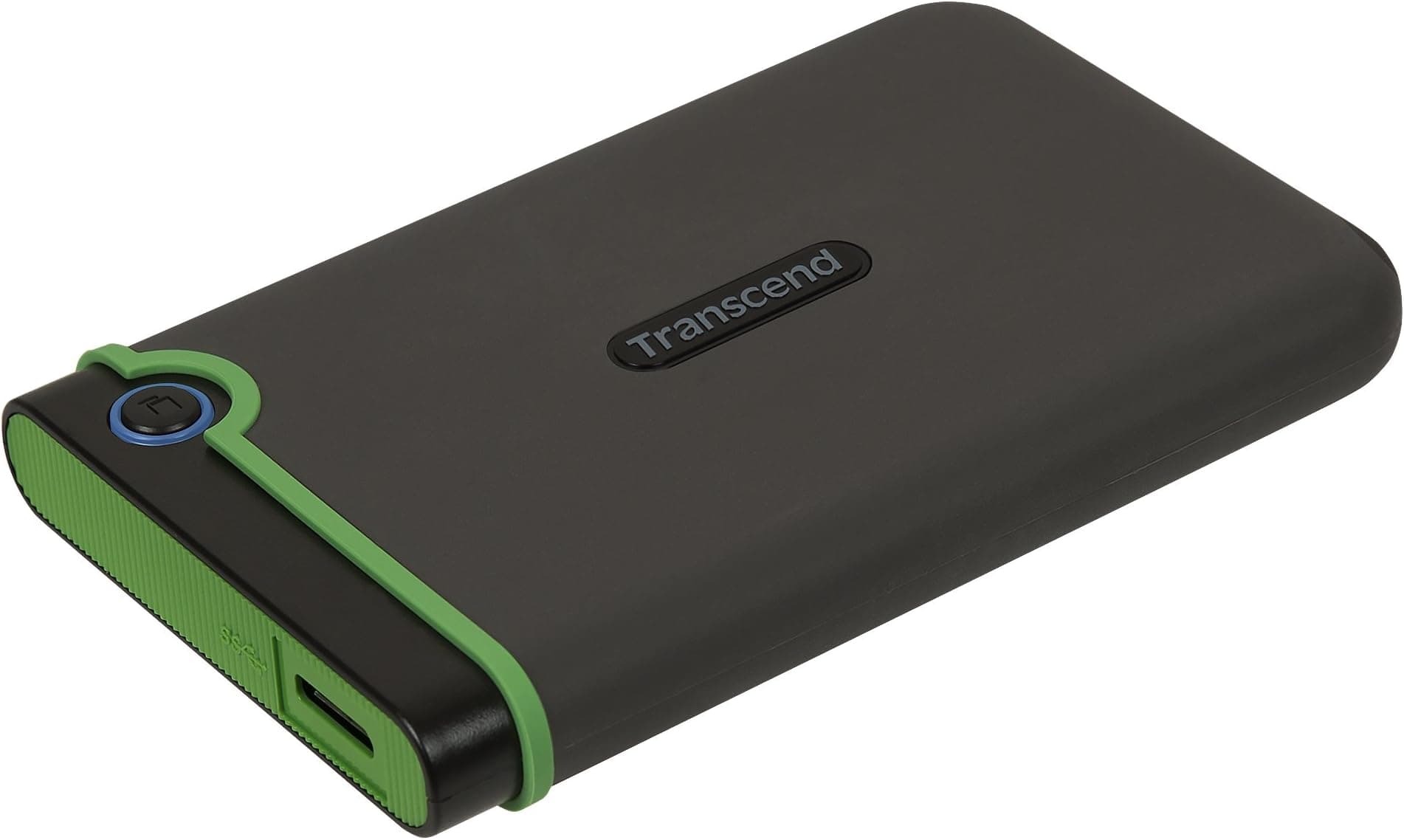
Strip back the packaging and what you've got is a 2.5-inch spinning hard drive inside a slim plastic enclosure, connected via USB 3.0 (also labelled USB 3.2 Gen 1 in some listings, same thing, same 5Gbps theoretical ceiling). It's bus-powered over a single USB-A cable, which means no separate power brick needed. That's a genuine convenience win for travel and desk tidiness.
The drive inside is a standard 5400 RPM platter-based HDD. Seagate rates sequential read speeds at around 120MB/s, which is typical for a 5400 RPM 2.5-inch drive. That's not a typo and it's not a criticism, it's just the physical reality of spinning media at that rotation speed. It's roughly a fifth of what a budget SATA SSD does, and maybe a fortieth of what a mid-range NVMe manages. But this drive isn't competing with SSDs on speed. It's competing on cost per gigabyte and portability at scale.
There's no DRAM cache in the traditional SSD sense, no SLC write buffer to discuss, no controller to evaluate for its sustained write behaviour. This is a mechanical drive, and its endurance story is measured differently. Seagate offers a two-year limited warranty on this model, which is standard for consumer portable HDDs in this class. that Seagate does publish a product page for their portable drive range if you want to dig into their official documentation.
| Specification | Detail |
|---|---|
| Model | Seagate STGX2000400 |
| Capacity | 2TB |
| Drive Type | HDD (spinning platter, 5400 RPM) |
| Form Factor | 2.5-inch (portable enclosure) |
| Interface | USB 3.0 (USB 3.2 Gen 1, 5Gbps) |
| Connection | USB-A cable (bus-powered) |
| Sequential Read | ~120MB/s (typical for 5400 RPM) |
| NAND / Media | Magnetic platters (not NAND) |
| DRAM Cache | N/A (HDD, not SSD) |
| TBW Endurance Rating | Not applicable (HDD) |
| Warranty | 2 years limited |
| Compatibility | Windows, Mac, Xbox One |
| Price | £173.61 |

Interface and Form Factor
USB 3.0, or USB 3.2 Gen 1 if you prefer the newer naming, gives you a theoretical ceiling of 5Gbps. In practice, a 5400 RPM hard drive tops out at around 120MB/s sequential, which is about 960Mbps. So the interface is absolutely not the bottleneck here. The drive's own mechanical speed is the limit, and USB 3.0 has more than enough headroom for it. You won't gain anything by plugging this into a USB 3.2 Gen 2 or Thunderbolt port. The drive will still max out at roughly the same speed regardless.
The physical form factor is a standard 2.5-inch enclosure, slim enough to slip into a jacket pocket or a laptop bag without drama. Bus-powered means the single USB-A cable handles both data and power, which is genuinely useful. No hunting for a plug socket, no separate adapter. Owner reports consistently mention this as one of the drive's practical strengths, especially for people who travel with it or move it between machines regularly. The cable is included in the box, and owners generally report it's a decent length, not the embarrassingly short stub you sometimes get with budget portables.
Compatibility is broad. Windows, macOS, and Xbox One are all officially supported. It ships formatted as exFAT, which means it works across both Windows and Mac without reformatting, though some owners note they reformatted to NTFS for Windows-only use. If you're on Linux, it'll work fine with standard drivers. One thing: this is USB-A, not USB-C. If your laptop only has USB-C ports (increasingly common on modern ultrabooks), you'll need an adapter or a USB-C to USB-A cable. Not a dealbreaker, but before you buy.
Real-World Performance
Right. Performance. This is where expectations need to be calibrated properly, because "performance" means something completely different for a portable HDD than it does for an NVMe drive. The Seagate 2TB Portable HDD is not going to boot your operating system quickly. It's not going to load games fast. It's not a scratch disk for video editing. Published benchmarks for 5400 RPM portable HDDs consistently show sequential reads in the 110MB/s to 130MB/s range, and sequential writes slightly behind that. Random read and write speeds, the thing that actually determines how fast a system feels, are dramatically lower on spinning media than on any SSD.
For the use cases this drive is actually designed for, large file transfers, backups, media storage, offloading photos and videos, archive storage, those sequential figures are what matter. Copying a 50GB folder of RAW photos across to this drive? You're looking at a few minutes. Reasonable. Copying 1TB of data? That'll take a while, plan around it. Owner reports align with this: people using it for backup and bulk storage are generally happy with the speed. People who tried to use it as a primary drive or game library extension report frustration, which is entirely predictable and arguably their own fault for not reading the spec sheet.
Random I/O is where mechanical drives fall apart compared to SSDs, and that's worth being direct about. A spinning platter has to physically seek to different locations on the disk for random reads and writes. That introduces latency measured in milliseconds, whereas an SSD measures latency in microseconds. For backup and sequential file storage, this barely matters. For running applications, loading games, or anything that involves lots of small random reads, it matters enormously. The owner review pool reflects this split clearly: buyers using it as intended love it, buyers who misunderstood its purpose don't.
Sustained Writes and Cache Behaviour
The SLC cache conversation that dominates SSD reviews doesn't apply here in the same way. Mechanical hard drives do have a small DRAM buffer (typically 128MB on a drive like this) that acts as a write cache to smooth out small bursts of data, but it's not the same as the SLC cache on a QLC SSD. There's no dramatic write speed cliff where the drive suddenly drops from 3,000MB/s to 80MB/s once a buffer fills. The speed is already what it is: around 110MB/s to 120MB/s sequential, consistently, throughout the transfer.
That consistency is actually one of the underappreciated strengths of a mechanical drive for bulk transfers. A budget QLC SSD might write at 500MB/s for the first 20GB or 30GB, then fall off a cliff to 80MB/s or even lower once its SLC cache exhausts. The Seagate portable HDD just plods along at its steady mechanical pace. For a 2TB backup job, that predictability has real practical value. You know roughly how long it'll take. It won't surprise you halfway through a large transfer by suddenly slowing to a crawl.
What does affect sustained write performance on a mechanical drive is heat and vibration. Owner reports occasionally mention the drive getting warm during prolonged transfers, which is normal for a 5400 RPM drive in a sealed plastic enclosure. Sustained heavy writes over multiple hours can cause the drive to slow slightly as thermal management kicks in, but this is a much gentler effect than the dramatic cache exhaustion cliffs you see on budget SSDs. For typical backup workloads, it's not a problem in practice. Just don't leave it sitting on a soft surface that blocks airflow during a big transfer.
Controller, NAND and DRAM
There's no NAND here. No controller in the SSD sense. No DRAM cache architecture to evaluate. This is a magnetic hard disk drive, and its internals are a set of spinning platters with read/write heads that physically move across the surface to access data. That's the technology. It's older than most of the people reading this review, it's well understood, and it's reliable in a way that's different from SSD reliability.
The drive inside Seagate's portable enclosure is almost certainly from their Barracuda or similar consumer laptop HDD line. Seagate doesn't always specify the exact internal drive model for their portable products, but at 2TB in a 2.5-inch form factor at 5400 RPM, the options are limited and well-mapped by the wider storage community. These are single-platter or dual-platter designs depending on the exact revision, and platter count can affect both performance and reliability slightly, though at this capacity it's typically dual-platter.
The lack of DRAM cache complexity actually simplifies the reliability picture in some ways. There's no risk of a DRAM-less SSD leaning on Host Memory Buffer and performing poorly on a system that doesn't support HMB well. There's no QLC NAND wearing out faster than expected under heavy write workloads. The failure modes for mechanical drives are well-documented: physical shock damage, bearing wear over time, and the occasional head crash. Owner reports for this drive do include some failures, and at 265,845, you'd expect a statistical tail of failures. The pattern in the negative reviews leans toward physical damage (drops) and drives failing after two or three years of heavy use, which is pretty normal for portable HDDs in this class.
Endurance and Reliability
Mechanical drives don't use TBW ratings the way SSDs do. There's no NAND wearing out with each write cycle. The endurance story for an HDD is about hours of operation, physical shock tolerance, and bearing longevity. Seagate rates this drive for typical consumer portable use, not enterprise or NAS workloads. It's not designed to run 24/7. It's designed to be connected, used for transfers or backups, then disconnected and carried around. That's the use pattern it's built for.
The two-year warranty is standard for consumer portable HDDs. It's not as generous as the five-year warranties you see on Seagate's IronWolf NAS drives or some enterprise lines, but it's appropriate for the product category and price point. A shorter warranty on a consumer portable drive isn't necessarily a red flag the way a short warranty on an SSD can be. The risk profile is different. That said, two years is two years. If you're buying this as a long-term archive drive, plan for the possibility of replacing it after three to five years of regular use.
Owner reports at this scale tell a useful story. The overwhelming majority of reviews are positive, with the 4.5 average across nearly 265,845 suggesting genuine satisfaction rather than a honeymoon period. The negative reviews cluster around a few themes: physical damage from drops (this is a spinning drive, drops are genuinely risky), drives that stopped being recognised after a period of use (often a USB connection issue rather than a drive failure, owners report), and a minority of DOA units. The DOA rate appears low based on the review distribution, and Seagate's customer support gets mixed but generally acceptable marks in the review pool. The key takeaway: back up your backups. Don't make this drive the only copy of anything you care about.

Thermals
Thermals on a portable HDD are a much simpler conversation than on a Gen 4 or Gen 5 NVMe, which can throttle aggressively without a heatsink. The Seagate 2TB Portable runs warm during sustained transfers, noticeably warm if you put your hand on it during a big backup job, but it doesn't throttle in the dramatic way a hot NVMe does. There's no heatsink needed, no thermal pad to worry about, no throttling cliff that suddenly halves your transfer speed because the drive hit 70 degrees.
That said, heat is still the enemy of mechanical drives over the long term. The bearings and platters don't love sustained high temperatures. Owner reports mention the drive getting warm to the touch during long transfers, which is expected and normal. The plastic enclosure doesn't dissipate heat as efficiently as a metal one would, and there's no active cooling. Common sense applies: don't leave it running in direct sunlight, don't stack things on top of it during a big transfer, and don't run it continuously for days on end in a hot environment.
For the typical use pattern, connect, transfer, disconnect, thermals are genuinely not a concern. This isn't a drive you're going to run at sustained load for hours every day. If that's your use case (constant heavy backup jobs, continuous media streaming from the drive), you might want to consider a drive with better thermal management or a desktop external HDD with its own power supply and better airflow. For portable backup and storage use, the thermal picture here is perfectly fine in practice.
Capacity Options and Price Per GB
The Seagate Backup Plus Portable and related portable lines come in a range of capacities, typically from 1TB up to 5TB in the 2.5-inch bus-powered format. The 2TB sits in the sweet spot for most buyers. It's enough for a substantial photo and video library, a full system backup, or a large media collection, without pushing into the higher price brackets of the 4TB and 5TB options. The 1TB is cheaper but halves your headroom, and at the price difference between 1TB and 2TB, the 2TB usually wins on pure pence-per-gigabyte value.
Price per gigabyte is where mechanical portable drives absolutely demolish SSDs. Portable SSDs at 2TB are considerably more expensive than this. You're paying a meaningful premium for the speed, shock resistance, and silent operation of an SSD. If you need those things, pay for them. If you're storing backups and large files that you access occasionally rather than constantly, the HDD's cost advantage is substantial and the speed difference genuinely doesn't matter for that workflow.
Compare this against the WD My Passport 2TB or the Toshiba Canvio Basics 2TB and you're in the same price bracket with similar performance characteristics. The Seagate's review volume and average rating give it a slight edge in confidence terms, but all three are broadly comparable products. The Seagate name carries weight in the storage world, and their portable drives have a long track record in the consumer market. For buyers who want the most storage for the least money in a portable form factor, the 2TB sits at a genuinely attractive price-per-gigabyte.
Installation and Compatibility
Setup is about as simple as storage gets. Plug the USB-A cable into your computer, the drive shows up, you're done. No software installation required for basic use. Seagate does include their optional Toolkit backup software if you want scheduled backups and folder mirroring, but it's optional, not mandatory. Owner reports on the software are mixed, some find it useful, others ignore it entirely and just use the drive as a plain external storage device. Either approach works fine.
Compatibility is genuinely broad. Windows 7 and later, macOS 10.11 and later, and Xbox One are all officially supported. The drive ships formatted as exFAT, which is readable and writable on both Windows and Mac without any additional drivers. If you're exclusively on Windows and want to use NTFS for its file size handling and permissions features, reformatting is straightforward. Mac-only users might prefer HFS+ or APFS formatting, which again is a simple reformat job. Linux compatibility is good with standard kernel drivers, though it's not officially listed.
One compatibility note: the USB-A connector. Modern MacBooks and many ultrabooks have moved entirely to USB-C, and some don't include USB-A ports at all. If that's your machine, you'll need a USB-A to USB-C adapter or a USB hub with USB-A ports. The drive will work fine through an adapter, the USB 3.0 speeds are preserved, but it's an extra thing to carry. If USB-C compatibility matters to you, there are USB-C versions of portable drives available, though they're often slightly pricier. Also: this drive is not officially PS5 compatible for extended storage in the way that NVMe drives are, and it won't work as a PS5 internal replacement. Xbox One game storage works, but PS5 users should look elsewhere for their gaming storage needs.
Who It's For
The ideal buyer for the Seagate 2TB Portable Hard Drive is someone who needs a lot of storage capacity in a portable form factor, accesses it sequentially rather than randomly, and doesn't want to pay SSD prices for that capacity. Photographers and videographers who shoot in bulk and need somewhere to dump large files between sessions. Students who want a backup drive that lives in their bag. Office workers doing regular system backups. People who want to carry a media library between home and work. Travellers who want to keep a copy of their important files without cloud dependency. All of these are genuinely good use cases for this drive.
It's also a decent choice as a secondary backup destination. The 3-2-1 backup rule (three copies, two media types, one offsite) is good practice, and a cheap high-capacity portable HDD is a reasonable choice for one of those copies. It's not your only backup, it's one layer of a sensible backup strategy. At this price and capacity, it's hard to argue against keeping one in a drawer or a bag as a backup-of-the-backup.
Who should look elsewhere? Anyone who wants to run games from it directly. Anyone who needs fast random access for database work, video editing scratch disk use, or running applications. Anyone whose laptop only has USB-C ports and doesn't want to deal with adapters. And anyone who's prone to dropping things should seriously consider a portable SSD instead, because mechanical drives and drops are a genuinely bad combination. The drive has some shock resistance built in, but it's not in the same league as a solid-state drive for physical resilience.
How It Compares
The two most obvious competitors to the Seagate 2TB Portable HDD are the WD My Passport 2TB and the Samsung T7 2TB portable SSD. The WD My Passport is a direct like-for-like comparison: same category, similar price, similar performance. The Samsung T7 represents the SSD alternative at a significantly higher price point but with dramatically better speed and shock resistance.
Against the WD My Passport 2TB, the Seagate holds its own comfortably. Both are 5400 RPM USB 3.0 portable HDDs. Performance is nearly identical in published benchmarks. The Seagate has a larger review pool and a slightly stronger reputation for reliability in owner reports, though the WD is also a well-regarded product. Price is typically similar. It comes down to brand preference and whichever is cheaper on the day you buy.
Against the Samsung T7 2TB, the comparison is more interesting. The Samsung is an NVMe-based portable SSD with USB 3.2 Gen 2 (10Gbps) connectivity, offering sequential reads up to 1,050MB/s, roughly eight to nine times faster than the Seagate HDD. It's also shock-resistant, silent, and smaller. But it costs considerably more. If you need the speed, the Samsung T7 is worth every penny. If you just need bulk portable storage and speed isn't the priority, paying that premium for storage you'll mostly use for sequential file dumps is hard to justify.
| Feature | Seagate 2TB Portable HDD (STGX2000400) | WD My Passport 2TB | Samsung T7 2TB |
|---|---|---|---|
| Drive Type | HDD (5400 RPM) | HDD (5400 RPM) | SSD (NVMe) |
| Interface | USB 3.0 (USB-A) | USB 3.0 (USB-A / USB-C) | USB 3.2 Gen 2 (USB-C) |
| Sequential Read | ~120MB/s | ~120MB/s | ~1,050MB/s |
| Shock Resistance | Limited (mechanical) | Limited (mechanical) | High (solid state) |
| Warranty | 2 years | 3 years | 3 years |
| Bus Powered | Yes | Yes | Yes |
| Connector | USB-A | USB-A / USB-C (model dependent) | USB-C (USB-A adapter included) |
| Price | £173.61 | Check Amazon | Significantly higher |

Final Verdict
The Seagate 2TB Portable Hard Drive is exactly what it says it is, nothing more, nothing less. It's a cheap, high-capacity, bus-powered portable HDD that does its job reliably for the buyers who understand what they're buying. The 4.5-star average across nearly 265,000 owner ratings isn't a fluke. It's a product that genuinely delivers on its promise for the right use case.
That use case is bulk portable storage: backups, media libraries, file transfers, archive storage. It's not for gaming. It's not for running applications. It's not a boot drive. It won't survive a drop the way a portable SSD would. And the USB-A connector is showing its age on modern laptops. But none of those things matter if you're buying it for what it's actually good at.
The honest don't-overspend line: if you just need 1TB of portable backup storage and don't anticipate needing more, the 1TB version of this drive (or a competitor like the WD My Passport 1TB) will save you money and is genuinely sufficient for most personal backup needs. Don't buy 2TB out of vague future-proofing anxiety if 1TB covers your actual current use. On the other hand, if you're regularly shooting video or managing large photo libraries, the 2TB is the right call and the price-per-gigabyte makes it easy to justify.
Reliability-wise, the two-year warranty is fine for the category. The owner review pool suggests a low DOA rate and generally solid longevity for buyers who treat it sensibly. Just don't make it the only copy of anything important. That's not a criticism of this drive specifically, it's just good storage hygiene for any single device.
Score: 7.5 out of 10. A proper workhorse for bulk portable storage at a genuinely fair price. Know what you're buying, and it won't let you down.
What works. What doesn’t.
5 + 4What we liked5 reasons
- Excellent price per gigabyte for portable bulk storage
- Bus-powered over a single USB-A cable, genuinely convenient
- Consistent sustained transfer speeds without dramatic cache cliffs
- Huge owner review pool with a strong 4.5-star average
- Broad compatibility: Windows, Mac, Xbox One, no drivers needed
Where it falls4 reasons
- Mechanical drive is vulnerable to physical shock and drops
- USB-A only connector is awkward on modern USB-C laptops
- Much slower than any portable SSD, unsuitable for gaming or app use
- Two-year warranty is shorter than WD My Passport's three-year cover
Full specifications
8 attributes| Capacity GB | 2000 |
|---|---|
| Dram cache | false |
| Form factor | 2.5" |
| Interface | USB 3.0 |
| Read speed MBS | 130 |
| Type | External HDD |
| Warranty years | 1 |
| Write speed MBS | 120 |
Frequently asked
5 questions01Is the Seagate 2TB Portable Hard Drive | USB 3.0 (STGX2000400) fast enough for everyday use?+
It depends entirely on what you mean by everyday use. For backups, copying large files, and storing media libraries, the roughly 120MB/s sequential speed is perfectly adequate. For running games, loading applications, or booting an OS from it, it's not. This is a mechanical hard drive, not an SSD, and its random I/O performance is much lower than any SSD. Owner reports consistently reflect this: buyers using it for backup and bulk storage are happy, buyers who tried to use it as a primary or gaming drive are not.
02Does the Seagate 2TB Portable Hard Drive | USB 3.0 (STGX2000400) slow down once the cache fills?+
Not in the dramatic way that a QLC SSD does. This is a mechanical hard drive, so there's no SLC write cache that exhausts and causes a sudden speed cliff. The drive has a small DRAM buffer (typically 128MB) to smooth out bursts, but the sustained sequential write speed is broadly consistent throughout a transfer at around 110MB/s to 120MB/s. This is actually one of the underappreciated advantages of mechanical storage for large sequential transfers: predictable, consistent speed rather than a fast burst followed by a dramatic slowdown.
03Is the Seagate 2TB Portable Hard Drive | USB 3.0 (STGX2000400) DRAM-less, and does that matter?+
The DRAM-less vs DRAM cache debate is an SSD concern, not relevant to this product. This is a mechanical hard drive, and the architecture is completely different. It has a small DRAM buffer for write smoothing, which is standard for HDDs, but the performance characteristics of DRAM-less SSDs and Host Memory Buffer don't apply here. For the backup and bulk storage use cases this drive is designed for, the absence of SSD-style DRAM architecture is simply not a factor.
04How long will the Seagate 2TB Portable Hard Drive | USB 3.0 (STGX2000400) last?+
Mechanical drives don't use TBW ratings like SSDs. Longevity depends on usage patterns, physical handling, and operating conditions. For typical portable use, connecting for transfers and backups rather than running continuously, drives like this commonly last three to five years or more. Seagate backs it with a two-year limited warranty. The owner review pool, with nearly 265,000 ratings, suggests a low failure rate for buyers who use it as intended and handle it carefully. Physical shock from drops is the biggest risk for any portable HDD.
05What warranty and returns apply to the Seagate 2TB Portable Hard Drive | USB 3.0 (STGX2000400)?+
Seagate provides a two-year limited warranty on this drive. Amazon's standard 30-day return window applies to purchases made through Amazon UK, along with the A-to-Z Guarantee for buyer protection. If you experience a failure within the warranty period, Seagate's customer support handles warranty claims directly. Always check the current warranty terms on Seagate's website and Amazon's returns policy at the time of purchase.