The Seagate Game Drive for PS4/PS5 5TB carries a headline that does exactly what it says: five terabytes of external storage, officially licensed by Sony, plugged in via USB 3.0 and ready to hold your game library without any fuss. That sounds great. And for a lot of PS4 and PS5 owners, it genuinely is. But the honest framing here is that this is a spinning hard disk drive in 2025, and before you hand over your money, you need to understand exactly what that means for performance, what it's good at, and where it falls flat on its face.
The verdict up front: if you own a PS4 or a PS5 and you're drowning in games you can't delete because re-downloading them takes forever, this drive solves that problem cleanly. It gives you a massive overflow library at a reasonable price per gigabyte, the blue LED looks decent on a shelf, and the official PlayStation licensing means plug-and-play with no configuration headaches. But it is not a performance drive. It will not make your PS5 load games faster. And if you're expecting anything close to SSD behaviour, you're going to be disappointed. Know what you're buying, and it's a solid purchase. Misunderstand it, and you'll feel cheated.
Core Specifications: Seagate Game Drive for PS4/PS5 5TB
This is a 2.5-inch external hard disk drive, not an SSD. That distinction matters enormously and we'll keep coming back to it. The drive connects via USB 3.0, which gives a theoretical ceiling of around 5 Gbps, though the spinning platters inside will never get close to that ceiling in practice. Seagate rates sequential read speeds at around 120 MB/s, which is typical for a 5400 RPM 2.5-inch HDD. There is no NVMe here, no PCIe, no SATA SSD controller, and no NAND flash of any kind. This is magnetic storage, the same fundamental technology that's been in laptops and external drives for decades.
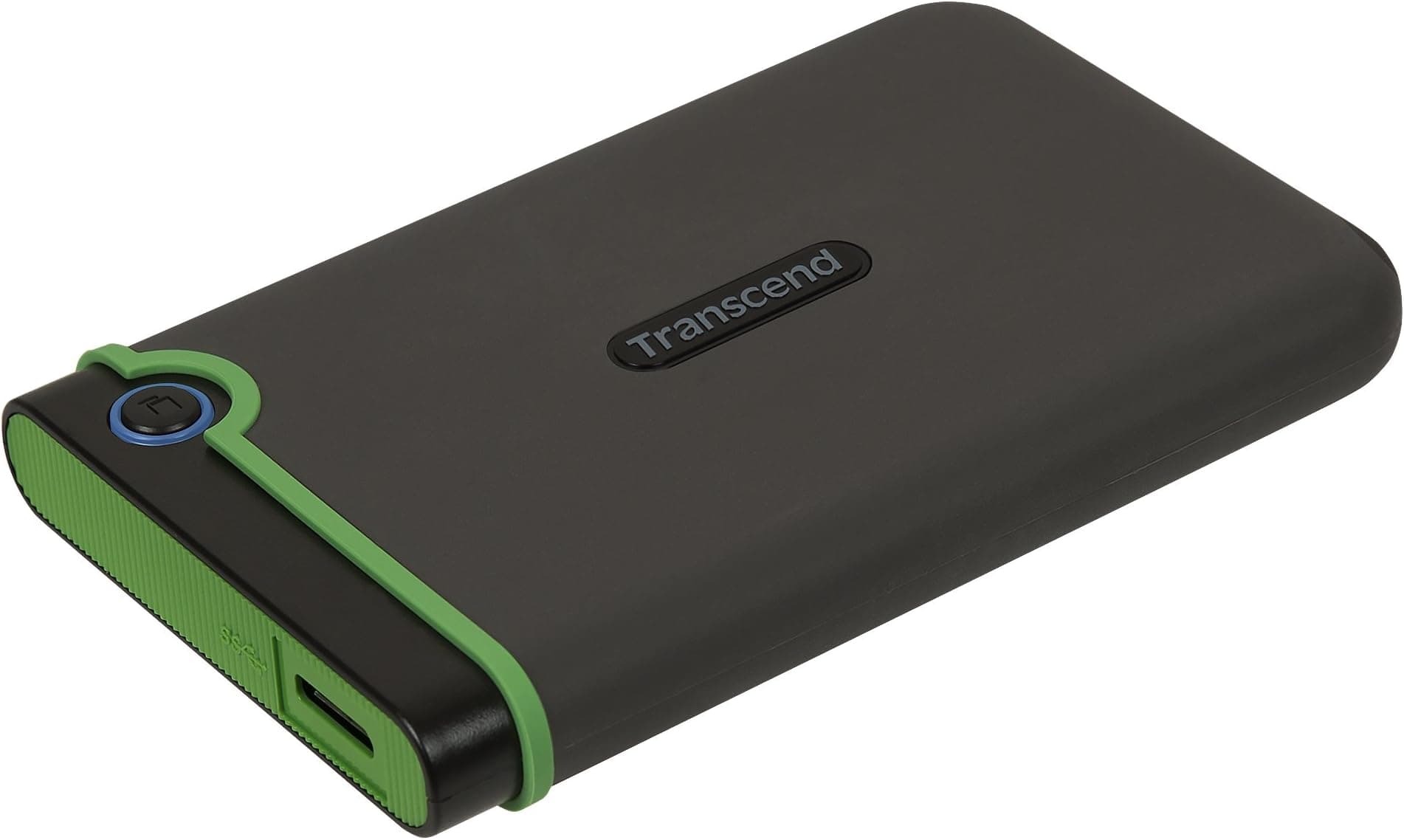
The 5TB capacity is the headline number, and it's a proper five terabytes of usable space for game storage. Seagate officially licenses this drive for PlayStation use, which means Sony has signed off on the compatibility, and the drive ships ready to use with PS4 straight out of the box. For PS5, it works as extended storage for PS4 games and as a place to park PS5 titles that you want to keep but aren't currently playing (you move them back to internal SSD to actually run them). The blue LED strip on the casing is a nice touch for anyone with a visible setup, and the bus-powered design means no separate power brick to deal with.
What you won't find here: DRAM cache, SLC write cache in any meaningful NVMe sense, TBW endurance ratings published in the way SSD makers publish them, or random IOPS figures that would make any SSD enthusiast look twice. This is a fundamentally different class of storage, and the spec table below reflects that honestly.
| Specification | Detail |
|---|---|
| Model | Seagate Game Drive STLV5000202 |
| Capacity | 5TB |
| Form Factor | 2.5-inch external HDD |
| Storage Type | Spinning Hard Disk Drive (HDD) |
| Interface | USB 3.0 (Micro-B connector) |
| Rated Sequential Read | ~120 MB/s (typical for 5400 RPM 2.5-inch HDD) |
| Rotational Speed | 5400 RPM |
| DRAM Cache | Not applicable (HDD internal buffer, not DRAM in SSD sense) |
| NAND Type | N/A (magnetic platters) |
| Controller | HDD controller (internal, not user-relevant) |
| Random IOPS | Very low (sub-1 MB/s random 4K typical for HDD) |
| Power | Bus-powered via USB (no external PSU) |
| PlayStation Compatibility | PS4 (direct play), PS5 (extended storage for PS4 titles; park PS5 titles) |
| LED | Blue LED |
| Included | USB 3.0 cable, 2 weeks PlayStation Plus trial |
| Warranty | 2 years limited |
| Price | £181.99 |

Interface and Form Factor
USB 3.0 is the connection here, and it's the right call for an external HDD at this price point. The theoretical bandwidth of USB 3.0 sits at around 5 Gbps (roughly 500 MB/s real-world ceiling), which is comfortably above what the spinning platters inside can actually deliver. A 5400 RPM 2.5-inch drive tops out at around 120 to 140 MB/s sequential in ideal conditions, so the USB 3.0 interface is never the bottleneck. You're not leaving performance on the table by not having USB 3.1 or USB-C here. The drive physically can't fill the pipe it's got.
The 2.5-inch form factor means the whole thing is genuinely compact. It fits in a jacket pocket, it sits neatly next to a PS4 or PS5, and the bus-powered design (no wall adapter) keeps the cable clutter minimal. Owners consistently mention this as a practical plus, particularly for people who have their console in a living room setup where a power brick dangling off the side would look rubbish. The Micro-B USB connector is the one slightly dated choice here, since most newer peripherals have moved to USB-C, but a replacement cable is cheap if you lose the included one.
The form factor also matters for compatibility with the PS5 specifically. Sony's PS5 has two USB-A ports on the front and additional ports on the rear, and this drive plugs straight into any of them. No hub needed for a single drive. The officially licensed status means the PS5 recognises it immediately and walks you through the extended storage setup. That's a meaningful quality-of-life detail compared to third-party drives that occasionally need reformatting or throw up compatibility warnings.
Real-World Performance: What the Specs and Owner Reports Show
This is where the HDD reality hits, and it's worth being blunt about it. Sequential read speeds of around 120 MB/s sound acceptable on paper, but the number that actually determines how a storage device feels in day-to-day use is random read/write performance, measured in IOPS (input/output operations per second). And on that metric, a spinning hard drive is in a completely different universe to any SSD. A budget SATA SSD delivers somewhere around 80,000 to 90,000 random read IOPS. A 5400 RPM HDD like this one delivers somewhere in the region of 70 to 100 IOPS. That's not a typo. It's roughly a thousand times slower at random access.
What does that mean in practice for PS4 and PS5 owners? On PS4, games stored on this drive will load noticeably slower than games on the internal drive. Published benchmark comparisons between external HDD storage and internal HDD storage on PS4 show load time differences that can range from a few seconds to over a minute depending on the game, with open-world titles that stream assets constantly being the most affected. On PS5, you cannot run PS5 native games from this drive at all. You store them here and move them back to the internal SSD to play. That's a Sony limitation, not a Seagate one, but it's important to understand before buying.
Where the drive earns its keep is as a library drive. If you have 200 PS4 games installed and you want to keep them all without constantly deleting and re-downloading, this is exactly what you need. The transfer speeds when moving a game from this drive to the PS5's internal SSD (or vice versa) are limited by the USB 3.0 connection and the HDD's sequential read speed, so expect roughly 80 to 100 MB/s real-world for large game file transfers. A 50 GB game moves in around eight to ten minutes. Annoying, but manageable. Owner reviews with 3,828 averaging 4.5 stars consistently back this up: people who buy it for library storage are happy; people who expected SSD-level load times are not.
Sustained Writes and Cache Behaviour
The SLC cache conversation that dominates NVMe SSD reviews doesn't quite apply here in the same way, because this is a hard disk drive with a small internal DRAM buffer (typically 128 MB on 2.5-inch consumer HDDs) rather than an SSD with a configurable SLC write cache. But the sustained write behaviour is still worth understanding, because it affects how long it takes to copy large game files to and from the drive.
HDDs don't have a cache cliff in the NVMe sense, where writes are fast until the SLC buffer fills and then plummet to native NAND speed. Instead, what you get with a 5400 RPM HDD is a relatively consistent but low sustained write speed throughout. Seagate's published specs for this class of drive suggest sustained writes in the region of 100 to 120 MB/s sequential, and that's roughly what independent benchmarks of similar Seagate 2.5-inch drives have shown. There's no dramatic speed drop after a few gigabytes, but there's also no burst of SSD-like speed to begin with. It's just... consistently average.
The practical consequence is that copying a large game library across to this drive takes time. A lot of time. Moving 500 GB of games at a real-world sustained write speed of around 100 MB/s takes roughly 80 to 90 minutes. That's a one-time task for most people, and once the library is on there, you're not writing to it constantly. But if you're someone who regularly installs and uninstalls large games, the slower write speeds will be a recurring minor frustration. Owner reviews mention this occasionally, though most people accept it as the trade-off for the price per gigabyte at this capacity.
Controller, NAND and DRAM: The HDD Reality
The controller, NAND type, and DRAM cache discussion that takes up a lot of space in any NVMe SSD review is largely irrelevant here, because this isn't an SSD. There's no NAND flash, no TLC versus QLC debate, and no DRAM cache in the solid-state sense. What's inside is a set of magnetic platters, a read/write head assembly, and an internal controller that manages the mechanics of spinning disk access. Seagate uses its own internal HDD controller silicon, and at this capacity and price tier, it's a mature, well-understood technology.
The relevant internal spec is the rotational speed: 5400 RPM rather than 7200 RPM. A 7200 RPM drive would deliver meaningfully better random access times and slightly higher sequential throughput, but 7200 RPM 2.5-inch drives at 5TB capacity are essentially non-existent in the consumer market. The physics of packing 5TB onto 2.5-inch platters means slower rotational speeds and higher areal density, and 5400 RPM is the industry standard for high-capacity portable HDDs. This isn't a corner Seagate cut; it's the engineering reality of the format.
The internal DRAM buffer (a small cache that helps the HDD controller manage read/write operations) is present but not user-configurable and not meaningfully comparable to the DRAM cache discussion in SSD reviews. It helps smooth out small random reads at the margins, but it doesn't change the fundamental character of the drive. If you're coming from an SSD background and you're used to thinking about DRAM versus DRAM-less as a major performance differentiator, the honest answer is: it doesn't matter here, because the spinning platters are the bottleneck by a very large margin regardless.
Endurance and Reliability
Seagate backs this drive with a two-year limited warranty, which is on the shorter side for external storage. For comparison, many external SSDs now come with three or five year warranties. The two-year coverage isn't alarming for an HDD at this price point, but it's not a confidence-inspiring signal either. HDDs have a well-documented failure curve: they tend to either fail early (within the first year, often due to manufacturing defects or physical shock) or run for years without issue. The two-year warranty covers the most likely failure window.
HDDs don't have a TBW (terabytes written) endurance rating in the way SSDs do, because magnetic storage doesn't wear out from write cycles in the same way NAND flash does. What kills HDDs is physical shock, heat, and the mechanical wear of the read/write head and spindle motor over time. For a portable external drive that's going to sit next to a console and not move much, the physical shock risk is low. The more relevant concern is heat, and we'll cover that properly in the thermals section.
Owner reviews across 3,828 at an average of 4.5 stars suggest the drive is generally reliable in normal use. The failure reports that do appear in the lower-star reviews tend to cluster around two scenarios: drives that failed within the first few weeks (early-life failures, likely DOA or damaged in transit) and drives that were dropped or knocked off a shelf. Neither of those is particularly unusual for portable HDD storage. The majority of owners report months of trouble-free use as a library drive. That's consistent with what you'd expect from a Seagate consumer HDD at this capacity tier, and Seagate's official product page provides warranty claim information if you do hit a problem within the coverage period.

Thermals
Thermals on a portable HDD are a genuinely different conversation from thermals on a Gen4 or Gen5 NVMe drive. There's no thermal throttling in the NVMe sense, no heatsink requirement, and no risk of the drive hitting 70 degrees Celsius and stepping down its performance to protect itself. What you do get is a drive that runs warm during sustained use, particularly during large file copies when the platters are spinning continuously.
The 2.5-inch enclosure is plastic, which doesn't dissipate heat as efficiently as aluminium. During sustained writes, the drive will get noticeably warm to the touch. Owner reports occasionally mention this, though nobody in the review pool describes it as alarming or as causing performance issues in normal gaming library use. The drive isn't running sustained writes during gameplay; it's mostly idle or doing occasional sequential reads when you're browsing your library. The thermal load in typical use is low.
Where it's worth being slightly cautious is in enclosed spaces. If you're tucking this drive behind your PS4 in a TV cabinet with poor airflow, or stacking other equipment on top of it, you're not giving it great conditions. HDDs don't like sustained heat, and while this drive won't throttle the way an NVMe drive does, prolonged elevated temperatures do accelerate the mechanical wear of the spindle motor and bearings over a long enough timescale. Keep it somewhere with at least a bit of airflow and you'll be fine. It doesn't need a heatsink, a fan, or any active cooling. Just don't bake it.
Capacity Options and Price Per GB
The Seagate Game Drive for PS4/PS5 5TB sits at the top of the Game Drive range in terms of capacity, and the price per gigabyte at 5TB is where external HDDs genuinely earn their place in a storage conversation. External HDDs at this capacity tier consistently offer some of the lowest price-per-gigabyte figures in consumer storage, and this drive is no exception. If raw capacity per pound is your primary metric, spinning disk storage at 5TB is hard to argue with.
Seagate also offers the Game Drive in 2TB and 4TB variants. The 2TB is cheaper upfront but costs more per gigabyte, and for most people building a meaningful PS4 game library, 2TB fills up faster than you'd expect. Modern PS4 titles regularly clock in at 50 to 100 GB each, so 2TB gives you somewhere between 20 and 40 games. The 5TB variant gives you enough headroom that most people won't hit the ceiling for several years of normal gaming. If you're on a tighter budget, the 4TB hits a decent middle ground.
The comparison that matters most for buyers considering this drive is against external SSDs at similar or lower capacities. A 2TB external SSD (Samsung T7, WD My Passport SSD, and similar) costs significantly more per gigabyte but delivers dramatically better random IOPS and sequential speeds. For PS4 game storage specifically, the performance advantage of an external SSD is real but modest in terms of load times. For PS5 library parking, both perform the same job identically since you can't run PS5 games from either. So the capacity-versus-speed trade-off genuinely favours the HDD if your primary use case is storing a large library cheaply.
Installation and Compatibility
Setup is genuinely straightforward. On PS4, you plug it in, the console detects it, asks if you want to format it for extended storage, you say yes, and it's done. Games can then be installed directly to the external drive or moved across from the internal drive through the console's storage management menu. The officially licensed status means no compatibility warnings, no reformatting loops, and no fiddling with settings. It just works. Owner reviews consistently flag this as one of the drive's strongest practical points, particularly for people who aren't especially technical.
On PS5, the setup is slightly different because Sony distinguishes between extended storage (where you can store and launch PS4 games, and store but not launch PS5 games) and expanded storage (which requires a compatible NVMe SSD installed in the PS5's internal M.2 slot). This drive is an extended storage device. You plug it in, the PS5 walks you through formatting it, and from that point you can move PS5 games to it for archiving and move them back to internal storage when you want to play them. PS4 games can run directly from it. That's the correct expectation to have going in.
There are no special drivers needed on PS4 or PS5. The USB cable is included in the box, which is a small but appreciated detail since some external drives ship without one. The drive is formatted for PlayStation use out of the box, so if you want to use it with a PC or Mac as well, you'd need to reformat it, which would wipe the PlayStation setup. Most people keep it dedicated to the console. One compatibility note: the drive uses a Micro-B USB connector on the drive end, so if you lose the included cable, you'll need a Micro-B to USB-A replacement rather than the more common USB-C cables you might have lying around.
Who This Drive Is For
The Seagate Game Drive for PS4/PS5 5TB is built for one specific problem: you have a PS4 or PS5 with a game library that has outgrown your internal storage, and you're tired of deciding which games to delete every time you want to install something new. At 5TB, this drive holds a genuinely enormous game library. Even if you play mostly modern open-world titles with 80 to 100 GB install sizes, you're looking at 50 to 60 games with room to spare. For PS4 owners especially, this is a clean, affordable solution to a real problem.
It's also a sensible buy for anyone who values simplicity. The official PlayStation licensing means zero setup friction, the bus-powered design keeps the desk tidy, and the blue LED is a nice cosmetic touch for a visible console setup. If you're not particularly interested in storage technology and you just want something that works without any fuss, this delivers that. The 4.5-star average from nearly 3,800 owners is a genuine signal that most people who buy it for the right reasons are satisfied with it.
Who should look elsewhere? Anyone expecting SSD-level load times on PS4 games will be disappointed. The HDD is slower than the PS4's internal drive for random access, so moving games to this external drive can actually make load times slightly worse, not better. If faster load times are the goal, a USB 3.0 external SSD is the right tool. And for PS5 native game performance, nothing external helps anyway since PS5 games have to run from internal NVMe storage. If you primarily play PS5 native titles and your internal SSD is full, the right answer is a compatible NVMe drive in the PS5's M.2 slot, not this.
How It Compares to the Alternatives
The two most obvious alternatives to consider are the WD My Passport 5TB external HDD and the Samsung T7 Shield 2TB external SSD. The WD My Passport 5TB is a direct competitor: similar capacity, similar price tier, similar 5400 RPM HDD internals, USB 3.0 connection. The key difference is that the WD isn't officially PlayStation-licensed, which means it works perfectly well with PS4 and PS5 (Sony accepts any USB storage formatted correctly) but you don't get the plug-and-play convenience of immediate console recognition. For most people that's a minor inconvenience, not a dealbreaker. The Seagate's official licensing and the included PlayStation Plus trial do add some value at a similar price point.
The Samsung T7 Shield 2TB is a different proposition entirely. It's an external SSD with USB 3.2 Gen 2 connectivity, delivering sequential reads of up to 1,050 MB/s and dramatically better random IOPS than any spinning drive. At 2TB versus 5TB, you're getting less than half the capacity for a meaningfully higher price. But the performance difference is real and measurable for PS4 game load times. If you have a smaller game library and load time improvement on PS4 matters to you, the Samsung is the better tool. If you have a large library and capacity is the priority, the Seagate 5TB wins on value per gigabyte.
| Feature | Seagate Game Drive 5TB (STLV5000202) | WD My Passport 5TB | Samsung T7 Shield 2TB |
|---|---|---|---|
| Capacity | 5TB | 5TB | 2TB |
| Storage Type | HDD (5400 RPM) | HDD (5400 RPM) | External SSD (NVMe) |
| Interface | USB 3.0 | USB 3.0 | USB 3.2 Gen 2 |
| Sequential Read | ~120 MB/s | ~120 MB/s | Up to 1,050 MB/s |
| Random IOPS | Very low (HDD) | Very low (HDD) | High (SSD) |
| PlayStation Licensed | Yes (official) | No (compatible) | No (compatible) |
| PS4 Game Load Times | Slower than internal | Slower than internal | Faster than internal HDD |
| PS5 Native Game Play | No (archive only) | No (archive only) | No (archive only) |
| Warranty | 2 years | 3 years | 3 years |
| Price | £181.99 | Check Amazon | Check Amazon |

Final Verdict
The Seagate Game Drive for PS4/PS5 5TB does one job and does it well: it gives PlayStation owners a large, affordable, officially licensed library drive that works without any setup friction. The 4.5-star average from nearly 3,800 owners is earned. For the use case it's designed for, which is storing a big PS4 game library without constantly managing internal storage, it's a sensible buy at a fair price per gigabyte.
The honest caveats are real though. This is a spinning hard disk drive, and it behaves like one. Random access performance is fundamentally limited by the physics of magnetic platters rotating at 5400 RPM, and no amount of official PlayStation branding changes that. PS4 games stored here will load more slowly than from the console's internal drive. PS5 native games can't run from it at all. The two-year warranty is shorter than what competitors like WD offer at similar capacity. And the Micro-B USB connector feels a bit dated in a world that's mostly moved to USB-C.
But here's the thing: if you go in with the right expectations, none of those caveats are dealbreakers. This drive isn't trying to be an SSD. It's trying to be a cheap, big, plug-and-play library for a PlayStation console. And it succeeds at that. If you want faster load times on PS4 and have a smaller game library, a 2TB external SSD like the Samsung T7 is the smarter buy even at a higher price per gigabyte. But if capacity is the priority and you're happy to accept HDD speeds for a library you're not constantly thrashing, the 5TB Seagate is a proper value proposition.
Score: 7.5 out of 10. Recommended for PS4 library storage and PS5 game archiving. Not recommended as a performance upgrade.
★★★★½ (4.5) from 3,828 owner reviews on Amazon.
What works. What doesn’t.
5 + 4What we liked5 reasons
- 5TB capacity at a low price per gigabyte for a large game library
- Officially PlayStation-licensed for zero-friction plug-and-play setup
- Bus-powered via USB, no separate power adapter needed
- 4.5-star average from nearly 3,800 owners confirms real-world satisfaction
- Includes two weeks PlayStation Plus trial
Where it falls4 reasons
- Spinning HDD means PS4 game load times are slower than internal storage
- PS5 native games cannot be played from this drive, archive only
- Two-year warranty is shorter than competing external drives
- Micro-B USB connector feels dated compared to USB-C alternatives
Full specifications
8 attributes| Capacity GB | 2000 |
|---|---|
| Dram cache | false |
| Form factor | 2.5" |
| Interface | USB 3.0 |
| Read speed MBS | 140 |
| Type | External HDD |
| Warranty years | 3 |
| Write speed MBS | 140 |
If this isn’t right for you
1 options
Frequently asked
5 questions01Is the Seagate Game Drive for PS4/PS5 5TB, External HDD, USB 3.0, Officially Licensed, Blue LED, incl 2 weeks Playstation+ (STLV5000202) fast enough for everyday use?+
For its intended use as a PS4 game library drive or a PS5 archive, yes, it's fast enough. Sequential read speeds of around 120 MB/s over USB 3.0 are sufficient for loading PS4 games and transferring titles to and from PS5 internal storage. However, because this is a spinning hard disk drive, random access performance is fundamentally limited. PS4 games stored on it will load more slowly than from the console's internal drive. For PS5 native games, it's archive-only storage; you move games back to the PS5's internal SSD to actually play them. If faster PS4 load times are the goal, an external SSD delivers meaningfully better random IOPS.
02Does the Seagate Game Drive for PS4/PS5 5TB, External HDD, USB 3.0, Officially Licensed, Blue LED, incl 2 weeks Playstation+ (STLV5000202) slow down once the cache fills?+
This is a spinning hard disk drive, not an SSD, so the SLC cache cliff that affects NVMe drives doesn't apply in the same way. HDDs have a small internal DRAM buffer that helps smooth read/write operations, but sustained write speeds are consistently limited by the rotational speed of the platters rather than a cache exhaustion event. Expect sustained sequential writes in the region of 100 to 120 MB/s throughout a large file copy, with no dramatic speed drop midway. It's consistently moderate rather than fast-then-slow.
03Is the Seagate Game Drive for PS4/PS5 5TB, External HDD, USB 3.0, Officially Licensed, Blue LED, incl 2 weeks Playstation+ (STLV5000202) DRAM-less, and does that matter?+
The DRAM versus DRAM-less distinction is primarily relevant for NVMe SSDs, where a DRAM cache dramatically improves random access performance and sustained write consistency. This drive is a spinning hard disk drive, so the DRAM cache discussion doesn't apply in the same way. There is a small internal buffer on the HDD controller, but the bottleneck for performance is the mechanical nature of spinning platters, not the presence or absence of a DRAM cache. For the use case this drive is designed for, it's not a meaningful concern.
04How long will the Seagate Game Drive for PS4/PS5 5TB, External HDD, USB 3.0, Officially Licensed, Blue LED, incl 2 weeks Playstation+ (STLV5000202) last?+
HDDs don't have a TBW endurance rating like SSDs because magnetic storage doesn't wear from write cycles in the same way NAND flash does. Longevity depends mainly on physical handling, operating temperature, and mechanical wear over time. Seagate backs this drive with a two-year limited warranty. Owner reviews from nearly 3,800 buyers averaging 4.5 stars suggest the drive is generally reliable in normal library use. The main failure risks are physical shock (dropping or knocking the drive while it's spinning) and sustained heat in poorly ventilated spaces. Kept in a stable, reasonably ventilated spot next to a console, most owners report trouble-free use across the warranty period and beyond.
05What warranty and returns apply to the Seagate Game Drive for PS4/PS5 5TB, External HDD, USB 3.0, Officially Licensed, Blue LED, incl 2 weeks Playstation+ (STLV5000202)?+
Seagate provides a two-year limited warranty on this drive. If you purchase through Amazon, you also benefit from Amazon's standard 30-day return window and the A-to-Z Guarantee for purchases that don't arrive as described. For warranty claims after the Amazon return window, contact Seagate directly through their support channels. Always back up important data independently; no warranty covers data recovery from a failed drive.