You know what kills a gaming headset faster than bad audio? The stuff nobody puts on the box. The mic that picks up your entire household. The earcups that feel fine for twenty minutes and then start slowly compressing your skull. The cable that snags on your chair arm every single time. That's the real test, and that's what most budget headsets fail at quietly, while looking perfectly decent on paper.
The Ozeino ZW1 is a budget wired gaming headset sitting in a very crowded corner of the market. At this price tier, you're essentially gambling on whether the manufacturer got the basics right, because there's no room for premium driver tech or fancy software suites. What you want to know is: does it sound decent enough to hear footsteps, is the mic usable for squad comms, and will it still feel comfortable after a three-hour session? With over 25,000 owner reviews averaging 4.4 stars, there's a lot of real-world data to dig into here. So let's see what the Ozeino ZW1 actually delivers.
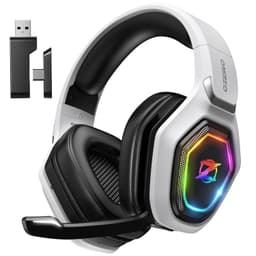
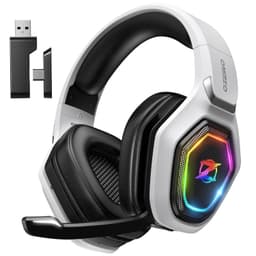
This is a wired headset connecting via 3.5mm, aimed squarely at PS5, PS4, PC, Xbox One, Switch, and pretty much anything else with a headphone jack. It's got 50mm drivers, a rotating noise-cancelling mic, and RGB lighting that cycles through seven colours automatically. On paper, that's a solid feature list for the money. The question is always whether those features work properly or just technically exist.
Core Specifications
The headline spec here is the 50mm neodymium drivers. That's actually a decent driver size for a budget headset. A lot of cheap headsets cut corners with 40mm drivers, so Ozeino going with 50mm suggests they're at least trying to push some low-end presence and wider soundstage. Neodymium magnets are standard across gaming headsets at every price point, from budget to flagship, so that part of the spec isn't a differentiator on its own. What matters is the tuning, and we'll get into that.
The build uses adjustable steel sliders, which is genuinely worth mentioning at this price. Plenty of budget headsets use plastic adjustment mechanisms that creak and eventually crack. Steel sliders are more durable and tend to hold their position better over time. The headband and earcups use soft protein leather (faux leather) cushioning, which is comfortable initially and breathable enough for moderate sessions. The connection is a single 3.5mm jack, keeping things simple and universally compatible.
The RGB lighting cycles through seven colours automatically. There's no software to control it, no way to turn it off or customise it as far as owners report. If you want static lighting or a specific colour, you're out of luck. But honestly, at this price, expecting addressable RGB control is a stretch. The lights look decent on a desk setup and the breathing effect is inoffensive. It's a style feature, nothing more.
| Specification | Detail |
|---|---|
| Driver Size | 50mm neodymium |
| Connection | 3.5mm |
| Microphone | Adjustable, 120 degree rotatable, noise-cancelling |
| Lighting | 7-colour automatic breathing RGB |
| Headband | Adjustable steel sliders |
| Ear Cushions | Soft protein leather |
| Compatible Platforms | PS5, PS4, PC, Xbox One (adapter required), Switch, Laptop, Tablet, Mobile, Xbox 360 |
| Price | £17.99 |

Audio Specifications
The Ozeino ZW1 uses 50mm dynamic drivers with neodymium magnets. Dynamic drivers are the standard choice across the entire gaming headset market because they're good at producing bass impact and handle the kind of punchy, dramatic sound that gaming benefits from. Dynamic driver designs move a coil through a magnetic field to produce sound, and the larger the driver, generally the more air it can move, which translates to better bass extension and overall volume potential.
Ozeino doesn't publish a full frequency response range, impedance figure, or sensitivity rating in the product listing, which is frustrating but not unusual at this price. Budget manufacturers often skip these specs entirely because publishing them invites direct comparison with better-specced competitors. What the listing does confirm is the 50mm neodymium driver configuration and the surround stereo sound claim. The "surround stereo" phrasing is worth unpacking: this is a stereo headset, not a true multi-driver surround setup. The surround effect, where present, comes from the size of the drivers and the ear cup design rather than dedicated surround processing hardware.
Owner reviews consistently mention the audio being louder than expected at this price point, which suggests the sensitivity is reasonably high. Several owners note that the bass has good punch without completely overwhelming the mids. That's encouraging for a budget headset, where the temptation is often to boost bass artificially to impress in short listening tests, at the expense of everything else. The 3.5mm connection means you're relying entirely on your device's own DAC and amp circuitry, so audio quality will vary slightly depending on what you plug it into.
Sound Signature
Based on what owners consistently report, the ZW1 leans toward a V-shaped sound signature. That means boosted bass and treble, with the mids sitting slightly back in the mix. This is a very common tuning choice for gaming headsets because it sounds impressive immediately: explosions hit hard, gunshots crack sharply, and the overall presentation feels exciting. It's the audio equivalent of turning the contrast up on a TV. Everything pops.
For competitive gaming, specifically shooters like Warzone, Fortnite, or Apex Legends, a V-shaped signature is a mixed bag. The boosted treble can help with footstep clarity and high-frequency directional cues. But if the bass is overdone, it can muddy the lower-mid frequencies where a lot of environmental audio information lives. Owners playing FPS games report being able to hear footsteps clearly, which is the key test for competitive play. That's a good sign that the tuning hasn't gone too far into bass-heavy territory.
For story games, RPGs, or anything cinematic, the V-shape actually works pretty well. Explosions feel weighty, music has energy, and dialogue sits in a reasonable position in the mix. It won't compete with a flat, reference-tuned headset for accuracy, but that's not what this headset is for. This is for someone who wants gaming audio to sound fun and engaging, not clinical. And at this price, that's the right call.
Sound Quality
The 50mm drivers do their job. Owners across the review pool consistently describe the audio as "surprisingly good for the price," which is the budget headset gold standard. Soundstage is reasonably wide for a closed-back design, meaning you get a decent sense of audio positioning. You won't mistake it for an open-back headset, but you're not getting that claustrophobic, sounds-inside-your-head sensation that plagues cheaper 40mm driver sets.
Imaging, which is your ability to locate sounds directionally in a game, is decent for casual and mid-level competitive play. Owners mention being able to tell whether footsteps are coming from the left, right, or behind them, which is the practical test that matters in battle royale and tactical shooters. Don't expect the pinpoint precision of a dedicated audiophile gaming headset. But for the price, the spatial awareness is genuinely functional rather than just technically present.
Bass extension is solid. The 50mm drivers push enough air to make explosions and in-game music feel impactful. Treble is present and reasonably detailed without being harsh or fatiguing over long sessions. Mids are, as expected with a V-shaped signature, a little recessed. Voices in games can sound slightly distant compared to more neutrally tuned headsets. For music listening, the same applies: it's fun and energetic rather than accurate. Pop, electronic, and hip-hop sound great. Classical or acoustic music, where midrange detail matters most, is less impressive. But again, that's not the use case here.
Microphone Quality
The mic is a 120-degree rotatable boom arm with omnidirectional noise reduction. That rotation range is genuinely useful because it means you can position it properly regardless of which side you prefer or how you're sitting. Getting the mic at the right distance from your mouth makes a real difference to how you sound to your teammates, and the flexibility here is better than fixed-position mics you sometimes see on budget headsets.
The noise cancellation is described as omnidirectional noise reduction tech. In practice, owners report that background noise is handled reasonably well for casual squad comms. Keyboard clatter, fans, and ambient room noise are reduced to acceptable levels. It's not going to perform like a dedicated condenser microphone with proper polar pattern isolation, but for calling out enemy positions in a Discord voice chat, it does the job. Several owners specifically mention their teammates being able to hear them clearly without complaint, which is the real benchmark.
Where budget mics like this tend to fall short is in voice naturalness. Your voice will sound slightly compressed and processed compared to a dedicated microphone or a higher-end gaming headset. That's expected at this price. If you're streaming or content creating, you'll want something better. But for in-game communication, the ZW1's mic is functional and genuinely usable, which puts it ahead of some budget competitors where the mic is essentially decorative.
Comfort and Build
Comfort is where budget headsets often fall apart, and it's arguably the most important spec for anyone planning long gaming sessions. The ZW1 uses soft protein leather earcups, which are faux leather with a foam backing. They're described as comfortable by the majority of owners, and the over-ear design means your ears sit inside the cups rather than being pressed flat, which is much better for extended wear. Protein leather does tend to get warm after a while, especially in summer, but that's a trade-off you accept with most closed-back headsets at any price.
The adjustable steel sliders are a genuine build quality win. They adjust smoothly and hold their position, which means the headset sits properly on your head without constantly needing to be readjusted. The headband has padding too, so top-of-head pressure is manageable. Owners with larger heads report a good fit, which isn't always the case with budget headsets that seem to have been designed for a single head size. The overall weight is described as lightweight in the product listing, and owner feedback confirms it doesn't feel heavy or fatiguing to wear.
Build quality is what you'd expect at this price: mostly plastic with the steel slider exception. It feels reasonably solid rather than flimsy, and the cable is reported to be adequate length for desk use. Some owners mention the cable could be longer for living room setups, which is worth considering if you're planning to use this on a console from a sofa. The RGB housing adds some visual bulk but doesn't seem to affect the fit or comfort negatively. Overall, the comfort-to-price ratio here is genuinely good, and that matters more than most other specs for daily use.

Connectivity
The ZW1 connects via a single 3.5mm jack. That's it. No USB, no wireless, no dongle. For a lot of people, that's actually ideal: plug it in, it works, no drivers, no software, no pairing process. The 3.5mm headphone connector is one of the most universally supported audio standards in existence, and it means this headset genuinely works on every device listed in the compatibility section without any faff.
For PS5, PS4, PC, Switch, and mobile, you plug straight into the controller or headphone jack and you're sorted. Xbox One requires a Microsoft adapter (not included, as the listing explicitly states), which is a known quirk of Xbox controllers that don't have a 3.5mm port. That adapter is cheap and widely available, so it's not a dealbreaker, but it is an additional cost to factor in if Xbox is your primary platform. Xbox Series X and S controllers do have a 3.5mm port, so those should work without an adapter.
The wired connection has one significant advantage over wireless at this price: zero latency. Budget wireless headsets often introduce audio lag that's noticeable in fast-paced gaming, and the cheaper the wireless implementation, the worse it gets. With a 3.5mm connection, the audio is as instant as the device's own output. You also never have to worry about battery life, charging, or the headset dying mid-match. For competitive gaming especially, wired is often the smarter choice regardless of price.
Battery Life
This is a wired headset. There is no battery. No charging cable to lose, no USB-C port to check, no power button to forget to press. You plug it in and it works for as long as you want to use it, drawing power from nothing because it needs none. In a world where wireless headsets require you to remember to charge them, this is genuinely refreshing.
The RGB lighting does draw power, but it runs off the USB cable that comes with the headset alongside the 3.5mm audio connection. So the audio works through the 3.5mm jack, and the lights run off USB. This means you need both a 3.5mm port and a USB port free on your setup. On a PC that's no issue at all. On a console or mobile device, it's worth checking you have both available. The USB connection is purely for power to the LEDs, not for audio signal.
This dual-connection setup is a common approach on budget RGB gaming headsets and it works fine in practice. The alternative would be battery-powered RGB, which would add cost and complexity. Owners don't report any issues with the lighting drawing too much power or causing interference with the audio signal, so the implementation seems clean enough. If you don't care about the RGB (and plenty of people don't), you can simply not plug in the USB cable and the headset still works perfectly for audio.
Software and Customisation
There is no software. No app to download, no EQ suite, no companion software, no firmware updater. What you see is what you get. For some people, that's a relief. Software bloat is a genuine problem with gaming peripherals, and plenty of headsets ship with companion apps that are buggy, resource-hungry, or simply redundant. The ZW1 skips all of that entirely.
The RGB lighting cycles through its seven colours automatically with no way to customise or disable it through software, because there's no software. If you're on PC and you want EQ adjustment, you'd need to use your operating system's built-in audio settings or a third-party app like Equalizer APO, which is a free Windows tool that works at the system level and can genuinely improve how any headset sounds. That's not a ZW1-specific limitation, but it's worth knowing about if you want to tweak the sound.
The lack of mic monitoring (hearing your own voice in the headset while you talk) is a common omission at this price. Mic monitoring helps you avoid shouting without realising it, which is a real thing that happens when you're wearing closed-back headphones. It's not a dealbreaker, but it's one of those quality-of-life features you notice once you've used a headset that has it. Virtual surround sound processing isn't present either, but as mentioned earlier, the "surround stereo" claim is about the driver size and cup design rather than any software processing, so there's nothing missing here that was ever actually promised.
Compatibility
The ZW1 is compatible with PS5, PS4, PC, Xbox One (with Microsoft adapter), Nintendo Switch, laptop, tablet, mobile, and Xbox 360. That's essentially every gaming platform currently in use, plus mobile devices. The 3.5mm connection is the reason for this breadth of compatibility: there's no platform-specific protocol or wireless standard to worry about. If it has a 3.5mm headphone port, this headset works with it.
On PS5, you plug into the DualSense controller's 3.5mm port and the headset works immediately, audio and mic both active. Same on PS4 with the DualShock 4. On PC, plug into your motherboard's rear audio out or front panel jack and it's recognised instantly as a standard audio device. No drivers needed. Switch works the same way via the console's headphone port. The simplicity here is actually one of the ZW1's strongest selling points for anyone who games across multiple platforms and doesn't want to deal with pairing, dongles, or platform-specific modes.
The Xbox One situation is the only complication. Older Xbox One controllers don't have a 3.5mm port, so you need Microsoft's stereo headset adapter. It's a small device that clips onto the controller's expansion port and adds a 3.5mm jack. It costs a few pounds and is available from most retailers. Xbox Series X and S controllers have a built-in 3.5mm port, so no adapter is needed for those. If you're primarily an Xbox player with an older controller, just factor in the adapter cost when comparing prices.
How It Compares
At the budget end of the gaming headset market, the Ozeino ZW1 sits alongside a lot of similar-looking headsets from brands like Eksa, Bengoo, and Mpow. The competition is fierce and most of them look almost identical because they often share the same manufacturing origins with different branding slapped on. What differentiates them comes down to driver size, build quality of the adjustment mechanism, and mic performance. The ZW1 scores well on all three relative to its direct competitors.
The Bengoo G9000 is probably the most direct comparison: similar price, similar 50mm driver claim, similar RGB aesthetic. The ZW1 edges it on build quality thanks to the steel sliders versus Bengoo's all-plastic construction, and owner reviews suggest the Ozeino's mic is slightly clearer. The Eksa E900 is another popular option at a similar price, offering a retractable mic rather than a boom arm. The retractable design is tidier but generally performs worse than a proper boom mic for voice clarity. The ZW1's adjustable boom arm is the better choice for anyone who cares about how they sound to teammates.
If you're willing to spend a bit more, the HyperX Cloud Stinger sits in the next price bracket up and is widely considered the benchmark for budget-to-mid gaming headsets. It has better audio tuning, a superior mic, and a more premium build. But it costs noticeably more than the ZW1, and for casual gaming or a first headset, the price difference is hard to justify. The ZW1 is the right choice when budget is the priority and you want the most functionality for the least outlay.
| Feature | Ozeino ZW1 | Bengoo G9000 | Eksa E900 |
|---|---|---|---|
| Driver Size | 50mm neodymium | 50mm | 50mm |
| Connection | 3.5mm | 3.5mm / USB | 3.5mm |
| Mic Type | Adjustable boom, 120 degree rotation | Adjustable boom | Retractable |
| RGB | 7-colour auto breathing | LED (limited) | None |
| Build | Steel sliders, plastic body | All plastic | Plastic |
| Platform Compatibility | PS5, PS4, PC, Xbox, Switch, Mobile | PS4, PC, Xbox, Switch | PS4, PS5, PC, Switch, Mobile |
| Software | None | None | None |
| Price | £17.99 | Similar budget tier | Similar budget tier |

Final Verdict
The Ozeino ZW1 does what a good budget gaming headset should do: it gets the fundamentals right without pretending to be something it isn't. The 50mm neodymium drivers deliver genuinely decent audio for the price, the mic is functional for squad comms rather than just technically present, and the steel slider construction puts it a step above the all-plastic competition in terms of durability. Over 25,000 owners giving it an average of 4.4 stars isn't a fluke. That's a lot of people who bought it, used it, and thought it was worth five stars or close to it.
Is it perfect? No. The RGB is fixed and automatic, which will annoy anyone who wants control over their lighting. The protein leather earcups will get warm in longer sessions. There's no mic monitoring, no EQ software, and no way to adjust the sound beyond what your device or a third-party app can do. The Xbox One adapter situation is a minor inconvenience. And like every budget headset, it won't compete with mid-range or premium options on audio fidelity or build quality. But none of that is surprising or unreasonable at this price.
Who should buy this? Anyone who needs a first gaming headset, anyone buying for a younger gamer, anyone who wants something functional across multiple platforms without spending serious money, or anyone whose old headset just died and they need a replacement today without breaking the bank. The multi-platform compatibility via 3.5mm is genuinely useful, the comfort is solid for extended sessions, and the audio is good enough for both casual and moderately competitive gaming. Who should skip it? Anyone playing at a competitive level where audio precision is critical, anyone who streams or records and needs a quality microphone, or anyone who already owns a decent mid-range headset and is wondering if this is an upgrade. It isn't. But it was never trying to be.
At the budget price point this sits at, the Ozeino ZW1 is one of the better options available. The 4.4 star average across a huge review pool backs that up. If you need a gaming headset that works, sounds decent, and won't fall apart after a month, this is a safe bet.
What works. What doesn’t.
5 + 5What we liked5 reasons
- 50mm neodymium drivers deliver audio quality that consistently surprises owners at this price tier, with solid bass impact and a reasonably wide soundstage for a closed-back design
- Steel slider adjustment mechanism is a genuine durability advantage over all-plastic budget competitors, holding its position reliably and resisting the creaking and cracking that plagues cheaper headsets
- Broad 3.5mm compatibility covers PS5, PS4, PC, Nintendo Switch, Xbox, and mobile devices with zero faff, no drivers, no pairing process, and no latency
- Rotating boom microphone with 120-degree adjustment allows proper positioning for voice clarity, and owner feedback confirms it performs adequately for squad comms and Discord calls
- Comfort is solid for extended sessions thanks to the over-ear protein leather cups, padded headband, and lightweight construction that owners with larger heads also report fitting well
Where it falls5 reasons
- RGB lighting cycles automatically through seven colours with no way to customise, disable, or lock it to a single colour, which will frustrate anyone wanting control over their setup's aesthetics
- Protein leather earcups retain heat during longer sessions, making them uncomfortable in warmer conditions or during intense play
- No mic monitoring means you cannot hear your own voice through the headset while talking, increasing the risk of unintentional shouting during closed-back wear
- V-shaped sound signature pushes mids back in the mix, meaning voice clarity in games and midrange detail in music are noticeably recessed compared to more neutrally tuned alternatives
- The dual-connection requirement, 3.5mm for audio and USB for RGB power, means you need both ports free simultaneously, which can be inconvenient on some consoles and mobile devices
Full specifications
11 attributes| Connectivity | 3.5mm |
|---|---|
| Surround | stereo |
| Microphone | boom |
| Noise cancellation | false |
| Driver size | 50mm |
| Driver size MM | 50 |
| Frequency response HZ | 20-20000 |
| Microphone type | flexible boom |
| Platforms | PC, PS4, PS5, Xbox, Switch, Mac, Mobile |
| Spatial audio | false |
| Type | over-ear |
If this isn’t right for you
2 options
Frequently asked
7 questions01Does the Ozeino ZW1 work with PS5 without any adapter?+
Yes. You plug the 3.5mm jack directly into the DualSense controller's headphone port and both audio and the microphone work immediately with no drivers or adapters required.
02Does the Ozeino ZW1 work with Xbox One?+
Older Xbox One controllers without a built-in 3.5mm port require Microsoft's stereo headset adapter, which is sold separately. Xbox Series X and S controllers have a 3.5mm port built in, so no adapter is needed for those.
03Can you turn off the RGB lighting on the Ozeino ZW1?+
No. There is no software, button, or switch to disable or customise the RGB lighting. It cycles automatically through seven colours. If you do not want the lights active, you can simply leave the USB cable unplugged, as that cable powers only the LEDs and the audio still functions through the 3.5mm connection alone.
04Is the Ozeino ZW1 microphone good enough for streaming or content creation?+
Not ideally. The boom microphone is functional for in-game squad communication and Discord calls, but it produces a slightly compressed, processed voice sound that falls short of what is needed for streaming or recording. A dedicated USB condenser microphone would be a far better choice for content creation purposes.
05What does the Ozeino ZW1 sound signature actually sound like?+
Owner reports consistently describe a V-shaped signature, meaning boosted bass and treble with the mids sitting slightly behind. Bass has solid punch without becoming overwhelming, treble adds crispness that helps with footstep detection in shooters, and mids are somewhat recessed, making voices in games and midrange instrument detail in music less prominent than on neutrally tuned headsets.
06Does the Ozeino ZW1 need any software to function?+
No. There is no companion app, driver installation, or firmware update process required. It is recognised as a standard audio device on any platform you connect it to. If you want EQ adjustments on PC, a free third-party tool such as Equalizer APO can be used, but that is entirely optional.
07How comfortable is the Ozeino ZW1 for long gaming sessions?+
The majority of owners report it as comfortable for extended wear. The over-ear design keeps ears inside the cups rather than pressed against them, the headband is padded, and the adjustable steel sliders hold the headset in position without constant readjustment. The protein leather earcups do retain some heat during long sessions, which is a trade-off common to most closed-back headsets at any price.